This is the content of the pop-over!

Lightning Deal Alert – 12% Off Ends at Midnight!

Strike while the savings are hot! Use promo code FlashSale at checkout for 12% off any Exam Edge test or bundle. Hurry—the clock is ticking!

Canadian Medical Laboratory Assistants (CSMLS) Practice Tests & Test Prep by Exam Edge


Canadian Medical Laboratory Assistants  product image
(4.9)
Based on 25 Reviews

  • Real Exam Simulation: Timed questions and matching content build comfort for your Canadian Medical Laboratory Assistants test day.
  • Instant, 24/7 Access: Web-based Canadian Medical Laboratory Assistants practice exams with no software needed.
  • Clear Explanations: Step-by-step answers and explanations for your CSMLS exam to strengthen understanding.
  • Boosted Confidence: Reduces anxiety and improves test-taking skills to ace your Canadian Medical Laboratory Assistants (CSMLS).

Featured on

Canadian Medical Laboratory Assistants Online Practice Test Bundles

BEST VALUE
10 practice tests

$99.50

$399.50

SAVE $300

Only $9.95 per test!

  • 100% Pass Guarantee
  • 10 online practice tests
  • 100 questions per test
  • Bonus: 100 Flash Cards + Study Guide
  • Instant access
  • Detailed Explanations
  • Practice tests never expire
  • Timed, untimed, or study guide mode
5 practice tests

$69.75

$199.75

SAVE $130

Only $13.95 per test!

  • 5 online practice tests
  • 100 questions per test
  • Bonus: 100 Flash Cards + Study Guide
  • Instant access
  • Detailed Explanations
  • Practice tests never expire
  • Timed, untimed, or study guide mode
1 practice test

$39.95

  • 1 online practice test
  • 100 questions per test
  • Instant access
  • Detailed Explanations
  • Practice tests never expire
  • Timed, untimed, or study guide mode
Quick Select
Tap to choose a bundle

** All Prices are in US Dollars (USD) **


Canadian Medical Laboratory Assistants (CSMLS) Resources

Jump to the section you need most.

Understanding the exact breakdown of the Canadian Medical Laboratory Assistants test will help you know what to expect and how to most effectively prepare. The Canadian Medical Laboratory Assistants has multiple-choice questions . The exam will be broken down into the sections below:

Canadian Medical Laboratory Assistants Exam Blueprint
Domain Name
Fundamental Competencies  
Safe Work Practices  
Communication & Interaction  
Data Entry and Specimen Procurement/Receipt  
Specimen Processing  
Pre-analytical Procedures  
Reagent/Media Preparation  
Quality Assurance  
Professionalism  

Canadian Medical Laboratory Assistants Study Tips by Domain

  • Accurately perform core calculations (dilutions, % solutions, unit conversions) and always sanity-check magnitude—red flag: results off by a factor of 10 suggest a metric or decimal error.
  • Verify patient identification using two identifiers before any collection or labeling—common trap: relying on bed/room number or a verbal name only is not acceptable.
  • Apply basic anatomy/physiology and test purpose to support correct collection choices—priority rule: match tube/additive and fill volume to the ordered test to avoid invalid results.
  • Demonstrate proper labeling at the bedside/chairside immediately after collection—red flag: pre-labeling tubes or labeling away from the patient increases misidentification risk.
  • Use correct specimen handling principles (time, temperature, light protection, transport) and document deviations—common trap: leaving time-sensitive specimens unprocessed without noting collection/receipt times.
  • Recognize and report abnormal or unsafe situations promptly within scope—priority rule: stop and escalate if patient status changes (e.g., fainting) or if an order/specimen identity is unclear.
  • Apply routine practices on every specimen (treat all blood/body fluids as potentially infectious) and add transmission-based precautions when indicated; red flag: handling an unlabeled “STAT” specimen without PPE because it “looks clean.”
  • Use sharps safety: never recap needles, activate safety devices immediately, and dispose in approved sharps containers before leaving the work area; common trap: carrying an uncapped needle across the room “just for a second.”
  • Know spill response tiers (minor vs major) and isolate the area, don appropriate PPE, and use the correct disinfectant/contact time; red flag: wiping a blood spill with alcohol and no defined dwell time.
  • Follow WHMIS/GHS for chemical hazards—verify SDS, labeling, and required controls (fume hood, gloves, eye protection) before use; common trap: mixing bleach with acids/ammonia during cleanup, creating toxic gas.
  • Maintain equipment safety: check centrifuge balance/locks and wait for full stop before opening; red flag: opening a centrifuge with suspected tube breakage without allowing aerosols to settle and without respiratory/eye protection.
  • Use ergonomic and physical safety practices (proper lifting, cart use, clear walkways) and report hazards immediately; priority rule: stop work and escalate when a safety control is missing (e.g., empty sharps container or broken eyewash) rather than “making do.”
  • Use at least two identifiers (e.g., full name and date of birth/health number) before any interaction or collection; red flag: any mismatch means stop and resolve before proceeding.
  • Give clear, plain-language collection instructions (fasting, timing, midstream, contamination avoidance) and use teach-back; common trap: assuming understanding when the patient simply nods.
  • Maintain confidentiality under PHIPA/PIPEDA principles and follow facility policy; red flag: discussing results or patient details in public areas (e.g., elevators, waiting rooms).
  • Escalate immediately and document objective facts if a request seems unsafe or outside scope; priority rule: patient safety overrides hierarchy, even if pressured by staff.
  • Use closed-loop communication (repeat-back/confirm) for critical details like timed collections, isolation status, or special handling; common trap: acting on verbal orders without confirmation.
  • Adapt communication for barriers (language, hearing, cognitive impairment) by using approved interpreters and visual aids; red flag: relying on family to translate sensitive medical information.
  • Use two unique identifiers at collection and at receipt (e.g., full name and DOB/health number) and stop the process if any mismatch occurs—never “fix” demographics from memory or a verbal report.
  • Enter orders exactly as requisitioned, including priority (STAT/timed) and collection requirements; a common trap is defaulting to routine and missing a timed drug level or fasting specimen.
  • Verify specimen type, container/additive, and minimum volume on receipt; red flag: wrong tube (e.g., EDTA instead of serum) or underfilled citrate tube—do not relabel into a different container.
  • Confirm date/time of collection and collector ID are documented; priority rule: missing collection time can invalidate time-sensitive tests (e.g., glucose tolerance, therapeutic drug monitoring) and must be resolved before processing.
  • Assess transport and acceptance criteria at receipt (temperature, light protection, leaks); red flag: unlidded/leaking container or broken seal—reject per policy and document the reason.
  • Maintain chain-of-custody and special handling instructions exactly as required; common trap: accepting a forensic/legal specimen without complete documentation or witness signatures.
  • Verify specimen integrity on receipt (ID match, volume, container, time/temperature) and reject per policy when criteria aren’t met—red flag: unlabeled/mislabeled samples require recollection, not relabeling.
  • Process within stated stability limits (e.g., prompt serum/plasma separation) and document deviations—common trap: delayed centrifugation can falsely alter potassium, glucose, and coagulation results.
  • Use correct centrifugation parameters (RCF vs RPM, time, balanced loads) and inspect for hemolysis/lipemia/icterus—priority rule: do not spin cracked tubes or unbalanced rotors.
  • Aliquot using aseptic technique, appropriate secondary tubes, and secure caps to prevent leaks/aerosols—red flag: transferring from additive tubes can contaminate aliquots and invalidate downstream testing.
  • Maintain chain of custody and special handling for time-critical tests (e.g., blood gases on ice, ammonia chilled, light-protected analytes)—common trap: failing to protect bilirubin or porphyrins from light causes falsely low results.
  • Apply correct storage and transport conditions post-processing (2–8 °C, frozen, ambient) with accurate labeling and timestamps—priority rule: if storage temperature is out of range and stability is exceeded, notify and recollect rather than “send anyway.”
  • Verify patient identity using at least two unique identifiers (e.g., full name and DOB/health card) before any collection; red flag: a mismatch between requisition and wristband must trigger a stop and re-verification.
  • Confirm correct tube/container, order of draw, and required fill volume for the requested tests; common trap: underfilling citrate (light blue) tubes invalidates coagulation results due to incorrect blood-to-anticoagulant ratio.
  • Assess patient preparation requirements (fasting status, posture, timing/therapeutic drug levels) and document deviations; priority rule: if pre-test conditions aren’t met, notify the lab/provider before collecting rather than “collecting anyway.”
  • Use proper collection technique to minimize hemolysis and contamination (appropriate needle gauge, avoid prolonged tourniquet/fist pumping); red flag: visible hemolysis or difficult draw should prompt recollection when clinically feasible.
  • Handle and transport specimens according to stability limits (time, temperature, light protection, on ice when required); common trap: delaying centrifugation for serum/plasma beyond stated limits can alter analytes (e.g., potassium, glucose).
  • Label specimens immediately at the bedside/chairside with patient identifiers, date/time, and collector ID as required; contraindication: never pre-label tubes because it increases wrong-patient errors and is a frequent CSMLS-style safety focus.
  • Verify you are using the current SOP/version and correct formula before weighing or measuring; red flag: preparing from memory or an unlabeled printout is a common CSMLS-aligned compliance trap.
  • Check reagent grade, lot number, and expiry before use and document traceability; do not use expired or compromised chemicals even if they “look fine.”
  • Label prepared reagents/media immediately with name, concentration, date/time prepared, preparer initials, lot/ID, and expiry/BUD; common trap: missing BUD leads to automatic rejection in audits.
  • Use proper mixing order and temperature control (e.g., add acid to water, not water to acid) and confirm complete dissolution; red flag: heat-sensitive components can be inactivated by overheating.
  • Sterilize and store according to requirements (autoclave parameters, filtration for heat-labile additives, light protection, specified temperature); contraindication: autoclaving media containing antibiotics or blood products.
  • Perform and record required QC before release (e.g., sterility check, pH range, appearance, growth promotion where applicable); priority rule: failed QC means quarantine/discard—never “use once” to avoid delays.
  • Verify patient ID using at least two unique identifiers (e.g., full name and DOB/PHN) before collection or processing—red flag: any mismatch between requisition and label requires immediate hold and supervisor notification.
  • Maintain strict specimen traceability from collection to disposal (time, collector/receiver, location, condition)—common trap: “temporary” unlabeled tubes or handwritten add-on labels without documented authorization.
  • Monitor and document critical pre-analytical quality indicators (e.g., hemolysis, clotting, insufficient volume, transport delays)—priority rule: reject or recollect when acceptance criteria are not met rather than “trying anyway.”
  • Follow QC and temperature log schedules for fridges/freezers/incubators with defined action limits—threshold cue: any out-of-range temperature requires quarantine of affected specimens/reagents until assessed and documented.
  • Use only current, controlled documents (SOPs, forms) and record corrections properly (single line strike-through, date/initial)—common trap: erasing/white-out or using outdated printed procedures.
  • Participate in incident reporting and CAPA (corrective and preventive action) for errors/near-misses—red flag: repeating the same deviation without a documented root-cause analysis and implemented follow-up check.
  • Maintain patient confidentiality at all times—red flag: discussing identifiers or results in elevators, cafeterias, or unsecured messaging apps.
  • Obtain and document informed consent/assent per facility policy before collection—common trap: proceeding when the patient appears unsure or a substitute decision-maker isn’t confirmed.
  • Practice within the MLA scope and escalate appropriately—priority rule: if a request involves interpretation, diagnosis, or result release, refer to the technologist/supervisor.
  • Use respectful, trauma-informed communication and preserve dignity—red flag: ignoring cultural/religious needs (e.g., same-gender collector requests) when accommodations are feasible.
  • Demonstrate accountability with incident reporting—common trap: “fixing it quietly” instead of documenting errors/near-misses (e.g., mislabel risk, collection complications) per CSMLS-aligned policies.
  • Manage conflicts of interest and professional boundaries—red flag: accepting gifts, accessing records without a care-related need-to-know, or sharing workplace photos that could identify patients.


Built to Fit Into Your Busy Life

Everything you need to prepare with confidence—without wasting a minute.

Three Study Modes

Timed, No Time Limit, or Explanation mode.

Actionable Analytics

Heatmaps and scaled scores highlight weak areas.

High-Yield Rationales

Concise explanations emphasize key concepts.

Realistic Interface

Matches the feel of the actual exam environment.

Accessible by Design

Clean layout reduces cognitive load.

Anytime, Anywhere

Web-based access 24/7 on any device.
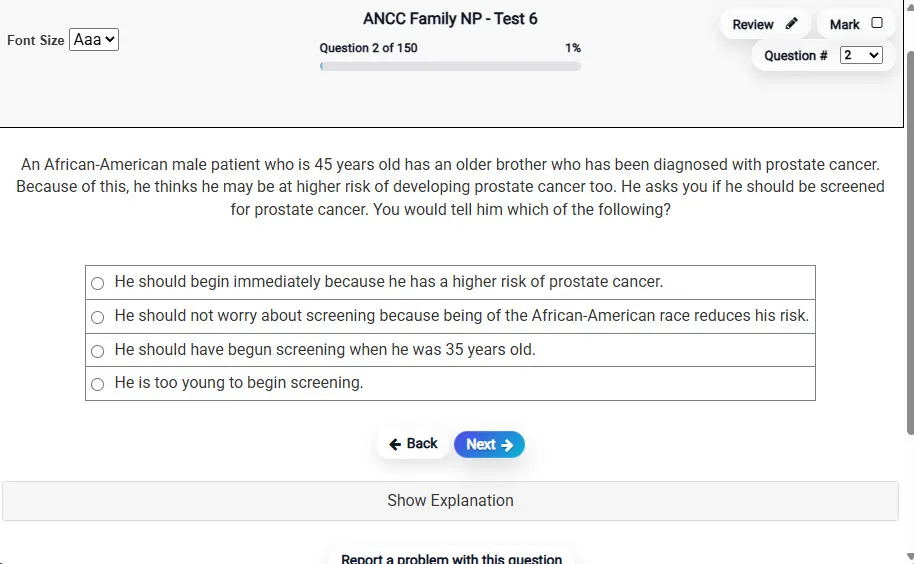
Answering a Question screen – Multiple-choice item view with navigation controls and progress tracker.
Answering a Question Multiple-choice item view with navigation controls and progress tracker.

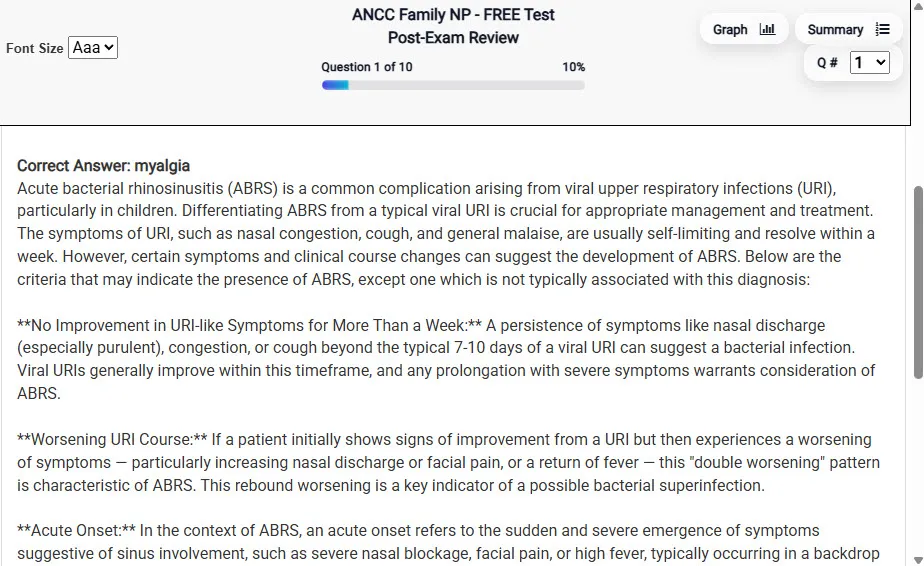
                           Detailed Explanation screen – 
                         Review mode showing chosen answer and rationale and references.
Detailed Explanation Review mode showing chosen answer and rationale and references.

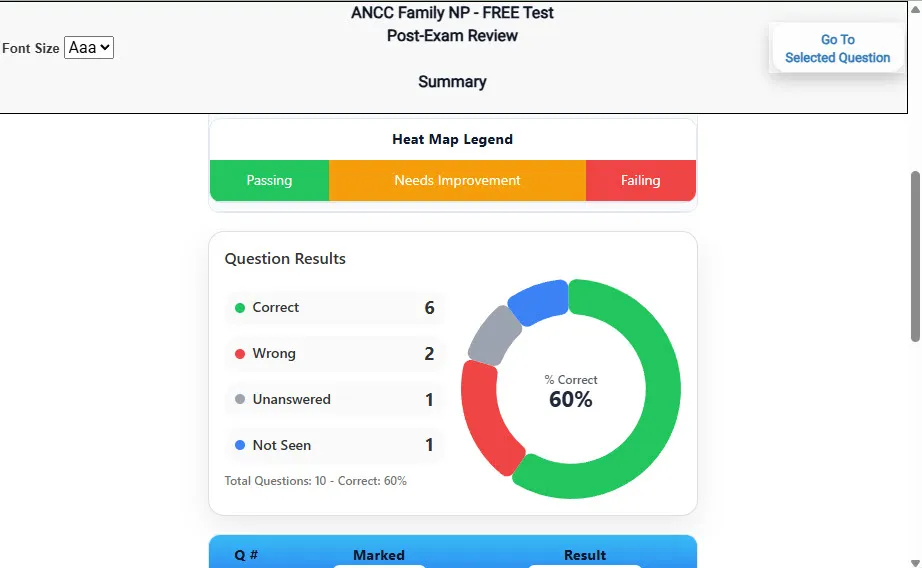
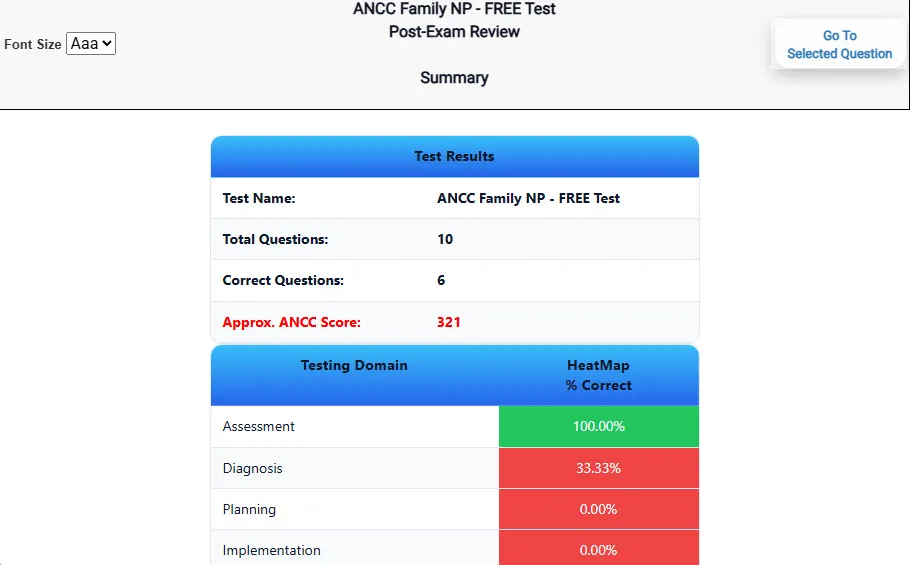
                           Review Summary 1 screen – 
                         Summary with counts for correct/wrong/unanswered and not seen items.
Review Summary 1 Summary with counts for correct/wrong/unanswered and not seen items.

                           Review Summary 2 screen – 
                         Advanced summary with category/domain breakdown and performance insights.
Review Summary 2 Advanced summary with category/domain breakdown and performance insights.

What Each Screen Shows

Answer Question Screen

  • Clean multiple-choice interface with progress bar.
  • Mark for review feature.
  • Matches real test pacing.

Detailed Explanation

  • Correct answer plus rationale.
  • Key concepts and guidelines highlighted.
  • Move between questions to fill knowledge gaps.

Review Summary 1

  • Overall results with total questions and scaled score.
  • Domain heatmap shows strengths and weaknesses.
  • Quick visual feedback on study priorities.

Review Summary 2

  • Chart of correct, wrong, unanswered, not seen.
  • Color-coded results for easy review.
  • Links back to missed items.

Top 10 Reasons to Use Exam Edge for your Canadian Medical Laboratory Assistants Exam Prep

  1. Focused on the Canadian Medical Laboratory Assistants Exam

    Our practice tests are built specifically for the Canadian Medical Laboratory Assistants exam — every question mirrors the real topics, format, and difficulty so you're studying exactly what matters.

  2. Real Exam Simulation

    We match the per-question time limits and pressure of the actual CSMLS exam, so test day feels familiar and stress-free.

  3. 10 Full Practice Tests & 1,000 Unique Questions

    You'll have more than enough material to master every Canadian Medical Laboratory Assistants concept — no repeats, no fluff.

  4. Lower Cost Than a Retake

    Ordering 5 practice exams costs less than retaking the Canadian Medical Laboratory Assistants exam after a failure. One low fee could save you both time and money.

  5. Flexible Testing

    Need to step away mid-exam? Pick up right where you left off — with your remaining time intact.

  6. Instant Scoring & Feedback

    See your raw score and an estimated Canadian Medical Laboratory Assistants score immediately after finishing each practice test.

  7. Detailed Explanations for Every Question

    Review correct and incorrect answers with clear, step-by-step explanations so you truly understand each topic.

  8. Trusted & Accredited

    We're fully accredited by the Better Business Bureau and uphold the highest standards of trust and transparency.

  9. Web-Based & Always Available

    No software to install. Access your Canadian Medical Laboratory Assistants practice exams 24/7 from any computer or mobile device.

  10. Expert Support When You Need It

    Need extra help? Our specialized tutors are highly qualified and ready to support your CSMLS exam prep.


Pass the Canadian Medical Laboratory Assistants Exam with Realistic Practice Tests from Exam Edge

Preparing for your upcoming Canadian Medical Laboratory Assistants (CSMLS) Certification Exam can feel overwhelming — but the right practice makes all the difference. Exam Edge gives you the tools, structure, and confidence to pass on your first try. Our online practice exams are built to match the real Canadian Medical Laboratory Assistants exam in content, format, and difficulty.

  • 📝 10 Canadian Medical Laboratory Assistants Practice Tests: Access 10 full-length exams with 100 questions each, covering every major Canadian Medical Laboratory Assistants topic in depth.
  • Instant Online Access: Start practicing right away — no software, no waiting.
  • 🧠 Step-by-Step Explanations: Understand the reasoning behind every correct answer so you can master Canadian Medical Laboratory Assistants exam concepts.
  • 🔄 Retake Each Exam Up to 4 Times: Build knowledge through repetition and track your improvement over time.
  • 🌐 Web-Based & Available 24/7: Study anywhere, anytime, on any device.
  • 🧘 Boost Your Test-Day Confidence: Familiarity with the CSMLS format reduces anxiety and helps you perform under pressure.

These Canadian Medical Laboratory Assistants practice exams are designed to simulate the real testing experience by matching question types, timing, and difficulty level. This approach helps you get comfortable not just with the exam content, but also with the testing environment, so you walk into your exam day focused and confident.


Exam Edge CSMLS Reviews


Canadian Medical Laboratory Assistants Aliases Test Name

Here is a list of alternative names used for this exam.

  • Canadian Medical Laboratory Assistants
  • Canadian Medical Laboratory Assistants test
  • Canadian Medical Laboratory Assistants Certification Test
  • CSMLS
  • CSMLS CSMLS
  • CSMLS test
  • Canadian Medical Laboratory Assistants (CSMLS)
  • Canadian Medical Laboratory Assistants certification