This is the content of the pop-over!

Lightning Deal Alert – 12% Off Ends at Midnight!

Strike while the savings are hot! Use promo code FlashSale at checkout for 12% off any Exam Edge test or bundle. Hurry—the clock is ticking!

ANCC Child/Adolescent Psych and Mental Health CNS (PMHCNS) Practice Tests & Test Prep by Exam Edge


ANCC Child/Adolescent Psych and Mental Health CNS  product image
(4.9)
Based on 34 Reviews

  • Real Exam Simulation: Timed questions and matching content build comfort for your ANCC Child/Adolescent Psych and Mental Health CNS test day.
  • Instant, 24/7 Access: Web-based ANCC Child/Adolescent Psych and Mental Health CNS practice exams with no software needed.
  • Clear Explanations: Step-by-step answers and explanations for your ANCC exam to strengthen understanding.
  • Boosted Confidence: Reduces anxiety and improves test-taking skills to ace your ANCC Child/Adolescent Psych and Mental Health CNS (PMHCNS).

Featured on

ANCC Child/Adolescent Psych and Mental Health CNS Online Practice Test Bundles

BEST VALUE
5 practice tests

$69.75

$199.75

SAVE $130

Only $13.95 per test!

  • 100% Pass Guarantee
  • 5 online practice tests
  • 100 questions per test
  • Bonus: 100 Flash Cards + Study Guide
  • Instant access
  • Detailed Explanations
  • Practice tests never expire
  • Timed, untimed, or study guide mode
1 practice test

$39.95

  • 1 online practice test
  • 100 questions per test
  • Instant access
  • Detailed Explanations
  • Practice tests never expire
  • Timed, untimed, or study guide mode
Quick Select
Tap to choose a bundle

** All Prices are in US Dollars (USD) **


ANCC Child/Adolescent Psych and Mental Health CNS (PMHCNS) Resources

Jump to the section you need most.

Understanding the exact breakdown of the ANCC Child/Adolescent Psych and Mental Health CNS test will help you know what to expect and how to most effectively prepare. The ANCC Child/Adolescent Psych and Mental Health CNS has 150 multiple-choice questions . The exam will be broken down into the sections below:

ANCC Child/Adolescent Psych and Mental Health CNS Exam Blueprint
Domain Name % Number of
Questions
Advanced Practice Mental Health Nursing: Provision of Care 49.33% 74
Professional Role 25.33% 38
Scope and Standards of Practice 16% 24
Organizations/Health Systems 9.33% 14

ANCC Child/Adolescent Psych and Mental Health CNS Study Tips by Domain

  • Prioritize safety first: screen every visit for suicidality (plan, intent, means) and recent nonsuicidal self-injury; red flag—access to lethal means plus recent escalation requires same-day safety planning and higher level of care consideration.
  • Use developmentally appropriate assessment (caregiver + child/teen + school data) and confirm impairment across settings; common trap—diagnosing ADHD or bipolar disorder from one setting or one informant without functional impact evidence.
  • Apply trauma-informed care and differentiate PTSD/complex trauma from disruptive or attentional disorders; red flag—new aggression, regression, or somatic complaints after a stressor should trigger trauma screening before labeling as “behavioral.”
  • When initiating psychopharmacology, verify weight-based dosing, baseline vitals/weight/BMI, and necessary labs (e.g., metabolic monitoring with SGAs); priority rule—document target symptoms and a titration/monitoring plan to avoid “set-and-forget” prescribing.
  • Integrate evidence-based psychotherapy selection (e.g., CBT for anxiety/depression, exposure for OCD, parent management training for disruptive behavior) with family engagement; common trap—skipping parent/caregiver interventions in younger children when symptoms are maintained by environment.
  • Manage confidentiality and consent with adolescents while meeting mandatory reporting duties; red flag—promising absolute confidentiality (instead of limits for safety/abuse) can create legal/ethical breaches and undermines therapeutic alliance.
  • Clarify and document the CNS’s role (consultant, educator, system leader, direct care) at each site—red flag: being scheduled as primary therapist/prescriber without credentialing or privileging.
  • Maintain boundaries and confidentiality with minors, including social media and texting policies—common trap: promising absolute secrecy when safety exceptions (suicidality/abuse) require disclosure.
  • Use a structured ethical decision-making process and escalate to ethics/risk management when needed—priority rule: imminent risk overrides routine confidentiality and requires immediate action.
  • Lead interprofessional collaboration with clear communication loops (handoffs, case conferences, school/community coordination)—red flag: fragmented plans when multiple agencies are involved and no single care coordinator is identified.
  • Advocate for trauma-informed, culturally responsive care and address SDOH barriers—common trap: labeling nonadherence as “resistance” without assessing access, family context, and cultural meaning.
  • Commit to lifelong learning and quality improvement (outcomes tracking, evidence-based updates, supervision/peer review)—threshold: act when data show harm signals (e.g., rising restraints, worsening PHQ-9/GAD-7, increased ED visits).
  • Practice within legal scope for CNS and within ANCC-recognized standards; red flag: independently prescribing/ordering or providing psychotherapy modalities beyond state/APRN authority and facility privileging.
  • Apply ANA/APNA standards (assessment, diagnosis, outcomes, planning, implementation, evaluation) with developmental tailoring; common trap: using adult criteria/tools without age-appropriate norms (e.g., missing school-based functional impairment).
  • Maintain informed consent/assent and confidentiality with minors per law and policy; priority rule: clarify limits of confidentiality up front, especially around suicidality, abuse, and mandated reporting.
  • Use evidence-based practice and document clinical reasoning; red flag: treatment changes without measurable targets (e.g., no baseline symptom scale, no follow-up interval, or no rationale for off-label use).
  • Follow safety and risk-management standards (suicide, violence, abuse/neglect, substance use); threshold cue: any credible plan/intent, access to lethal means, or escalating self-harm requires immediate safety planning and higher level-of-care consideration.
  • Uphold professional ethics, boundaries, and cultural humility; common trap: dual relationships in small communities/schools or electronic communication with families without documented parameters and secure systems.
  • Align child/adolescent mental health services with organizational policy, accreditation, and state/federal requirements (e.g., EMTALA, HIPAA/42 CFR Part 2, mandatory reporting)—red flag: treating family requests as sufficient when a legal consent/authorization is required.
  • Use system-level risk screening and escalation pathways (suicide, violence, elopement, restraint/seclusion) with documented timeframes—common trap: no clearly defined trigger for when to activate 1:1 observation or higher level of care.
  • Integrate care across settings (school, primary care, ED, inpatient, community) using standardized handoffs and referral loop-closure—priority rule: every referral needs a tracked outcome, not just a sent order.
  • Implement evidence-based staffing, competency, and supervision structures for pediatric psych care (trauma-informed de-escalation, restraint alternatives)—red flag: assigning untrained staff to manage agitation or administer PRN sedatives without competency validation.
  • Drive quality improvement using meaningful metrics (readmissions, follow-up within 7 days, restraint/seclusion rates, missed appointments, medication monitoring compliance)—common trap: measuring volume only and missing safety/continuity indicators.
  • Establish medication safety systems (high-alert psychotropics, black-box warnings, metabolic monitoring, ECG/QTc processes) with clear responsibility and reminders—contraindication cue: initiating or escalating without baseline labs/vitals when policy requires them.


Built to Fit Into Your Busy Life

Everything you need to prepare with confidence—without wasting a minute.

Three Study Modes

Timed, No Time Limit, or Explanation mode.

Actionable Analytics

Heatmaps and scaled scores highlight weak areas.

High-Yield Rationales

Concise explanations emphasize key concepts.

Realistic Interface

Matches the feel of the actual exam environment.

Accessible by Design

Clean layout reduces cognitive load.

Anytime, Anywhere

Web-based access 24/7 on any device.
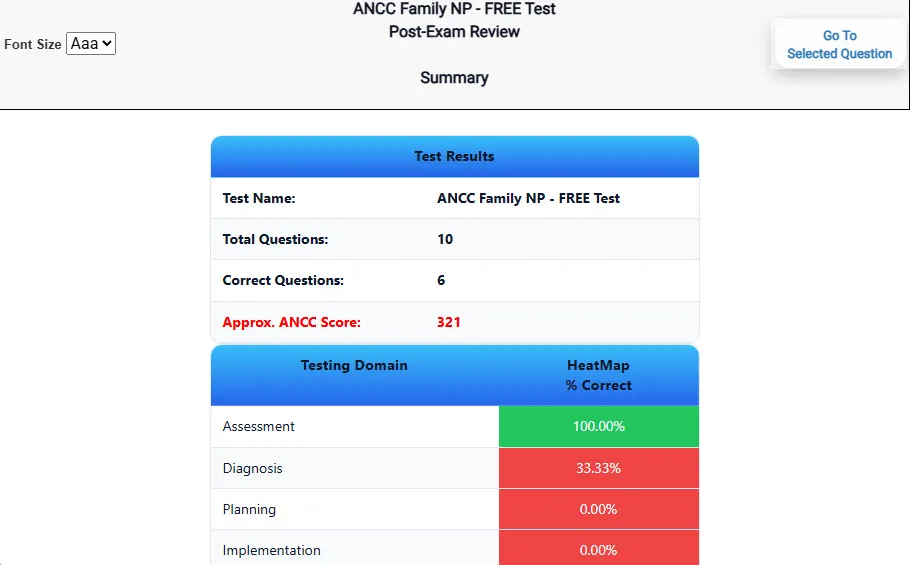
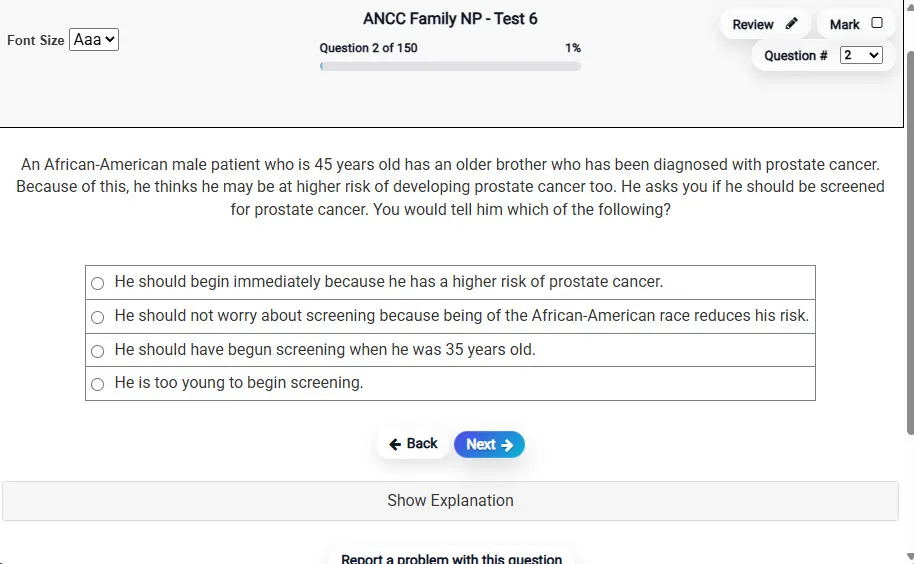
Answering a Question screen – Multiple-choice item view with navigation controls and progress tracker.
Answering a Question Multiple-choice item view with navigation controls and progress tracker.

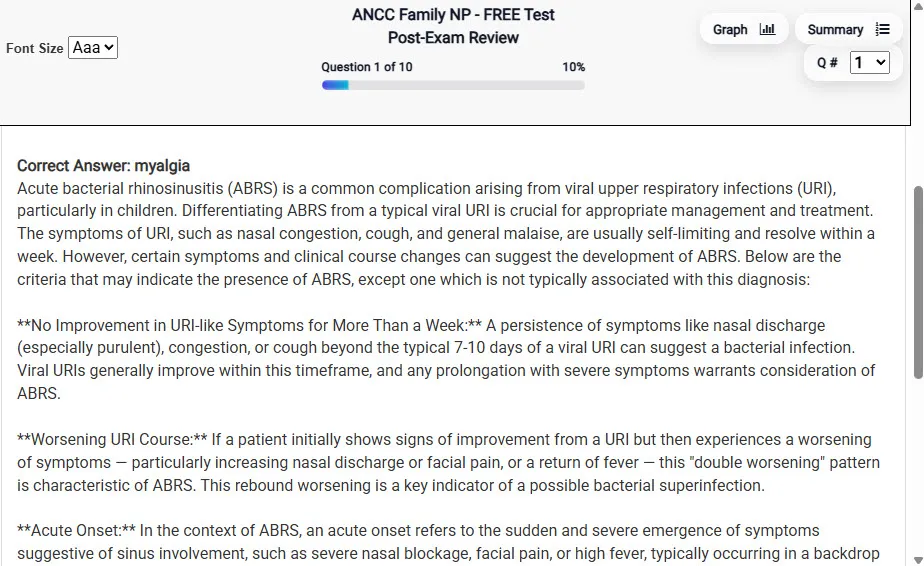
                           Detailed Explanation screen – 
                         Review mode showing chosen answer and rationale and references.
Detailed Explanation Review mode showing chosen answer and rationale and references.

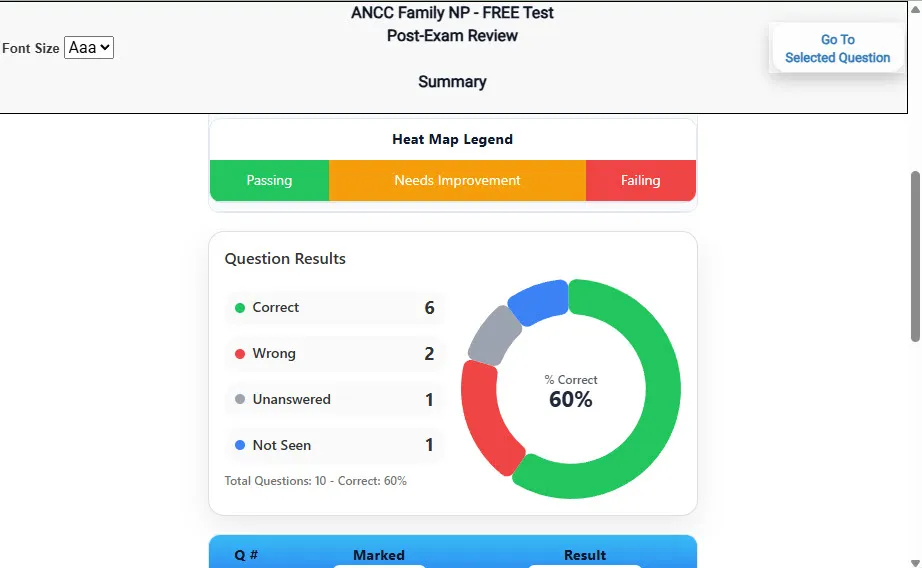
                           Review Summary 1 screen – 
                         Summary with counts for correct/wrong/unanswered and not seen items.
Review Summary 1 Summary with counts for correct/wrong/unanswered and not seen items.

                           Review Summary 2 screen – 
                         Advanced summary with category/domain breakdown and performance insights.
Review Summary 2 Advanced summary with category/domain breakdown and performance insights.

What Each Screen Shows

Answer Question Screen

  • Clean multiple-choice interface with progress bar.
  • Mark for review feature.
  • Matches real test pacing.

Detailed Explanation

  • Correct answer plus rationale.
  • Key concepts and guidelines highlighted.
  • Move between questions to fill knowledge gaps.

Review Summary 1

  • Overall results with total questions and scaled score.
  • Domain heatmap shows strengths and weaknesses.
  • Quick visual feedback on study priorities.

Review Summary 2

  • Chart of correct, wrong, unanswered, not seen.
  • Color-coded results for easy review.
  • Links back to missed items.

Top 10 Reasons to Use Exam Edge for your ANCC Child/Adolescent Psych and Mental Health CNS Exam Prep

  1. Focused on the ANCC Child/Adolescent Psych and Mental Health CNS Exam

    Our practice tests are built specifically for the ANCC Child/Adolescent Psych and Mental Health CNS exam — every question mirrors the real topics, format, and difficulty so you're studying exactly what matters.

  2. Real Exam Simulation

    We match the per-question time limits and pressure of the actual ANCC exam, so test day feels familiar and stress-free.

  3. 5 Full Practice Tests & 500 Unique Questions

    You'll have more than enough material to master every ANCC Child/Adolescent Psych and Mental Health CNS concept — no repeats, no fluff.

  4. Lower Cost Than a Retake

    Ordering 5 practice exams costs less than retaking the ANCC Child/Adolescent Psych and Mental Health CNS exam after a failure. One low fee could save you both time and money.

  5. Flexible Testing

    Need to step away mid-exam? Pick up right where you left off — with your remaining time intact.

  6. Instant Scoring & Feedback

    See your raw score and an estimated ANCC Child/Adolescent Psych and Mental Health CNS score immediately after finishing each practice test.

  7. Detailed Explanations for Every Question

    Review correct and incorrect answers with clear, step-by-step explanations so you truly understand each topic.

  8. Trusted & Accredited

    We're fully accredited by the Better Business Bureau and uphold the highest standards of trust and transparency.

  9. Web-Based & Always Available

    No software to install. Access your ANCC Child/Adolescent Psych and Mental Health CNS practice exams 24/7 from any computer or mobile device.

  10. Expert Support When You Need It

    Need extra help? Our specialized tutors are highly qualified and ready to support your ANCC exam prep.


Pass the ANCC Child/Adolescent Psych and Mental Health CNS Exam with Realistic Practice Tests from Exam Edge

Preparing for your upcoming ANCC Child/Adolescent Psych and Mental Health CNS (PMHCNS) Certification Exam can feel overwhelming — but the right practice makes all the difference. Exam Edge gives you the tools, structure, and confidence to pass on your first try. Our online practice exams are built to match the real ANCC Child/Adolescent Psych and Mental Health CNS exam in content, format, and difficulty.

  • 📝 5 ANCC Child/Adolescent Psych and Mental Health CNS Practice Tests: Access 5 full-length exams with 100 questions each, covering every major ANCC Child/Adolescent Psych and Mental Health CNS topic in depth.
  • Instant Online Access: Start practicing right away — no software, no waiting.
  • 🧠 Step-by-Step Explanations: Understand the reasoning behind every correct answer so you can master ANCC Child/Adolescent Psych and Mental Health CNS exam concepts.
  • 🔄 Retake Each Exam Up to 4 Times: Build knowledge through repetition and track your improvement over time.
  • 🌐 Web-Based & Available 24/7: Study anywhere, anytime, on any device.
  • 🧘 Boost Your Test-Day Confidence: Familiarity with the ANCC format reduces anxiety and helps you perform under pressure.

These ANCC Child/Adolescent Psych and Mental Health CNS practice exams are designed to simulate the real testing experience by matching question types, timing, and difficulty level. This approach helps you get comfortable not just with the exam content, but also with the testing environment, so you walk into your exam day focused and confident.


Exam Edge ANCC Reviews


I purchased your 20 practice test after not passing the ACM exam a couple of times.I completed your practice test 2 times then took the exam.I passed the exam on my first time!!! The exam was SO easy due to your practice tests.I felt SO confident while I was taking the exam.I thank you and will let ...
Read More
Brenda , Chesapeake Virginia.

I wish I had bought the 20-bundle!! These practice tests were instrumental in focusing my studying and test-preparation. For some answers, I would have preferred if the rationales had explained why the wrong options were wrong in addition to why the right answers were right. Overall, I'm really ...
Read More
CARMA , Chicago, Illinois

The tests helped immensely! I passed the first time and it is the only study material I used!

Julieann , Lexington, South Carolina

Excellent review studies. It's like a real exam.

Christine , ODESSA, Texas

Wanted to let you know I passed my exam today! Thanks for all of your help. The practice tests are a good resource and I will recommend your site to others

JoAnn, Houston, Texas

I just signed up for the review. I can't tell until I pass. The site was a little convoluted to navigate.

dahlia , New Rochelle, New York


ANCC Child/Adolescent Psych and Mental Health CNS Aliases Test Name

Here is a list of alternative names used for this exam.

  • ANCC Child/Adolescent Psych and Mental Health CNS
  • ANCC Child/Adolescent Psych and Mental Health CNS test
  • ANCC Child/Adolescent Psych and Mental Health CNS Certification Test
  • ANCC
  • ANCC PMHCNS
  • PMHCNS test
  • ANCC Child/Adolescent Psych and Mental Health CNS (PMHCNS)
  • Child/Adolescent Psych and Mental Health CNS certification
  • ANA Child/Adolescent Psych and Mental Health CNS
  • ANA Child/Adolescent Psych and Mental Health CNS certification
  • ANA PMHCNS