This is the content of the pop-over!

Lightning Deal Alert – 12% Off Ends at Midnight!

Strike while the savings are hot! Use promo code FlashSale at checkout for 12% off any Exam Edge test or bundle. Hurry—the clock is ticking!

GACE Middle Grades Social Science (707 - 111/112/113/114/115) Practice Tests & Test Prep by Exam Edge


GACE Middle Grades Social Science (4-8) product image
(5.0)
Based on 20 Reviews

  • Real Exam Simulation: Timed questions and matching content build comfort for your GACE Middle Grades Social Science (4-8) test day.
  • Instant, 24/7 Access: Web-based GACE Middle Grades Social Science (4-8) practice exams with no software needed.
  • Clear Explanations: Step-by-step answers and explanations for your GACE exam to strengthen understanding.
  • Boosted Confidence: Reduces anxiety and improves test-taking skills to ace your GACE Middle Grades Social Science (4-8) (707).

Featured on

GACE Middle Grades Social Science (4-8) Online Practice Test Bundles

BEST VALUE
15 practice tests

$149.25

$449.25

SAVE $300

Only $9.95 per test!

  • 100% Pass Guarantee
  • 15 online practice tests
  • 100 questions per test
  • Bonus: 100 Flash Cards + Study Guide
  • Instant access
  • Detailed Explanations
  • Practice tests never expire
  • Timed, untimed, or study guide mode
MOST POPULAR
10 practice tests

$99.50

$299.50

SAVE $200

Only $9.95 per test!

  • 10 online practice tests
  • 100 questions per test
  • Bonus: 100 Flash Cards + Study Guide
  • Instant access
  • Detailed Explanations
  • Practice tests never expire
  • Timed, untimed, or study guide mode
5 practice tests

$59.75

$149.75

SAVE $90

Only $11.95 per test!

  • 5 online practice tests
  • 100 questions per test
  • Bonus: 100 Flash Cards
  • Instant access
  • Detailed Explanations
  • Practice tests never expire
  • Timed, untimed, or study guide mode
1 practice test

$29.95

  • 1 online practice test
  • 100 questions per test
  • Instant access
  • Detailed Explanations
  • Practice tests never expire
  • Timed, untimed, or study guide mode
Quick Select
Tap to choose a bundle

** All Prices are in US Dollars (USD) **


GACE Middle Grades Social Science (4-8) (707) Shortcuts


Understanding the exact breakdown of the GACE Middle Grades Social Science (4-8) test will help you know what to expect and how to most effectively prepare. The GACE Middle Grades Social Science (4-8) has 100 multiple-choice questions . The exam will be broken down into the sections below:

GACE Middle Grades Social Science (4-8) Exam Blueprint
Domain Name % Number of
Questions
United States History (4–8) 20% 20
World History (4–8) 20% 20
Geography (4–8) 20% 20
Civics and Political Science (4–8) 20% 20
Economics (4–8) 20% 20

GACE Middle Grades Social Science (4-8) Study Tips by Domain

  • For colonization and the American Revolution, keep a cause?effect chain (Stamp Act/Tea Act ? protests ? Intolerable Acts ? independence); red flag: mixing up the First Continental Congress (1774) with the Second (1775) and the Declaration (1776).
  • For the Constitution, prioritize structure over trivia: Articles failed due to weak taxation/executive power, and the Constitution fixes this with federalism and checks/balances; common trap: confusing “federalism” (shared powers) with “separation of powers” (three branches).
  • For early republic and expansion, use the sequence Louisiana Purchase (1803) ? War of 1812 ? Monroe Doctrine (1823) ? Jacksonian era; threshold cue: if a question mentions “judicial review,” it’s Marbury v. Madison (1803).
  • For Civil War and Reconstruction, anchor to slavery/sectionalism and postwar amendments (13th/14th/15th); red flag: assuming Reconstruction ended immediately after Lincoln—priority rule: link the Compromise of 1877 to the end of federal enforcement in the South.
  • For industrialization and immigration, tie big business to urbanization, labor unions, and reform; common trap: mixing the Progressive Era’s regulation/reforms (trust-busting, consumer protection) with the Gilded Age’s laissez-faire politics.
  • For 20th-century U.S., distinguish the Great Depression/New Deal (1930s) from WWII mobilization (1941–45) and the Cold War (containment, Korea/Vietnam, civil rights at home); red flag: if “containment” appears, don’t answer with “isolationism.”
  • Keep chronology straight from ancient to modern eras; red flag: treating the Renaissance or Industrial Revolution as “ancient” or placing the Columbian Exchange before 1492.
  • When comparing civilizations (e.g., Mesopotamia, Egypt, Indus, China), prioritize evidence of political structure, belief systems, and technology; common trap: listing facts without a clear similarity/difference claim.
  • Use “cause ? event ? consequence” for major transformations (fall of Rome, spread of Islam, Mongol expansion, Atlantic revolutions); threshold: you should name at least one short-term and one long-term effect.
  • For trade networks (Silk Roads, Trans-Saharan, Indian Ocean), match goods, ideas, and disease to routes; red flag: assuming overland routes dominated volume compared to maritime trade after the late Middle Ages.
  • With imperialism and decolonization, distinguish motives (economic, strategic, ideological) from outcomes (resource extraction, borders, nationalism); common trap: calling all independence movements “peaceful” or all colonialism “identical” across regions.
  • In 20th-century conflicts (World Wars, Cold War), separate alliances, turning points, and postwar settlements; priority rule: if a question mentions “global,” include effects beyond Europe (Asia, Africa, Latin America) or it’s likely incomplete.
  • Use the five themes (location, place, human–environment interaction, movement, region) as a checklist; red flag if you answer a question about a region without citing a defining characteristic (physical, cultural, or economic).
  • Prioritize map elements in order: title/purpose, legend, scale, then compass/coordinates; common trap is confusing relative location (nearby features) with absolute location (latitude/longitude).
  • With scale, set up a ratio and keep units consistent; threshold cue: if your computed distance seems implausibly large or tiny for the map extent, you likely inverted the scale or skipped unit conversion.
  • Interpret climate graphs by reading temperature line and precipitation bars separately; red flag is labeling climate from one month instead of using the annual pattern (e.g., total precip and seasonal distribution).
  • For physical geography, separate weathering/erosion/deposition and match each to landforms; common trap is claiming erosion “builds” deltas (it’s deposition that builds).
  • When evaluating human–environment interaction, identify both a push and pull factor or both a cost and benefit; priority rule: choose the option that explicitly links a human action to a specific environmental constraint or resource.
  • Know what the Constitution does versus what it says: a common trap is confusing “reserved powers” (10th Amendment/state) with “delegated/enumerated powers” (federal); if an answer choice mentions education or policing, default to state unless a federal law is clearly tied to an enumerated power.
  • Separate the Bill of Rights from later amendments: a red flag is any option implying the 14th Amendment is in the Bill of Rights; use the priority rule that incorporation of most protections against states comes through the 14th Amendment’s Due Process Clause.
  • Distinguish checks and balances from separation of powers: a common trap is calling “Congress makes laws” a check; look for one branch limiting another (veto, override, judicial review, advice and consent) to identify a true check.
  • Identify Supreme Court case themes by constitutional issue: if the prompt is speech/press, search for First Amendment reasoning; if it’s search/seizure, anchor on the Fourth Amendment and watch for the exception cue “reasonable expectation of privacy.”
  • Understand federalism and mandates: a practical cue is “unfunded mandate” (federal requirement without money) versus “grant-in-aid” (funding with conditions); if the scenario is a state changing policy to get federal funds, it’s usually conditional grants.
  • Differentiate civic participation and election mechanics: a common trap is mixing “primary” (party nomination) with “general election” (officeholder selection); if the question mentions “turnout” or “mobilization,” prioritize factors like registration rules, voter ID, and campaign intensity over constitutional structure.
  • Use “opportunity cost” as the default decision tool: the cost is the next best alternative you gave up, not the price you paid (red flag: picking “money spent” when time or another option is the true trade-off).
  • When a scenario changes price, apply the law of demand/supply before anything else: price ? tends to decrease quantity demanded and increase quantity supplied (common trap: mixing up demand vs quantity demanded or shifting the wrong curve).
  • Read graphs with “ceteris paribus” in mind: a shift in demand/supply means a non-price factor changed (income, tastes, input costs, technology, number of sellers/buyers), while moving along a curve means only price changed (red flag: calling every change a “shift”).
  • For market structures, use the quick identifiers: many firms + identical products = perfect competition; one seller = monopoly; few sellers = oligopoly (priority rule: if there’s only one seller with high barriers to entry, choose monopoly even if the product seems common).
  • On inflation and purchasing power, remember: inflation means the general price level rises and each dollar buys less (common trap: thinking inflation automatically means wages rise at the same rate or that “higher prices” for one item alone equals inflation).
  • For fiscal vs monetary policy, match the actor and tool: Congress/President use spending and taxes (fiscal), while the Federal Reserve uses interest rates and money supply (contraindication: if the question mentions the Fed, it is not fiscal policy).

Built to Fit Into Your Busy Life

Everything you need to prepare with confidence—without wasting a minute.

Three Study Modes

Timed, No Time Limit, or Explanation mode.

Actionable Analytics

Heatmaps and scaled scores highlight weak areas.

High-Yield Rationales

Concise explanations emphasize key concepts.

Realistic Interface

Matches the feel of the actual exam environment.

Accessible by Design

Clean layout reduces cognitive load.

Anytime, Anywhere

Web-based access 24/7 on any device.
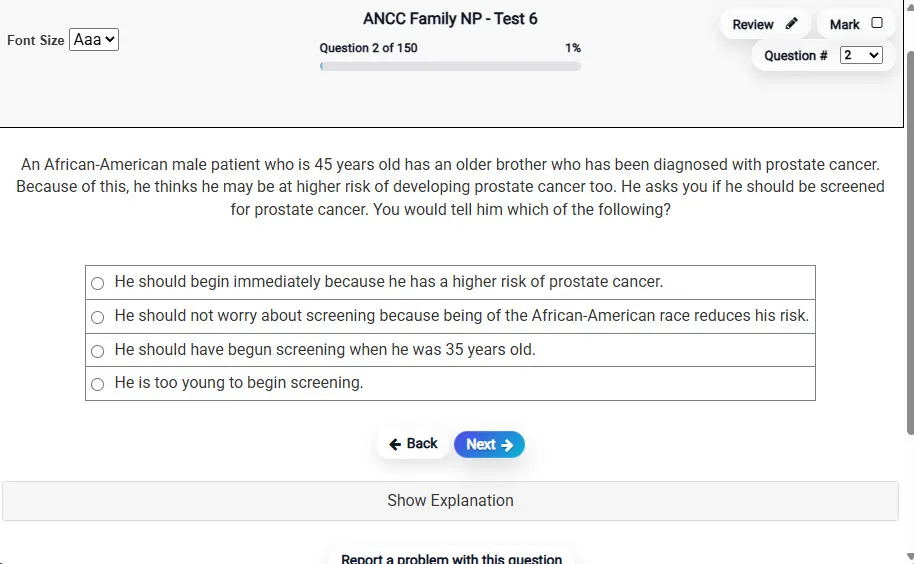
Answering a Question screen – Multiple-choice item view with navigation controls and progress tracker.
Answering a Question Multiple-choice item view with navigation controls and progress tracker.

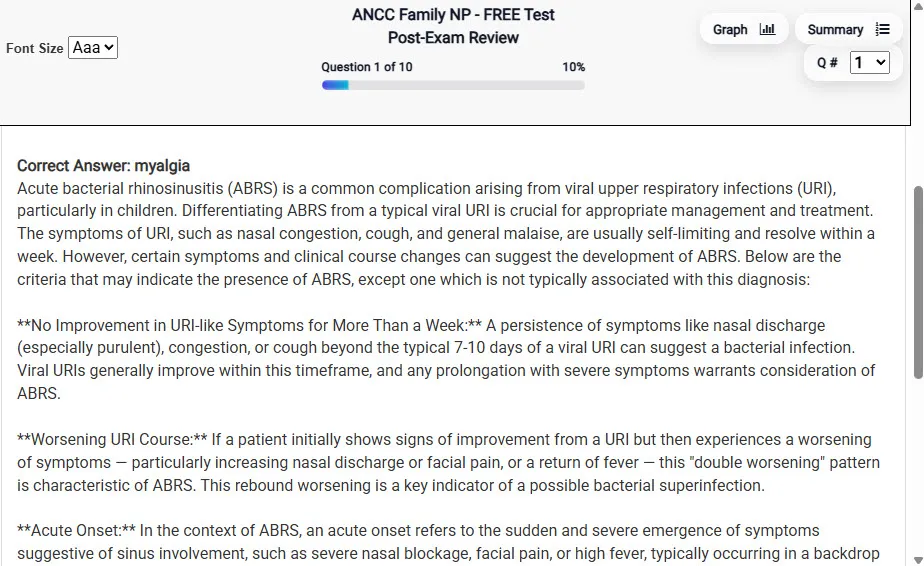
                           Detailed Explanation screen – 
                         Review mode showing chosen answer and rationale and references.
Detailed Explanation Review mode showing chosen answer and rationale and references.

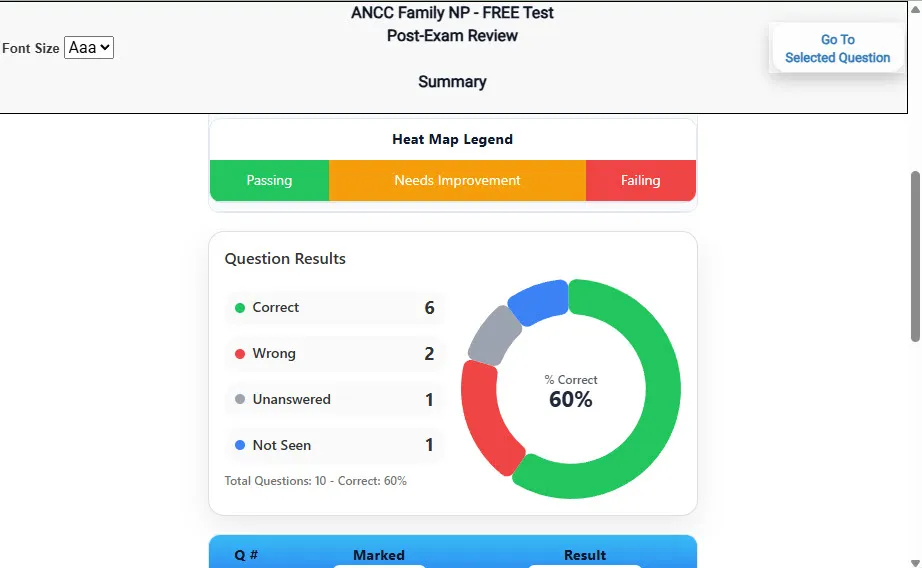
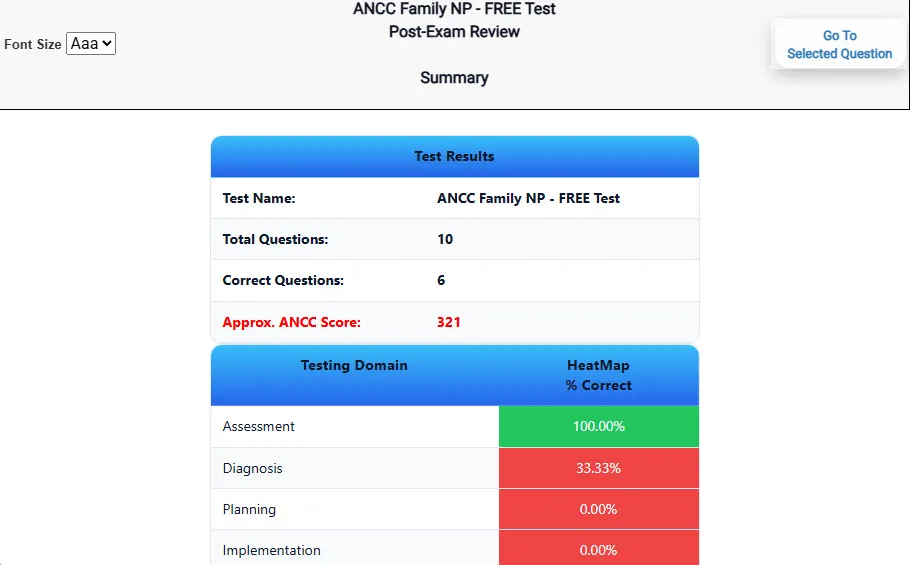
                           Review Summary 1 screen – 
                         Summary with counts for correct/wrong/unanswered and not seen items.
Review Summary 1 Summary with counts for correct/wrong/unanswered and not seen items.

                           Review Summary 2 screen – 
                         Advanced summary with category/domain breakdown and performance insights.
Review Summary 2 Advanced summary with category/domain breakdown and performance insights.

What Each Screen Shows

Answer Question Screen

  • Clean multiple-choice interface with progress bar.
  • Mark for review feature.
  • Matches real test pacing.

Detailed Explanation

  • Correct answer plus rationale.
  • Key concepts and guidelines highlighted.
  • Move between questions to fill knowledge gaps.

Review Summary 1

  • Overall results with total questions and scaled score.
  • Domain heatmap shows strengths and weaknesses.
  • Quick visual feedback on study priorities.

Review Summary 2

  • Chart of correct, wrong, unanswered, not seen.
  • Color-coded results for easy review.
  • Links back to missed items.

Top 10 Reasons to Use Exam Edge for your GACE Middle Grades Social Science (4-8) Exam Prep

  1. Focused on the GACE Middle Grades Social Science (4-8) Exam

    Our practice tests are built specifically for the GACE Middle Grades Social Science (4-8) exam — every question mirrors the real topics, format, and difficulty so you're studying exactly what matters.

  2. Real Exam Simulation

    We match the per-question time limits and pressure of the actual GACE exam, so test day feels familiar and stress-free.

  3. 15 Full Practice Tests & 1,500 Unique Questions

    You'll have more than enough material to master every GACE Middle Grades Social Science (4-8) concept — no repeats, no fluff.

  4. Lower Cost Than a Retake

    Ordering 5 practice exams costs less than retaking the GACE Middle Grades Social Science (4-8) exam after a failure. One low fee could save you both time and money.

  5. Flexible Testing

    Need to step away mid-exam? Pick up right where you left off — with your remaining time intact.

  6. Instant Scoring & Feedback

    See your raw score and an estimated GACE Middle Grades Social Science (4-8) score immediately after finishing each practice test.

  7. Detailed Explanations for Every Question

    Review correct and incorrect answers with clear, step-by-step explanations so you truly understand each topic.

  8. Trusted & Accredited

    We're fully accredited by the Better Business Bureau and uphold the highest standards of trust and transparency.

  9. Web-Based & Always Available

    No software to install. Access your GACE Middle Grades Social Science (4-8) practice exams 24/7 from any computer or mobile device.

  10. Expert Support When You Need It

    Need extra help? Our specialized tutors are highly qualified and ready to support your GACE exam prep.


Pass the GACE Middle Grades Social Science (4-8) Exam with Realistic Practice Tests from Exam Edge

Preparing for your upcoming GACE Middle Grades Social Science (4-8) (707) Certification Exam can feel overwhelming — but the right practice makes all the difference. Exam Edge gives you the tools, structure, and confidence to pass on your first try. Our online practice exams are built to match the real GACE Middle Grades Social Science (4-8) exam in content, format, and difficulty.

  • 📝 15 GACE Middle Grades Social Science (4-8) Practice Tests: Access 15 full-length exams with 100 questions each, covering every major GACE Middle Grades Social Science (4-8) topic in depth.
  • Instant Online Access: Start practicing right away — no software, no waiting.
  • 🧠 Step-by-Step Explanations: Understand the reasoning behind every correct answer so you can master GACE Middle Grades Social Science (4-8) exam concepts.
  • 🔄 Retake Each Exam Up to 4 Times: Build knowledge through repetition and track your improvement over time.
  • 🌐 Web-Based & Available 24/7: Study anywhere, anytime, on any device.
  • 🧘 Boost Your Test-Day Confidence: Familiarity with the GACE format reduces anxiety and helps you perform under pressure.

These GACE Middle Grades Social Science (4-8) practice exams are designed to simulate the real testing experience by matching question types, timing, and difficulty level. This approach helps you get comfortable not just with the exam content, but also with the testing environment, so you walk into your exam day focused and confident.


Exam Edge GACE Reviews


Thank you for the update. I took the GACE Reading Test 2 on Sat, Nov 15, and I made a 276! Exam Edge was my only test prep tool. Thanks for offering such a wonderful product.

Diane , GA

I found your website and started reading your testimonials and was immediately sold on creating an account and purchasing the Business Education tests. I practiced with those tests and soon signed up for the Gace test. I graduated three years ago. I took the test yesterday, Feb 11, and.... PASSED BO ...
Read More
Sandra , Quitman, GA

I just NAILED the GACE Special Ed General Curriculum assessments part I & II!!! I also bought practice tests from the GACE website but that was just ONE test per part and it never changed. Your tests challenged me more and gave much better interactive feedback. Thank you so much!!

Phoebe , Atlanta

I took the ESOL GACE yesterday and passed both sections! I hadn't taken a standardized test in ten years, so I was very apprehensive. I must say that if it were not for your practice exams, I would not have passed. The workbook I had ordered from another vendor was insufficient to cover the cont ...
Read More
Amy, GA

I want to thank you for your test reviews. It really helped me a lot. I passed the Birth to Kindergarten GACE exam!!

Angela, Norcross, GA.

Thank you! Thank you! Thank you!!! I always had horrible experiences with the GACE tests when entering and exiting my program and now I passed the SPED on the first try!!! I took each practice test and it was so familiar to the real one! I'm so happy I purchased it!

Mariah, Acworth GA


GACE Middle Grades Social Science (4-8) Aliases Test Name

Here is a list of alternative names used for this exam.

  • GACE Middle Grades Social Science (4-8)
  • GACE Middle Grades Social Science (4-8) test
  • GACE Middle Grades Social Science (4-8) Certification Test
  • GACE
  • GACE 707
  • 707 test
  • GACE Middle Grades Social Science (4-8) (707)
  • Middle Grades Social Science (4-8) certification