
This is the content of the pop-over!

FELE Educational Leadership (081) Practice Tests & Test Prep by Exam Edge


FELE Educational Leadership  product image
(5.0)
Based on 25 Reviews

  • Real Exam Simulation: Timed questions and matching content build comfort for your FELE Educational Leadership test day.
  • Instant, 24/7 Access: Web-based FELE Educational Leadership practice exams with no software needed.
  • Clear Explanations: Step-by-step answers and explanations for your FELE exam to strengthen understanding.
  • Boosted Confidence: Reduces anxiety and improves test-taking skills to ace your FELE Educational Leadership (081).

Featured on

FELE Educational Leadership Online Practice Test Bundles

BEST VALUE
15 practice tests

$149.25

$599.25

SAVE $450

Only $9.95 per test!

  • 100% Pass Guarantee
  • 15 online practice tests
  • 165 questions per test
  • Bonus: 100 Flash Cards + Study Guide
  • Instant access
  • Detailed Explanations
  • Practice tests never expire
  • Timed, untimed, or study guide mode
MOST POPULAR
10 practice tests

$99.50

$399.50

SAVE $300

Only $9.95 per test!

  • 10 online practice tests
  • 165 questions per test
  • Bonus: 100 Flash Cards + Study Guide
  • Instant access
  • Detailed Explanations
  • Practice tests never expire
  • Timed, untimed, or study guide mode
5 practice tests

$69.75

$199.75

SAVE $130

Only $13.95 per test!

  • 5 online practice tests
  • 165 questions per test
  • Bonus: 100 Flash Cards
  • Instant access
  • Detailed Explanations
  • Practice tests never expire
  • Timed, untimed, or study guide mode
1 practice test

$39.95

  • 1 online practice test
  • 165 questions per test
  • Instant access
  • Detailed Explanations
  • Practice tests never expire
  • Timed, untimed, or study guide mode
Quick Select
Tap to choose a bundle

** All Prices are in US Dollars (USD) **


FELE Educational Leadership (081) Resources

Jump to the section you need most.

Understanding the exact breakdown of the FELE Educational Leadership test will help you know what to expect and how to most effectively prepare. The FELE Educational Leadership has 165 multiple-choice questions and 1 essay questions. The exam will be broken down into the sections below:

FELE Educational Leadership Exam Blueprint
Domain Name % Number of
Questions
Subtest 1 - Leadership for Student Learning  
     Knowledge of effective facilitation of positive achievement results 25% 14
     Knowledge of effective prioritization of student learning through leadership 25% 14
     Knowledge of effective development and implementation of an instructional framework 25% 14
     Knowledge of effective structuring and monitoring of a school environment 25% 14
Subtest 2 - Organizational Development  
     Knowledge of effective recruitment and induction practices 17% 9
     Knowledge of effective practices for the development and retention of faculty 33% 18
     Knowledge of effective practices that cultivate - support develop leaders 25% 14
     Knowledge of personal and professional behavior consistent with quality practices 25% 14
Subtest 3: Systems Leadership  
     Knowledge of effective decision-making processes that are based on research - best practices leadership theory to support the mission - vision improvement priorities of schools 25% 14
     Knowledge of effective organizational theory - research management practices related to school operations that maximize a safe and effective learning environment 25% 14
     Knowledge of effective utilization of resources and fiscal management practices that maximize a safe and effective learning environment 25% 14
     Knowledge of school legal practices and applications that assure a safe and effective learning environment 25% 14

FELE Educational Leadership Study Tips by Domain

  • Anchor decisions to a clearly articulated mission/vision and measurable student outcomes; red flag: initiatives that sound innovative but lack a data-defined problem statement.
  • Use an instructional framework with non-negotiable “look-fors” (standards alignment, checks for understanding, differentiation) and calibrate walkthroughs to it; common trap: evaluating teacher style instead of evidence of learning.
  • Implement data cycles (plan–teach–assess–respond) with frequent formative checks and documented interventions; priority rule: address Tier 1 core gaps before over-relying on pull-out supports.
  • Set achievement targets that are specific, time-bound, and subgroup-conscious, then monitor leading indicators (attendance, on-track, interim mastery); red flag: celebrating overall gains while subgroup gaps widen.
  • Protect instructional time through schedules, duty assignments, and meeting norms; common trap: allowing assemblies, testing disruptions, or meeting creep to erode Tier 1 minutes.
  • Build a feedback culture using evidence-based coaching and aligned professional learning; contraindication: using summative evaluation language during coaching conversations, which shuts down growth.
  • Use multiple data sources (state/local assessments, formative checks, attendance/discipline, subgroup trends) to define the problem of practice; red flag: making a plan from overall averages while ignoring achievement gaps.
  • Set SMART goals aligned to SIP priorities and progress-monitor with a fixed cadence (e.g., every 4–6 weeks); common trap: goals that are activities (“provide PD”) instead of measurable student outcomes.
  • Implement data-team/PLC cycles (analyze → plan → act → assess) with clearly defined roles and norms; priority rule: decisions must tie to evidence of impact on student learning, not preferences.
  • Select interventions based on root-cause analysis (instruction, curriculum, assessment, learner factors, environment) and match intensity to need; red flag: jumping to tutoring or new programs without verifying Tier 1 core instruction.
  • Ensure equitable access to rigorous instruction and supports (advanced coursework, interventions, ELL/ESE accommodations) and monitor fidelity; common trap: compliance-only documentation without checking whether supports are delivered as designed.
  • Communicate results transparently to staff and families and adjust actions when data show insufficient growth; contraindication: waiting until end-of-year test results to course-correct.
  • Use a clear “student learning first” decision rule: if an initiative doesn’t measurably improve learning (achievement, growth, engagement), deprioritize it—red flag: goals stated as activities (e.g., “implement a program”) with no outcome metrics.
  • Align campus priorities to a small number of non-negotiable, measurable targets tied to the school improvement plan—common trap: chasing too many initiatives and diluting implementation fidelity.
  • Prioritize instructional time and high-impact instruction by protecting the master schedule (core minutes, intervention blocks) and limiting disruptions—red flag: frequent assemblies, testing add-ons, or coverage practices that erode Tier 1 instruction.
  • Make data cycles routine (plan–do–study–act) with defined meeting cadences, protocols, and follow-up actions—common trap: reviewing data without specifying reteach plans, responsible staff, and deadlines.
  • Allocate staff, coaching, and professional learning based on student need and evidence of impact—priority cue: shift supports toward courses/grades with the largest learning gaps rather than equal distribution.
  • Establish accountability for learning outcomes through observable expectations (walkthrough look-fors, feedback timelines, progress monitoring)—red flag: evaluating teachers primarily on compliance artifacts instead of student learning evidence.
  • Ensure the instructional framework is anchored to Florida Standards/B.E.S.T. and district expectations; red flag: a framework that is a poster on the wall but not visible in lesson plans, walkthrough data, and student work.
  • Define non-negotiable components (e.g., learning targets, checks for understanding, differentiation, and literacy) and calibrate on “look-fors”; common trap: confusing a teacher’s style with fidelity to the framework.
  • Use a continuous-improvement cycle (plan–teach–assess–adjust) with short, frequent assessment checks; priority rule: reteach based on evidence, not pacing guide pressure.
  • Align professional learning to the framework using student data and observation trends; red flag: one-size-fits-all PD not connected to the highest-leverage instructional gaps.
  • Implement a consistent walkthrough/observation process with actionable feedback and follow-up; common trap: collecting compliance notes without specifying the next instructional move and a timeline for evidence.
  • Monitor implementation through multiple measures (walkthrough trends, PLC artifacts, assessment results, and student work protocols); contraindication: relying on test scores alone to judge whether the framework is being used effectively.
  • Establish clear routines, transitions, and supervision plans aligned to the master schedule so learning time is protected—red flag: frequent instructional minutes lost to hallway or arrival/dismissal confusion.
  • Use multiple data sources (walkthrough trends, attendance, behavior incidents, and course performance) to monitor the environment and adjust supports—common trap: relying on anecdotal complaints instead of documented patterns.
  • Implement and monitor a schoolwide behavior framework with defined expectations, acknowledgments, and progressive responses—priority rule: ensure consequences are consistent across staff to avoid perceived inequity.
  • Conduct regular learning walks with a focused look-for, provide timely feedback, and track follow-through—red flag: walkthroughs that generate notes but no coaching, reteaching, or accountability cycle.
  • Use tiered supports (MTSS) with fidelity checks and progress monitoring to address academics and behavior—common trap: moving students to more intensive interventions without documenting response to prior supports.
  • Maintain a safe physical and emotional climate through supervision coverage maps, duty schedules, and reporting protocols—contraindication: “informal” reporting that bypasses required documentation and delays response.
  • Use a continuous improvement cycle (needs assessment → SMART goal → strategy → progress monitoring) and require evidence of impact; red flag: initiatives launched without baseline data or an identified root cause.
  • Align structures (teams, schedules, roles) to priorities and define decision rights (who recommends, decides, and is accountable); common trap: unclear authority that leads to duplicated work and inconsistent implementation.
  • Build capacity through job-embedded professional learning with follow-up coaching and implementation checks; priority rule: PD is incomplete unless you can verify transfer to practice.
  • Use data routines (data walls, PLC protocols, interim checks) that include equity subgroup review; red flag: celebrating overall gains while one subgroup is flat or declining.
  • Manage change with a communication plan (why, what, when, how) and stakeholder feedback loops; common trap: announcing major shifts without mapping impacts on workload, bargaining, or timelines.
  • Monitor operations through clear procedures and compliance checkpoints (safety, supervision, reporting deadlines) and audit adherence; red flag: relying on informal “we usually do it this way” instead of documented processes.
  • Build recruitment around a standards-aligned, job-embedded profile (instructional expertise + cultural competence) and screen consistently — red flag: changing interview questions midstream for different candidates.
  • Use multi-measure selection (structured interview, performance task, reference checks) and document each step — common trap: relying on “fit” language without evidence tied to the role.
  • Verify certification/eligibility and assignment alignment before onboarding — priority rule: never place a teacher out-of-field and assume it can be fixed after the first day.
  • Design an induction plan that includes mentor pairing, orientation to instructional framework, and scheduled check-ins during the first 90 days — red flag: mentorship that is informal, optional, or undocumented.
  • Provide targeted support for early-career teachers using observation/feedback cycles and differentiated PD — common trap: treating induction as a one-time orientation instead of a yearlong support system.
  • Monitor induction effectiveness with retention, evaluation trends, and student learning indicators and adjust supports quickly — threshold cue: address repeated early warning signs (chronic absenteeism, missed planning, classroom management referrals) within the first month.
  • Use multiple data sources (student growth, observation evidence, and teacher self-assessment) to target professional learning; red flag: choosing PD based on preferences rather than documented need.
  • Implement a coherent support cycle (coaching, feedback, and job-embedded practice) aligned to the instructional framework; common trap: one-time workshops with no follow-up monitoring.
  • Retain effective teachers by addressing working conditions (planning time, manageable duties, and classroom resources) and documenting actions; priority rule: fix systemic barriers before blaming “motivation.”
  • Differentiate development for novice, mid-career, and teacher leaders with clear competencies and timelines; red flag: using the same growth plan and expectations for all experience levels.
  • Use fair, evidence-based evaluation and timely, specific feedback to strengthen practice and reduce attrition; common trap: vague ratings without actionable next steps or calibration for inter-rater reliability.
  • Create pathways and recognition for teacher leadership (mentors, PLC facilitators, instructional coaches) while protecting instructional time; contraindication: promoting without training/support, which often increases burnout and turnover.
  • Build a leadership pipeline with clear role competencies, evidence sources, and timelines; red flag: selecting leaders based on seniority or favoritism rather than demonstrated impact.
  • Use distributed leadership with defined decision rights (who recommends, decides, and implements) to avoid confusion; common trap: creating committees with no authority or accountability.
  • Develop leaders through job-embedded coaching cycles (goal → practice → feedback → follow-up) tied to student outcomes; red flag: one-shot workshops with no transfer checks.
  • Establish succession planning for key roles (AP, department chair, grade-level lead) with shadowing and interim assignments; priority rule: identify at least one ready-now and one ready-soon candidate per critical role.
  • Create a psychologically safe culture for leaders to surface problems early and learn from data; common trap: punishing bad news, which drives inaccurate reporting and delayed interventions.
  • Monitor leadership development with leading indicators (implementation fidelity, walkthrough trends, coaching logs) and adjust supports; red flag: evaluating leaders only on end-of-year test scores without evidence of practices.
  • Model ethical conduct and transparency—declare and avoid conflicts of interest (red flag: accepting gifts or favors from vendors connected to purchasing decisions).
  • Maintain confidentiality of student and personnel information—follow FERPA and local policies (common trap: discussing discipline, ESE, or evaluation details in public spaces or over unsecured email).
  • Use professional communication that is accurate, timely, and documented (priority rule: put directives and critical parent/staff decisions in writing to prevent “he said/she said” disputes).
  • Apply consistent, equitable decision-making aligned to policy and code of conduct (red flag: making exceptions for influential families or staff without a documented, policy-based rationale).
  • Demonstrate professional boundaries and appropriate use of social media and technology (common trap: posting or texting about students/staff or engaging in online interactions that blur supervisor–employee boundaries).
  • Engage in continuous professional learning and reflective practice tied to school goals (priority rule: use data and feedback to adjust leadership actions rather than relying on tradition or personal preference).
  • Use a continuous improvement cycle (e.g., plan–do–study–act) tied to a few measurable district/school priorities; red flag: launching multiple initiatives without success metrics or an owner.
  • Align budgets, staffing, time, and materials to the School Improvement Plan and evidence of student need; common trap: funding “wants” that are not defensible to outcomes or compliance requirements.
  • Build monitoring systems with leading indicators (attendance, course performance, intervention fidelity) and set check-in cadences; red flag: relying only on end-of-year test scores to judge effectiveness.
  • Ensure legal/ethical compliance in system decisions (records, safety, due process, equity) and document decision rationales; common trap: informal actions without required notice, documentation, or consistent application.
  • Use structured stakeholder engagement (families, community partners, staff) with clear feedback loops and decision rules; red flag: “input” that is collected but not summarized, responded to, or reflected in the final plan.
  • Develop leadership capacity through distributed leadership, succession planning, and targeted coaching aligned to system goals; common trap: over-centralizing decisions so progress stalls when one leader is absent.
  • Use a structured decision cycle (identify problem, analyze data, generate options, select, implement, monitor) anchored to the school’s mission/vision; red flag: choosing a solution before defining the problem and desired outcomes.
  • Prioritize decisions with a clear “student learning first” rule tied to the School Improvement Plan (SIP) goals and measurable targets; common trap: chasing initiatives that are popular but not aligned to improvement priorities.
  • Rely on multiple data sources (achievement, growth, discipline, attendance, perception) and disaggregate by subgroup before acting; red flag: using overall averages that mask gaps.
  • Apply research and best-practice standards by matching interventions to root cause and context (e.g., fidelity, dosage, training needs); common trap: adopting a program because a neighboring school used it without evidence of fit.
  • Use leadership theory to guide the process (e.g., distributive leadership and stakeholder engagement) while maintaining decision authority and timelines; red flag: “consensus” becomes paralysis and delays critical actions.
  • Build in monitoring checkpoints (short-cycle data reviews, implementation walkthroughs, progress indicators) and be ready to adjust based on evidence; priority rule: stop or revise initiatives that do not show progress within the agreed monitoring window.
  • Build budgets by tying every line item to the school improvement plan, student outcome targets, and evidence-based strategies; red flag: funding “nice-to-haves” without a documented impact rationale.
  • Use enrollment/FTE projections and staffing formulas to drive allocations and prevent midyear shortfalls; common trap: committing to positions or supplements before verifying projected revenue and allowable uses.
  • Maintain internal controls for purchasing (segregation of duties, approvals, receiving, and reconciliation) to reduce fraud and audit findings; red flag: one person initiates, approves, and reconciles the same purchase.
  • Monitor spending with monthly budget-to-actual reviews and early corrective actions (freeze, reallocate, amend); priority rule: address safety, compliance, and core instructional needs before discretionary expenditures.
  • Manage grants and restricted funds by tracking allowability, time/effort documentation, and supplement-not-supplant expectations; common trap: charging general operating costs to restricted funds without clear program benefit documentation.
  • Plan for facilities, transportation, technology, and emergency preparedness using lifecycle cost and risk analysis; red flag: deferring critical maintenance that increases safety risk and leads to higher long-term costs.


Built to Fit Into Your Busy Life

Everything you need to prepare with confidence—without wasting a minute.

Three Study Modes

Timed, No Time Limit, or Explanation mode.

Actionable Analytics

Heatmaps and scaled scores highlight weak areas.

High-Yield Rationales

Concise explanations emphasize key concepts.

Realistic Interface

Matches the feel of the actual exam environment.

Accessible by Design

Clean layout reduces cognitive load.

Anytime, Anywhere

Web-based access 24/7 on any device.
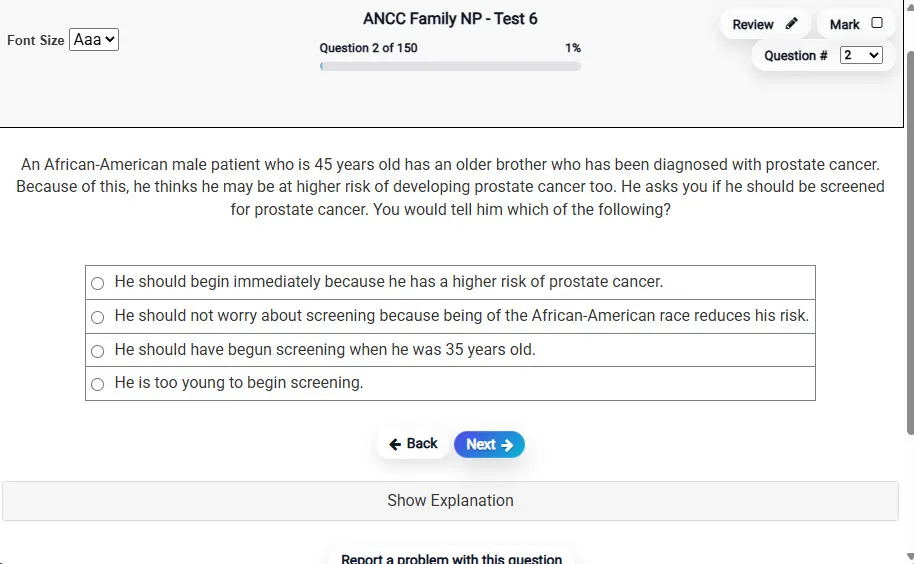
Answering a Question screen – Multiple-choice item view with navigation controls and progress tracker.
Answering a Question Multiple-choice item view with navigation controls and progress tracker.

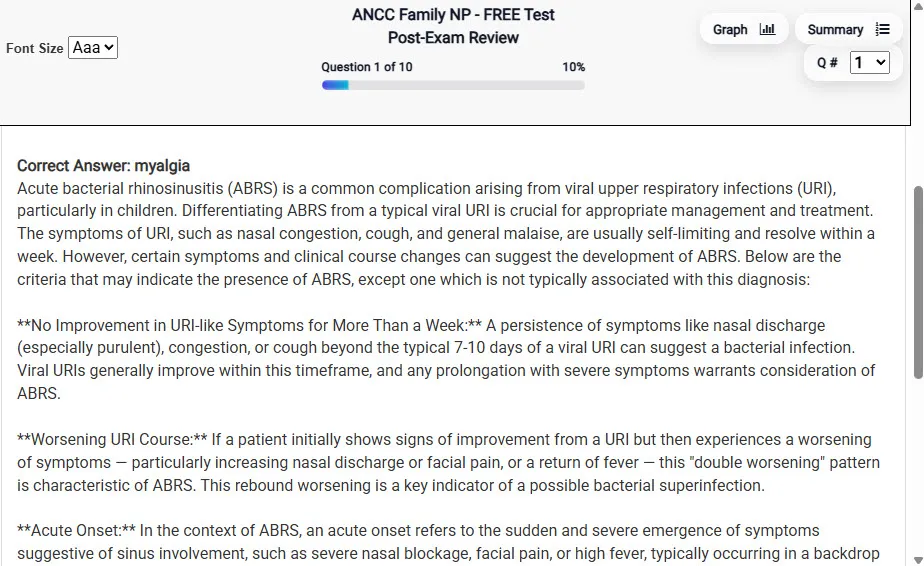
                           Detailed Explanation screen – 
                         Review mode showing chosen answer and rationale and references.
Detailed Explanation Review mode showing chosen answer and rationale and references.

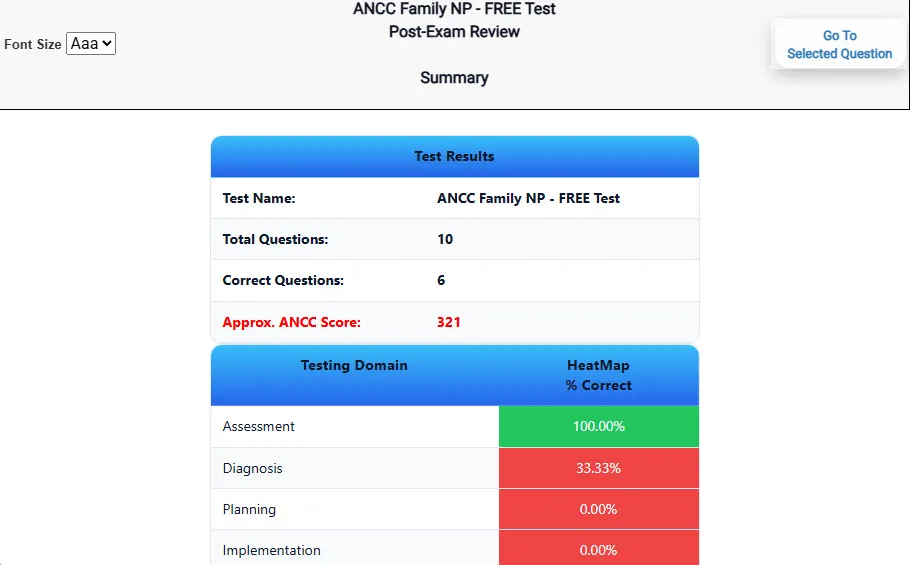
                           Review Summary 1 screen – 
                         Summary with counts for correct/wrong/unanswered and not seen items.
Review Summary 1 Summary with counts for correct/wrong/unanswered and not seen items.

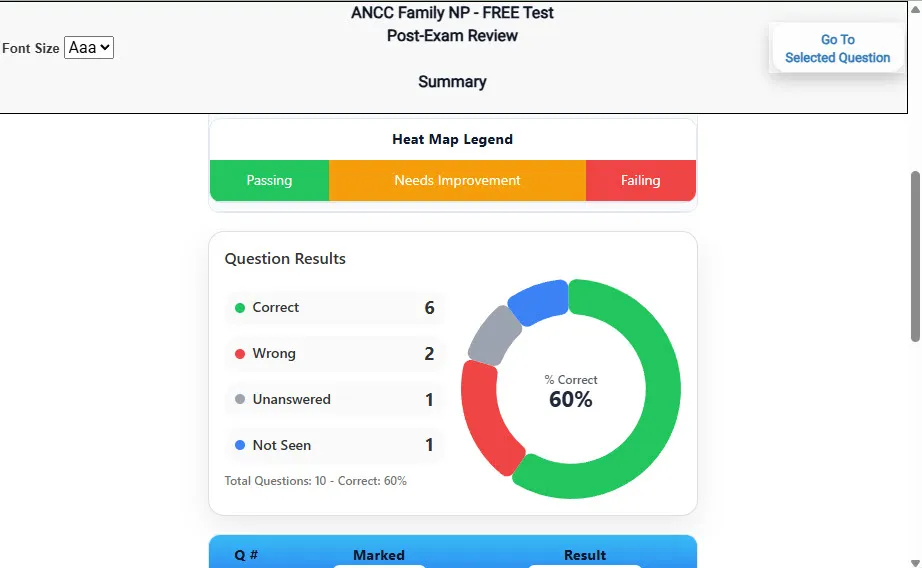
                           Review Summary 2 screen – 
                         Advanced summary with category/domain breakdown and performance insights.
Review Summary 2 Advanced summary with category/domain breakdown and performance insights.

What Each Screen Shows

Answer Question Screen

  • Clean multiple-choice interface with progress bar.
  • Mark for review feature.
  • Matches real test pacing.

Detailed Explanation

  • Correct answer plus rationale.
  • Key concepts and guidelines highlighted.
  • Move between questions to fill knowledge gaps.

Review Summary 1

  • Overall results with total questions and scaled score.
  • Domain heatmap shows strengths and weaknesses.
  • Quick visual feedback on study priorities.

Review Summary 2

  • Chart of correct, wrong, unanswered, not seen.
  • Color-coded results for easy review.
  • Links back to missed items.

Top 10 Reasons to Use Exam Edge for your FELE Educational Leadership Exam Prep

  1. Focused on the FELE Educational Leadership Exam

    Our practice tests are built specifically for the FELE Educational Leadership exam — every question mirrors the real topics, format, and difficulty so you're studying exactly what matters.

  2. Real Exam Simulation

    We match the per-question time limits and pressure of the actual FELE exam, so test day feels familiar and stress-free.

  3. 15 Full Practice Tests & 2,475 Unique Questions

    You'll have more than enough material to master every FELE Educational Leadership concept — no repeats, no fluff.

  4. Lower Cost Than a Retake

    Ordering 5 practice exams costs less than retaking the FELE Educational Leadership exam after a failure. One low fee could save you both time and money.

  5. Flexible Testing

    Need to step away mid-exam? Pick up right where you left off — with your remaining time intact.

  6. Instant Scoring & Feedback

    See your raw score and an estimated FELE Educational Leadership score immediately after finishing each practice test.

  7. Detailed Explanations for Every Question

    Review correct and incorrect answers with clear, step-by-step explanations so you truly understand each topic.

  8. Trusted & Accredited

    We're fully accredited by the Better Business Bureau and uphold the highest standards of trust and transparency.

  9. Web-Based & Always Available

    No software to install. Access your FELE Educational Leadership practice exams 24/7 from any computer or mobile device.

  10. Expert Support When You Need It

    Need extra help? Our specialized tutors are highly qualified and ready to support your FELE exam prep.


Pass the FELE Educational Leadership Exam with Realistic Practice Tests from Exam Edge

Preparing for your upcoming FELE Educational Leadership (081) Certification Exam can feel overwhelming — but the right practice makes all the difference. Exam Edge gives you the tools, structure, and confidence to pass on your first try. Our online practice exams are built to match the real FELE Educational Leadership exam in content, format, and difficulty.

  • 📝 15 FELE Educational Leadership Practice Tests: Access 15 full-length exams with 165 questions each, covering every major FELE Educational Leadership topic in depth.
  • Instant Online Access: Start practicing right away — no software, no waiting.
  • 🧠 Step-by-Step Explanations: Understand the reasoning behind every correct answer so you can master FELE Educational Leadership exam concepts.
  • 🔄 Retake Each Exam Up to 4 Times: Build knowledge through repetition and track your improvement over time.
  • 🌐 Web-Based & Available 24/7: Study anywhere, anytime, on any device.
  • 🧘 Boost Your Test-Day Confidence: Familiarity with the FELE format reduces anxiety and helps you perform under pressure.

These FELE Educational Leadership practice exams are designed to simulate the real testing experience by matching question types, timing, and difficulty level. This approach helps you get comfortable not just with the exam content, but also with the testing environment, so you walk into your exam day focused and confident.

Exam Edge FELE Reviews


Just wanted to say thank you for such an accurate and comprehensive FELE prep program. The practice tests were almost identical to the new exam and I just got my scores tonight and passed on the first attempt. 

Alvarez, FL


FELE Educational Leadership Aliases Test Name

Here is a list of alternative names used for this exam.

  • FELE Educational Leadership
  • FELE Educational Leadership test
  • FELE Educational Leadership Certification Test
  • FELE
  • FELE 081
  • 081 test
  • FELE Educational Leadership (081)
  • Educational Leadership certification