This is the content of the pop-over!

Lightning Deal Alert – 12% Off Ends at Midnight!

Strike while the savings are hot! Use promo code FlashSale at checkout for 12% off any Exam Edge test or bundle. Hurry—the clock is ticking!

GACE Early Childhood Sp Ed General Curriculum (703 - 409-410/416/417/503) Practice Tests & Test Prep by Exam Edge


GACE Special Education General Curriculum Elementary Education (P-5) product image
(5.0)
Based on 28 Reviews

  • Real Exam Simulation: Timed questions and matching content build comfort for your GACE Special Education General Curriculum Elem Edu (P-5) test day.
  • Instant, 24/7 Access: Web-based GACE Special Education General Curriculum Elementary Education (P-5) practice exams with no software needed.
  • Clear Explanations: Step-by-step answers and explanations for your GACE exam to strengthen understanding.
  • Boosted Confidence: Reduces anxiety and improves test-taking skills to ace your GACE Special Education General Curriculum Elementary Education (P-5) (703).

Featured on

GACE Special Education General Curriculum Elementary Education (P-5) Online Practice Test Bundles

BEST VALUE
20 practice tests

$174.00

$799.00

SAVE $625

Only $8.70 per test!

  • 100% Pass Guarantee
  • 20 online practice tests
  • 130 questions per test
  • Bonus: 100 Flash Cards + Study Guide
  • Instant access
  • Detailed Explanations
  • Practice tests never expire
  • Timed, untimed, or study guide mode
MOST POPULAR
10 practice tests

$99.50

$399.50

SAVE $300

Only $9.95 per test!

  • 10 online practice tests
  • 130 questions per test
  • Bonus: 100 Flash Cards + Study Guide
  • Instant access
  • Detailed Explanations
  • Practice tests never expire
  • Timed, untimed, or study guide mode
5 practice tests

$69.75

$199.75

SAVE $130

Only $13.95 per test!

  • 5 online practice tests
  • 130 questions per test
  • Bonus: 100 Flash Cards
  • Instant access
  • Detailed Explanations
  • Practice tests never expire
  • Timed, untimed, or study guide mode
1 practice test

$39.95

  • 1 online practice test
  • 130 questions per test
  • Instant access
  • Detailed Explanations
  • Practice tests never expire
  • Timed, untimed, or study guide mode
Quick Select
Tap to choose a bundle

** All Prices are in US Dollars (USD) **


GACE Special Education General Curriculum Elem Edu (P-5) (703) Resources

Jump to the section you need most.

Understanding the exact breakdown of the GACE Special Education General Curriculum Elementary Education (P-5) test will help you know what to expect and how to most effectively prepare. The GACE Special Education General Curriculum Elementary Education (P-5) has 130 multiple-choice questions . The exam will be broken down into the sections below:

GACE Special Education General Curriculum Elementary Education (P-5) Exam Blueprint
Domain Name % Number of
Questions
Assessment and the Learning Environment (General Curriculum P–5) 23% 30
Specialized Instruction for the General Curriculum (P–5) 15% 20
Language Arts and Social Studies (P–5) 15% 20
Mathematics and Science (P–5) 15% 20
Foundations and Professional Knowledge in Special Education 32% 42

GACE Special Education General Curriculum Elementary Education (P-5) Study Tips by Domain

  • Match the assessment type to the decision: use screening to flag risk, diagnostic to find skill gaps, formative to adjust instruction, and summative for end-of-unit outcomes—red flag if a single high-stakes score is used to determine eligibility or placement.
  • Ensure accommodations provide access without changing the construct (e.g., extended time for math computation may be OK; reading a reading comprehension test aloud may invalidate it)—common trap is confusing accommodation with a modification that lowers expectations.
  • Use multiple measures and sources (work samples, observations, curriculum-based measures, and progress monitoring data) to confirm patterns over time—priority rule: one data point is never enough for instructional or behavioral conclusions.
  • Interpret results with attention to reliability/validity and potential bias (language, culture, disability impact, testing conditions)—red flag when scores conflict with classroom performance and no investigation is done.
  • Design a learning environment that prevents problems before they start (clear routines, explicit expectations, proactive reinforcement, and accessible materials)—common trap is reacting with consequences without teaching the expected behavior.
  • Implement progress monitoring with a consistent schedule and decision rule (e.g., if trend data show inadequate growth over several data points, adjust instruction)—red flag if goals are revised instead of changing instruction when progress stalls.
  • Design specially designed instruction that targets the student’s present levels and IEP goals—red flag: copying grade-level standards into the IEP without measurable, skills-based objectives.
  • Select accommodations vs. modifications correctly—priority rule: accommodations change access (how), modifications change expectations (what), and confusing them can invalidate assessment results.
  • Use explicit instruction (model, guided practice, independent practice) with frequent checks for understanding—common trap: moving to independent work before the student reaches ~80% accuracy in guided practice.
  • Provide systematic prompting and fading (least-to-most or most-to-least) and reinforce desired responses—red flag: prompts that never fade create prompt dependence and stall generalization.
  • Plan for generalization and maintenance across settings, people, and materials—priority cue: if a skill only appears with one adult or worksheet type, instruction must add varied practice and transfer steps.
  • Implement positive behavior supports aligned to function (antecedent strategies, teaching replacement behaviors, consequences) —contraindication: relying on punishment without a function-based plan often escalates behavior and reduces instructional time.
  • Use screening and progress-monitoring data to target literacy skills (phonological awareness, phonics, fluency, vocab, comprehension); red flag: relying on a single benchmark score instead of multiple data points over time.
  • Teach decoding and spelling explicitly with systematic, cumulative phonics and daily opportunities for corrective feedback; common trap: assigning “read more” independent time as the primary intervention for weak decoders.
  • Build comprehension with text structures, graphic organizers, and explicit inference/main idea instruction while supporting access via read-aloud or text-to-speech; priority rule: accommodations don’t replace instruction in the missing skill.
  • Support writing using modeled sentences, SRSD-style planning (e.g., POW+TREE), and rubrics aligned to purpose (opinion/informative/narrative); red flag: grading mechanics heavily when the IEP goal targets organization or idea development.
  • In social studies, frontload vocabulary and background knowledge (maps, timelines, civic concepts) and use primary sources with scaffolded questions; common trap: expecting students to “get it” from lecture or dense textbook passages alone.
  • Ensure IEP-aligned participation in discussions and presentations with structured turn-taking, sentence frames, and alternative response modes; contraindication: reducing speaking/listening demands without providing a pathway to practice the communication standard.
  • Match the assessment to the math/science target—use CBM for computation fluency and performance tasks/labs for inquiry; red flag: relying on a single multiple-choice test to claim mastery of a hands-on standard.
  • Teach math fact fluency with explicit, timed-but-safe practice and error correction; common trap: increasing speed demands before accuracy is stable, which can reinforce incorrect patterns.
  • Use concrete–representational–abstract (CRA) and visual models (number lines, arrays, fraction bars) for place value and fractions; red flag: jumping straight to algorithms when the student cannot explain the model.
  • Plan science instruction around the scientific method and variables (fair test, control, repeated trials); priority rule: if a student cannot identify the independent/dependent variables, reteach investigation design before data analysis.
  • Support word problems and science texts with vocabulary and language scaffolds (units, comparison words, cause/effect); common trap: students choose operations by keyword only (“more” = add) instead of the relationship described.
  • Prioritize safety and accessibility in labs—explicitly teach procedures, PPE, and safe handling; contraindication: unmodified materials (e.g., glass, heat, chemicals) for students with impulsivity or motor needs without added controls.
  • Apply IDEA timelines and procedural safeguards—know the difference between an IEP (annual) and a reevaluation (at least every 3 years) and treat missing parent notice/consent as a major compliance red flag.
  • Use LRE decision rules—start with general education supports before moving to more restrictive placements; a common trap is choosing placement based on label or convenience rather than documented needs and data.
  • Follow FAPE standards with measurable IEP components—present levels, SMART goals, services, and progress monitoring must align; a red flag is goals that can’t be measured or don’t connect to baseline data.
  • Implement confidentiality and records rules (FERPA)—share student information only with legitimate educational interest; a common trap is discussing IEP details in hallways, emails, or group chats.
  • Use ethical and culturally responsive practice in evaluation/decision-making—consider language, culture, and disability impacts; a red flag is relying on a single test score or biased instrument to determine eligibility.
  • Coordinate roles in collaborative service delivery—define responsibilities with general educators, related service providers, and paraprofessionals; a common trap is delegating instruction or legal decision-making to paraprofessionals without supervision.


Built to Fit Into Your Busy Life

Everything you need to prepare with confidence—without wasting a minute.

Three Study Modes

Timed, No Time Limit, or Explanation mode.

Actionable Analytics

Heatmaps and scaled scores highlight weak areas.

High-Yield Rationales

Concise explanations emphasize key concepts.

Realistic Interface

Matches the feel of the actual exam environment.

Accessible by Design

Clean layout reduces cognitive load.

Anytime, Anywhere

Web-based access 24/7 on any device.
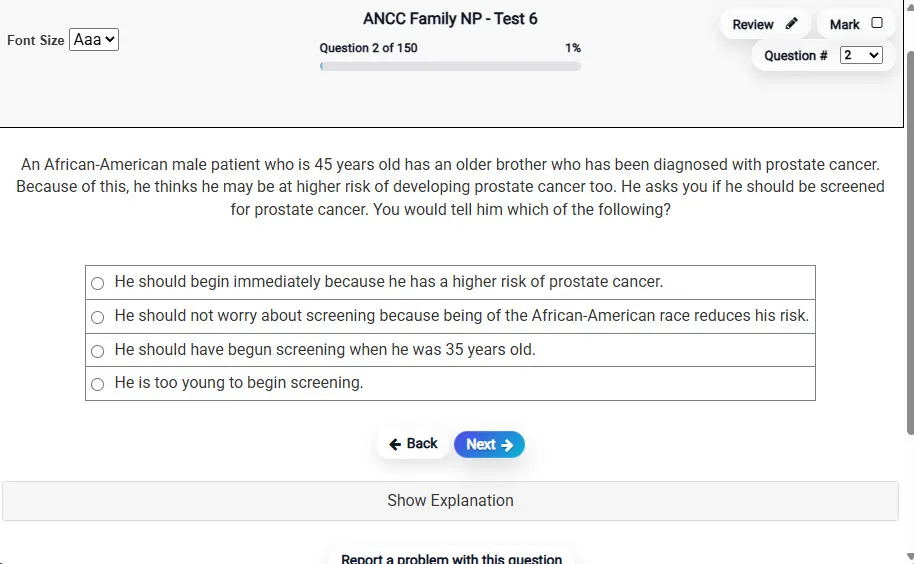
Answering a Question screen – Multiple-choice item view with navigation controls and progress tracker.
Answering a Question Multiple-choice item view with navigation controls and progress tracker.

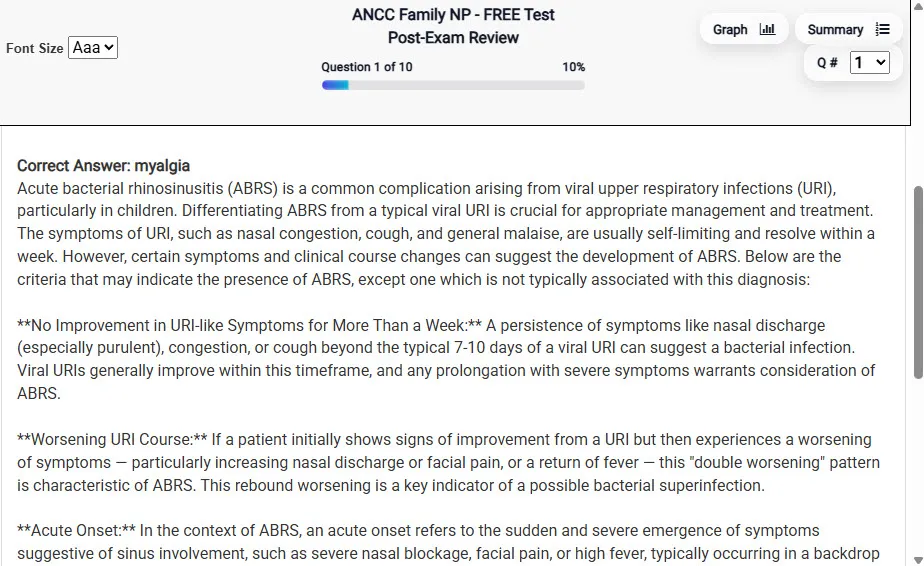
                           Detailed Explanation screen – 
                         Review mode showing chosen answer and rationale and references.
Detailed Explanation Review mode showing chosen answer and rationale and references.

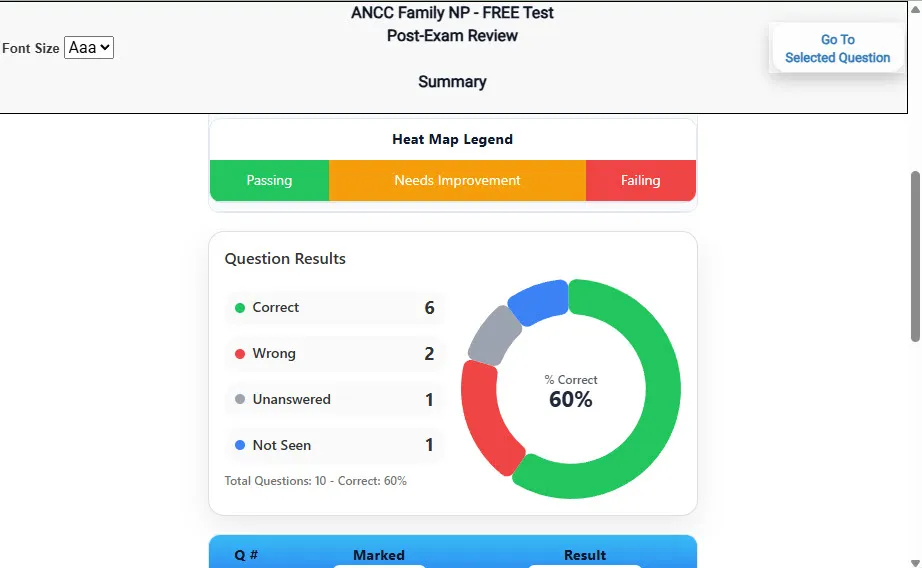
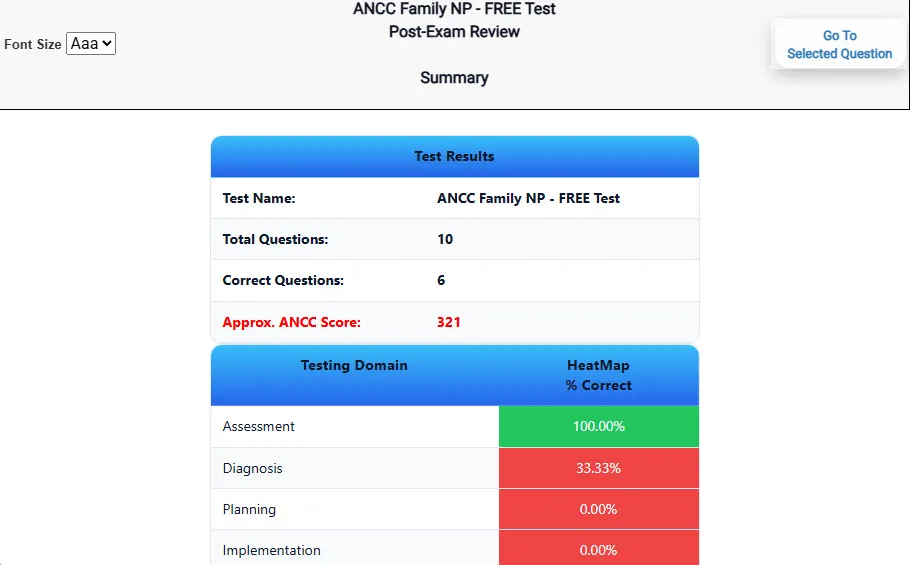
                           Review Summary 1 screen – 
                         Summary with counts for correct/wrong/unanswered and not seen items.
Review Summary 1 Summary with counts for correct/wrong/unanswered and not seen items.

                           Review Summary 2 screen – 
                         Advanced summary with category/domain breakdown and performance insights.
Review Summary 2 Advanced summary with category/domain breakdown and performance insights.

What Each Screen Shows

Answer Question Screen

  • Clean multiple-choice interface with progress bar.
  • Mark for review feature.
  • Matches real test pacing.

Detailed Explanation

  • Correct answer plus rationale.
  • Key concepts and guidelines highlighted.
  • Move between questions to fill knowledge gaps.

Review Summary 1

  • Overall results with total questions and scaled score.
  • Domain heatmap shows strengths and weaknesses.
  • Quick visual feedback on study priorities.

Review Summary 2

  • Chart of correct, wrong, unanswered, not seen.
  • Color-coded results for easy review.
  • Links back to missed items.

Top 10 Reasons to Use Exam Edge for your GACE Special Education General Curriculum Elementary Education (P-5) Exam Prep

  1. Focused on the GACE Special Education General Curriculum Elementary Education (P-5) Exam

    Our practice tests are built specifically for the GACE Special Education General Curriculum Elem Edu (P-5) exam — every question mirrors the real topics, format, and difficulty so you're studying exactly what matters.

  2. Real Exam Simulation

    We match the per-question time limits and pressure of the actual GACE exam, so test day feels familiar and stress-free.

  3. 20 Full Practice Tests & 2,600 Unique Questions

    You'll have more than enough material to master every GACE Special Education General Curriculum Elem Edu (P-5) concept — no repeats, no fluff.

  4. Lower Cost Than a Retake

    Ordering 5 practice exams costs less than retaking the GACE Special Education General Curriculum Elementary Education (P-5) exam after a failure. One low fee could save you both time and money.

  5. Flexible Testing

    Need to step away mid-exam? Pick up right where you left off — with your remaining time intact.

  6. Instant Scoring & Feedback

    See your raw score and an estimated GACE Special Education General Curriculum Elementary Education (P-5) score immediately after finishing each practice test.

  7. Detailed Explanations for Every Question

    Review correct and incorrect answers with clear, step-by-step explanations so you truly understand each topic.

  8. Trusted & Accredited

    We're fully accredited by the Better Business Bureau and uphold the highest standards of trust and transparency.

  9. Web-Based & Always Available

    No software to install. Access your GACE Special Education General Curriculum Elem Edu (P-5) practice exams 24/7 from any computer or mobile device.

  10. Expert Support When You Need It

    Need extra help? Our specialized tutors are highly qualified and ready to support your GACE exam prep.


Pass the GACE Special Education General Curriculum Elementary Education (P-5) Exam with Realistic Practice Tests from Exam Edge

Preparing for your upcoming GACE Special Education General Curriculum Elementary Education (P-5) (703) Certification Exam can feel overwhelming — but the right practice makes all the difference. Exam Edge gives you the tools, structure, and confidence to pass on your first try. Our online practice exams are built to match the real GACE Special Education General Curriculum Elem Edu (P-5) exam in content, format, and difficulty.

  • 📝 20 GACE Special Education General Curriculum Elementary Education (P-5) Practice Tests: Access 20 full-length exams with 130 questions each, covering every major GACE Special Education General Curriculum Elementary Education (P-5) topic in depth.
  • Instant Online Access: Start practicing right away — no software, no waiting.
  • 🧠 Step-by-Step Explanations: Understand the reasoning behind every correct answer so you can master GACE Special Education General Curriculum Elem Edu (P-5) exam concepts.
  • 🔄 Retake Each Exam Up to 4 Times: Build knowledge through repetition and track your improvement over time.
  • 🌐 Web-Based & Available 24/7: Study anywhere, anytime, on any device.
  • 🧘 Boost Your Test-Day Confidence: Familiarity with the GACE format reduces anxiety and helps you perform under pressure.

These GACE Special Education General Curriculum Elementary Education (P-5) practice exams are designed to simulate the real testing experience by matching question types, timing, and difficulty level. This approach helps you get comfortable not just with the exam content, but also with the testing environment, so you walk into your exam day focused and confident.


Exam Edge GACE Reviews


Thank you for the update. I took the GACE Reading Test 2 on Sat, Nov 15, and I made a 276! Exam Edge was my only test prep tool. Thanks for offering such a wonderful product.

Diane , GA

I found your website and started reading your testimonials and was immediately sold on creating an account and purchasing the Business Education tests. I practiced with those tests and soon signed up for the Gace test. I graduated three years ago. I took the test yesterday, Feb 11, and.... PASSED BO ...
Read More
Sandra , Quitman, GA

I just NAILED the GACE Special Ed General Curriculum assessments part I & II!!! I also bought practice tests from the GACE website but that was just ONE test per part and it never changed. Your tests challenged me more and gave much better interactive feedback. Thank you so much!!

Phoebe , Atlanta

I took the ESOL GACE yesterday and passed both sections! I hadn't taken a standardized test in ten years, so I was very apprehensive. I must say that if it were not for your practice exams, I would not have passed. The workbook I had ordered from another vendor was insufficient to cover the cont ...
Read More
Amy, GA

I want to thank you for your test reviews. It really helped me a lot. I passed the Birth to Kindergarten GACE exam!!

Angela, Norcross, GA.

Thank you! Thank you! Thank you!!! I always had horrible experiences with the GACE tests when entering and exiting my program and now I passed the SPED on the first try!!! I took each practice test and it was so familiar to the real one! I'm so happy I purchased it!

Mariah, Acworth GA


GACE Special Education General Curriculum Elementary Education (P-5) Aliases Test Name

Here is a list of alternative names used for this exam.

  • GACE Special Education General Curriculum Elementary Education (P-5)
  • GACE Special Education General Curriculum Elementary Education (P-5) test
  • GACE Special Education General Curriculum Elementary Education (P-5) Certification Test
  • GACE Special Education General Curriculum Elem Edu (P-5) test
  • GACE
  • GACE 703
  • 703 test
  • GACE Special Education General Curriculum Elementary Education (P-5) (703)
  • Special Education General Curriculum Elementary Education (P-5) certification