This is the content of the pop-over!

APA Certified Payroll Professional (CPP) Practice Tests & Test Prep by Exam Edge


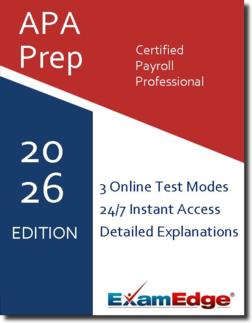
APA Certified Payroll Professional  product image
(5.0)
Based on 28 Reviews

  • Real Exam Simulation: Timed questions and matching content build comfort for your APA Certified Payroll Professional test day.
  • Instant, 24/7 Access: Web-based APA Certified Payroll Professional practice exams with no software needed.
  • Clear Explanations: Step-by-step answers and explanations for your APA exam to strengthen understanding.
  • Boosted Confidence: Reduces anxiety and improves test-taking skills to ace your APA Certified Payroll Professional (CPP).

Featured on

APA Certified Payroll Professional Online Practice Test Bundles

BEST VALUE
10 practice tests

$99.50

$299.50

SAVE $200

Only $9.95 per test!

  • 100% Pass Guarantee
  • 10 online practice tests
  • 125 questions per test
  • Bonus: 100 Flash Cards + Study Guide
  • Instant access
  • Detailed Explanations
  • Practice tests never expire
  • Timed, untimed, or study guide mode
5 practice tests

$59.75

$149.75

SAVE $90

Only $11.95 per test!

  • 5 online practice tests
  • 125 questions per test
  • Bonus: 100 Flash Cards + Study Guide
  • Instant access
  • Detailed Explanations
  • Practice tests never expire
  • Timed, untimed, or study guide mode
1 practice test

$29.95

  • 1 online practice test
  • 125 questions per test
  • Instant access
  • Detailed Explanations
  • Practice tests never expire
  • Timed, untimed, or study guide mode
Quick Select
Tap to choose a bundle

** All Prices are in US Dollars (USD) **


APA Certified Payroll Professional (CPP) Shortcuts


Understanding the exact breakdown of the APA Certified Payroll Professional test will help you know what to expect and how to most effectively prepare. The APA Certified Payroll Professional has 125 multiple-choice questions . The exam will be broken down into the sections below:

APA Certified Payroll Professional Exam Blueprint
Domain Name % Number of
Questions
CORE PAYROLL CONCEPTS 24% 30
     Worker Status  
     Fair Labor Standards Act  
     Employment Taxes  
     Employee Benefits  
     Employee/Employer Forms  
     Professional Responsibility  
     Methods and Timing of Pay  
COMPLIANCE/RESEARCH AND RESOURCES 16% 20
     Escheatment  
     Legislative and Regulatory Requirements  
     Reporting  
     Record Retention  
     Penalties  
     Global  
     Multi-state Taxation / Reporting  
CALCULATION OF THE PAYCHEC 20% 25
     Compensation/Benefits  
     Fringe Benefits  
     Involuntary Deductions/Taxes  
     Voluntary Deductions  
     Employer Taxes and Contributions  
     Total Payroll  
PAYROLL PROCESS AND SUPPORTING SYSTEMS AND ADMINISTRATION 12% 15
     Maintain Master File Components  
     Concepts and Functionalities  
     Business Continuity Plan  
     Technology Evaluation  
     Upgrade/Implementation Knowledge  
     System Maintenance/Updates  
     System/Project Implementations  
PAYROLL ADMINISTRATION AND MANAGEMENT 10% 13
     Policies and Procedures  
     Management Skills and Practices  
     Customer Service and Communication  
     Staffing - Employee Development Core Competencies  
AUDITS. 9% 11
     Internal Controls  
     Payroll System Controls  
     Accounting System Controls  
     Audit Policies and Procedures  
     Third Party Controls  
ACCOUNTING 9% 11
     Financial Reporting  
     Accounting Principles  
     Payroll Journal Entry  
     Account Reconciliation  

APA Certified Payroll Professional Study Tips by Domain

  • Know the difference between wages, supplemental wages, fringe benefits, and reimbursements; red flag: treating taxable fringe reimbursements as non-taxable expenses.
  • Master employee vs. independent contractor indicators; priority rule: classification drives withholding, reporting, and liability before any pay calculation.
  • Understand pre-tax vs. after-tax deductions (e.g., cafeteria plans vs. garnishments); common trap: reducing taxable wages for an after-tax deduction.
  • Apply FLSA basics (hours worked, regular rate, overtime); threshold cue: overtime typically triggers after 40 hours in a workweek unless a specific exemption applies.
  • Track leave and timekeeping concepts (PTO, FMLA, paid sick leave) accurately; red flag: paying based on scheduled hours instead of recorded hours for nonexempt staff.
  • Recognize taxable wage bases (FIT, SS, Medicare, FUTA/SUTA where applicable); priority rule: determine taxability first, then compute withholding.
  • Use primary sources (IRC, IRS regs, DOL guidance, state statutes) when rules conflict; priority rule: rely on the highest-authority source over vendor summaries.
  • Maintain a compliance calendar for deposit, filing, and reconciliation due dates; red flag: missing “lookback period” rules that change deposit frequency.
  • Document decisions on gray areas (taxability, residency, nexus, exemptions); common trap: applying a “we’ve always done it” approach without citations.
  • Know where to research multi-state withholding and reciprocity; threshold cue: one day worked in another state can trigger withholding in some jurisdictions.
  • Validate I-9, W-4, and state withholding forms for completeness; contraindication: never advise employees on how to complete W-4 beyond IRS instructions.
  • Track retention requirements for payroll records and personnel data; red flag: destroying payroll tax records before the statute of limitations closes.
  • Compute gross pay correctly for hourly, salaried nonexempt, piece-rate, and commissions; common trap: forgetting to include nondiscretionary bonuses in the regular rate.
  • Calculate FIT withholding using current IRS tables and W-4 inputs; priority rule: use the employee’s most recent valid W-4 on file.
  • Apply Social Security and Medicare rates and wage limits; threshold cue: Social Security stops at the annual wage base but Medicare continues (plus any additional Medicare rules).
  • Handle supplemental wages (bonuses, commissions, severance) properly; red flag: mixing regular and supplemental methods incorrectly when required by policy or jurisdiction.
  • Process deductions in the correct order (taxes, pre-tax benefits, after-tax, garnishments); priority rule: honor federal/state garnishment limits before voluntary deductions that reduce disposable earnings.
  • Net pay validation and rounding controls; common trap: ignoring negative net pay scenarios—set a contraindication rule that prevents releasing an invalid check.
  • Follow a standardized payroll cycle checklist (inputs, audits, approvals, transmit, post); red flag: processing off-cycle checks without documented authorization.
  • Control master data changes (rate, tax setup, direct deposit, address); priority rule: require dual approval for bank and pay rate changes to reduce fraud.
  • Manage interfaces between HRIS, timekeeping, and payroll; common trap: assuming file feeds reconcile automatically—set a threshold to investigate variances over a set dollar/percent amount.
  • Implement access controls and segregation of duties; contraindication: the same person should not create employees and release payments without oversight.
  • Ensure pay statements meet state requirements (itemization, sick leave balances where required); red flag: missing required fields can trigger penalties per employee per pay period.
  • Maintain business continuity for payroll (backup approvers, funding plan, contingency runs); priority rule: test disaster recovery at least annually before peak payroll periods.
  • Build service-level metrics (on-time payroll, error rate, adjustments) and trend them; red flag: rising manual checks is a leading indicator of upstream process failure.
  • Manage policy governance (pay schedules, rounding, PTO payouts, term pay); priority rule: written policy must align with federal/state/local law and collective agreements.
  • Oversee vendor and banking relationships (funding, reversals, returns); common trap: missing ACH return windows—set a time threshold for reversal requests.
  • Train stakeholders (HR, managers, employees) on time entry and changes; red flag: late timecards should trigger escalation rather than payroll “best guesses.”
  • Handle confidential data and privacy obligations; contraindication: never email unencrypted SSNs or full payroll registers to broad distribution lists.
  • Plan for year-end and major changes (new tax rates, system upgrades); priority rule: freeze critical configuration changes during close and test in parallel first.
  • Reconcile payroll registers to general ledger and tax filings each period; red flag: unresolved reconciling items carried forward more than one cycle.
  • Perform pre-process and post-process audits (hours, rates, tax setup, net pay); threshold cue: investigate outliers such as pay changes over a defined percent or dollar amount.
  • Validate tax deposits to liabilities (EFTPS, state portals) and confirm acknowledgments; common trap: assuming a scheduled payment equals a settled payment.
  • Audit employee master file for duplicates, inactive employees, and bank changes; red flag: multiple employees sharing a bank account without documented justification.
  • Review garnishment compliance (orders, limits, remittance timing); priority rule: remit within the order’s deadline—late remits can create employer liability.
  • Prepare for external audits (DOL, IRS, state UI) with organized support; contraindication: never alter records after an audit notice—document corrections transparently.
  • Post payroll journal entries correctly (wages, employer taxes, benefits, liabilities); common trap: expensing withholdings instead of recording them as liabilities.
  • Reconcile payroll bank accounts and clearing accounts promptly; threshold cue: investigate any stale-dated or outstanding items beyond a set number of days.
  • Accrue payroll and benefits for period-end close; priority rule: match expenses to the period earned, not the pay date.
  • Understand employer tax expense vs. employee withholding; red flag: combining employer FICA/FUTA/SUTA with employee withholdings in one undifferentiated account.
  • Handle wage and tax adjustments (voids, reversals, prior-period corrections) with proper accounting treatment; common trap: voiding after quarter-end without considering amended filings impact.
  • Support financial statement disclosures and audits with tie-outs (W-2 totals, 941/940, state returns); priority rule: totals should reconcile within a defined tolerance before sign-off.

Built to Fit Into Your Busy Life

Everything you need to prepare with confidence—without wasting a minute.

Three Study Modes

Timed, No Time Limit, or Explanation mode.

Actionable Analytics

Heatmaps and scaled scores highlight weak areas.

High-Yield Rationales

Concise explanations emphasize key concepts.

Realistic Interface

Matches the feel of the actual exam environment.

Accessible by Design

Clean layout reduces cognitive load.

Anytime, Anywhere

Web-based access 24/7 on any device.
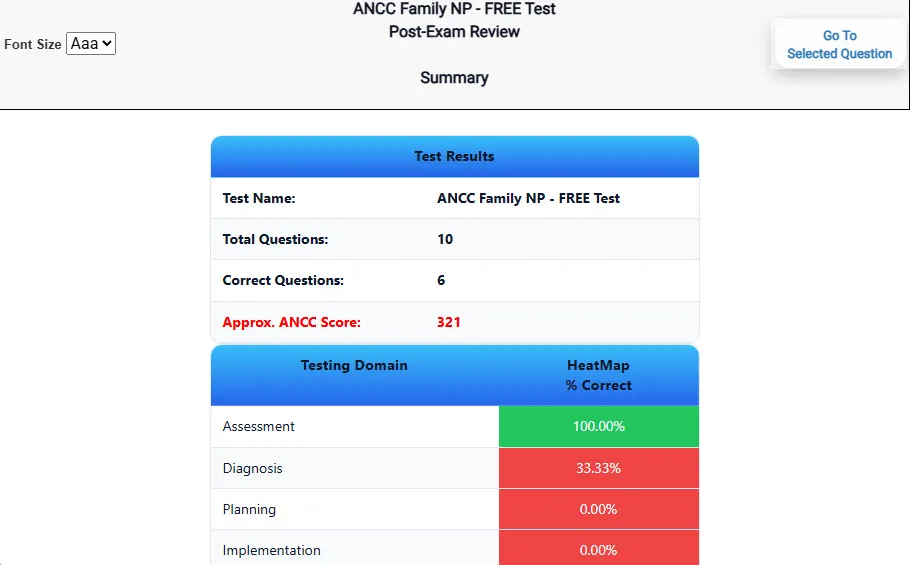
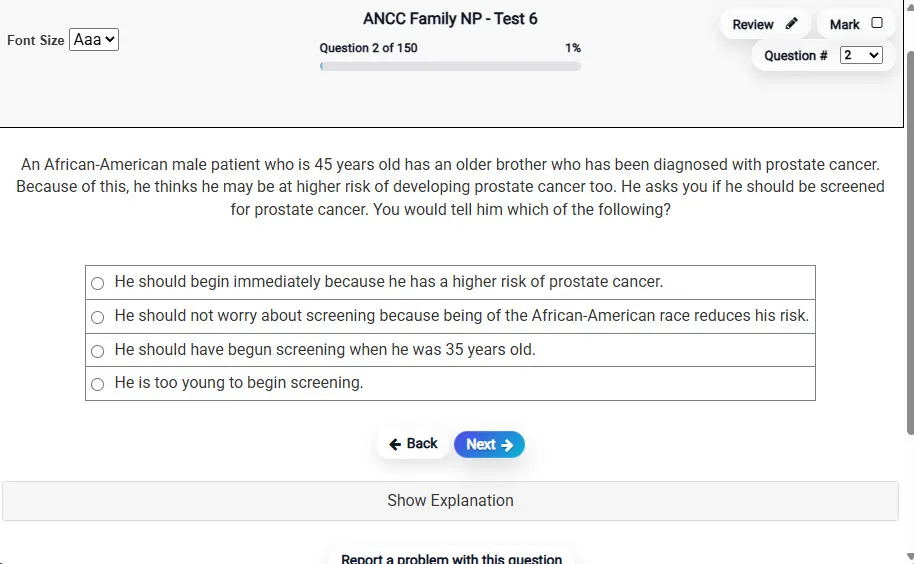
Answering a Question screen – Multiple-choice item view with navigation controls and progress tracker.
Answering a Question Multiple-choice item view with navigation controls and progress tracker.

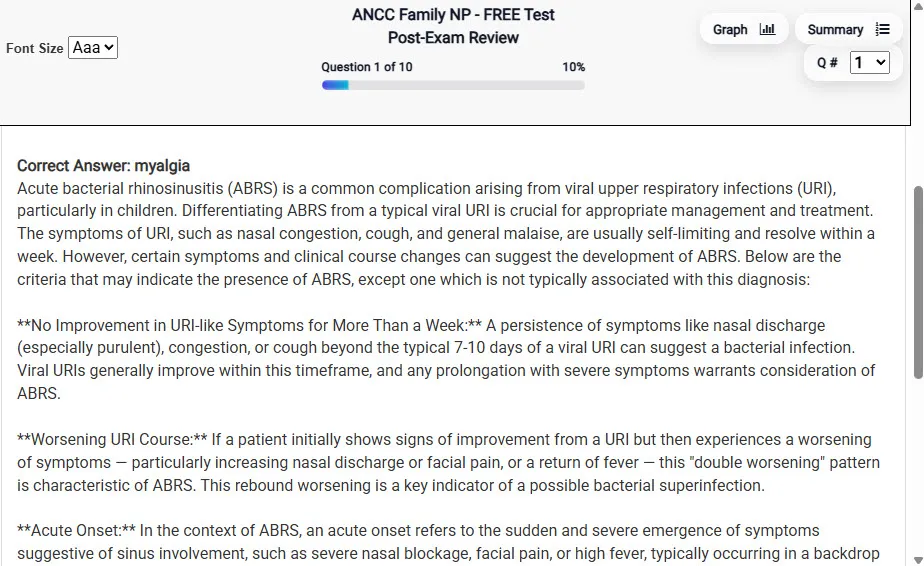
                           Detailed Explanation screen – 
                         Review mode showing chosen answer and rationale and references.
Detailed Explanation Review mode showing chosen answer and rationale and references.

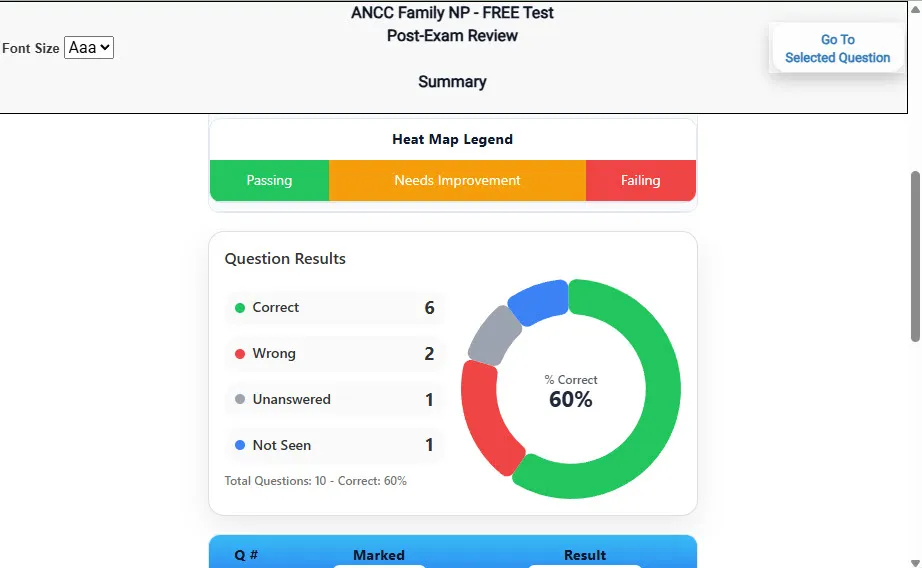
                           Review Summary 1 screen – 
                         Summary with counts for correct/wrong/unanswered and not seen items.
Review Summary 1 Summary with counts for correct/wrong/unanswered and not seen items.

                           Review Summary 2 screen – 
                         Advanced summary with category/domain breakdown and performance insights.
Review Summary 2 Advanced summary with category/domain breakdown and performance insights.

What Each Screen Shows

Answer Question Screen

  • Clean multiple-choice interface with progress bar.
  • Mark for review feature.
  • Matches real test pacing.

Detailed Explanation

  • Correct answer plus rationale.
  • Key concepts and guidelines highlighted.
  • Move between questions to fill knowledge gaps.

Review Summary 1

  • Overall results with total questions and scaled score.
  • Domain heatmap shows strengths and weaknesses.
  • Quick visual feedback on study priorities.

Review Summary 2

  • Chart of correct, wrong, unanswered, not seen.
  • Color-coded results for easy review.
  • Links back to missed items.

Top 10 Reasons to Use Exam Edge for your APA Certified Payroll Professional Exam Prep

  1. Focused on the APA Certified Payroll Professional Exam

    Our practice tests are built specifically for the APA Certified Payroll Professional exam — every question mirrors the real topics, format, and difficulty so you're studying exactly what matters.

  2. Real Exam Simulation

    We match the per-question time limits and pressure of the actual APA exam, so test day feels familiar and stress-free.

  3. 10 Full Practice Tests & 1,250 Unique Questions

    You'll have more than enough material to master every APA Certified Payroll Professional concept — no repeats, no fluff.

  4. Lower Cost Than a Retake

    Ordering 5 practice exams costs less than retaking the APA Certified Payroll Professional exam after a failure. One low fee could save you both time and money.

  5. Flexible Testing

    Need to step away mid-exam? Pick up right where you left off — with your remaining time intact.

  6. Instant Scoring & Feedback

    See your raw score and an estimated APA Certified Payroll Professional score immediately after finishing each practice test.

  7. Detailed Explanations for Every Question

    Review correct and incorrect answers with clear, step-by-step explanations so you truly understand each topic.

  8. Trusted & Accredited

    We're fully accredited by the Better Business Bureau and uphold the highest standards of trust and transparency.

  9. Web-Based & Always Available

    No software to install. Access your APA Certified Payroll Professional practice exams 24/7 from any computer or mobile device.

  10. Expert Support When You Need It

    Need extra help? Our specialized tutors are highly qualified and ready to support your APA exam prep.


Pass the APA Certified Payroll Professional Exam with Realistic Practice Tests from Exam Edge

Preparing for your upcoming APA Certified Payroll Professional (CPP) Certification Exam can feel overwhelming — but the right practice makes all the difference. Exam Edge gives you the tools, structure, and confidence to pass on your first try. Our online practice exams are built to match the real APA Certified Payroll Professional exam in content, format, and difficulty.

  • 📝 10 APA Certified Payroll Professional Practice Tests: Access 10 full-length exams with 125 questions each, covering every major APA Certified Payroll Professional topic in depth.
  • Instant Online Access: Start practicing right away — no software, no waiting.
  • 🧠 Step-by-Step Explanations: Understand the reasoning behind every correct answer so you can master APA Certified Payroll Professional exam concepts.
  • 🔄 Retake Each Exam Up to 4 Times: Build knowledge through repetition and track your improvement over time.
  • 🌐 Web-Based & Available 24/7: Study anywhere, anytime, on any device.
  • 🧘 Boost Your Test-Day Confidence: Familiarity with the APA format reduces anxiety and helps you perform under pressure.

These APA Certified Payroll Professional practice exams are designed to simulate the real testing experience by matching question types, timing, and difficulty level. This approach helps you get comfortable not just with the exam content, but also with the testing environment, so you walk into your exam day focused and confident.


Exam Edge APA Reviews


APA Certified Payroll Professional Aliases Test Name

Here is a list of alternative names used for this exam.

  • APA Certified Payroll Professional
  • APA Certified Payroll Professional test
  • APA Certified Payroll Professional Certification Test
  • APA
  • APA CPP
  • CPP test
  • APA Certified Payroll Professional (CPP)
  • Certified Payroll Professional certification