This is the content of the pop-over!

NBCC National Certified Counselor (NCE) Practice Tests & Test Prep by Exam Edge


NBCC National Certified Counselor product image
(4.6)
Based on 37 Reviews

  • Real Exam Simulation: Timed questions and matching content build comfort for your NBCC National Certified Counselor test day.
  • Instant, 24/7 Access: Web-based NBCC National Certified Counselor practice exams with no software needed.
  • Clear Explanations: Step-by-step answers and explanations for your NBCC exam to strengthen understanding.
  • Boosted Confidence: Reduces anxiety and improves test-taking skills to ace your NBCC National Certified Counselor (NCE).

Featured on

NBCC National Certified Counselor Online Practice Test Bundles

BEST VALUE
15 practice tests

$149.25

$599.25

SAVE $450

Only $9.95 per test!

  • 100% Pass Guarantee
  • 15 online practice tests
  • 100 questions per test
  • Bonus: 100 Flash Cards + Study Guide
  • Instant access
  • Detailed Explanations
  • Practice tests never expire
  • Timed, untimed, or study guide mode
MOST POPULAR
10 practice tests

$99.50

$399.50

SAVE $300

Only $9.95 per test!

  • 10 online practice tests
  • 100 questions per test
  • Bonus: 100 Flash Cards + Study Guide
  • Instant access
  • Detailed Explanations
  • Practice tests never expire
  • Timed, untimed, or study guide mode
5 practice tests

$69.75

$199.75

SAVE $130

Only $13.95 per test!

  • 5 online practice tests
  • 100 questions per test
  • Bonus: 100 Flash Cards
  • Instant access
  • Detailed Explanations
  • Practice tests never expire
  • Timed, untimed, or study guide mode
1 practice test

$39.95

  • 1 online practice test
  • 100 questions per test
  • Instant access
  • Detailed Explanations
  • Practice tests never expire
  • Timed, untimed, or study guide mode
Quick Select
Tap to choose a bundle

** All Prices are in US Dollars (USD) **


NBCC National Certified Counselor (NCE) Resources

Jump to the section you need most.

Understanding the exact breakdown of the NBCC National Certified Counselor test will help you know what to expect and how to most effectively prepare. The NBCC National Certified Counselor has 200 multiple-choice questions . The exam will be broken down into the sections below:

NBCC National Certified Counselor Exam Blueprint
Domain Name
Human Growth and Development  
Social and Cultural Diversity  
Helping Relationships  
Group Work  
Career Development  
Assessment  
Research and Program Evaluation  
Professional Orientation and Ethical Practice  

NBCC National Certified Counselor Study Tips by Domain

  • Differentiate developmental “tasks” from pathology—a common trap is labeling age-appropriate behaviors (e.g., adolescent identity exploration) as a disorder without functional impairment.
  • Use major stage models (Erikson, Piaget, Kohlberg) as hypotheses, not checklists—red flag if you force-fit a client to a stage while ignoring culture, context, and trauma history.
  • Track attachment patterns and early caregiving impacts on adult intimacy and affect regulation—priority cue: chronic relational instability plus fear of abandonment warrants careful differential (attachment insecurity vs. personality disorder).
  • Identify normal vs. complicated grief across the lifespan—threshold cue: persistent, impairing yearning/identity disruption beyond typical cultural expectations suggests complicated grief rather than normative bereavement.
  • Consider neurodevelopment and learning factors (ADHD, ASD, learning disorders) when problems appear early and across settings—red flag is late-onset “ADHD symptoms” that begin only in adulthood without childhood evidence.
  • Account for aging-related changes (cognition, role transitions, loss) without assuming decline—common trap is confusing depression-related pseudodementia with major neurocognitive disorder when memory improves with mood treatment.
  • Differentiate multicultural counseling competence into awareness, knowledge, and skills—don’t overfocus on “skills” while ignoring your own bias (common trap: assuming good intentions equal cultural competence).
  • Use the ADDRESSING framework to systematically consider multiple identities; red flag: treating a client as a spokesperson for an entire group or collapsing identity to one visible characteristic.
  • Assess for acculturation, experiences of discrimination, and minority stress when clinically relevant; priority rule: do not pathologize culturally normative behaviors or idioms of distress.
  • Match interventions to the client’s cultural values (e.g., individualism vs. collectivism, power distance, spirituality) and collaborate on goals; contraindication: imposing counselor-defined “healthy” norms that conflict with client values.
  • Use culturally responsive communication (e.g., meaning of eye contact, silence, self-disclosure, touch) and check assumptions explicitly; red flag: interpreting difference as resistance or lack of insight without cultural hypothesis testing.
  • When working cross-culturally, ensure language access (qualified interpreter when needed) and verify informed consent and understanding; common trap: using family members as interpreters, especially for sensitive topics.
  • Begin with informed consent that clarifies counseling goals, limits of confidentiality (including duty to warn/protect), fees, and records — red flag: starting treatment without documenting client understanding.
  • Use basic attending skills (SOLER, minimal encouragers, reflections, summaries) to strengthen alliance — common trap: asking a rapid series of questions that turns the session into an interview.
  • Match interventions to the client’s stage of change and readiness — priority rule: avoid action planning when the client is still in precontemplation/contemplation.
  • Maintain appropriate boundaries and manage dual relationships proactively — red flag: accepting gifts, extending sessions, or self-disclosing in ways that meet the counselor’s needs rather than the client’s.
  • Handle resistance and ruptures with validation, collaborative goal review, and feedback-informed adjustments — common trap: confronting defensiveness before establishing sufficient rapport and safety.
  • Use crisis and safety procedures (risk assessment, safety planning, consultation/referral) when there is imminent harm — threshold cue: any current plan, intent, means, or escalating substance use requires immediate action and documentation.
  • Screen members pre-group and set clear inclusion/exclusion criteria; red flag: admitting someone in acute crisis, active psychosis, or high imminent risk without an individual stabilization plan.
  • Use informed consent that names purpose, format, limits of confidentiality, and communication rules; common trap: promising “confidentiality” without stating legal/ethical exceptions and the reality of member disclosure.
  • Choose an evidence-aligned group type (psychoeducational, counseling, therapy, task, or support) and match leadership style accordingly; priority rule: structure more tightly when goals are skill-building or risk is elevated.
  • Manage group process intentionally (forming–storming–norming–performing–adjourning) and intervene early on norms; red flag: unaddressed monopolizing, scapegoating, or side conversations that erode cohesion.
  • Apply core therapeutic factors (universality, instillation of hope, interpersonal learning, cohesion) while maintaining boundaries; common trap: allowing advice-giving to replace empathic feedback and here-and-now processing.
  • Plan for termination and evaluation from the start (attendance, goal attainment, outcome measures); priority rule: document critical incidents (threats, ruptures, rule violations) promptly because group notes are often scrutinized in complaints.
  • Use Holland RIASEC, Super’s life-span/life-space, and Social Cognitive Career Theory to match interventions to the client’s stage and context; red flag: forcing a trait-only “fit” when barriers (self-efficacy, supports, discrimination) are primary.
  • Write measurable career goals (e.g., SMART) and a stepwise action plan (information gathering → decision → implementation); common trap: skipping values/constraints clarification and rushing to a job title.
  • Interpret career assessments (interest, aptitude, values, personality) using current norms, reliability/validity, and appropriate populations; priority rule: document informed consent and avoid high-stakes decisions from a single test score.
  • Teach labor market and educational pathway skills (O*NET-style task/skill analysis, outlook, wages, credentialing); red flag: presenting outdated or local-unverified market data as definitive.
  • Address decision-making and career barriers with counseling skills (cognitive restructuring, problem-solving, motivational interviewing); common trap: mistaking “indecision” for resistance when anxiety or perfectionism is driving avoidance.
  • Support job-search competencies (resume/ATS keywords, interviewing, networking, negotiation) with ethical boundaries; contraindication: writing false credentials or endorsing misrepresentation to “help” a client get hired.
  • Begin assessment with a clear informed-consent explanation of purpose, limits, and how results will be used; red flag: using a test for a decision (e.g., placement) that was not disclosed to the client.
  • Select instruments that match the referral question and client characteristics (age, language, culture, disability status); common trap: assuming a normed score is valid when the client is outside the test’s norm group.
  • Prioritize psychometrics in selection and interpretation—use reliability to judge consistency and validity to judge meaning; cue: low reliability sets an upper limit on validity, so be cautious with fine-grained score distinctions.
  • When interpreting results, integrate multiple data sources (interview, behavioral observation, records, collateral) rather than relying on a single score; red flag: making a diagnosis or high-stakes recommendation from one screening tool alone.
  • Use proper administration, scoring, and standardization procedures and document any deviations; priority rule: if standardized conditions are broken (e.g., extra coaching, altered timing), interpret scores qualitatively and note limits.
  • Attend to ethical and legal duties in test security, record keeping, and release of results; common trap: releasing raw data or test materials without considering client access rights versus test integrity and potential misuse.
  • Know the hierarchy of evidence and when each fits counseling practice (e.g., RCTs for efficacy vs qualitative for lived experience); red flag: claiming causation from a correlational or cross-sectional design.
  • Identify sampling methods and their bias risks (random, stratified, convenience) and how they affect generalizability; common trap: overgeneralizing results from a small, nonrepresentative clinical sample.
  • Interpret core statistics accurately (p-value vs effect size vs confidence interval) for practical counseling decisions; priority rule: a statistically significant result with a trivial effect size may not be clinically meaningful.
  • Apply basics of measurement quality (reliability types, validity evidence, standard error of measurement) when selecting instruments; contraindication: using a tool outside its validated population or language without noting limits.
  • Understand program evaluation steps (needs assessment, logic model, process vs outcome evaluation) and align metrics to program goals; red flag: measuring only satisfaction surveys when the goal is symptom reduction or functioning.
  • Follow research ethics and compliance (informed consent, confidentiality, risk/benefit, vulnerable populations, IRB when required); common trap: thinking “program evaluation” automatically exempts data collection from ethical review and participant protections.
  • Know the hierarchy for resolving ethics issues: follow NBCC Code of Ethics first, then laws/regulations; red flag—“my supervisor said it’s fine” is not a defense if the action violates code or law.
  • Informed consent must be documented early and updated when services change (telehealth, fees, records, limits of confidentiality); common trap—using a one-time generic form without revisiting it after a significant change.
  • Confidentiality has specific exceptions (imminent danger, abuse/neglect reporting, court orders) and should be disclosed at intake; priority rule—share the minimum necessary and document the rationale and disclosures.
  • Maintain clear boundaries and avoid dual relationships that impair objectivity or risk exploitation; red flag—accepting gifts, bartering, social media connections, or non-therapeutic contact without a documented, client-centered justification and risk assessment.
  • Competence is scope-limited: practice only within training/experience and seek supervision, consultation, or referral when needed; common trap—continuing treatment with a high-risk issue (e.g., active suicidality, complex trauma) without appropriate training and support.
  • Recordkeeping and professional practice standards matter: timely, factual notes; secure storage; clear release-of-information processes; red flag—altering records after a complaint or subpoena rather than creating an addendum with date/time and explanation.


Built to Fit Into Your Busy Life

Everything you need to prepare with confidence—without wasting a minute.

Three Study Modes

Timed, No Time Limit, or Explanation mode.

Actionable Analytics

Heatmaps and scaled scores highlight weak areas.

High-Yield Rationales

Concise explanations emphasize key concepts.

Realistic Interface

Matches the feel of the actual exam environment.

Accessible by Design

Clean layout reduces cognitive load.

Anytime, Anywhere

Web-based access 24/7 on any device.
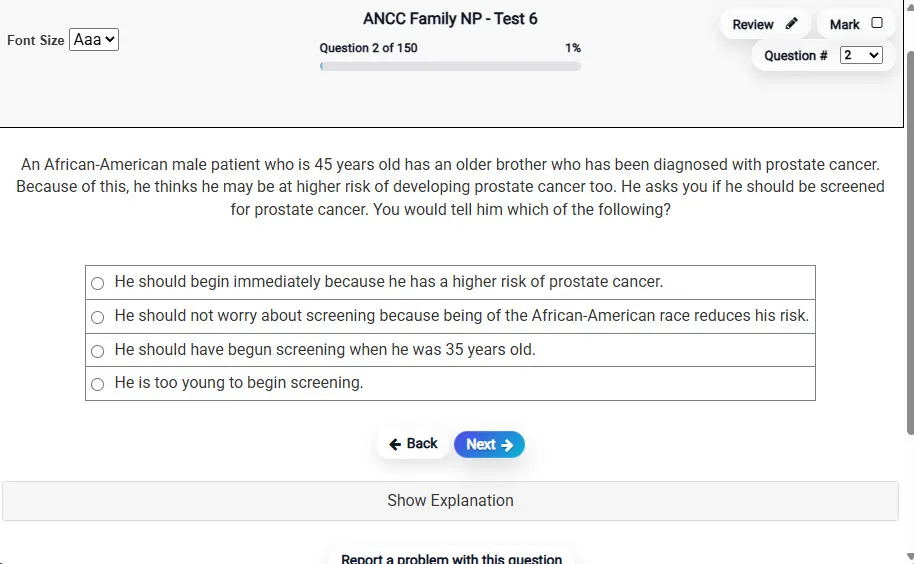
Answering a Question screen – Multiple-choice item view with navigation controls and progress tracker.
Answering a Question Multiple-choice item view with navigation controls and progress tracker.

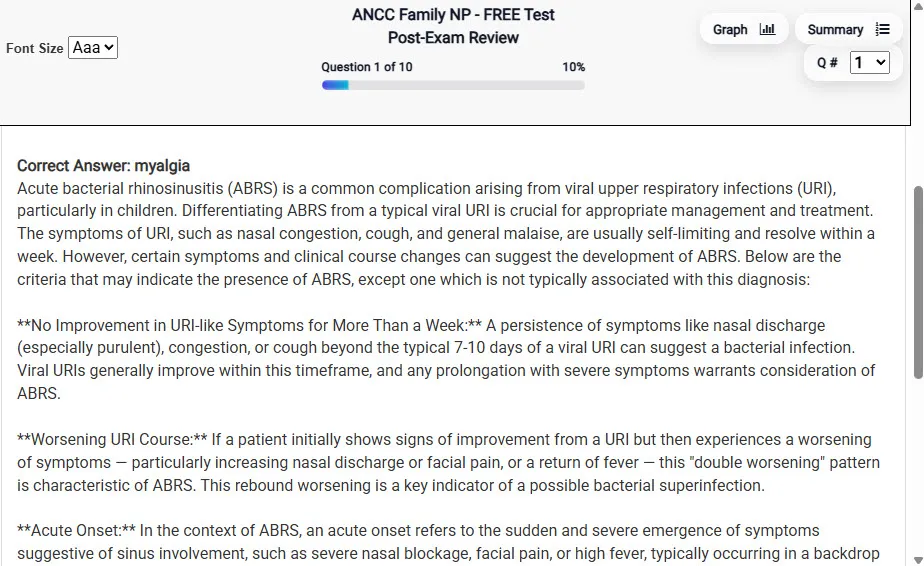
                           Detailed Explanation screen – 
                         Review mode showing chosen answer and rationale and references.
Detailed Explanation Review mode showing chosen answer and rationale and references.

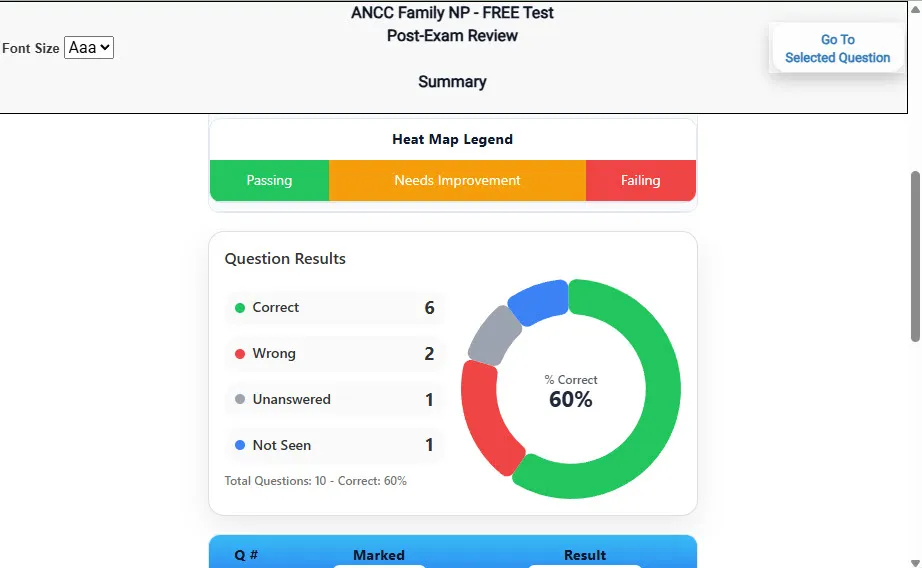
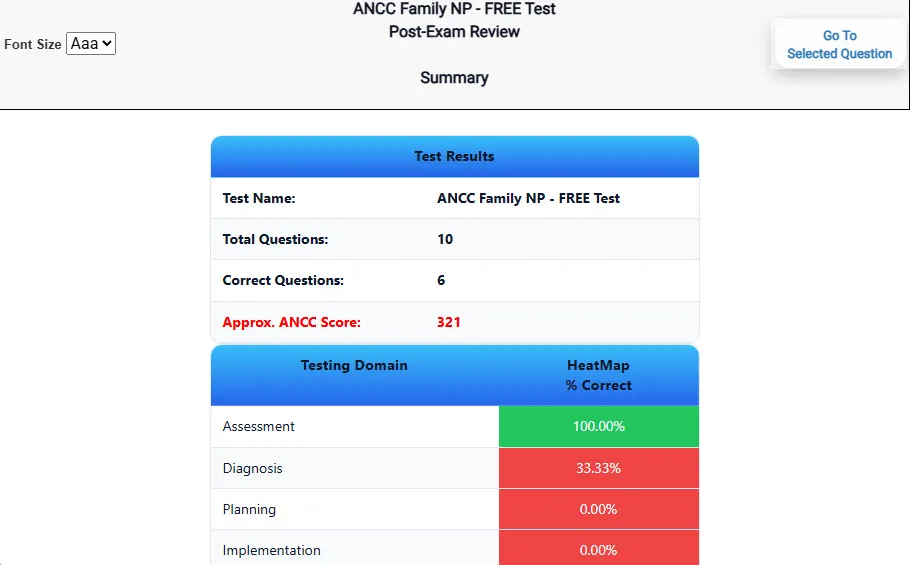
                           Review Summary 1 screen – 
                         Summary with counts for correct/wrong/unanswered and not seen items.
Review Summary 1 Summary with counts for correct/wrong/unanswered and not seen items.

                           Review Summary 2 screen – 
                         Advanced summary with category/domain breakdown and performance insights.
Review Summary 2 Advanced summary with category/domain breakdown and performance insights.

What Each Screen Shows

Answer Question Screen

  • Clean multiple-choice interface with progress bar.
  • Mark for review feature.
  • Matches real test pacing.

Detailed Explanation

  • Correct answer plus rationale.
  • Key concepts and guidelines highlighted.
  • Move between questions to fill knowledge gaps.

Review Summary 1

  • Overall results with total questions and scaled score.
  • Domain heatmap shows strengths and weaknesses.
  • Quick visual feedback on study priorities.

Review Summary 2

  • Chart of correct, wrong, unanswered, not seen.
  • Color-coded results for easy review.
  • Links back to missed items.

Top 10 Reasons to Use Exam Edge for your NBCC National Certified Counselor Exam Prep

  1. Focused on the NBCC National Certified Counselor Exam

    Our practice tests are built specifically for the NBCC National Certified Counselor exam — every question mirrors the real topics, format, and difficulty so you're studying exactly what matters.

  2. Real Exam Simulation

    We match the per-question time limits and pressure of the actual NBCC exam, so test day feels familiar and stress-free.

  3. 15 Full Practice Tests & 1,500 Unique Questions

    You'll have more than enough material to master every NBCC National Certified Counselor concept — no repeats, no fluff.

  4. Lower Cost Than a Retake

    Ordering 5 practice exams costs less than retaking the NBCC National Certified Counselor exam after a failure. One low fee could save you both time and money.

  5. Flexible Testing

    Need to step away mid-exam? Pick up right where you left off — with your remaining time intact.

  6. Instant Scoring & Feedback

    See your raw score and an estimated NBCC National Certified Counselor score immediately after finishing each practice test.

  7. Detailed Explanations for Every Question

    Review correct and incorrect answers with clear, step-by-step explanations so you truly understand each topic.

  8. Trusted & Accredited

    We're fully accredited by the Better Business Bureau and uphold the highest standards of trust and transparency.

  9. Web-Based & Always Available

    No software to install. Access your NBCC National Certified Counselor practice exams 24/7 from any computer or mobile device.

  10. Expert Support When You Need It

    Need extra help? Our specialized tutors are highly qualified and ready to support your NBCC exam prep.


Pass the NBCC National Certified Counselor Exam with Realistic Practice Tests from Exam Edge

Preparing for your upcoming NBCC National Certified Counselor (NCE) Certification Exam can feel overwhelming — but the right practice makes all the difference. Exam Edge gives you the tools, structure, and confidence to pass on your first try. Our online practice exams are built to match the real NBCC National Certified Counselor exam in content, format, and difficulty.

  • 📝 15 NBCC National Certified Counselor Practice Tests: Access 15 full-length exams with 100 questions each, covering every major NBCC National Certified Counselor topic in depth.
  • Instant Online Access: Start practicing right away — no software, no waiting.
  • 🧠 Step-by-Step Explanations: Understand the reasoning behind every correct answer so you can master NBCC National Certified Counselor exam concepts.
  • 🔄 Retake Each Exam Up to 4 Times: Build knowledge through repetition and track your improvement over time.
  • 🌐 Web-Based & Available 24/7: Study anywhere, anytime, on any device.
  • 🧘 Boost Your Test-Day Confidence: Familiarity with the NBCC format reduces anxiety and helps you perform under pressure.

These NBCC National Certified Counselor practice exams are designed to simulate the real testing experience by matching question types, timing, and difficulty level. This approach helps you get comfortable not just with the exam content, but also with the testing environment, so you walk into your exam day focused and confident.


Exam Edge NBCC Reviews


NBCC National Certified Counselor Aliases Test Name

Here is a list of alternative names used for this exam.

  • NBCC National Certified Counselor
  • NBCC National Certified Counselor test
  • NBCC National Certified Counselor Certification Test
  • NBCC
  • NBCC NCE
  • NCE test
  • NBCC National Certified Counselor (NCE)
  • National Certified Counselor certification