This is the content of the pop-over!

EMT i85 (NREMT-I85) Practice Tests & Test Prep by Exam Edge


EMT Intermediate 85  product image
(4.4)
Based on 20 Reviews

  • Real Exam Simulation: Timed questions and matching content build comfort for your EMT i85 test day.
  • Instant, 24/7 Access: Web-based EMT Intermediate 85 practice exams with no software needed.
  • Clear Explanations: Step-by-step answers and explanations for your EMT exam to strengthen understanding.
  • Boosted Confidence: Reduces anxiety and improves test-taking skills to ace your EMT Intermediate 85 (NREMT-I85).

Featured on

EMT Intermediate 85 Online Practice Test Bundles

BEST VALUE
5 practice tests

$69.75

$199.75

SAVE $130

Only $13.95 per test!

  • 100% Pass Guarantee
  • 5 online practice tests
  • 100 questions per test
  • Bonus: 100 Flash Cards + Study Guide
  • Instant access
  • Detailed Explanations
  • Practice tests never expire
  • Timed, untimed, or study guide mode
1 practice test

$39.95

  • 1 online practice test
  • 100 questions per test
  • Instant access
  • Detailed Explanations
  • Practice tests never expire
  • Timed, untimed, or study guide mode
Quick Select
Tap to choose a bundle

** All Prices are in US Dollars (USD) **


EMT i85 (NREMT-I85) Resources

Jump to the section you need most.

Understanding the exact breakdown of the EMT Intermediate 85 test will help you know what to expect and how to most effectively prepare. The EMT Intermediate 85 has multiple-choice questions . The exam will be broken down into the sections below:

EMT Intermediate 85 Exam Blueprint
Domain Name % Number of
Questions
Airway - Respiration & Ventilation 17-21% 19
Cardiology & Resuscitation 17-21% 19
Trauma 18-22% 20
Medical/Obstetrics/Gyn 26-30% 29
EMS Ops 12-16% 13

EMT Intermediate 85 Study Tips by Domain

  • Open the airway with head-tilt–chin-lift unless trauma is suspected; if you suspect C-spine injury, use a jaw-thrust and avoid repeated repositioning as a red flag for missed obstruction.
  • Confirm advanced airway placement with continuous waveform capnography whenever available; a persistent ETCO2 <10 mmHg after effective ventilation is a red flag for poor perfusion/CPR quality or dislodgement.
  • Ventilate adults at 10/min with visible chest rise and avoid hyperventilation; a common trap is bagging too fast, causing hypotension, gastric inflation, and worsening outcomes.
  • Choose oxygen delivery based on need: NRB for significant hypoxia with adequate breathing vs BVM for inadequate ventilation; a priority rule is to treat ventilation failure before chasing SpO2 numbers.
  • Use suction early and often, limiting each pass to ≤10 seconds in adults; prolonged suctioning is a red flag for induced hypoxia and bradycardia.
  • Recognize obstructive airway emergencies: stridor with retractions suggests upper airway narrowing and requires rapid airway prep, while wheezing with silent chest is a red flag for impending respiratory failure and need for assisted ventilation.
  • Start BLS first: check responsiveness, breathing, pulse ≤10 seconds, then begin high-quality CPR (rate 100–120/min, depth 2–2.4 in) with minimal interruptions—red flag is pausing compressions for IV/airway.
  • Use the AED/monitor early and follow shockable vs nonshockable pathways; common trap is failing to immediately resume CPR for 2 minutes after a shock (don’t stop to recheck a pulse).
  • For adult bradycardia with poor perfusion, give atropine 1 mg IV/IO q3–5 min (max 3 mg) and prepare transcutaneous pacing—contraindication cue: don’t waste time with atropine in high-grade AV block with severe instability.
  • For symptomatic tachycardia with a pulse, cardiovert if unstable (hypotension, altered mental status, shock, ischemic chest discomfort, acute heart failure); red flag is giving adenosine to an irregular wide-complex tachycardia.
  • In ACS, prioritize aspirin (if no allergy/active bleeding) and early 12-lead acquisition/notification; common trap is delaying transport for repeated on-scene ECGs or nonessential IV attempts.
  • For ROSC care, manage oxygenation/ventilation (avoid hyperventilation) and support perfusion (target SBP ≥90 mmHg); red flag is leaving the patient hyperoxic or with ETCO2 persistently <10 mmHg without correcting CPR/ventilation issues.
  • Manage massive hemorrhage first in trauma — if direct pressure fails quickly, escalate to tourniquet (high and tight) or hemostatic dressing, and note the time; red flag: repeated dressing changes without controlling bleeding.
  • Suspect tension pneumothorax with severe dyspnea, unilateral absent breath sounds, hypotension, and JVD — priority rule: treat immediately per protocol rather than waiting for confirmation; common trap: attributing shock solely to bleeding when chest findings are present.
  • Spinal motion restriction is for high-risk mechanisms or neuro deficits, not routine for all trauma; red flag: midline spinal tenderness, paresthesias, or altered mental status warrants stricter precautions and careful extrication.
  • Shock in trauma is hemorrhagic until proven otherwise — prioritize rapid transport, warming, and permissive hypotension if allowed by protocol; common trap: delaying transport for multiple on-scene IV attempts.
  • Head injury care hinges on preventing secondary injury — maintain oxygenation and avoid hypotension; red flag: unequal pupils, worsening headache/vomiting, or declining GCS requires rapid transport to a trauma-capable facility.
  • Handle open fractures and impaled objects by controlling bleeding, covering with sterile moist dressings, and stabilizing in place; contraindication: do not remove impaled objects except per protocol for airway/CPR access or uncontrolled bleeding.
  • Suspected hypoglycemia: treat if glucose <60 mg/dL or you can’t obtain a reading and the patient is altered; red flag is giving oral glucose to someone who can’t swallow or protect the airway.
  • Opioid overdose: support ventilation first and titrate naloxone to adequate breathing (not full wakefulness); common trap is pushing a full dose rapidly and triggering withdrawal/agitation with recurrent hypoventilation.
  • Suspected stroke/TIA: determine last known well and check glucose early; priority rule is minimize on-scene time and transport to a stroke-capable facility rather than trying to normalize blood pressure in the field.
  • Seizures: protect from injury and treat hypoxia/hypoglycemia; red flag is ongoing seizure activity >5 minutes or repeated seizures without return to baseline (status epilepticus) requiring rapid airway/benzodiazepine per protocol.
  • Obstetrics emergency: for postpartum hemorrhage, prioritize fundal massage and rapid transport while treating for shock; common trap is overlooking uterine atony when bleeding is brisk after delivery.
  • Obstetrics preeclampsia/eclampsia: suspect with hypertension plus headache, visual changes, RUQ/epigastric pain, or seizures; contraindication cue is avoid delaying transport to “wait it out”—manage airway/oxygenation and prepare for recurrent seizures per protocol.
  • Scene size-up follows NREMT priorities: BSI, scene safety, mechanism/NOI, additional resources; red flag—entering an unsafe scene without staging (law enforcement, fire, hazmat) is a common test trap.
  • Triage uses START/JumpSTART principles: tag based on respirations/perfusion/mental status, not injury appearance; red flag—failing to open the airway once in a nonbreathing patient before tagging.
  • Safe patient movement: choose the device for the situation (stretcher vs. backboard vs. stair chair), and secure patient before moving; red flag—lifting/moving before straps and side rails are set.
  • Ambulance operations: use due regard, seat belts for all, and secure all equipment; red flag—unrestrained crew or loose gear becomes a projectile in sudden stops or crashes.
  • Communications/documentation: give concise radio reports (age/sex, chief complaint, vitals, interventions, ETA) and document times; trap—omitting reassessment findings after an intervention can make care appear incomplete.
  • Consent/refusal: assess decision-making capacity, explain risks/benefits/alternatives, and obtain signatures/witness when possible; red flag—accepting a refusal from a patient who is intoxicated, hypoxic, or otherwise lacks capacity.


Built to Fit Into Your Busy Life

Everything you need to prepare with confidence—without wasting a minute.

Three Study Modes

Timed, No Time Limit, or Explanation mode.

Actionable Analytics

Heatmaps and scaled scores highlight weak areas.

High-Yield Rationales

Concise explanations emphasize key concepts.

Realistic Interface

Matches the feel of the actual exam environment.

Accessible by Design

Clean layout reduces cognitive load.

Anytime, Anywhere

Web-based access 24/7 on any device.
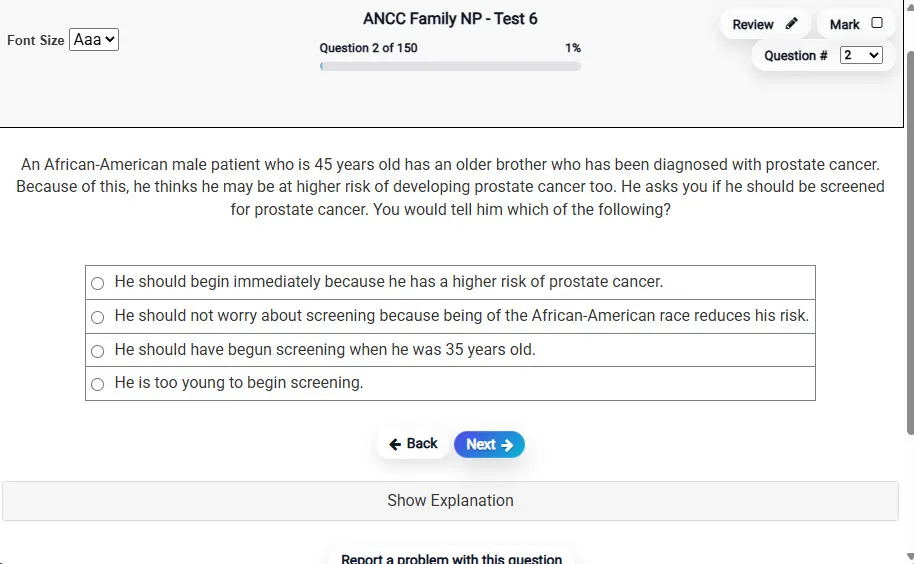
Answering a Question screen – Multiple-choice item view with navigation controls and progress tracker.
Answering a Question Multiple-choice item view with navigation controls and progress tracker.

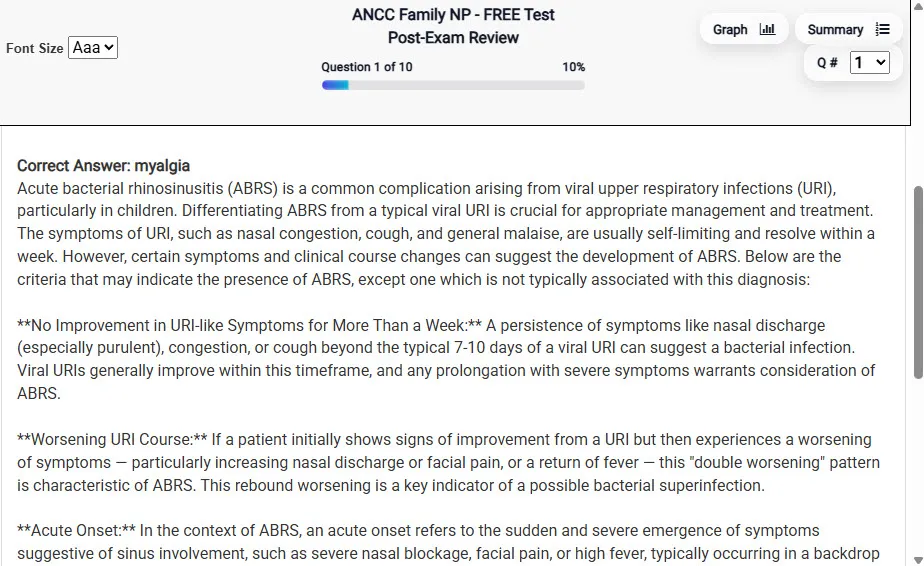
                           Detailed Explanation screen – 
                         Review mode showing chosen answer and rationale and references.
Detailed Explanation Review mode showing chosen answer and rationale and references.

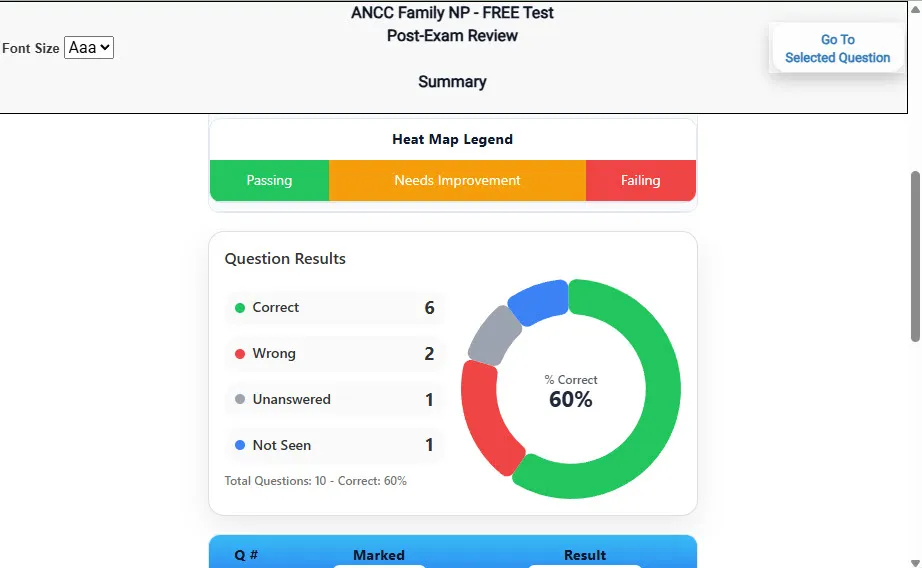
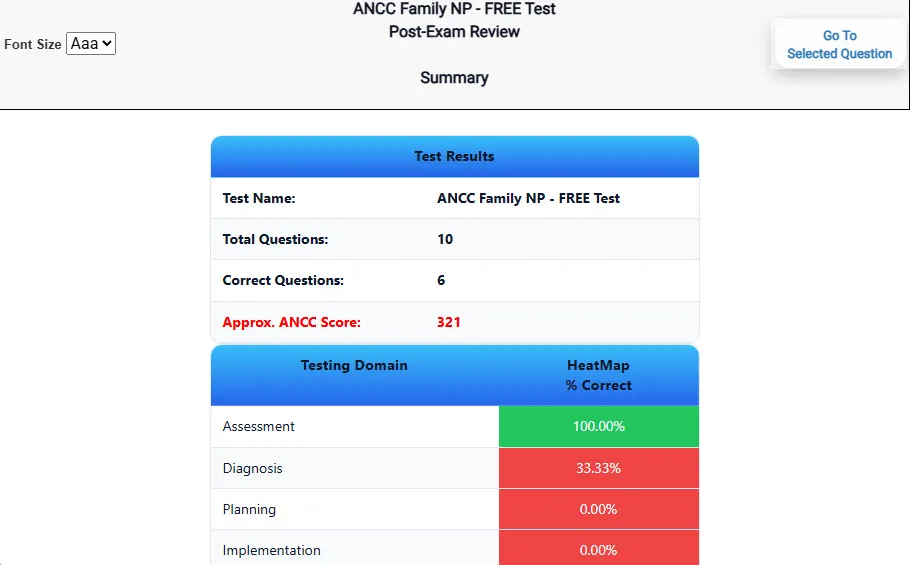
                           Review Summary 1 screen – 
                         Summary with counts for correct/wrong/unanswered and not seen items.
Review Summary 1 Summary with counts for correct/wrong/unanswered and not seen items.

                           Review Summary 2 screen – 
                         Advanced summary with category/domain breakdown and performance insights.
Review Summary 2 Advanced summary with category/domain breakdown and performance insights.

What Each Screen Shows

Answer Question Screen

  • Clean multiple-choice interface with progress bar.
  • Mark for review feature.
  • Matches real test pacing.

Detailed Explanation

  • Correct answer plus rationale.
  • Key concepts and guidelines highlighted.
  • Move between questions to fill knowledge gaps.

Review Summary 1

  • Overall results with total questions and scaled score.
  • Domain heatmap shows strengths and weaknesses.
  • Quick visual feedback on study priorities.

Review Summary 2

  • Chart of correct, wrong, unanswered, not seen.
  • Color-coded results for easy review.
  • Links back to missed items.

Top 10 Reasons to Use Exam Edge for your EMT Intermediate 85 Exam Prep

  1. Focused on the EMT Intermediate 85 Exam

    Our practice tests are built specifically for the EMT i85 exam — every question mirrors the real topics, format, and difficulty so you're studying exactly what matters.

  2. Real Exam Simulation

    We match the per-question time limits and pressure of the actual EMT exam, so test day feels familiar and stress-free.

  3. 5 Full Practice Tests & 500 Unique Questions

    You'll have more than enough material to master every EMT i85 concept — no repeats, no fluff.

  4. Lower Cost Than a Retake

    Ordering 5 practice exams costs less than retaking the EMT Intermediate 85 exam after a failure. One low fee could save you both time and money.

  5. Flexible Testing

    Need to step away mid-exam? Pick up right where you left off — with your remaining time intact.

  6. Instant Scoring & Feedback

    See your raw score and an estimated EMT Intermediate 85 score immediately after finishing each practice test.

  7. Detailed Explanations for Every Question

    Review correct and incorrect answers with clear, step-by-step explanations so you truly understand each topic.

  8. Trusted & Accredited

    We're fully accredited by the Better Business Bureau and uphold the highest standards of trust and transparency.

  9. Web-Based & Always Available

    No software to install. Access your EMT i85 practice exams 24/7 from any computer or mobile device.

  10. Expert Support When You Need It

    Need extra help? Our specialized tutors are highly qualified and ready to support your EMT exam prep.


Pass the EMT Intermediate 85 Exam with Realistic Practice Tests from Exam Edge

Preparing for your upcoming EMT Intermediate 85 (NREMT-I85) Certification Exam can feel overwhelming — but the right practice makes all the difference. Exam Edge gives you the tools, structure, and confidence to pass on your first try. Our online practice exams are built to match the real EMT i85 exam in content, format, and difficulty.

  • 📝 5 EMT Intermediate 85 Practice Tests: Access 5 full-length exams with 100 questions each, covering every major EMT Intermediate 85 topic in depth.
  • Instant Online Access: Start practicing right away — no software, no waiting.
  • 🧠 Step-by-Step Explanations: Understand the reasoning behind every correct answer so you can master EMT i85 exam concepts.
  • 🔄 Retake Each Exam Up to 4 Times: Build knowledge through repetition and track your improvement over time.
  • 🌐 Web-Based & Available 24/7: Study anywhere, anytime, on any device.
  • 🧘 Boost Your Test-Day Confidence: Familiarity with the EMT format reduces anxiety and helps you perform under pressure.

These EMT Intermediate 85 practice exams are designed to simulate the real testing experience by matching question types, timing, and difficulty level. This approach helps you get comfortable not just with the exam content, but also with the testing environment, so you walk into your exam day focused and confident.


Exam Edge NREMT Reviews


I wanted to say Thank You! I would not have passed my NREMT exam without your practice tests. They showed me my weaknesses and helped my confidence, so I went into the test relaxed and ready.

James, Hartford, Connecticut

Thank you for creating these exams, they allowed me to find my weaknesses and correct them before taking the actual exam.

Michael , Lagunitas, California


EMT Intermediate 85 Aliases Test Name

Here is a list of alternative names used for this exam.

  • EMT Intermediate 85
  • EMT Intermediate 85 test
  • EMT Intermediate 85 Certification Test
  • EMT i85 test
  • NREMT
  • NREMT NREMT-I85
  • NREMT-I85 test
  • EMT Intermediate 85 (NREMT-I85)
  • EMT Intermediate 85 certification