This is the content of the pop-over!

DHA Clinical Dietitians (DHA-Diet) Practice Tests & Test Prep


DHA Clinical Dietitians  product image
(4.8)
Based on 25 Reviews

  • Real Exam Simulation: Timed questions and matching content build comfort for your DHA Clinical Dietitians test day.
  • Instant, 24/7 Access: Web-based DHA Clinical Dietitians practice exams with no software needed.
  • Clear Explanations: Step-by-step answers and explanations for your DHA exam to strengthen understanding.
  • Boosted Confidence: Reduces anxiety and improves test-taking skills to ace your DHA Clinical Dietitians (NUTRO).

Featured on

DHA Clinical Dietitians Online Practice Test Bundles

BEST VALUE
20 practice tests

$174.00

$799.00

SAVE $625

Only $8.70 per test!

  • 100% Pass Guarantee
  • 20 online practice tests
  • 100 questions per test
  • Bonus: 100 Flash Cards + Study Guide
  • Instant access
  • Detailed Explanations
  • Practice tests never expire
  • Timed, untimed, or study guide mode
MOST POPULAR
10 practice tests

$99.50

$399.50

SAVE $300

Only $9.95 per test!

  • 10 online practice tests
  • 100 questions per test
  • Bonus: 100 Flash Cards + Study Guide
  • Instant access
  • Detailed Explanations
  • Practice tests never expire
  • Timed, untimed, or study guide mode
5 practice tests

$69.75

$199.75

SAVE $130

Only $13.95 per test!

  • 5 online practice tests
  • 100 questions per test
  • Bonus: 100 Flash Cards
  • Instant access
  • Detailed Explanations
  • Practice tests never expire
  • Timed, untimed, or study guide mode
1 practice test

$39.95

  • 1 online practice test
  • 100 questions per test
  • Instant access
  • Detailed Explanations
  • Practice tests never expire
  • Timed, untimed, or study guide mode
Quick Select
Tap to choose a bundle

** All Prices are in US Dollars (USD) **


DHA Clinical Dietitians (NUTRO) Resources

Jump to the section you need most.

Understanding the exact breakdown of the DHA Clinical Dietitians test will help you know what to expect and how to most effectively prepare. The DHA Clinical Dietitians has 100 multiple-choice questions . The exam will be broken down into the sections below:

DHA Clinical Dietitians Exam Blueprint
Domain Name
Fundamental of Dietetics - Food Management and Services  
Obesity  
Cardiovascular Diseases  
Diabetes Mellitus  
Renal Diseases  
Liver Diseases  
Gastro-Intestinal Diseases  
Metabolic Disorders  
Inflammatory Diseases and Cancer  
Nutrition Support  
Community Nutrition  
Nutrition Through Life Cycle  

DHA Clinical Dietitians Study Tips by Domain

  • Apply HACCP basics in foodservice: identify CCPs for cooking/cooling/holding, and treat time–temperature abuse as a red flag requiring discard rather than “reheat to fix.”
  • Use safe temperature thresholds: hot holding ≥63°C and cold holding ≤5°C; a common trap is leaving food in the danger zone (5–63°C) during transport or service.
  • Prevent cross-contamination by separating raw and ready-to-eat foods and using dedicated equipment; a key red flag is the same cutting board/knife used for raw poultry then salads.
  • Manage allergens with strict segregation and clear labeling; priority rule: when in doubt about an ingredient or substitution, do not serve it as “allergen-free” without verified documentation.
  • Calculate recipes and portions accurately (standardized recipes, yield, portion control) because a common DHA-style pitfall is miscalculating edible portion (EP) vs as-purchased (AP) weights and underestimating cost or nutrients.
  • Implement sanitation and pest-control routines with documented schedules; red flag: inadequate handwashing or sick food handlers—exclude symptomatic staff (e.g., vomiting/diarrhea) from food prep to prevent outbreaks.
  • Classify obesity using BMI thresholds: 25.0–29.9 (overweight), 30.0–34.9 (Class I), 35.0–39.9 (Class II), ≥40 (Class III); red flag: confirm measured height/weight—self-reported values commonly underestimate BMI.
  • Assess central adiposity with waist circumference as a risk modifier (commonly ≥102 cm men, ≥88 cm women); trap: relying on BMI alone can miss high cardiometabolic risk in normal-BMI patients with high waist.
  • Set a realistic initial target of 5%–10% weight loss over ~3–6 months to improve glycemia, BP, and lipids; priority rule: focus on sustained energy deficit and adherence rather than a specific named diet.
  • Screen for obesity-related comorbidities (T2DM, dyslipidemia, hypertension, NAFLD, OSA) and secondary causes (hypothyroidism, Cushing’s, medications like steroids/antipsychotics); red flag: unexplained rapid weight gain warrants medical review before aggressive restriction.
  • Use behavioral strategies (self-monitoring, portion control, stimulus control, protein/fiber emphasis) and prescribe physical activity with a practical threshold (aim ≥150 min/week moderate for health; often 200–300 min/week for weight-loss maintenance); trap: underestimating liquid calories and “healthy” snacks is a common reason for plateau.
  • Know escalation criteria: consider anti-obesity pharmacotherapy at BMI ≥30 or ≥27 with comorbidities, and bariatric surgery typically at BMI ≥40 or ≥35 with comorbidities; contraindication cue: avoid very-low-calorie diets without close monitoring in pregnancy, severe organ disease, or high arrhythmia risk.
  • For dyslipidemia, prioritize LDL-C reduction with saturated fat <7% of kcal and eliminate trans fat; red flag: focusing on dietary cholesterol alone while saturated fat remains high.
  • In hypertension, implement DASH with sodium ≤1,500–2,300 mg/day and adequate potassium from foods; common trap: recommending potassium supplements in patients on ACEi/ARB or with renal impairment.
  • For heart failure, enforce sodium restriction (often ~2 g/day) and consider fluid restriction when hyponatremia or severe congestion is present; red flag: unintended weight loss and inadequate protein/energy from overly restrictive diets.
  • Post-MI/ASCVD secondary prevention should emphasize Mediterranean-style eating (high unsaturated fats, fiber ≥25–30 g/day, oily fish 2x/week); common trap: high-dose omega-3 supplements without accounting for bleeding risk with anticoagulants.
  • With anticoagulation (e.g., warfarin), keep vitamin K intake consistent rather than avoiding vegetables; red flag: sudden increases in leafy greens or starting supplements (e.g., vitamin E, fish oil) without monitoring INR.
  • For hypertriglyceridemia, reduce added sugars/refined carbs and alcohol, and use very-low-fat diet when TG ≥500 mg/dL to lower pancreatitis risk; common trap: adding “healthy” oils while total calories and TG remain high.
  • Differentiate T1DM vs T2DM and gestational diabetes for treatment priority—red flag: ketosis/weight loss with hyperglycemia suggests insulin deficiency and needs urgent insulin assessment.
  • Use carbohydrate counting and consistent timing with insulin/secretagogues—common trap: increasing insulin without adjusting carbs leads to recurrent hypoglycemia, especially with missed meals.
  • Medical nutrition therapy should target glycemic goals and cardiometabolic risk—priority rule: if BP/lipids are uncontrolled, emphasize DASH-style pattern, fiber, and saturated fat <10% (preferably lower) alongside glucose control.
  • Recognize and treat hypoglycemia promptly—threshold cue: plasma glucose <70 mg/dL requires 15–20 g fast-acting carbohydrate and reassess in 15 minutes (avoid chocolate/high-fat foods as they delay absorption).
  • For acute illness/DKA risk, ensure hydration and carbohydrate availability—red flag: nausea/vomiting, abdominal pain, or fruity breath with high glucose warrants ketone testing and urgent referral.
  • Screen for diabetes complications affecting nutrition—common traps: gastroparesis requires small low-fat/low-fiber meals with medication timing, and nephropathy shifts protein/sodium/potassium planning based on renal stage.
  • Stage CKD by eGFR and act on thresholds: when eGFR <30 mL/min/1.73 m2 (Stages 4–5) prioritize stricter protein, phosphorus, potassium, and sodium control and early dialysis education—common trap is waiting until symptoms.
  • Protein: pre-dialysis typically restrict (often ~0.6–0.8 g/kg/day with adequate kcal), but once on hemodialysis/peritoneal dialysis increase needs (often ~1.0–1.3 g/kg/day)—red flag is continuing pre-dialysis restriction after dialysis starts.
  • Potassium management: treat hyperkalemia urgently when K+ is persistently ≥5.5 mmol/L or with ECG changes, and review hidden sources (salt substitutes, high-K supplements, ACEi/ARB)—common trap is banning all fruits/veg without checking labs and dialysis adequacy.
  • Phosphorus control: aim to reduce additives and high-phosphate processed foods first, and coordinate binders with meals/snacks—priority rule is that binders taken without food won’t bind dietary phosphorus.
  • Sodium and fluids: for hypertension/edema, keep sodium low (often ≤2 g/day) to reduce interdialytic weight gain; red flag is >2–3 kg gain between hemodialysis sessions suggesting excess sodium/fluid rather than “just thirst.”
  • Diabetes with CKD: adjust carb goals to prevent hypoglycemia as insulin clearance falls with declining GFR; common DHA-style safety cue is to reconcile renal-safe meds/supplements (avoid high-dose vitamin A, caution with magnesium/aluminum antacids) and monitor for protein-energy wasting.
  • In cirrhosis, prioritize adequate protein (often 1.2–1.5 g/kg/day) and avoid routine protein restriction—red flag: reducing protein for encephalopathy without addressing precipitating factors.
  • For ascites/edema, enforce sodium restriction (typically ≤2 g/day) and monitor daily weights—common trap: focusing on fluid restriction without controlling sodium intake.
  • Hepatic encephalopathy nutrition: maintain calories, use frequent meals/late-night snack, and consider BCAA-enriched formulas when intolerance persists—contraindication cue: sedatives/alcohol intake worsening mental status.
  • In cholestatic liver disease, assess and supplement fat-soluble vitamins (A, D, E, K) and use MCT when steatorrhea is significant—red flag: unexplained bruising suggesting vitamin K deficiency.
  • Acute hepatitis or decompensation requires avoiding hepatotoxic supplements and ensuring adequate energy (often 30–35 kcal/kg/day) with tight glucose control—common trap: high-dose herbal products (e.g., green tea extract) in jaundiced patients.
  • Pre/post liver transplant: screen for sarcopenia and refeeding risk, then advance nutrition promptly with electrolyte monitoring—priority rule: correct low phosphate, potassium, and magnesium early when restarting feeds.
  • Differentiate osmotic vs secretory diarrhea—osmotic improves with fasting and has an osmotic gap >100 mOsm/kg; red flag: persistent nocturnal diarrhea suggests secretory/inflammatory causes.
  • In suspected celiac disease, ensure patients remain on a gluten-containing diet before tTG-IgA/biopsy; common trap: starting a gluten-free diet early can yield false-negative results.
  • For GERD, prioritize weight loss if overweight and avoid late meals (no food 2–3 hours before lying down); red flag: dysphagia, GI bleeding, or unintentional weight loss warrants urgent evaluation.
  • In acute pancreatitis, initiate early oral/enteral feeding as tolerated and avoid routine NPO beyond necessary; contraindication: alcohol use and hypertriglyceridemia are key triggers to address immediately.
  • For IBD flares, use low-residue/low-fiber temporarily and monitor iron, B12, folate, and vitamin D; common trap: high-fiber or lactose loads can worsen symptoms during active disease.
  • In IBS, consider a time-limited low-FODMAP trial with structured reintroduction; red flag: onset after age 50, anemia, fever, or nocturnal symptoms suggests a non-IBS pathology.
  • Differentiate inborn errors vs. acquired endocrine causes by pattern recognition (e.g., recurrent fasting hypoglycemia with elevated ketones suggests a fatty-acid oxidation disorder is less likely)—red flag: unexplained encephalopathy after illness/fasting warrants urgent metabolic workup.
  • For suspected inborn errors, implement “sick-day” prevention early (avoid prolonged fasting; provide rapid carbohydrate and hydration)—common trap: advising high-protein intake in urea cycle disorders can precipitate hyperammonemia.
  • Manage hyperuricemia/gout nutrition by prioritizing purine and alcohol reduction and weight management—red flag: rapid weight loss/ketosis increases uric acid and can trigger flares.
  • For phenylketonuria (PKU), enforce lifelong phenylalanine control with medical formula and monitored protein exchanges—contraindication: aspartame-containing products can raise phenylalanine.
  • In galactosemia, eliminate lactose/galactose sources immediately—common trap: assuming lactose-free products are always safe (some still contain galactose derivatives).
  • In hemochromatosis, limit supplemental iron and high-dose vitamin C with iron-rich meals (vitamin C increases absorption)—priority rule: avoid iron cookware and fortified products if ferritin/TSAT are elevated per DHA protocols.
  • For active cancer or inflammatory states, prioritize adequate protein (often 1.2–2.0 g/kg/day) and energy; red flag: unexplained rapid weight loss suggests cachexia and requires early nutrition intervention.
  • During chemotherapy/radiation, manage nutrition-impact symptoms (mucositis, nausea, taste changes) with texture/temperature modifications; common trap: recommending acidic/spicy foods when oral mucosa is inflamed.
  • Neutropenia precautions may be needed for severely immunocompromised patients; red flag: ANC <500/mm³ typically warrants stricter food safety and avoidance of high-risk foods (e.g., unpasteurized, undercooked).
  • For inflammatory bowel disease flares, use low-residue/low-fiber temporarily and reintroduce fiber as symptoms improve; common trap: long-term unnecessary restriction leading to micronutrient deficits (iron, B12, vitamin D).
  • In chronic inflammation and cancer, monitor and correct micronutrients with known risk (vitamin D, calcium, folate, B12, zinc); red flag: anemia workup should distinguish iron deficiency vs anemia of chronic disease before supplementing aggressively.
  • Be cautious with high-dose antioxidant/herbal supplements during active cancer therapy; priority rule: avoid megadoses (e.g., high-dose vitamins C/E) without oncology approval due to potential treatment interaction.
  • Screen for refeeding syndrome in malnourished patients (e.g., negligible intake >5 days, significant weight loss)—start feeds low, advance slowly, and replace phosphate/potassium/magnesium; red flag: falling PO4 with edema/arrhythmia after initiating nutrition.
  • Prefer enteral nutrition (EN) if the gut works; contraindication cue: bowel obstruction, uncontrolled GI bleeding, severe hemodynamic instability, or high-output fistula without distal access.
  • Confirm feeding-tube placement per facility policy (radiograph for new NG/OG in many settings) before first use; common trap: relying on auscultation “air bolus” rather than objective confirmation.
  • Estimate protein/energy needs and set realistic targets (e.g., aim to meet ≥60% of needs within 3–7 days when feasible); red flag: prolonged underfeeding from frequent NPO holds without compensatory rate adjustments.
  • Monitor and manage EN intolerance—use clinical signs (abdominal distention, vomiting, high aspiration risk) rather than gastric residual volume alone; common trap: stopping feeds solely for modest GRVs without other symptoms.
  • Use parenteral nutrition (PN) when EN is not possible/insufficient, and watch metabolic/line complications; priority rule: avoid overfeeding (hyperglycemia, hypercapnia, fatty liver) and check triglycerides with lipid infusion and daily electrolytes early on.
  • Use a full community assessment (demographics, food access, morbidity data, cultural practices) before planning interventions—red flag: choosing a program based on assumptions rather than local surveillance indicators.
  • For screening, apply validated tools (e.g., MUST/MNA for older adults) and define referral thresholds upfront—common trap: using BMI alone and missing recent unintentional weight loss.
  • Prioritize food safety and high-risk groups in community feeding (pregnant women, infants, immunocompromised)—contraindication: advising unpasteurized dairy or high-mercury fish without risk counseling.
  • Design education with clear SMART goals and culturally appropriate materials—red flag: lecture-only sessions without behavior targets or a plan to check understanding (teach-back).
  • Evaluate programs with process and outcome indicators (attendance, fidelity, anthropometrics/biomarkers) and set a timeline—common trap: reporting activities (inputs) as outcomes (impact).
  • Follow DHA-style compliance expectations for documentation and confidentiality in community settings—priority rule: obtain informed consent for data collection and avoid sharing identifiable health information outside the care team.
  • Pregnancy: target appropriate gestational weight gain by pre-pregnancy BMI (underweight 12.5–18 kg; normal 11.5–16; overweight 7–11.5; obese 5–9) — red flag is rapid or minimal gain suggesting poor intake, edema, or poor glycemic control.
  • Pregnancy micronutrients: folic acid 400 µg/day preconception (600 µg/day during pregnancy) and iron 27 mg/day — common trap is relying on diet alone in high-risk patients (multiple gestation, short interpregnancy interval, anemia).
  • Infants: prioritize exclusive breastfeeding for ~6 months and vitamin D 400 IU/day for breastfed (or partially breastfed) infants — red flag is cow’s milk before 12 months (risk of iron deficiency and renal solute load).
  • Complementary feeding: introduce iron-rich foods around 6 months and offer a variety of textures by 8–10 months — common trap is delaying allergenic foods without indication (increases allergy risk) or giving honey before 12 months (botulism risk).
  • Children/adolescents: track growth with WHO/CDC percentiles and use BMI-for-age to screen overweight/obesity (=85th/=95th percentile) — red flag is crossing two major percentile lines or faltering weight gain without illness.
  • Older adults: screen for malnutrition (e.g., unintentional weight loss ≥5% in 1 month or ≥10% in 6 months) and prioritize protein/energy-dense meals plus hydration — common trap is overlooking chewing/swallowing issues or polypharmacy reducing appetite.


Built to Fit Into Your Busy Life

Everything you need to prepare with confidence—without wasting a minute.

Three Study Modes

Timed, No Time Limit, or Explanation mode.

Actionable Analytics

Heatmaps and scaled scores highlight weak areas.

High-Yield Rationales

Concise explanations emphasize key concepts.

Realistic Interface

Matches the feel of the actual exam environment.

Accessible by Design

Clean layout reduces cognitive load.

Anytime, Anywhere

Web-based access 24/7 on any device.
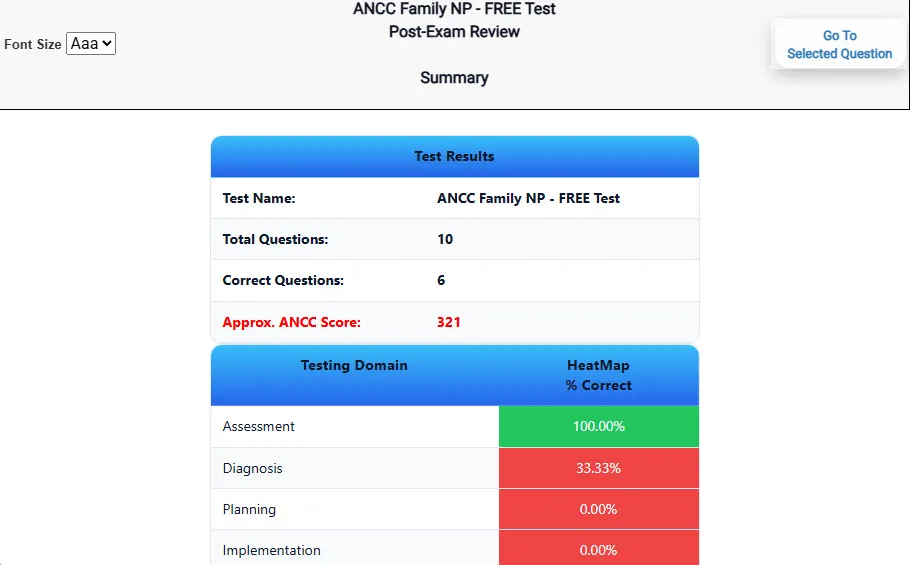
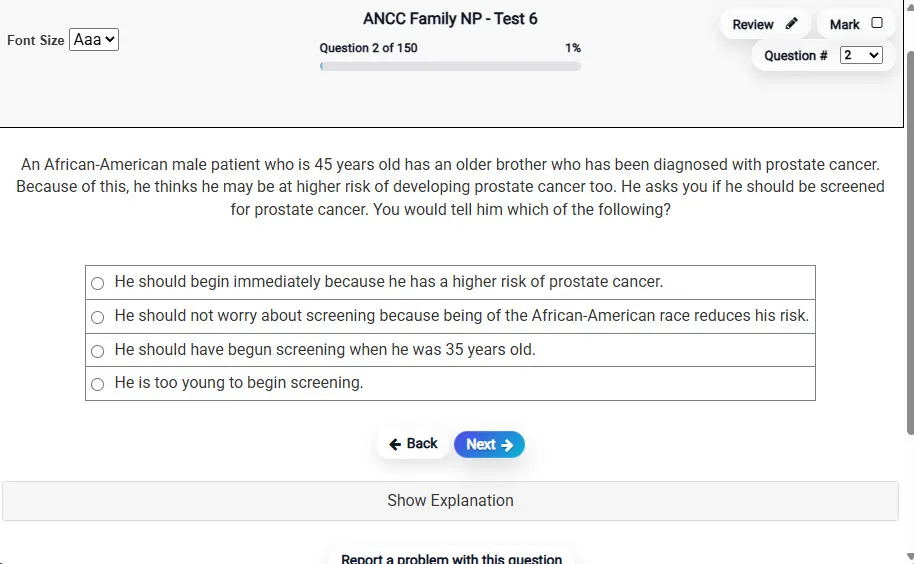
Answering a Question screen – Multiple-choice item view with navigation controls and progress tracker.
Answering a Question Multiple-choice item view with navigation controls and progress tracker.

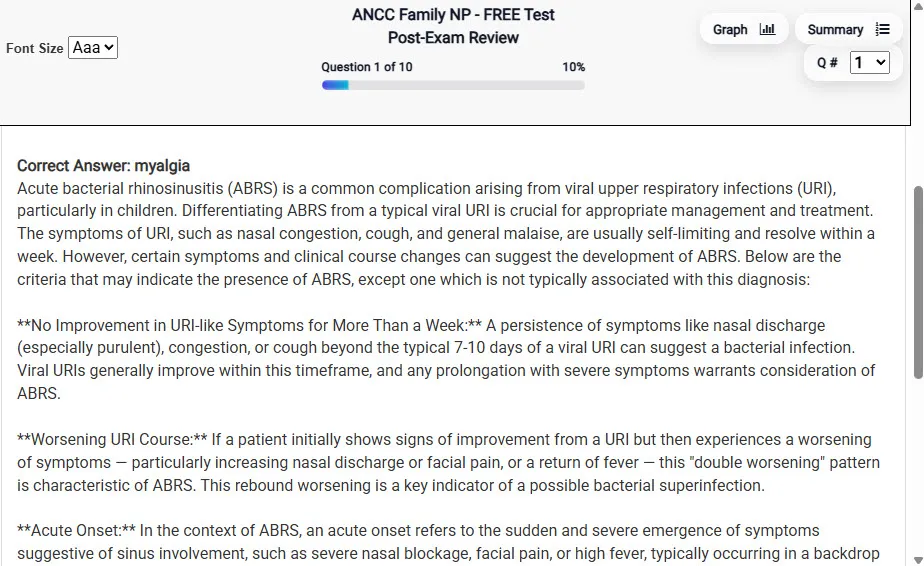
                           Detailed Explanation screen – 
                         Review mode showing chosen answer and rationale and references.
Detailed Explanation Review mode showing chosen answer and rationale and references.

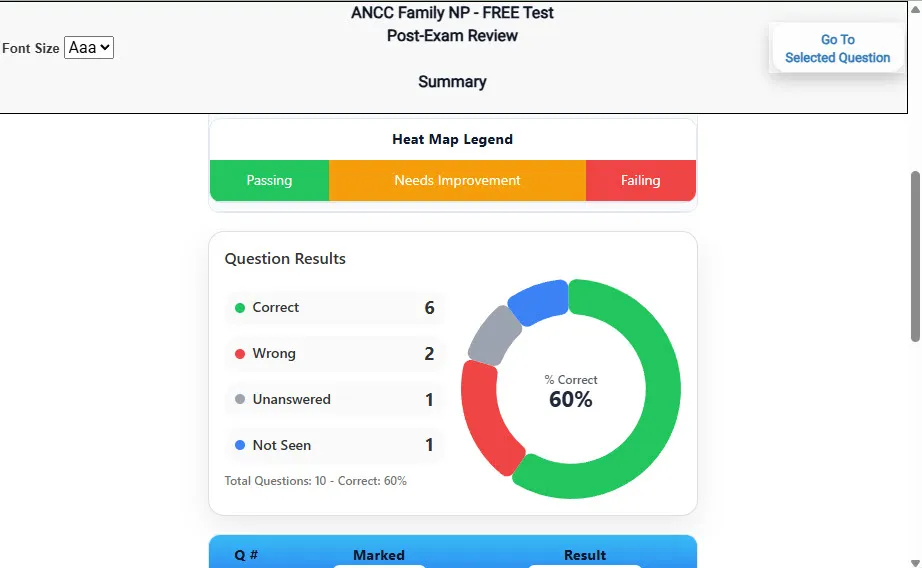
                           Review Summary 1 screen – 
                         Summary with counts for correct/wrong/unanswered and not seen items.
Review Summary 1 Summary with counts for correct/wrong/unanswered and not seen items.

                           Review Summary 2 screen – 
                         Advanced summary with category/domain breakdown and performance insights.
Review Summary 2 Advanced summary with category/domain breakdown and performance insights.

What Each Screen Shows

Answer Question Screen

  • Clean multiple-choice interface with progress bar.
  • Mark for review feature.
  • Matches real test pacing.

Detailed Explanation

  • Correct answer plus rationale.
  • Key concepts and guidelines highlighted.
  • Move between questions to fill knowledge gaps.

Review Summary 1

  • Overall results with total questions and scaled score.
  • Domain heatmap shows strengths and weaknesses.
  • Quick visual feedback on study priorities.

Review Summary 2

  • Chart of correct, wrong, unanswered, not seen.
  • Color-coded results for easy review.
  • Links back to missed items.

Top 10 Reasons to Use Exam Edge for your DHA Clinical Dietitians Exam Prep

  1. Focused on the DHA Clinical Dietitians Exam

    Our practice tests are built specifically for the DHA Clinical Dietitians exam — every question mirrors the real topics, format, and difficulty so you're studying exactly what matters.

  2. Real Exam Simulation

    We match the per-question time limits and pressure of the actual DHA exam, so test day feels familiar and stress-free.

  3. 20 Full Practice Tests & 2,000 Unique Questions

    You'll have more than enough material to master every DHA Clinical Dietitians concept — no repeats, no fluff.

  4. Lower Cost Than a Retake

    Ordering 5 practice exams costs less than retaking the DHA Clinical Dietitians exam after a failure. One low fee could save you both time and money.

  5. Flexible Testing

    Need to step away mid-exam? Pick up right where you left off — with your remaining time intact.

  6. Instant Scoring & Feedback

    See your raw score and an estimated DHA Clinical Dietitians score immediately after finishing each practice test.

  7. Detailed Explanations for Every Question

    Review correct and incorrect answers with clear, step-by-step explanations so you truly understand each topic.

  8. Trusted & Accredited

    We're fully accredited by the Better Business Bureau and uphold the highest standards of trust and transparency.

  9. Web-Based & Always Available

    No software to install. Access your DHA Clinical Dietitians practice exams 24/7 from any computer or mobile device.

  10. Expert Support When You Need It

    Need extra help? Our specialized tutors are highly qualified and ready to support your DHA exam prep.


Pass the DHA Clinical Dietitians Exam with Realistic Practice Tests from Exam Edge

Preparing for your upcoming DHA Clinical Dietitians (NUTRO) Certification Exam can feel overwhelming — but the right practice makes all the difference. Exam Edge gives you the tools, structure, and confidence to pass on your first try. Our online practice exams are built to match the real DHA Clinical Dietitians exam in content, format, and difficulty.

  • 📝 20 DHA Clinical Dietitians Practice Tests: Access 20 full-length exams with 100 questions each, covering every major DHA Clinical Dietitians topic in depth.
  • Instant Online Access: Start practicing right away — no software, no waiting.
  • 🧠 Step-by-Step Explanations: Understand the reasoning behind every correct answer so you can master DHA Clinical Dietitians exam concepts.
  • 🔄 Retake Each Exam Up to 4 Times: Build knowledge through repetition and track your improvement over time.
  • 🌐 Web-Based & Available 24/7: Study anywhere, anytime, on any device.
  • 🧘 Boost Your Test-Day Confidence: Familiarity with the DHA format reduces anxiety and helps you perform under pressure.

These DHA Clinical Dietitians practice exams are designed to simulate the real testing experience by matching question types, timing, and difficulty level. This approach helps you get comfortable not just with the exam content, but also with the testing environment, so you walk into your exam day focused and confident.


Exam Edge DHA Reviews


Hi Ma'am, thank you so much. I cleared my DHA exam, and this time the question papers helped me a lot. I will surely recommend DHA prep to all my friends. Thanks once again.

Shafana ,

Very helpful and quick response.

Roxan , United Kingdom


DHA Clinical Dietitians Aliases Test Name

Here is a list of alternative names used for this exam.

  • DHA Clinical Dietitians
  • DHA Clinical Dietitians test
  • DHA Clinical Dietitians Certification Test
  • DHA
  • DHA NUTRO
  • NUTRO test
  • DHA Clinical Dietitians (NUTRO)
  • Clinical Dietitians certification