This is the content of the pop-over!

Lightning Deal Alert – 12% Off Ends at Midnight!

Strike while the savings are hot! Use promo code FlashSale at checkout for 12% off any Exam Edge test or bundle. Hurry—the clock is ticking!

AMT RPT (RPT) Practice Tests & Test Prep by Exam Edge


AMT Registered Phlebotomy Technician  product image
(4.5)
Based on 32 Reviews

  • Real Exam Simulation: Timed questions and matching content build comfort for your AMT RPT test day.
  • Instant, 24/7 Access: Web-based AMT Registered Phlebotomy Technician practice exams with no software needed.
  • Clear Explanations: Step-by-step answers and explanations for your AMT exam to strengthen understanding.
  • Boosted Confidence: Reduces anxiety and improves test-taking skills to ace your AMT Registered Phlebotomy Technician (RPT).

Featured on

AMT Registered Phlebotomy Technician Online Practice Test Bundles

BEST VALUE
10 practice tests

$99.50

$399.50

SAVE $300

Only $9.95 per test!

  • 100% Pass Guarantee
  • 10 online practice tests
  • 100 questions per test
  • Bonus: 100 Flash Cards + Study Guide
  • Instant access
  • Detailed Explanations
  • Practice tests never expire
  • Timed, untimed, or study guide mode
5 practice tests

$69.75

$199.75

SAVE $130

Only $13.95 per test!

  • 5 online practice tests
  • 100 questions per test
  • Bonus: 100 Flash Cards + Study Guide
  • Instant access
  • Detailed Explanations
  • Practice tests never expire
  • Timed, untimed, or study guide mode
1 practice test

$39.95

  • 1 online practice test
  • 100 questions per test
  • Instant access
  • Detailed Explanations
  • Practice tests never expire
  • Timed, untimed, or study guide mode
Quick Select
Tap to choose a bundle

** All Prices are in US Dollars (USD) **


AMT RPT (RPT) Resources

Jump to the section you need most.

Understanding the exact breakdown of the AMT Registered Phlebotomy Technician test will help you know what to expect and how to most effectively prepare. The AMT Registered Phlebotomy Technician has multiple-choice questions . The exam will be broken down into the sections below:

AMT Registered Phlebotomy Technician Exam Blueprint
Domain Name % Number of
Questions
Obtaining Blood Samples 41.5% 42
Specimen Collection and Processing 15.5% 16
Time Management and Assignment Organization 8% 8
Professional Communications 5.5% 6
Clerical Skills and Duties 4.5% 5
Safety Standards and Procedures 10% 10
Legal - Ethical Professional Considerations 6% 6
Terminology - Anatomy Physiology 9% 9

AMT Registered Phlebotomy Technician Study Tips by Domain

  • Verify patient identity using two identifiers (e.g., full name and DOB) against the requisition and wristband; red flag: any mismatch means stop and resolve before any needle stick.
  • Select the correct venipuncture site and avoid contraindications; do not draw from an arm with IV infusion, mastectomy side, or fistula—priority rule: use the opposite arm or get provider direction.
  • Apply the tourniquet 3–4 inches above the site and release within 1 minute; common trap: leaving it on too long can cause hemoconcentration and inaccurate results.
  • Cleanse the site with appropriate antiseptic and let it air-dry fully; red flag: touching the site after cleaning requires re-cleansing to reduce contamination risk.
  • Use proper needle angle and tube handling to minimize hemolysis; common trap: probing or forcefully pulling back on a syringe increases hemolysis and patient injury risk.
  • After collection, ensure hemostasis and patient safety; contraindication: do not allow a patient on anticoagulants or with bleeding risk to leave without firm pressure applied and bleeding fully stopped.
  • Verify tube type and additive before collection; red flag: using the wrong color top can cause clotting or anticoagulant interference and invalid results.
  • Follow the correct order of draw to prevent additive carryover; trap: drawing an EDTA tube before a serum tube can falsely elevate potassium and lower calcium.
  • Mix additive tubes by gentle inversions immediately after fill (do not shake); contraindication: vigorous shaking can hemolyze the specimen and trigger rejection.
  • Label specimens at the bedside with two identifiers, date/time, and collector ID; priority rule: any unlabeled or mislabeled specimen should not be processed.
  • Process per test requirements (centrifuge timing, aliquot, protect from light, keep on ice); threshold: delays beyond the stability window can alter analytes like glucose and blood gases.
  • Transport specimens using proper containment and temperature control; red flag: sending a chilled specimen that must be kept at room temperature (or vice versa) can compromise coagulation and chemistry tests.
  • Prioritize timed draws first (STAT, blood cultures, glucose tolerance, therapeutic drug levels); red flag: starting routine rounds when a collection has a strict clock window.
  • Cluster patients by location and required equipment (e.g., isolation rooms, pediatric carts) to cut backtracking; common trap: forgetting to restock after a difficult draw and losing time on the next patient.
  • Confirm patient readiness before entering the room (ID available, fasting status, IV restrictions, consent/understanding); threshold: if the patient is not ready, reschedule immediately and move to the next task.
  • Handle specimens in batches only when stability allows; priority rule: label and secure each tube at bedside before leaving, even if it slows you down.
  • Use a quick pre-round checklist (orders, special tubes, transport needs, temperature requirements); red flag: missing a light-protected or chilled specimen and having to recollect due to improper handling.
  • Document and communicate delays in real time (difficult access, patient unavailable, unsuccessful attempts) to avoid repeated trips; contraindication: repeatedly attempting without escalation—after facility policy limits, hand off to a more experienced collector.
  • Confirm patient identity using two identifiers (e.g., full name and DOB) and match them to the requisition before any draw; red flag: name-only confirmation or “I’m the only one here” claims.
  • Explain the procedure in plain language and obtain cooperation before applying the tourniquet; common trap: using jargon like “venipuncture” without checking understanding or consent to proceed.
  • Use closed-loop communication for critical details (test priority, special handling, isolation status) by repeating back the request; priority rule: clarify STAT/Timed draws immediately to avoid missed collection windows.
  • When relaying problems (failed draw, hemolysis risk, insufficient volume), state the issue, impact, and next step; red flag: blaming language or vague reports like “it didn’t work” without time/site details.
  • Maintain professional boundaries and confidentiality during conversations at the bedside and in hallways; contraindication: discussing results or diagnoses—redirect to the licensed provider and document the handoff if needed.
  • Handle difficult interactions with de-escalation: calm tone, offer choices (which arm, seated vs. lying), and pause if safety is threatened; threshold: stop and get assistance if patient becomes combative or cannot follow instructions.
  • Verify two patient identifiers against the requisition and ID band before labeling; red flag: any mismatch means stop and resolve before the draw.
  • Confirm test orders, specimen type, and collection time requirements on the requisition/LIS; common trap: collecting the wrong tube because “CBC” and “CMP” were assumed instead of read.
  • Label tubes immediately at the bedside with full identifiers, date/time, and collector ID; priority rule: never prelabel—unlabeled or mislabeled specimens are recollects.
  • Document collection details in the LIS/log (time, site, complications, special handling) right after the draw; red flag: “late entry” increases error risk and may invalidate timed studies.
  • Maintain chain-of-custody paperwork when required (signatures, seals, timed handoffs); threshold: any broken seal or missing signature requires rejection or recollection per policy.
  • Check sample transport requirements and complete routing forms (STAT vs routine, temperature, light protection); common trap: sending ammonia or lactic acid at room temp instead of on ice.
  • Verify patient identity using two identifiers (e.g., full name and DOB) against the requisition and wristband before any draw; red flag: “I’m here for labs” without matching ID is a hard stop.
  • Perform hand hygiene before and after glove use and change gloves between patients; common trap: reusing gloves to “just label tubes” can transfer pathogens to the next surface/patient.
  • Use standard precautions for all specimens and add transmission-based precautions when indicated (e.g., airborne precautions require appropriate respirator); contraindication: entering an isolation room without the required PPE.
  • Activate safety-engineered needles immediately after use and dispose of sharps directly into an approved container within arm’s reach; priority rule: never recap or carry an exposed needle across the room.
  • Disinfect the venipuncture site with the correct antiseptic and allow it to fully air-dry; red flag: blowing on or wiping the site after cleaning contaminates the draw and increases infection risk.
  • Maintain a clear, stable workspace and secure patients at risk of syncope (seated with arm supported, bed rails up if supine); threshold: if the patient reports dizziness or looks pale/diaphoretic, stop the draw and initiate safety measures immediately.
  • Know vein anatomy for venipuncture: prioritize the median cubital vein, and treat a “pulsing, bright red” return as a contraindication suggesting arterial puncture.
  • Use correct additive terminology: if you say “serum,” do not use anticoagulant tubes (red/gold), and a common trap is calling a green-top (heparin) sample “serum” when it’s plasma.
  • Match tube additives to tests: EDTA (lavender) for hematology and citrate (light blue) for coagulation, and a key threshold is filling light blue tubes to the line to maintain the 9:1 blood-to-anticoagulant ratio.
  • Recognize order-of-draw rationale: blood cultures first, then citrate, then serum, then heparin, then EDTA, then glycolytic inhibitor, and a red flag is reversed order after an IV start that can cause additive carryover.
  • Apply basic physiology to patient prep: postural changes affect analytes, so if a patient has been standing, allow them to sit quietly ~15 minutes before drawing to reduce hemoconcentration error.
  • Use vital sign and symptom terminology appropriately: if a patient becomes pale/diaphoretic with nausea (presyncope), stop the draw and position them safely; a trap is continuing because they “want to finish.”


Built to Fit Into Your Busy Life

Everything you need to prepare with confidence—without wasting a minute.

Three Study Modes

Timed, No Time Limit, or Explanation mode.

Actionable Analytics

Heatmaps and scaled scores highlight weak areas.

High-Yield Rationales

Concise explanations emphasize key concepts.

Realistic Interface

Matches the feel of the actual exam environment.

Accessible by Design

Clean layout reduces cognitive load.

Anytime, Anywhere

Web-based access 24/7 on any device.
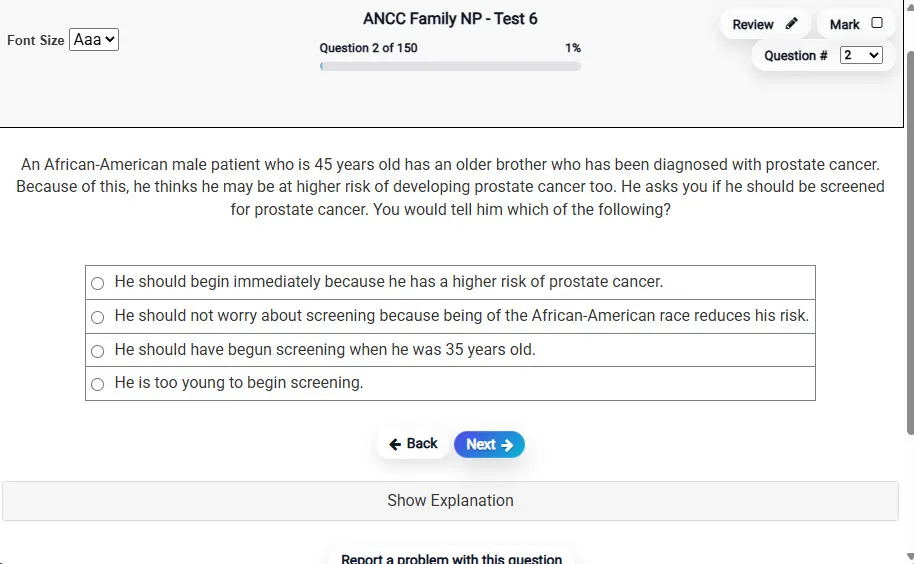
Answering a Question screen – Multiple-choice item view with navigation controls and progress tracker.
Answering a Question Multiple-choice item view with navigation controls and progress tracker.

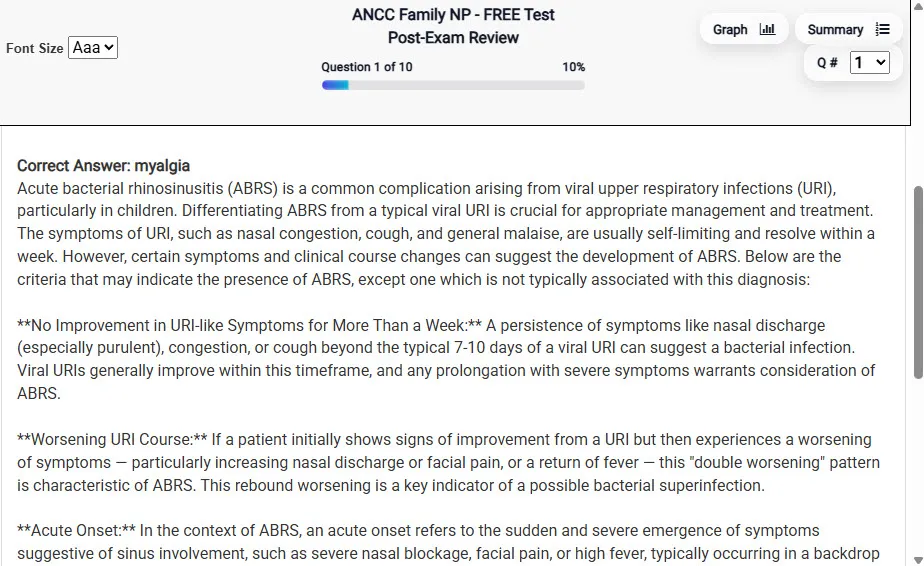
                           Detailed Explanation screen – 
                         Review mode showing chosen answer and rationale and references.
Detailed Explanation Review mode showing chosen answer and rationale and references.

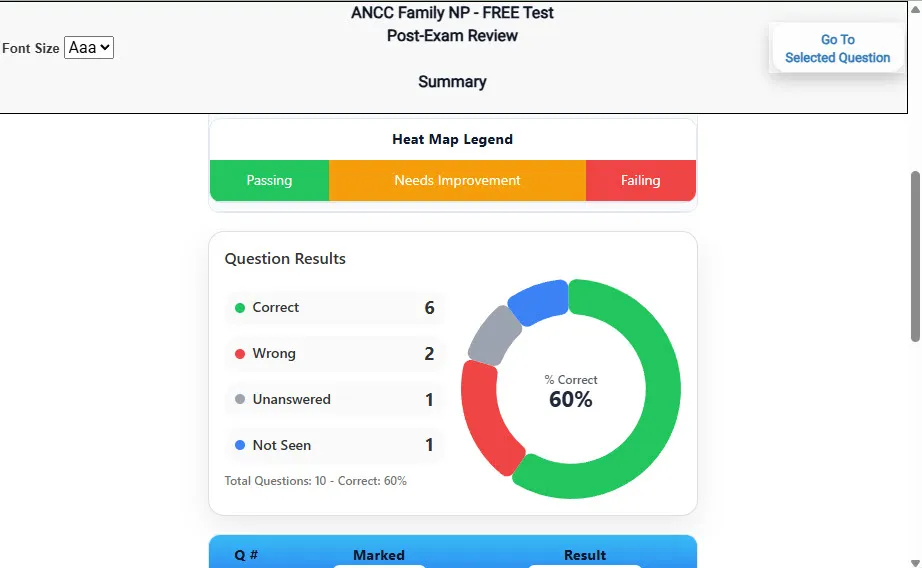
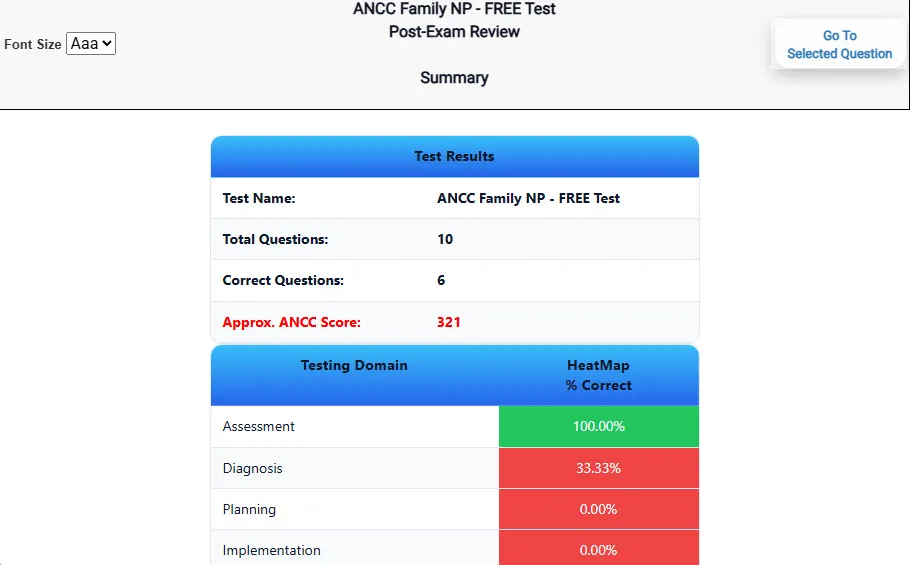
                           Review Summary 1 screen – 
                         Summary with counts for correct/wrong/unanswered and not seen items.
Review Summary 1 Summary with counts for correct/wrong/unanswered and not seen items.

                           Review Summary 2 screen – 
                         Advanced summary with category/domain breakdown and performance insights.
Review Summary 2 Advanced summary with category/domain breakdown and performance insights.

What Each Screen Shows

Answer Question Screen

  • Clean multiple-choice interface with progress bar.
  • Mark for review feature.
  • Matches real test pacing.

Detailed Explanation

  • Correct answer plus rationale.
  • Key concepts and guidelines highlighted.
  • Move between questions to fill knowledge gaps.

Review Summary 1

  • Overall results with total questions and scaled score.
  • Domain heatmap shows strengths and weaknesses.
  • Quick visual feedback on study priorities.

Review Summary 2

  • Chart of correct, wrong, unanswered, not seen.
  • Color-coded results for easy review.
  • Links back to missed items.

Top 10 Reasons to Use Exam Edge for your AMT Registered Phlebotomy Technician Exam Prep

  1. Focused on the AMT Registered Phlebotomy Technician Exam

    Our practice tests are built specifically for the AMT RPT exam — every question mirrors the real topics, format, and difficulty so you're studying exactly what matters.

  2. Real Exam Simulation

    We match the per-question time limits and pressure of the actual AMT exam, so test day feels familiar and stress-free.

  3. 10 Full Practice Tests & 1,000 Unique Questions

    You'll have more than enough material to master every AMT RPT concept — no repeats, no fluff.

  4. Lower Cost Than a Retake

    Ordering 5 practice exams costs less than retaking the AMT Registered Phlebotomy Technician exam after a failure. One low fee could save you both time and money.

  5. Flexible Testing

    Need to step away mid-exam? Pick up right where you left off — with your remaining time intact.

  6. Instant Scoring & Feedback

    See your raw score and an estimated AMT Registered Phlebotomy Technician score immediately after finishing each practice test.

  7. Detailed Explanations for Every Question

    Review correct and incorrect answers with clear, step-by-step explanations so you truly understand each topic.

  8. Trusted & Accredited

    We're fully accredited by the Better Business Bureau and uphold the highest standards of trust and transparency.

  9. Web-Based & Always Available

    No software to install. Access your AMT RPT practice exams 24/7 from any computer or mobile device.

  10. Expert Support When You Need It

    Need extra help? Our specialized tutors are highly qualified and ready to support your AMT exam prep.


Pass the AMT Registered Phlebotomy Technician Exam with Realistic Practice Tests from Exam Edge

Preparing for your upcoming AMT Registered Phlebotomy Technician (RPT) Certification Exam can feel overwhelming — but the right practice makes all the difference. Exam Edge gives you the tools, structure, and confidence to pass on your first try. Our online practice exams are built to match the real AMT RPT exam in content, format, and difficulty.

  • 📝 10 AMT Registered Phlebotomy Technician Practice Tests: Access 10 full-length exams with 100 questions each, covering every major AMT Registered Phlebotomy Technician topic in depth.
  • Instant Online Access: Start practicing right away — no software, no waiting.
  • 🧠 Step-by-Step Explanations: Understand the reasoning behind every correct answer so you can master AMT RPT exam concepts.
  • 🔄 Retake Each Exam Up to 4 Times: Build knowledge through repetition and track your improvement over time.
  • 🌐 Web-Based & Available 24/7: Study anywhere, anytime, on any device.
  • 🧘 Boost Your Test-Day Confidence: Familiarity with the AMT format reduces anxiety and helps you perform under pressure.

These AMT Registered Phlebotomy Technician practice exams are designed to simulate the real testing experience by matching question types, timing, and difficulty level. This approach helps you get comfortable not just with the exam content, but also with the testing environment, so you walk into your exam day focused and confident.


Exam Edge AMT Reviews


I took the AMT CMAS test this past Monday and got a perfect score. Exam Edge was a huge help!

Sue B, Colorado Springs, CO


AMT Registered Phlebotomy Technician Aliases Test Name

Here is a list of alternative names used for this exam.

  • AMT Registered Phlebotomy Technician
  • AMT Registered Phlebotomy Technician test
  • AMT Registered Phlebotomy Technician Certification Test
  • AMT RPT test
  • AMT
  • AMT RPT
  • RPT test
  • AMT Registered Phlebotomy Technician (RPT)
  • Registered Phlebotomy Technician certification