This is the content of the pop-over!

Texas Nurse Aide Practice Tests & Test Prep by Exam Edge


Texas Nurse Aide product image
(5.0)
Based on 28 Reviews

  • Real Exam Simulation: Timed questions and matching content build comfort for your Texas Nurse Aide test day.
  • Instant, 24/7 Access: Web-based Texas Nurse Aide practice exams with no software needed.
  • Clear Explanations: Step-by-step answers and explanations for your NurseAide exam to strengthen understanding.
  • Boosted Confidence: Reduces anxiety and improves test-taking skills to ace your Texas Nurse Aide .

Featured on

Texas Nurse Aide Online Practice Test Bundles

BEST VALUE
10 practice tests

$99.50

$399.50

SAVE $300

Only $9.95 per test!

  • 100% Pass Guarantee
  • 10 online practice tests
  • 60 questions per test
  • Bonus: 100 Flash Cards + Study Guide
  • Instant access
  • Detailed Explanations
  • Practice tests never expire
  • Timed, untimed, or study guide mode
5 practice tests

$69.75

$199.75

SAVE $130

Only $13.95 per test!

  • 5 online practice tests
  • 60 questions per test
  • Bonus: 100 Flash Cards + Study Guide
  • Instant access
  • Detailed Explanations
  • Practice tests never expire
  • Timed, untimed, or study guide mode
1 practice test

$39.95

  • 1 online practice test
  • 60 questions per test
  • Instant access
  • Detailed Explanations
  • Practice tests never expire
  • Timed, untimed, or study guide mode
Quick Select
Tap to choose a bundle

** All Prices are in US Dollars (USD) **


Texas Nurse Aide () Resources

Jump to the section you need most.

Understanding the exact breakdown of the Texas Nurse Aide test will help you know what to expect and how to most effectively prepare. The Texas Nurse Aide has 60 multiple-choice questions . The exam will be broken down into the sections below:

Texas Nurse Aide Exam Blueprint
Domain Name % Number of
Questions
Role of the Nurse Aide 20% 12
Promotion of Safety 22% 13
Promotion of Function and Health of Residents 20% 12
Basic Nursing Care Provided by the Nurse Aide 24% 14
Providing Specialized Care for Residents with Changes in Health 14% 8

Texas Nurse Aide Study Tips by Domain

  • Follow your facility’s chain of command—report resident condition changes, safety hazards, and suspected abuse immediately to the nurse; red flag: trying to “fix it yourself” instead of reporting.
  • Work within the nurse aide scope: perform assigned tasks and never assess, diagnose, or change a care plan; common trap: giving PRN meds or using another staff member’s login to chart.
  • Protect resident rights (privacy, dignity, choice) during all care and keep doors/curtains closed; red flag: discussing resident information in hallways, elevators, or on social media.
  • Maintain accurate, timely documentation of care provided and observations using objective facts; common trap: charting before care is done or writing opinions like “lazy” instead of specific behaviors.
  • Use professional communication—SBAR-style updates to the nurse and respectful interactions with residents/families; priority rule: report urgent symptoms (new confusion, chest pain, trouble breathing) before completing routine tasks.
  • Demonstrate dependability and infection-control professionalism (hand hygiene, PPE, attendance, and proper uniform/ID); red flag: coming to work ill with contagious symptoms or ignoring isolation signage.
  • Use standard precautions every time (hand hygiene before/after resident contact, gloves for blood/body fluids); red flag: skipping hand hygiene when moving from a “clean” task to a “dirty” task.
  • Prevent falls by keeping bed low/locked, call light within reach, non-skid footwear on, and clutter cleared; common trap: leaving water pitchers, cords, or walker out of reach and prompting risky self-ambulation.
  • Maintain proper body mechanics and use gait belts or mechanical lifts per care plan; contraindication: do not lift or transfer alone when the plan requires a two-person assist or device.
  • Support safe swallowing by following ordered diet/positioning (upright 90° during and after meals) and pacing bites/sips; red flag: coughing, wet voice, or pocketing food—stop feeding and report immediately.
  • Prevent pressure injuries by turning/repositioning on schedule and keeping skin clean/dry; common trap: massaging reddened bony areas or placing a resident directly on a reddened spot.
  • Know emergency priorities and reporting: call for help, ensure resident safety, and report changes promptly; red flag: finding a resident on the floor—do not move them before assessment and notify the nurse immediately.
  • Promote mobility with proper body mechanics and assistive devices as ordered; red flag—if the resident reports new dizziness or chest pain during activity, stop and report immediately.
  • Support nutrition and hydration by offering fluids regularly and tracking intake/output when assigned; common trap—not reporting poor appetite, nausea, or coughing with meals which may signal aspiration risk.
  • Encourage independence with ADLs using cueing and setting up supplies (e.g., toothbrush in hand) rather than doing the task; priority rule—use the least assistance needed to maintain function.
  • Promote skin integrity with turning/repositioning and moisture control; red flag—non-blanchable redness, warmth, or open areas must be reported at once.
  • Support bowel and bladder function with timely toileting, privacy, and perineal care; common trap—assuming incontinence is “normal” and failing to report new onset, burning, or blood in urine/stool.
  • Foster rest, comfort, and psychosocial well-being by maintaining routines and providing choices; contraindication—do not restrain or isolate for convenience, and report sudden confusion or withdrawal as a change in condition.
  • Follow the care plan exactly for ADLs (bathing, dressing, grooming) and report any new refusal or change in ability immediately—red flag: a sudden need for more help can signal acute illness.
  • Measure and record vital signs correctly (right cuff size, proper technique, verify abnormal results) and report at once if outside facility parameters—common trap: rounding numbers or charting a value you didn’t obtain.
  • Accurate intake and output matters: measure liquids in mL, note emesis/diarrhea, and report low urine output—priority threshold: <30 mL/hr or no urine in 6–8 hours is urgent.
  • Provide safe feeding assistance (upright position, small bites, check for pocketing) and stop if coughing/choking occurs—contraindication: do not feed a resident who is not alert enough to swallow safely.
  • Maintain skin integrity during hygiene and repositioning: keep skin clean/dry, use moisture barriers, and turn per schedule—red flag: non-blanchable redness over bony areas must be reported promptly.
  • Use proper transfers and mobility assistance (gait belt if indicated, lock wheels, clear path) and ask for help when required—priority rule: if the care plan says 2-person assist, never attempt alone.
  • Recognize and report change-of-condition immediately (e.g., new confusion, shortness of breath, chest pain, sudden weakness, uncontrolled bleeding)—red flag: don’t assume it’s “normal aging” or wait until end of shift.
  • For diabetes care, watch for hypoglycemia (shakiness, sweating, confusion) and act per facility policy (notify nurse, follow ordered interventions)—common trap: skipping meals after insulin/meds or ignoring mild symptoms.
  • Monitor for dehydration and fluid overload by noting intake/output cues, dry mucous membranes, dizziness, edema, or rapid weight change—priority rule: report sudden swelling, new crackles, or difficulty breathing at once.
  • Provide safe care for residents with indwelling urinary catheters or ostomies by preventing pulling, keeping drainage below bladder, and observing output/skin—red flag: cloudy/foul urine, no output, leaking, or new skin breakdown.
  • For respiratory changes, use positioning and basic oxygen safety (no smoking/flames, don’t change flow rate unless directed) and observe work of breathing—common trap: removing oxygen for comfort or leaving tubing kinked.
  • During infection precautions, follow isolation signage exactly and report fever, new cough, diarrhea, or wound drainage—priority rule: hand hygiene before and after resident contact even when gloves are used.


Built to Fit Into Your Busy Life

Everything you need to prepare with confidence—without wasting a minute.

Three Study Modes

Timed, No Time Limit, or Explanation mode.

Actionable Analytics

Heatmaps and scaled scores highlight weak areas.

High-Yield Rationales

Concise explanations emphasize key concepts.

Realistic Interface

Matches the feel of the actual exam environment.

Accessible by Design

Clean layout reduces cognitive load.

Anytime, Anywhere

Web-based access 24/7 on any device.
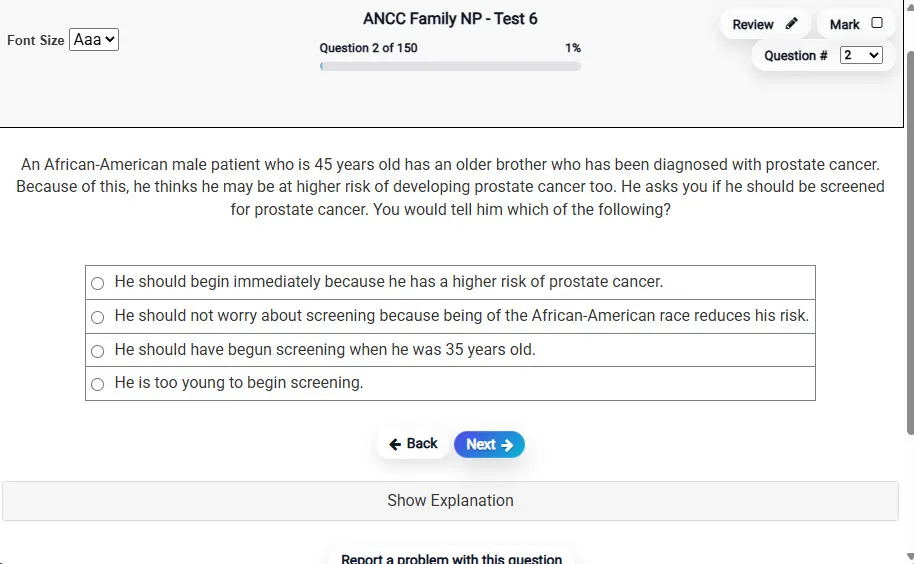
Answering a Question screen – Multiple-choice item view with navigation controls and progress tracker.
Answering a Question Multiple-choice item view with navigation controls and progress tracker.

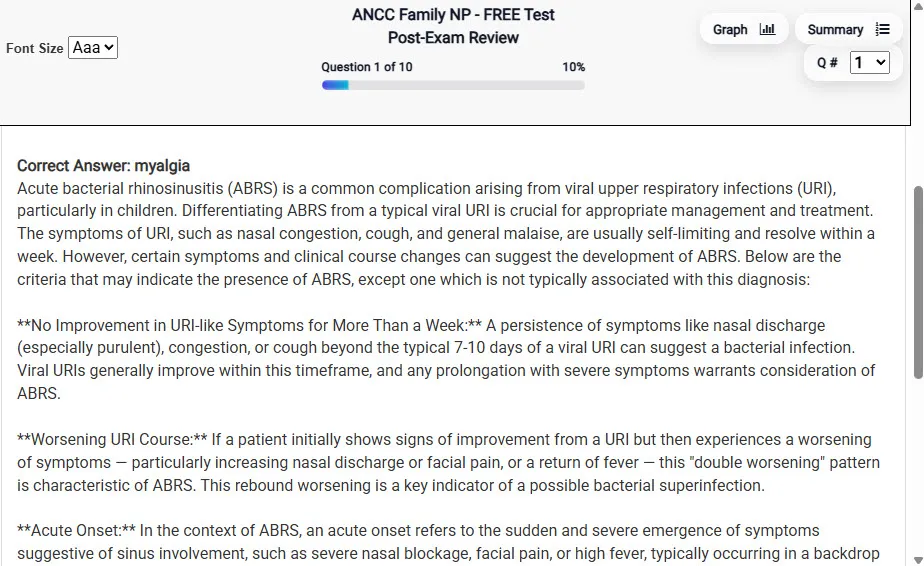
                           Detailed Explanation screen – 
                         Review mode showing chosen answer and rationale and references.
Detailed Explanation Review mode showing chosen answer and rationale and references.

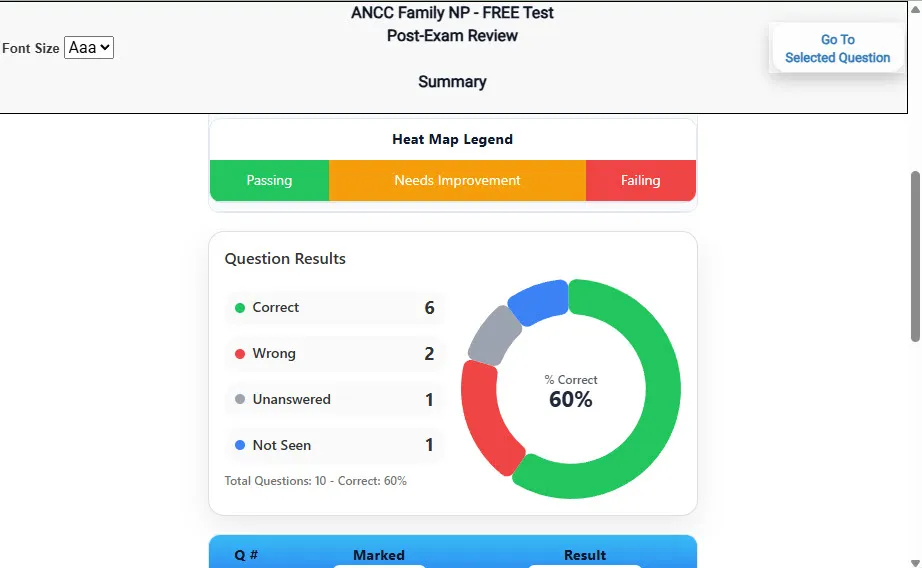
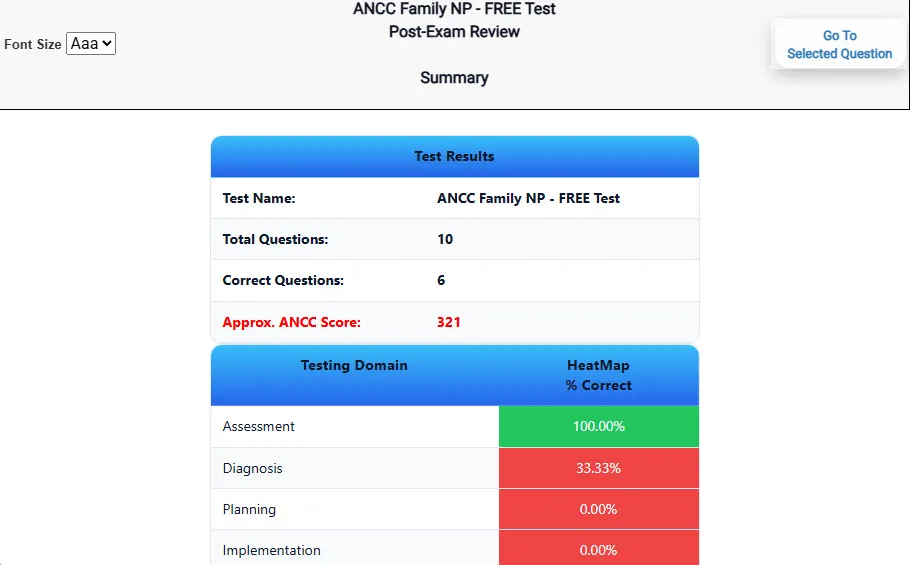
                           Review Summary 1 screen – 
                         Summary with counts for correct/wrong/unanswered and not seen items.
Review Summary 1 Summary with counts for correct/wrong/unanswered and not seen items.

                           Review Summary 2 screen – 
                         Advanced summary with category/domain breakdown and performance insights.
Review Summary 2 Advanced summary with category/domain breakdown and performance insights.

What Each Screen Shows

Answer Question Screen

  • Clean multiple-choice interface with progress bar.
  • Mark for review feature.
  • Matches real test pacing.

Detailed Explanation

  • Correct answer plus rationale.
  • Key concepts and guidelines highlighted.
  • Move between questions to fill knowledge gaps.

Review Summary 1

  • Overall results with total questions and scaled score.
  • Domain heatmap shows strengths and weaknesses.
  • Quick visual feedback on study priorities.

Review Summary 2

  • Chart of correct, wrong, unanswered, not seen.
  • Color-coded results for easy review.
  • Links back to missed items.

Top 10 Reasons to Use Exam Edge for your Texas Nurse Aide Exam Prep

  1. Focused on the Texas Nurse Aide Exam

    Our practice tests are built specifically for the Texas Nurse Aide exam — every question mirrors the real topics, format, and difficulty so you're studying exactly what matters.

  2. Real Exam Simulation

    We match the per-question time limits and pressure of the actual NurseAide exam, so test day feels familiar and stress-free.

  3. 10 Full Practice Tests & 600 Unique Questions

    You'll have more than enough material to master every Texas Nurse Aide concept — no repeats, no fluff.

  4. Lower Cost Than a Retake

    Ordering 5 practice exams costs less than retaking the Texas Nurse Aide exam after a failure. One low fee could save you both time and money.

  5. Flexible Testing

    Need to step away mid-exam? Pick up right where you left off — with your remaining time intact.

  6. Instant Scoring & Feedback

    See your raw score and an estimated Texas Nurse Aide score immediately after finishing each practice test.

  7. Detailed Explanations for Every Question

    Review correct and incorrect answers with clear, step-by-step explanations so you truly understand each topic.

  8. Trusted & Accredited

    We're fully accredited by the Better Business Bureau and uphold the highest standards of trust and transparency.

  9. Web-Based & Always Available

    No software to install. Access your Texas Nurse Aide practice exams 24/7 from any computer or mobile device.

  10. Expert Support When You Need It

    Need extra help? Our specialized tutors are highly qualified and ready to support your NurseAide exam prep.


Pass the Texas Nurse Aide Exam with Realistic Practice Tests from Exam Edge

Preparing for your upcoming Texas Nurse Aide () Certification Exam can feel overwhelming — but the right practice makes all the difference. Exam Edge gives you the tools, structure, and confidence to pass on your first try. Our online practice exams are built to match the real Texas Nurse Aide exam in content, format, and difficulty.

  • 📝 10 Texas Nurse Aide Practice Tests: Access 10 full-length exams with 60 questions each, covering every major Texas Nurse Aide topic in depth.
  • Instant Online Access: Start practicing right away — no software, no waiting.
  • 🧠 Step-by-Step Explanations: Understand the reasoning behind every correct answer so you can master Texas Nurse Aide exam concepts.
  • 🔄 Retake Each Exam Up to 4 Times: Build knowledge through repetition and track your improvement over time.
  • 🌐 Web-Based & Available 24/7: Study anywhere, anytime, on any device.
  • 🧘 Boost Your Test-Day Confidence: Familiarity with the NurseAide format reduces anxiety and helps you perform under pressure.

These Texas Nurse Aide practice exams are designed to simulate the real testing experience by matching question types, timing, and difficulty level. This approach helps you get comfortable not just with the exam content, but also with the testing environment, so you walk into your exam day focused and confident.


Exam Edge Nurse Aide Reviews


Texas Nurse Aide Aliases Test Name

Here is a list of alternative names used for this exam.

  • Texas Nurse Aide
  • Texas Nurse Aide test
  • Texas Nurse Aide Certification Test
  • Nurse Aide
  • Nurse Aide
  • test
  • Texas Nurse Aide ()
  • Texas certification