This is the content of the pop-over!

Lightning Deal Alert – 12% Off Ends at Midnight!

Strike while the savings are hot! Use promo code FlashSale at checkout for 12% off any Exam Edge test or bundle. Hurry—the clock is ticking!

NNCC Certified Nephrology Nurse-Nurse Practitioner (CNN-NP) Practice Tests & Test Prep by Exam Edge


NNCC Certified Nephrology Nurse-Nurse Practitioner   product image
(5.0)
Based on 37 Reviews

  • Real Exam Simulation: Timed questions and matching content build comfort for your NNCC Certified Nephrology Nurse-Nurse Practitioner test day.
  • Instant, 24/7 Access: Web-based NNCC Certified Nephrology Nurse-Nurse Practitioner practice exams with no software needed.
  • Clear Explanations: Step-by-step answers and explanations for your NNCC exam to strengthen understanding.
  • Boosted Confidence: Reduces anxiety and improves test-taking skills to ace your NNCC Certified Nephrology Nurse-Nurse Practitioner (CNN-NP).

Featured on

NNCC Certified Nephrology Nurse-Nurse Practitioner Online Practice Test Bundles

BEST VALUE
5 practice tests

$69.75

$199.75

SAVE $130

Only $13.95 per test!

  • 100% Pass Guarantee
  • 5 online practice tests
  • 100 questions per test
  • Bonus: 100 Flash Cards + Study Guide
  • Instant access
  • Detailed Explanations
  • Practice tests never expire
  • Timed, untimed, or study guide mode
1 practice test

$39.95

  • 1 online practice test
  • 100 questions per test
  • Instant access
  • Detailed Explanations
  • Practice tests never expire
  • Timed, untimed, or study guide mode
Quick Select
Tap to choose a bundle

** All Prices are in US Dollars (USD) **


NNCC Certified Nephrology Nurse-Nurse Practitioner (CNN-NP) Resources

Jump to the section you need most.

Understanding the exact breakdown of the NNCC Certified Nephrology Nurse-Nurse Practitioner test will help you know what to expect and how to most effectively prepare. The NNCC Certified Nephrology Nurse-Nurse Practitioner has 175 multiple-choice questions . The exam will be broken down into the sections below:

NNCC Certified Nephrology Nurse-Nurse Practitioner Exam Blueprint
Domain Name % Number of
Questions
Axis I - Client Problem  
     Acute Kidney Injury 4-6% 3
     CKD Stages 1 & 2 and General Nephrology 4-6% 3
     Stage 3 CKD 11-13% 8
     Stages 4 & 5 CKD 19-21% 14
     Kidney Replacement Therapies (KRT) 57-59% 43
     Hemodialysis  
     Peritoneal dialysis  
     Transplant  
     CRRT/Pheresis  
Axis II - Nurse Practitioner Activities  
     Assess and diagnose pathologic processes and complications that occur in kidney disease. 38-40% 29
     Prescribe interventions - including evidence-based treatments - therapies procedures consistent with comprehensive care needs. 43-45% 32
     Pharmacology 21-25% 16
     Other 21-25% 16
     Evaluate - select and/or design strategies/resources to educate client - family - other health profes- sionals the public 8-10% 6
     Facilitate an interdisciplinary process with other members of the health care team. 3-6% 2
     Ensure the development of a holistic plan of care that reflects an individual's values and beliefs 3-5% 2

NNCC Certified Nephrology Nurse-Nurse Practitioner Study Tips by Domain

  • Differentiate uremic vs non-uremic causes of symptoms (e.g., encephalopathy, pruritus, nausea)—a red flag is new confusion or asterixis suggesting advanced azotemia and need for urgent evaluation.
  • Rapidly identify life-threatening electrolyte/acid-base problems—priority rule: treat hyperkalemia with ECG changes as an emergency regardless of the lab value and prepare for KRT if refractory.
  • Screen for volume status problems (overload vs depletion) driving AKI/CKD decompensation—common trap is relying on edema alone; orthostasis, daily weights, and lung exam often detect earlier instability.
  • Recognize infection risk patterns in kidney disease (dialysis access, immunosuppression, urinary obstruction)—red flag: fever or chills in a patient with a catheter or graft/fistula pain warrants immediate cultures and access assessment.
  • Identify kidney disease complications requiring timely intervention (anemia, CKD-MBD, malnutrition)—threshold cue: symptomatic anemia or rapidly falling hemoglobin should prompt evaluation for bleeding/hemolysis before attributing to CKD.
  • Assess cardiovascular comorbidity as a primary client problem in CKD (HTN, heart failure, accelerated atherosclerosis)—common trap: treating resistant hypertension without checking adherence, volume excess, and interfering agents (NSAIDs, decongestants).
  • Use KDIGO staging: AKI is a rise in SCr ≥0.3 mg/dL in 48 hours, or ≥1.5× baseline within 7 days, or urine output <0.5 mL/kg/h for ≥6 hours—common trap is missing oliguria when creatinine is still “normal.”
  • Rapidly differentiate prerenal vs intrinsic vs postrenal: check volume status/med exposures and obtain bladder scan/renal ultrasound for obstruction—red flag is anuria or new hydronephrosis needing urgent decompression.
  • Stop nephrotoxins and adjust doses immediately (NSAIDs, ACEi/ARB during acute hypoperfusion, iodinated contrast, aminoglycosides, vancomycin)—priority rule is “renal-dose everything” and document medication holds/renal dosing rationale.
  • Recognize intrinsic AKI clues: muddy brown casts suggest ATN; RBC casts/proteinuria suggest GN; eosinophilia/rash suggests AIN—contraindication cue is avoid delaying nephrology consult when GN is suspected.
  • Manage complications proactively: hyperkalemia, metabolic acidosis, volume overload, and uremic symptoms—red flag thresholds include K≥6.0 (or ECG changes), pulmonary edema, severe acidosis, or uremic pericarditis/encephalopathy.
  • Know when to initiate urgent KRT: refractory hyperkalemia, fluid overload, acidosis, uremic complications, or certain intoxications (AEIOU)—common trap is “watchful waiting” despite escalating oxygen needs from fluid overload.
  • Stage 1–2 CKD is defined by eGFR ≥60 with evidence of kidney damage (e.g., ACR ≥30 mg/g or persistent hematuria)—common trap: labeling CKD based on a single abnormal lab rather than persistence ≥3 months.
  • Albuminuria risk stratification drives intensity of therapy and follow-up; red flag: rising ACR or new A2/A3 warrants ACEi/ARB consideration even when eGFR is preserved (avoid combining ACEi + ARB).
  • Blood pressure management is kidney-protective—priority rule: confirm hypertension with home/ambulatory readings when possible, and check creatinine/potassium 1–2 weeks after starting or titrating ACEi/ARB (red flag: K+ >5.5 or creatinine rise >30%).
  • Diabetes and CKD early care includes kidney-protective agents—common trap: not using an SGLT2 inhibitor when indicated; contraindication cue: hold SGLT2 inhibitors with acute illness/volume depletion and avoid initiation at very low eGFR per product labeling.
  • General nephrology evaluation should separate glomerular vs nonglomerular hematuria/proteinuria—red flag: dysmorphic RBCs/RBC casts, nephrotic-range proteinuria, or rapid change in creatinine should prompt urgent nephrology workup rather than routine monitoring.
  • Early CKD complication screening still matters—priority rule: assess cardiovascular risk, smoking, NSAID use, and vaccination status; common trap: continued NSAID use or unadjusted nephrotoxic meds despite “mild” CKD.
  • Confirm true CKD stage 3 with eGFR 30–59 for ≥3 months and check urine ACR; red flag: a sudden eGFR drop suggests AKI-on-CKD, not progression.
  • Stratify risk using albuminuria (A1–A3) and trend eGFR slope; common trap: documenting only eGFR without ACR can miss high-risk A3 disease.
  • Optimize BP and proteinuria control (often ACEi/ARB if albuminuric) and monitor creatinine/potassium after starts or dose changes; threshold: >30% creatinine rise or K+ ≥5.5 warrants prompt reassessment.
  • Screen and treat CKD complications beginning in stage 3—anemia, CKD-MBD, and metabolic acidosis; red flag: bicarbonate <22 mEq/L or rising phosphate should trigger evaluation and therapy planning.
  • Medication safety is a priority: reconcile nephrotoxins and renally dose drugs; common trap: continuing NSAIDs, high-dose PPIs without indication, or metformin when eGFR falls <30.
  • Plan referral and monitoring cadence based on trajectory and comorbidity; referral cue: eGFR <45 with A3 albuminuria, rapid decline (>5 mL/min/1.73 m²/yr), or refractory HTN suggests need for nephrology co-management.
  • Recognize late-stage uremic symptoms (anorexia, pruritus, sleep disturbance, cognitive changes) and act on red flags like pericarditis, encephalopathy, or refractory hyperkalemia as urgent indications to escalate care.
  • Track CKD-mineral and bone disorder (calcium, phosphorus, PTH, vitamin D) and avoid the common trap of giving calcium-based binders in hypercalcemia or severe vascular calcification risk.
  • Manage anemia of CKD with iron assessment and ESA use, but don’t start or up-titrate ESA without addressing iron deficiency first and be cautious of higher Hb targets (thromboembolic risk).
  • Prepare for kidney replacement therapy early—priority rule: refer for access planning and modality education well before kidney failure; red flag is waiting until symptomatic uremia to discuss dialysis or transplant referral.
  • Optimize volume and BP control (loop diuretics, sodium restriction, RAASi when appropriate), and watch for the contraindication of continuing RAASi/ARNI or MRA in recurrent severe hyperkalemia or acute creatinine rise without evaluation.
  • Review medications for renal dosing and nephrotoxins—common traps include NSAIDs, high-dose magnesium/phosphate products, and metformin continuation at very low eGFR; cue: reassess every new prescription for eGFR-based adjustments.
  • Distinguish KRT initiation triggers: refractory hyperkalemia, severe metabolic acidosis, pulmonary edema/uremia despite medical therapy (a common trap is waiting for a specific creatinine number rather than clinical indications).
  • Choose modality based on hemodynamic stability and urgency: intermittent HD for rapid clearance, CRRT for unstable patients, and PD when vascular access is limited (red flag: escalating vasopressor needs during intermittent treatments).
  • Match solute targets to modality: small molecules clear quickly with HD/CRRT, but middle molecules and volume may require different prescriptions (priority rule: treat life-threatening potassium/volume issues first).
  • Anticoagulation planning is essential: assess bleeding risk and consider regional citrate vs heparin where appropriate (contraindication cue: active bleeding or recent intracranial hemorrhage makes systemic heparin high risk).
  • Access selection and preservation: prefer AV fistula/graft planning early and use temporary catheters only when necessary (red flag: femoral or non-tunneled catheters with fever/chills—think catheter-related bloodstream infection).
  • Monitor for KRT complications: disequilibrium, hypotension, electrolyte shifts (e.g., hypophosphatemia on CRRT), and medication under/overdosing (common trap: failing to renally adjust antibiotics and anticonvulsants when modality or dose changes).
  • Assess access function every treatment—new bruit/thrill changes, rising venous pressures, or prolonged bleeding after needle removal are red flags for stenosis/thrombosis and require prompt evaluation. Avoid BP cuffs, phlebotomy, and IVs in an AV fistula/graft arm (common trap).
  • Target safe ultrafiltration: high UF rates increase intradialytic hypotension and ischemic events—consider longer treatment time, cooler dialysate, or adjusting dry weight rather than repeatedly giving boluses (priority rule). Recurrent cramps, nausea, or dizziness during UF are warning signs of excessive volume removal.
  • Anticoagulation management: verify heparin orders and bleeding risk each session—active bleeding, recent surgery, severe thrombocytopenia, or HIT history are contraindications/red flags. If circuit clotting occurs, troubleshoot blood flow, access, and anticoagulation rather than simply escalating heparin (common trap).
  • Dialysate safety cues: confirm potassium, calcium, bicarbonate, and sodium prescriptions—using a low-K bath in a patient already hypokalemic is a dangerous error. Sudden muscle weakness, palpitations, or widened QRS during/after dialysis are red flags for electrolyte shifts.
  • Complication recognition: chest pain, hypoxia, or acute dyspnea during dialysis is a red flag—stop UF, assess for air embolism, hemolysis, or dialyzer reaction, and escalate per protocol. Fever/chills during treatment should trigger immediate evaluation for access infection or contaminated dialysate (priority rule).
  • Medication timing and clearance: hold dialyzable antihypertensives pre-HD if the patient is prone to hypotension (common trap is giving them right before treatment). Dose-adjust and time antibiotics and other renally cleared drugs around HD sessions, and remember many supplements/OTC agents (e.g., magnesium-containing antacids) can accumulate (red flag).
  • Screen for absolute/relative contraindications before starting PD (e.g., uncorrected abdominal wall hernia, active intra-abdominal infection, severe protein-calorie malnutrition)—red flag: recurrent leaks or poor drainage early after catheter placement.
  • Prioritize peritonitis recognition and action: cloudy effluent and abdominal pain should trigger immediate dialysate cell count/culture and empiric intraperitoneal antibiotics—common trap: sending cultures after antibiotics or using an inadequate dwell for sampling.
  • Assess adequacy and volume status using symptoms, ultrafiltration trends, and solute clearance targets (Kt/V and creatinine clearance)—priority rule: falling UF or rising weight suggests membrane failure, constipation, or catheter dysfunction before assuming “nonadherence.”
  • Manage common mechanical complications (inflow/outflow failure, leaks, catheter tip migration)—practical cue: constipation is a frequent reversible cause of poor drainage and should be treated promptly.
  • Monitor metabolic and nutritional complications unique to PD (glucose load, hypertriglyceridemia, protein loss)—red flag: unexplained hyperglycemia or weight gain may require prescription changes (e.g., icodextrin for long dwell) and diet review.
  • Ensure safe PD prescribing and home technique: match dwell volume/osmotic agent to UF goals, maintain strict aseptic connection/disconnection, and document retraining triggers—common trap: ignoring exit-site infection signs (erythema, drainage) that predict peritonitis.
  • Verify immunologic risk pre-op (ABO compatibility, HLA typing, PRA/DSA) and document unacceptable antigens; red flag: proceeding to induction before a final negative crossmatch is confirmed.
  • Monitor for hyperacute/acute rejection versus ischemia-reperfusion injury by trending urine output, creatinine, and Doppler findings; common trap: assuming delayed graft function is “just ATN” and delaying biopsy when creatinine fails to improve.
  • Manage immunosuppression with tight therapeutic drug monitoring (e.g., tacrolimus/cyclosporine troughs) and interaction checks; red flag: starting azoles, macrolides, diltiazem, or grapefruit products without dose adjustment/level recheck.
  • Prioritize infection prophylaxis and screening (CMV, BK virus, PJP) based on donor/recipient serostatus and regimen; common trap: missing rising BK viremia and continuing full immunosuppression until nephropathy develops.
  • Recognize early surgical/urologic complications (urine leak, ureteral obstruction, lymphocele, renal artery/vein thrombosis); red flag: sudden anuria or graft tenderness — treat as an emergency and escalate for imaging/intervention.
  • Address long-term graft and patient survival risks (HTN, diabetes, dyslipidemia, malignancy, bone disease) with prevention and surveillance; priority rule: new proteinuria or rising creatinine after stabilization warrants prompt workup, not “watchful waiting.”
  • Initiate CRRT with a clear indication (e.g., refractory hyperkalemia, severe acidosis, uremic complications, or fluid overload with hemodynamic instability) and document the goal (net ultrafiltration, solute control)—red flag: escalating vasopressor needs after UF suggests UF is too aggressive.
  • Select modality and dose deliberately (CVVH/CVVHD/CVVHDF; prescribe effluent rate and reassess daily)—common trap: assuming delivered dose equals prescribed when downtime, filter clotting, or access issues reduce clearance.
  • Manage anticoagulation (regional citrate vs heparin vs none) based on bleeding risk and liver function—contraindication cue: citrate in severe hepatic failure or shock can cause citrate accumulation (rising total Ca:ionized Ca ratio and worsening metabolic derangements).
  • Troubleshoot circuit and access problems promptly (pressures trending up, frequent alarms, declining blood flow) to prevent clotting and inadequate therapy—priority rule: optimize catheter position/flow before increasing anticoagulation.
  • Monitor and replace electrolytes and nutrients proactively during CRRT (K, Mg, Phos, bicarbonate, glucose, and medication clearance)—red flag: hypophosphatemia and hypokalemia are common and can precipitate respiratory failure or arrhythmias if not repleted.
  • For pheresis, verify indication and replacement fluid (albumin vs plasma) and anticipate procedure complications—common trap: missing ACE-inhibitor use before plasma exchange, which increases bradykinin-mediated reactions and mandates holding the drug.
  • Prioritize rapid triage and stabilization in kidney patients by using “ABCs + electrolytes”; red flag: hyperkalemia with ECG changes requires immediate treatment before definitive diagnosis.
  • Perform focused renal history/physical and trend data (UOP, weights, BP, creatinine/eGFR) to drive decisions; common trap: relying on a single creatinine value instead of trajectory and volume status.
  • Order and interpret renal-relevant diagnostics (UA with microscopy, urine protein quantification, imaging, serologies) and escalate when indicated; red flag: hematuria + proteinuria + rising creatinine suggests glomerulonephritis needing urgent nephrology workup.
  • Prescribe and titrate therapies safely (RAASi, diuretics, bicarbonate, anemia/mineral-bone agents) with kidney-adjusted dosing; common trap: failing to renally dose antimicrobials/DOACs or to monitor potassium after ACEi/ARB changes.
  • Coordinate dialysis/KRT decisions (timing, modality selection, access planning) using patient goals and clinical thresholds; red flag: refractory acidosis, hyperkalemia, volume overload, or uremic complications signals urgent need for KRT evaluation.
  • Provide counseling and education (diet, fluids, meds, sick-day rules, access care) and document teach-back; common trap: not addressing nephrotoxin avoidance (NSAIDs, contrast) or missing high-risk transitions after hospitalization.
  • Differentiate pre-renal, intrinsic, and post-renal etiologies using BUN:Cr trends, urine indices, and imaging; red flag: suspected obstruction requires urgent bladder scan/renal ultrasound rather than repeated fluid boluses.
  • Interpret urinalysis and microscopy to localize pathology (RBC casts → glomerulonephritis, WBC casts → interstitial nephritis/pyelo, muddy brown casts → ATN); common trap: missing dysmorphic RBCs/proteinuria that warrant serologic workup and nephrology consult.
  • Recognize uremic complications (pericarditis, encephalopathy, bleeding) and correlate with symptoms rather than a single lab value; priority rule: chest pain with friction rub in advanced kidney disease is dialysis-indicated until proven otherwise.
  • Assess volume status and cardio-renal interactions using weights, I&O, orthostatics, lung exam, BNP trends, and ultrasound when available; red flag: rapid weight gain with rising BP and edema suggests sodium/volume overload even if creatinine is stable.
  • Diagnose and trend electrolyte/acid–base emergencies in CKD/AKI (hyperkalemia, severe metabolic acidosis, hyperphosphatemia/hypocalcemia); threshold cue: K≥6.0 mmol/L or ECG changes requires immediate stabilization and definitive potassium removal plan.
  • Identify kidney-related complications of systemic disease and therapies (diabetic nephropathy, lupus nephritis, myeloma kidney, drug-induced AIN/ATN); common trap: continuing ACEi/ARB, NSAIDs, contrast, or nephrotoxic antibiotics during acute decline without a reassessment and monitoring plan.
  • Match intervention intensity to kidney function — always verify current eGFR/CrCl (and trends) before prescribing, with a red flag for “normal” creatinine in sarcopenic/elderly patients masking low GFR.
  • Use kidney-safe prescribing for common nephrology meds (ACEi/ARB, SGLT2i, diuretics, alkali, phosphate binders) — a common trap is starting/uptitrating without a planned lab recheck window for K+, CO2/HCO3−, and creatinine.
  • Prevent and treat hyperkalemia with a stepwise plan (diet/med review, diuretic, bicarbonate if acidotic, potassium binder when appropriate) — red flag: stopping RAAS inhibitors reflexively without addressing reversible contributors.
  • Manage anemia of CKD using evidence-based thresholds — confirm iron deficiency and replete iron before/with ESA, and a contraindication cue is avoiding ESA initiation in uncontrolled hypertension or when Hgb is already at/above target.
  • Address CKD–mineral and bone disorder with targeted therapy — treat vitamin D deficiency and select phosphate binders based on calcium load, with a red flag for hypercalcemia when using calcium-based binders or active vitamin D analogs.
  • Prescribe kidney replacement therapy planning early (access referral, modality education, vaccination, transplant referral) — priority rule: avoid placing a PICC in patients with advanced CKD or high risk of progression to preserve future vascular access.
  • Renally dose and time medications to kidney function (e.g., CrCl/eGFR) and KRT modality; red flag: using serum creatinine alone in low-muscle-mass patients can overestimate GFR and lead to toxicity.
  • Avoid nephrotoxin stacking (NSAIDs + ACEi/ARB + diuretic “triple whammy”); priority rule: if AKI or rising creatinine, stop/hold the offending agent(s) and reassess volume status.
  • Adjust antibiotic choices/doses for CKD and dialysis; common trap: giving standard vancomycin/aminoglycoside regimens without drug-level monitoring increases ototoxicity/nephrotoxicity risk.
  • Manage hyperkalemia risk from RAAS inhibitors, MRAs, TMP-SMX, and potassium supplements; red flag: new weakness/arrhythmia symptoms warrant immediate ECG and potassium verification before further dosing.
  • Account for dialysis clearance and rebound when scheduling meds; common trap: dosing dialyzable drugs (e.g., some beta-lactams) before hemodialysis without a post-dialysis supplement can under-treat infection.
  • Use caution with contrast and other renal stressors; contraindication cue: metformin should be held around iodinated contrast in patients with reduced eGFR or AKI risk to reduce lactic acidosis risk per protocol.
  • Recognize non-renal causes of “uremia-like” symptoms (e.g., sepsis, hepatic failure, thyroid disease) and avoid anchoring on CKD alone—common trap: attributing delirium or nausea solely to BUN/Cr without assessing infection or medication toxicity.
  • Screen for common electrolyte/acid-base mimics and urgent non-kidney etiologies (e.g., DKA, tumor lysis, adrenal crisis)—red flag: hyperkalemia with ECG changes requires immediate action regardless of the presumed cause.
  • Prioritize vascular access preservation and limb protection—rule: avoid BP cuffs, venipuncture, and PICC lines in a potential future AV access arm (especially CKD stages 3–5) to prevent access-limiting thrombosis/stenosis.
  • Identify dialysis-related and CKD-related dermatologic/neurologic issues (pruritus, restless legs, neuropathy) and treat contributors—common trap: escalating sedating antihistamines without addressing hyperphosphatemia, iron deficiency, or inadequate dialysis.
  • Apply infection prevention and vaccination priorities for immunocompromised kidney patients—red flag: fever/chills during or after dialysis may indicate access infection or bacteremia and warrants prompt cultures and access evaluation.
  • Address nutrition, frailty, and functional status as “other” drivers of outcomes—threshold cue: unintentional weight loss or low serum albumin trends should trigger a malnutrition-inflammation assessment and dietitian referral rather than assuming fluid overload alone.
  • Assess readiness and barriers to learning (health literacy, language, vision/hearing, cognitive status) before teaching—red flag: using printed materials only when the client has low literacy or poor vision.
  • Use teach-back with specific action steps (e.g., phosphate-binder timing, fluid goals, home BP log) and document response—common trap: equating nodding/agreeing with comprehension.
  • Select kidney-specific resources aligned to the client’s treatment path (CKD, dialysis modality, transplant) and update at transitions of care—priority rule: re-educate after any hospitalization or medication change.
  • Design family/caregiver education that targets safety tasks (vascular access protection, PD sterile technique, recognition of hyperkalemia symptoms) with return-demonstration—contraindication: allowing home procedures without competency validation.
  • Provide interprofessional education using standardized protocols (e.g., contrast exposure risk, nephrotoxin avoidance, renal dosing) and communicate clearly in handoffs—red flag: missing renal dose adjustments when eGFR declines.
  • Tailor public-facing education to prevention and early detection (BP/diabetes control, NSAID risk, CKD screening in high-risk groups) and include a clear referral threshold—common trap: giving overly general advice without specifying when to seek urgent care.
  • Clarify roles early (nephrology, primary care, dialysis unit, transplant, pharmacy, dietitian, social work) and document a single “owner” for follow-up—red flag: duplicate orders or unclear responsibility after transitions.
  • Use structured handoffs (e.g., SBAR) for AKI/CKD changes and include baseline creatinine, urine output trend, access status, and current meds—common trap: reporting only a single creatinine value without trend or context.
  • Coordinate medication reconciliation with pharmacy at every admission/discharge and after dialysis modality changes—priority rule: explicitly address renally cleared drugs, nephrotoxins, and QT/pro-arrhythmic combinations.
  • Partner with dietitian and nursing to align sodium, potassium, phosphorus, and fluid goals with the patient’s labs and dialysis prescription—red flag: repeated hyperkalemia/hyperphosphatemia despite “education” suggests plan misalignment or access to foods/meds barriers.
  • Engage social work/case management early for modality planning, transportation, financial coverage, and caregiver capacity—common trap: delaying referral until the patient misses treatments or cannot obtain binders/ESA.
  • Escalate to interdisciplinary safety huddles for high-risk scenarios (new vascular access issues, sepsis concern, rapid volume shifts, severe anemia, mental status change) and define rapid-response thresholds—red flag: repeated intradialytic hypotension without revisiting dry weight, antihypertensives, and UF goals as a team.
  • Use shared decision-making to align the care plan with the client’s goals (e.g., longevity vs symptom relief) and document a measurable goal—red flag if choices are made solely on lab targets without client-stated priorities.
  • Assess cultural, spiritual, and dietary practices before prescribing renal diet or fluid limits—common trap is giving standard sodium/phosphorus restrictions that conflict with traditional foods and lead to nonadherence.
  • Screen for health literacy and preferred language; use teach-back and interpreter services as needed—red flag is relying on family members as interpreters for consent or complex KRT discussions.
  • Incorporate psychosocial factors (depression, caregiver strain, transportation, housing/food insecurity) into the plan—priority rule is to address barriers that will prevent dialysis attendance or medication access.
  • Plan for advance care planning early (code status, surrogate decision-maker, goals of care, dialysis initiation/withdrawal preferences) and revisit at transitions—common trap is delaying discussions until urgent dialysis is needed.
  • Coordinate an individualized symptom-management plan (pruritus, fatigue, pain, sleep) while honoring client preferences—contraindication cue: avoid NSAIDs and be cautious with sedatives/opioids in advanced CKD due to accumulation.


Built to Fit Into Your Busy Life

Everything you need to prepare with confidence—without wasting a minute.

Three Study Modes

Timed, No Time Limit, or Explanation mode.

Actionable Analytics

Heatmaps and scaled scores highlight weak areas.

High-Yield Rationales

Concise explanations emphasize key concepts.

Realistic Interface

Matches the feel of the actual exam environment.

Accessible by Design

Clean layout reduces cognitive load.

Anytime, Anywhere

Web-based access 24/7 on any device.
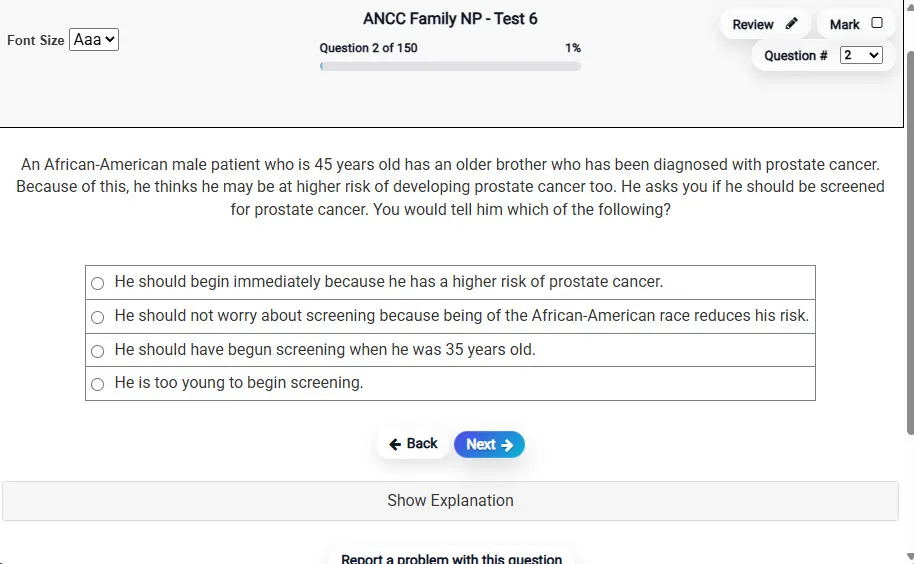
Answering a Question screen – Multiple-choice item view with navigation controls and progress tracker.
Answering a Question Multiple-choice item view with navigation controls and progress tracker.

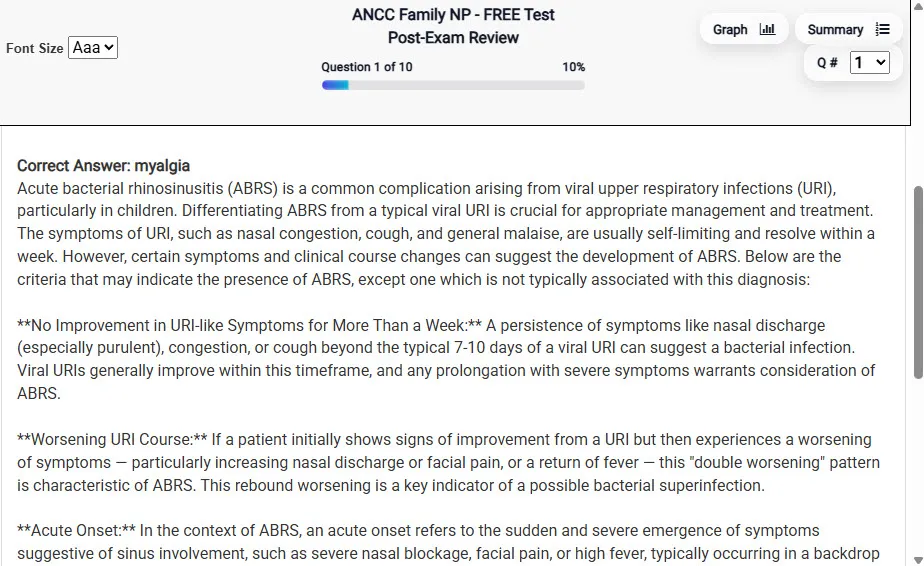
                           Detailed Explanation screen – 
                         Review mode showing chosen answer and rationale and references.
Detailed Explanation Review mode showing chosen answer and rationale and references.

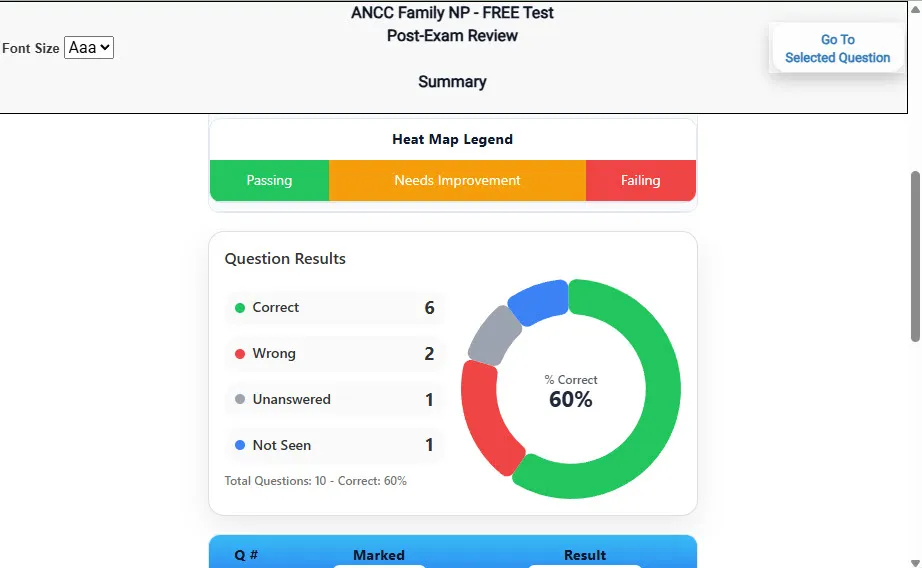
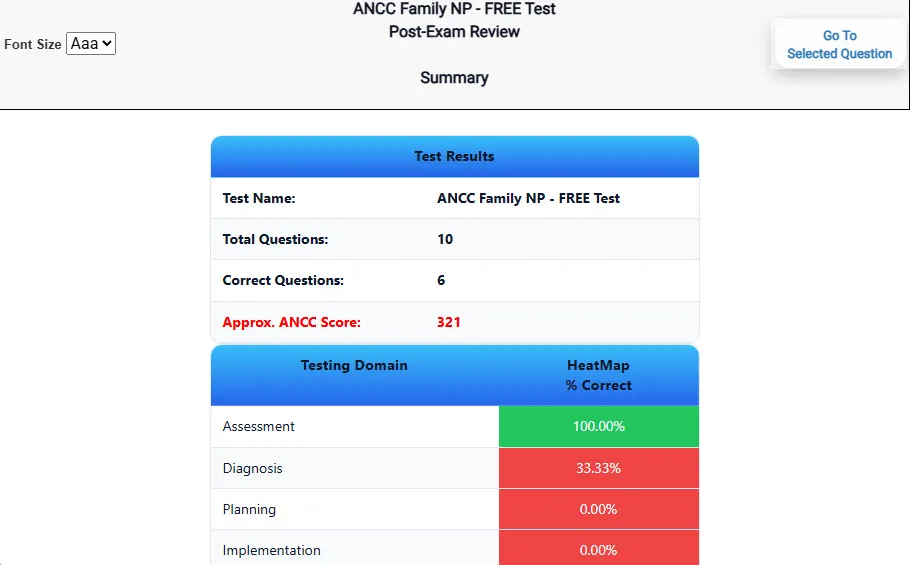
                           Review Summary 1 screen – 
                         Summary with counts for correct/wrong/unanswered and not seen items.
Review Summary 1 Summary with counts for correct/wrong/unanswered and not seen items.

                           Review Summary 2 screen – 
                         Advanced summary with category/domain breakdown and performance insights.
Review Summary 2 Advanced summary with category/domain breakdown and performance insights.

What Each Screen Shows

Answer Question Screen

  • Clean multiple-choice interface with progress bar.
  • Mark for review feature.
  • Matches real test pacing.

Detailed Explanation

  • Correct answer plus rationale.
  • Key concepts and guidelines highlighted.
  • Move between questions to fill knowledge gaps.

Review Summary 1

  • Overall results with total questions and scaled score.
  • Domain heatmap shows strengths and weaknesses.
  • Quick visual feedback on study priorities.

Review Summary 2

  • Chart of correct, wrong, unanswered, not seen.
  • Color-coded results for easy review.
  • Links back to missed items.

Top 10 Reasons to Use Exam Edge for your NNCC Certified Nephrology Nurse-Nurse Practitioner Exam Prep

  1. Focused on the NNCC Certified Nephrology Nurse-Nurse Practitioner Exam

    Our practice tests are built specifically for the NNCC Certified Nephrology Nurse-Nurse Practitioner exam — every question mirrors the real topics, format, and difficulty so you're studying exactly what matters.

  2. Real Exam Simulation

    We match the per-question time limits and pressure of the actual NNCC exam, so test day feels familiar and stress-free.

  3. 5 Full Practice Tests & 500 Unique Questions

    You'll have more than enough material to master every NNCC Certified Nephrology Nurse-Nurse Practitioner concept — no repeats, no fluff.

  4. Lower Cost Than a Retake

    Ordering 5 practice exams costs less than retaking the NNCC Certified Nephrology Nurse-Nurse Practitioner exam after a failure. One low fee could save you both time and money.

  5. Flexible Testing

    Need to step away mid-exam? Pick up right where you left off — with your remaining time intact.

  6. Instant Scoring & Feedback

    See your raw score and an estimated NNCC Certified Nephrology Nurse-Nurse Practitioner score immediately after finishing each practice test.

  7. Detailed Explanations for Every Question

    Review correct and incorrect answers with clear, step-by-step explanations so you truly understand each topic.

  8. Trusted & Accredited

    We're fully accredited by the Better Business Bureau and uphold the highest standards of trust and transparency.

  9. Web-Based & Always Available

    No software to install. Access your NNCC Certified Nephrology Nurse-Nurse Practitioner practice exams 24/7 from any computer or mobile device.

  10. Expert Support When You Need It

    Need extra help? Our specialized tutors are highly qualified and ready to support your NNCC exam prep.


Pass the NNCC Certified Nephrology Nurse-Nurse Practitioner Exam with Realistic Practice Tests from Exam Edge

Preparing for your upcoming NNCC Certified Nephrology Nurse-Nurse Practitioner (CNN-NP) Certification Exam can feel overwhelming — but the right practice makes all the difference. Exam Edge gives you the tools, structure, and confidence to pass on your first try. Our online practice exams are built to match the real NNCC Certified Nephrology Nurse-Nurse Practitioner exam in content, format, and difficulty.

  • 📝 5 NNCC Certified Nephrology Nurse-Nurse Practitioner Practice Tests: Access 5 full-length exams with 100 questions each, covering every major NNCC Certified Nephrology Nurse-Nurse Practitioner topic in depth.
  • Instant Online Access: Start practicing right away — no software, no waiting.
  • 🧠 Step-by-Step Explanations: Understand the reasoning behind every correct answer so you can master NNCC Certified Nephrology Nurse-Nurse Practitioner exam concepts.
  • 🔄 Retake Each Exam Up to 4 Times: Build knowledge through repetition and track your improvement over time.
  • 🌐 Web-Based & Available 24/7: Study anywhere, anytime, on any device.
  • 🧘 Boost Your Test-Day Confidence: Familiarity with the NNCC format reduces anxiety and helps you perform under pressure.

These NNCC Certified Nephrology Nurse-Nurse Practitioner practice exams are designed to simulate the real testing experience by matching question types, timing, and difficulty level. This approach helps you get comfortable not just with the exam content, but also with the testing environment, so you walk into your exam day focused and confident.


Exam Edge NNCC Reviews


I am surely happy for the day that I came across examedge I am proud to announce I took my Certified Nephrology Exam on November 4, 2023 and was successful. I cried tears of joy. As long as you put the work in and practice the questions you will not regret. Make the purchase from examedge.

Stacey F, San Antonio TX


NNCC Certified Nephrology Nurse-Nurse Practitioner Aliases Test Name

Here is a list of alternative names used for this exam.

  • NNCC Certified Nephrology Nurse-Nurse Practitioner
  • NNCC Certified Nephrology Nurse-Nurse Practitioner test
  • NNCC Certified Nephrology Nurse-Nurse Practitioner Certification Test
  • NNCC
  • NNCC CNN-NP
  • CNN-NP test
  • NNCC Certified Nephrology Nurse-Nurse Practitioner (CNN-NP)
  • Certified Nephrology Nurse-Nurse Practitioner certification