This is the content of the pop-over!

Lightning Deal Alert – 12% Off Ends at Midnight!

Strike while the savings are hot! Use promo code FlashSale at checkout for 12% off any Exam Edge test or bundle. Hurry—the clock is ticking!

NCHEC MCHES (MCHES) Practice Tests & Test Prep by Exam Edge


NCHEC Master Certified Health Education Specialist product image
(4.6)
Based on 17 Reviews

  • Real Exam Simulation: Timed questions and matching content build comfort for your NCHEC MCHES test day.
  • Instant, 24/7 Access: Web-based NCHEC Master Certified Health Education Specialist practice exams with no software needed.
  • Clear Explanations: Step-by-step answers and explanations for your NCHEC exam to strengthen understanding.
  • Boosted Confidence: Reduces anxiety and improves test-taking skills to ace your NCHEC Master Certified Health Education Specialist (MCHES).

Featured on

NCHEC Master Certified Health Education Specialist Online Practice Test Bundles

BEST VALUE
5 practice tests

$69.75

$199.75

SAVE $130

Only $13.95 per test!

  • 100% Pass Guarantee
  • 5 online practice tests
  • 150 questions per test
  • Bonus: 100 Flash Cards + Study Guide
  • Instant access
  • Detailed Explanations
  • Practice tests never expire
  • Timed, untimed, or study guide mode
1 practice test

$39.95

  • 1 online practice test
  • 150 questions per test
  • Instant access
  • Detailed Explanations
  • Practice tests never expire
  • Timed, untimed, or study guide mode
Quick Select
Tap to choose a bundle

** All Prices are in US Dollars (USD) **


NCHEC MCHES (MCHES) Resources

Jump to the section you need most.

Understanding the exact breakdown of the NCHEC Master Certified Health Education Specialist test will help you know what to expect and how to most effectively prepare. The NCHEC Master Certified Health Education Specialist has 150 multiple-choice questions . The exam will be broken down into the sections below:

NCHEC Master Certified Health Education Specialist Exam Blueprint
Domain Name % Number of
Questions
Assess Needs - Resources and Capacity for Health Education/Promotion 10% 15
Plan Health Education/Promotion 16% 24
Implement Health Education/Promotion 15% 23
Conduct Evaluation and Research Related to Health Education/Promotion 20% 30
Administer and Manage Health Education/Promotion 18% 27
Serve as a Health Education/Promotion Resource Person 12% 18
Communicate - Promote and Advocate for Health and the Profession of Health Education/Promotion 9% 14

NCHEC Master Certified Health Education Specialist Study Tips by Domain

  • Start with a clear needs assessment purpose statement that distinguishes needs, resources, and capacity; red flag: jumping to solutions before confirming the priority population and setting.
  • Use mixed methods to capture epidemiologic, behavioral, and environmental determinants (e.g., surveillance data plus key informant interviews); common trap: relying on a single convenient dataset that misrepresents subpopulations.
  • Map assets and gaps across sectors (schools, worksites, clinical, faith-based, CBOs) and document who controls decision-making; priority rule: verify “who has authority to act” before proposing partnerships.
  • Assess organizational capacity (staff competencies, policies, infrastructure, culture, readiness) and quantify constraints; red flag: assuming volunteers or grant funds can substitute for sustained staffing.
  • Identify and analyze stakeholders for influence, interest, and potential opposition using a transparent process; common trap: overlooking informal leaders who can block implementation despite lacking formal titles.
  • Apply an explicit prioritization approach (e.g., magnitude, severity, changeability, feasibility, equity impact) and document assumptions; red flag: selecting priorities solely based on funder preference without equity and feasibility checks.
  • Start with a logic model that links identified needs to SMART objectives, methods/strategies, and measurable indicators—red flag: activities listed without a clear causal pathway or outcomes.
  • Write objectives at multiple levels (behavioral, environmental, learning) with a time frame and criterion (e.g., %/number)—common trap: confusing broad goals with objectives or omitting a measurement target.
  • Select theory- and evidence-informed methods that match determinants (e.g., self-efficacy, norms) and the setting—priority rule: don’t choose an intervention just because it’s popular if it doesn’t address the key determinants.
  • Build a feasible work plan (timeline, staffing, budget, procurement) and define roles/responsibilities early—red flag: no named owner for deliverables or missing line items for training, materials, or indirect costs.
  • Plan for stakeholder engagement (partners, gatekeepers, priority population) with clear decision points—common trap: token participation that leads to low buy-in or cultural mismatch.
  • Integrate ethics, equity, and compliance into the plan (privacy, consent, accessibility, risk management)—contraindication: collecting or sharing identifiable data without a defined purpose, minimum necessary use, and safeguards.
  • Implement according to the approved work plan (scope, timeline, staffing, and deliverables) and document any deviations; red flag: “scope creep” without formal change control or stakeholder sign-off.
  • Operationalize fidelity while allowing appropriate adaptation to context; common trap: changing core components (dosage, sequence, target audience) and later claiming the program was “implemented as designed.”
  • Manage logistics (space, materials, accessibility, and technology) with a pre-implementation checklist; priority rule: address ADA/access needs and language access before launching sessions.
  • Train and supervise implementers using standardized protocols and competency checks; red flag: relying on one-time training without observation, feedback, and refresher sessions.
  • Engage participants and partners using culturally responsive strategies and clear consent/confidentiality practices; common trap: collecting identifiable data in group settings without privacy safeguards.
  • Monitor implementation with real-time process data (reach, dose delivered/received, and participant responsiveness) and course-correct quickly; threshold cue: investigate immediately if attendance or completion drops below expected targets for two consecutive cycles.
  • Set up administrative systems (policies, SOPs, timelines, approvals) that align with NCHEC ethical practice and organizational requirements; red flag: running programs without documented decision authority and accountability.
  • Manage budgets using clear line items, allowable costs, and reconciliation cadence; common trap: committing funds (e.g., contracts, incentives) before confirming procurement rules and funding restrictions.
  • Oversee staffing, supervision, and performance expectations with role clarity and competency-based training plans; priority rule: document supervision and corrective actions to reduce HR and liability risk.
  • Manage partnerships and contracts/MOUs with defined scope, deliverables, data-sharing terms, and termination clauses; red flag: partners collecting participant data without a signed agreement and privacy safeguards.
  • Maintain records and data governance (retention, access control, confidentiality, incident response) for program and evaluation documentation; common trap: storing identifiable data in unsecured shared drives or personal devices.
  • Apply continuous quality improvement (CQI) with measurable process indicators, regular review cycles, and corrective action logs; priority rule: act on recurring implementation failures rather than only reporting outcomes.
  • Match resource referrals to assessed needs, eligibility, and readiness (e.g., literacy, language, insurance, transportation); red flag: giving a “one-size-fits-all” list without confirming access barriers.
  • Vet information sources for credibility, recency, and conflicts of interest; common trap: relying on outdated guidelines or vendor-sponsored materials without disclosure.
  • Maintain and routinely update a resource inventory (services, hours, costs, referral steps, contacts) with a defined review interval; priority rule: document the “last verified” date to avoid expired referrals.
  • Provide technical assistance and capacity-building (toolkits, training, coaching) aligned to stakeholders’ roles and scope; red flag: drifting into clinical advice or practice outside professional competence.
  • Use culturally and linguistically appropriate communication and accessible formats (plain language, translation, ADA accommodations); contraindication: distributing materials that are not understandable to the intended audience.
  • Protect confidentiality when sharing or coordinating resources (minimum necessary information, secure channels, consent where required); common trap: forwarding identifiable details via unsecured email or informal texting.
  • Tailor messages using audience segmentation (literacy, language, culture, readiness) and pretest materials before broad release; red flag: assuming one-size-fits-all messaging for diverse populations.
  • Use plain language, actionable framing, and teach-back for key health behaviors; common trap: leading with statistics or jargon that increases confusion and reduces adherence.
  • Select communication channels based on where the priority population actually gets information (trusted messengers, social media, community sites) and monitor reach; red flag: choosing channels for convenience rather than audience access.
  • Apply risk/crisis communication principles (timely, transparent, consistent, uncertainty acknowledged) and correct misinformation quickly; priority rule: “be first, be right, be credible” to prevent rumor amplification.
  • Advocate with a clear policy/organizational ask tied to data and equity impact, and document stakeholder positions; common trap: vague advocacy goals that cannot be measured or acted on.
  • Promote the profession by communicating scope of practice, competencies, and ethical boundaries (e.g., confidentiality, conflicts of interest); red flag: representing yourself as providing clinical diagnosis/treatment when your role is health education/promotion.


Built to Fit Into Your Busy Life

Everything you need to prepare with confidence—without wasting a minute.

Three Study Modes

Timed, No Time Limit, or Explanation mode.

Actionable Analytics

Heatmaps and scaled scores highlight weak areas.

High-Yield Rationales

Concise explanations emphasize key concepts.

Realistic Interface

Matches the feel of the actual exam environment.

Accessible by Design

Clean layout reduces cognitive load.

Anytime, Anywhere

Web-based access 24/7 on any device.
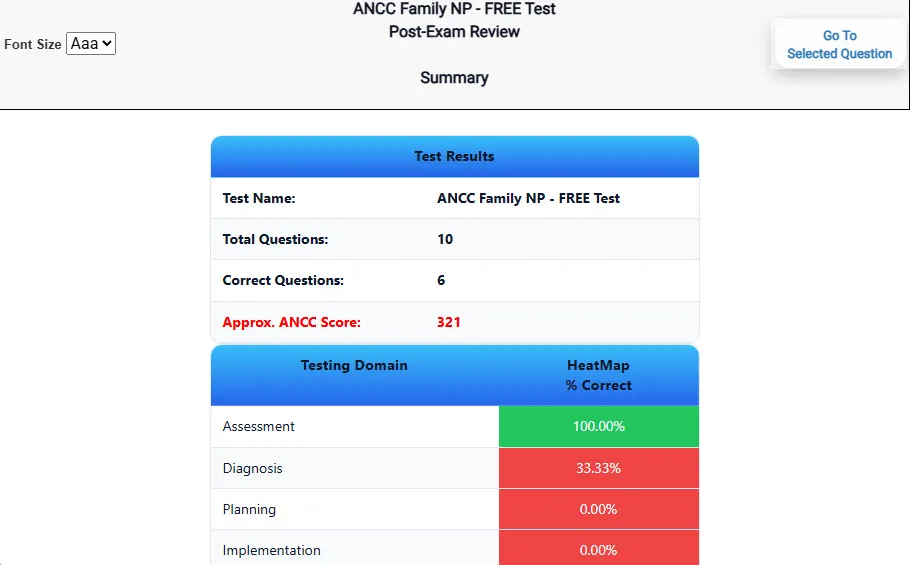
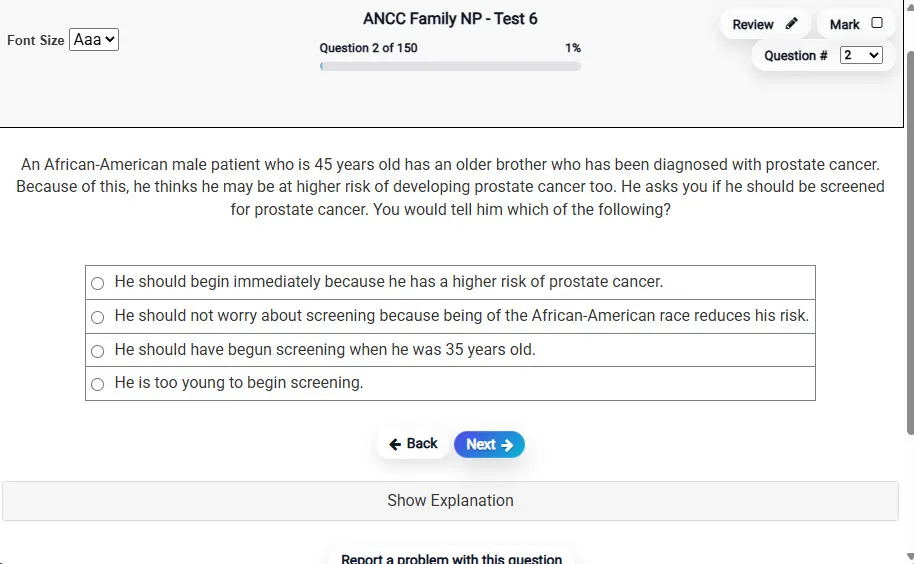
Answering a Question screen – Multiple-choice item view with navigation controls and progress tracker.
Answering a Question Multiple-choice item view with navigation controls and progress tracker.

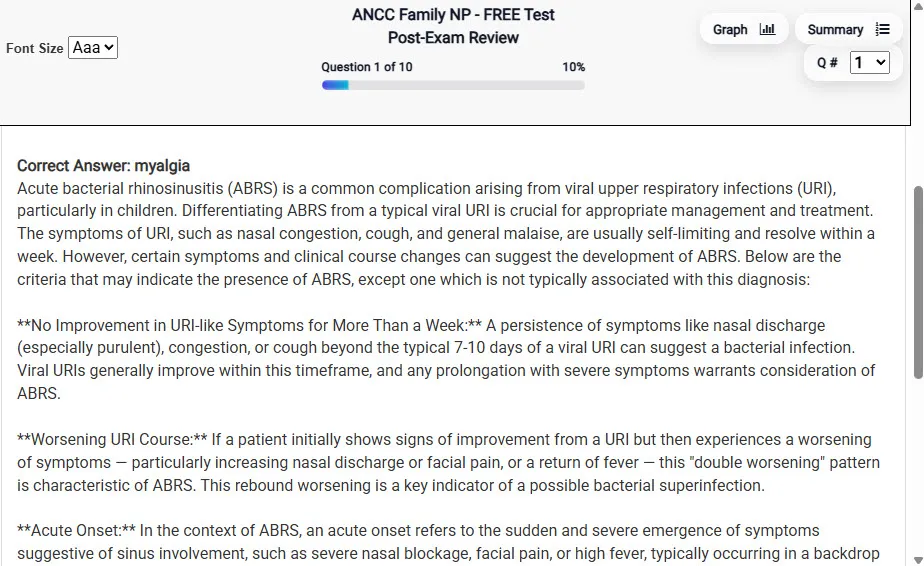
                           Detailed Explanation screen – 
                         Review mode showing chosen answer and rationale and references.
Detailed Explanation Review mode showing chosen answer and rationale and references.

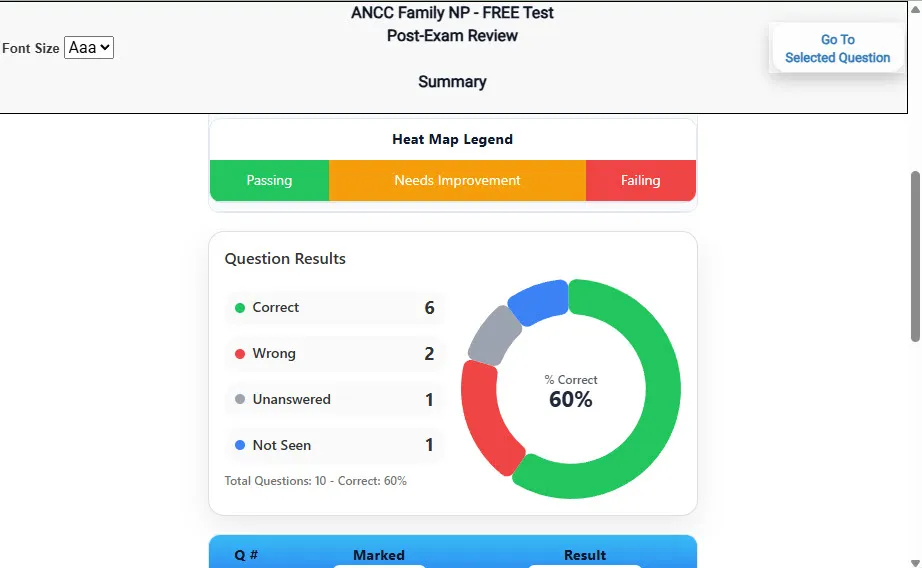
                           Review Summary 1 screen – 
                         Summary with counts for correct/wrong/unanswered and not seen items.
Review Summary 1 Summary with counts for correct/wrong/unanswered and not seen items.

                           Review Summary 2 screen – 
                         Advanced summary with category/domain breakdown and performance insights.
Review Summary 2 Advanced summary with category/domain breakdown and performance insights.

What Each Screen Shows

Answer Question Screen

  • Clean multiple-choice interface with progress bar.
  • Mark for review feature.
  • Matches real test pacing.

Detailed Explanation

  • Correct answer plus rationale.
  • Key concepts and guidelines highlighted.
  • Move between questions to fill knowledge gaps.

Review Summary 1

  • Overall results with total questions and scaled score.
  • Domain heatmap shows strengths and weaknesses.
  • Quick visual feedback on study priorities.

Review Summary 2

  • Chart of correct, wrong, unanswered, not seen.
  • Color-coded results for easy review.
  • Links back to missed items.

Top 10 Reasons to Use Exam Edge for your NCHEC Master Certified Health Education Specialist Exam Prep

  1. Focused on the NCHEC Master Certified Health Education Specialist Exam

    Our practice tests are built specifically for the NCHEC MCHES exam — every question mirrors the real topics, format, and difficulty so you're studying exactly what matters.

  2. Real Exam Simulation

    We match the per-question time limits and pressure of the actual NCHEC exam, so test day feels familiar and stress-free.

  3. 5 Full Practice Tests & 750 Unique Questions

    You'll have more than enough material to master every NCHEC MCHES concept — no repeats, no fluff.

  4. Lower Cost Than a Retake

    Ordering 5 practice exams costs less than retaking the NCHEC Master Certified Health Education Specialist exam after a failure. One low fee could save you both time and money.

  5. Flexible Testing

    Need to step away mid-exam? Pick up right where you left off — with your remaining time intact.

  6. Instant Scoring & Feedback

    See your raw score and an estimated NCHEC Master Certified Health Education Specialist score immediately after finishing each practice test.

  7. Detailed Explanations for Every Question

    Review correct and incorrect answers with clear, step-by-step explanations so you truly understand each topic.

  8. Trusted & Accredited

    We're fully accredited by the Better Business Bureau and uphold the highest standards of trust and transparency.

  9. Web-Based & Always Available

    No software to install. Access your NCHEC MCHES practice exams 24/7 from any computer or mobile device.

  10. Expert Support When You Need It

    Need extra help? Our specialized tutors are highly qualified and ready to support your NCHEC exam prep.


Pass the NCHEC Master Certified Health Education Specialist Exam with Realistic Practice Tests from Exam Edge

Preparing for your upcoming NCHEC Master Certified Health Education Specialist (MCHES) Certification Exam can feel overwhelming — but the right practice makes all the difference. Exam Edge gives you the tools, structure, and confidence to pass on your first try. Our online practice exams are built to match the real NCHEC MCHES exam in content, format, and difficulty.

  • 📝 5 NCHEC Master Certified Health Education Specialist Practice Tests: Access 5 full-length exams with 150 questions each, covering every major NCHEC Master Certified Health Education Specialist topic in depth.
  • Instant Online Access: Start practicing right away — no software, no waiting.
  • 🧠 Step-by-Step Explanations: Understand the reasoning behind every correct answer so you can master NCHEC MCHES exam concepts.
  • 🔄 Retake Each Exam Up to 4 Times: Build knowledge through repetition and track your improvement over time.
  • 🌐 Web-Based & Available 24/7: Study anywhere, anytime, on any device.
  • 🧘 Boost Your Test-Day Confidence: Familiarity with the NCHEC format reduces anxiety and helps you perform under pressure.

These NCHEC Master Certified Health Education Specialist practice exams are designed to simulate the real testing experience by matching question types, timing, and difficulty level. This approach helps you get comfortable not just with the exam content, but also with the testing environment, so you walk into your exam day focused and confident.


Exam Edge NCHEC Reviews


I PASSED MY MCHES EXAM!!! I ordered the materials 10/2/20 and passed my exam 10/16/20. This was a great birthday present to me and for me. Thank you so much!!! 

Brittany , Wilmington, Delaware


NCHEC Master Certified Health Education Specialist Aliases Test Name

Here is a list of alternative names used for this exam.

  • NCHEC Master Certified Health Education Specialist
  • NCHEC Master Certified Health Education Specialist test
  • NCHEC Master Certified Health Education Specialist Certification Test
  • NCHEC MCHES test
  • NCHEC
  • NCHEC MCHES
  • MCHES test
  • NCHEC Master Certified Health Education Specialist (MCHES)
  • Master Certified Health Education Specialist certification