This is the content of the pop-over!

MOH Pharmacists Assistant (MOH MOH Pharmacists Assistance) Practice Tests & Test Prep by Exam Edge


MOH Pharmacists Assistant  product image
(4.9)
Based on 28 Reviews

  • Real Exam Simulation: Timed questions and matching content build comfort for your MOH Pharmacists Assistant test day.
  • Instant, 24/7 Access: Web-based MOH Pharmacists Assistant practice exams with no software needed.
  • Clear Explanations: Step-by-step answers and explanations for your MOH exam to strengthen understanding.
  • Boosted Confidence: Reduces anxiety and improves test-taking skills to ace your MOH Pharmacists Assistant (MOH MOH Pharmacists Assistance).

Featured on

MOH Pharmacists Assistant Online Practice Test Bundles

BEST VALUE
20 practice tests

$174.00

$799.00

SAVE $625

Only $8.70 per test!

  • 100% Pass Guarantee
  • 20 online practice tests
  • 100 questions per test
  • Bonus: 100 Flash Cards + Study Guide
  • Instant access
  • Detailed Explanations
  • Practice tests never expire
  • Timed, untimed, or study guide mode
MOST POPULAR
10 practice tests

$99.50

$399.50

SAVE $300

Only $9.95 per test!

  • 10 online practice tests
  • 100 questions per test
  • Bonus: 100 Flash Cards + Study Guide
  • Instant access
  • Detailed Explanations
  • Practice tests never expire
  • Timed, untimed, or study guide mode
5 practice tests

$69.75

$199.75

SAVE $130

Only $13.95 per test!

  • 5 online practice tests
  • 100 questions per test
  • Bonus: 100 Flash Cards
  • Instant access
  • Detailed Explanations
  • Practice tests never expire
  • Timed, untimed, or study guide mode
1 practice test

$39.95

  • 1 online practice test
  • 100 questions per test
  • Instant access
  • Detailed Explanations
  • Practice tests never expire
  • Timed, untimed, or study guide mode
Quick Select
Tap to choose a bundle

** All Prices are in US Dollars (USD) **


MOH Pharmacists Assistant (MOH MOH Pharmacists Assistance) Resources

Jump to the section you need most.

Understanding the exact breakdown of the MOH Pharmacists Assistant test will help you know what to expect and how to most effectively prepare. The MOH Pharmacists Assistant has multiple-choice questions . The exam will be broken down into the sections below:

MOH Pharmacists Assistant Exam Blueprint
Domain Name
Pharmacology for Technicians  
Pharmacy Law and Regulations  
Sterile and Non-Sterile Compounding  
Medication Safety  
Pharmacy Quality Assurance  
Medication Order Entry and Fill Process  
Pharmacy Inventory Management  
Pharmacy Billing and Reimbursement  
Pharmacy Information System Usage and Application  

MOH Pharmacists Assistant Study Tips by Domain

  • Differentiate drug names (generic vs brand) and look-alike/sound-alike pairs; red flag—similar names plus different strengths (e.g., mg vs mcg) require an independent double-check before selection.
  • Know common dosage forms and routes (oral, sublingual, inhalation, topical, IM/IV) and their key handling implications; trap—do not crush/chew ER/CR/SR/XL or enteric-coated products unless explicitly permitted.
  • Recognize high-alert medications (e.g., insulin, anticoagulants, opioids, concentrated electrolytes) and apply extra verification steps; priority rule—pause and escalate if the dose seems outside typical adult ranges or if patient-specific parameters are missing.
  • Identify major therapeutic classes and signature adverse effects (e.g., NSAIDs—GI bleed/renal risk, ACE inhibitors—cough/hyperkalemia, beta-blockers—bradycardia); contraindication cue—avoid NSAIDs in active ulcer/bleeding history unless prescriber confirms.
  • Screen for essential interactions technicians should catch (e.g., warfarin + antibiotics, nitrates + PDE5 inhibitors, QT-prolongers together); red flag—new medication added to a narrow-therapeutic-index drug warrants immediate pharmacist review.
  • Apply basic pharmacokinetic concepts (onset/peak/duration, half-life, renal/hepatic clearance) to timing and monitoring; threshold cue—reduced renal function often requires dose/interval adjustment, so missing creatinine/eGFR should be escalated before dispensing.
  • Verify every prescription meets legal elements before dispensing: patient identifiers, date, prescriber name/license, drug/strength/dose, directions, and signature/stamp; red flag — missing prescriber identifier or unclear directions requires clarification, not guessing.
  • Controlled medications require stricter handling (secure storage, limited access, accurate counts, and documented dispensing); common trap — “verbal OK” without proper documentation or authorization is not legally sufficient.
  • Apply MOH rules on prescription validity and refills: don’t refill beyond what is authorized and within allowed timeframes; red flag — early refill requests or “lost medication” stories should trigger pharmacist review.
  • Protect patient confidentiality: share information only with authorized healthcare team members and only what is necessary; common trap — discussing patient therapy in public areas or over unsecured messaging.
  • Enforce separation of roles: technicians/assistants may process and prepare but must not independently counsel, change therapy, or substitute without pharmacist authorization; red flag — patient asks “can I switch to another antibiotic?” — escalate to the pharmacist.
  • Maintain required records (prescriptions, controlled-drug logs, incident/ADR reports, temperature logs where mandated) and keep them audit-ready; priority rule — if it isn’t documented, it didn’t happen during MOH inspection.
  • Maintain aseptic technique in sterile compounding: disinfect hood surfaces (e.g., 70% IPA) and work “first air” without blocking airflow; red flag—hands or supplies passing over open vial/needle tips.
  • Differentiate sterile vs non-sterile compounding requirements: sterile preparations require controlled environments and beyond-use dating tied to risk level; common trap—assigning an extended BUD without documented storage conditions.
  • Use proper garbing and hand hygiene sequence before entering clean areas (shoe covers, hair cover, mask, gown, sterile gloves); contraindication—compounding with jewelry or artificial nails due to contamination risk.
  • Accurately calculate concentrations, dilutions, and final volumes (especially reconstitution and IV admixtures); red flag—confusing mg/mL with % strength (w/v) leading to 10× dosing errors.
  • For non-sterile compounding, select appropriate dosage forms and vehicles (ointments, creams, suspensions) and ensure uniformity by geometric dilution; common trap—adding powders directly to full-volume vehicle causing clumping and poor content uniformity.
  • Label and document every compounded preparation with ingredients, strength, route, storage, BUD, and required auxiliary labels; priority rule—do not dispense if the master formula/compounding record is incomplete or lacks lot numbers/expiry dates.
  • Apply the “5 rights” (right patient, drug, dose, route, time) and verify two patient identifiers before dispensing—red flag: look-alike/sound-alike (LASA) names or packaging.
  • Escalate immediately for high-alert medications (e.g., insulin, anticoagulants, opioids, concentrated electrolytes) and use independent double-checks—common trap: confusing units (U vs IU) or trailing zeros (write 1 mg, not 1.0 mg).
  • Screen every order for allergies, contraindications, and major interactions; priority rule: any reported allergy with matching drug class requires pharmacist review before supply.
  • Prevent dosing errors by confirming weight (kg), renal/hepatic status, and dose calculations—red flag: weight documented in lb or missing, especially for pediatrics.
  • Ensure correct storage and handling to maintain safety (cold chain 2–8 °C, light protection, segregation of hazardous items)—common trap: returning refrigerated meds to room-temperature shelves during busy periods.
  • Document and report medication errors/near-misses using the facility’s incident system and preserve labels/lot/expiry for traceability—priority rule: report immediately if patient harm is suspected.
  • Verify a written SOP exists for each high-risk workflow (receiving, storage, dispensing, controlled drugs, compounding) and that staff training is documented; red flag: “everyone knows how we do it” with no version-controlled SOP.
  • Use double-checks for look-alike/sound-alike medicines and high-alert meds (e.g., insulin, anticoagulants); common trap: relying on memory instead of tall-man lettering, shelf separation, and independent verification.
  • Maintain temperature logs for fridge/room storage with defined action limits and documented corrective actions; threshold cue: any out-of-range excursion without quarantine-and-assess documentation is a QA failure.
  • Perform routine audit cycles (spot checks of labels, expiry dates, controlled-drug counts) with tracked CAPA; red flag: audits done but no root-cause analysis or repeat issues not trended.
  • Ensure incident/near-miss reporting is non-punitive and includes follow-up and trend review; common trap: only reporting harm events and ignoring near-misses that reveal system gaps.
  • Validate cleaning schedules and environmental hygiene for dispensing and preparation areas with logs and sign-offs; priority rule: missing cleaning records are treated as “not done” during inspection.
  • Verify the prescription has core elements before entry (patient identifiers, drug, strength, dose, route, frequency, duration, prescriber); red flag: missing weight/age for pediatric dosing or unclear directions.
  • Enter orders using Tall Man lettering and leading-zero rules (e.g., 0.5 mg) and never use trailing zeros (e.g., 5.0 mg); common trap: miskeyed decimals causing tenfold dosing errors.
  • Screen for allergies, contraindications, and major interactions at entry and escalate any high-severity alert to the pharmacist; priority rule: do not override “anaphylaxis” allergy alerts without documented clarification.
  • Select the correct product by matching generic name, strength, dosage form, and route to the order; red flag: look-alike/sound-alike drugs or similar strengths stored adjacent on shelves.
  • During fill, compare label-to-original order-to stock bottle for the “5 rights” and verify calculations for liquids and weight-based doses; common trap: wrong concentration (mg/mL) when multiple strengths exist.
  • Complete final technical checks and documentation (batch/lot where applicable, quantity, beyond-use/expiry on label, and counseling referral); red flag: early refill requests or controlled-medication discrepancies requiring pharmacist review.
  • Apply FEFO (first-expire, first-out) every time you pick and restock; red flag: leaving near-expiry items behind newer stock leads to preventable wastage and audit findings.
  • Maintain storage conditions per label (e.g., 2–8 °C for cold chain) with documented temperature logs; common trap: accepting fridge items without verifying transport temperature and time out of refrigeration.
  • Perform routine cycle counts and immediately investigate variances beyond your facility’s tolerance; priority rule: treat unexplained losses of controlled/high-value items as urgent and escalate per MOH policy.
  • Quarantine and clearly label expired, recalled, damaged, or suspected counterfeit stock; red flag: returning quarantined items to active shelves even “temporarily” can trigger dispensing errors.
  • Use par levels/reorder points based on average monthly consumption and lead time; common trap: ordering by intuition causes stockouts of fast movers and overstock of slow movers.
  • Check receiving against purchase order and invoice (drug name, strength, dosage form, batch/lot, expiry, quantity); contraindication: never accept unclear/altered batch or expiry details—reject and document.
  • Verify patient eligibility and coverage details before processing—a common trap is billing under the wrong beneficiary type or expired ID, which leads to automatic claim rejection.
  • Ensure the prescriber, facility, and medication are billable under the correct payer rules—red flag: missing diagnosis/ICD or prior authorization documentation for restricted or high-cost medicines.
  • Match the dispensed item exactly to the billed item (strength, dosage form, pack size, quantity)—priority rule: no substitutions on claims unless the policy explicitly allows it and the change is documented.
  • Apply correct day-supply and refill timing rules—common rejection: early refill beyond the allowed threshold, especially for controlled drugs or chronic therapies.
  • Capture copay/coinsurance, exemptions, and waivers accurately—red flag: manually overriding patient share without approved justification and audit trail.
  • Maintain complete billing records (prescription, labels, counseling/documentation, claim response, reversals/credits)—common trap: failing to reverse a claim when medication is returned or not collected, causing compliance and financial discrepancies.
  • Verify patient identity in the system using at least two identifiers (e.g., full name and national/Iqama ID) before any dispensing step; red flag: creating a duplicate profile instead of merging per policy.
  • Document allergy status and severity in the correct coded field (not free-text) so clinical alerts fire; common trap: bypassing an alert without recording a valid override reason.
  • Use barcode scanning for patient, medication, and batch/lot when available, and reconcile any mismatch before proceeding; priority rule: never “work around” a scanner failure by manual entry unless authorized and documented.
  • Confirm order parameters in the system (dose, route, frequency, duration, indication if required) and resolve ambiguous SIGs with the pharmacist; red flag: selecting the wrong formulation from look-alike drop-down lists (e.g., XR vs IR).
  • Maintain audit-trail integrity by using your own login and logging off shared terminals; contraindication: sharing passwords or using another user’s session to process orders.
  • Record dispensing status accurately (filled, partial, out-of-stock, returned) and update inventory deductions/returns in real time; common trap: printing labels before final verification, leading to mismatched labels and stock errors.


Built to Fit Into Your Busy Life

Everything you need to prepare with confidence—without wasting a minute.

Three Study Modes

Timed, No Time Limit, or Explanation mode.

Actionable Analytics

Heatmaps and scaled scores highlight weak areas.

High-Yield Rationales

Concise explanations emphasize key concepts.

Realistic Interface

Matches the feel of the actual exam environment.

Accessible by Design

Clean layout reduces cognitive load.

Anytime, Anywhere

Web-based access 24/7 on any device.
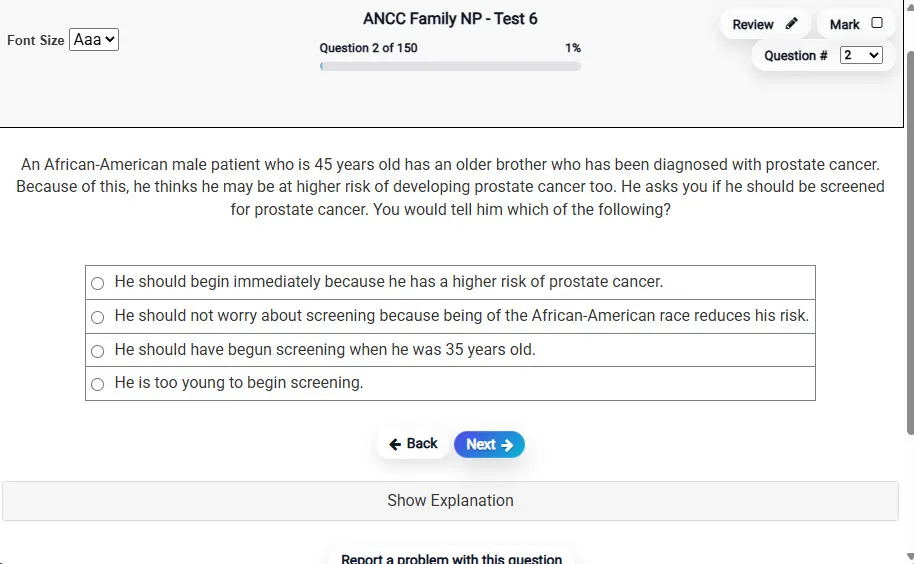
Answering a Question screen – Multiple-choice item view with navigation controls and progress tracker.
Answering a Question Multiple-choice item view with navigation controls and progress tracker.

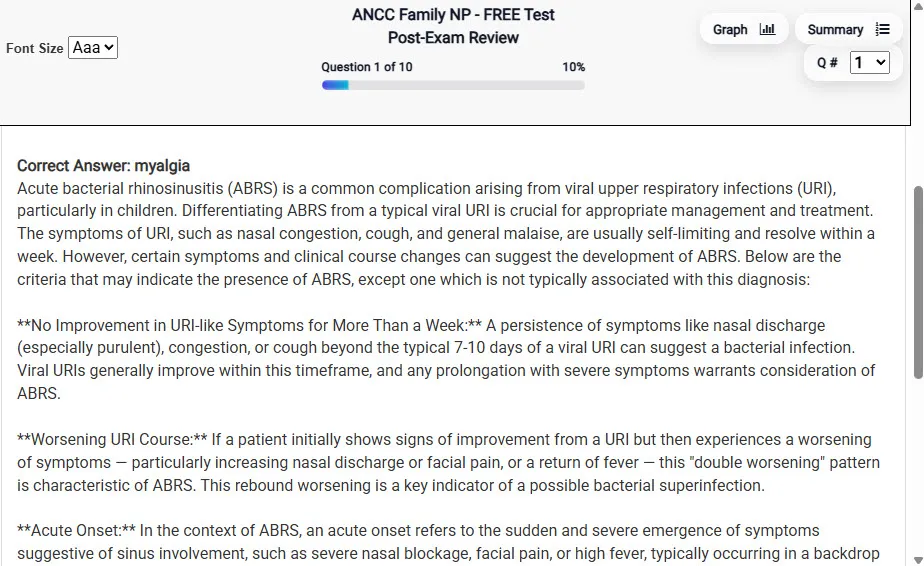
                           Detailed Explanation screen – 
                         Review mode showing chosen answer and rationale and references.
Detailed Explanation Review mode showing chosen answer and rationale and references.

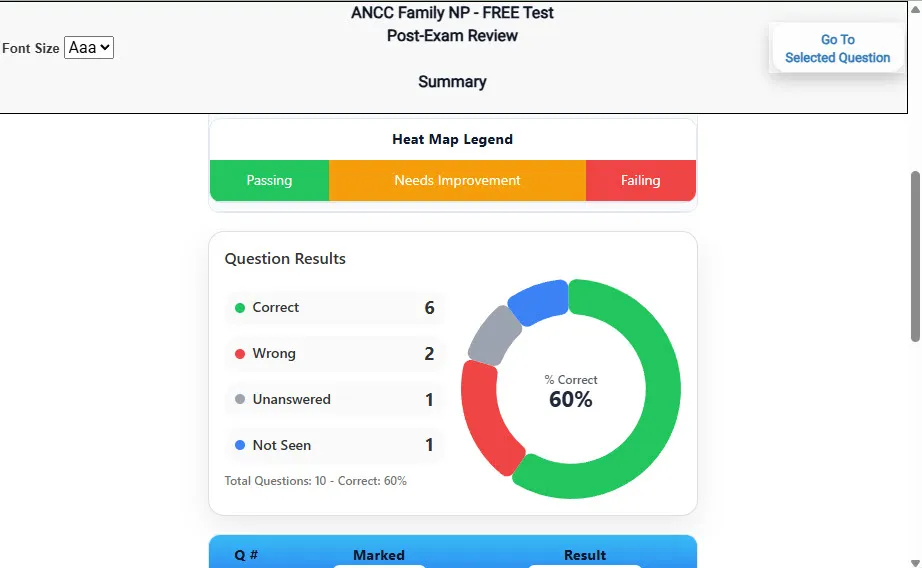
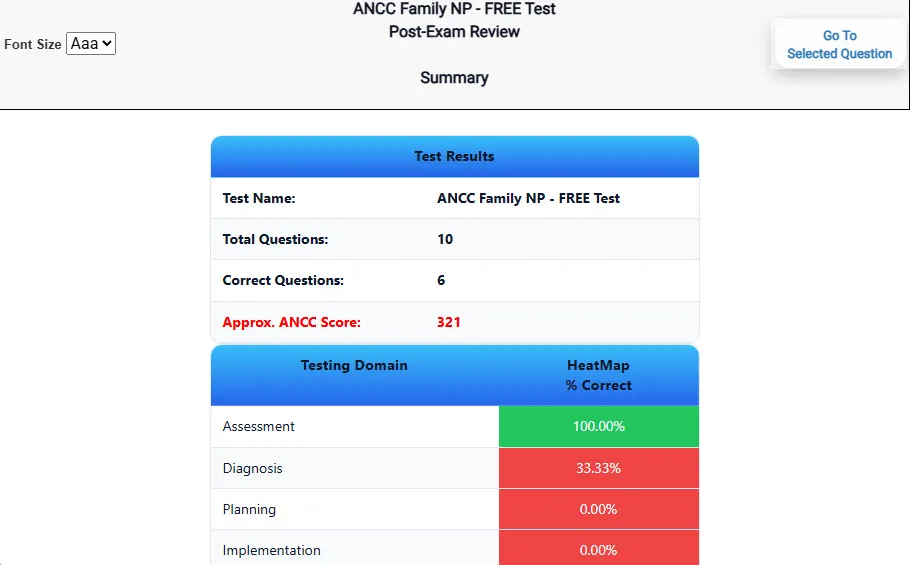
                           Review Summary 1 screen – 
                         Summary with counts for correct/wrong/unanswered and not seen items.
Review Summary 1 Summary with counts for correct/wrong/unanswered and not seen items.

                           Review Summary 2 screen – 
                         Advanced summary with category/domain breakdown and performance insights.
Review Summary 2 Advanced summary with category/domain breakdown and performance insights.

What Each Screen Shows

Answer Question Screen

  • Clean multiple-choice interface with progress bar.
  • Mark for review feature.
  • Matches real test pacing.

Detailed Explanation

  • Correct answer plus rationale.
  • Key concepts and guidelines highlighted.
  • Move between questions to fill knowledge gaps.

Review Summary 1

  • Overall results with total questions and scaled score.
  • Domain heatmap shows strengths and weaknesses.
  • Quick visual feedback on study priorities.

Review Summary 2

  • Chart of correct, wrong, unanswered, not seen.
  • Color-coded results for easy review.
  • Links back to missed items.

Top 10 Reasons to Use Exam Edge for your MOH Pharmacists Assistant Exam Prep

  1. Focused on the MOH Pharmacists Assistant Exam

    Our practice tests are built specifically for the MOH Pharmacists Assistant exam — every question mirrors the real topics, format, and difficulty so you're studying exactly what matters.

  2. Real Exam Simulation

    We match the per-question time limits and pressure of the actual MOH exam, so test day feels familiar and stress-free.

  3. 20 Full Practice Tests & 2,000 Unique Questions

    You'll have more than enough material to master every MOH Pharmacists Assistant concept — no repeats, no fluff.

  4. Lower Cost Than a Retake

    Ordering 5 practice exams costs less than retaking the MOH Pharmacists Assistant exam after a failure. One low fee could save you both time and money.

  5. Flexible Testing

    Need to step away mid-exam? Pick up right where you left off — with your remaining time intact.

  6. Instant Scoring & Feedback

    See your raw score and an estimated MOH Pharmacists Assistant score immediately after finishing each practice test.

  7. Detailed Explanations for Every Question

    Review correct and incorrect answers with clear, step-by-step explanations so you truly understand each topic.

  8. Trusted & Accredited

    We're fully accredited by the Better Business Bureau and uphold the highest standards of trust and transparency.

  9. Web-Based & Always Available

    No software to install. Access your MOH Pharmacists Assistant practice exams 24/7 from any computer or mobile device.

  10. Expert Support When You Need It

    Need extra help? Our specialized tutors are highly qualified and ready to support your MOH exam prep.


Pass the MOH Pharmacists Assistant Exam with Realistic Practice Tests from Exam Edge

Preparing for your upcoming MOH Pharmacists Assistant (MOH MOH Pharmacists Assistance) Certification Exam can feel overwhelming — but the right practice makes all the difference. Exam Edge gives you the tools, structure, and confidence to pass on your first try. Our online practice exams are built to match the real MOH Pharmacists Assistant exam in content, format, and difficulty.

  • 📝 20 MOH Pharmacists Assistant Practice Tests: Access 20 full-length exams with 100 questions each, covering every major MOH Pharmacists Assistant topic in depth.
  • Instant Online Access: Start practicing right away — no software, no waiting.
  • 🧠 Step-by-Step Explanations: Understand the reasoning behind every correct answer so you can master MOH Pharmacists Assistant exam concepts.
  • 🔄 Retake Each Exam Up to 4 Times: Build knowledge through repetition and track your improvement over time.
  • 🌐 Web-Based & Available 24/7: Study anywhere, anytime, on any device.
  • 🧘 Boost Your Test-Day Confidence: Familiarity with the MOH format reduces anxiety and helps you perform under pressure.

These MOH Pharmacists Assistant practice exams are designed to simulate the real testing experience by matching question types, timing, and difficulty level. This approach helps you get comfortable not just with the exam content, but also with the testing environment, so you walk into your exam day focused and confident.


Exam Edge MOH Saudi Arabia Reviews


Very Helpful..Exam Edge Thank you so much for such amazing tests. Very creative tests & almost covered every single Topic. Thank you so Much Exam Edge....!!

Harshal , Silver Spring , MD


MOH Pharmacists Assistant Aliases Test Name

Here is a list of alternative names used for this exam.

  • MOH Pharmacists Assistant
  • MOH Pharmacists Assistant test
  • MOH Pharmacists Assistant Certification Test
  • MOH Saudi Arabia
  • MOH Saudi Arabia MOH MOH Pharmacists Assistance
  • MOH MOH Pharmacists Assistance test
  • MOH Pharmacists Assistant (MOH MOH Pharmacists Assistance)
  • MOH Pharmacists Assistant certification