This is the content of the pop-over!

Lightning Deal Alert – 12% Off Ends at Midnight!

Strike while the savings are hot! Use promo code FlashSale at checkout for 12% off any Exam Edge test or bundle. Hurry—the clock is ticking!

CNBC CCN (CCN) Practice Tests & Test Prep by Exam Edge


CNBC Certified Clinical Nutritionist product image
(4.6)
Based on 37 Reviews

  • Real Exam Simulation: Timed questions and matching content build comfort for your CNBC CCN test day.
  • Instant, 24/7 Access: Web-based CNBC Certified Clinical Nutritionist practice exams with no software needed.
  • Clear Explanations: Step-by-step answers and explanations for your CNCB exam to strengthen understanding.
  • Boosted Confidence: Reduces anxiety and improves test-taking skills to ace your CNBC Certified Clinical Nutritionist (CCN).

Featured on

CNBC Certified Clinical Nutritionist Online Practice Test Bundles

BEST VALUE
20 practice tests

$174.00

$799.00

SAVE $625

Only $8.70 per test!

  • 100% Pass Guarantee
  • 20 online practice tests
  • 100 questions per test
  • Bonus: 100 Flash Cards + Study Guide
  • Instant access
  • Detailed Explanations
  • Practice tests never expire
  • Timed, untimed, or study guide mode
MOST POPULAR
10 practice tests

$99.50

$399.50

SAVE $300

Only $9.95 per test!

  • 10 online practice tests
  • 100 questions per test
  • Bonus: 100 Flash Cards + Study Guide
  • Instant access
  • Detailed Explanations
  • Practice tests never expire
  • Timed, untimed, or study guide mode
5 practice tests

$69.75

$199.75

SAVE $130

Only $13.95 per test!

  • 5 online practice tests
  • 100 questions per test
  • Bonus: 100 Flash Cards
  • Instant access
  • Detailed Explanations
  • Practice tests never expire
  • Timed, untimed, or study guide mode
1 practice test

$39.95

  • 1 online practice test
  • 100 questions per test
  • Instant access
  • Detailed Explanations
  • Practice tests never expire
  • Timed, untimed, or study guide mode
Quick Select
Tap to choose a bundle

** All Prices are in US Dollars (USD) **


CNBC CCN (CCN) Resources

Jump to the section you need most.

Understanding the exact breakdown of the CNBC Certified Clinical Nutritionist test will help you know what to expect and how to most effectively prepare. The CNBC Certified Clinical Nutritionist has multiple-choice questions . The exam will be broken down into the sections below:

CNBC Certified Clinical Nutritionist Exam Blueprint
Domain Name % Number of
Questions
Basic Knowledge Related to Nutrition 20% 20
Nutrition Assessment and Evaluation 18% 18
Nutrition Counseling and Case Management 14% 14
Professional Practice Management 2% 2
Professional Responsibility 2% 2
Optimal Human Nutrition 10% 10
Cognition & Sensory Overload 10% 10
Detoxification - Herbology and Homeopathic Therapy 10% 10
Laboratory Assessment 12% 12

CNBC Certified Clinical Nutritionist Study Tips by Domain

  • Start with a structured intake (chief concern, timeline, diet pattern, meds/supplements, GI/bowel habits, sleep/stress) and flag red-flag symptoms (unintentional weight loss, blood in stool, persistent vomiting, dysphagia) for immediate referral.
  • Use anthropometrics appropriately (weight history, waist circumference, body composition) and don’t overinterpret single-point measurements—trend data and context (edema, dehydration, recent illness) are the priority rule.
  • Assess dietary intake with at least two methods (e.g., 24-hour recall plus food frequency or 3-day log) and treat “weekend-only” records as a common trap that underestimates alcohol, snacks, and eating out.
  • Screen for nutrient deficiencies and excesses using signs/symptoms and risk factors (restricted diets, bariatric surgery, chronic PPI/metformin use), with the cue that supplement megadoses can mask deficits (e.g., folate masking B12-related anemia).
  • Evaluate lifestyle and readiness to change (stage of change, barriers, health literacy) and flag disordered-eating risk (rigid rules, fear foods, compensatory behaviors) as a contraindication to aggressive restriction-focused plans.
  • Document and prioritize problems into a focused nutrition diagnosis and measurable goals (SMART), using the rule that the top priority is the issue with the highest safety/medical risk before performance or aesthetics.
  • Use motivational interviewing (OARS) to elicit change talk and set one SMART goal per visit; red flag: client is ambivalent and you respond with lecturing or “should” statements.
  • Apply the “teach-back” method for supplement and meal-plan instructions; common trap: assuming understanding when the client can’t restate timing, dose, or key food swaps.
  • Document case notes with clear SOAP structure (including measurable outcomes and follow-up interval); priority rule: if it isn’t documented, it didn’t happen in a CNCB-style audit or dispute.
  • Screen for referral needs and contraindications (e.g., eating disorder behaviors, suicidal ideation, pregnancy complications, severe GI bleeding); red flag: continuing nutrition-only care when a medical or mental-health referral is urgently indicated.
  • Manage expectations with staged care plans (baseline, 2–4 week check, 8–12 week reassess) and define success metrics; common trap: changing too many variables at once, making outcomes impossible to interpret.
  • Use case management basics—coordination, follow-up reminders, adherence barriers, and interprofessional communication with consent; priority rule: obtain written authorization before sharing any client information with other providers or family.
  • Use written intake forms, informed consent, and a clear scope-of-practice statement that distinguishes nutrition education from diagnosing/treating disease; red flag: promising to “cure” or implying medical management.
  • Document every encounter with date/time, chief concern, goals, recommendations, and follow-up plan; common trap: relying on memory or undocumented verbal advice when a complaint arises.
  • Set policies for scheduling, cancellations, fees, and refunds in writing before the first paid session; red flag: changing fees mid-plan without documented client agreement.
  • Protect privacy with secure storage, minimum necessary sharing, and explicit authorization for third-party communications; common trap: emailing identifiable health details via unsecured personal accounts.
  • Manage referrals and collaboration by using standardized release-of-information forms and documenting when you refer to a licensed provider; priority rule: refer immediately if you suspect eating disorder risk, suicidal ideation, severe weight loss, or uncontrolled symptoms.
  • Maintain competence with continuing education, evidence-based resources, and product integrity checks; red flag: recommending supplements you sell without disclosing financial interest or without screening for contraindications and interactions.
  • Practice within your credential and state scope; a red flag is “treating” or “diagnosing” disease rather than providing nutrition education and support.
  • Use clear informed consent (services, limits, risks, fees, cancellation) before starting; a common trap is relying on verbal agreements that later become billing or expectation disputes.
  • Protect confidentiality (HIPAA-aligned habits even if not legally bound)—minimum necessary, secure storage, and no client identifiers in emails/social posts; red flag: sharing “success stories” without written authorization.
  • Maintain accurate, timely records (intake, assessment rationale, plans, referrals, client communications); priority rule: if it wasn’t documented, it didn’t happen.
  • Disclose conflicts of interest and avoid undisclosed commissions/affiliate influence; common trap: recommending products you sell without transparent disclosure and documentation of alternatives.
  • Know when to refer and coordinate care (red flags: eating disorder risk, severe psychiatric symptoms, pregnancy complications, uncontrolled diabetes, abnormal labs); contraindication: continuing solo management when medical evaluation is warranted.
  • Prioritize macronutrient balance based on goals and health status—red flag: prescribing very low-carbohydrate or very low-fat patterns without considering thyroid, lipid markers, gallbladder status, or training volume.
  • Cover micronutrient essentials with food-first planning, then targeted supplementation—common trap: overlooking iron, B12, folate, iodine, zinc, and vitamin D risks in vegan/vegetarian or highly restricted diets.
  • Optimize protein quality and distribution (e.g., evenly across meals) to support lean mass and recovery—priority rule: older adults, athletes, and post-illness clients often need higher protein density per meal.
  • Support cardiometabolic health by emphasizing fiber, unsaturated fats, and glycemic control—red flag: recommending high saturated-fat “keto” patterns in clients with elevated ApoB/LDL-C or strong family history without close monitoring.
  • Hydration and electrolytes should match climate, activity, and medical context—contraindication: aggressive sodium restriction can worsen symptoms in heavy sweaters or endurance athletes, while excess fluids can risk hyponatremia.
  • Tailor nutrition to life stage and special populations (pregnancy, pediatrics, older adults)—common trap: missing critical nutrients like folate/choline in preconception/pregnancy or calcium/protein in older adults at fracture risk.
  • Differentiate common cognitive patterns tied to overload (e.g., brain fog, irritability, reduced working memory) from acute neurologic red flags—sudden unilateral weakness, slurred speech, or new severe headache requires immediate referral.
  • Screen for sensory triggers (light, sound, screens, crowds) and document frequency/severity; a common trap is treating “stress” broadly without identifying the specific environmental driver.
  • Consider sleep quantity/quality as the first modifiable lever for cognition; priority rule—if insomnia or suspected sleep apnea is present, address/referral precedes advanced supplement protocols.
  • Identify stimulant cycles (caffeine/energy drinks) that worsen sensory sensitivity; red flag—afternoon “crash” followed by escalating caffeine often indicates a self-perpetuating overload loop.
  • Evaluate diet patterns that can amplify cognitive volatility (irregular meals, high glycemic load, dehydration); practical cue—headache, shakiness, or mood swings within 2–4 hours of eating suggests poor glycemic stability.
  • Use graded exposure and pacing for sensory environments alongside nutrition support; common trap—adding multiple new interventions at once, which makes it impossible to identify the true trigger or effective change.
  • Differentiate phases of detoxification (Phase I activation vs Phase II conjugation) and match support nutrients/herbs accordingly; red flag: increasing Phase I (e.g., inducing CYPs) without adequate Phase II support can worsen headaches, nausea, or chemical sensitivity.
  • Screen for contraindications before herbal detox protocols; priority rule: pregnancy, breastfeeding, pediatric clients, and active liver/kidney disease are “no DIY detox” populations requiring referral/medical oversight.
  • Know key herb–drug interaction patterns (CYP/P-gp modulation, anticoagulant/antiplatelet effects); common trap: combining botanicals that affect clotting with warfarin, DOACs, aspirin, or NSAIDs without monitoring.
  • Use conservative dosing and time-limited protocols with clear stop criteria; red flag: new rash, jaundice, dark urine, severe fatigue, or RUQ pain suggests possible hepatotoxicity and warrants immediate discontinuation and referral.
  • Differentiate evidence-based herbology from homeopathic principles (high dilutions, “like cures like”); common trap: presenting homeopathic remedies as nutrient replacement or as treatment for serious disease beyond scope.
  • Document product quality, standardization (e.g., % marker compounds), and third-party testing; CNCB-style compliance cue: incomplete supplement records (brand, dose, lot if available) is a frequent charting deficiency and increases liability.
  • Confirm specimen requirements before ordering (fasting status, time of day, tube type) because pre-analytical error is a top red flag when results don’t match the clinical picture.
  • Interpret reference ranges in context (age, sex, pregnancy, altitude, lab method) — a common trap is treating “normal” as optimal or ignoring method-to-method variation.
  • For glycemic assessment, use A1c plus fasting glucose when appropriate, but prioritize SMBG/CGM or fructosamine if hemoglobinopathies, anemia, or recent blood loss are present (contraindication for relying on A1c).
  • In lipid evaluation, do not over-trust calculated LDL when triglycerides are high (≥400 mg/dL is a clear threshold); consider non-HDL-C or direct LDL as the priority workaround.
  • For thyroid panels, interpret TSH with free T4 (and antibodies when indicated) — red flag: biotin supplementation can falsely alter immunoassays, so hold biotin 48–72 hours if possible before testing.
  • Micronutrient testing requires the right biomarker (e.g., 25(OH)D for vitamin D; MMA for functional B12 status) — common trap: using serum levels alone when inflammation or recent intake can mask deficiency.


Built to Fit Into Your Busy Life

Everything you need to prepare with confidence—without wasting a minute.

Three Study Modes

Timed, No Time Limit, or Explanation mode.

Actionable Analytics

Heatmaps and scaled scores highlight weak areas.

High-Yield Rationales

Concise explanations emphasize key concepts.

Realistic Interface

Matches the feel of the actual exam environment.

Accessible by Design

Clean layout reduces cognitive load.

Anytime, Anywhere

Web-based access 24/7 on any device.
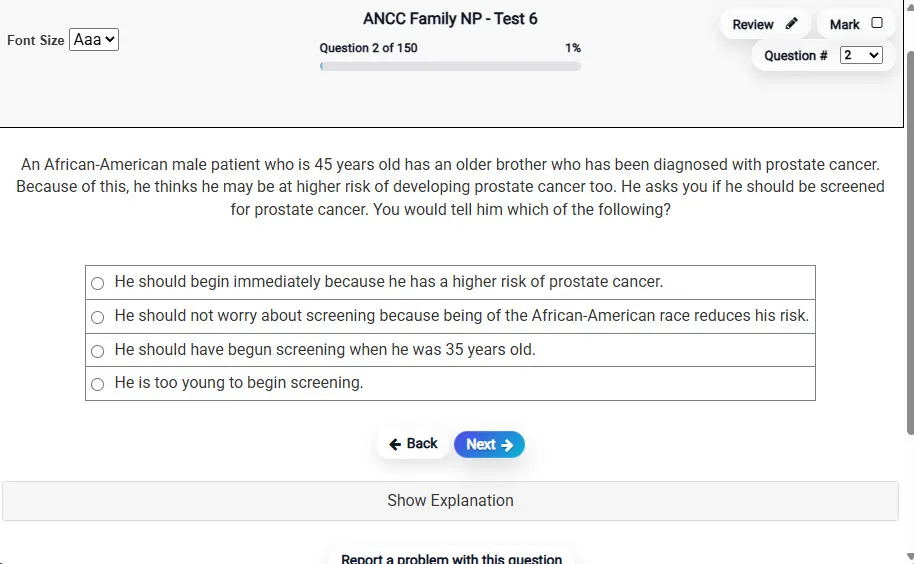
Answering a Question screen – Multiple-choice item view with navigation controls and progress tracker.
Answering a Question Multiple-choice item view with navigation controls and progress tracker.

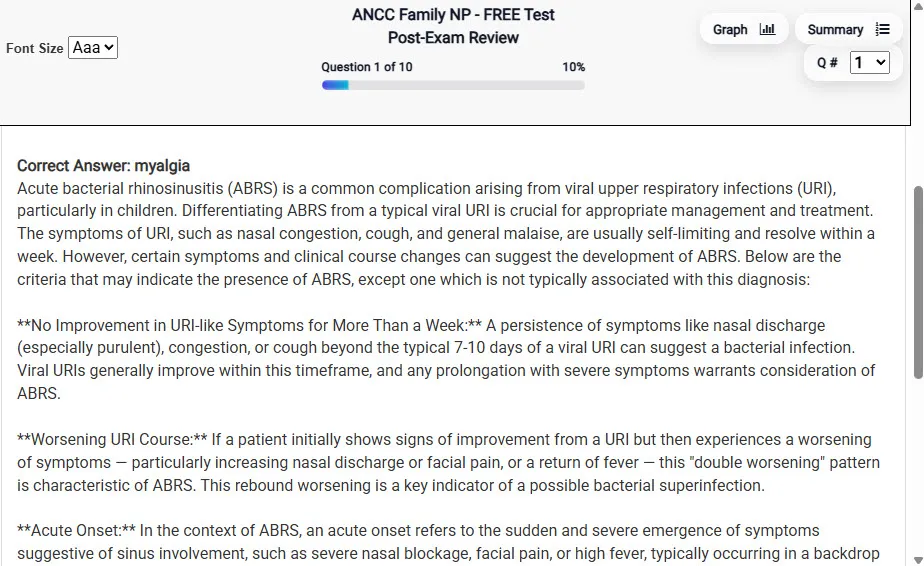
                           Detailed Explanation screen – 
                         Review mode showing chosen answer and rationale and references.
Detailed Explanation Review mode showing chosen answer and rationale and references.

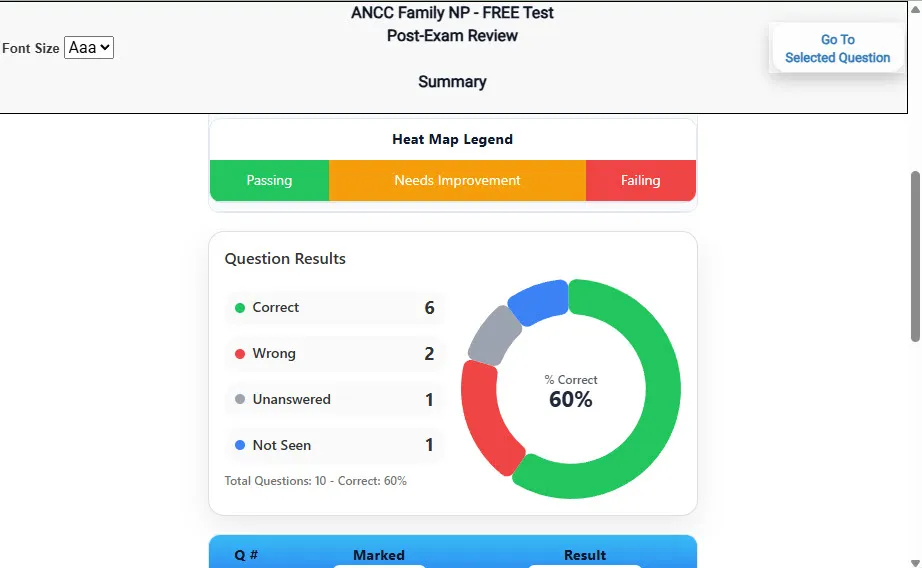
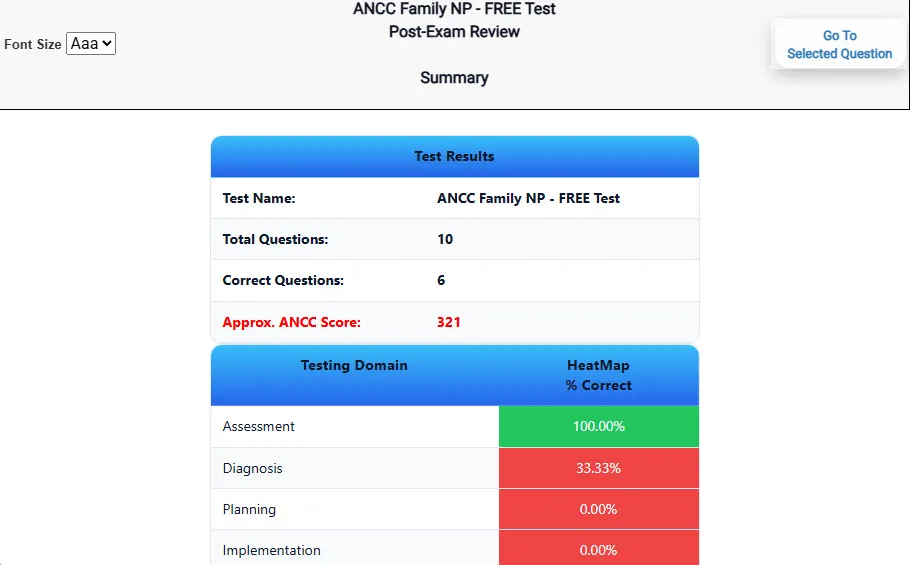
                           Review Summary 1 screen – 
                         Summary with counts for correct/wrong/unanswered and not seen items.
Review Summary 1 Summary with counts for correct/wrong/unanswered and not seen items.

                           Review Summary 2 screen – 
                         Advanced summary with category/domain breakdown and performance insights.
Review Summary 2 Advanced summary with category/domain breakdown and performance insights.

What Each Screen Shows

Answer Question Screen

  • Clean multiple-choice interface with progress bar.
  • Mark for review feature.
  • Matches real test pacing.

Detailed Explanation

  • Correct answer plus rationale.
  • Key concepts and guidelines highlighted.
  • Move between questions to fill knowledge gaps.

Review Summary 1

  • Overall results with total questions and scaled score.
  • Domain heatmap shows strengths and weaknesses.
  • Quick visual feedback on study priorities.

Review Summary 2

  • Chart of correct, wrong, unanswered, not seen.
  • Color-coded results for easy review.
  • Links back to missed items.

Top 10 Reasons to Use Exam Edge for your CNBC Certified Clinical Nutritionist Exam Prep

  1. Focused on the CNBC Certified Clinical Nutritionist Exam

    Our practice tests are built specifically for the CNBC CCN exam — every question mirrors the real topics, format, and difficulty so you're studying exactly what matters.

  2. Real Exam Simulation

    We match the per-question time limits and pressure of the actual CNCB exam, so test day feels familiar and stress-free.

  3. 20 Full Practice Tests & 2,000 Unique Questions

    You'll have more than enough material to master every CNBC CCN concept — no repeats, no fluff.

  4. Lower Cost Than a Retake

    Ordering 5 practice exams costs less than retaking the CNBC Certified Clinical Nutritionist exam after a failure. One low fee could save you both time and money.

  5. Flexible Testing

    Need to step away mid-exam? Pick up right where you left off — with your remaining time intact.

  6. Instant Scoring & Feedback

    See your raw score and an estimated CNBC Certified Clinical Nutritionist score immediately after finishing each practice test.

  7. Detailed Explanations for Every Question

    Review correct and incorrect answers with clear, step-by-step explanations so you truly understand each topic.

  8. Trusted & Accredited

    We're fully accredited by the Better Business Bureau and uphold the highest standards of trust and transparency.

  9. Web-Based & Always Available

    No software to install. Access your CNBC CCN practice exams 24/7 from any computer or mobile device.

  10. Expert Support When You Need It

    Need extra help? Our specialized tutors are highly qualified and ready to support your CNCB exam prep.


Pass the CNBC Certified Clinical Nutritionist Exam with Realistic Practice Tests from Exam Edge

Preparing for your upcoming CNBC Certified Clinical Nutritionist (CCN) Certification Exam can feel overwhelming — but the right practice makes all the difference. Exam Edge gives you the tools, structure, and confidence to pass on your first try. Our online practice exams are built to match the real CNBC CCN exam in content, format, and difficulty.

  • 📝 20 CNBC Certified Clinical Nutritionist Practice Tests: Access 20 full-length exams with 100 questions each, covering every major CNBC Certified Clinical Nutritionist topic in depth.
  • Instant Online Access: Start practicing right away — no software, no waiting.
  • 🧠 Step-by-Step Explanations: Understand the reasoning behind every correct answer so you can master CNBC CCN exam concepts.
  • 🔄 Retake Each Exam Up to 4 Times: Build knowledge through repetition and track your improvement over time.
  • 🌐 Web-Based & Available 24/7: Study anywhere, anytime, on any device.
  • 🧘 Boost Your Test-Day Confidence: Familiarity with the CNCB format reduces anxiety and helps you perform under pressure.

These CNBC Certified Clinical Nutritionist practice exams are designed to simulate the real testing experience by matching question types, timing, and difficulty level. This approach helps you get comfortable not just with the exam content, but also with the testing environment, so you walk into your exam day focused and confident.


Exam Edge CNCB Reviews


I accidentally bought the wrong test. I emailed and within hours they fixed it and emailed me back. Wonderful response!

Atlanta , Jacksonville, Florida


CNBC Certified Clinical Nutritionist Aliases Test Name

Here is a list of alternative names used for this exam.

  • CNBC Certified Clinical Nutritionist
  • CNBC Certified Clinical Nutritionist test
  • CNBC Certified Clinical Nutritionist Certification Test
  • CNBC CCN test
  • CNCB
  • CNCB CCN
  • CCN test
  • CNBC Certified Clinical Nutritionist (CCN)
  • CNBC Certified Clinical Nutritionist certification