This is the content of the pop-over!

CCI RCCS (RCCS) Practice Tests & Test Prep by Exam Edge


CCI Registered Congenital Cardiac Sonographer  product image
(4.6)
Based on 34 Reviews

  • Real Exam Simulation: Timed questions and matching content build comfort for your CCI RCCS test day.
  • Instant, 24/7 Access: Web-based CCI Registered Congenital Cardiac Sonographer practice exams with no software needed.
  • Clear Explanations: Step-by-step answers and explanations for your CCI exam to strengthen understanding.
  • Boosted Confidence: Reduces anxiety and improves test-taking skills to ace your CCI Registered Congenital Cardiac Sonographer (RCCS).

Featured on

CCI Registered Congenital Cardiac Sonographer Online Practice Test Bundles

BEST VALUE
5 practice tests

$69.75

$199.75

SAVE $130

Only $13.95 per test!

  • 100% Pass Guarantee
  • 5 online practice tests
  • 100 questions per test
  • Bonus: 100 Flash Cards + Study Guide
  • Instant access
  • Detailed Explanations
  • Practice tests never expire
  • Timed, untimed, or study guide mode
1 practice test

$39.95

  • 1 online practice test
  • 100 questions per test
  • Instant access
  • Detailed Explanations
  • Practice tests never expire
  • Timed, untimed, or study guide mode
Quick Select
Tap to choose a bundle

** All Prices are in US Dollars (USD) **


CCI RCCS (RCCS) Resources

Jump to the section you need most.

Understanding the exact breakdown of the CCI Registered Congenital Cardiac Sonographer test will help you know what to expect and how to most effectively prepare. The CCI Registered Congenital Cardiac Sonographer has 130 multiple-choice questions . The exam will be broken down into the sections below:

CCI Registered Congenital Cardiac Sonographer Exam Blueprint
Domain Name % Number of
Questions
Managing Workflow 3% 4
Providing Patient Care 19% 25
Acquiring Cardiac Images 36% 47
Characterizing Cardiac Abnormalities 29% 38
Processing and Communicating Preliminary Reports 13% 17

CCI Registered Congenital Cardiac Sonographer Study Tips by Domain

  • Verify the order, indication, and prior studies before scanning; red flag: missing laterality/segmental anatomy request (e.g., “rule out coarctation”) that could change required views and measurements.
  • Apply a time-critical triage rule: prioritize unstable neonates and suspected ductal-dependent lesions ahead of routine follow-ups; common trap is delaying a STAT echo while waiting for a full demographic registration.
  • Confirm equipment readiness before patient arrival (pediatric presets, ECG leads, warming gel, transducers, backup storage); threshold cue: if ECG tracing is unusable, fix it before Doppler/measurements to avoid inaccurate timing-dependent values.
  • Manage infection control and room turnover with a checklist (probe covers, high-level disinfection, isolation signage); contraindication cue: do not move between contact-precaution patients without documented probe and cable disinfection.
  • Coordinate with the care team for sedation/feeding plans and lines/tubes; red flag is a patient with prostaglandin infusion or multiple central lines—plan positioning and scan sequence to minimize dislodgement risk.
  • Ensure complete documentation and handoff (patient ID, acquisition time, hemodynamic status, limitations, pending measurements); priority rule: immediately escalate critical findings (e.g., pericardial tamponade signs, obstructed total anomalous pulmonary venous return) rather than waiting to finalize the study.
  • Verify two patient identifiers and the exact order/indication before scanning; red flag: mismatch between scheduled study and clinical question (e.g., “follow-up VSD” on a patient with no prior diagnosis) requires clarification before proceeding.
  • Use age-appropriate communication and obtain consent/assent per policy, confirming allergies and infection-control status; contraindication: do not use latex-containing supplies if latex allergy is reported.
  • Assess baseline vitals, work of breathing, perfusion, and pain/anxiety level; threshold: new or worsening respiratory distress or cyanosis during positioning is a stop-scan-and-escalate situation.
  • Position safely with attention to lines/tubes and hemodynamic tolerance; common trap: compressing the abdomen/chest in infants can worsen oxygenation—reposition and reassess immediately.
  • Maintain thermoregulation and comfort (warm gel/blankets, minimize exposure, cluster views); priority rule: patient stability and safety override completing every view in one session.
  • Recognize and respond to emergencies (syncope, apnea, arrhythmia, acute desaturation) by activating the appropriate response and documenting time/events; red flag: sudden bradycardia with pallor or poor perfusion demands immediate intervention, not continued imaging.
  • In Acquiring Cardiac Images, optimize patient position early (left lateral if tolerated) and confirm situs/position before scanning; red flag: starting apical views before confirming cardiac position can invert anatomic assumptions.
  • In Acquiring Cardiac Images, lock in ECG tracing quality and depth/gain before Doppler measurements; common trap: measuring gradients with a noisy or mis-triggered ECG leading to mis-timed peak velocity.
  • In Acquiring Cardiac Images, systematically obtain required standard views (subcostal, parasternal long/short, apical, suprasternal) with orthogonal sweeps; priority rule: if a structure is unclear, get two perpendicular planes before labeling it.
  • In Acquiring Cardiac Images, align CW Doppler as parallel as possible to flow and use multiple windows (apical, suprasternal, subcostal) for stenosis/regurgitation; threshold: an angle error >20° can significantly underestimate velocity and gradients.
  • In Acquiring Cardiac Images, use color Doppler with appropriate Nyquist and box size to avoid artifact; red flag: an oversized color box or low scale causing blooming that mimics valve regurgitation or shunt.
  • In Acquiring Cardiac Images, for pediatric/congenital studies prioritize high-frequency probes, short clip acquisition, and warm gel to reduce motion; contraindication cue: do not prolong scanning during desaturation, bradycardia, or escalating respiratory distress—pause and stabilize first.
  • Use segmental analysis (situs, atrioventricular connections, ventriculoarterial connections) before naming a lesion; red flag: calling “TGA” without documenting atrial and ventricular situs and great-artery relationships.
  • Differentiate shunt direction and significance with color/spectral Doppler and chamber size; trap: labeling a small VSD “restrictive” without a measurable high-velocity jet or evidence of normal RV pressure.
  • Grade outflow obstruction with CW Doppler aligned to flow and report peak/mean gradients; priority rule: if alignment is off-axis or jet is eccentric, treat gradients as underestimated and state the limitation.
  • Assess valve regurgitation using multiple views and supportive signs (vena contracta/jet density, chamber dilation, flow reversal); contraindication: do not rely on color jet area alone when gain, aliasing, or eccentric wall-hugging jets can mislead.
  • Characterize ventricular function with both qualitative and quantitative measures (fractional shortening, Simpson/area-length when feasible); threshold cue: if EF appears reduced or there is regional wall motion abnormality, document loading conditions and compare to prior studies before attributing to cardiomyopathy.
  • Identify critical ductal-dependent lesions and mixing physiology (e.g., severe coarctation, HLHS, TGA) by arch/isthmus and systemic/pulmonary flow patterns; red flag: right-to-left ductal flow or diastolic runoff without a clear arch evaluation warrants urgent communication.
  • Label every image/clip with patient ID, date/time, anatomic view, and sweep direction; red flag: any unlabeled or mismatched-demographic media should halt reporting until reconciled.
  • Use consistent congenital measurements (e.g., valve annulus Z-scores with stated method and body size inputs); common trap: mixing measurement conventions or omitting BSA/gestational age makes comparisons invalid.
  • Document shunts and flows with direction, timing, and peak/mean gradients plus rhythm/HR at acquisition; priority rule: if Doppler angle or sample position is suboptimal, state the limitation rather than reporting a definitive gradient.
  • Summarize segmental anatomy (situs, AV connections, VA connections) before listing lesions; red flag: skipping the segmental framework can produce internally inconsistent conclusions in complex congenital cases.
  • Communicate urgent findings immediately (e.g., ductal-dependent systemic/pulmonary flow, critical outflow obstruction, tamponade, severe hypoxemia correlates) and document time/person notified; threshold cue: “critical/unstable” should trigger real-time escalation, not routine report delivery.
  • Include a focused limitations/quality statement (windows, agitation, ECMO/vent settings, suboptimal Doppler alignment) and what was not assessed; contraindication cue: do not imply exclusion of lesions (e.g., coarctation, anomalous pulmonary venous return) if key views were not obtained.


Built to Fit Into Your Busy Life

Everything you need to prepare with confidence—without wasting a minute.

Three Study Modes

Timed, No Time Limit, or Explanation mode.

Actionable Analytics

Heatmaps and scaled scores highlight weak areas.

High-Yield Rationales

Concise explanations emphasize key concepts.

Realistic Interface

Matches the feel of the actual exam environment.

Accessible by Design

Clean layout reduces cognitive load.

Anytime, Anywhere

Web-based access 24/7 on any device.
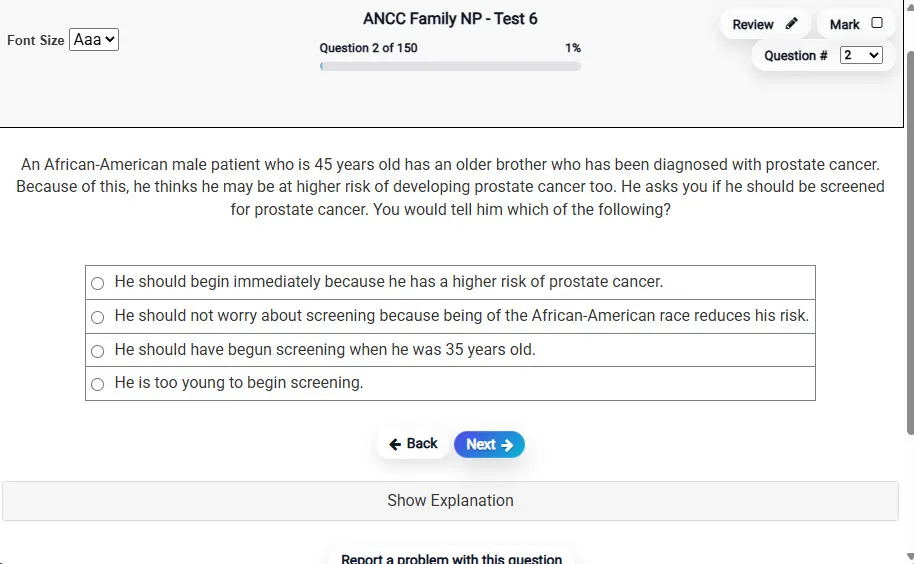
Answering a Question screen – Multiple-choice item view with navigation controls and progress tracker.
Answering a Question Multiple-choice item view with navigation controls and progress tracker.

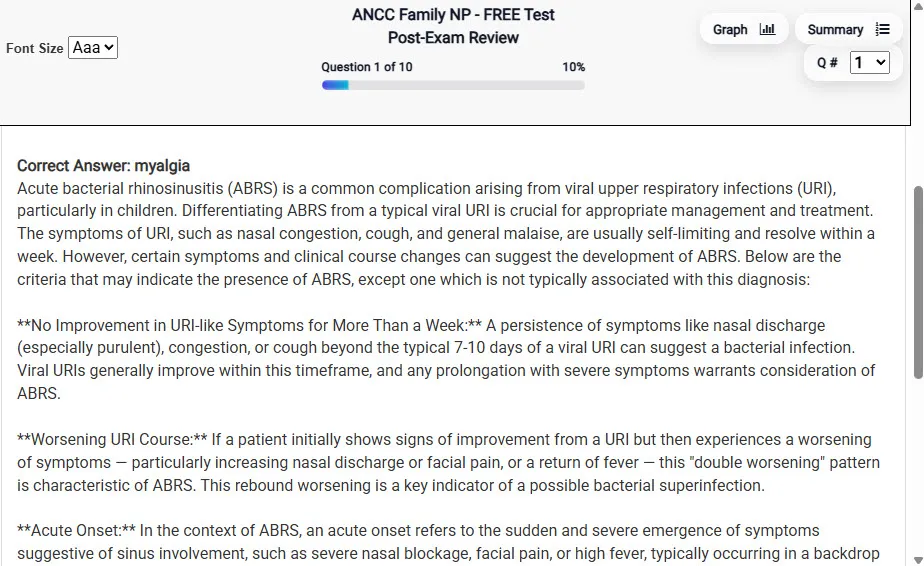
                           Detailed Explanation screen – 
                         Review mode showing chosen answer and rationale and references.
Detailed Explanation Review mode showing chosen answer and rationale and references.

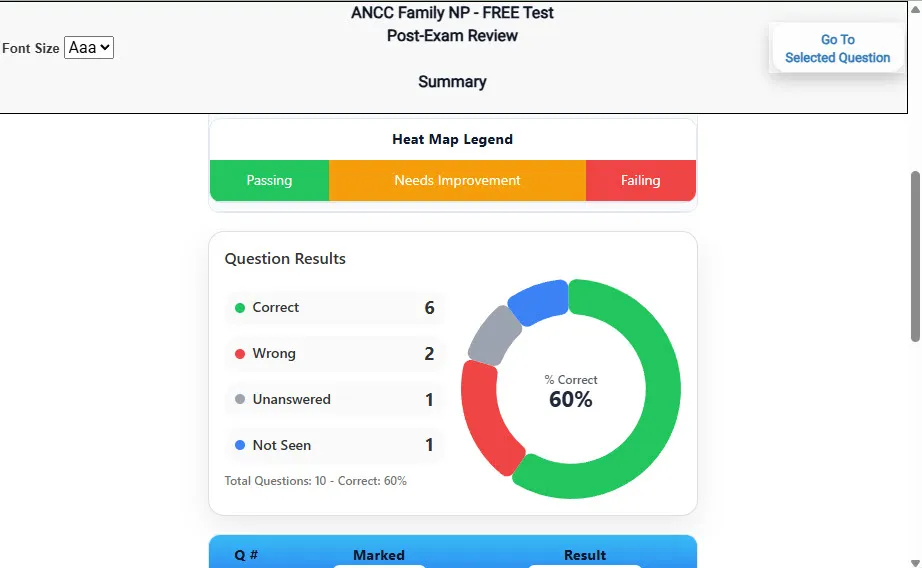
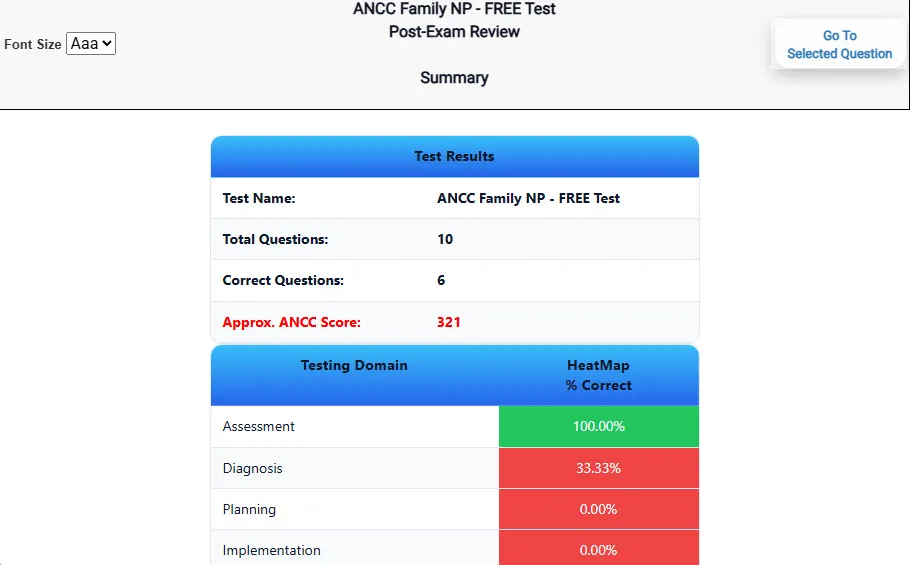
                           Review Summary 1 screen – 
                         Summary with counts for correct/wrong/unanswered and not seen items.
Review Summary 1 Summary with counts for correct/wrong/unanswered and not seen items.

                           Review Summary 2 screen – 
                         Advanced summary with category/domain breakdown and performance insights.
Review Summary 2 Advanced summary with category/domain breakdown and performance insights.

What Each Screen Shows

Answer Question Screen

  • Clean multiple-choice interface with progress bar.
  • Mark for review feature.
  • Matches real test pacing.

Detailed Explanation

  • Correct answer plus rationale.
  • Key concepts and guidelines highlighted.
  • Move between questions to fill knowledge gaps.

Review Summary 1

  • Overall results with total questions and scaled score.
  • Domain heatmap shows strengths and weaknesses.
  • Quick visual feedback on study priorities.

Review Summary 2

  • Chart of correct, wrong, unanswered, not seen.
  • Color-coded results for easy review.
  • Links back to missed items.

Top 10 Reasons to Use Exam Edge for your CCI Registered Congenital Cardiac Sonographer Exam Prep

  1. Focused on the CCI Registered Congenital Cardiac Sonographer Exam

    Our practice tests are built specifically for the CCI RCCS exam — every question mirrors the real topics, format, and difficulty so you're studying exactly what matters.

  2. Real Exam Simulation

    We match the per-question time limits and pressure of the actual CCI exam, so test day feels familiar and stress-free.

  3. 5 Full Practice Tests & 500 Unique Questions

    You'll have more than enough material to master every CCI RCCS concept — no repeats, no fluff.

  4. Lower Cost Than a Retake

    Ordering 5 practice exams costs less than retaking the CCI Registered Congenital Cardiac Sonographer exam after a failure. One low fee could save you both time and money.

  5. Flexible Testing

    Need to step away mid-exam? Pick up right where you left off — with your remaining time intact.

  6. Instant Scoring & Feedback

    See your raw score and an estimated CCI Registered Congenital Cardiac Sonographer score immediately after finishing each practice test.

  7. Detailed Explanations for Every Question

    Review correct and incorrect answers with clear, step-by-step explanations so you truly understand each topic.

  8. Trusted & Accredited

    We're fully accredited by the Better Business Bureau and uphold the highest standards of trust and transparency.

  9. Web-Based & Always Available

    No software to install. Access your CCI RCCS practice exams 24/7 from any computer or mobile device.

  10. Expert Support When You Need It

    Need extra help? Our specialized tutors are highly qualified and ready to support your CCI exam prep.


Pass the CCI Registered Congenital Cardiac Sonographer Exam with Realistic Practice Tests from Exam Edge

Preparing for your upcoming CCI Registered Congenital Cardiac Sonographer (RCCS) Certification Exam can feel overwhelming — but the right practice makes all the difference. Exam Edge gives you the tools, structure, and confidence to pass on your first try. Our online practice exams are built to match the real CCI RCCS exam in content, format, and difficulty.

  • 📝 5 CCI Registered Congenital Cardiac Sonographer Practice Tests: Access 5 full-length exams with 100 questions each, covering every major CCI Registered Congenital Cardiac Sonographer topic in depth.
  • Instant Online Access: Start practicing right away — no software, no waiting.
  • 🧠 Step-by-Step Explanations: Understand the reasoning behind every correct answer so you can master CCI RCCS exam concepts.
  • 🔄 Retake Each Exam Up to 4 Times: Build knowledge through repetition and track your improvement over time.
  • 🌐 Web-Based & Available 24/7: Study anywhere, anytime, on any device.
  • 🧘 Boost Your Test-Day Confidence: Familiarity with the CCI format reduces anxiety and helps you perform under pressure.

These CCI Registered Congenital Cardiac Sonographer practice exams are designed to simulate the real testing experience by matching question types, timing, and difficulty level. This approach helps you get comfortable not just with the exam content, but also with the testing environment, so you walk into your exam day focused and confident.


Exam Edge CCI (cardio) Reviews


Thank you for your services. I purchase the test prep for CCI Certified Cardiographic Technician and it was a big help. I passed my board exam the first time with a score of a 739. Thanks again, I will be using your services for my CCI CRAT boards here soon.

David, TN

Love all the different tests with rationale to test questions.

carlyle , alpharetta, Georgia

This is the go-to for RCS, CCI board review practice test. I failed two times and passed on my third attempt with the help of Exam Edge. I was not paid for this review, I just want to help others make the right decision in board preparation. Exam Edge has a great series of questions related to the R ...
Read More
Jason P,

Exam Edge is a great resource for people trying to study for their board exams. This is the second time I have used Exam Edge's services, and it gave me the confidence for when the time came for me to sit for the exams. I passed my CCI Cardiographic Technician and Rhythm Analysis Technician exams.

Amanda K, Ohio

"Thank you so much, Exam Edge!!! I just left Pearson Vue, Miami........ with 759! I couldn't have done it without your practice tests!"

AJR, Miami FL

I feel the practice exams prepared me very well for the real thing. I have test anxiety, so I purchased a set of 10 tests. I finished 6 of 10 tests and still passed with a nice score. I like the way your test are designed and how they make you actually learn physics and not just memorize the answers ...
Read More
Sherry B, Allen County, Indiana


CCI Registered Congenital Cardiac Sonographer Aliases Test Name

Here is a list of alternative names used for this exam.

  • CCI Registered Congenital Cardiac Sonographer
  • CCI Registered Congenital Cardiac Sonographer test
  • CCI Registered Congenital Cardiac Sonographer Certification Test
  • CCI RCCS test
  • CCI (cardio)
  • CCI (cardio) RCCS
  • RCCS test
  • CCI Registered Congenital Cardiac Sonographer (RCCS)
  • CCI Registered Congenital Cardiac Sonographer certification