This is the content of the pop-over!

CCC Speech-Language Pathology (CCC-SLP) Practice Tests & Test Prep by Exam Edge


ASHA Certificate of Clinical Competence Speech-Language Pathology  product image
(4.5)
Based on 28 Reviews

  • Real Exam Simulation: Timed questions and matching content build comfort for your CCC Speech-Language Pathology test day.
  • Instant, 24/7 Access: Web-based ASHA Certificate of Clinical Competence Speech-Language Pathology practice exams with no software needed.
  • Clear Explanations: Step-by-step answers and explanations for your ASHA exam to strengthen understanding.
  • Boosted Confidence: Reduces anxiety and improves test-taking skills to ace your ASHA Certificate of Clinical Competence Speech-Language Pathology (CCC-SLP).

Featured on

ASHA Certificate of Clinical Competence Speech-Language Pathology Online Practice Test Bundles

BEST VALUE
15 practice tests

$149.25

$599.25

SAVE $450

Only $9.95 per test!

  • 100% Pass Guarantee
  • 15 online practice tests
  • 120 questions per test
  • Bonus: 100 Flash Cards + Study Guide
  • Instant access
  • Detailed Explanations
  • Practice tests never expire
  • Timed, untimed, or study guide mode
MOST POPULAR
10 practice tests

$99.50

$399.50

SAVE $300

Only $9.95 per test!

  • 10 online practice tests
  • 120 questions per test
  • Bonus: 100 Flash Cards + Study Guide
  • Instant access
  • Detailed Explanations
  • Practice tests never expire
  • Timed, untimed, or study guide mode
5 practice tests

$69.75

$199.75

SAVE $130

Only $13.95 per test!

  • 5 online practice tests
  • 120 questions per test
  • Bonus: 100 Flash Cards
  • Instant access
  • Detailed Explanations
  • Practice tests never expire
  • Timed, untimed, or study guide mode
1 practice test

$39.95

  • 1 online practice test
  • 120 questions per test
  • Instant access
  • Detailed Explanations
  • Practice tests never expire
  • Timed, untimed, or study guide mode
Quick Select
Tap to choose a bundle

** All Prices are in US Dollars (USD) **


CCC Speech-Language Pathology (CCC-SLP) Resources

Jump to the section you need most.

Understanding the exact breakdown of the ASHA Certificate of Clinical Competence Speech-Language Pathology test will help you know what to expect and how to most effectively prepare. The ASHA Certificate of Clinical Competence Speech-Language Pathology has 132 multiple-choice questions . The exam will be broken down into the sections below:

ASHA Certificate of Clinical Competence Speech-Language Pathology Exam Blueprint
Domain Name % Number of
Questions
Basic Human Communication Processes 17% 22
Phonological and Language Disorders 19% 25
Speech Disorders 13% 17
Neurogenic Disorders 19% 25
Audiology/Hearing 5% 7
Clinical Management 19% 25
Professional Issues/Psychometrics/Research 8% 11

ASHA Certificate of Clinical Competence Speech-Language Pathology Study Tips by Domain

  • Know speech production anatomy/physiology (respiration, phonation, resonance, articulation) and use a quick red-flag check: sudden dysphonia with stridor or breathing distress warrants immediate medical referral, not therapy.
  • Master acoustic and perceptual basics (frequency vs. intensity vs. duration) and avoid the common trap of equating loudness with pitch; a cue is to verify pitch changes with F0 rather than dB level.
  • Differentiate swallowing phases and airway protection mechanisms; a priority rule is that overt signs (wet voice, persistent cough, oxygen desaturation after PO) require stopping trials and considering instrumental assessment per scope and setting.
  • Understand language processing foundations (semantics, syntax, morphology, pragmatics) and use the cue that pragmatics deficits can present with intact vocabulary/grammar—don’t mislabel as purely “language intact” based on standardized scores alone.
  • Link hearing, speech perception, and speech development (auditory feedback loops); a key threshold cue is that even mild, fluctuating conductive loss (e.g., recurrent OME) can impact phonological learning—prompt audiology/ENT coordination when concerns persist.
  • Apply developmental norms for speech, language, and feeding across the lifespan; a common ASHA-style trap is over-relying on age norms without considering cultural/linguistic variation—use dynamic assessment or language sampling when standardized tools are invalid.
  • Differentiate phonological disorder vs. childhood apraxia of speech (CAS)—inconsistent errors, disrupted coarticulation, and prosodic abnormalities are red flags for CAS and should shift you away from a purely phonological approach.
  • Prioritize targets using impact and developmental norms (e.g., earlier-developing sounds, stimulable sounds, and patterns affecting intelligibility most)—common trap: treating isolated sounds when a phonological pattern (e.g., final consonant deletion) better explains the errors.
  • For phonological patterns, use an evidence-based approach (e.g., minimal pairs, cycles, multiple oppositions) matched to severity—priority rule: use minimal pairs only when the child can produce at least one sound contrast to highlight meaning differences.
  • In language assessment, confirm disorder across contexts and modalities (spoken, narrative, classroom) and consider dialect/second-language influence—red flag: labeling a difference as a disorder without verifying patterning consistent with the child’s linguistic community.
  • Match intervention to language profile (receptive vs. expressive, syntax vs. semantics vs. pragmatics) and embed goals in functional communication—common trap: writing goals that are not measurable (e.g., “improve vocabulary”) instead of criterion-based targets.
  • For literacy-risk links (phonological awareness, narrative, morphology), coordinate with educational teams and monitor response to intervention—threshold cue: persistent deficits despite adequate instruction warrant more intensive, individualized SLP services and possible co-occurring learning concerns.
  • Differentiate dysarthria vs apraxia of speech: dysarthria shows consistent weakness/coordination issues, while AOS has inconsistent errors and groping—red flag is calling it “AOS” without disrupted prosody and impaired motor planning.
  • For stuttering, document overt and covert behaviors and use a severity measure (e.g., % syllables stuttered) plus impact—common trap is treating only speech rate without addressing avoidance and participation restrictions.
  • Voice evaluation should include perceptual (e.g., CAPE-V), acoustic/aerodynamic, and case history for misuse/medical factors—priority rule: refer to ENT before initiating direct voice therapy when there is persistent dysphonia (>3 weeks) or red flags (pain, hemoptysis, neck mass).
  • Resonance disorders: distinguish velopharyngeal insufficiency (structural) vs incompetence (neuromotor) vs mislearning—contraindication: do not use oral-motor strengthening for cleft-related hypernasality; refer for team-based management.
  • Articulation errors: determine if phonetic placement/distortion vs phonological patterning and check stimulability—common trap is skipping an oral mechanism exam when distortions suggest structural/functional issues (e.g., tongue-tie, dentition, malocclusion).
  • Motor speech and swallowing co-occur frequently; screen for dysphagia signs (wet voice, coughing with meals) and coordinate care—red flag is initiating intensive speech drills without considering fatigue, respiration, and safety in medically fragile clients.
  • Differentiate dysarthria vs. apraxia of speech (AOS): dysarthria shows consistent weakness/coordination deficits, while AOS has inconsistent errors with groping and disrupted prosody—red flag is labeling AOS as “phonological” when errors vary with increased length/complexity.
  • Screen swallow safety with attention to aspiration risk factors (wet/gurgly voice, weak cough, recurrent pneumonia)—priority rule is that suspected dysphagia warrants instrumental assessment (MBSS/FEES) rather than relying on bedside signs alone.
  • Localize aphasia patterns and functional impact: fluent vs. nonfluent, comprehension vs. expression, repetition/naming—common trap is overcalling “Wernicke’s” without checking auditory comprehension and awareness (anosognosia).
  • For right-hemisphere disorder and TBI, assess pragmatics, attention, neglect, and discourse organization—red flag is using only standardized language tests when the main deficits are conversational inference, topic maintenance, or visuospatial neglect.
  • Differentiate dementia types and delirium: delirium is acute/fluctuating with inattention; dementia is progressive—priority rule is to rule out reversible causes (meds, infection, dehydration) before attributing change to neurodegeneration.
  • Plan neurogenic treatment with participation-focused goals and caregiver training (AAC, environmental supports, errorless learning for memory)—contraindication is heavy metalinguistic drill for clients with severe anosognosia or poor sustained attention without supports.
  • Complete basic hearing screening workflow: otoscopy → pure-tone screening (commonly 20 dB HL at 1, 2, 4 kHz) → immediate rescreen/appropriate referral; red flag: pain, drainage, or sudden/unilateral change requires medical referral rather than “watch and wait.”
  • Interpret tympanometry patterns for referral decisions (Type B suggests middle-ear effusion; Type C suggests negative pressure/Eustachian tube dysfunction); common trap: calling a flat tympanogram “normal” because ear canal volume wasn’t checked.
  • Use acoustic reflexes and speech results to cross-check pure-tone thresholds; red flag: elevated/absent reflexes with disproportionately poor speech discrimination may indicate retrocochlear involvement and warrants audiology/ENT referral.
  • Recognize classic audiometric configurations and likely impacts (presbycusis/high-frequency SNHL, noise notch near 3–6 kHz); priority rule: counsel on hearing conservation when history includes firearms/industrial noise even if thresholds are only mildly affected.
  • Manage communication in hearing loss with evidence-based strategies (clear speech, reduced distance, visual cues, environmental modifications); common trap: recommending speaking louder instead of improving SNR (signal-to-noise ratio).
  • Know when to refer for amplification/assistive tech (hearing aids, FM/DM, captioning) and coordinate with audiology; red flag: complaints of difficulty in noise with “normal” audiogram may reflect central auditory processing issues and should not be dismissed.
  • Prioritize life-threatening or medically fragile issues first (e.g., airway protection/aspiration risk)—red flag: wet/gurgly voice, coughing with thin liquids, or recurrent pneumonia requires immediate swallow safety action and medical coordination.
  • Write measurable goals tied to function and data (accuracy, rate, level of cueing, context)—common trap: goals like “improve communication” without criteria, condition, and timeframe are not defensible for ASHA-aligned documentation.
  • Use evidence-based decision-making by integrating research, clinical expertise, and patient/caregiver values—priority rule: if an intervention lacks support for the client profile, document rationale and consider supported alternatives.
  • Plan treatment considering intensity, dosage, and generalization—common trap: gains seen only in drill without carryover; require at least one generalization measure (e.g., probe in natural context) in the plan.
  • Maintain clear, timely documentation for evaluation results, progress, and discharge—red flag: billing/coding or minutes that don’t match the note (or missing skilled justification) risks compliance and audit issues.
  • Ensure interprofessional collaboration and appropriate referrals (ENT, audiology, OT/PT, neuro, mental health)—contraindication cue: do not proceed with voice therapy without medical clearance when laryngeal pathology is suspected (e.g., persistent dysphonia >2–3 weeks).
  • Apply ASHA Code of Ethics — if there’s a dual relationship or financial incentive, disclose and avoid it; red flag: accepting gifts/referrals that could bias clinical judgment.
  • Use evidence-based practice (EBP) as the integration of best research evidence, clinical expertise, and client values; common trap: citing a single study or manufacturer claim without considering level/quality of evidence.
  • Know informed consent and documentation basics — obtain consent in understandable language and document risks/alternatives; red flag: starting treatment or recording sessions without explicit permission.
  • Interpret psychometrics correctly — reliability affects consistency and validity affects whether a test measures what it claims; common trap: making high-stakes decisions from a tool with weak validity for the client’s age/language/culture.
  • Use sensitivity/specificity and predictive values appropriately — predictive values shift with base rates; priority rule: in low-prevalence settings, beware false positives even with good sensitivity.
  • Protect confidentiality under HIPAA/FERPA as applicable — share only minimum necessary information; red flag: discussing cases in public areas or sending identifiable info via unsecured email/text.


Built to Fit Into Your Busy Life

Everything you need to prepare with confidence—without wasting a minute.

Three Study Modes

Timed, No Time Limit, or Explanation mode.

Actionable Analytics

Heatmaps and scaled scores highlight weak areas.

High-Yield Rationales

Concise explanations emphasize key concepts.

Realistic Interface

Matches the feel of the actual exam environment.

Accessible by Design

Clean layout reduces cognitive load.

Anytime, Anywhere

Web-based access 24/7 on any device.
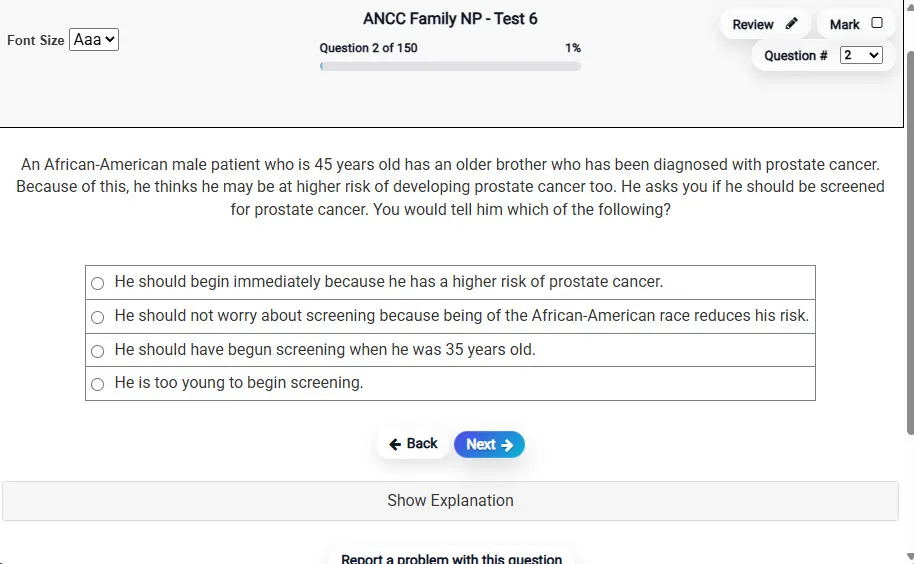
Answering a Question screen – Multiple-choice item view with navigation controls and progress tracker.
Answering a Question Multiple-choice item view with navigation controls and progress tracker.

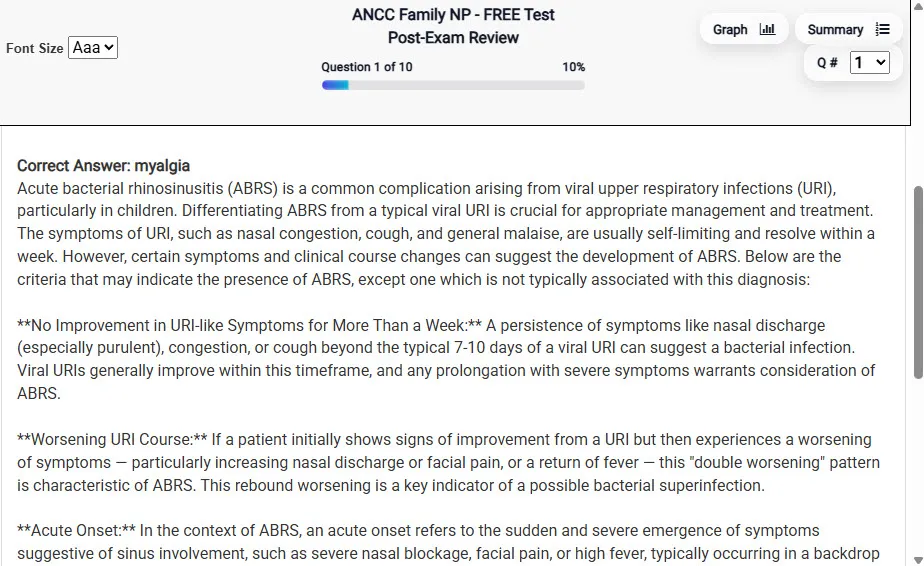
                           Detailed Explanation screen – 
                         Review mode showing chosen answer and rationale and references.
Detailed Explanation Review mode showing chosen answer and rationale and references.

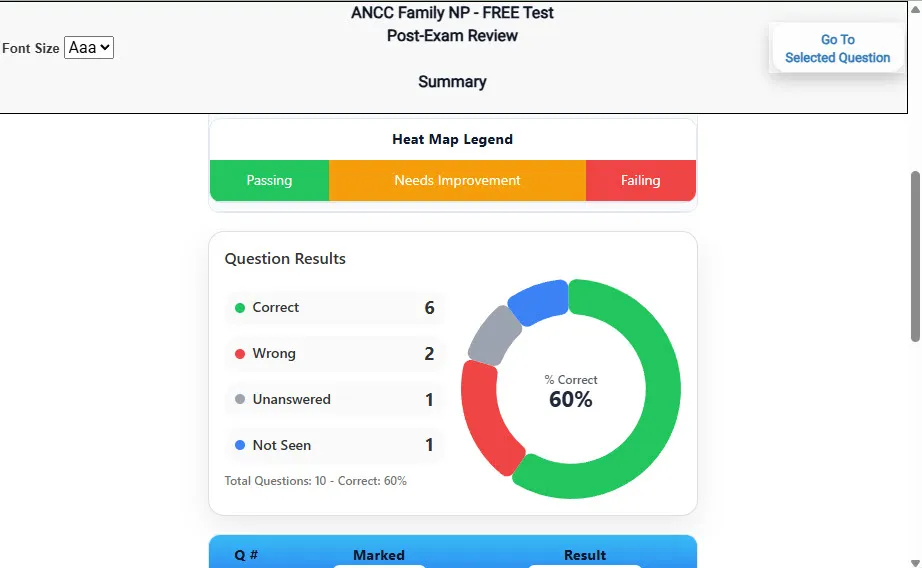
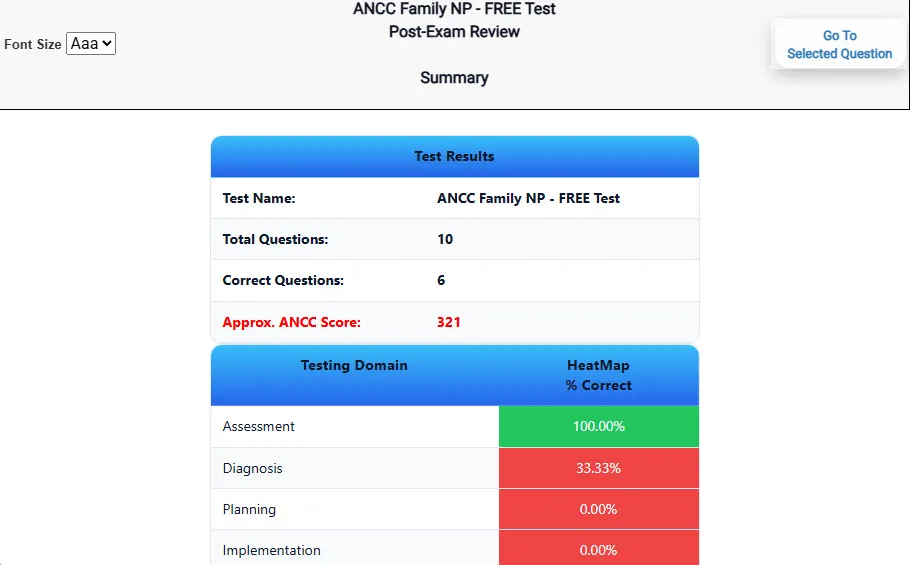
                           Review Summary 1 screen – 
                         Summary with counts for correct/wrong/unanswered and not seen items.
Review Summary 1 Summary with counts for correct/wrong/unanswered and not seen items.

                           Review Summary 2 screen – 
                         Advanced summary with category/domain breakdown and performance insights.
Review Summary 2 Advanced summary with category/domain breakdown and performance insights.

What Each Screen Shows

Answer Question Screen

  • Clean multiple-choice interface with progress bar.
  • Mark for review feature.
  • Matches real test pacing.

Detailed Explanation

  • Correct answer plus rationale.
  • Key concepts and guidelines highlighted.
  • Move between questions to fill knowledge gaps.

Review Summary 1

  • Overall results with total questions and scaled score.
  • Domain heatmap shows strengths and weaknesses.
  • Quick visual feedback on study priorities.

Review Summary 2

  • Chart of correct, wrong, unanswered, not seen.
  • Color-coded results for easy review.
  • Links back to missed items.

Top 10 Reasons to Use Exam Edge for your ASHA Certificate of Clinical Competence Speech-Language Pathology Exam Prep

  1. Focused on the ASHA Certificate of Clinical Competence Speech-Language Pathology Exam

    Our practice tests are built specifically for the CCC Speech-Language Pathology exam — every question mirrors the real topics, format, and difficulty so you're studying exactly what matters.

  2. Real Exam Simulation

    We match the per-question time limits and pressure of the actual ASHA exam, so test day feels familiar and stress-free.

  3. 15 Full Practice Tests & 1,800 Unique Questions

    You'll have more than enough material to master every CCC Speech-Language Pathology concept — no repeats, no fluff.

  4. Lower Cost Than a Retake

    Ordering 5 practice exams costs less than retaking the ASHA Certificate of Clinical Competence Speech-Language Pathology exam after a failure. One low fee could save you both time and money.

  5. Flexible Testing

    Need to step away mid-exam? Pick up right where you left off — with your remaining time intact.

  6. Instant Scoring & Feedback

    See your raw score and an estimated ASHA Certificate of Clinical Competence Speech-Language Pathology score immediately after finishing each practice test.

  7. Detailed Explanations for Every Question

    Review correct and incorrect answers with clear, step-by-step explanations so you truly understand each topic.

  8. Trusted & Accredited

    We're fully accredited by the Better Business Bureau and uphold the highest standards of trust and transparency.

  9. Web-Based & Always Available

    No software to install. Access your CCC Speech-Language Pathology practice exams 24/7 from any computer or mobile device.

  10. Expert Support When You Need It

    Need extra help? Our specialized tutors are highly qualified and ready to support your ASHA exam prep.


Pass the ASHA Certificate of Clinical Competence Speech-Language Pathology Exam with Realistic Practice Tests from Exam Edge

Preparing for your upcoming ASHA Certificate of Clinical Competence Speech-Language Pathology (CCC-SLP) Certification Exam can feel overwhelming — but the right practice makes all the difference. Exam Edge gives you the tools, structure, and confidence to pass on your first try. Our online practice exams are built to match the real CCC Speech-Language Pathology exam in content, format, and difficulty.

  • 📝 15 ASHA Certificate of Clinical Competence Speech-Language Pathology Practice Tests: Access 15 full-length exams with 120 questions each, covering every major ASHA Certificate of Clinical Competence Speech-Language Pathology topic in depth.
  • Instant Online Access: Start practicing right away — no software, no waiting.
  • 🧠 Step-by-Step Explanations: Understand the reasoning behind every correct answer so you can master CCC Speech-Language Pathology exam concepts.
  • 🔄 Retake Each Exam Up to 4 Times: Build knowledge through repetition and track your improvement over time.
  • 🌐 Web-Based & Available 24/7: Study anywhere, anytime, on any device.
  • 🧘 Boost Your Test-Day Confidence: Familiarity with the ASHA format reduces anxiety and helps you perform under pressure.

These ASHA Certificate of Clinical Competence Speech-Language Pathology practice exams are designed to simulate the real testing experience by matching question types, timing, and difficulty level. This approach helps you get comfortable not just with the exam content, but also with the testing environment, so you walk into your exam day focused and confident.

Exam Edge ASHA Reviews


ASHA Certificate of Clinical Competence Speech-Language Pathology Aliases Test Name

Here is a list of alternative names used for this exam.

  • ASHA Certificate of Clinical Competence Speech-Language Pathology
  • ASHA Certificate of Clinical Competence Speech-Language Pathology test
  • ASHA Certificate of Clinical Competence Speech-Language Pathology Certification Test
  • CCC Speech-Language Pathology test
  • ASHA
  • ASHA CCC-SLP
  • CCC-SLP test
  • ASHA Certificate of Clinical Competence Speech-Language Pathology (CCC-SLP)
  • Certificate of Clinical Competence Speech-Language Pathology certification