This is the content of the pop-over!

Lightning Deal Alert – 12% Off Ends at Midnight!

Strike while the savings are hot! Use promo code FlashSale at checkout for 12% off any Exam Edge test or bundle. Hurry—the clock is ticking!

ONCC BMTCN (BMTCN) Practice Tests & Test Prep by Exam Edge


ONCC Blood and Marrow Transplant Certified Nurse  product image
(5.0)
Based on 29 Reviews

  • Real Exam Simulation: Timed questions and matching content build comfort for your ONCC BMTCN test day.
  • Instant, 24/7 Access: Web-based ONCC Blood and Marrow Transplant Certified Nurse practice exams with no software needed.
  • Clear Explanations: Step-by-step answers and explanations for your ONCC exam to strengthen understanding.
  • Boosted Confidence: Reduces anxiety and improves test-taking skills to ace your ONCC Blood and Marrow Transplant Certified Nurse (BMTCN).

Featured on

ONCC Blood and Marrow Transplant Certified Nurse Online Practice Test Bundles

BEST VALUE
5 practice tests

$69.75

$199.75

SAVE $130

Only $13.95 per test!

  • 100% Pass Guarantee
  • 5 online practice tests
  • 100 questions per test
  • Bonus: 100 Flash Cards + Study Guide
  • Instant access
  • Detailed Explanations
  • Practice tests never expire
  • Timed, untimed, or study guide mode
1 practice test

$39.95

  • 1 online practice test
  • 100 questions per test
  • Instant access
  • Detailed Explanations
  • Practice tests never expire
  • Timed, untimed, or study guide mode
Quick Select
Tap to choose a bundle

** All Prices are in US Dollars (USD) **


ONCC BMTCN (BMTCN) Resources

Jump to the section you need most.

Understanding the exact breakdown of the ONCC Blood and Marrow Transplant Certified Nurse test will help you know what to expect and how to most effectively prepare. The ONCC Blood and Marrow Transplant Certified Nurse has multiple-choice questions . The exam will be broken down into the sections below:

ONCC Blood and Marrow Transplant Certified Nurse Exam Blueprint
Domain Name % Number of
Questions
Foundations of Transplant 16% 16
Cellular Collection - Preparative Regimens Infusion 16% 16
Early Post-Transplant Management and Education 24% 24
Late Post-Transplant Management and Education 22% 22
Quality of Life 12% 12
Professional Performance 10% 10

ONCC Blood and Marrow Transplant Certified Nurse Study Tips by Domain

  • Differentiate autologous, allogeneic (related/unrelated), and haploidentical transplant goals and risks; red flag: treating autologous patients as if they can develop GVHD (they typically do not), which can delay correct identification of engraftment syndrome or infection.
  • Verify HLA typing and donor selection criteria (match level, CMV status, ABO compatibility, sensitization history) early; priority rule: any discrepancy between donor and recipient identifiers/HLA results is a hard stop before proceeding.
  • Assess baseline organ function (cardiac, pulmonary, renal, hepatic) and performance status to determine transplant eligibility; threshold cue: rising bilirubin/creatinine from baseline warrants immediate provider notification before conditioning starts.
  • Plan infection risk mitigation based on pre-transplant serologies and history (HBV/HCV/HIV, CMV, VZV) and vaccination status; common trap: assuming recent vaccination equals protection—many vaccines are ineffective once immunosuppression begins.
  • Prepare patients/caregivers for the transplant timeline and expected toxicities (mucositis, cytopenias, infertility, secondary malignancy risk); contraindication cue: pregnancy requires urgent escalation before conditioning due to teratogenic regimen risk.
  • Ensure informed consent and education cover donor risks (if applicable), fertility preservation, advance directives, and caregiver availability; red flag: inadequate caregiver/transportation plan is a major barrier and should trigger early social work/case management referral.
  • For autologous mobilization/collection, trend daily CBC and CD34+ counts and schedule apheresis when peripheral CD34+ is adequate; red flag: rising WBC with very low CD34+ suggests poor mobilization and should trigger early provider notification/plan change.
  • Before starting apheresis, verify central line patency and anticoagulation plan; common trap: citrate toxicity—watch for perioral tingling, cramps, or QT changes and prioritize calcium replacement per protocol.
  • During conditioning, enforce chemotherapy safety and organ-protection thresholds (e.g., strict I&O, daily weights, renal/hepatic labs); contraindication cue: hold/clarify dosing with significant creatinine rise or new transaminase spike rather than “pushing through” the regimen.
  • For radiation/chemotherapy preparative regimens, anticipate profound mucositis and initiate scheduled antiemetics and oral care early; priority rule: treat dehydration and electrolyte losses promptly because they worsen arrhythmia risk and delay infusion readiness.
  • At product receipt/infusion, perform a two-person verification of patient ID, product ID, ABO/Rh compatibility, and expiration/temperature requirements; red flag: any mismatch, broken seal, or unexpected discoloration requires stopping and contacting the lab/physician immediately.
  • During stem cell infusion (especially DMSO-cryopreserved products), monitor vitals frequently and be prepared for reactions; common trap: DMSO-related bradycardia/hypotension or chest tightness—slow/stop infusion and treat per protocol rather than attributing symptoms to anxiety.
  • In the first 30 days, treat fever (e.g., =38.0°C/100.4°F once) as infection until proven otherwise—obtain blood cultures from each lumen and a peripheral site before starting empiric broad-spectrum antibiotics, and never delay antibiotics for imaging.
  • Track engraftment trends daily; a common trap is assuming recovery has started—ANC =500/µL for 3 consecutive days (or per program criteria) is the practical threshold, and a sudden drop can be a red flag for graft failure, drug effect, or infection.
  • Escalate immediately for acute GVHD red flags: new maculopapular rash, bilirubin rise, or diarrhea (especially >500 mL/day or worsening); priority rule is to quantify stool output and assess skin surface area involved rather than relying on patient-described “a lot.”
  • Prevent and detect tumor lysis/renal injury early—monitor creatinine, potassium, phosphorus, calcium, and uric acid; a contraindication is giving nephrotoxic agents or NSAIDs without provider review when creatinine is rising or urine output is falling.
  • For mucositis and GI toxicity, use scheduled oral care and pain control, but red flag any inability to swallow fluids, uncontrolled pain, or bloody stools; common trap is missing dehydration—set a cue such as urine output <0.5 mL/kg/hr or orthostasis prompting IV fluids/assessment.
  • Central line care is non-negotiable: scrub the hub every access and change dressings per policy; priority rule is to suspect catheter-associated bloodstream infection with any new chills/rigors during infusion or flushing, even if the site looks normal.
  • For chronic GVHD surveillance, use a consistent head-to-toe screen (skin, mouth/eyes, lungs, GI, joints) at each visit; a new cough or dyspnea is a red flag for bronchiolitis obliterans and warrants prompt pulmonary workup.
  • Manage long-term immunosuppression with strict infection precautions and prophylaxis adherence; a common trap is stopping antiviral/PJP prophylaxis early while still on systemic steroids or other immunosuppressants.
  • Follow revaccination schedules and verify immune reconstitution per program protocol; contraindication: do not give live vaccines while on immunosuppression or with active GVHD.
  • Monitor for late infections (encapsulated bacteria, VZV reactivation, fungal disease) and teach “fever = emergency” with a threshold of =38.0°C (100.4°F) to call immediately or seek urgent care.
  • Screen for relapse and late effects with trend-based labs and symptom review; a priority rule is to treat new cytopenias, rising LDH, or B symptoms as relapse/secondary malignancy until proven otherwise.
  • Assess and manage organ toxicities and secondary complications (cardiac, pulmonary, renal, endocrine, bone); a practical cue is to initiate osteoporosis prevention and consider DEXA when prolonged steroids or chronic GVHD are present.
  • Prioritize daily screening for distress, anxiety/depression, and sleep disruption; red flag: any suicidal ideation or new confusion requires immediate safety assessment and urgent provider notification.
  • Assess fatigue and functional status with a consistent tool (e.g., 0–10 fatigue or activity tolerance) and set a pacing plan; common trap: advising “rest only” instead of balancing graded activity with energy conservation.
  • Manage nutrition and taste changes with small frequent high-protein meals and hydration goals; threshold: report inability to maintain oral intake for 24 hours, persistent vomiting, or >2% weight loss in a week.
  • Address sexual health and fertility early and revisit regularly; contraindication: avoid vaginal/anal intercourse when platelets are low or mucositis/GVHD lesions are present due to bleeding and infection risk.
  • Support caregiver capacity and home safety planning (med schedule, line care, transport, emergency plan); red flag: missed doses, inability to attend follow-ups, or caregiver burnout signals need for immediate social work/case management referral.
  • Promote return-to-work/school planning with infection precautions and stamina limits; priority rule: defer high-exposure settings (crowds, sick contacts, construction/soil dust) until the transplant team confirms immune recovery and revaccination milestones.
  • Verify your scope of practice and the transplant program’s policies before acting; red flag: independently changing immunosuppressant dosing or GVHD prophylaxis outside approved standing orders.
  • Use two-identifier and product/label checks per institutional protocol at every handoff; common trap: assuming “autologous” removes the need for full verification and documentation.
  • Escalate immediately for time-sensitive complications using chain-of-command; threshold cue: any suspected sepsis, acute respiratory change, or new neuro deficit in an immunocompromised patient warrants urgent provider notification and rapid response consideration.
  • Prioritize infection prevention and isolation compliance for staff/visitors; contraindication cue: no live vaccines for the patient (and avoid exposure to recently live-vaccinated household contacts per policy) until the transplant team clears.
  • Document and report deviations, near-misses, and adverse events through the correct safety system; priority rule: report first, then troubleshoot—do not “fix and forget,” especially for central line, chemotherapy, or product-handling errors.
  • Practice ethical, patient-centered communication and informed consent support; red flag: proceeding with teaching or discharge plans when the patient/caregiver cannot accurately teach-back critical items (e.g., fever threshold, line care, medication schedule).


Built to Fit Into Your Busy Life

Everything you need to prepare with confidence—without wasting a minute.

Three Study Modes

Timed, No Time Limit, or Explanation mode.

Actionable Analytics

Heatmaps and scaled scores highlight weak areas.

High-Yield Rationales

Concise explanations emphasize key concepts.

Realistic Interface

Matches the feel of the actual exam environment.

Accessible by Design

Clean layout reduces cognitive load.

Anytime, Anywhere

Web-based access 24/7 on any device.
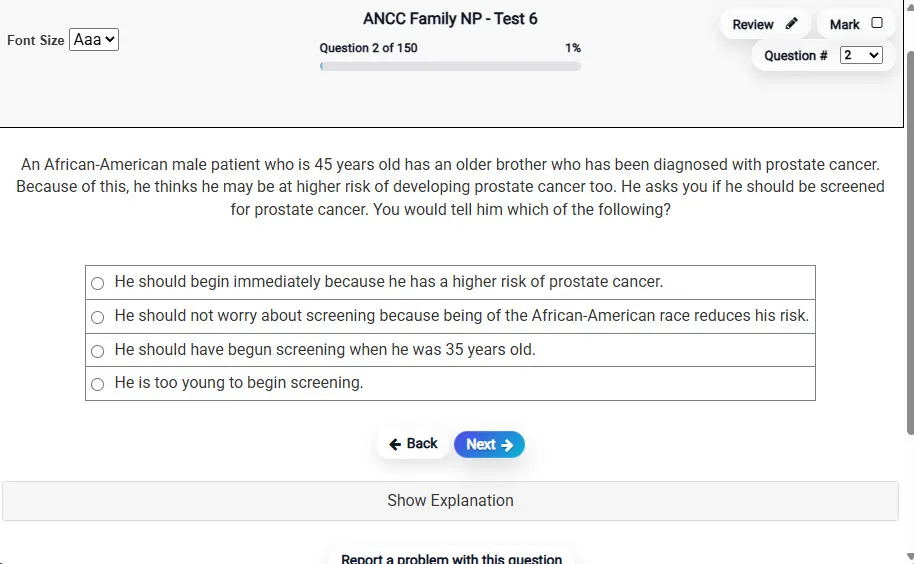
Answering a Question screen – Multiple-choice item view with navigation controls and progress tracker.
Answering a Question Multiple-choice item view with navigation controls and progress tracker.

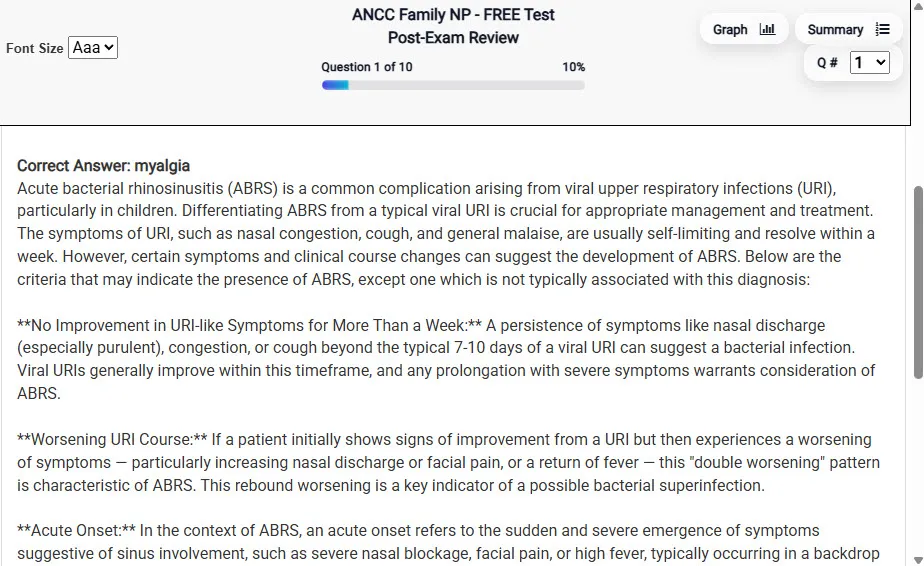
                           Detailed Explanation screen – 
                         Review mode showing chosen answer and rationale and references.
Detailed Explanation Review mode showing chosen answer and rationale and references.

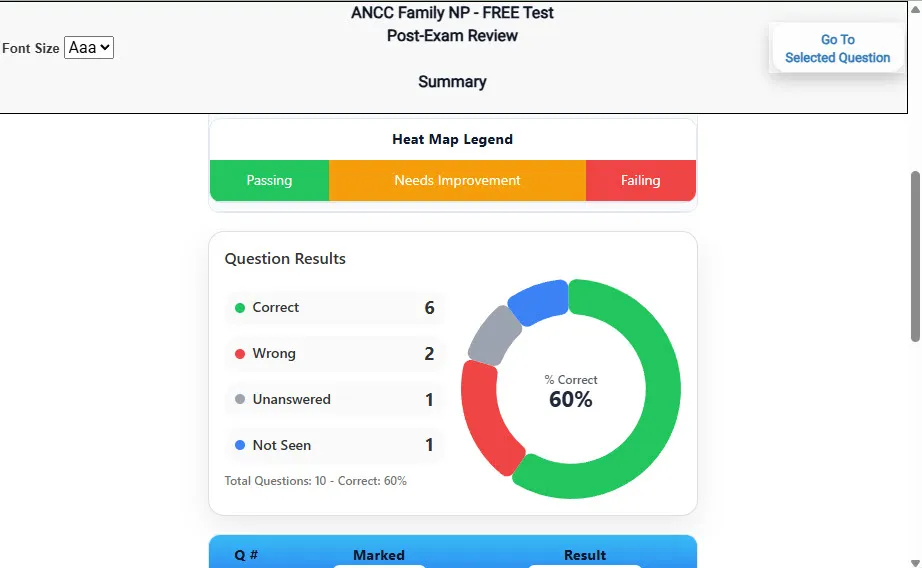
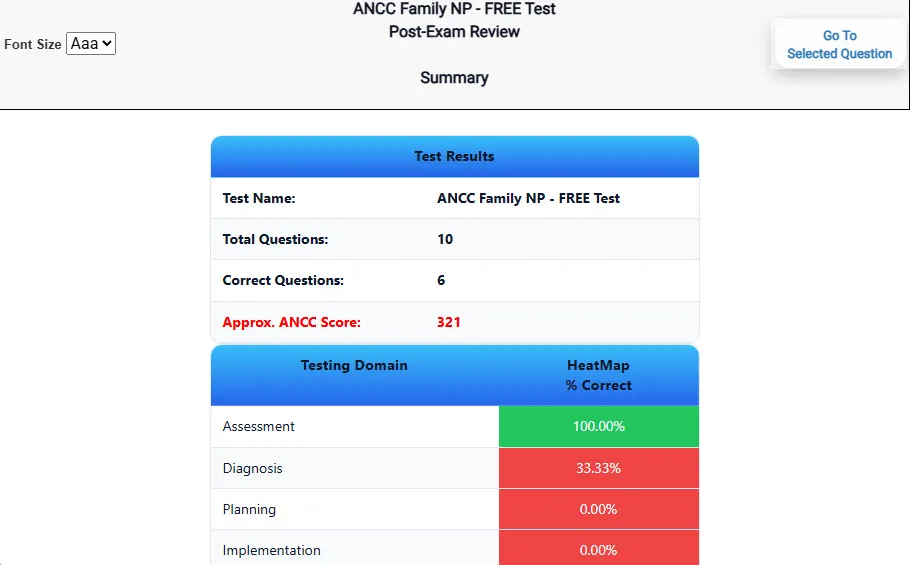
                           Review Summary 1 screen – 
                         Summary with counts for correct/wrong/unanswered and not seen items.
Review Summary 1 Summary with counts for correct/wrong/unanswered and not seen items.

                           Review Summary 2 screen – 
                         Advanced summary with category/domain breakdown and performance insights.
Review Summary 2 Advanced summary with category/domain breakdown and performance insights.

What Each Screen Shows

Answer Question Screen

  • Clean multiple-choice interface with progress bar.
  • Mark for review feature.
  • Matches real test pacing.

Detailed Explanation

  • Correct answer plus rationale.
  • Key concepts and guidelines highlighted.
  • Move between questions to fill knowledge gaps.

Review Summary 1

  • Overall results with total questions and scaled score.
  • Domain heatmap shows strengths and weaknesses.
  • Quick visual feedback on study priorities.

Review Summary 2

  • Chart of correct, wrong, unanswered, not seen.
  • Color-coded results for easy review.
  • Links back to missed items.

Top 10 Reasons to Use Exam Edge for your ONCC Blood and Marrow Transplant Certified Nurse Exam Prep

  1. Focused on the ONCC Blood and Marrow Transplant Certified Nurse Exam

    Our practice tests are built specifically for the ONCC BMTCN exam — every question mirrors the real topics, format, and difficulty so you're studying exactly what matters.

  2. Real Exam Simulation

    We match the per-question time limits and pressure of the actual ONCC exam, so test day feels familiar and stress-free.

  3. 5 Full Practice Tests & 500 Unique Questions

    You'll have more than enough material to master every ONCC BMTCN concept — no repeats, no fluff.

  4. Lower Cost Than a Retake

    Ordering 5 practice exams costs less than retaking the ONCC Blood and Marrow Transplant Certified Nurse exam after a failure. One low fee could save you both time and money.

  5. Flexible Testing

    Need to step away mid-exam? Pick up right where you left off — with your remaining time intact.

  6. Instant Scoring & Feedback

    See your raw score and an estimated ONCC Blood and Marrow Transplant Certified Nurse score immediately after finishing each practice test.

  7. Detailed Explanations for Every Question

    Review correct and incorrect answers with clear, step-by-step explanations so you truly understand each topic.

  8. Trusted & Accredited

    We're fully accredited by the Better Business Bureau and uphold the highest standards of trust and transparency.

  9. Web-Based & Always Available

    No software to install. Access your ONCC BMTCN practice exams 24/7 from any computer or mobile device.

  10. Expert Support When You Need It

    Need extra help? Our specialized tutors are highly qualified and ready to support your ONCC exam prep.


Pass the ONCC Blood and Marrow Transplant Certified Nurse Exam with Realistic Practice Tests from Exam Edge

Preparing for your upcoming ONCC Blood and Marrow Transplant Certified Nurse (BMTCN) Certification Exam can feel overwhelming — but the right practice makes all the difference. Exam Edge gives you the tools, structure, and confidence to pass on your first try. Our online practice exams are built to match the real ONCC BMTCN exam in content, format, and difficulty.

  • 📝 5 ONCC Blood and Marrow Transplant Certified Nurse Practice Tests: Access 5 full-length exams with 100 questions each, covering every major ONCC Blood and Marrow Transplant Certified Nurse topic in depth.
  • Instant Online Access: Start practicing right away — no software, no waiting.
  • 🧠 Step-by-Step Explanations: Understand the reasoning behind every correct answer so you can master ONCC BMTCN exam concepts.
  • 🔄 Retake Each Exam Up to 4 Times: Build knowledge through repetition and track your improvement over time.
  • 🌐 Web-Based & Available 24/7: Study anywhere, anytime, on any device.
  • 🧘 Boost Your Test-Day Confidence: Familiarity with the ONCC format reduces anxiety and helps you perform under pressure.

These ONCC Blood and Marrow Transplant Certified Nurse practice exams are designed to simulate the real testing experience by matching question types, timing, and difficulty level. This approach helps you get comfortable not just with the exam content, but also with the testing environment, so you walk into your exam day focused and confident.


Exam Edge ONCC Reviews


I have taken the CBCN exam twice before and I failed. I purchased your test 2 and I reviewed it over and over again. I'm not a good test taker but your test taught me how to eliminate wrong answers and choose the correct one. Yesterday, I took the CBCN test and I passed!!!! I'm so very happy and doi ...
Read More
Evelyn C. , Harbor City CA


ONCC Blood and Marrow Transplant Certified Nurse Aliases Test Name

Here is a list of alternative names used for this exam.

  • ONCC Blood and Marrow Transplant Certified Nurse
  • ONCC Blood and Marrow Transplant Certified Nurse test
  • ONCC Blood and Marrow Transplant Certified Nurse Certification Test
  • ONCC BMTCN test
  • ONCC
  • ONCC BMTCN
  • BMTCN test
  • ONCC Blood and Marrow Transplant Certified Nurse (BMTCN)
  • Blood and Marrow Transplant Certified Nurse certification