This is the content of the pop-over!

Lightning Deal Alert – 12% Off Ends at Midnight!

Strike while the savings are hot! Use promo code FlashSale at checkout for 12% off any Exam Edge test or bundle. Hurry—the clock is ticking!

NREMT EMT-P (NREMT-P) Practice Tests & Test Prep by Exam Edge


NREMT Paramedic Exam  product image
(4.6)
Based on 40 Reviews

  • Real Exam Simulation: Timed questions and matching content build comfort for your NREMT EMT-P test day.
  • Instant, 24/7 Access: Web-based NREMT Paramedic Exam practice exams with no software needed.
  • Clear Explanations: Step-by-step answers and explanations for your NREMT exam to strengthen understanding.
  • Boosted Confidence: Reduces anxiety and improves test-taking skills to ace your NREMT Paramedic Exam (NREMT-P).

Featured on

NREMT Paramedic Exam Online Practice Test Bundles

BEST VALUE
15 practice tests

$149.25

$599.25

SAVE $450

Only $9.95 per test!

  • 100% Pass Guarantee
  • 15 online practice tests
  • 100 questions per test
  • Bonus: 100 Flash Cards + Study Guide
  • Instant access
  • Detailed Explanations
  • Practice tests never expire
  • Timed, untimed, or study guide mode
MOST POPULAR
10 practice tests

$99.50

$399.50

SAVE $300

Only $9.95 per test!

  • 10 online practice tests
  • 100 questions per test
  • Bonus: 100 Flash Cards + Study Guide
  • Instant access
  • Detailed Explanations
  • Practice tests never expire
  • Timed, untimed, or study guide mode
5 practice tests

$69.75

$199.75

SAVE $130

Only $13.95 per test!

  • 5 online practice tests
  • 100 questions per test
  • Bonus: 100 Flash Cards
  • Instant access
  • Detailed Explanations
  • Practice tests never expire
  • Timed, untimed, or study guide mode
1 practice test

$39.95

  • 1 online practice test
  • 100 questions per test
  • Instant access
  • Detailed Explanations
  • Practice tests never expire
  • Timed, untimed, or study guide mode
Quick Select
Tap to choose a bundle

** All Prices are in US Dollars (USD) **


NREMT EMT-P (NREMT-P) Resources

Jump to the section you need most.

Understanding the exact breakdown of the NREMT Paramedic Exam test will help you know what to expect and how to most effectively prepare. The NREMT Paramedic Exam has multiple-choice questions . The exam will be broken down into the sections below:

NREMT Paramedic Exam Exam Blueprint
Domain Name % Number of
Questions
Airway - Respiration & Ventilation 17-21% 19
Cardiology & Resuscitation 17-21% 19
Trauma 18-22% 20
Medical/Obstetrics/Gyn 26-30% 29
EMS Ops 12-16% 13

NREMT Paramedic Exam Study Tips by Domain

  • Confirm airway patency early and choose the least invasive option that works; red flag: falling SpO2 despite oxygen often signals ventilation failure, not oxygenation failure.
  • Use waveform capnography whenever you ventilate or place an advanced airway; common trap: relying on chest rise alone—ETCO2 is the best continuous confirmation of ventilation/perfusion changes.
  • Preoxygenate and consider apneic oxygenation before laryngoscopy; priority rule: minimize interruptions—if you can’t intubate in ~30 seconds, stop and re-oxygenate.
  • For BVM ventilation, use two-person technique with a tight mask seal when possible; red flag: gurgling/epigastric rise suggests gastric insufflation—slow to 1 breath every ~6 seconds in adults.
  • Recognize and treat tension pneumothorax rapidly (severe dyspnea, hypotension, absent breath sounds, JVD); contraindication to delay: don’t wait for imaging—decompress when the clinical picture fits.
  • When using CPAP, screen for ability to protect airway and adequate blood pressure; common trap: applying CPAP to vomiting, altered, or hypotensive patients can rapidly worsen outcomes.
  • Start with high-quality CPR for pulseless arrest: 100–120/min, 2–2.4 in depth, full recoil, switch compressors about every 2 min; red flag—long pauses for airway/IV dramatically reduce survival.
  • Defibrillate shockable rhythms (VF/pulseless VT) ASAP and resume compressions immediately after the shock; common trap—spending time re-checking a pulse/rhythm instead of getting back on the chest.
  • Give epinephrine 1 mg IV/IO every 3–5 min during cardiac arrest (both shockable and nonshockable), prioritizing early dosing in PEA/asystole; red flag—delaying epi while chasing a definitive airway.
  • Administer amiodarone for refractory VF/pulseless VT after shocks (300 mg IV/IO, then 150 mg), with lidocaine as an alternative; common trap—using antiarrhythmics before defibrillation attempts.
  • Manage symptomatic bradycardia with atropine 1 mg IV q3–5 min (max 3 mg) and move promptly to pacing if unstable or ineffective; red flag—atropine is often ineffective in high-grade AV block.
  • For narrow-complex SVT, attempt vagal maneuvers then adenosine 6 mg rapid IV push followed by 20 mL flush, then 12 mg if needed; contraindication cue—avoid adenosine in irregular/wide rhythms (e.g., Afib with WPW) due to risk of deterioration.
  • Control life-threatening hemorrhage first (tourniquet for severe extremity bleeding, hemostatic gauze + pressure for junctional wounds)—red flag: don’t loosen a tourniquet once applied unless directed by protocol/medical control.
  • Tension pneumothorax is a clinical diagnosis (severe respiratory distress, hypotension, absent/decreased breath sounds, JVD may be absent)—trap: waiting for hypoxia or a perfectly “classic” presentation delays decompression.
  • Suspect pelvic fracture in high-energy mechanisms and unexplained shock; apply a pelvic binder over the greater trochanters—contraindication/trap: don’t place it over the iliac crests or repeatedly “rock” the pelvis.
  • Spinal motion restriction is selective; prioritize airway/ventilation and apply SMR based on neurologic deficit, spine pain/tenderness, or high-risk mechanism—common trap: immobilizing low-risk patients while delaying time-critical interventions.
  • Head injury: maintain oxygenation/ventilation and avoid hypotension (aim SBP ≥ 100 in adults 50–69, ≥110 in adults 15–49 or ≥70); ventilate only for impending herniation or inadequate ventilation—red flag: routine hyperventilation can worsen outcomes.
  • Burns: stop the burning, cool briefly (avoid prolonged cooling), cover with dry sterile dressings, and start fluids for major burns (e.g., >20% TBSA adults) per protocol—trap: over-cooling causes hypothermia, which worsens shock and coagulopathy.
  • Manage hypoglycemia with a bedside glucose before assuming stroke; red flag: altered mental status with diaphoresis or seizure should trigger immediate dextrose/appropriate glucose source per protocol.
  • For suspected opioid overdose, prioritize ventilation (BVM + airway adjuncts) over naloxone; common trap: giving naloxone and stopping ventilations despite persistent hypoventilation.
  • In ACS vs. non-cardiac chest pain, treat life threats but screen for contraindications to aspirin/nitro (e.g., allergy, recent PDE-5 inhibitor use, hypotension); red flag: SBP < 90 mmHg or signs of RV infarct with nitro.
  • Recognize sepsis early (suspected infection + abnormal vitals) and start high-flow oxygen as needed and fluid resuscitation per protocol; common trap: attributing hypotension solely to dehydration and delaying transport/alert.
  • Obstetric emergencies: treat eclampsia seizures with magnesium per protocol and protect airway; red flag: headache, visual changes, or RUQ/epigastric pain in pregnancy/postpartum signals preeclampsia/eclampsia risk.
  • Postpartum hemorrhage is an immediate transport problem—perform fundal massage, manage shock, and keep the patient warm; common trap: focusing on neonatal care while ongoing heavy vaginal bleeding worsens maternal perfusion.
  • Scene safety first: use BSI/PPE and control hazards before patient contact; red flag—entering an unsafe scene is an automatic priority error on NREMT-style items.
  • Start with the right resources: early ALS request, additional units, and specialty teams (fire, hazmat, law) when indicated; common trap—delaying backup until after extrication or deterioration.
  • Secure the ambulance and patient for transport: patient must be restrained (shoulder/hip straps) and provider belted when the vehicle is moving; red flag—unrestrained patient/equipment becomes a projectile in sudden stops.
  • Follow refusal/AMA essentials: confirm decision-making capacity, explain risks/benefits/alternatives, obtain signatures/witness, and document vitals and mental status; common trap—accepting refusal from an intoxicated or altered patient without capacity.
  • Apply incident command and triage correctly: establish/assume ICS, communicate spans of control, and use a validated triage method (e.g., START/JumpSTART) when multiple patients exist; priority rule—tagging must follow objective criteria, not age or loudest patient.
  • Prevent medication and equipment errors: verify the “right patient/right drug/right dose/right route/right time,” check expiration/clarity, and confirm oxygen cylinder pressure before transport; common trap—empty O2 tank discovered after loading.


Built to Fit Into Your Busy Life

Everything you need to prepare with confidence—without wasting a minute.

Three Study Modes

Timed, No Time Limit, or Explanation mode.

Actionable Analytics

Heatmaps and scaled scores highlight weak areas.

High-Yield Rationales

Concise explanations emphasize key concepts.

Realistic Interface

Matches the feel of the actual exam environment.

Accessible by Design

Clean layout reduces cognitive load.

Anytime, Anywhere

Web-based access 24/7 on any device.
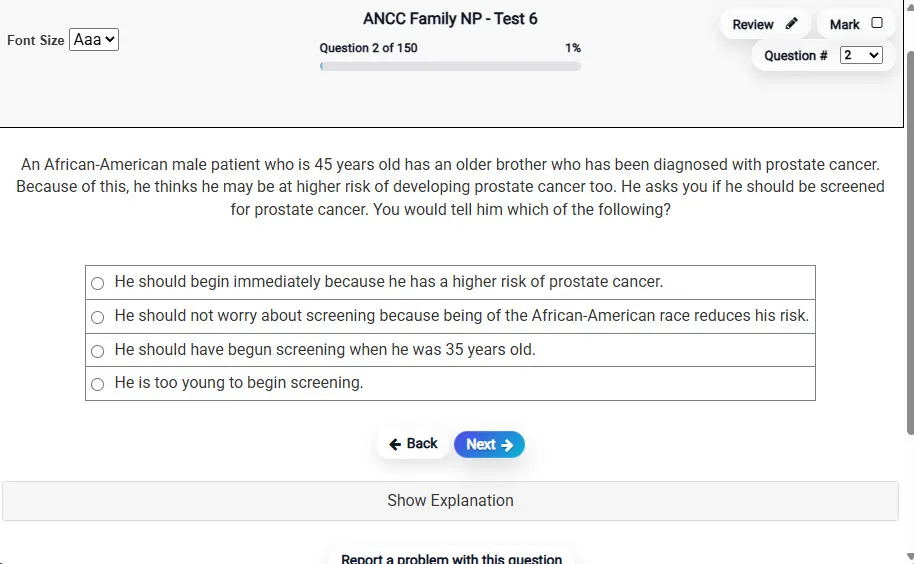
Answering a Question screen – Multiple-choice item view with navigation controls and progress tracker.
Answering a Question Multiple-choice item view with navigation controls and progress tracker.

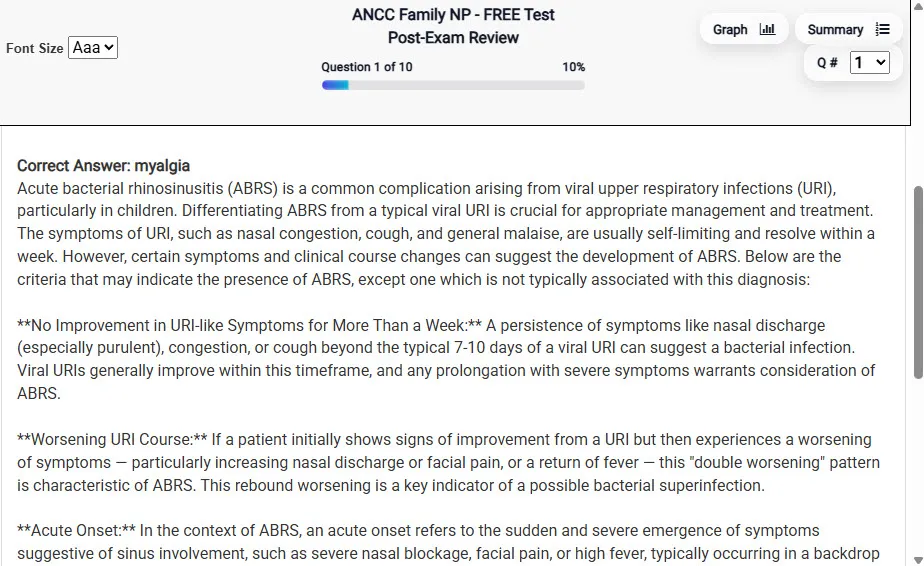
                           Detailed Explanation screen – 
                         Review mode showing chosen answer and rationale and references.
Detailed Explanation Review mode showing chosen answer and rationale and references.

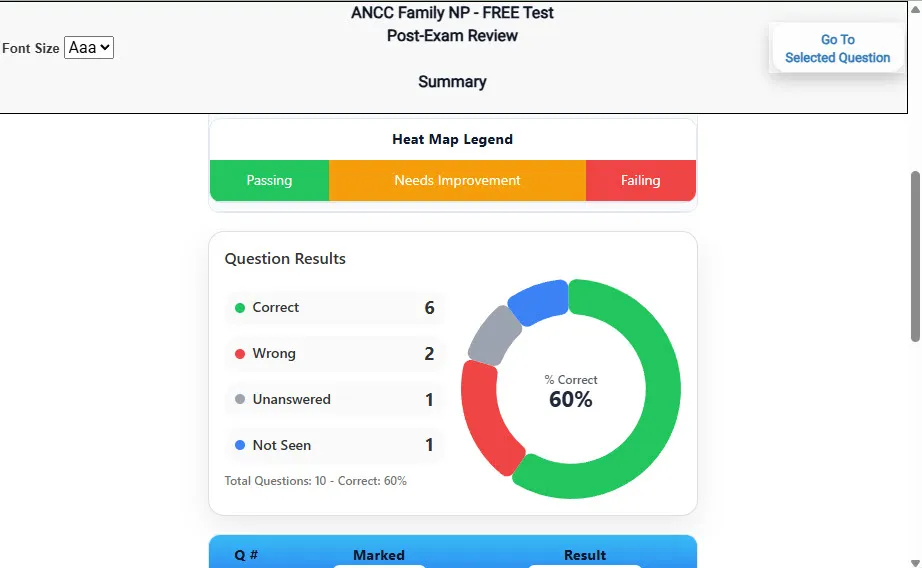
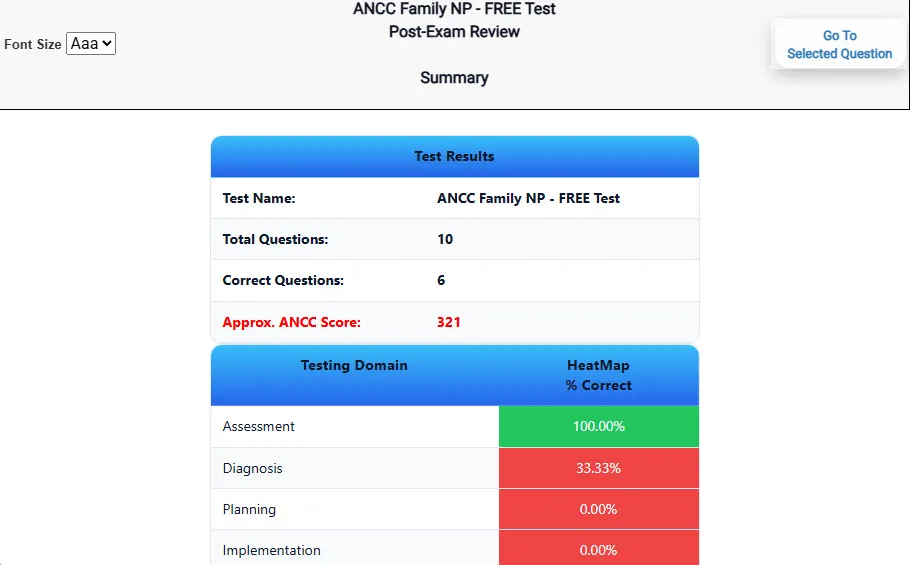
                           Review Summary 1 screen – 
                         Summary with counts for correct/wrong/unanswered and not seen items.
Review Summary 1 Summary with counts for correct/wrong/unanswered and not seen items.

                           Review Summary 2 screen – 
                         Advanced summary with category/domain breakdown and performance insights.
Review Summary 2 Advanced summary with category/domain breakdown and performance insights.

What Each Screen Shows

Answer Question Screen

  • Clean multiple-choice interface with progress bar.
  • Mark for review feature.
  • Matches real test pacing.

Detailed Explanation

  • Correct answer plus rationale.
  • Key concepts and guidelines highlighted.
  • Move between questions to fill knowledge gaps.

Review Summary 1

  • Overall results with total questions and scaled score.
  • Domain heatmap shows strengths and weaknesses.
  • Quick visual feedback on study priorities.

Review Summary 2

  • Chart of correct, wrong, unanswered, not seen.
  • Color-coded results for easy review.
  • Links back to missed items.

Top 10 Reasons to Use Exam Edge for your NREMT Paramedic Exam Exam Prep

  1. Focused on the NREMT Paramedic Exam Exam

    Our practice tests are built specifically for the NREMT EMT-P exam — every question mirrors the real topics, format, and difficulty so you're studying exactly what matters.

  2. Real Exam Simulation

    We match the per-question time limits and pressure of the actual NREMT exam, so test day feels familiar and stress-free.

  3. 15 Full Practice Tests & 1,500 Unique Questions

    You'll have more than enough material to master every NREMT EMT-P concept — no repeats, no fluff.

  4. Lower Cost Than a Retake

    Ordering 5 practice exams costs less than retaking the NREMT Paramedic Exam exam after a failure. One low fee could save you both time and money.

  5. Flexible Testing

    Need to step away mid-exam? Pick up right where you left off — with your remaining time intact.

  6. Instant Scoring & Feedback

    See your raw score and an estimated NREMT Paramedic Exam score immediately after finishing each practice test.

  7. Detailed Explanations for Every Question

    Review correct and incorrect answers with clear, step-by-step explanations so you truly understand each topic.

  8. Trusted & Accredited

    We're fully accredited by the Better Business Bureau and uphold the highest standards of trust and transparency.

  9. Web-Based & Always Available

    No software to install. Access your NREMT EMT-P practice exams 24/7 from any computer or mobile device.

  10. Expert Support When You Need It

    Need extra help? Our specialized tutors are highly qualified and ready to support your NREMT exam prep.


Pass the NREMT Paramedic Exam Exam with Realistic Practice Tests from Exam Edge

Preparing for your upcoming NREMT Paramedic Exam (NREMT-P) Certification Exam can feel overwhelming — but the right practice makes all the difference. Exam Edge gives you the tools, structure, and confidence to pass on your first try. Our online practice exams are built to match the real NREMT EMT-P exam in content, format, and difficulty.

  • 📝 15 NREMT Paramedic Exam Practice Tests: Access 15 full-length exams with 100 questions each, covering every major NREMT Paramedic Exam topic in depth.
  • Instant Online Access: Start practicing right away — no software, no waiting.
  • 🧠 Step-by-Step Explanations: Understand the reasoning behind every correct answer so you can master NREMT EMT-P exam concepts.
  • 🔄 Retake Each Exam Up to 4 Times: Build knowledge through repetition and track your improvement over time.
  • 🌐 Web-Based & Available 24/7: Study anywhere, anytime, on any device.
  • 🧘 Boost Your Test-Day Confidence: Familiarity with the NREMT format reduces anxiety and helps you perform under pressure.

These NREMT Paramedic Exam practice exams are designed to simulate the real testing experience by matching question types, timing, and difficulty level. This approach helps you get comfortable not just with the exam content, but also with the testing environment, so you walk into your exam day focused and confident.


Exam Edge NREMT Reviews


Thank you for creating these exams, they allowed me to find my weaknesses and correct them before taking the actual exam.

Michael , Lagunitas, California

I wanted to say Thank You! I would not have passed my NREMT exam without your practice tests. They showed me my weaknesses and helped my confidence, so I went into the test relaxed and ready.

James, Hartford, Connecticut


NREMT Paramedic Exam Aliases Test Name

Here is a list of alternative names used for this exam.

  • NREMT Paramedic Exam
  • NREMT Paramedic Exam test
  • NREMT Paramedic Exam Certification Test
  • NREMT EMT-P test
  • NREMT
  • NREMT NREMT-P
  • NREMT-P test
  • NREMT Paramedic Exam (NREMT-P)
  • Paramedic Exam certification