This is the content of the pop-over!

DOH VI Radiography (DOH-VI) Practice Tests & Test Prep by Exam Edge


DOH Vascular-Interventional Radiography  product image
(4.8)
Based on 22 Reviews

  • Real Exam Simulation: Timed questions and matching content build comfort for your DOH VI Radiography test day.
  • Instant, 24/7 Access: Web-based DOH Vascular-Interventional Radiography practice exams with no software needed.
  • Clear Explanations: Step-by-step answers and explanations for your DOH exam to strengthen understanding.
  • Boosted Confidence: Reduces anxiety and improves test-taking skills to ace your DOH Vascular-Interventional Radiography (DOH-VI).

Featured on

DOH Vascular-Interventional Radiography Online Practice Test Bundles

BEST VALUE
20 practice tests

$174.00

$799.00

SAVE $625

Only $8.70 per test!

  • 100% Pass Guarantee
  • 20 online practice tests
  • 100 questions per test
  • Bonus: 100 Flash Cards + Study Guide
  • Instant access
  • Detailed Explanations
  • Practice tests never expire
  • Timed, untimed, or study guide mode
MOST POPULAR
10 practice tests

$99.50

$399.50

SAVE $300

Only $9.95 per test!

  • 10 online practice tests
  • 100 questions per test
  • Bonus: 100 Flash Cards + Study Guide
  • Instant access
  • Detailed Explanations
  • Practice tests never expire
  • Timed, untimed, or study guide mode
5 practice tests

$69.75

$199.75

SAVE $130

Only $13.95 per test!

  • 5 online practice tests
  • 100 questions per test
  • Bonus: 100 Flash Cards
  • Instant access
  • Detailed Explanations
  • Practice tests never expire
  • Timed, untimed, or study guide mode
1 practice test

$39.95

  • 1 online practice test
  • 100 questions per test
  • Instant access
  • Detailed Explanations
  • Practice tests never expire
  • Timed, untimed, or study guide mode
Quick Select
Tap to choose a bundle

** All Prices are in US Dollars (USD) **


DOH VI Radiography (DOH-VI) Resources

Jump to the section you need most.

Understanding the exact breakdown of the DOH Vascular-Interventional Radiography test will help you know what to expect and how to most effectively prepare. The DOH Vascular-Interventional Radiography has multiple-choice questions . The exam will be broken down into the sections below:

DOH Vascular-Interventional Radiography Exam Blueprint
Domain Name % Number of
Questions
Equipment and Instrumentation 15% 17
Patient Care 17% 19
Procedures  
     Neurologic 8% 9
     Abdominal 16% 18
     GU and GI - non vascular 10% 11
     Peripheral 12% 13
     Dialysis 7% 8
     Venous Access 5% 6

DOH Vascular-Interventional Radiography Study Tips by Domain

  • Before fluoroscopy, verify tube warm-up, collimation, and last dose indicator reset; red flag: unusually high dose-rate or image noise suggests incorrect pulse rate/kVp or filtration settings.
  • Optimize dose with pulsed fluoro (lowest acceptable fps) and tight collimation; common trap: leaving magnification or high-detail mode on throughout a case unnecessarily increases skin dose.
  • Maintain sterile technique for guidewires, catheters, sheaths, and contrast manifolds; red flag: any wire or catheter that touches a nonsterile surface must be replaced (don’t “wipe” and reuse).
  • Match guidewire and catheter sizes to the sheath/target vessel (e.g., 0.035” vs 0.018” systems); common trap: forcing an oversized device risks vessel injury or sheath valve failure/bleeding.
  • Power injector setup requires correct syringe/pressure limit, secure luer connections, and air purge; red flag: any visible air in the line is a hard stop due to embolism risk.
  • Contrast and accessory safety: confirm contrast type/concentration, expiration, and compatible stopcocks/one-way valves; common trap: mispositioned stopcock can deliver contrast to the wrong port or allow back-bleeding/air entry.
  • Verify patient identity with two identifiers and match consent to the intended procedure/site; red flag: anticoagulants or contrast allergy not reconciled before timeout.
  • Assess renal function and hydration status prior to iodinated contrast (e.g., elevated creatinine/eGFR concern); common trap: proceeding without a documented contrast reaction plan or premedication when indicated.
  • Maintain sterile technique and skin prep appropriate to access site; priority rule: any break in sterility (contaminated glove/field) requires immediate correction or restart.
  • Monitor sedation/analgesia continuously (airway, SpO2, ECG, BP) and document at required intervals; red flag: rising end-tidal CO2 or decreasing responsiveness signals impending respiratory compromise.
  • Recognize and respond to acute contrast reactions and access-site bleeding; threshold cue: hypotension, bronchospasm, or rapidly expanding hematoma warrants stopping the procedure and initiating emergency management.
  • Post-procedure care includes hemostasis, limb neurovascular checks, and discharge instructions; common trap: missing delayed complications (e.g., retroperitoneal bleed after femoral access—new back pain, tachycardia, falling BP).
  • Confirm correct patient, procedure, laterality, and site marking in a documented time-out; red flag: proceeding when consent or indication is unclear or missing.
  • Use sterile technique with full barrier precautions for all percutaneous access; common trap: inadequate skin prep or glove changes after contaminating the field.
  • Follow contrast administration protocols (dose, rate, and monitoring) and verify allergies/renal risk; priority rule: stop injection and assess immediately with pain, swelling, or resistance suggesting extravasation.
  • Apply radiation protection steps during fluoroscopy (collimation, pulsed fluoro, last-image hold, shielding); red flag: extended fluoro time without documenting dose metrics per DOH expectations.
  • Recognize and respond to procedure complications (bleeding, dissection, embolization, arrhythmia, vasovagal); priority rule: treat hemodynamic instability first and activate emergency response if unresponsive to initial measures.
  • Complete post-procedure care and documentation (hemostasis method, device counts, images, meds, and discharge instructions); common trap: removing sheaths or lines without confirming ACT/anticoagulation status and ordered parameters.
  • Stroke intervention basics: confirm LVO on CTA/MRA and document last-known-well—red flag is treating without ruling out intracranial hemorrhage on non-contrast CT.
  • Mechanical thrombectomy workflow: target rapid reperfusion with minimal passes—common trap is excessive device manipulation increasing emboli to new territory and vasospasm risk.
  • Carotid stenting/angioplasty: ensure dual antiplatelet strategy is verified and hemodynamics are tightly managed—contraindication cue is uncontrolled intracranial hemorrhage or inability to tolerate antiplatelets.
  • Intracranial aneurysm coiling/flow diversion: maintain meticulous anticoagulation/ACT documentation—red flag is giving heparin before securing access and confirming no acute bleed when clinically suspected.
  • Diagnostic cerebral angiography: use biplane roadmapping and minimize contrast/osm load—priority rule is to stop and reassess if neurologic status changes during the case.
  • Post-neuro IR monitoring: frequent neuro checks and access-site surveillance are mandatory—common trap is attributing new headache, aphasia, or pupillary change to sedation rather than treating as emergent rebleed/occlusion.
  • Abdominal aortography planning: choose an access and catheter shape that will clear the renal ostia; red flag—high pigtail injection can reflux into renals and obscure mesenteric origins.
  • Mesenteric ischemia workup: prioritize imaging of the SMA (and celiac if needed) with attention to ostial stenosis; common trap—mistaking vasospasm for fixed stenosis without repeat after intra-arterial vasodilator.
  • Renal artery evaluation: document accessory renal arteries and ostial lesions; red flag—unrecognized accessory artery can lead to incomplete treatment and persistent hypertension.
  • Hepatic interventions: confirm portal vein patency and hepatic arterial anatomy variants before embolization; contraindication cue—unprotected reflux near the cystic artery risks gallbladder ischemia.
  • GI bleed angiography: use provocative runs (celiac, SMA, IMA as indicated) and look for early venous drainage/pseudoaneurysm; common trap—negative study when the patient is not actively bleeding—coordinate timing with clinical hemorrhage.
  • Abdominal aneurysm/dissection imaging: measure landing zones and branch involvement with orthogonal views; priority rule—limit contrast load in at-risk patients (e.g., CKD) and consider CO2 or staged runs.
  • Differentiate nonvascular GU/GI fluoroscopic studies by indication—IVP/urogram for collecting system anatomy vs VCUG/cystogram for reflux/trauma; red flag: suspected bladder rupture requires a cystogram before catheter removal.
  • Use water-soluble contrast when perforation or leak is a concern (esophageal/colonic, post-op, suspected fistula)—common trap: barium in a suspected perforation can worsen mediastinitis/peritonitis.
  • Screen renal function and allergy history for iodinated contrast in GU studies; priority rule: if eGFR is significantly reduced or there’s prior severe reaction, notify the radiologist and consider premedication/alternative study.
  • For GI contrast exams, verify NPO and aspiration risk; red flag: altered mental status or poor swallow may contraindicate oral contrast without airway precautions.
  • Recognize key positioning/technique checkpoints—e.g., VCUG requires imaging during voiding and post-void; common trap: missing reflux because only filling images were obtained.
  • Know common complications and immediate actions—contrast extravasation, vagal response, infection risk with urinary catheterization; priority rule: stop injection, assess vitals, and report promptly if pain/swelling or hypotension occurs.
  • Acute limb ischemia workup prioritizes “6 Ps” and time-to-reperfusion; red flag: a cold, pulseless limb with new sensory loss is an emergency, not a routine outpatient angiogram.
  • Access planning: ultrasound-guided common femoral artery puncture at the mid-femoral head reduces complications; common trap is a high stick (retroperitoneal bleed risk) or low stick (pseudoaneurysm/AV fistula risk).
  • Runoff assessment should include multilevel disease (aorto-iliac, femoropopliteal, tibial) before intervention; priority rule: treat inflow lesions before outflow to avoid failed distal revascularization.
  • Heparinization during peripheral interventions must be coordinated with bleeding risk and closure device plans; red flag: unexplained access-site oozing or hypotension suggests occult hemorrhage and warrants immediate evaluation.
  • Angioplasty/stenting decisions hinge on lesion length, calcification, and location (e.g., popliteal flexion zone); common trap is placing a stent across a highly mobile segment leading to fracture and restenosis.
  • Post-procedure surveillance focuses on distal pulses, capillary refill, and access-site hematoma; priority rule: any sudden loss of pulses or escalating pain after intervention requires urgent imaging for thrombosis, dissection, or embolization.
  • Assess dialysis access patency by comparing thrill/bruit and dynamic venous pressures; red flag is loss of thrill, rising venous pressures, or prolonged post-needle bleeding suggesting outflow stenosis.
  • For fistulography/graft studies, inject contrast under fluoroscopy and evaluate arterial anastomosis, juxta-anastomotic segment, and central veins; common trap is stopping at the access and missing central venous stenosis.
  • During angioplasty of access stenosis, size the balloon to the adjacent normal vein and document residual stenosis; priority rule is treat ≥50% stenosis with hemodynamic/clinical dysfunction rather than “looks tight” alone.
  • Thrombosed graft/fistula management hinges on restoring inflow then outflow and treating the underlying stenosis; red flag is poor arterial inflow (e.g., tight juxta-anastomotic lesion) that will cause immediate rethrombosis if not corrected.
  • Recognize and respond to complications—contrast extravasation, rupture, embolization, or arrhythmia from wire/catheter in the heart; contraindication cue is stop high-pressure inflations with severe pain or sudden waist loss suggesting rupture risk.
  • Infection and pseudoaneurysm considerations: avoid cannulating through erythema, drainage, or enlarging pulsatile mass and escalate per DOH-style safety priorities; common trap is proceeding with intervention despite systemic signs (fever/chills) without sepsis workup.
  • For central venous access, prioritize ultrasound-guided venipuncture and confirm the guidewire course before dilating—red flag: advancing a wire that meets resistance (stop and image).
  • Know tip-position targets: non-tunneled CVC and PICC tips should terminate at the cavoatrial junction/lower SVC—common trap: leaving the tip in the subclavian/innominate vein increases thrombosis risk.
  • Tunneled catheters and ports require sterile field, maximal barrier precautions, and a documented time-out—priority rule: DOH-style scrutiny often focuses on infection-prevention steps and complete charting.
  • Anticoagulation/bleeding risk must be screened before puncture—contraindication cue: uncorrected coagulopathy or severe thrombocytopenia warrants delay or correction per protocol.
  • Recognize and respond to complications: pneumothorax, arterial puncture, air embolism, and arrhythmia—red flag: ectopy during wire/catheter advancement suggests intracardiac irritation (withdraw to safe position).
  • Post-placement verification includes aspiration/flush, dressing securement, and imaging confirmation when indicated—common trap: using a line before patency and tip location are verified/documented.


Built to Fit Into Your Busy Life

Everything you need to prepare with confidence—without wasting a minute.

Three Study Modes

Timed, No Time Limit, or Explanation mode.

Actionable Analytics

Heatmaps and scaled scores highlight weak areas.

High-Yield Rationales

Concise explanations emphasize key concepts.

Realistic Interface

Matches the feel of the actual exam environment.

Accessible by Design

Clean layout reduces cognitive load.

Anytime, Anywhere

Web-based access 24/7 on any device.
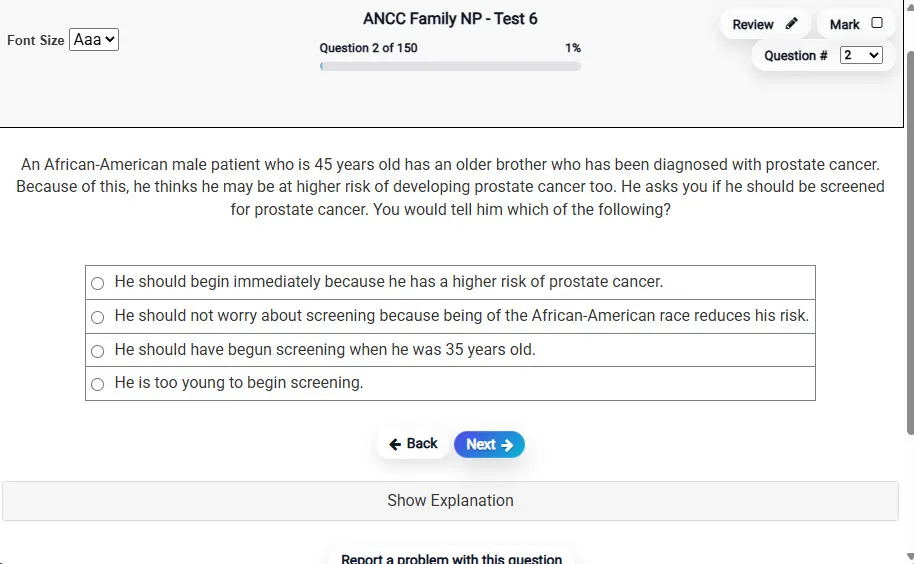
Answering a Question screen – Multiple-choice item view with navigation controls and progress tracker.
Answering a Question Multiple-choice item view with navigation controls and progress tracker.

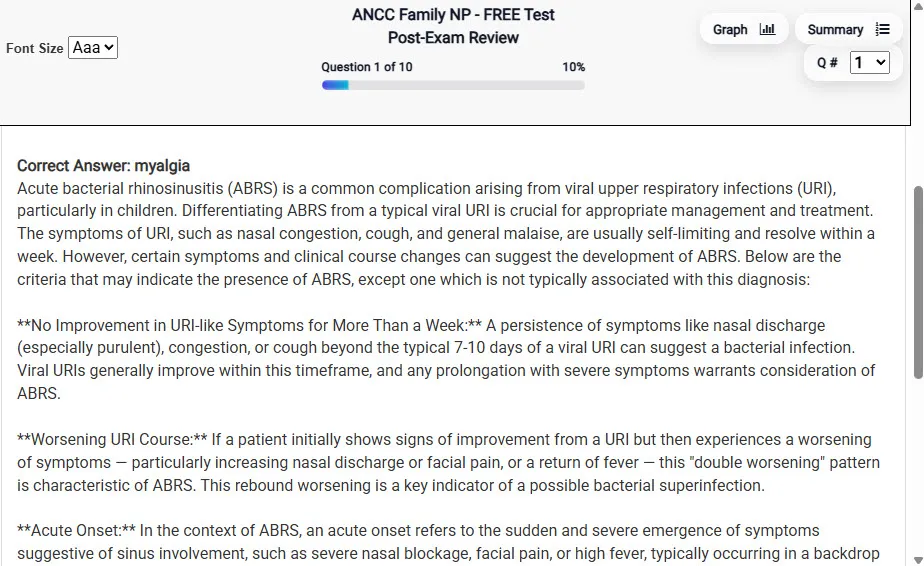
                           Detailed Explanation screen – 
                         Review mode showing chosen answer and rationale and references.
Detailed Explanation Review mode showing chosen answer and rationale and references.

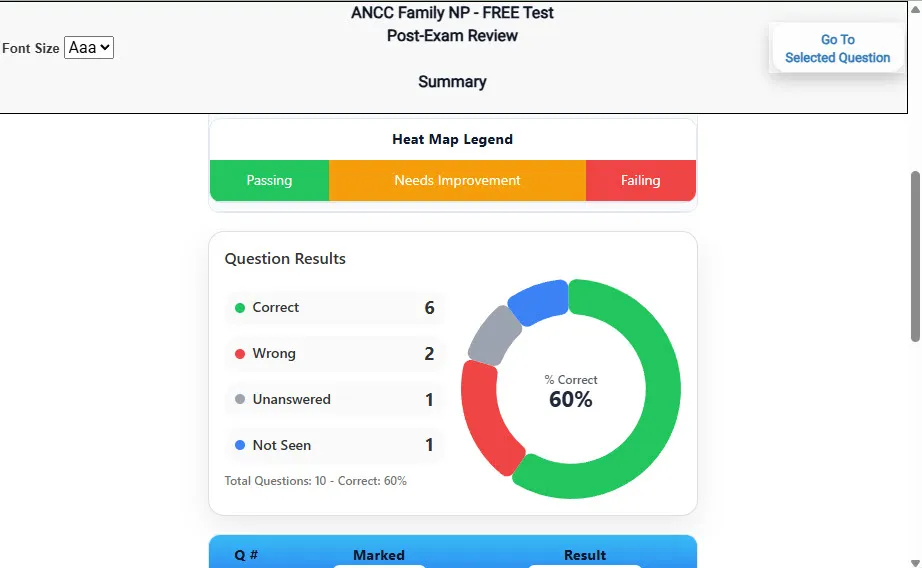
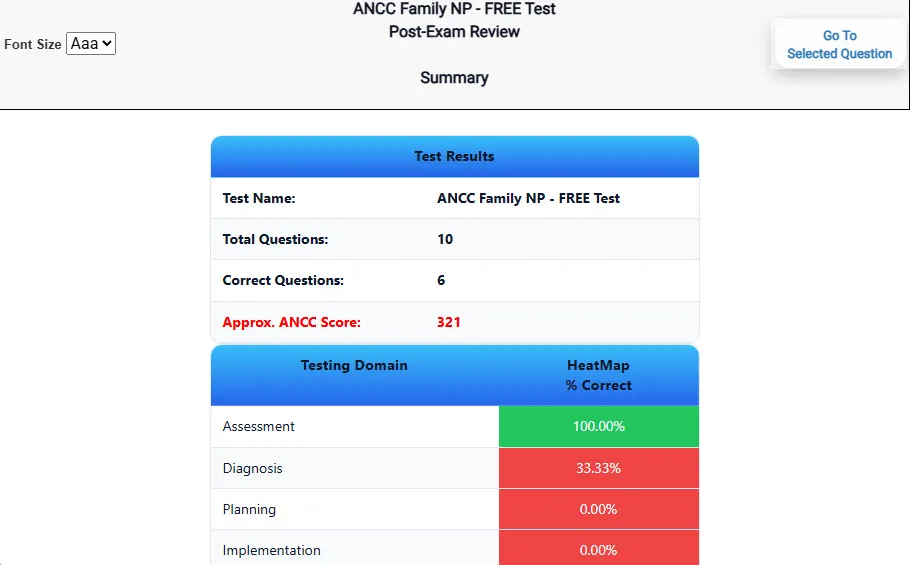
                           Review Summary 1 screen – 
                         Summary with counts for correct/wrong/unanswered and not seen items.
Review Summary 1 Summary with counts for correct/wrong/unanswered and not seen items.

                           Review Summary 2 screen – 
                         Advanced summary with category/domain breakdown and performance insights.
Review Summary 2 Advanced summary with category/domain breakdown and performance insights.

What Each Screen Shows

Answer Question Screen

  • Clean multiple-choice interface with progress bar.
  • Mark for review feature.
  • Matches real test pacing.

Detailed Explanation

  • Correct answer plus rationale.
  • Key concepts and guidelines highlighted.
  • Move between questions to fill knowledge gaps.

Review Summary 1

  • Overall results with total questions and scaled score.
  • Domain heatmap shows strengths and weaknesses.
  • Quick visual feedback on study priorities.

Review Summary 2

  • Chart of correct, wrong, unanswered, not seen.
  • Color-coded results for easy review.
  • Links back to missed items.

Top 10 Reasons to Use Exam Edge for your DOH Vascular-Interventional Radiography Exam Prep

  1. Focused on the DOH Vascular-Interventional Radiography Exam

    Our practice tests are built specifically for the DOH VI Radiography exam — every question mirrors the real topics, format, and difficulty so you're studying exactly what matters.

  2. Real Exam Simulation

    We match the per-question time limits and pressure of the actual DOH exam, so test day feels familiar and stress-free.

  3. 20 Full Practice Tests & 2,000 Unique Questions

    You'll have more than enough material to master every DOH VI Radiography concept — no repeats, no fluff.

  4. Lower Cost Than a Retake

    Ordering 5 practice exams costs less than retaking the DOH Vascular-Interventional Radiography exam after a failure. One low fee could save you both time and money.

  5. Flexible Testing

    Need to step away mid-exam? Pick up right where you left off — with your remaining time intact.

  6. Instant Scoring & Feedback

    See your raw score and an estimated DOH Vascular-Interventional Radiography score immediately after finishing each practice test.

  7. Detailed Explanations for Every Question

    Review correct and incorrect answers with clear, step-by-step explanations so you truly understand each topic.

  8. Trusted & Accredited

    We're fully accredited by the Better Business Bureau and uphold the highest standards of trust and transparency.

  9. Web-Based & Always Available

    No software to install. Access your DOH VI Radiography practice exams 24/7 from any computer or mobile device.

  10. Expert Support When You Need It

    Need extra help? Our specialized tutors are highly qualified and ready to support your DOH exam prep.


Pass the DOH Vascular-Interventional Radiography Exam with Realistic Practice Tests from Exam Edge

Preparing for your upcoming DOH Vascular-Interventional Radiography (DOH-VI) Certification Exam can feel overwhelming — but the right practice makes all the difference. Exam Edge gives you the tools, structure, and confidence to pass on your first try. Our online practice exams are built to match the real DOH VI Radiography exam in content, format, and difficulty.

  • 📝 20 DOH Vascular-Interventional Radiography Practice Tests: Access 20 full-length exams with 100 questions each, covering every major DOH Vascular-Interventional Radiography topic in depth.
  • Instant Online Access: Start practicing right away — no software, no waiting.
  • 🧠 Step-by-Step Explanations: Understand the reasoning behind every correct answer so you can master DOH VI Radiography exam concepts.
  • 🔄 Retake Each Exam Up to 4 Times: Build knowledge through repetition and track your improvement over time.
  • 🌐 Web-Based & Available 24/7: Study anywhere, anytime, on any device.
  • 🧘 Boost Your Test-Day Confidence: Familiarity with the DOH format reduces anxiety and helps you perform under pressure.

These DOH Vascular-Interventional Radiography practice exams are designed to simulate the real testing experience by matching question types, timing, and difficulty level. This approach helps you get comfortable not just with the exam content, but also with the testing environment, so you walk into your exam day focused and confident.


Exam Edge DOH Reviews


I took the exam and failed because I didn't review well and didn't know which topics to focus on, but after purchasing these 20 sets from haadrn.Com, I passed my second exam. I only finished up to 17 sets, I am thankful for this site because I can review online anytime, anywhere! Friends are asking ...
Read More
parrenas, Philippines

Thank you Exam Edge :) I passed the Haad RN exam :) Godbless :)

Fedi, Manila, Philippines

I just want to take this opportunity to thank Exam Edge since I passed my HAAD exam.

RHODALYN,

I am glad to inform you that I have successfully passed my HAAD ophthalmology exams, your mock tests were extremely helpful in my journey to this success, thank you once again

Farheen, Karnataka India


DOH Vascular-Interventional Radiography Aliases Test Name

Here is a list of alternative names used for this exam.

  • DOH Vascular-Interventional Radiography
  • DOH Vascular-Interventional Radiography test
  • DOH Vascular-Interventional Radiography Certification Test
  • DOH VI Radiography test
  • DOH
  • DOH DOH-VI
  • DOH-VI test
  • DOH Vascular-Interventional Radiography (DOH-VI)
  • Vascular-Interventional Radiography certification