This is the content of the pop-over!

MTEL Biology (13) Practice Tests & Test Prep by Exam Edge


MTEL Biology  product image
(5.0)
Based on 28 Reviews

  • Real Exam Simulation: Timed questions and matching content build comfort for your MTEL Biology test day.
  • Instant, 24/7 Access: Web-based MTEL Biology practice exams with no software needed.
  • Clear Explanations: Step-by-step answers and explanations for your MTEL exam to strengthen understanding.
  • Boosted Confidence: Reduces anxiety and improves test-taking skills to ace your MTEL Biology (13).

Featured on

MTEL Biology Online Practice Test Bundles

BEST VALUE
20 practice tests

$174.00

$799.00

SAVE $625

Only $8.70 per test!

  • 100% Pass Guarantee
  • 20 online practice tests
  • 100 questions per test
  • Bonus: 100 Flash Cards + Study Guide
  • Instant access
  • Detailed Explanations
  • Practice tests never expire
  • Timed, untimed, or study guide mode
MOST POPULAR
10 practice tests

$99.50

$399.50

SAVE $300

Only $9.95 per test!

  • 10 online practice tests
  • 100 questions per test
  • Bonus: 100 Flash Cards + Study Guide
  • Instant access
  • Detailed Explanations
  • Practice tests never expire
  • Timed, untimed, or study guide mode
5 practice tests

$69.75

$199.75

SAVE $130

Only $13.95 per test!

  • 5 online practice tests
  • 100 questions per test
  • Bonus: 100 Flash Cards
  • Instant access
  • Detailed Explanations
  • Practice tests never expire
  • Timed, untimed, or study guide mode
1 practice test

$39.95

  • 1 online practice test
  • 100 questions per test
  • Instant access
  • Detailed Explanations
  • Practice tests never expire
  • Timed, untimed, or study guide mode
Quick Select
Tap to choose a bundle

** All Prices are in US Dollars (USD) **


MTEL Biology (13) Resources

Jump to the section you need most.

Understanding the exact breakdown of the MTEL Biology test will help you know what to expect and how to most effectively prepare. The MTEL Biology has multiple-choice questions . The exam will be broken down into the sections below:

MTEL Biology Exam Blueprint
Domain Name % Number of
Questions
Nature of Science 10% 10
Chemistry of Life and Cell Biology 14% 14
Characteristics of Organisms 14% 14
Human Anatomy and Physiology 14% 14
Genetics - Evolution Biodiversity 14% 14
Populations - Ecosystems the
Environment
14% 14
Integration of Knowledge and Understanding 20% 20

MTEL Biology Study Tips by Domain

  • Differentiate observation vs. inference and hypothesis vs. theory vs. law; red flag: calling a “theory” a mere guess rather than an evidence-based explanatory framework.
  • Prioritize testable, falsifiable hypotheses and identify appropriate controls, constants, and replicates; common trap: changing more than one variable so results can’t be attributed to a single factor.
  • Interpret data displays (tables, graphs) using units, scales, and error bars; red flag: concluding causation from correlation or extrapolating beyond the data range.
  • Evaluate reliability and validity using sample size, randomization, blinding, and peer review; priority rule: single small, unreplicated studies warrant caution compared with converging evidence.
  • Apply scientific reasoning to experimental design and ethics (e.g., humane treatment, informed consent for human subjects); contraindication: omitting safety procedures or ethical approvals in a proposed investigation.
  • Explain how scientific knowledge changes with new evidence and technology (e.g., model revision) and distinguish science from pseudoscience; red flag: claims that are non-falsifiable or rely on anecdote instead of reproducible methods.
  • Know water’s polarity and hydrogen bonding and the consequences for cohesion, specific heat, and solvent properties; red flag: mixing up hydrophobic vs. hydrophilic interactions on biomolecules.
  • Relate macromolecule structure to function (carbohydrates, lipids, proteins, nucleic acids) including dehydration synthesis and hydrolysis; common trap: confusing peptide vs. phosphodiester vs. glycosidic bonds.
  • Apply enzyme kinetics and regulation (active site specificity, competitive vs. noncompetitive inhibition, allosteric control); priority rule: changes in temperature or pH outside an enzyme’s optimum typically reduce activity by disrupting structure.
  • Compare prokaryotic and eukaryotic cell organization and organelle functions (nucleus, mitochondria, chloroplasts, ER, Golgi, lysosomes); red flag: attributing energy production to chloroplasts in animals or confusing ribosomes with organelles.
  • Explain membrane structure (fluid mosaic, phospholipid bilayer) and transport (diffusion, osmosis, facilitated diffusion, active transport, endo/exocytosis); threshold cue: in hypotonic solutions animal cells can lyse while plant cells become turgid due to the cell wall.
  • Link cellular respiration and photosynthesis pathways to energy transfer (ATP, redox, electron transport chains, chemiosmosis); common trap: claiming oxygen is produced in the Calvin cycle rather than from water splitting in the light reactions.
  • Differentiate prokaryotes vs. eukaryotes using nucleus/organelles, ribosomes (70S vs. 80S), and cell wall composition—red flag: assuming all microbes are prokaryotic.
  • Classify organisms by key diagnostic traits (e.g., plant vascular tissue, fungal chitin walls, animal embryonic layers)—common trap: using habitat (aquatic/terrestrial) instead of structural traits to define groups.
  • Compare viruses, bacteria, protists, fungi, plants, and animals by mode of nutrition, cellular organization, and reproduction—priority rule: viruses are acellular and require a host to replicate.
  • Explain structural adaptations that support function (e.g., gills vs. lungs, stomata density, leaf cuticle thickness)—red flag: describing an adaptation without linking it to a specific selective pressure.
  • Distinguish life cycles and reproductive strategies (asexual vs. sexual; alternation of generations; complete vs. incomplete metamorphosis)—common trap: mixing up haploid/diploid dominant stages in plants and fungi.
  • Use dichotomous keys and scientific names correctly (genus capitalized, species lowercase, italicized/underlined)—test cue: a single wrong step in a key invalidates the final identification.
  • Trace structure to function across organ systems (e.g., alveoli, villi, nephrons) and use surface area/transport distance as the priority rule for why exchange tissues are thin and highly folded.
  • Homeostasis questions often hinge on negative feedback—identify sensor, control center, effector, and a set point; red flag: choosing positive feedback (e.g., labor, clotting) when the prompt asks for regulation.
  • Know gas exchange and transport basics (partial pressure gradients, hemoglobin loading/unloading, CO2 as bicarbonate); common trap: mixing up where O2 loads (lungs) versus unloads (tissues) when conditions change (pH, temperature).
  • For the nervous and endocrine systems, compare signal type, speed, and duration (action potentials/synapses vs hormones/receptors); contraindication cue: water-soluble hormones act via membrane receptors while steroid hormones act via intracellular receptors and gene expression.
  • Circulatory and immune items often test pathways and specificity—distinguish innate vs adaptive, antibody vs antigen, and T-cell vs B-cell roles; red flag: assuming all immune responses involve antibodies.
  • Reproduction and development questions frequently target meiosis, hormones, and fetal-maternal exchange; threshold cue: gametes are haploid (n) and fertilization restores diploid (2n), so watch for chromosome-number errors in life-cycle items.
  • Use Mendel’s laws to predict offspring outcomes with Punnett squares or probability rules; red flag: forgetting to multiply independent events (product rule) when combining traits.
  • Distinguish inheritance patterns (incomplete dominance, codominance, multiple alleles, sex-linked traits, epistasis) from simple dominance; common trap: labeling a heterozygote phenotype as “dominant” when the data show intermediate or dual expression.
  • Connect meiosis (crossing over, independent assortment, nondisjunction) to genetic variation and aneuploidy; priority rule: if a pedigree shows mostly affected males and no father-to-son transmission, suspect X-linked recessive.
  • Explain how allele frequencies change via Hardy–Weinberg and evolutionary mechanisms (selection, drift, gene flow, mutation); threshold cue: if any assumption is violated, expect frequencies to change and don’t claim equilibrium.
  • Interpret evidence for evolution (fossil succession, homologous vs analogous structures, embryology, molecular clocks, biogeography); common trap: using similarity alone without distinguishing homology (shared ancestry) from convergent evolution.
  • Classify biodiversity using phylogenetic trees/cladograms and derived characters (synapomorphies); red flag: reading tips left-to-right as “more evolved” instead of using branching order and most recent common ancestor.
  • Track how population size changes with birth/death rates, immigration/emigration, and carrying capacity (K)—red flag: assuming exponential growth continues once resources become limiting.
  • Compare density-dependent (competition, disease, predation) vs. density-independent (drought, fire) limiting factors—common trap: labeling climate events as density-dependent.
  • Interpret predator–prey and competitive interactions (niche, competitive exclusion, resource partitioning)—priority rule: two species with identical niches cannot stably coexist in the same habitat.
  • Follow energy flow and trophic structure (producers to consumers to decomposers) with ~10% energy transfer as a rule of thumb—trap: confusing energy flow (one-way) with matter cycling (reused).
  • Use biogeochemical cycles (carbon, nitrogen, water) to predict ecosystem impacts—contraindication cue: fertilizer runoff can trigger eutrophication and hypoxia even when water looks “green and productive.”
  • Evaluate human impacts and environmental decisions (habitat fragmentation, invasive species, pollution, climate change) with cause–effect evidence—red flag: assuming correlation proves causation without a plausible mechanism or controls.
  • Synthesize across levels of organization (molecule → cell → organism → ecosystem) and justify each link with evidence; red flag: giving a correct fact in isolation without showing the causal connection.
  • Interpret novel scenarios using core principles (energy flow, matter cycling, homeostasis, heredity) rather than memorized examples; common trap: forcing a familiar textbook organism/process onto an unfamiliar prompt.
  • Use quantitative reasoning (rates, proportions, growth curves, probability) to support conclusions; priority rule: show units and direction of change because missing units is a frequent scoring loss.
  • Evaluate models/diagrams/graphs for assumptions and limitations; red flag: treating a simplified model as literal reality (e.g., linear trends extrapolated beyond the data range).
  • Connect structure to function across systems (e.g., membrane properties to transport, anatomy to physiology) and predict outcomes of perturbations; contraindication: explanations that ignore constraints like diffusion distance or surface area-to-volume ratio.
  • Choose and defend the most plausible explanation among alternatives using multiple lines of evidence; common trap: concluding “A causes B” from correlation without considering confounders or controlled comparisons.


Built to Fit Into Your Busy Life

Everything you need to prepare with confidence—without wasting a minute.

Three Study Modes

Timed, No Time Limit, or Explanation mode.

Actionable Analytics

Heatmaps and scaled scores highlight weak areas.

High-Yield Rationales

Concise explanations emphasize key concepts.

Realistic Interface

Matches the feel of the actual exam environment.

Accessible by Design

Clean layout reduces cognitive load.

Anytime, Anywhere

Web-based access 24/7 on any device.
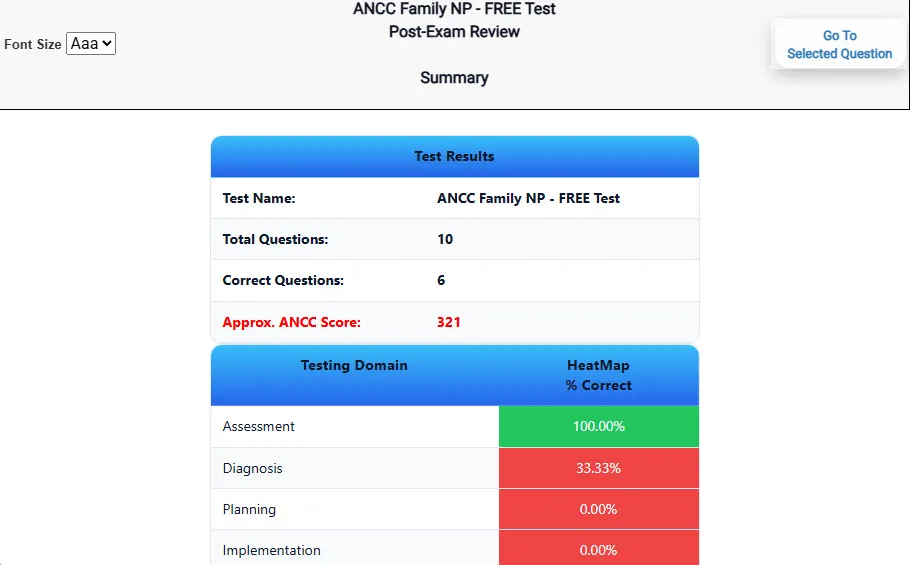
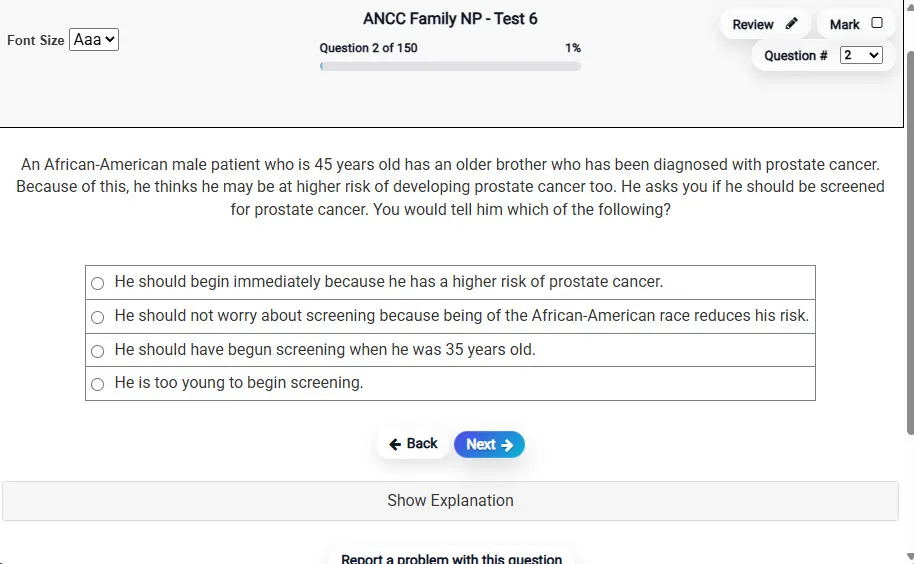
Answering a Question screen – Multiple-choice item view with navigation controls and progress tracker.
Answering a Question Multiple-choice item view with navigation controls and progress tracker.

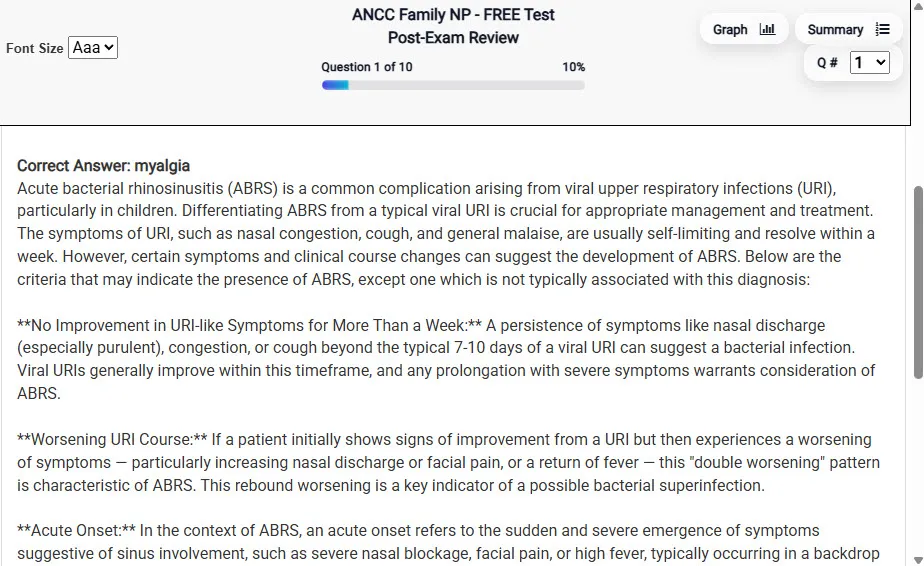
                           Detailed Explanation screen – 
                         Review mode showing chosen answer and rationale and references.
Detailed Explanation Review mode showing chosen answer and rationale and references.

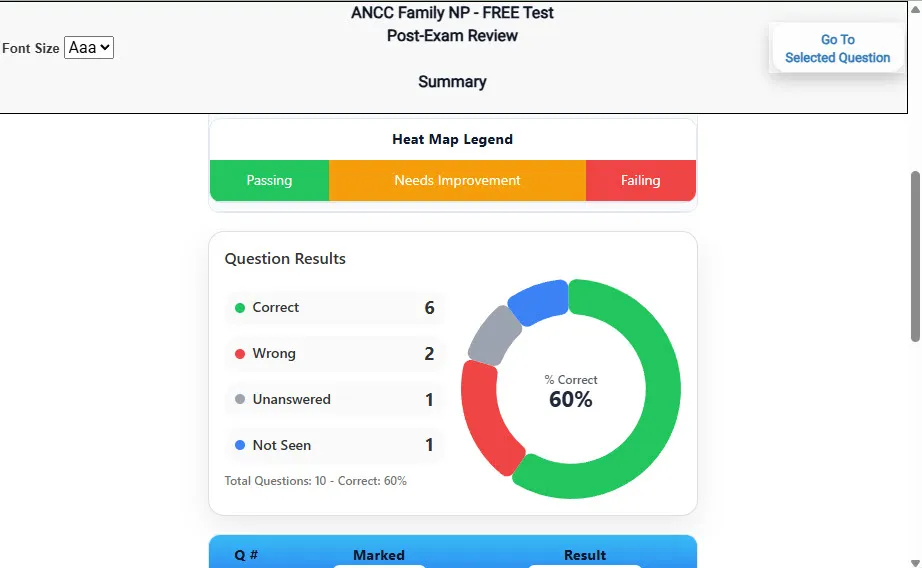
                           Review Summary 1 screen – 
                         Summary with counts for correct/wrong/unanswered and not seen items.
Review Summary 1 Summary with counts for correct/wrong/unanswered and not seen items.

                           Review Summary 2 screen – 
                         Advanced summary with category/domain breakdown and performance insights.
Review Summary 2 Advanced summary with category/domain breakdown and performance insights.

What Each Screen Shows

Answer Question Screen

  • Clean multiple-choice interface with progress bar.
  • Mark for review feature.
  • Matches real test pacing.

Detailed Explanation

  • Correct answer plus rationale.
  • Key concepts and guidelines highlighted.
  • Move between questions to fill knowledge gaps.

Review Summary 1

  • Overall results with total questions and scaled score.
  • Domain heatmap shows strengths and weaknesses.
  • Quick visual feedback on study priorities.

Review Summary 2

  • Chart of correct, wrong, unanswered, not seen.
  • Color-coded results for easy review.
  • Links back to missed items.

Top 10 Reasons to Use Exam Edge for your MTEL Biology Exam Prep

  1. Focused on the MTEL Biology Exam

    Our practice tests are built specifically for the MTEL Biology exam — every question mirrors the real topics, format, and difficulty so you're studying exactly what matters.

  2. Real Exam Simulation

    We match the per-question time limits and pressure of the actual MTEL exam, so test day feels familiar and stress-free.

  3. 20 Full Practice Tests & 2,000 Unique Questions

    You'll have more than enough material to master every MTEL Biology concept — no repeats, no fluff.

  4. Lower Cost Than a Retake

    Ordering 5 practice exams costs less than retaking the MTEL Biology exam after a failure. One low fee could save you both time and money.

  5. Flexible Testing

    Need to step away mid-exam? Pick up right where you left off — with your remaining time intact.

  6. Instant Scoring & Feedback

    See your raw score and an estimated MTEL Biology score immediately after finishing each practice test.

  7. Detailed Explanations for Every Question

    Review correct and incorrect answers with clear, step-by-step explanations so you truly understand each topic.

  8. Trusted & Accredited

    We're fully accredited by the Better Business Bureau and uphold the highest standards of trust and transparency.

  9. Web-Based & Always Available

    No software to install. Access your MTEL Biology practice exams 24/7 from any computer or mobile device.

  10. Expert Support When You Need It

    Need extra help? Our specialized tutors are highly qualified and ready to support your MTEL exam prep.


Pass the MTEL Biology Exam with Realistic Practice Tests from Exam Edge

Preparing for your upcoming MTEL Biology (13) Certification Exam can feel overwhelming — but the right practice makes all the difference. Exam Edge gives you the tools, structure, and confidence to pass on your first try. Our online practice exams are built to match the real MTEL Biology exam in content, format, and difficulty.

  • 📝 20 MTEL Biology Practice Tests: Access 20 full-length exams with 100 questions each, covering every major MTEL Biology topic in depth.
  • Instant Online Access: Start practicing right away — no software, no waiting.
  • 🧠 Step-by-Step Explanations: Understand the reasoning behind every correct answer so you can master MTEL Biology exam concepts.
  • 🔄 Retake Each Exam Up to 4 Times: Build knowledge through repetition and track your improvement over time.
  • 🌐 Web-Based & Available 24/7: Study anywhere, anytime, on any device.
  • 🧘 Boost Your Test-Day Confidence: Familiarity with the MTEL format reduces anxiety and helps you perform under pressure.

These MTEL Biology practice exams are designed to simulate the real testing experience by matching question types, timing, and difficulty level. This approach helps you get comfortable not just with the exam content, but also with the testing environment, so you walk into your exam day focused and confident.


Exam Edge MTEL Reviews


I wanted to thank ExamEdge for helping me pass this teacher test the  first time. I had a lot of material to absorb in a short space of time and so I purchased the 15 practice tests and by test 15 I was so much more confident due to getting consistent passing scores. Thank you again, in my ...
Read More
Paul, Quincy, MA

I would like to commend your site in assisting me in passing the high school math test MTEL. I used your tests for practice and review and passed the test the first time. I was a little worried going into the test because the online tests were at such a high level. I found that I was very well prepa ...
Read More
Julie, MA


MTEL Biology Aliases Test Name

Here is a list of alternative names used for this exam.

  • MTEL Biology
  • MTEL Biology test
  • MTEL Biology Certification Test
  • MTEL
  • MTEL 13
  • 13 test
  • MTEL Biology (13)
  • Biology certification