This is the content of the pop-over!

CDCA Dental Hygiene Practice Tests & Test Prep by Exam Edge


CDCA Dental Hygiene (ADEX) product image
(4.9)
Based on 28 Reviews

  • Real Exam Simulation: Timed questions and matching content build comfort for your CDCA Dental Hygiene test day.
  • Instant, 24/7 Access: Web-based CDCA Dental Hygiene (ADEX) practice exams with no software needed.
  • Clear Explanations: Step-by-step answers and explanations for your CDCA exam to strengthen understanding.
  • Boosted Confidence: Reduces anxiety and improves test-taking skills to ace your CDCA Dental Hygiene (ADEX) .

Featured on

CDCA Dental Hygiene (ADEX) Online Practice Test Bundles

BEST VALUE
10 practice tests

$99.50

$399.50

SAVE $300

Only $9.95 per test!

  • 100% Pass Guarantee
  • 10 online practice tests
  • 110 questions per test
  • Bonus: 100 Flash Cards + Study Guide
  • Instant access
  • Detailed Explanations
  • Practice tests never expire
  • Timed, untimed, or study guide mode
5 practice tests

$69.75

$199.75

SAVE $130

Only $13.95 per test!

  • 5 online practice tests
  • 110 questions per test
  • Bonus: 100 Flash Cards + Study Guide
  • Instant access
  • Detailed Explanations
  • Practice tests never expire
  • Timed, untimed, or study guide mode
1 practice test

$39.95

  • 1 online practice test
  • 110 questions per test
  • Instant access
  • Detailed Explanations
  • Practice tests never expire
  • Timed, untimed, or study guide mode
Quick Select
Tap to choose a bundle

** All Prices are in US Dollars (USD) **


CDCA Dental Hygiene () Resources

Jump to the section you need most.

Understanding the exact breakdown of the CDCA Dental Hygiene (ADEX) test will help you know what to expect and how to most effectively prepare. The CDCA Dental Hygiene (ADEX) has 100 multiple-choice questions . The exam will be broken down into the sections below:

CDCA Dental Hygiene (ADEX) Exam Blueprint
Domain Name % Number of
Questions
Medical/Dental Assessment 12% 12
Intra and Extra Oral Assessment and Charting 27% 27
     Intra and Extra Oral Examination  
     Dental and Periodontal Charting and Assessment  
     Soft Tissue - Bone Tooth Abnormalities  
Radiology/Imaging 15% 15
Dental Hygiene Care Planning 13% 13
Patient Care 19% 19
     Periodontal Procedures  
     Infection Control  
     Medical Emergency Management  
Dental Specialties and Pharmacology 14% 14
     Dental Specialties  
     Applied Pharmacology  

CDCA Dental Hygiene (ADEX) Study Tips by Domain

  • Verify and document ASA classification and vital signs before treatment; red flag: uncontrolled hypertension (e.g., ≥180/110) — defer elective care and consult/refer.
  • Reconcile the medical history with a complete medication list (Rx/OTC/herbals) and allergies; common trap: missing anticoagulants/antiplatelets or bisphosphonates that change bleeding and procedural risk.
  • Screen for diabetes control (recent A1c/typical glucose, meal timing) and plan shorter morning visits; red flag: symptomatic hypo/hyperglycemia — treat/monitor before initiating care.
  • Assess cardiovascular history (MI, stroke, angina, stents, heart failure) and confirm stability; priority rule: if chest pain or shortness of breath is new/worsening today, stop and activate EMS.
  • Evaluate respiratory status (asthma/COPD/OSA) and triggers; common trap: supine positioning worsening dyspnea — use upright positioning and ensure rescue inhaler availability.
  • Determine need for antibiotic prophylaxis using current guidelines and the patient’s specific cardiac/prosthetic joint status; red flag: prescribing “because they always take it” without an indicated high-risk condition.
  • Perform a systematic head/neck and TMJ screening (symmetry, ROM, tenderness, lymph nodes) and chart location/size/consistency—red flag: a firm, fixed, non-tender node or new asymmetry requires documentation and referral language.
  • Complete a full intraoral soft-tissue exam (lips, labial/buccal mucosa, floor of mouth, tongue, palate, oropharynx) and chart lesions with precise descriptors (color, border, texture, size in mm)—common trap: writing “WNL” without site-by-site coverage.
  • Chart existing restorations and tooth conditions using consistent notation (surface-specific, material type, recurrent caries vs. stain) —priority rule: when uncertain, document as “suspected” and plan radiographic/clinical confirmation rather than marking definitive decay.
  • Record occlusion and functional findings (wear facets, mobility, fremitus, parafunction indicators) and link them to chart notes—red flag: mobility or fremitus without an occlusal note can be scored as incomplete assessment.
  • Document periodontal screening findings that impact charting accuracy (gingival margin, recession, mucogingival concerns) —common trap: charting recession without specifying mid-buccal/line-angle location or failing to note mucogingival involvement.
  • Use standardized abbreviations and legible entries with date/time and examiner ID—threshold cue: any abnormality should have a measurable descriptor (e.g., 6 mm ulcer, 2 cm swelling) plus an action note (monitor/re-eval/referral).
  • Begin with a systematic extraoral scan (face/neck, TMJ, lymph nodes, salivary glands) and document size/consistency/mobility; red flag: firm, fixed, non-tender nodes or asymmetry persisting >2 weeks warrants referral.
  • Complete an intraoral soft-tissue sweep in a consistent order (lips, labial/buccal mucosa, vestibules, gingiva, tongue, FOM, palate, oropharynx); common trap: skipping the floor of mouth and lateral tongue where high-risk lesions often occur.
  • Palpate bidigitally where indicated (tongue, floor of mouth, buccal mucosa) and note induration; red flag: ulceration with indurated borders or erythroplakia should not be “re-evaluated at next recall”.
  • Assess TMJ function (opening pattern, deviation, joint sounds, pain) and measure maximum opening; priority rule: pain with limited opening or progressive locking requires documentation and prompt follow-up/referral.
  • Screen for signs of infection or swelling (fluctuant mass, purulence, trismus, fever history) before instrumentation; contraindication cue: defer elective care and escalate if facial swelling with systemic symptoms suggests spreading infection.
  • Document findings precisely (location by landmark, color, texture, borders, size in mm, symptoms) and use photos when allowed; common CDCA trap: vague notes (e.g., “lesion present”) can cost points even if the exam was performed.
  • Chart probing depths (PD) in mm at six sites per tooth with a light, consistent force (≈20–25 g); red flag: rounding to 3/5/7 or skipping distal sites is a frequent scoring error.
  • Record clinical attachment level (CAL) correctly by relating PD to the CEJ (add recession, subtract gingival overgrowth); common trap: using the gingival margin as the reference and misclassifying severity.
  • Document bleeding on probing (BOP) within 10 seconds and note suppuration separately; priority rule: don’t infer BOP from inflammation alone—it must be observed.
  • Identify and chart furcation involvement (e.g., Grade I–III) using a Nabers probe; red flag: calling a furcation on maxillary molars without checking buccal and both palatal/mesial-distal entrances.
  • Measure and record gingival recession and mucogingival concerns (e.g., inadequate attached gingiva) where present; common trap: failing to chart recession ≥1 mm because “PD is normal.”
  • Chart tooth-specific factors that affect periodontal status (mobility grade, fremitus, plaque/calculus levels, open contacts/overhangs); red flag: omitting contributing local factors that explain localized deep sites.
  • Differentiate normal variants from pathology: Fordyce granules and linea alba are benign, but a persistent ulcer >2 weeks is a red flag requiring referral.
  • Screen for oral cancer with attention to high-risk sites (lateral/ventral tongue, floor of mouth, soft palate)—any indurated, nonhealing, or erythro/leukoplakic lesion is a priority finding.
  • Recognize infection vs. trauma: fluctuance, purulence, and lymphadenopathy suggest infection, while a sharp cusp/edge causing a traumatic ulcer is a common trap that still needs re-evaluation if it doesn’t resolve.
  • Identify bony abnormalities: a hard, non-tender midline palatal mass suggests torus palatinus (benign), but rapid growth, pain, or paresthesia is a contraindication to routine care until evaluated.
  • Note tooth abnormalities that affect treatment: cracked teeth, severe attrition/erosion, and cervical lesions can mimic caries—a key cue is hypersensitivity or a visible fracture line that warrants dentist assessment before instrumentation near the area.
  • Document accurately with location, size, color, border, surface texture, and palpation findings—a common CDCA trap is vague charting (e.g., “sore spot”) instead of measurable descriptors and follow-up plan.
  • Verify patient ID, pregnancy status, and the correct prescription before exposing; red flag: taking radiographs “because it’s routine” without documented justification.
  • Apply ALARA with fastest receptor available, rectangular collimation, and thyroid collar when not interfering with imaging; common trap: skipping the collar for “just one film.”
  • Master paralleling technique for periapicals (receptor parallel, beam perpendicular); red flag: elongation/foreshortening from bisecting errors that force unnecessary retakes.
  • For bitewings, center at crowns and open contacts with correct horizontal angulation; common trap: overlapping contacts that obscure interproximal caries and crestal bone.
  • Use selection criteria and recognize key findings—caries patterns, periapical radiolucency, and crestal bone height; priority rule: suspicious lesions or rapid bone loss require prompt referral/documentation.
  • Prevent and correct common errors (cone-cuts, receptor bending, motion blur, double exposure) before retaking; red flag: repeating exposures without first adjusting positioning/angulation and documenting why.
  • Complete a risk-based assessment before planning care (caries, periodontal, medical, and behavioral risks)—red flag: writing a “standard prophy” plan without documenting the findings that justify it.
  • Prioritize safety and medical stability first (ASA status, vitals, anticoagulants, diabetes control, allergy history)—common trap: planning invasive instrumentation without addressing need for medical consult or timing around medications.
  • Set patient-centered, measurable goals tied to specific problems (e.g., bleeding on probing reduction, plaque score targets)—red flag: goals that are vague (“improve hygiene”) and not time-bound.
  • Select evidence-based interventions and sequencing (OHI, debridement, chemotherapeutics, referral, re-evaluation intervals)—priority rule: treat inflammation/infection control and home care deficits before elective procedures.
  • Define recall and re-evaluation based on risk and response to therapy—common trap: defaulting everyone to a 6-month interval despite active periodontal findings or high caries risk.
  • Document informed consent, patient education, and barriers to adherence (motivation, dexterity, finances, language)—red flag: no notation of patient understanding/acceptance or refusal when the plan changes.
  • Confirm patient identity, allergies, and current meds at chairside before initiating care; red flag: proceeding with treatment when the med list is “unknown” or outdated.
  • Position for safety and aspiration prevention (semi-upright as indicated) and use high-volume evacuation appropriately; common trap: leaving a patient supine with excessive water when coughing or dysphagia is noted.
  • Maintain effective pain and anxiety control within scope (topical/local adjuncts per protocol) and reassess comfort mid-procedure; red flag: continuing instrumentation after the patient reports sharp, localized pain.
  • Provide individualized oral hygiene instruction tied to the patient’s findings and demonstrate technique; priority rule: document the specific recommendation (device, frequency) rather than “OHI given.”
  • Use clear postoperative instructions and verify understanding with teach-back; common trap: omitting written guidance for sensitivity, bleeding expectations, and when to call the office.
  • Coordinate follow-up and referrals based on risk and response to care (e.g., re-eval interval, periodontal maintenance); red flag: failing to schedule re-evaluation when inflammation or bleeding persists.
  • Before scaling/root planing, verify medical alerts and bleeding risk (e.g., anticoagulants, uncontrolled hypertension) and document baseline periodontal findings; red flag: proceeding without current BP/medication review per CDCA-style safety expectations.
  • Use correct instrumentation sequence and adaptation for deposits and root anatomy (stable fulcrum, correct angulation); common trap: over-angulation that causes tissue trauma or root gouging.
  • During subgingival debridement, prioritize thoroughness in deepest sites while maintaining patient comfort; red flag: leaving detectable residual calculus in 5+ mm pockets.
  • For periodontal probing and re-evaluation, use consistent probe force and record to the nearest mm; common trap: inconsistent angulation/force creating false pocket depths and missed bleeding-on-probing.
  • Manage local anesthesia considerations within scope and patient status (avoid vasoconstrictor excess in significant cardiovascular disease); red flag: inadequate pain control leading to rushed, incomplete instrumentation.
  • Post-procedure, provide specific home-care instructions tied to findings (e.g., interdental cleaning for embrasures, chlorhexidine cautions) and set recall/maintenance intervals; common trap: generic OHI with no maintenance plan for active periodontal disease.
  • Assume every patient is potentially infectious and follow standard precautions at all times; red flag: touching face mask/eyewear with contaminated gloves.
  • Hand hygiene is nonnegotiable before donning gloves and immediately after glove removal; common trap: using hand sanitizer on visibly soiled hands instead of soap and water.
  • Maintain clean-to-dirty workflow with barriers and surface disinfection between patients; priority rule: disinfect high-touch clinical contact surfaces even if barriers were used and may have leaked.
  • Instrument processing must follow the sequence: transport → cleaning → packaging with indicators → sterilization → storage; red flag: sterilizing unclean or unwrapped instruments or skipping chemical indicators.
  • Sharps safety requires one-handed scoop or safety device activation and immediate disposal in an approved container; common trap: recapping with two hands or leaving needles on the tray.
  • For exposure incidents, wash/flush immediately, report per protocol, and document source/patient and provider status; priority cue: do not delay post-exposure evaluation when blood/body fluids contact mucous membranes or non-intact skin.
  • Start every emergency with BLS priorities—scene safety, responsiveness, activate EMS, airway/breathing/circulation; red flag: spending time searching for drugs before ensuring effective ventilation and compressions.
  • Manage syncope by placing the patient supine with legs elevated and maintaining airway; common trap: sitting the patient upright too soon, which can re-trigger the episode.
  • For suspected anaphylaxis, use epinephrine IM promptly (mid-anterolateral thigh) and call EMS; priority rule: don’t delay epinephrine while waiting to see if antihistamines “work.”
  • For hypoglycemia in a conscious patient, give fast-acting oral glucose; red flag: any altered mental status or inability to swallow—do not give oral fluids and activate EMS.
  • For angina/possible MI, stop treatment, monitor vitals, give oxygen only if hypoxic, and activate EMS if pain persists or is atypical; contraindication cue: avoid nitroglycerin if recent PDE-5 inhibitor use or suspected right-sided MI.
  • For seizures, protect from injury and maintain airway without restraining; common trap: placing objects in the mouth or attempting to forcefully open the jaw.
  • Review specialty consult triggers: persistent ulcer >2 weeks, unexplained lymphadenopathy, or indurated lesion — red flag for oral surgery/ENT referral and document location, size, and duration.
  • Orthodontic and periodontal overlap: fixed appliances increase plaque retention — priority rule is reinforced interproximal cleaning and monitoring for decalcification/gingival enlargement at each visit.
  • Endodontic vs periodontal pain clues: lingering thermal pain and spontaneous pain suggest pulpal involvement — common trap is assuming all localized swelling is periodontal without assessing for sinus tract or deep caries.
  • Antibiotic prophylaxis is limited: reserve for highest-risk cardiac conditions with procedures involving gingival manipulation or mucosal incision — red flag is outdated “prophylax everyone with a murmur” thinking.
  • Medication-related osteonecrosis risk: antiresorptives (e.g., bisphosphonates/denosumab) plus invasive procedures — priority is thorough med history and coordination before extractions/implants; don’t dismiss oral formulations as risk-free.
  • Local anesthetic/vasoconstrictor considerations: epinephrine can interact with nonselective beta-blockers or recent stimulant use — contraindication cue is palpitations/unstable angina or recent cocaine/meth use, prompting deferral and medical consult.
  • Recognize when findings warrant specialty referral: suspicious lesions persisting >2 weeks, unexplained induration, or nonhealing extraction sites are red flags for OMFS/oral pathology.
  • Screen occlusion/TMJ basics: deviation on opening, limited opening (<35–40 mm), or joint sounds with pain should trigger a referral cue rather than prolonged hygiene procedures.
  • Orthodontic considerations: note decalcification/white-spot lesions around brackets and recommend fluoride strategies; a common trap is scaling aggressively around bonded attachments and debonding them.
  • Pediatric dentistry cues: early childhood caries patterns (maxillary anterior), deep pits/fissures, or high caries risk are priority indicators for sealants/fluoride and timely referral.
  • Endodontic red flags: lingering spontaneous pain, swelling/sinus tract, or tenderness to percussion suggests pulpal/PA pathology—do not “watch and wait” if infection signs are present.
  • Prosthodontic/implant maintenance: bleeding on probing with suppuration or increasing probing depths around implants is a peri-implant disease alert; a key trap is using metal scalers on implants (use implant-safe instruments).
  • Confirm allergies and prior reactions before any drug exposure; a red flag is a reported “penicillin allergy” without details—clarify rash vs anaphylaxis because it changes antibiotic choices.
  • Screen for anticoagulants/antiplatelets (warfarin, DOACs, clopidogrel) and avoid recommending NSAIDs as first-line analgesics; a common trap is advising ibuprofen without checking bleeding risk.
  • Know maximum safe local anesthetic dosing and document total carpules given; a priority rule is to reduce dose in low body weight or significant hepatic disease to prevent LAST (local anesthetic systemic toxicity).
  • Identify xerostomia-causing meds (anticholinergics, antidepressants, antihistamines) and adjust caries prevention accordingly; a red flag is rampant cervical caries with multiple dry-mouth medications.
  • Recognize drug-induced gingival enlargement (calcium channel blockers, phenytoin, cyclosporine) and chart/treat inflammation aggressively; a common trap is blaming “poor hygiene” without linking the medication.
  • Use safe antibiotic stewardship—avoid antibiotics for uncomplicated chronic periodontal inflammation; a red flag is prescribing or suggesting antibiotics when there are no systemic signs (fever, lymphadenopathy, spreading infection).


Built to Fit Into Your Busy Life

Everything you need to prepare with confidence—without wasting a minute.

Three Study Modes

Timed, No Time Limit, or Explanation mode.

Actionable Analytics

Heatmaps and scaled scores highlight weak areas.

High-Yield Rationales

Concise explanations emphasize key concepts.

Realistic Interface

Matches the feel of the actual exam environment.

Accessible by Design

Clean layout reduces cognitive load.

Anytime, Anywhere

Web-based access 24/7 on any device.
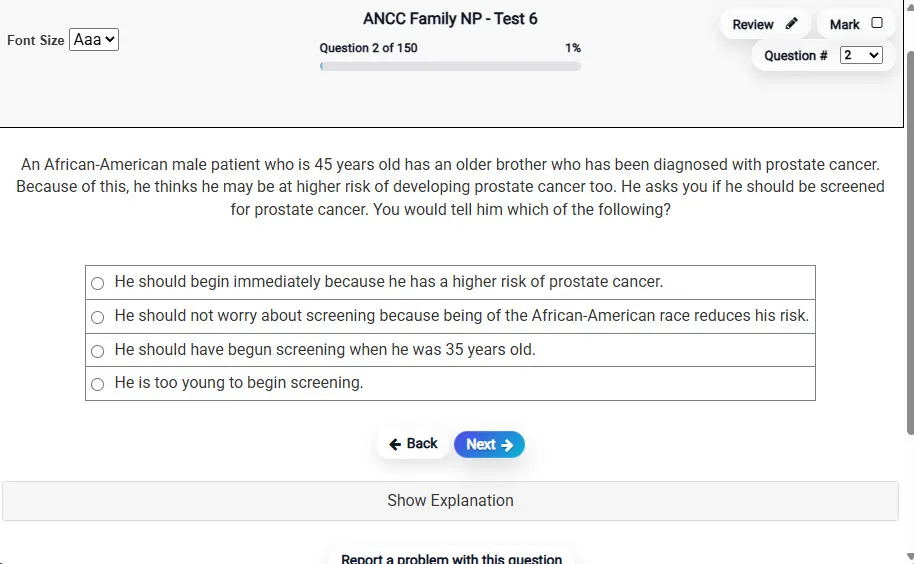
Answering a Question screen – Multiple-choice item view with navigation controls and progress tracker.
Answering a Question Multiple-choice item view with navigation controls and progress tracker.

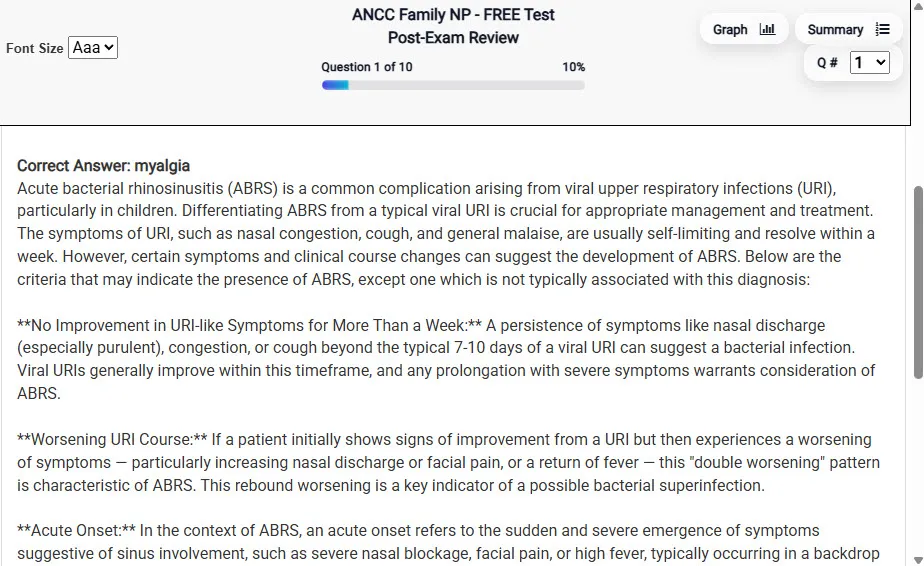
                           Detailed Explanation screen – 
                         Review mode showing chosen answer and rationale and references.
Detailed Explanation Review mode showing chosen answer and rationale and references.

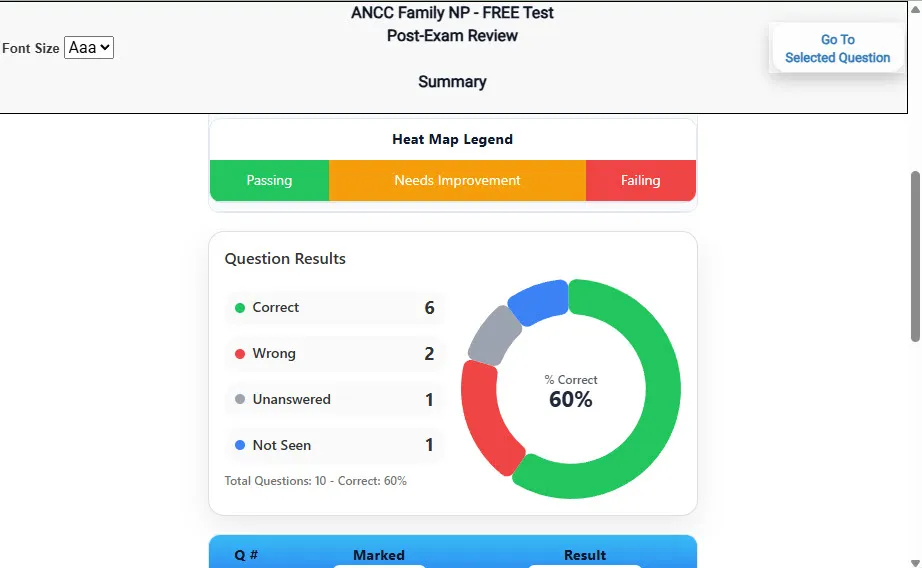
                           Review Summary 1 screen – 
                         Summary with counts for correct/wrong/unanswered and not seen items.
Review Summary 1 Summary with counts for correct/wrong/unanswered and not seen items.

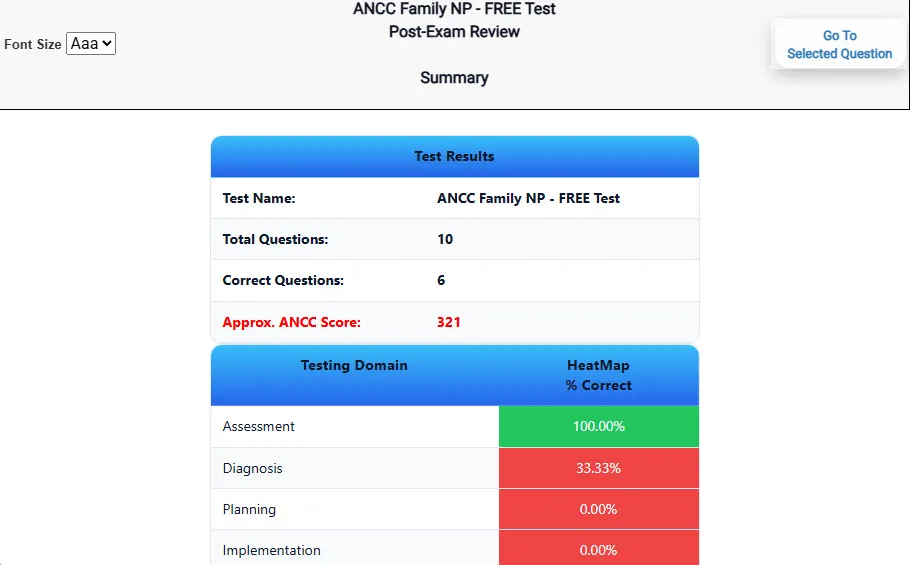
                           Review Summary 2 screen – 
                         Advanced summary with category/domain breakdown and performance insights.
Review Summary 2 Advanced summary with category/domain breakdown and performance insights.

What Each Screen Shows

Answer Question Screen

  • Clean multiple-choice interface with progress bar.
  • Mark for review feature.
  • Matches real test pacing.

Detailed Explanation

  • Correct answer plus rationale.
  • Key concepts and guidelines highlighted.
  • Move between questions to fill knowledge gaps.

Review Summary 1

  • Overall results with total questions and scaled score.
  • Domain heatmap shows strengths and weaknesses.
  • Quick visual feedback on study priorities.

Review Summary 2

  • Chart of correct, wrong, unanswered, not seen.
  • Color-coded results for easy review.
  • Links back to missed items.

Top 10 Reasons to Use Exam Edge for your CDCA Dental Hygiene (ADEX) Exam Prep

  1. Focused on the CDCA Dental Hygiene (ADEX) Exam

    Our practice tests are built specifically for the CDCA Dental Hygiene exam — every question mirrors the real topics, format, and difficulty so you're studying exactly what matters.

  2. Real Exam Simulation

    We match the per-question time limits and pressure of the actual CDCA exam, so test day feels familiar and stress-free.

  3. 10 Full Practice Tests & 1,100 Unique Questions

    You'll have more than enough material to master every CDCA Dental Hygiene concept — no repeats, no fluff.

  4. Lower Cost Than a Retake

    Ordering 5 practice exams costs less than retaking the CDCA Dental Hygiene (ADEX) exam after a failure. One low fee could save you both time and money.

  5. Flexible Testing

    Need to step away mid-exam? Pick up right where you left off — with your remaining time intact.

  6. Instant Scoring & Feedback

    See your raw score and an estimated CDCA Dental Hygiene (ADEX) score immediately after finishing each practice test.

  7. Detailed Explanations for Every Question

    Review correct and incorrect answers with clear, step-by-step explanations so you truly understand each topic.

  8. Trusted & Accredited

    We're fully accredited by the Better Business Bureau and uphold the highest standards of trust and transparency.

  9. Web-Based & Always Available

    No software to install. Access your CDCA Dental Hygiene practice exams 24/7 from any computer or mobile device.

  10. Expert Support When You Need It

    Need extra help? Our specialized tutors are highly qualified and ready to support your CDCA exam prep.


Pass the CDCA Dental Hygiene (ADEX) Exam with Realistic Practice Tests from Exam Edge

Preparing for your upcoming CDCA Dental Hygiene (ADEX) () Certification Exam can feel overwhelming — but the right practice makes all the difference. Exam Edge gives you the tools, structure, and confidence to pass on your first try. Our online practice exams are built to match the real CDCA Dental Hygiene exam in content, format, and difficulty.

  • 📝 10 CDCA Dental Hygiene (ADEX) Practice Tests: Access 10 full-length exams with 110 questions each, covering every major CDCA Dental Hygiene (ADEX) topic in depth.
  • Instant Online Access: Start practicing right away — no software, no waiting.
  • 🧠 Step-by-Step Explanations: Understand the reasoning behind every correct answer so you can master CDCA Dental Hygiene exam concepts.
  • 🔄 Retake Each Exam Up to 4 Times: Build knowledge through repetition and track your improvement over time.
  • 🌐 Web-Based & Available 24/7: Study anywhere, anytime, on any device.
  • 🧘 Boost Your Test-Day Confidence: Familiarity with the CDCA format reduces anxiety and helps you perform under pressure.

These CDCA Dental Hygiene (ADEX) practice exams are designed to simulate the real testing experience by matching question types, timing, and difficulty level. This approach helps you get comfortable not just with the exam content, but also with the testing environment, so you walk into your exam day focused and confident.


Exam Edge CDCA Reviews


CDCA Dental Hygiene (ADEX) Aliases Test Name

Here is a list of alternative names used for this exam.

  • CDCA Dental Hygiene (ADEX)
  • CDCA Dental Hygiene (ADEX) test
  • CDCA Dental Hygiene (ADEX) Certification Test
  • CDCA Dental Hygiene test
  • CDCA
  • CDCA
  • test
  • CDCA Dental Hygiene (ADEX) ()
  • Dental Hygiene (ADEX) certification