This is the content of the pop-over!

Florida Nurse Aide Exam Practice Tests & Test Prep by Exam Edge


Florida Nurse Aide product image
(4.8)
Based on 32 Reviews

  • Real Exam Simulation: Timed questions and matching content build comfort for your Florida Nurse Aide test day.
  • Instant, 24/7 Access: Web-based Florida Nurse Aide practice exams with no software needed.
  • Clear Explanations: Step-by-step answers and explanations for your NurseAide exam to strengthen understanding.
  • Boosted Confidence: Reduces anxiety and improves test-taking skills to ace your Florida Nurse Aide .

Featured on

Florida Nurse Aide Online Practice Test Bundles

BEST VALUE
10 practice tests

$99.50

$399.50

SAVE $300

Only $9.95 per test!

  • 100% Pass Guarantee
  • 10 online practice tests
  • 60 questions per test
  • Bonus: 100 Flash Cards + Study Guide
  • Instant access
  • Detailed Explanations
  • Practice tests never expire
  • Timed, untimed, or study guide mode
5 practice tests

$69.75

$199.75

SAVE $130

Only $13.95 per test!

  • 5 online practice tests
  • 60 questions per test
  • Bonus: 100 Flash Cards + Study Guide
  • Instant access
  • Detailed Explanations
  • Practice tests never expire
  • Timed, untimed, or study guide mode
1 practice test

$39.95

  • 1 online practice test
  • 60 questions per test
  • Instant access
  • Detailed Explanations
  • Practice tests never expire
  • Timed, untimed, or study guide mode
Quick Select
Tap to choose a bundle

** All Prices are in US Dollars (USD) **


Florida Nurse Aide () Resources

Jump to the section you need most.

Understanding the exact breakdown of the Florida Nurse Aide test will help you know what to expect and how to most effectively prepare. The Florida Nurse Aide has 60 multiple-choice questions . The exam will be broken down into the sections below:

Florida Nurse Aide Exam Blueprint
Domain Name % Number of
Questions
Role of the Nurse Aide 20% 12
Promotion of Safety 22% 13
Promotion of Function and Health of Residents 20% 12
Basic Nursing Care Provided by the Nurse Aide 24% 14
Providing Specialized Care for Residents with Changes in Health 14% 8

Florida Nurse Aide Study Tips by Domain

  • Work within the nurse aide scope: provide assigned care, observe, and report—do not assess, diagnose, or change a care plan (red flag: a resident’s new chest pain or confusion must be reported immediately, not “watched”).
  • Follow the chain of command for concerns and refusals: notify the nurse promptly, document per facility policy, and never argue or coerce (common trap: charting “refused” without telling the nurse).
  • Maintain confidentiality (HIPAA): discuss resident information only with the care team and only as needed (red flag: talking about residents in hallways/elevators or posting photos on social media).
  • Use professional communication and documentation: report objective facts (what you see, hear, measure) and time of events (common trap: writing opinions like “resident was faking” instead of behaviors observed).
  • Protect resident rights and dignity: knock, introduce yourself, provide privacy, and honor preferences and informed refusals (priority rule: stop and get help if a resident’s choice creates immediate danger).
  • Know and report abuse, neglect, or exploitation immediately per facility procedure (red flag: unexplained bruises, fear of a caregiver, or missing belongings—do not investigate yourself; report to the nurse/supervisor right away).
  • Use standard precautions every time (hand hygiene before/after contact, gloves for blood/body fluids); red flag: skipping hand hygiene after glove removal is a frequent fail point.
  • Prevent falls by ensuring bed is low and locked, call light within reach, and non-skid footwear on; trap: leaving the resident unattended on the toilet or with side rails up without an order.
  • Maintain a clutter-free environment with clear pathways, dry floors, and secured cords; priority rule: clean spills immediately and post wet-floor signage before leaving the area.
  • Use proper body mechanics and gait belts for transfers and ambulation; contraindication: do not attempt a transfer alone if the care plan requires two-person assist—get help.
  • Prevent skin injury by repositioning at scheduled intervals and protecting bony prominences; red flag: persistent redness that doesn’t blanch after pressure relief must be reported promptly.
  • Identify and report safety hazards or changes immediately (e.g., broken equipment, confused wandering, swallowing difficulty); trap: “fixing” equipment yourself instead of removing it from service and notifying the nurse.
  • Promote independence with ADLs by offering choices and doing only what the resident can’t do safely; red flag: automatically taking over tasks can reduce function and may violate the care plan.
  • Support mobility and activity (ROM, ambulation, repositioning) as scheduled; priority rule: stop and report new pain, dizziness, or shortness of breath during activity.
  • Encourage adequate nutrition and fluids per care plan (including diet consistency); common trap: offering restricted items (e.g., NPO, thickened liquids, low-sodium) because the resident asks.
  • Prevent skin breakdown by turning/repositioning, keeping skin clean/dry, and using pressure-relief measures; red flag: non-blanchable redness or open areas must be reported immediately.
  • Promote bowel and bladder function with toileting schedules, privacy, and perineal care; contraindication: don’t give enemas, suppositories, or laxatives unless specifically directed per facility policy and nurse instructions.
  • Support psychosocial health through respectful communication, routine, and orientation cues; common trap: arguing with a confused resident—instead, use calm reassurance and redirect while reporting sudden changes in behavior.
  • Hand hygiene is required before and after every resident contact and after glove removal; red flag: skipping handwashing because you “only touched the bedrail” still counts as exposure.
  • Protect resident privacy during basic care (bath, toileting, peri-care) by closing curtains/doors and covering the resident; common trap: leaving the resident exposed while gathering supplies.
  • For hygiene and peri-care, clean from clean-to-dirty (front-to-back for females) and use a new washcloth area with each wipe; red flag: reusing the same section spreads bacteria and increases UTI risk.
  • Measure and record vital signs accurately and report readings outside facility parameters immediately; priority rule: new fever, very low/high BP, or abnormal pulse/respirations are report-now findings, not end-of-shift notes.
  • Support nutrition and hydration by measuring intake/output as assigned and assisting with meals safely; common trap: charting intake without measuring or failing to report coughing/choking during eating.
  • Prevent pressure injuries with scheduled repositioning, skin checks, and keeping skin clean/dry; red flag: non-blanchable redness or skin breakdown must be reported promptly rather than treated with lotion alone.
  • Recognize and report acute change in condition immediately (e.g., new confusion, sudden weakness, chest pain, trouble breathing, uncontrolled bleeding)—red flag: don’t assume it’s “just aging” or wait until end of shift.
  • For stroke warning signs (FAST: Face droop, Arm weakness, Speech changes), notify the nurse at once and note the time symptoms started—priority rule: time-sensitive emergency.
  • Manage residents with diabetes per care plan: monitor for hypoglycemia (shakiness, sweating, confusion) and hyperglycemia (thirst, frequent urination, fruity breath) and report promptly—common trap: giving extra food/juice without direction unless policy allows for suspected low blood sugar.
  • Provide safe care for oxygen or respiratory changes: keep oxygen in place as ordered, avoid petroleum-based products near oxygen, and report increased work of breathing—red flag: new cyanosis (blue lips) or SpO2 drop if you are assigned to check it.
  • Observe for infection and sepsis risk: report fever, chills, new cough, foul-smelling urine, new wound drainage, or sudden mental status change—common trap: masking fever with blankets or skipping hand hygiene between residents.
  • Support residents with IVs, catheters, feeding tubes, or drains by protecting lines from pulling and reporting leaks, redness, swelling, or pain at the site—priority rule: do not adjust flow rates or settings; notify the nurse.


Built to Fit Into Your Busy Life

Everything you need to prepare with confidence—without wasting a minute.

Three Study Modes

Timed, No Time Limit, or Explanation mode.

Actionable Analytics

Heatmaps and scaled scores highlight weak areas.

High-Yield Rationales

Concise explanations emphasize key concepts.

Realistic Interface

Matches the feel of the actual exam environment.

Accessible by Design

Clean layout reduces cognitive load.

Anytime, Anywhere

Web-based access 24/7 on any device.
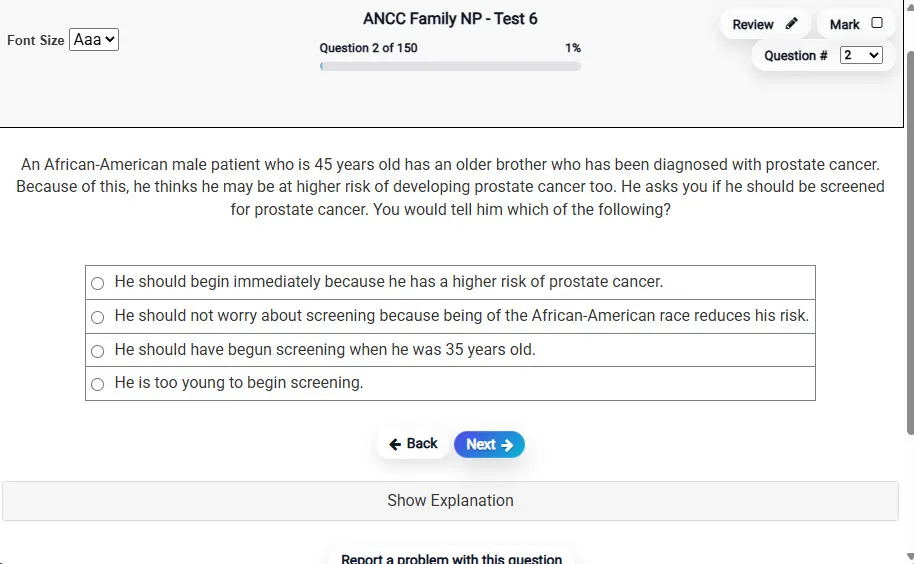
Answering a Question screen – Multiple-choice item view with navigation controls and progress tracker.
Answering a Question Multiple-choice item view with navigation controls and progress tracker.

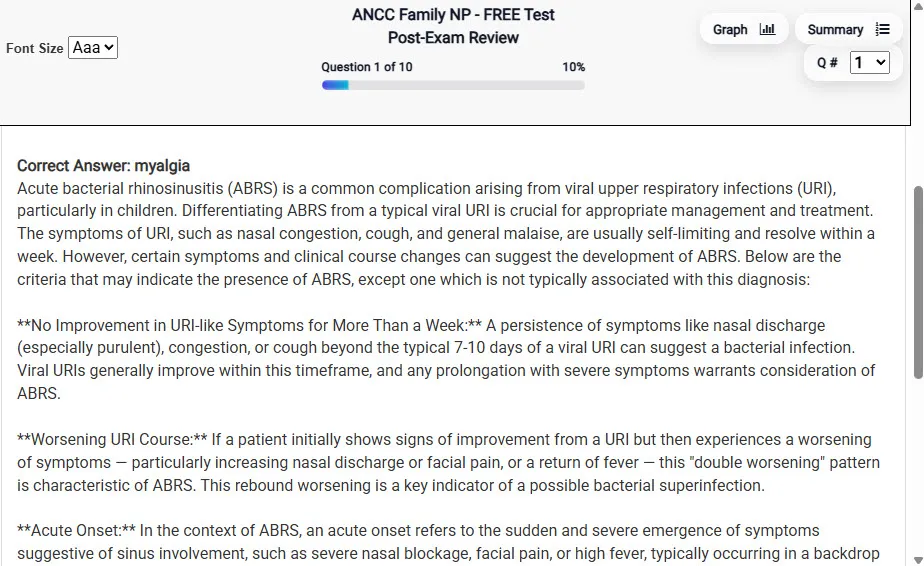
                           Detailed Explanation screen – 
                         Review mode showing chosen answer and rationale and references.
Detailed Explanation Review mode showing chosen answer and rationale and references.

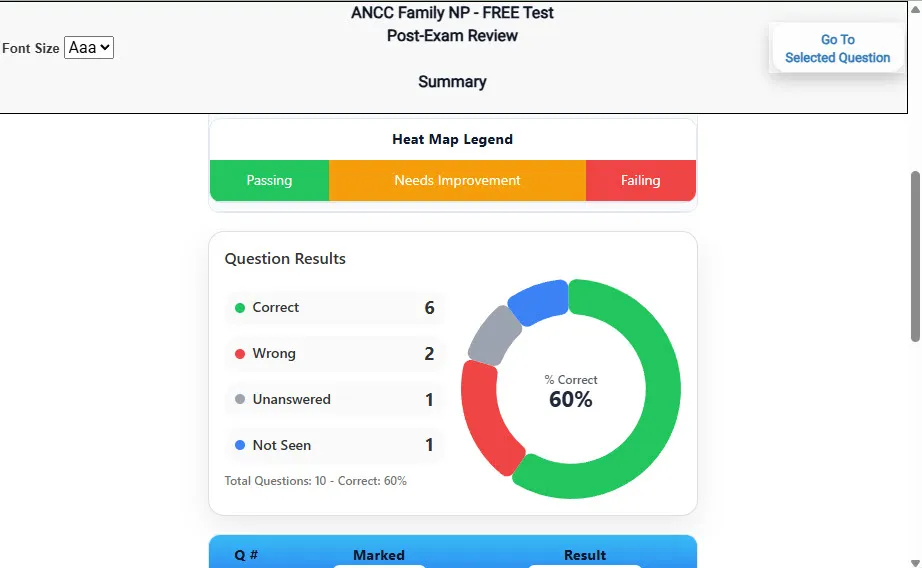
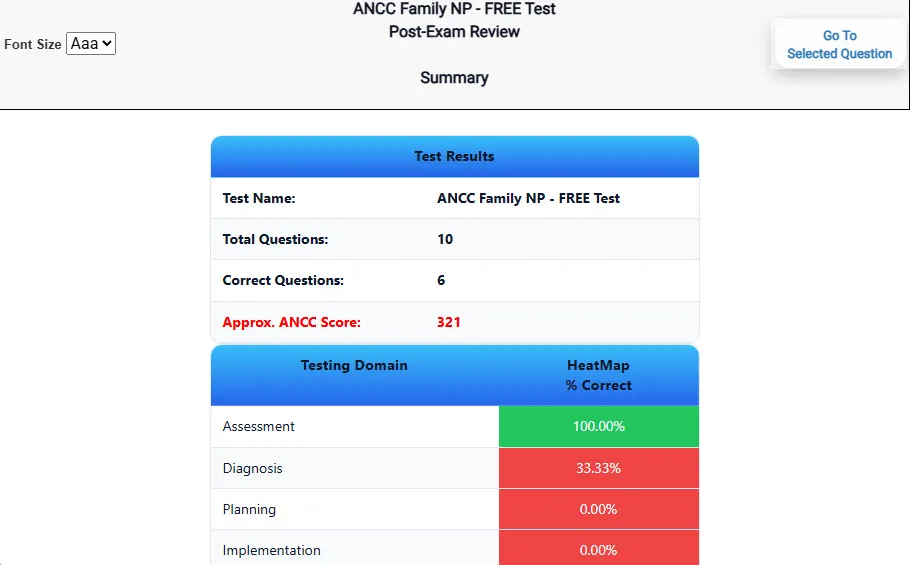
                           Review Summary 1 screen – 
                         Summary with counts for correct/wrong/unanswered and not seen items.
Review Summary 1 Summary with counts for correct/wrong/unanswered and not seen items.

                           Review Summary 2 screen – 
                         Advanced summary with category/domain breakdown and performance insights.
Review Summary 2 Advanced summary with category/domain breakdown and performance insights.

What Each Screen Shows

Answer Question Screen

  • Clean multiple-choice interface with progress bar.
  • Mark for review feature.
  • Matches real test pacing.

Detailed Explanation

  • Correct answer plus rationale.
  • Key concepts and guidelines highlighted.
  • Move between questions to fill knowledge gaps.

Review Summary 1

  • Overall results with total questions and scaled score.
  • Domain heatmap shows strengths and weaknesses.
  • Quick visual feedback on study priorities.

Review Summary 2

  • Chart of correct, wrong, unanswered, not seen.
  • Color-coded results for easy review.
  • Links back to missed items.

Top 10 Reasons to Use Exam Edge for your Florida Nurse Aide Exam Prep

  1. Focused on the Florida Nurse Aide Exam

    Our practice tests are built specifically for the Florida Nurse Aide exam — every question mirrors the real topics, format, and difficulty so you're studying exactly what matters.

  2. Real Exam Simulation

    We match the per-question time limits and pressure of the actual NurseAide exam, so test day feels familiar and stress-free.

  3. 10 Full Practice Tests & 600 Unique Questions

    You'll have more than enough material to master every Florida Nurse Aide concept — no repeats, no fluff.

  4. Lower Cost Than a Retake

    Ordering 5 practice exams costs less than retaking the Florida Nurse Aide exam after a failure. One low fee could save you both time and money.

  5. Flexible Testing

    Need to step away mid-exam? Pick up right where you left off — with your remaining time intact.

  6. Instant Scoring & Feedback

    See your raw score and an estimated Florida Nurse Aide score immediately after finishing each practice test.

  7. Detailed Explanations for Every Question

    Review correct and incorrect answers with clear, step-by-step explanations so you truly understand each topic.

  8. Trusted & Accredited

    We're fully accredited by the Better Business Bureau and uphold the highest standards of trust and transparency.

  9. Web-Based & Always Available

    No software to install. Access your Florida Nurse Aide practice exams 24/7 from any computer or mobile device.

  10. Expert Support When You Need It

    Need extra help? Our specialized tutors are highly qualified and ready to support your NurseAide exam prep.


Pass the Florida Nurse Aide Exam with Realistic Practice Tests from Exam Edge

Preparing for your upcoming Florida Nurse Aide () Certification Exam can feel overwhelming — but the right practice makes all the difference. Exam Edge gives you the tools, structure, and confidence to pass on your first try. Our online practice exams are built to match the real Florida Nurse Aide exam in content, format, and difficulty.

  • 📝 10 Florida Nurse Aide Practice Tests: Access 10 full-length exams with 60 questions each, covering every major Florida Nurse Aide topic in depth.
  • Instant Online Access: Start practicing right away — no software, no waiting.
  • 🧠 Step-by-Step Explanations: Understand the reasoning behind every correct answer so you can master Florida Nurse Aide exam concepts.
  • 🔄 Retake Each Exam Up to 4 Times: Build knowledge through repetition and track your improvement over time.
  • 🌐 Web-Based & Available 24/7: Study anywhere, anytime, on any device.
  • 🧘 Boost Your Test-Day Confidence: Familiarity with the NurseAide format reduces anxiety and helps you perform under pressure.

These Florida Nurse Aide practice exams are designed to simulate the real testing experience by matching question types, timing, and difficulty level. This approach helps you get comfortable not just with the exam content, but also with the testing environment, so you walk into your exam day focused and confident.


Exam Edge Nurse Aide Reviews


Florida Nurse Aide Aliases Test Name

Here is a list of alternative names used for this exam.

  • Florida Nurse Aide
  • Florida Nurse Aide test
  • Florida Nurse Aide Certification Test
  • Nurse Aide
  • Nurse Aide
  • test
  • Florida Nurse Aide ()
  • Florida certification