This is the content of the pop-over!

Lightning Deal Alert – 12% Off Ends at Midnight!

Strike while the savings are hot! Use promo code FlashSale at checkout for 12% off any Exam Edge test or bundle. Hurry—the clock is ticking!

DANB's CDA (CDA) Practice Tests & Test Prep by Exam Edge


DANB's Certified Dental Assistant  product image
(5.0)
Based on 22 Reviews

  • Real Exam Simulation: Timed questions and matching content build comfort for your DANB's CDA test day.
  • Instant, 24/7 Access: Web-based DANB's Certified Dental Assistant practice exams with no software needed.
  • Clear Explanations: Step-by-step answers and explanations for your DANB's exam to strengthen understanding.
  • Boosted Confidence: Reduces anxiety and improves test-taking skills to ace your DANB's Certified Dental Assistant (CDA).

Featured on

DANB's Certified Dental Assistant Online Practice Test Bundles

BEST VALUE
20 practice tests

$174.00

$799.00

SAVE $625

Only $8.70 per test!

  • 100% Pass Guarantee
  • 20 online practice tests
  • 150 questions per test
  • Bonus: 100 Flash Cards + Study Guide
  • Instant access
  • Detailed Explanations
  • Practice tests never expire
  • Timed, untimed, or study guide mode
MOST POPULAR
10 practice tests

$99.50

$399.50

SAVE $300

Only $9.95 per test!

  • 10 online practice tests
  • 150 questions per test
  • Bonus: 100 Flash Cards + Study Guide
  • Instant access
  • Detailed Explanations
  • Practice tests never expire
  • Timed, untimed, or study guide mode
5 practice tests

$69.75

$199.75

SAVE $130

Only $13.95 per test!

  • 5 online practice tests
  • 150 questions per test
  • Bonus: 100 Flash Cards
  • Instant access
  • Detailed Explanations
  • Practice tests never expire
  • Timed, untimed, or study guide mode
1 practice test

$39.95

  • 1 online practice test
  • 150 questions per test
  • Instant access
  • Detailed Explanations
  • Practice tests never expire
  • Timed, untimed, or study guide mode
MOST FLEXIBLE
Question Bank

As low as $59.95

750 Questions

Choose 1, 3, 6, or 12 months
A second login is required.

  • Exam Edge content in a powerful question bank
  • Customize Tests
  • Multiple Test & Flash Card Modes
  • Track performance over time
  • Instant access
  • Detailed Explanations
Quick Select
Tap to choose a bundle

** All Prices are in US Dollars (USD) **


DANB's CDA (CDA) Resources

Jump to the section you need most.

Understanding the exact breakdown of the DANB's Certified Dental Assistant test will help you know what to expect and how to most effectively prepare. The DANB's Certified Dental Assistant has multiple-choice questions . The exam will be broken down into the sections below:

DANB's Certified Dental Assistant Exam Blueprint
Domain Name % Number of
Questions
GC (120 Questions)  
     Collection and recording of clinical data 10% 5
     Chairside dental procedures 45% 23
     Chairside dental materials (preparation - manipulation - application) 11% 6
     Lab materials and procedures 4% 2
     Patient education and oral health management 10% 5
     Prevention and management of emergencies 14% 7
     Office management procedures 6% 3
RHS (100 Questions)  
     Expose and evaluate (intraoral - extraoral) 37% 19
     Process 16% 8
     Mount/label 11% 6
     Radiation safety-patient 24% 12
     Radiation safety-operator 12% 6
ICE (100 Questions)  
     Patient and dental healthcare worker education 10% 5
     Prevent cross-contamination and disease transmission 20% 10
     Maintain aseptic conditions 10% 5
     Perform sterilization procedures 15% 8
     Environmental asepsis 15% 8
     Occupational safety 30% 15

DANB's Certified Dental Assistant Study Tips by Domain

  • Know DANB’s GC focus is broad chairside assisting knowledge (not radiography-specific)—common trap is over-studying RHS image rules and under-studying fundamentals like instrument transfer, isolation, and patient prep.
  • Review standard precautions and PPE sequencing; red flag: touching drawers/phones with contaminated gloves is a frequent cross-contamination scenario tested in GC.
  • Master dental materials basics (mix ratios, working/setting times, and contamination control); trap: adding water/powder to “fix” a mix can weaken properties and is often the wrong answer.
  • Be solid on clinical data collection and documentation; priority rule: abnormal vitals, medical alerts, or significant history changes must be reported before proceeding with treatment.
  • Understand instrument processing flow (cleaning → packaging → sterilization → storage) at a high level; red flag: skipping cleaning before sterilization is never acceptable even if a cycle completes.
  • Know basic emergency management roles (activate EMS, retrieve AED/oxygen, monitor vitals); priority rule: for suspected syncope, position supine with legs elevated unless contraindicated.
  • Confirm patient identifiers (e.g., full name and DOB) before recording vitals or histories—red flag: charting data under the wrong patient is a common DANB-style trap.
  • Record blood pressure with cuff size and patient position noted; priority rule: repeat and document if the reading is elevated (e.g., ≥140/90) before proceeding with elective care per office protocol.
  • Capture and document baseline vital signs (BP, pulse, respirations, temperature when indicated) and note “WNL” only when actual values are entered—trap: writing “normal” without numbers.
  • Update medical history at every visit and document changes, including OTC/herbal products; red flag: anticoagulants, bisphosphonates, and pregnancy status must be clearly recorded before invasive procedures.
  • Chart intraoral findings with precise locations (tooth number/surface) and standardized abbreviations; trap: mixing universal and Palmer notation or omitting surfaces leads to incorrect treatment entry.
  • Record diagnostic data (periodontal measurements, caries risk, pain scale) immediately after collection with date/time and initials; priority rule: if a patient reports chest pain, shortness of breath, or syncope history, stop data collection and alert the dentist.
  • For local anesthesia and treatment prep, verify the correct tooth, patient, and documentation before the dentist begins—red flag: missing medical history review for anticoagulants, bisphosphonates, or allergy claims.
  • During restorative procedures, pass instruments in the dentist’s line of sight and maintain a clear transfer zone—common trap: crossing over the patient’s face or retracting with excessive pressure causing tissue trauma.
  • For rubber dam placement assistance, confirm clamp stability and floss-tie the clamp—priority rule: immediately manage any clamp slippage to prevent aspiration risk.
  • When mixing and delivering materials chairside (e.g., etchant, bonding, liners), track working/setting times and isolation needs—red flag: contamination of etched enamel/dentin with saliva or blood before bonding.
  • In extraction and oral surgery assisting, set up sterile instruments as directed and use high-volume evacuation efficiently—common trap: failing to monitor gauze counts or not protecting the airway during heavy irrigation.
  • For impressions and intraoral scans, ensure tray selection/adhesive use (if applicable) and patient positioning before loading—red flag: gagging/airway compromise or distortion from tray movement during set.
  • Follow manufacturer’s ratios and working/setting times for alginate and impression materials; red flag: adding extra water to “make it smoother” increases distortion and weakens the impression.
  • For resin composites, keep etch/prime/bond steps distinct and avoid saliva contamination; common trap: re-wetting etched enamel with saliva without re-etching can cause sensitivity and bond failure.
  • When mixing cements (e.g., GI/RMGI), use the correct powder–liquid proportions and incorporate powder in increments; priority rule: once the mix loses gloss, stop and load—overworking shortens working time and compromises strength.
  • Manage moisture and temperature for gypsum products; red flag: using warm water or “adding water later” to extend working time increases porosity and reduces cast accuracy.
  • Handle bonding agents, sealants, and desensitizers with light control and timing; common trap: curing too early or leaving operatory light on uncapped bottles can prematurely polymerize material and reduce effectiveness.
  • Prepare and pass medicaments (e.g., hemostatic agents, liners/bases) only as ordered and verify contraindications; red flag: aluminum chloride/iron sulfate contamination on dentin can inhibit bonding and discolor restorations if not thoroughly rinsed.
  • Alginate impressions: use room-temperature water and follow manufacturer’s W/P ratio; red flag—overmixing/too warm water shortens working time and increases distortion.
  • Pour alginate ASAP (generally within 10–15 minutes) and store briefly in 100% humidity if delayed; common trap—leaving it in air causes syneresis, while soaking causes imbibition.
  • Gypsum products: choose correct type (Type II plaster vs Type III dental stone) for the task; priority rule—mix to a smooth, vacuum-mixed consistency to reduce porosity and weak casts.
  • When pouring casts, vibrate gently and paint a thin layer into the impression first; red flag—heavy vibration traps bubbles on occlusal/incisal surfaces and ruins anatomical detail.
  • Waxing and provisional materials: control heat and polymerization per instructions; contraindication—excess monomer contact can irritate tissues and excessive heat can warp wax patterns.
  • Trimming/finishing models: trim with adequate base thickness and use PPE with dust control; common trap—over-trimming compromises landmarks and stone dust without a mask is an occupational hazard.
  • Tailor home-care instructions to the patient’s risk (caries, perio, xerostomia)—common trap: giving the same generic brushing/flossing spiel to everyone.
  • Reinforce fluoride use appropriately (toothpaste amount, rinse timing) and avoid overuse in young children—red flag: caregiver reports child swallowing toothpaste or using adult-strength products unsupervised.
  • For periodontal patients, emphasize daily interdental cleaning and short, specific goals—priority rule: if bleeding occurs with proper technique, continue and re-evaluate rather than stopping immediately.
  • Diet counseling should target frequency of fermentable carbohydrate exposure—common trap: focusing only on “sugar amount” instead of snacking/sipping frequency and night-time intake.
  • Manage xerostomia with practical options (hydration, sugar-free xylitol gum/candy, saliva substitutes) and medication review prompts—red flag: high caries activity with a complaint of dry mouth.
  • Postoperative and disease-management instructions must include clear “call the office if” thresholds—priority rule: uncontrolled bleeding, swelling, fever, or pain not relieved by recommended measures requires prompt follow-up.
  • Recognize syncope early (pallor, diaphoresis, nausea, yawning) and treat immediately with supine positioning and legs elevated; red flag: trying to sit the patient upright too soon can worsen cerebral hypoperfusion.
  • For airway compromise, use head-tilt/chin-lift (or jaw-thrust if trauma suspected) and suction as needed; priority rule: airway first before giving anything by mouth or focusing on vitals.
  • Manage anaphylaxis as time-critical (hives, wheeze, hypotension, facial/tongue swelling) with prompt activation of EMS and epinephrine per office protocol; common trap: delaying epinephrine while searching for antihistamines.
  • For chest pain/possible MI, stop treatment, administer oxygen as indicated, and activate EMS; red flag: pain with pressure, radiation, diaphoresis, or shortness of breath warrants treating as cardiac until proven otherwise.
  • Handle seizures by protecting the patient from injury and maintaining airway without restraining or placing objects in the mouth; common trap: attempting to hold the tongue or forcing a bite block during active convulsions.
  • In hypoglycemia, provide fast-acting oral glucose if the patient is conscious and able to swallow, and activate EMS if altered mental status persists; contraindication: do not give oral fluids/gel to an unconscious or non-swallowing patient.
  • Protect patient privacy when handling phone messages, emails, and records—red flag: discussing treatment or balances where others can overhear (HIPAA risk).
  • Confirm patient identity and required forms before care (medical history, consent, insurance info)—common trap: skipping updates when a returning patient reports “no changes.”
  • Verify insurance benefits/limitations and document preauthorizations before scheduling major treatment—priority rule: never promise coverage; quote estimates and note “subject to plan provisions.”
  • Use accurate scheduling blocks and procedure codes to match provider time and operatory needs—red flag: routinely double-booking long procedures, causing delayed care and dissatisfied patients.
  • Maintain complete documentation for financial transactions (ledgers, receipts, adjustments, write-offs)—common trap: undocumented adjustments or waived copays creating audit and compliance exposure.
  • Apply professional telephone etiquette and complaint management scripts—priority rule: document the concern, escalate clinical issues to the dentist, and avoid diagnosing or giving definitive advice over the phone.
  • Know RHS exam flow and timing expectations: patient ID, prescription verification, exposure, processing, mounting/labeling, and evaluation; red flag: skipping the order increases mix-ups and retakes.
  • Differentiate intraoral receptor types and selection (sizes, film vs. digital sensor/PSP) and placement devices; common trap: choosing the wrong size/holder for pediatric or gagging patients leads to cone-cuts and poor diagnostic yield.
  • Master common radiographic errors and fixes (cone-cut, elongation/foreshortening, overlap, motion, reversed film, burnout, artifacts); priority rule: always identify the error cause before re-exposing to avoid repeat radiation.
  • Apply patient preparation and positioning for bisecting, paralleling, bitewings, occlusal, and extraoral basics; red flag: incorrect head alignment (occlusal plane/ala-tragus line) is a top cause of missed apices or overlapping contacts.
  • Understand processing/handling concepts for film and digital capture (PSP scanning, sensor care, darkroom/light leaks, chemical exhaustion, temperature/time); common trap: over-relying on software “fixes” when under/overexposure or processing is the true problem.
  • Recognize normal anatomy, landmarks, and common pathologic patterns on radiographs (caries, periodontal bone loss, periapical radiolucencies, calculus, restorations); red flag: mistaking anatomic landmarks (e.g., mental foramen, maxillary sinus) for disease leads to incorrect charting.
  • Verify order, correct patient, and correct receptor orientation before exposure (dot to occlusal for intraoral); red flag: reversed receptor leads to herringbone/tire-track and a retake.
  • Use proper angulation/positioning to avoid cone-cuts and overlap; common trap: not aligning PID with receptor edges causes unexposed areas and likely repeat exposure.
  • Evaluate density and contrast for diagnostic acceptability before dismissing the patient; priority rule: if apices or interproximal contacts aren’t visible when required, correct technique now to prevent a second appointment retake.
  • Identify motion blur and prevent it with stable head/receptor support and clear instructions; red flag: fuzzy crowns/roots often indicate patient movement rather than processing error.
  • For extraoral images (e.g., panoramic), confirm midsagittal plane, Frankfort plane, and tongue-to-palate instruction; common trap: failing to position the tongue creates a palatoglossal air space that obscures maxillary apices.
  • Check for artifacts and technical errors before documenting results (lead apron/neck collar in pano, jewelry, removable appliances); contraindication cue: a thyroid collar can block the anterior region on panoramic images.
  • Follow the film/sensor processing sequence exactly (develop → rinse → fix → wash → dry); common trap: mixing up fixer and developer causes irreversible image loss.
  • Control time/temperature for manual processing (use the manufacturer chart); red flag: low developer temperature or shortened time leads to light, underdeveloped radiographs.
  • Maintain solution strength and cleanliness (cover tanks, avoid splashing, replace on schedule); red flag: exhausted developer produces flat/gray images and repeats increase patient exposure.
  • Prevent chemical contamination (use separate stirring rods/tongs and keep fixer out of developer); common trap: a few drops of fixer in developer can rapidly ruin processing quality.
  • Ensure adequate washing and complete drying before mounting/labeling; red flag: insufficient wash leaves residual fixer that causes yellow-brown staining over time.
  • Handle and dispose of processing chemicals per office policy and safety rules (PPE, ventilation, spill response); contraindication: pouring fixer with silver content down the drain violates many wastewater requirements.
  • Mount radiographs in the correct anatomic orientation (dot “up” and towards the viewer)—red flag: left/right reversal can invalidate interpretation and retakes.
  • Label every mount with patient identifiers and date before leaving the operatory—common trap: unlabeled films/images create documentation and chain-of-custody problems.
  • Use a consistent mounting sequence (e.g., maxillary right to left, then mandibular left to right for FMX)—priority rule: follow office/DANB-style conventions to avoid missing or duplicated images.
  • Verify the exam type and required views before mounting (BWX vs periapicals vs FMX)—red flag: mounting the wrong series wastes time and risks repeat exposures.
  • Handle radiographs by the edges and keep mounts clean and dry—common trap: fingerprints, smudges, or bent films can obscure diagnostic areas.
  • Separate and secure images by patient and appointment when mounting/labeling—red flag: mixing patients’ radiographs is a serious identification error and potential HIPAA breach.
  • Apply ALARA for every exposure—use the fastest receptor available, proper technique, and only prescribed images; red flag: repeating films because the operator “guessed” the settings.
  • Use protective shielding correctly—lead apron and thyroid collar when indicated and positioned snugly; common trap: collar obstructs the beam when placed too high, forcing a retake.
  • Verify patient status before exposing—ask about pregnancy and document the response; priority rule: do not cancel a necessary radiograph solely due to pregnancy, but minimize number and ensure strict technique to avoid retakes.
  • Minimize retakes by controlling motion and positioning—stabilize the receptor, give clear instructions, and confirm head alignment; red flag: blurred image from patient movement leading to multiple exposures.
  • Limit the exposed area—use collimation and correct beam alignment (PID centered, receptor parallel) to avoid cone-cuts and extra tissue exposure; common trap: increasing exposure time to “fix” a positioning error.
  • Protect pediatric and special-needs patients with tailored technique—use child-appropriate exposure settings and smaller receptors; red flag: using adult technique charts on a child resulting in unnecessary dose.
  • Maximize distance and shielding during exposure—stand at least 6 ft away and 90–135° to the primary beam; red flag: remaining in the operatory without a barrier during exposure.
  • Follow ALARA for yourself as well as the patient—never hold the receptor or tubehead; common trap: stabilizing the sensor with fingers when the patient gags or can’t tolerate the holder.
  • Wear a personal dosimeter when required and store it correctly—outside the lead apron at collar level unless otherwise directed; red flag: leaving it in a car, on a countertop in the beam area, or sharing badges.
  • Use proper exposure techniques to avoid retakes—confirm receptor placement, PID alignment, and correct settings before firing; common trap: increasing exposure to “fix” a positioning error instead of correcting positioning.
  • Control scatter and leakage exposure by verifying equipment condition—report damaged tubehead seals, loose PID, or unusual noise/odor; red flag: continuing to expose with a malfunctioning unit.
  • Know and follow office radiation policies and postings—keep doors closed during exposure and restrict access; common trap: allowing nonessential staff/visitors in the room during radiography.
  • Know infectious agents and transmission routes (direct, indirect, droplet, airborne) and match the correct control; red flag: assuming gloves replace hand hygiene.
  • Apply Standard Precautions to every patient and add Transmission-Based Precautions when indicated; common trap: skipping eye/face protection during ultrasonic scaling or spatter-producing tasks.
  • Identify and correctly use PPE sequence (don/doff) to avoid self-contamination; priority rule: remove gloves first, then perform hand hygiene immediately.
  • Differentiate cleaning, disinfection, and sterilization and choose the right method by item classification (critical, semicritical, noncritical); threshold cue: semicritical items must be heat-sterilized when possible.
  • Manage sharps safely (recap with one-handed scoop or device, dispose in puncture-resistant container); red flag: overfilling sharps containers beyond the fill line.
  • Follow OSHA Bloodborne Pathogens basics (exposure control plan, HBV vaccine offer, post-exposure steps); common trap: delaying incident reporting—seek evaluation and document immediately after an exposure.
  • Use teach-back for post-op and home-care instructions (e.g., brushing/flossing, fluoride, diet) and document understanding; red flag: nodding “yes” without being able to repeat steps in their own words.
  • Provide targeted education for special populations (xerostomia, diabetes, pregnancy, ortho, periodontal risk) and align with dentist’s treatment plan; common trap: giving one-size-fits-all advice that contradicts prescribed care.
  • Train dental healthcare workers on hazard communication (SDS access, labeling, PPE selection) and update with any new product introduction; priority rule: if it isn’t documented and accessible, it isn’t compliant.
  • Reinforce ergonomics and injury prevention (neutral posture, instrument transfer technique, stretching/microbreaks) to reduce MSD risk; red flag: persistent wrist/neck pain ignored until it becomes a reportable injury.
  • Educate staff on exposure response protocols (needlestick, splash) including immediate first aid, reporting chain, and post-exposure evaluation timing; common trap: delaying reporting “until the end of the day.”
  • Deliver clear infection-control education to both patients and staff (hand hygiene moments, cough etiquette, preprocedural rinse if used by office policy); contraindication cue: do not recommend rinses or products that the patient is allergic to or cannot safely use.
  • Use standard precautions for every patient—common trap: relaxing PPE or hand hygiene because the patient appears “low risk.”
  • Perform hand hygiene at each required moment (before donning gloves, after removing gloves, and after touching contaminated surfaces); red flag: sanitizing over visibly soiled hands instead of washing with soap and water.
  • Handle sharps with one-hand scoop or an approved device and dispose immediately in a puncture-resistant container; contraindication: two-handed recapping or carrying uncapped needles across the operatory.
  • Keep clean-to-dirty workflow in the operatory (clean supplies away from the field, contaminated items contained); common trap: reaching into drawers or touching computer/phone with contaminated gloves.
  • Use barriers (plastic wraps, covers) on hard-to-clean surfaces and change them between patients; red flag: wiping over torn or visibly contaminated barriers instead of replacing them.
  • Manage contaminated instruments and impressions in sealed, labeled containers for transport; priority rule: never carry loose contaminated items through common areas or place them on clean countertops.
  • Maintain the sterile field by keeping sterile items above waist level, within sight, and away from moisture; red flag: reaching over a sterile tray contaminates it.
  • Use proper donning/doffing order (mask/eye protection, gown, then gloves; remove gloves first) to avoid self-contamination; common trap: touching hair, phone, or drawers with gloved hands.
  • Disinfect operatory surfaces with the correct EPA-registered product and full wet contact time per label; priority rule: if the surface isn’t visibly wet for the full dwell time, it’s not disinfected.
  • Apply barriers to high-touch items (light handles, chair switches, x-ray controls) and replace them between patients; red flag: wiping a barrier instead of changing it.
  • Prevent aerosol spread by using high-volume evacuation and proper suction positioning during ultrasonic/handpiece use; common trap: relying on low-volume saliva ejector for aerosol-producing procedures.
  • Manage contaminated impressions, appliances, and prostheses by rinsing, disinfecting with an approved agent, and labeling for the lab; red flag: sending an item to the lab without disinfection and a clear “disinfected” tag.
  • Follow the full instrument-processing flow: transport in a closed, leak-proof container → clean → inspect → package → sterilize → store; red flag: skipping cleaning before sterilization leaves bioburden that can prevent sterilant contact.
  • Use manufacturer instructions for use (IFU) for ultrasonic/washer cycles, detergents, and load configuration; common trap: overloading trays or stacking cassettes reduces cleaning and sterilization effectiveness.
  • Package correctly with approved wrap/pouches and place an internal chemical indicator in each package; priority rule: paper/plastic pouches go paper-to-paper and plastic-to-plastic to allow proper steam penetration and drying.
  • Run and document monitoring: mechanical (time/temperature/pressure), chemical indicators each load, and biological indicators at required intervals; red flag: a positive spore test means the sterilizer is out of service and items since the last negative are suspect.
  • For steam sterilizers, allow complete drying and cooling before handling or storage; common trap: wet packs or handling hot packs increases wicking/tears and should be considered contaminated.
  • Store sterile items in a clean, dry, protected area and use event-related sterility (inspect package integrity before use); red flag: torn wrap, broken seal, or missing/failed indicator means reprocess regardless of the “date.”
  • Clean “dirty-to-clean” and top-to-bottom (high-touch surfaces first) using the facility’s EPA-registered disinfectant with the full wet contact time—common trap: wiping dry too soon negates the kill claim.
  • Use barriers on items that are hard to disinfect (light handles, chair switches, x-ray controls) and replace them between patients—red flag: gloved contamination of uncovered controls requires immediate cleaning and disinfection.
  • Distinguish cleaning (soil removal) from disinfection (microbial kill); if visible blood/saliva is present, clean first then disinfect—priority rule: disinfection over debris is unreliable.
  • Handle clinical waste correctly: place regular waste, regulated/biohazard waste, and sharps in their designated containers at point of use—contraindication: recapping needles by two hands increases exposure risk.
  • Maintain proper operatory setup/turnover timing: disinfect, allow surfaces to air-dry, then set up sterile packages without recontaminating them—common trap: placing wrapped sterile items on a still-wet disinfected surface.
  • Manage housekeeping equipment (mops, wipes, buckets) as contamination sources: change solutions as directed and store clean/dry between uses—red flag: re-dipping used wipes back into a container can spread organisms.
  • Follow OSHA bloodborne pathogens requirements—treat all blood/saliva as potentially infectious; red flag: eating, drinking, or applying cosmetics in clinical areas is prohibited.
  • Use proper PPE selection and sequence (don, doff, hand hygiene)—common trap: touching masks/eyewear with contaminated gloves and then handling charts, phones, or drawer pulls.
  • Sharps safety is non-negotiable—never recap with two hands; priority rule: use a one-hand scoop or recapping device and dispose immediately in a puncture-resistant sharps container (don’t overfill).
  • Manage chemical hazards per SDS/HazCom—store and label correctly; red flag: mixing disinfectants/cleaners (e.g., bleach with acids/ammonia) or using unlabelled spray bottles.
  • Ergonomics prevents cumulative injury—maintain neutral wrist/back posture and position instruments within easy reach; common trap: prolonged static posture and overreaching around the patient.
  • Radiation occupational safety includes time, distance, and shielding—priority rule: stand behind a barrier or at least 6 ft away at 90–135 degrees from the beam; red flag: holding sensors/film or tubehead during exposure.


Built to Fit Into Your Busy Life

Everything you need to prepare with confidence—without wasting a minute.

Three Study Modes

Timed, No Time Limit, or Explanation mode.

Actionable Analytics

Heatmaps and scaled scores highlight weak areas.

High-Yield Rationales

Concise explanations emphasize key concepts.

Realistic Interface

Matches the feel of the actual exam environment.

Accessible by Design

Clean layout reduces cognitive load.

Anytime, Anywhere

Web-based access 24/7 on any device.
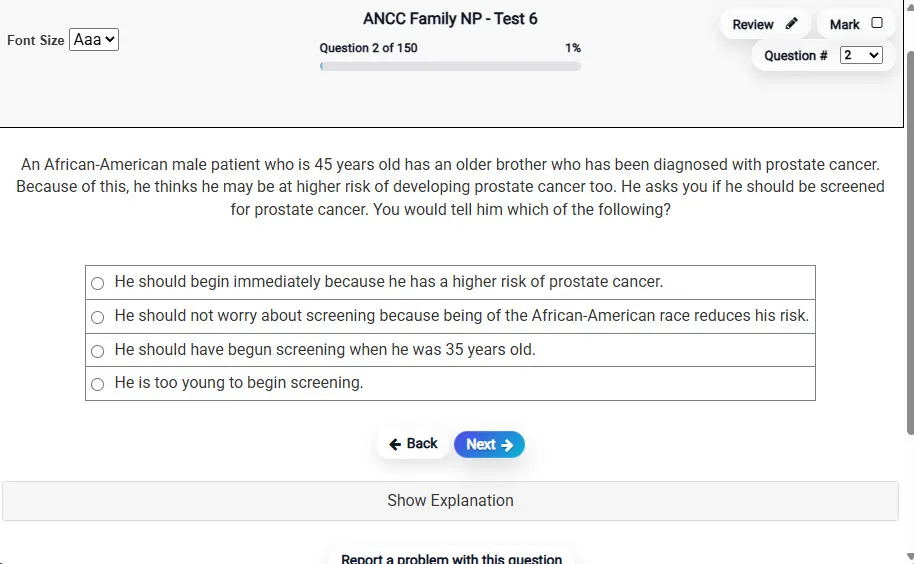
Answering a Question screen – Multiple-choice item view with navigation controls and progress tracker.
Answering a Question Multiple-choice item view with navigation controls and progress tracker.

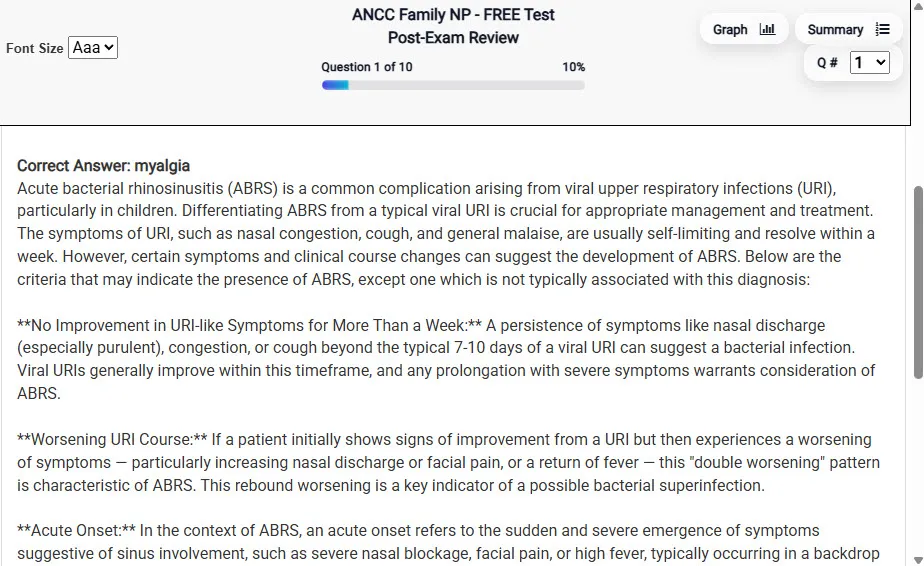
                           Detailed Explanation screen – 
                         Review mode showing chosen answer and rationale and references.
Detailed Explanation Review mode showing chosen answer and rationale and references.

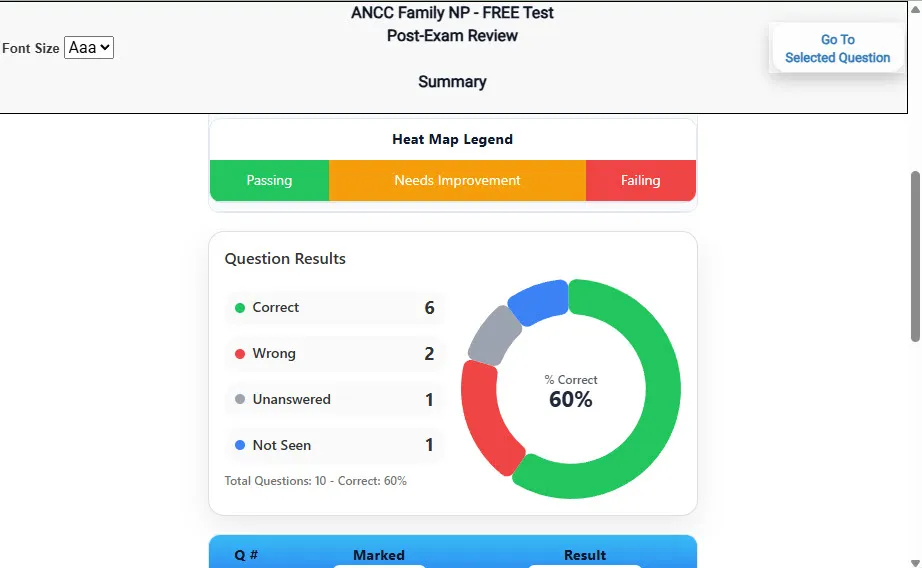
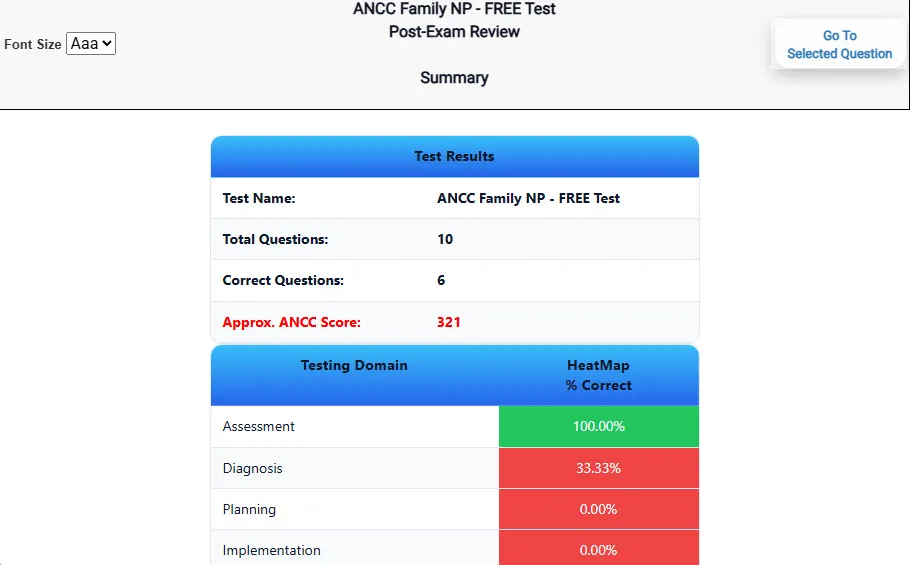
                           Review Summary 1 screen – 
                         Summary with counts for correct/wrong/unanswered and not seen items.
Review Summary 1 Summary with counts for correct/wrong/unanswered and not seen items.

                           Review Summary 2 screen – 
                         Advanced summary with category/domain breakdown and performance insights.
Review Summary 2 Advanced summary with category/domain breakdown and performance insights.

What Each Screen Shows

Answer Question Screen

  • Clean multiple-choice interface with progress bar.
  • Mark for review feature.
  • Matches real test pacing.

Detailed Explanation

  • Correct answer plus rationale.
  • Key concepts and guidelines highlighted.
  • Move between questions to fill knowledge gaps.

Review Summary 1

  • Overall results with total questions and scaled score.
  • Domain heatmap shows strengths and weaknesses.
  • Quick visual feedback on study priorities.

Review Summary 2

  • Chart of correct, wrong, unanswered, not seen.
  • Color-coded results for easy review.
  • Links back to missed items.

Top 10 Reasons to Use Exam Edge for your DANB's Certified Dental Assistant Exam Prep

  1. Focused on the DANB's Certified Dental Assistant Exam

    Our practice tests are built specifically for the DANB's CDA exam — every question mirrors the real topics, format, and difficulty so you're studying exactly what matters.

  2. Real Exam Simulation

    We match the per-question time limits and pressure of the actual DANB's exam, so test day feels familiar and stress-free.

  3. 20 Full Practice Tests & 3,000 Unique Questions

    You'll have more than enough material to master every DANB's CDA concept — no repeats, no fluff.

  4. Lower Cost Than a Retake

    Ordering 5 practice exams costs less than retaking the DANB's Certified Dental Assistant exam after a failure. One low fee could save you both time and money.

  5. Flexible Testing

    Need to step away mid-exam? Pick up right where you left off — with your remaining time intact.

  6. Instant Scoring & Feedback

    See your raw score and an estimated DANB's Certified Dental Assistant score immediately after finishing each practice test.

  7. Detailed Explanations for Every Question

    Review correct and incorrect answers with clear, step-by-step explanations so you truly understand each topic.

  8. Trusted & Accredited

    We're fully accredited by the Better Business Bureau and uphold the highest standards of trust and transparency.

  9. Web-Based & Always Available

    No software to install. Access your DANB's CDA practice exams 24/7 from any computer or mobile device.

  10. Expert Support When You Need It

    Need extra help? Our specialized tutors are highly qualified and ready to support your DANB's exam prep.


Pass the DANB's Certified Dental Assistant Exam with Realistic Practice Tests from Exam Edge

Preparing for your upcoming DANB's Certified Dental Assistant (CDA) Certification Exam can feel overwhelming — but the right practice makes all the difference. Exam Edge gives you the tools, structure, and confidence to pass on your first try. Our online practice exams are built to match the real DANB's CDA exam in content, format, and difficulty.

  • 📝 20 DANB's Certified Dental Assistant Practice Tests: Access 20 full-length exams with 150 questions each, covering every major DANB's Certified Dental Assistant topic in depth.
  • Instant Online Access: Start practicing right away — no software, no waiting.
  • 🧠 Step-by-Step Explanations: Understand the reasoning behind every correct answer so you can master DANB's CDA exam concepts.
  • 🔄 Retake Each Exam Up to 4 Times: Build knowledge through repetition and track your improvement over time.
  • 🌐 Web-Based & Available 24/7: Study anywhere, anytime, on any device.
  • 🧘 Boost Your Test-Day Confidence: Familiarity with the DANB's format reduces anxiety and helps you perform under pressure.

These DANB's Certified Dental Assistant practice exams are designed to simulate the real testing experience by matching question types, timing, and difficulty level. This approach helps you get comfortable not just with the exam content, but also with the testing environment, so you walk into your exam day focused and confident.


Exam Edge DANB Reviews


Yesterday I passed my CDA test. Your test really helped me and I just wanted to say thank you.

Charisse, NY

I found the practice tests extremely helpful. I passed the DANB RHS exam and felt that the subject matter was thoroughly covered by your practice tests. The viewing of films and answering questions on them was especially helpful. Thank you very much for the assistance in preparing for the DANB RHS e ...
Read More
Rofiah, Turnersville NJ

Easy to purchase & easily accessible. Great tool to use

Kay , Milton, Indiana


DANB's Certified Dental Assistant Aliases Test Name

Here is a list of alternative names used for this exam.

  • DANB's Certified Dental Assistant
  • DANB's Certified Dental Assistant test
  • DANB's Certified Dental Assistant Certification Test
  • DANB's CDA test
  • DANB
  • DANB CDA
  • CDA test
  • DANB's Certified Dental Assistant (CDA)
  • 's Certified Dental Assistant certification