This is the content of the pop-over!

Lightning Deal Alert – 12% Off Ends at Midnight!

Strike while the savings are hot! Use promo code FlashSale at checkout for 12% off any Exam Edge test or bundle. Hurry—the clock is ticking!

FTCE Physical Education (063) Practice Tests & Test Prep by Exam Edge


FTCE Physical Education K-12  product image
(4.7)
Based on 37 Reviews

  • Real Exam Simulation: Timed questions and matching content build comfort for your FTCE Physical Education test day.
  • Instant, 24/7 Access: Web-based FTCE Physical Education K-12 practice exams with no software needed.
  • Clear Explanations: Step-by-step answers and explanations for your FTCE exam to strengthen understanding.
  • Boosted Confidence: Reduces anxiety and improves test-taking skills to ace your FTCE Physical Education K-12 (063).

Featured on

FTCE Physical Education K-12 Online Practice Test Bundles

BEST VALUE
15 practice tests

$149.25

$599.25

SAVE $450

Only $9.95 per test!

  • 100% Pass Guarantee
  • 15 online practice tests
  • 100 questions per test
  • Bonus: 100 Flash Cards + Study Guide
  • Instant access
  • Detailed Explanations
  • Practice tests never expire
  • Timed, untimed, or study guide mode
MOST POPULAR
10 practice tests

$99.50

$399.50

SAVE $300

Only $9.95 per test!

  • 10 online practice tests
  • 100 questions per test
  • Bonus: 100 Flash Cards + Study Guide
  • Instant access
  • Detailed Explanations
  • Practice tests never expire
  • Timed, untimed, or study guide mode
5 practice tests

$69.75

$199.75

SAVE $130

Only $13.95 per test!

  • 5 online practice tests
  • 100 questions per test
  • Bonus: 100 Flash Cards
  • Instant access
  • Detailed Explanations
  • Practice tests never expire
  • Timed, untimed, or study guide mode
1 practice test

$39.95

  • 1 online practice test
  • 100 questions per test
  • Instant access
  • Detailed Explanations
  • Practice tests never expire
  • Timed, untimed, or study guide mode
Quick Select
Tap to choose a bundle

** All Prices are in US Dollars (USD) **


FTCE Physical Education (063) Resources

Jump to the section you need most.

Understanding the exact breakdown of the FTCE Physical Education K-12 test will help you know what to expect and how to most effectively prepare. The FTCE Physical Education K-12 has 100 multiple-choice questions . The exam will be broken down into the sections below:

FTCE Physical Education K-12 Exam Blueprint
Domain Name % Number of
Questions
Knowledge of the history and philosophy of the physical education profession 3% 3
Knowledge of standards-based physical education curriculum development 10% 10
Knowledge of developmentally appropriate physical education
instructional strategies
13% 13
Knowledge of human growth and development and motor learning as
they relate to physical education
8% 8
Knowledge of developmentally appropriate movement skills and
concepts related to physical education
12% 12
Knowledge of lifetime health - wellness physical fitness 12% 12
Knowledge of cognitive - social emotional development through
physical education and physical activity
7% 7
Knowledge of various types of assessment strategies that can be
used to determine student levels and needs in physical education
10% 10
Knowledge of strategies that promote an effective learning environment 7% 7
Knowledge of laws - legislation liabilities that pertain to physical education 4% 4
Knowledge of appropriate safety considerations - rules - strategies -
and terminology related to physical education and a variety
of physical activities
5% 5
Knowledge of professional ethics - advocacy development 4% 4
Knowledge of the appropriate use of technology as related to physical education 5% 5

FTCE Physical Education K-12 Study Tips by Domain

  • Be able to distinguish major historical influences on school PE (e.g., gymnastics/military drill, sport education, health-related fitness, and the movement education tradition) — a common trap is treating PE history as only “sports in schools.”
  • Know key philosophical orientations (education through the physical, fitness/health, sport/competition, movement/expressive, and social responsibility) and match each to goals — red flag: a philosophy that excludes most students is misaligned with K–12 PE.
  • Connect “physically educated individual” outcomes (competence, knowledge, valuing activity) to program purpose — priority rule: PE is instruction in movement and health behaviors, not unstructured “free play.”
  • Recognize how societal priorities shaped PE (public health, national readiness, recreation, equity/access) — common trap: assuming one era’s purpose (e.g., athletics) defines the profession today.
  • Identify how adapted PE and inclusion evolved from separate programs toward least-restrictive participation — cue: philosophies emphasizing normalization without supports can create unsafe or inequitable practice.
  • Relate philosophy to curriculum choices (skills vs. fitness vs. personal/social responsibility vs. lifetime activity) — red flag: assessments or activities that don’t measure stated program aims signal a philosophy–practice mismatch.
  • Align unit and lesson outcomes explicitly to Florida’s Next Generation Sunshine State Standards (NGSSS) and grade-level benchmarks—red flag: activities listed without measurable standards-linked objectives.
  • Build a scope-and-sequence that progresses from fundamental motor skills to specialized skills with planned revisiting (spiraling)—common trap: repeating the same sport units each year with no complexity increase.
  • Use backward design: define desired results and acceptable evidence first, then plan learning experiences—priority rule: assessments must match the stated standard (skill vs. knowledge vs. fitness).
  • Integrate SHAPE America National Standards outcomes (skill, knowledge, fitness, responsible behavior, valuing activity) within Florida requirements—red flag: curriculum focuses only on game play and neglects responsible behavior/health-related fitness outcomes.
  • Plan for differentiation and accessibility (UDL, ESE/504, ESOL supports) within the written curriculum—common trap: one-size tasks that unintentionally exclude students with disabilities or language needs.
  • Ensure curriculum includes equitable activity offerings and culturally responsive choices with appropriate time allocations—red flag: overemphasis on a single team sport season that limits lifetime activity exposure.
  • Match instruction to developmental readiness (e.g., K–2 focus on fundamental motor patterns; 6–12 add tactics/strategy); red flag: teaching complex sport-specific skills before students demonstrate prerequisite locomotor and object-control skills.
  • Use clear demonstrations plus 1–2 concise cues (e.g., “step & throw”) and check for understanding quickly; common trap: giving long verbal explanations that reduce active practice time.
  • Maximize MVPA with small-sided games, stations, and short wait times; priority rule: if students are standing in lines for more than ~30 seconds, redesign the task for more repetitions.
  • Differentiate with task progressions/regressions (space, equipment size/weight, speed, rules) so all students can succeed; red flag: “one-size-fits-all” drills that exclude beginners or frustrate advanced students.
  • Provide specific, immediate feedback (knowledge of performance/results) and use peer/self-assessment checklists sparingly; common trap: praising effort only without a corrective cue tied to the skill criteria.
  • Structure lessons with a quick readiness activity, explicit objective, guided practice, and closure/reflection aligned to standards; red flag: ending class without a brief summary or transfer cue (“when will you use this skill?”).
  • Sequence instruction to reflect typical motor development (e.g., fundamental locomotor/objects control before specialized sport skills); red flag: teaching complex tactics before students show consistent mature patterns.
  • Match tasks to growth-related differences in strength, coordination, and limb length—use size-appropriate equipment and scaled distances; common trap: equating chronological age with readiness.
  • Use motor-learning principles: begin with clear cues and demonstrations, then increase practice variability as accuracy improves; priority rule: more successful repetitions beats longer explanations.
  • Provide feedback strategically—start with specific knowledge of performance (what to change) and fade toward knowledge of results (outcome) as learners improve; red flag: constant, generic “good job” feedback that doesn’t guide correction.
  • Design practice for retention and transfer: spaced practice and random/interleaved drills for later stages, blocked practice for initial acquisition; common trap: assuming short-term performance gains equal learning.
  • Account for individual differences (e.g., maturation timing, prior experience, disabilities) when setting expectations and grouping; contraindication: using high-risk competitive elimination games that repeatedly exclude late-developers.
  • Distinguish health-related fitness (cardiorespiratory endurance, muscular strength/endurance, flexibility, body composition) from skill-related fitness; common trap: testing agility/speed and calling it “fitness” progress.
  • Apply basic training principles (FITT, overload, specificity, progression) with age-appropriate loads; red flag: large week-to-week volume jumps that invite overuse injuries.
  • Use target heart-rate zones and perceived exertion to monitor intensity; priority rule: if a student can’t speak more than a few words, you’re likely above moderate intensity for many K–12 learners.
  • Teach safe warm-up/cool-down, hydration, and heat-illness prevention; red flag: high-intensity work in heat/humidity without scheduled water breaks and shaded recovery.
  • Promote wellness behaviors (sleep, nutrition basics, stress management, avoiding tobacco/vaping) integrated into activity goals; common trap: giving prescriptive diet advice beyond basic guidelines rather than focusing on healthy choices and energy balance.
  • Interpret fitness data responsibly (criterion-referenced standards vs. norm-referenced comparisons) to set personal goals; priority rule: avoid public rankings—use confidential feedback and individualized improvement targets.
  • Use physical activity to build executive function (e.g., stop/go, tag variations, pattern changes) and increase cognitive load gradually; red flag: complex rules with no modeling often look like “behavior problems” but are really comprehension issues.
  • Plan cooperative tasks (partner balances, group juggling, team challenges) with defined roles to develop social skills; common trap: assuming students automatically know how to share space, take turns, and communicate without explicit practice.
  • Support emotional regulation by teaching quick reset routines (breathing, water break cues, “freeze and focus” signals) during transitions; priority rule: intervene early when escalation starts rather than waiting for unsafe behavior.
  • Differentiate feedback by developmental level—use concrete, immediate cues for younger students and more self-assessment prompts for older students; red flag: overusing public correction can trigger embarrassment and withdrawal.
  • Promote motivation with choice, achievable challenges, and mastery goals (personal bests) rather than constant comparison; common trap: praising only winners undermines self-efficacy and increases off-task behavior.
  • Address peer dynamics and inclusion intentionally (structured grouping, norms for respectful language, adapted roles) to reduce teasing and exclusion; red flag: letting captains pick teams often amplifies social hierarchy and anxiety.
  • Match assessment type to purpose: diagnostic (pretest), formative (during), summative (end)—red flag if you grade a one-time skill check as the whole unit without allowing practice/growth.
  • Use analytic rubrics for skills (e.g., overhand throw components) and define performance criteria up front—common trap: vague descriptors (e.g., “good form”) that reduce reliability across classes.
  • Collect evidence with systematic observation tools (checklists, event recording, time sampling) during authentic play—priority rule: rotate observation focus so every student is assessed, not just the most visible.
  • Assess fitness with age-appropriate field tests and interpret results using criterion-referenced standards rather than comparing classmates—red flag: using raw scores alone without considering health-related zones or student safety limits.
  • Include cognitive and affective measures (exit tickets, journals, self/peer assessment) to identify understanding and responsible behavior—common trap: peer ratings without training/criteria that turn into popularity scores.
  • Ensure fairness and accommodations (IEP/504/ELL supports) while keeping the construct intact—red flag: modifying the skill so much that you no longer assess the intended standard (e.g., changing a throwing assessment into a rolling task without documenting rationale).
  • Establish clear routines for entry, warm-up, transitions, and equipment return; a red flag is “dead time” between activities, which predicts off-task behavior and safety issues.
  • Use explicit behavior expectations framed as observable actions (e.g., stop signal, boundaries, personal space); common trap: giving vague directions like “be good” without modeling.
  • Maximize active learning time with small-sided games, adequate equipment ratios, and quick rotations; priority rule: reduce lines and elimination games that leave students inactive.
  • Apply proactive supervision—strategic positioning, scanning, and moving to trouble spots; red flag: turning your back to the group during demonstrations or while retrieving equipment.
  • Differentiation supports inclusion—modify task, space, equipment, or rules to match skill levels; common trap: one-size-fits-all tasks that repeatedly set some students up for failure.
  • Use positive, specific feedback and corrective cues tied to criteria while reinforcing effort and safe choices; contraindication: public shaming or sarcasm, which undermines motivation and class climate.
  • Follow mandated reporting requirements for suspected abuse/neglect; red flag: delaying a report to “get more evidence” can create personal liability.
  • Apply FERPA to PE records (fitness test data, health info, videos) by limiting access to legitimate educational interest; common trap: posting student performance videos publicly without written consent.
  • Meet ADA/Section 504 obligations by providing reasonable modifications and access to PE; priority rule: don’t remove a student from PE as a “default”—document accommodations and use the IEP/504 plan.
  • Manage negligence risk using the duty of care: proper supervision, safe facilities, and instruction matched to skill level; red flag: leaving students unsupervised in locker rooms, weight rooms, or on fields.
  • Use informed consent and district procedures for higher-risk activities (e.g., gymnastics, aquatics, weight training); common trap: assuming a generic field-trip form covers specialized PE risks.
  • Prevent and respond to discrimination/harassment (Title IX and related policies) in coed and extracurricular athletics; red flag: unequal access to equipment, facilities, or participation based on sex or disability.
  • Follow Florida’s Code of Ethics in PE settings: maintain professional boundaries, use respectful language, and document concerns promptly—red flag: private 1:1 contact in secluded areas without visibility or another adult present.
  • Maintain confidentiality of student health/IEP/504 information and share only on a need-to-know basis—common trap: discussing a student’s disability, grades, or fitness results with other students or non-instructional staff.
  • Advocate for inclusive, equitable participation by providing reasonable accommodations and adapted equipment when indicated—priority rule: modify task/environment/equipment before excusing a student from activity.
  • Use assessment and grading ethically by aligning criteria to standards and effort/skill indicators rather than athletic ability—common trap: grading based on winning, body size, or comparing students to one another instead of defined rubrics.
  • Engage in ongoing professional development (CPR/AED, concussion/heat-illness protocols, inclusive practices) and apply training consistently—red flag: letting certifications lapse or ignoring district/FTCE-aligned safety updates.
  • Model integrity and sportsmanship (fair play, rule enforcement, bias-free decisions) and address bullying/harassment immediately—threshold cue: intervene and report per school policy when behavior targets protected characteristics or creates a hostile environment.


Built to Fit Into Your Busy Life

Everything you need to prepare with confidence—without wasting a minute.

Three Study Modes

Timed, No Time Limit, or Explanation mode.

Actionable Analytics

Heatmaps and scaled scores highlight weak areas.

High-Yield Rationales

Concise explanations emphasize key concepts.

Realistic Interface

Matches the feel of the actual exam environment.

Accessible by Design

Clean layout reduces cognitive load.

Anytime, Anywhere

Web-based access 24/7 on any device.
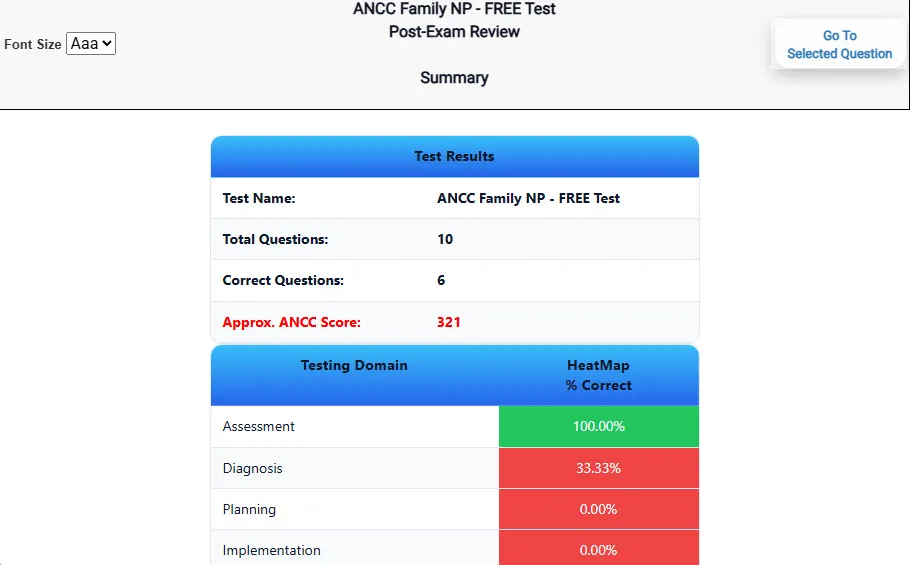
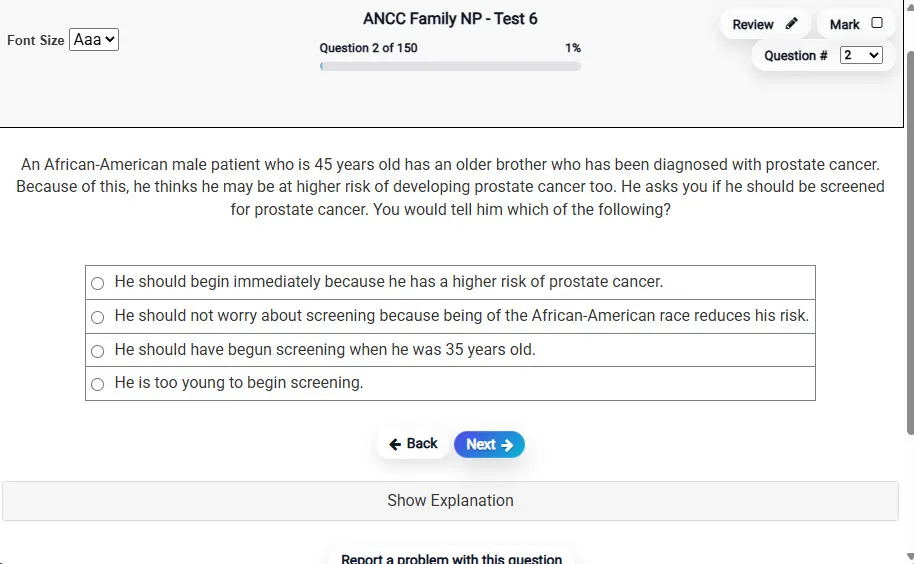
Answering a Question screen – Multiple-choice item view with navigation controls and progress tracker.
Answering a Question Multiple-choice item view with navigation controls and progress tracker.

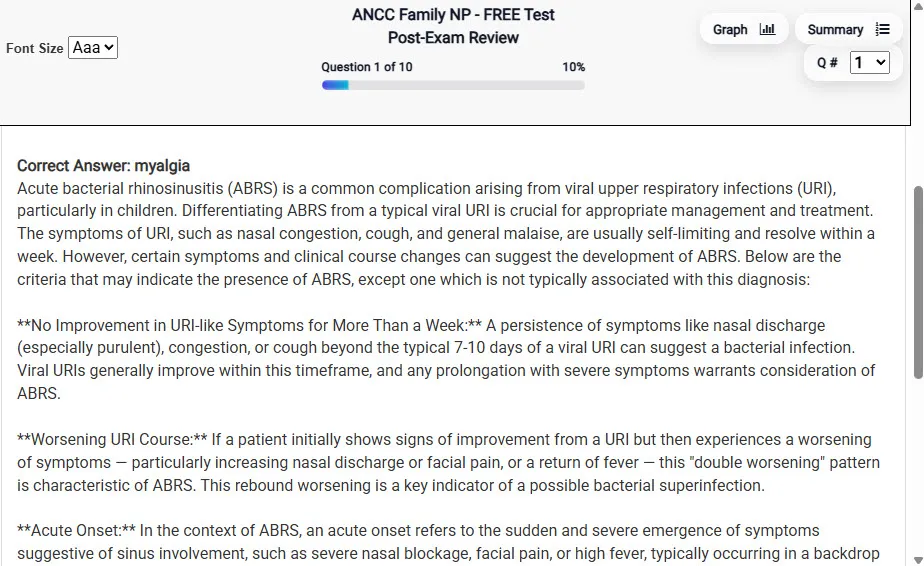
                           Detailed Explanation screen – 
                         Review mode showing chosen answer and rationale and references.
Detailed Explanation Review mode showing chosen answer and rationale and references.

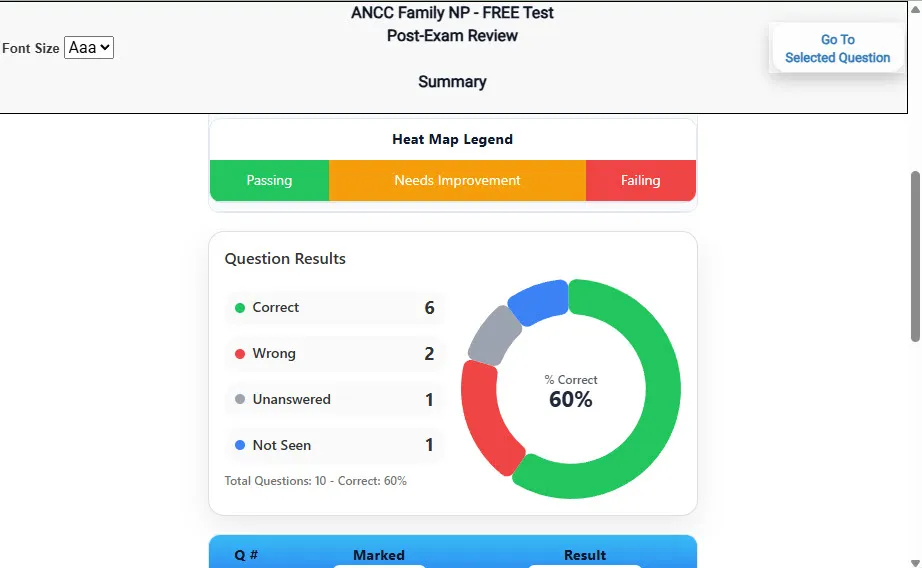
                           Review Summary 1 screen – 
                         Summary with counts for correct/wrong/unanswered and not seen items.
Review Summary 1 Summary with counts for correct/wrong/unanswered and not seen items.

                           Review Summary 2 screen – 
                         Advanced summary with category/domain breakdown and performance insights.
Review Summary 2 Advanced summary with category/domain breakdown and performance insights.

What Each Screen Shows

Answer Question Screen

  • Clean multiple-choice interface with progress bar.
  • Mark for review feature.
  • Matches real test pacing.

Detailed Explanation

  • Correct answer plus rationale.
  • Key concepts and guidelines highlighted.
  • Move between questions to fill knowledge gaps.

Review Summary 1

  • Overall results with total questions and scaled score.
  • Domain heatmap shows strengths and weaknesses.
  • Quick visual feedback on study priorities.

Review Summary 2

  • Chart of correct, wrong, unanswered, not seen.
  • Color-coded results for easy review.
  • Links back to missed items.

Top 10 Reasons to Use Exam Edge for your FTCE Physical Education K-12 Exam Prep

  1. Focused on the FTCE Physical Education K-12 Exam

    Our practice tests are built specifically for the FTCE Physical Education exam — every question mirrors the real topics, format, and difficulty so you're studying exactly what matters.

  2. Real Exam Simulation

    We match the per-question time limits and pressure of the actual FTCE exam, so test day feels familiar and stress-free.

  3. 15 Full Practice Tests & 1,500 Unique Questions

    You'll have more than enough material to master every FTCE Physical Education concept — no repeats, no fluff.

  4. Lower Cost Than a Retake

    Ordering 5 practice exams costs less than retaking the FTCE Physical Education K-12 exam after a failure. One low fee could save you both time and money.

  5. Flexible Testing

    Need to step away mid-exam? Pick up right where you left off — with your remaining time intact.

  6. Instant Scoring & Feedback

    See your raw score and an estimated FTCE Physical Education K-12 score immediately after finishing each practice test.

  7. Detailed Explanations for Every Question

    Review correct and incorrect answers with clear, step-by-step explanations so you truly understand each topic.

  8. Trusted & Accredited

    We're fully accredited by the Better Business Bureau and uphold the highest standards of trust and transparency.

  9. Web-Based & Always Available

    No software to install. Access your FTCE Physical Education practice exams 24/7 from any computer or mobile device.

  10. Expert Support When You Need It

    Need extra help? Our specialized tutors are highly qualified and ready to support your FTCE exam prep.


Pass the FTCE Physical Education K-12 Exam with Realistic Practice Tests from Exam Edge

Preparing for your upcoming FTCE Physical Education K-12 (063) Certification Exam can feel overwhelming — but the right practice makes all the difference. Exam Edge gives you the tools, structure, and confidence to pass on your first try. Our online practice exams are built to match the real FTCE Physical Education exam in content, format, and difficulty.

  • 📝 15 FTCE Physical Education K-12 Practice Tests: Access 15 full-length exams with 100 questions each, covering every major FTCE Physical Education K-12 topic in depth.
  • Instant Online Access: Start practicing right away — no software, no waiting.
  • 🧠 Step-by-Step Explanations: Understand the reasoning behind every correct answer so you can master FTCE Physical Education exam concepts.
  • 🔄 Retake Each Exam Up to 4 Times: Build knowledge through repetition and track your improvement over time.
  • 🌐 Web-Based & Available 24/7: Study anywhere, anytime, on any device.
  • 🧘 Boost Your Test-Day Confidence: Familiarity with the FTCE format reduces anxiety and helps you perform under pressure.

These FTCE Physical Education K-12 practice exams are designed to simulate the real testing experience by matching question types, timing, and difficulty level. This approach helps you get comfortable not just with the exam content, but also with the testing environment, so you walk into your exam day focused and confident.


Exam Edge FTCE Reviews


As anyone in Florida knows, the SAEs are very expensive, especially if you do not pass on your first go-around. I have been teaching for 20 years, and due to a change in my assignment (from middle school to high school), I needed to pass the Business 6-12 exam to keep my current job. The practice te ...
Read More
Chris, Pembroke Pines, FL

I actually passed my exam A LOT sooner than I expected to :) Your practice exams were a lifesaver!

Deanna, FL

I still can't believe I passed my FCTE exams on my first attempt. I always thought “Practice makes perfect” was a cliche, but after using your product, I now know that “Practice does make perfect.” Unlike several classmates, I walked into the tests feeling confident and prepared. Thank you for ...
Read More
Sally,

I had failed the Math portion of the General Knowledge test twice and felt really hopeless.. I was waiting for a study guide in the mail but it failed to come next day so I started looking for other review items on the internet. Not having received the books was the best thing that happened because ...
Read More
Christine ,

I am so grateful for examedge! I have used other programs with no luck. Examedge helped me to pass my FTCE Mathematics 6-12 exam with so many different questions that gave me a wide variety of preparation for the real exam. It was money well spent! Thanks!

Kathleen H, Cape Coral, FL

The two products I purchased, intending to purchase only one, did not properly prepare me for the Florida Social Sciences in any fashion. The five tests, with three options per test for practice, only used the exact same questions, though in a different order. I was expecting a tool to help me prepa ...
Read More
Susan , LARGO, Florida


FTCE Physical Education K-12 Aliases Test Name

Here is a list of alternative names used for this exam.

  • FTCE Physical Education K-12
  • FTCE Physical Education K-12 test
  • FTCE Physical Education K-12 Certification Test
  • FTCE Physical Education test
  • FTCE
  • FTCE 063
  • 063 test
  • FTCE Physical Education K-12 (063)
  • Physical Education K-12 certification