This is the content of the pop-over!

DHA Ophthalmic Technician (DHA-OT) Practice Tests & Test Prep


DHA Ophthalmic Technician  product image
(4.8)
Based on 17 Reviews

  • Real Exam Simulation: Timed questions and matching content build comfort for your DHA Ophthalmic Technician test day.
  • Instant, 24/7 Access: Web-based DHA Ophthalmic Technician practice exams with no software needed.
  • Clear Explanations: Step-by-step answers and explanations for your DHA exam to strengthen understanding.
  • Boosted Confidence: Reduces anxiety and improves test-taking skills to ace your DHA Ophthalmic Technician (DHA-OT).

Featured on

DHA Ophthalmic Technician Online Practice Test Bundles

BEST VALUE
15 practice tests

$149.25

$599.25

SAVE $450

Only $9.95 per test!

  • 100% Pass Guarantee
  • 15 online practice tests
  • 100 questions per test
  • Bonus: 100 Flash Cards + Study Guide
  • Instant access
  • Detailed Explanations
  • Practice tests never expire
  • Timed, untimed, or study guide mode
MOST POPULAR
10 practice tests

$99.50

$399.50

SAVE $300

Only $9.95 per test!

  • 10 online practice tests
  • 100 questions per test
  • Bonus: 100 Flash Cards + Study Guide
  • Instant access
  • Detailed Explanations
  • Practice tests never expire
  • Timed, untimed, or study guide mode
5 practice tests

$69.75

$199.75

SAVE $130

Only $13.95 per test!

  • 5 online practice tests
  • 100 questions per test
  • Bonus: 100 Flash Cards
  • Instant access
  • Detailed Explanations
  • Practice tests never expire
  • Timed, untimed, or study guide mode
1 practice test

$39.95

  • 1 online practice test
  • 100 questions per test
  • Instant access
  • Detailed Explanations
  • Practice tests never expire
  • Timed, untimed, or study guide mode
Quick Select
Tap to choose a bundle

** All Prices are in US Dollars (USD) **


DHA Ophthalmic Technician (DHA-OT) Resources

Jump to the section you need most.

Understanding the exact breakdown of the DHA Ophthalmic Technician test will help you know what to expect and how to most effectively prepare. The DHA Ophthalmic Technician has 70 multiple-choice questions . The exam will be broken down into the sections below:

DHA Ophthalmic Technician Exam Blueprint
Domain Name % Number of
Questions
History Taking 6% 4
Pupillary Assessment 5% 4
Contact Lenses 3% 2
Equipment Maintenance And Repair 4% 3
Lensometry 5% 4
Keratometry 5% 4
Medical Ethics - Legal And Regulatory Issues 3% 2
Microbiology 3% 2
Pharmacology 5% 4
Ocular Motility 5% 4
Assisting In Surgical Procedures 6% 4
Ophthalmic Patient Services & Education 7% 5
Ophthalmic Imaging 7% 5
Refractometry 7% 5
Spectacle Skills 3% 2
Supplemental Skills 9% 6
Tonometry 5% 4
Visual Assessment 6% 4
Visual Fields 6% 4

DHA Ophthalmic Technician Study Tips by Domain

  • Use a structured chief complaint with OLDCARTS and document laterality (OD/OS/OU) — red flag if the patient can’t localize symptoms or reports “both eyes” inconsistently.
  • Screen urgently for red-flag symptoms: sudden vision loss, flashes/floaters with a curtain, severe eye pain, trauma, chemical exposure, or halos with nausea — priority rule: escalate immediately rather than continuing routine history.
  • Capture ocular history precisely (prior surgery/laser, injections, trauma, glaucoma/retinal disease) — common trap: missing post-op timing (e.g., within weeks) which changes triage and precautions.
  • Take a focused medication/allergy history including anticoagulants, steroids (topical/systemic), alpha-blockers (e.g., tamsulosin), and drops used today — contraindication cue: suspect allergy if prior anaphylaxis/angioedema to drops or preservatives.
  • Document systemic history relevant to eye care (diabetes, hypertension, thyroid disease, autoimmune disease, pregnancy) — threshold cue: any diabetic with new vision change is treated as urgent due to possible macular edema/retinopathy.
  • Clarify vision needs and functional impact (driving, work screens, reading) and current correction (glasses/CL type, wear schedule, last exam) — common trap: not recording contact lens overwear, a key clue in painful red eye.
  • Assess pupils in a consistent sequence: size/shape, equality, direct/consensual light response, and accommodation; red flag—new anisocoria (≥1 mm) that is greater in bright vs dim light suggests different urgent pathways.
  • Document pupil size in mm under photopic and scotopic conditions; common trap—failing to standardize room illumination can create false asymmetry or mask a subtle defect.
  • Perform a swinging flashlight test to detect a relative afferent pupillary defect (RAPD); priority rule—any RAPD is significant and warrants prompt clinician notification even if visual acuity seems acceptable.
  • Differentiate physiologic anisocoria from pathologic by checking stability across lighting and reviewing prior records/photos; red flag—acute anisocoria with ptosis and diplopia may indicate a neurologic emergency.
  • Account for confounders (miotics, mydriatics, opioids, trauma, intraocular surgery) before concluding pathology; common trap—not asking about recent eye drops or aerosol exposure (e.g., anticholinergics) leading to misinterpretation.
  • Ensure infection control and patient safety during close facial work (hand hygiene, avoid touching ocular surface with light source); contraindication—do not apply pressure to a potentially ruptured globe when lifting lids to view the pupil.
  • Verify lens type and parameters before insertion (base curve, diameter, power, material) — red flag: mismatch between ordered and dispensed lenses is a common cause of poor vision and non-tolerance.
  • Assess fit systematically (centration, movement, coverage, push-up test) — priority rule: a tight lens with minimal movement increases hypoxia risk, especially with extended wear.
  • Differentiate normal adaptation from pathology — contraindication cue: pain, photophobia, reduced vision, or corneal staining warrants lens removal and prompt clinician escalation.
  • Teach hygiene and solution use precisely — common trap: topping-off, water exposure (shower/swim), or using saliva raises microbial keratitis risk (think Acanthamoeba).
  • Manage common complications (dryness, GPC, infiltrates) with practical steps — red flag: multiple peripheral infiltrates with redness may signal CLARE/keratitis and should not be treated as simple irritation.
  • Document wear schedule, replacement frequency, and follow-up — DHA-style compliance cue: non-adherence (overnight wear in daily lenses, overdue replacement) is a high-yield risk factor to record and counsel.
  • Perform daily function checks and calibration logs for key devices (e.g., tonometer, autorefractor, perimeter); red flag: using equipment when QC is out of range or undocumented violates DHA-style audit expectations.
  • Follow manufacturer cleaning/disinfection instructions exactly for patient-contact parts; common trap: using alcohol or harsh wipes on coated optics/corneal applanation tips can cause permanent damage and inaccurate readings.
  • Inspect cables, probes, bulbs, and moving parts before clinic starts and remove unsafe devices from service immediately; priority rule: if there’s frayed wiring, intermittent power, or visible cracks, tag “Do Not Use” and escalate.
  • Protect optics and sensors with proper storage (dust caps, covers, stable temperature/humidity); red flag: condensation, fungus, or dust on lenses can mimic pathology or degrade image quality in documented exams.
  • Troubleshoot systematically (power source → connections → settings → calibration → test patient); common trap: adjusting internal settings without authorization can void warranty and compromise medico-legal defensibility.
  • Document maintenance, repairs, and consumable replacements with date, serial number, and who performed the work; red flag: missing traceability (especially after a repair) can invalidate comparative results across visits.
  • Verify patient ID and prescription details before neutralizing lenses; red flag: OD/OS swapped or cyl axis written in plus-cylinder when you’re recording in minus-cylinder (or vice versa).
  • Start with the right lens and locate the optical center and major/minor meridians accurately; common trap: reading prism because the lens isn’t centered on the lens stop.
  • Measure sphere, cylinder, and axis by aligning the mires sharply and confirming axis stability; red flag: fluctuating axis often indicates lens tilt or an unlevel instrument table.
  • Record prism amount and base direction using the reticle and prism compensator; priority rule: document prism as base-in/out/up/down for each eye, not just the magnitude.
  • Check progressive addition lenses by identifying the fitting cross and verifying distance/near powers at the correct reference points; common trap: taking the add reading at the optical center instead of the near reference point.
  • Confirm UV/blue-filter marks and lens type (single vision, bifocal, PAL) while noting significant power discrepancies; red flag: more than ~0.50 D unexpected difference from the prescription warrants re-check and supervisor escalation per facility policy.
  • Verify the patient’s identity, remove contact lenses, and ensure a stable tear film before readings; red flag: dry eye or recent RGP wear can flatten/warp K values and should be documented.
  • Positioning is non-negotiable—align chin/forehead, instruct steady fixation, and center mires; common trap: decentered mires falsely increase cylinder or suggest irregular astigmatism.
  • Know what you are measuring: standard keratometry samples a small central zone and assumes a regular cornea; priority rule: if mires are distorted or doubled, proceed to topography/referral rather than forcing a number.
  • Record K readings correctly (flat/steep meridians with axis) and note the instrument used; red flag: mixing diopters and mm without conversion (337.5/r) leads to wrong IOL/contact lens calculations.
  • Quality-check repeatability—take multiple readings and look for consistency; common trap: accepting single-shot values when variability suggests poor fixation, blinking, or tear instability.
  • Apply keratometry clinically: baseline for astigmatism, CL base curve selection, and pre-op cataract planning; contraindication cue: post-refractive surgery (LASIK/PRK) K readings can be misleading and must be flagged for the surgeon.
  • Differentiate common ocular pathogens: bacteria (acute purulent), viruses (watery with preauricular node), fungi (feathery infiltrate) — red flag: contact lens wearer with pain and corneal infiltrate is keratitis until proven otherwise.
  • Know specimen collection basics (swab, scrape, transport medium) and timing — common trap: starting topical antibiotics before culture can yield false-negative results, especially in suspected microbial keratitis.
  • Apply infection control for adenoviral conjunctivitis — priority rule: assume high contagion and disinfect tonometer tips, chin rests, and imaging surfaces between patients to prevent clinic outbreaks.
  • Recognize Acanthamoeba risk — red flag: severe pain out of proportion to signs in a contact lens user (especially water exposure) should trigger urgent escalation and strict lens-case hygiene counseling.
  • Understand normal flora vs. true infection — common trap: overinterpreting mild lid margin colonization; correlate with clinical signs (ulcer, anterior chamber reaction) before labeling as microbial keratitis.
  • Know basic antimicrobial stewardship principles — priority rule: avoid indiscriminate broad-spectrum drops for simple viral conjunctivitis and escalate immediately for corneal ulcers or endophthalmitis suspicion (decreased vision, hypopyon).
  • Always verify the “five rights” (patient, drug, dose, route, time) before instilling drops; red flag: giving mydriatics to the wrong patient can compromise exam findings and safety.
  • Screen for contraindications to dilation (e.g., narrow angles/known angle-closure risk) and escalate per DHA facility policy; common trap: dilating without checking for prior angle-closure history or current severe headache/halos.
  • Topical anesthetics are for in-clinic procedures only (tonometry, foreign body removal) and not for take-home use; red flag: repeated dosing can cause corneal toxicity and delayed healing.
  • Recognize key adverse reactions and act quickly—vasovagal syncope, allergy, bronchospasm; priority rule: stop the drug, position the patient safely, and seek urgent clinician support if breathing or consciousness is affected.
  • Use punctal occlusion for 1–2 minutes after drops in children, pregnant patients, and those with cardiac/respiratory disease; common trap: forgetting this increases systemic absorption (e.g., beta-blockers causing bradycardia/bronchospasm).
  • Maintain safe medication handling—check expiry, avoid touching the bottle tip, and follow single-use/multi-dose labeling; red flag: using contaminated drops can cause iatrogenic infection and is a DHA compliance issue.
  • Differentiate comitant vs incomitant strabismus early—red flag: incomitance (angle changes with gaze) suggests paretic/restrictive cause and warrants prompt escalation.
  • When testing ductions/versions, control head posture; common trap: missing an oblique palsy because the patient tilts the head instead of moving the eyes.
  • Use cover–uncover to detect tropia and alternate cover to reveal phoria; priority rule: always note fixation target distance (near vs distance) because deviations can change significantly.
  • In suspected cranial nerve palsy, map limitation patterns (III: multiple directions/ptosis, IV: worse on downgaze, VI: abduction deficit); red flag: acute painful diplopia requires urgent referral.
  • Perform near point of convergence and assess for convergence insufficiency; practical cue: break >10 cm with symptoms (asthenopia, headaches) is a common exam threshold to document.
  • Check for nystagmus type (jerk vs pendular) and whether it dampens with fixation; red flag: new-onset nystagmus or associated neurologic signs mandates immediate clinician notification.
  • Verify patient identity, procedure, laterality, and consent before prep—red flag: any mismatch between chart, wristband, and marked eye requires an immediate stop and escalation.
  • Maintain strict aseptic technique during draping, instrument handling, and field boundaries—common trap: reaching over or touching the sterile field with non-sterile gloves/gown contaminates the setup.
  • Prepare and confirm correct intraocular lens (IOL) details (power, type, A-constant notes) and required disposables before incision—priority rule: no lens opens until surgeon and team confirm model and power on the case board.
  • Anticipate and pass instruments safely (neutral zone, tip awareness) and track sharps—red flag: an unaccounted needle/blade triggers an immediate count and search before closure or patient transfer.
  • Support intraoperative medication safety by labeling all syringes/bowls and reading back drug/concentration—common trap: unlabeled balanced salt solution vs anesthetic/antibiotic can cause wrong-route or toxic exposure.
  • Post-procedure, apply ordered dressing/shield, provide discharge precautions, and document counts and any events—red flag: severe pain, sudden vision loss, nausea/vomiting, or increasing redness after surgery warrants urgent surgeon notification.
  • Verify patient identity with two identifiers and confirm laterality/time-out before any procedure; red flag: mismatch between referral note and patient’s stated complaint or eye.
  • Give post-dilation safety advice (blurred vision/photophobia, driving caution) and document understanding; common trap: discharging without advising on driving restrictions and sunglasses.
  • Use clear escalation criteria for urgent symptoms (sudden vision loss, severe pain, flashes/floaters with curtain, chemical exposure) — treat as same-day emergency; red flag: “new floaters + shadow” after trauma.
  • Teach and observe eye-drop instillation (hand hygiene, avoid bottle-tip contact, punctal occlusion 1–2 minutes when indicated); common trap: patients contaminating the tip or using drops back-to-back without spacing 5 minutes.
  • For contact precautions and infection prevention, enforce hand hygiene and appropriate PPE with suspected conjunctivitis or keratitis; red flag: contact lens wearer with pain/photophobia — prioritize immediate clinician review.
  • Provide culturally sensitive education and DHA-aligned consent/privacy practices — use interpreter services for limited Arabic/English proficiency; common trap: relying on family translation for consent or disclosing results in public areas.
  • Verify patient identifiers and laterality before any capture; red flag: images labeled OD/OS incorrectly can invalidate DHA documentation and misdirect treatment.
  • For fundus photography, achieve proper focus, centration (macula/optic disc as ordered), and illumination; common trap: small pupil or media opacity causing low-quality images—document the limitation rather than over-adjusting exposure.
  • In OCT, confirm scan protocol (macula vs RNFL) and signal strength meets clinic threshold (e.g., acceptable quality score per device); red flag: motion artifact or segmentation errors—repeat or flag for clinician review.
  • For fluorescein angiography support, screen for allergy/asthma history and monitor for nausea or urticaria; contraindication cue: suspected fluorescein hypersensitivity—stop and escalate immediately.
  • In corneal/topography imaging, ensure proper tear film and remove contact lenses per policy (soft often 24 hours, rigid longer); common trap: dry eye or recent lens wear creating false steepening/irregularity.
  • Maintain infection control and device hygiene (chin rest/forehead strap disinfection between patients); red flag: improper disinfection can breach DHA infection-control expectations and risks cross-contamination.
  • Verify patient ID and refraction purpose (distance vs near vs both) before starting—red flag: skipping chief complaint often leads to over-minus in asthenopia or accommodative spasm.
  • Begin with objective refraction (autorefractor/retinoscopy) then refine subjectively—common trap: relying on autorefraction alone when media opacity, dry eye, or poor fixation is present.
  • Apply fogging and keep binocular balance in mind for distance refraction—priority rule: avoid giving the most minus that yields 6/6 if plus acceptance suggests latent hyperopia.
  • Refine cylinder with JCC/axis bracketing in small steps—red flag: large axis jumps (e.g., >10–15°) usually indicate inconsistent responses or uncorrected vertex/working distance issues.
  • Use proper vertex distance when converting high prescriptions—threshold cue: for powers around ±4.00 D and higher, neglecting vertex changes can meaningfully alter the effective correction.
  • Document VA, refraction steps, and final Rx clearly and comply with DHA documentation expectations—common trap: recording sphere/cyl/axis without measured VA or near add rationale, which can fail audit/clinical review.
  • Verify the prescription against the order (OD/OS, sphere/cylinder/axis, add, prism base direction) before dispensing—common trap: transposing OD/OS or misreading axis (e.g., 15 vs 150).
  • Confirm pupillary distance (distance vs near PD) and correct decentration; red flag: patient reports headaches/diplopia with new glasses, often from incorrect PD or vertical height measurements.
  • Check lens type and treatments (single vision, bifocal/progressive, photochromic, anti-reflective) match the patient’s task needs; priority rule: computer users often need occupational designs rather than standard progressives.
  • Inspect frame fit and alignment (pantoscopic tilt, face form, bridge fit, temple length) and adjust before judging vision; common trap: chasing refraction when the frame is crooked or sitting too low.
  • For progressive lenses, measure and mark fitting height accurately and ensure pupils align with the fitting cross; red flag: “swim” or narrow clear zone suggests incorrect height, tilt, or wrong corridor length.
  • Educate on adaptation and care (cleaning, avoiding heat, safe storage) and document complaints objectively; DHA compliance cue: do not alter or remake without proper authorization and clear record of measurements and findings.
  • Perform aseptic technique for minor in-clinic procedures (e.g., foreign body removal assist, lacrimal irrigation setup)—red flag: any break in sterility (touching tip/field) requires re-prep and new sterile supplies.
  • Apply and remove ocular dressings/shields correctly—trap: pressure patch is contraindicated when open-globe injury is suspected; use a rigid shield and avoid pressure.
  • Support pre-op/post-op workflow (vitals, consent verification, marking checks, patient ID)—priority rule: follow DHA-style “two identifiers” and never proceed if site/procedure/patient mismatch is noted.
  • Provide basic emergency response for ocular exposures/trauma—threshold: chemical splash demands immediate copious irrigation before history-taking or visual acuity, then pH recheck until neutral.
  • Assist with pediatric/low-vision/disabled patient positioning and communication—common trap: restraining without explanation/escalation increases risk; use caregiver support and document cooperation limits.
  • Handle specimens and sharps safely (labels, transport, disposal)—red flag: unlabeled or mismatched specimen identifiers must not be sent; correct at source and complete incident reporting per facility policy.
  • Differentiate methods: Goldmann applanation is the reference standard; noncontact and Tono-Pen readings can drift—red flag if values differ >3–4 mmHg from expected or between eyes without explanation.
  • Before applanation, confirm no contraindication to contact (suspected open globe, recent corneal surgery/trauma, active infection)—common trap is touching an injured cornea and worsening the injury.
  • Use fluorescein with cobalt blue for applanation and aim for correct mires; priority rule: too much fluorescein or excessive lid pressure falsely elevates IOP.
  • Account for corneal factors: thick cornea can overestimate and thin cornea can underestimate IOP—red flag when IOP seems discordant with optic nerve/field findings.
  • Infection control is mandatory: disinfect tips per facility policy between patients and avoid cross-contamination—common trap is inadequate soak/contact time for disinfectant.
  • Document clearly (method, eye, time, patient position/behavior); priority rule: repeat and recheck if patient is squeezing, Valsalva, or holding breath because this can artifactually raise IOP.
  • Verify patient identity and the correct eye before testing acuity; red flag: documenting OD/OS incorrectly is a frequent DHA-style documentation error with clinical impact.
  • Distance visual acuity must use standardized illumination and correct test distance (e.g., 6 m/20 ft); common trap: allowing the patient to squint or lean forward artificially improves acuity.
  • Always test uncorrected then best-corrected acuity (with glasses or pinhole if no correction available); priority rule: a pinhole improvement suggests refractive error rather than pathology.
  • Near vision assessment requires appropriate working distance and the patient’s near add if prescribed; red flag: reduced near only can indicate presbyopia, not necessarily disease.
  • Record acuity precisely (e.g., 6/12, 20/40, count fingers/hand motion/light perception with projection); common trap: writing “poor vision” instead of a measurable level is noncompliant and non-actionable.
  • Assess color vision and contrast when indicated (e.g., optic neuropathy, cataract complaints); red flag: new dyschromatopsia out of proportion to acuity warrants prompt escalation.
  • Differentiate central field testing (e.g., 24–2/30–2, 10–2) from peripheral kinetic testing (e.g., Goldmann)—red flag: new neuro symptoms or markedly constricted fields warrant urgent escalation rather than routine repeat.
  • Prioritize reliability indices before interpretation: high fixation losses, false positives, or false negatives make the printout non-actionable—common trap: calling progression on an unreliable test.
  • Use correct refractive correction and test distance (near add for short working distance) to avoid generalized depression—red flag: diffuse sensitivity loss that resolves after proper trial lens placement.
  • Coach patient technique (steady fixation, blink between stimuli, respond only when seen) and pause/restart if fatigue sets in—priority rule: better a shorter reliable field than a full unreliable one.
  • Recognize artifact patterns: lid droop/ptosis, rim artifact from poor trial lens position, and lens edge effects can mimic defects—common trap: interpreting a superior arcuate defect when the upper lid is blocking.
  • Correlate field loss patterns with anatomy (glaucomatous arcuate/nasal step vs. neuro chiasmal bitemporal) and repeat to confirm change—red flag: sudden homonymous defects require prompt clinician notification.


Built to Fit Into Your Busy Life

Everything you need to prepare with confidence—without wasting a minute.

Three Study Modes

Timed, No Time Limit, or Explanation mode.

Actionable Analytics

Heatmaps and scaled scores highlight weak areas.

High-Yield Rationales

Concise explanations emphasize key concepts.

Realistic Interface

Matches the feel of the actual exam environment.

Accessible by Design

Clean layout reduces cognitive load.

Anytime, Anywhere

Web-based access 24/7 on any device.
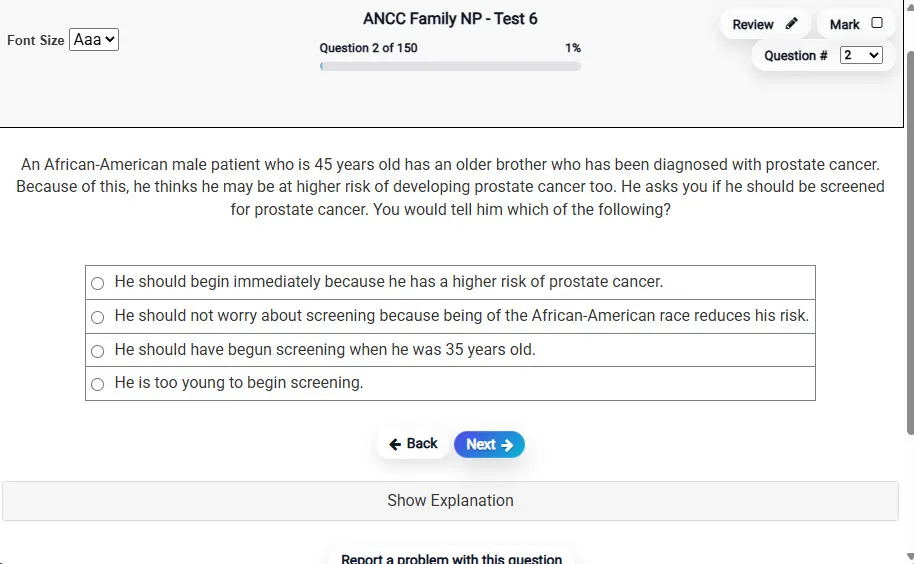
Answering a Question screen – Multiple-choice item view with navigation controls and progress tracker.
Answering a Question Multiple-choice item view with navigation controls and progress tracker.

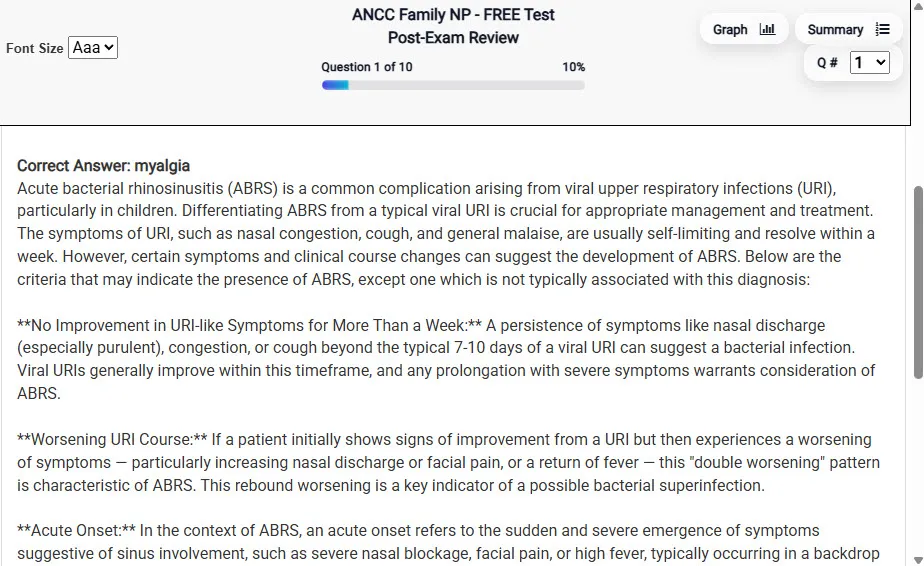
                           Detailed Explanation screen – 
                         Review mode showing chosen answer and rationale and references.
Detailed Explanation Review mode showing chosen answer and rationale and references.

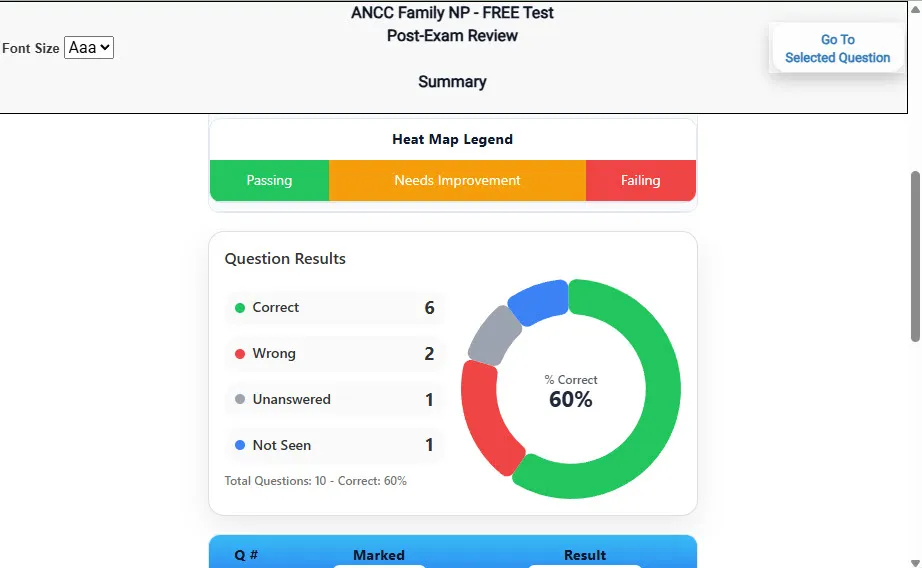
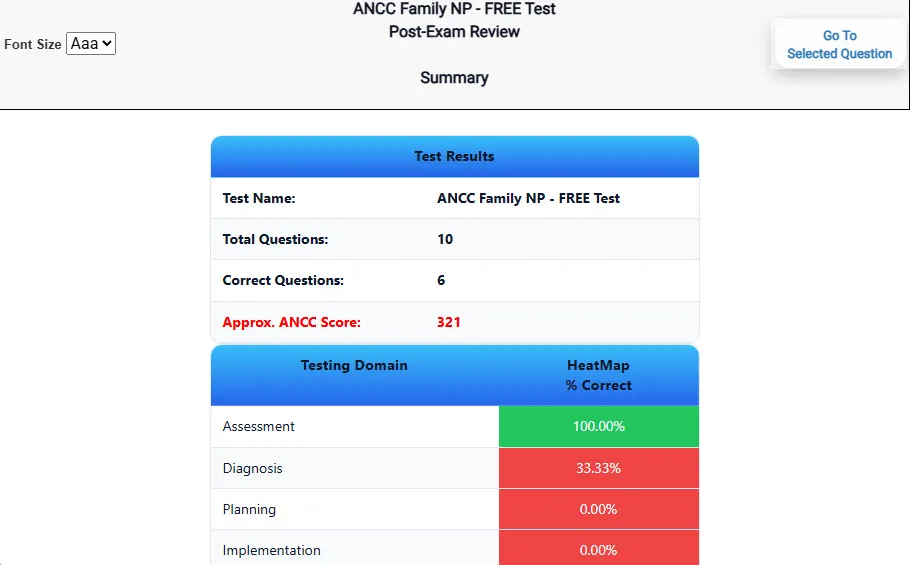
                           Review Summary 1 screen – 
                         Summary with counts for correct/wrong/unanswered and not seen items.
Review Summary 1 Summary with counts for correct/wrong/unanswered and not seen items.

                           Review Summary 2 screen – 
                         Advanced summary with category/domain breakdown and performance insights.
Review Summary 2 Advanced summary with category/domain breakdown and performance insights.

What Each Screen Shows

Answer Question Screen

  • Clean multiple-choice interface with progress bar.
  • Mark for review feature.
  • Matches real test pacing.

Detailed Explanation

  • Correct answer plus rationale.
  • Key concepts and guidelines highlighted.
  • Move between questions to fill knowledge gaps.

Review Summary 1

  • Overall results with total questions and scaled score.
  • Domain heatmap shows strengths and weaknesses.
  • Quick visual feedback on study priorities.

Review Summary 2

  • Chart of correct, wrong, unanswered, not seen.
  • Color-coded results for easy review.
  • Links back to missed items.

Top 10 Reasons to Use Exam Edge for your DHA Ophthalmic Technician Exam Prep

  1. Focused on the DHA Ophthalmic Technician Exam

    Our practice tests are built specifically for the DHA Ophthalmic Technician exam — every question mirrors the real topics, format, and difficulty so you're studying exactly what matters.

  2. Real Exam Simulation

    We match the per-question time limits and pressure of the actual DHA exam, so test day feels familiar and stress-free.

  3. 15 Full Practice Tests & 1,500 Unique Questions

    You'll have more than enough material to master every DHA Ophthalmic Technician concept — no repeats, no fluff.

  4. Lower Cost Than a Retake

    Ordering 5 practice exams costs less than retaking the DHA Ophthalmic Technician exam after a failure. One low fee could save you both time and money.

  5. Flexible Testing

    Need to step away mid-exam? Pick up right where you left off — with your remaining time intact.

  6. Instant Scoring & Feedback

    See your raw score and an estimated DHA Ophthalmic Technician score immediately after finishing each practice test.

  7. Detailed Explanations for Every Question

    Review correct and incorrect answers with clear, step-by-step explanations so you truly understand each topic.

  8. Trusted & Accredited

    We're fully accredited by the Better Business Bureau and uphold the highest standards of trust and transparency.

  9. Web-Based & Always Available

    No software to install. Access your DHA Ophthalmic Technician practice exams 24/7 from any computer or mobile device.

  10. Expert Support When You Need It

    Need extra help? Our specialized tutors are highly qualified and ready to support your DHA exam prep.


Pass the DHA Ophthalmic Technician Exam with Realistic Practice Tests from Exam Edge

Preparing for your upcoming DHA Ophthalmic Technician (DHA-OT) Certification Exam can feel overwhelming — but the right practice makes all the difference. Exam Edge gives you the tools, structure, and confidence to pass on your first try. Our online practice exams are built to match the real DHA Ophthalmic Technician exam in content, format, and difficulty.

  • 📝 15 DHA Ophthalmic Technician Practice Tests: Access 15 full-length exams with 100 questions each, covering every major DHA Ophthalmic Technician topic in depth.
  • Instant Online Access: Start practicing right away — no software, no waiting.
  • 🧠 Step-by-Step Explanations: Understand the reasoning behind every correct answer so you can master DHA Ophthalmic Technician exam concepts.
  • 🔄 Retake Each Exam Up to 4 Times: Build knowledge through repetition and track your improvement over time.
  • 🌐 Web-Based & Available 24/7: Study anywhere, anytime, on any device.
  • 🧘 Boost Your Test-Day Confidence: Familiarity with the DHA format reduces anxiety and helps you perform under pressure.

These DHA Ophthalmic Technician practice exams are designed to simulate the real testing experience by matching question types, timing, and difficulty level. This approach helps you get comfortable not just with the exam content, but also with the testing environment, so you walk into your exam day focused and confident.


Exam Edge DHA Reviews


Hi Ma'am, thank you so much. I cleared my DHA exam, and this time the question papers helped me a lot. I will surely recommend DHA prep to all my friends. Thanks once again.

Shafana ,

Very helpful and quick response.

Roxan , United Kingdom


DHA Ophthalmic Technician Aliases Test Name

Here is a list of alternative names used for this exam.

  • DHA Ophthalmic Technician
  • DHA Ophthalmic Technician test
  • DHA Ophthalmic Technician Certification Test
  • DHA
  • DHA DHA-OT
  • DHA-OT test
  • DHA Ophthalmic Technician (DHA-OT)
  • Ophthalmic Technician certification