This is the content of the pop-over!

DHA Occupational Therapist (DHA-OT) Exam Prep & Practice Tests


DHA Occupational Therapist  product image
(4.8)
Based on 25 Reviews

  • Real Exam Simulation: Timed questions and matching content build comfort for your DHA Occupational Therapist test day.
  • Instant, 24/7 Access: Web-based DHA Occupational Therapist practice exams with no software needed.
  • Clear Explanations: Step-by-step answers and explanations for your DHA exam to strengthen understanding.
  • Boosted Confidence: Reduces anxiety and improves test-taking skills to ace your DHA Occupational Therapist (ORAPS).

Featured on

DHA Occupational Therapist Online Practice Test Bundles

BEST VALUE
20 practice tests

$174.00

$799.00

SAVE $625

Only $8.70 per test!

  • 100% Pass Guarantee
  • 20 online practice tests
  • 70 questions per test
  • Bonus: 100 Flash Cards + Study Guide
  • Instant access
  • Detailed Explanations
  • Practice tests never expire
  • Timed, untimed, or study guide mode
MOST POPULAR
10 practice tests

$99.50

$399.50

SAVE $300

Only $9.95 per test!

  • 10 online practice tests
  • 70 questions per test
  • Bonus: 100 Flash Cards + Study Guide
  • Instant access
  • Detailed Explanations
  • Practice tests never expire
  • Timed, untimed, or study guide mode
5 practice tests

$69.75

$199.75

SAVE $130

Only $13.95 per test!

  • 5 online practice tests
  • 70 questions per test
  • Bonus: 100 Flash Cards
  • Instant access
  • Detailed Explanations
  • Practice tests never expire
  • Timed, untimed, or study guide mode
1 practice test

$39.95

  • 1 online practice test
  • 70 questions per test
  • Instant access
  • Detailed Explanations
  • Practice tests never expire
  • Timed, untimed, or study guide mode
Quick Select
Tap to choose a bundle

** All Prices are in US Dollars (USD) **


DHA Occupational Therapist (ORAPS) Resources

Jump to the section you need most.

Understanding the exact breakdown of the DHA Occupational Therapist test will help you know what to expect and how to most effectively prepare. The DHA Occupational Therapist has 150 multiple-choice questions . The exam will be broken down into the sections below:

DHA Occupational Therapist Exam Blueprint
Domain Name
Neurological Conditions  
Physical Disabilities  
Developmental Disabilities  
Group Intervention  
Hand Dysfunctions  
Psychosocial Problems  
Pediatric Conditions  
Ethics and Professionalism  

DHA Occupational Therapist Study Tips by Domain

  • Prioritize airway, breathing, and positioning in acute neuro cases (e.g., stroke, SCI) before AD training; red flag: sudden neuro change with headache, vomiting, or decreased consciousness requires immediate escalation.
  • For stroke rehab, screen for unilateral neglect and visual field loss during functional tasks; common trap: interpreting neglect as “noncompliance” rather than cueing with scanning and environmental setup.
  • Use tone and spasticity management strategies (slow sustained stretch, proper alignment, splinting as ordered) and avoid quick stretch; red flag: increasing pain, clonus, or skin breakdown under orthoses means reassess immediately.
  • In spinal cord injury, follow level-of-injury priorities for ADLs and transfers while protecting shoulders; common trap: over-reliance on upper limbs without pressure relief and joint protection leading to overuse and skin injury.
  • For Parkinson’s disease, apply external cueing (rhythm, visual targets) and task-specific practice for bradykinesia/freezing; red flag: orthostatic hypotension or sudden falls during mobility/ADLs requires safety modification and referral.
  • With traumatic brain injury, match interventions to Rancho level and manage cognition/behavior with structure; common trap: advancing complex IADLs before consistent orientation, safety awareness, and impulse control are demonstrated.
  • Prioritize cardiopulmonary and DVT red flags in physical disability rehab—new unilateral calf swelling/warmth or sudden SOB/chest pain is a stop-therapy and urgent-referral cue.
  • For safe mobilization, verify weight-bearing and ROM precautions after ortho injury/surgery; a common trap is advancing transfers or resistive exercise when orders specify NWB or no active ROM.
  • Skin integrity is a daily priority in limited mobility—nonblanchable erythema over bony prominences or increased shear during transfers is a cue to adjust positioning, support surfaces, and technique immediately.
  • Teach joint protection and energy conservation for chronic physical disability; a practical rule is to stop and modify tasks if pain persists >2 hours after activity (red flag for overuse).
  • Use appropriate assistive devices and fit them correctly; a common trap is incorrect cane use—cane should typically be in the contralateral hand to the affected/weak lower limb to reduce load and improve stability.
  • Address spasticity, contracture risk, and tone management with positioning and splinting; increased clonus, rapid loss of passive range, or skin breakdown under an orthosis is a cue to reassess wear schedule and alignment.
  • Differentiate global developmental delay/intellectual disability from autism spectrum disorder by confirming deficits in adaptive functioning across settings—red flag: labeling ASD based only on speech delay without social-communication criteria.
  • Use standardized tools (e.g., Bayley, PDMS-2, Vineland) plus caregiver interview; common trap: reporting age-equivalents as outcomes instead of standard scores/percentiles with functional impact.
  • Prioritize participation-focused goals (feeding, play, dressing, school routines) using SMART objectives; cue: goals must be measurable within the plan-of-care timeframe, not broad (“improve development”).
  • Address sensory processing needs with function-first strategies (environmental modifications, routines, co-regulation) rather than sensory activities alone—red flag: using “sensory diet” without documenting occupational performance change.
  • Manage feeding and oral-motor concerns with safety screening; priority rule: signs of aspiration (wet voice, coughing/choking, recurrent chest infections) require medical referral before progressing textures.
  • Ensure family-centered, culturally responsive intervention with clear consent and education; common trap: providing home programs that caregivers cannot realistically implement, leading to poor adherence and limited carryover.
  • Select group type and size to match goals and safety—use smaller, structured groups when cognition or impulse control is limited; red flag: adding high-risk clients to open groups without clear inclusion criteria.
  • Write measurable group objectives (e.g., “initiate 3 peer interactions”) and assign roles to support participation; common trap: listing only activity steps without linking them to functional outcomes.
  • Plan grading and adaptation in advance (task, environment, social demands) and have a backup activity; red flag: no contingency plan when one member cannot follow multi-step directions.
  • Manage group dynamics with clear norms, cueing, and consistent limits; priority rule: address unsafe behavior immediately before continuing therapeutic discussion.
  • Document attendance, individual response, and progress toward goals within the group context; common trap: duplicating the same note for all members without individual performance data.
  • Ensure confidentiality and informed participation in shared settings—avoid discussing protected health details that are not essential to the session; red flag: peers pressuring a member to disclose diagnosis or trauma history.
  • Screen for red flags with acute hand pain/swelling—disproportionate pain, increasing tightness, or pain on passive stretch suggests compartment syndrome and warrants urgent referral.
  • Follow tendon-repair precautions strictly: after flexor tendon repair, avoid forceful gripping and combined wrist/finger extension early—common trap is progressing strengthening before surgeon protocol milestones.
  • In suspected nerve compression, use symptom pattern to guide splinting—night paresthesia in median distribution is a priority cue for neutral wrist splint and activity modification before aggressive exercises.
  • For fractures/sprains, respect immobilization vs early motion thresholds—red flag is increasing deformity, loss of alignment, or escalating pain after ROM that may indicate instability or hardware failure.
  • Identify complex regional pain syndrome early—disproportionate pain with temperature/color change, edema, and allodynia is a cue to prioritize gentle desensitization, edema control, and graded functional use over high-intensity stretching.
  • Match orthosis selection to the structure at risk: ulnar collateral ligament (thumb MCP) injuries need thumb spica stabilization—common trap is leaving MCP free, which prolongs instability and pain.
  • Differentiate normal stress reactions from acute risk states—red flag: suicidal intent/plan, command hallucinations, or homicidal ideation requires immediate safety actions and documentation per facility policy.
  • Use occupation-based screening for mood and anxiety impact on function—common trap: focusing on symptom checklists without linking to ADL/IADL participation, routines, and role performance.
  • Apply trauma-informed care in all settings—priority rule: offer choice, predictability, and control; contraindication: forcing exposure to triggering stimuli without coordination with the mental health team.
  • Address substance use effects on occupational performance—red flag: withdrawal signs, intoxication, or impaired judgment make unsupervised cooking, driving, or equipment use unsafe.
  • Plan interventions for severe mental illness with structure—common trap: overly complex home programs; use brief, repeatable routines with environmental cues and graded task demands.
  • Maintain professional boundaries and confidentiality—priority rule: obtain informed consent for family involvement and disclose only minimum necessary information; red flag: dual relationships or gifts that could impair judgment.
  • Use age-appropriate standardized tools (e.g., fine-motor, sensory, ADL scales) and document setting/norms; red flag: reporting “within normal limits” without scores, age-equivalents, or interpretation limits.
  • Prioritize safety and medical stability in NICU/peds cases (positioning, feeding readiness, respiratory status); contraindication: initiating oral feeding when aspiration signs (wet voice, coughing, desaturation) are present.
  • For cerebral palsy and motor delay, target function and participation with task-specific practice and caregiver carryover; common trap: focusing only on “normalizing tone” without measurable functional goals.
  • In autism/ADHD profiles, use structured routines, visual supports, and objective behavior data; red flag: labeling behaviors as “noncompliance” without identifying antecedents/sensory or communication needs.
  • Integrate school-based requirements (IEP goals, classroom participation, least restrictive environment) when relevant; priority rule: goals must be educationally relevant and measurable, not solely impairment-based.
  • Apply safeguarding/consent rules with minors and family-centered practice; red flag: ignoring mandatory reporting triggers (suspected abuse/neglect) or proceeding without appropriate guardian consent and documentation.
  • Follow DHA documentation expectations: chart objective findings and skilled rationale, not opinions; red flag—copy/paste notes or vague phrases like “tolerated well” without measurable outcomes.
  • Maintain patient confidentiality under facility policy—share information only on a need-to-know basis; common trap: discussing cases in public areas or using personal devices for photos/messages.
  • Obtain informed consent (and assent when appropriate) before evaluation, treatment, or releasing information; red flag—proceeding after a patient expresses refusal or limited understanding.
  • Work within scope and competence and seek supervision/referral when needed; priority rule—stop and consult when a condition changes (e.g., new neuro signs) rather than continuing the plan unchecked.
  • Manage conflicts of interest and professional boundaries; common trap—accepting significant gifts, entering dual relationships, or providing services to friends/family without clear clinical justification and oversight.
  • Prioritize patient safety and report concerns through proper channels; red flag—ignoring suspected abuse/neglect, unsafe equipment, or impaired practice instead of escalating per DHA facility procedure.


Built to Fit Into Your Busy Life

Everything you need to prepare with confidence—without wasting a minute.

Three Study Modes

Timed, No Time Limit, or Explanation mode.

Actionable Analytics

Heatmaps and scaled scores highlight weak areas.

High-Yield Rationales

Concise explanations emphasize key concepts.

Realistic Interface

Matches the feel of the actual exam environment.

Accessible by Design

Clean layout reduces cognitive load.

Anytime, Anywhere

Web-based access 24/7 on any device.
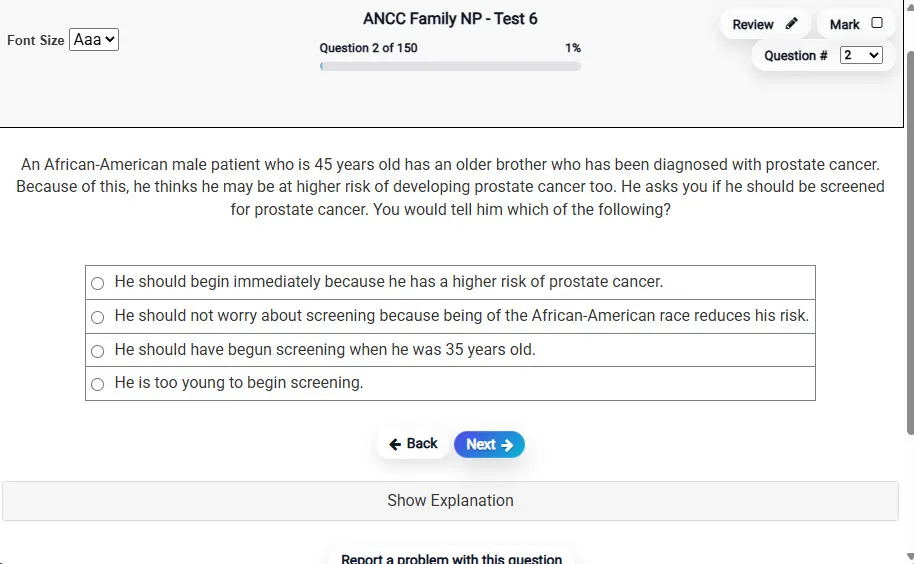
Answering a Question screen – Multiple-choice item view with navigation controls and progress tracker.
Answering a Question Multiple-choice item view with navigation controls and progress tracker.

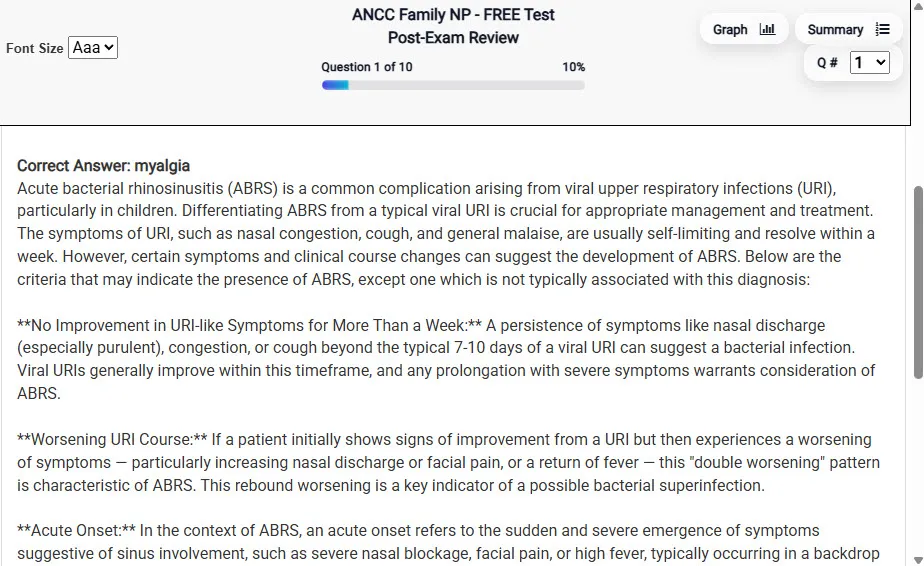
                           Detailed Explanation screen – 
                         Review mode showing chosen answer and rationale and references.
Detailed Explanation Review mode showing chosen answer and rationale and references.

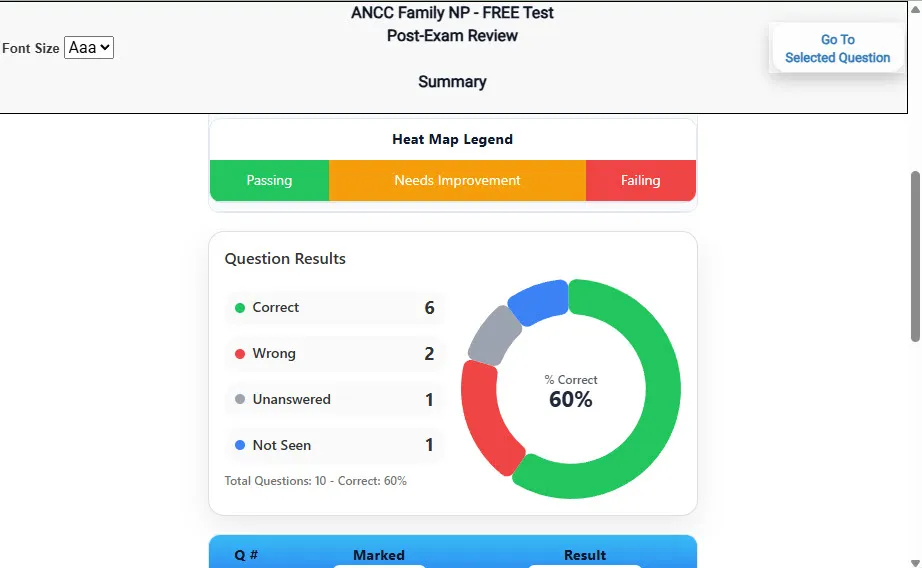
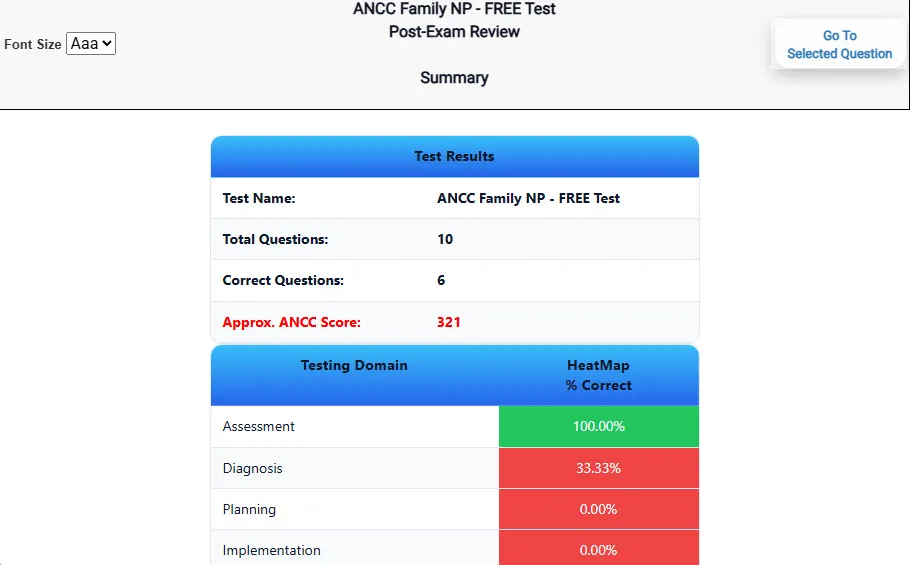
                           Review Summary 1 screen – 
                         Summary with counts for correct/wrong/unanswered and not seen items.
Review Summary 1 Summary with counts for correct/wrong/unanswered and not seen items.

                           Review Summary 2 screen – 
                         Advanced summary with category/domain breakdown and performance insights.
Review Summary 2 Advanced summary with category/domain breakdown and performance insights.

What Each Screen Shows

Answer Question Screen

  • Clean multiple-choice interface with progress bar.
  • Mark for review feature.
  • Matches real test pacing.

Detailed Explanation

  • Correct answer plus rationale.
  • Key concepts and guidelines highlighted.
  • Move between questions to fill knowledge gaps.

Review Summary 1

  • Overall results with total questions and scaled score.
  • Domain heatmap shows strengths and weaknesses.
  • Quick visual feedback on study priorities.

Review Summary 2

  • Chart of correct, wrong, unanswered, not seen.
  • Color-coded results for easy review.
  • Links back to missed items.

Top 10 Reasons to Use Exam Edge for your DHA Occupational Therapist Exam Prep

  1. Focused on the DHA Occupational Therapist Exam

    Our practice tests are built specifically for the DHA Occupational Therapist exam — every question mirrors the real topics, format, and difficulty so you're studying exactly what matters.

  2. Real Exam Simulation

    We match the per-question time limits and pressure of the actual DHA exam, so test day feels familiar and stress-free.

  3. 20 Full Practice Tests & 1,400 Unique Questions

    You'll have more than enough material to master every DHA Occupational Therapist concept — no repeats, no fluff.

  4. Lower Cost Than a Retake

    Ordering 5 practice exams costs less than retaking the DHA Occupational Therapist exam after a failure. One low fee could save you both time and money.

  5. Flexible Testing

    Need to step away mid-exam? Pick up right where you left off — with your remaining time intact.

  6. Instant Scoring & Feedback

    See your raw score and an estimated DHA Occupational Therapist score immediately after finishing each practice test.

  7. Detailed Explanations for Every Question

    Review correct and incorrect answers with clear, step-by-step explanations so you truly understand each topic.

  8. Trusted & Accredited

    We're fully accredited by the Better Business Bureau and uphold the highest standards of trust and transparency.

  9. Web-Based & Always Available

    No software to install. Access your DHA Occupational Therapist practice exams 24/7 from any computer or mobile device.

  10. Expert Support When You Need It

    Need extra help? Our specialized tutors are highly qualified and ready to support your DHA exam prep.


Pass the DHA Occupational Therapist Exam with Realistic Practice Tests from Exam Edge

Preparing for your upcoming DHA Occupational Therapist (ORAPS) Certification Exam can feel overwhelming — but the right practice makes all the difference. Exam Edge gives you the tools, structure, and confidence to pass on your first try. Our online practice exams are built to match the real DHA Occupational Therapist exam in content, format, and difficulty.

  • 📝 20 DHA Occupational Therapist Practice Tests: Access 20 full-length exams with 70 questions each, covering every major DHA Occupational Therapist topic in depth.
  • Instant Online Access: Start practicing right away — no software, no waiting.
  • 🧠 Step-by-Step Explanations: Understand the reasoning behind every correct answer so you can master DHA Occupational Therapist exam concepts.
  • 🔄 Retake Each Exam Up to 4 Times: Build knowledge through repetition and track your improvement over time.
  • 🌐 Web-Based & Available 24/7: Study anywhere, anytime, on any device.
  • 🧘 Boost Your Test-Day Confidence: Familiarity with the DHA format reduces anxiety and helps you perform under pressure.

These DHA Occupational Therapist practice exams are designed to simulate the real testing experience by matching question types, timing, and difficulty level. This approach helps you get comfortable not just with the exam content, but also with the testing environment, so you walk into your exam day focused and confident.


Exam Edge DHA Reviews


Hi Ma'am, thank you so much. I cleared my DHA exam, and this time the question papers helped me a lot. I will surely recommend DHA prep to all my friends. Thanks once again.

Shafana ,

Very helpful and quick response.

Roxan , United Kingdom


DHA Occupational Therapist Aliases Test Name

Here is a list of alternative names used for this exam.

  • DHA Occupational Therapist
  • DHA Occupational Therapist test
  • DHA Occupational Therapist Certification Test
  • DHA
  • DHA ORAPS
  • ORAPS test
  • DHA Occupational Therapist (ORAPS)
  • Occupational Therapist certification