This is the content of the pop-over!

Lightning Deal Alert – 12% Off Ends at Midnight!

Strike while the savings are hot! Use promo code FlashSale at checkout for 12% off any Exam Edge test or bundle. Hurry—the clock is ticking!

Child Development Associate - Toddler (CDA-toddler) Practice Tests & Test Prep by Exam Edge


Child Development Associate Toddler  product image
(4.5)
Based on 17 Reviews

  • Real Exam Simulation: Timed questions and matching content build comfort for your Child Development Associate Toddler test day.
  • Instant, 24/7 Access: Web-based Child Development Associate Toddler practice exams with no software needed.
  • Clear Explanations: Step-by-step answers and explanations for your CDA exam to strengthen understanding.
  • Boosted Confidence: Reduces anxiety and improves test-taking skills to ace your Child Development Associate Toddler (CDA-toddler).

Featured on

Child Development Associate Toddler Online Practice Test Bundles

BEST VALUE
5 practice tests

$69.75

$199.75

SAVE $130

Only $13.95 per test!

  • 100% Pass Guarantee
  • 5 online practice tests
  • 65 questions per test
  • Bonus: 100 Flash Cards + Study Guide
  • Instant access
  • Detailed Explanations
  • Practice tests never expire
  • Timed, untimed, or study guide mode
1 practice test

$39.95

  • 1 online practice test
  • 65 questions per test
  • Instant access
  • Detailed Explanations
  • Practice tests never expire
  • Timed, untimed, or study guide mode
Quick Select
Tap to choose a bundle

** All Prices are in US Dollars (USD) **


Child Development Associate Toddler (CDA-toddler) Resources

Jump to the section you need most.

Understanding the exact breakdown of the Child Development Associate Toddler test will help you know what to expect and how to most effectively prepare. The Child Development Associate Toddler has multiple-choice questions . The exam will be broken down into the sections below:

Child Development Associate Toddler Exam Blueprint
Domain Name
Planning a safe and healthy learning environment  
Advancing Children's physical and intellectual Development  
Supporting Children's social and emotional development  
Building productive relationships with families  
Managing an effective program  
Maintaining a commitment to professionalism  
Observing and recording choldren's behavior  
Understanding principles of child development and learning  

Child Development Associate Toddler Study Tips by Domain

  • Complete daily safety sweeps using a consistent checklist (floors, outlets, small objects, broken toys) and remove hazards immediately; red flag: any item that fits in a toilet-paper roll is a choking risk for toddlers.
  • Maintain active supervision at all times (positioning, scanning, counting, listening), especially during transitions; common trap: assuming “someone else is watching” during diapering, outdoor play, or pickup.
  • Follow safe sleep and rest practices for toddlers (clear sleep space, appropriate spacing, head checks) and document checks per program policy; red flag: blankets, pillows, or stuffed items in a sleep area create suffocation risk.
  • Use strict hand hygiene and sanitizing routines (before food, after toileting/diapering, after outdoor play) and separate cleaning from sanitizing; common trap: wiping with water only and calling it “clean.”
  • Implement allergy and medication safety controls (posted but confidential alerts, ingredient checks, labeled storage, verified authorizations) every time; priority rule: no medication is given without written permission and correct dose/time verification.
  • Prepare for emergencies with posted plans and practiced drills (fire, severe weather, lockdown) and keep go-bags, attendance, and emergency contacts ready; red flag: doors blocked, unlabeled exits, or missing headcounts during evacuation.
  • Plan daily gross-motor and fine-motor experiences (e.g., climbing, pushing/pulling, grasping tools) and increase challenge gradually; red flag: expecting toddler balance or hand strength to match preschoolers.
  • Use responsive routines (diapering, meals, dressing) as intentional learning moments by naming actions, body parts, and sequencing steps; common trap: doing tasks “for” toddlers when they can attempt with support.
  • Support early language and cognition with serve-and-return talk, singing, and book sharing using real objects and pictures; priority rule: follow the child’s focus rather than quizzing or rapid-fire questions.
  • Provide open-ended materials for problem-solving (stacking, nesting, cause-and-effect toys, sensory bins) and allow safe repetition; red flag: stopping repeated play that is actually practice and mastery-building.
  • Differentiate activities by developmental level and individual needs (including IFSP/IEP strategies) while keeping goals realistic; common trap: using one worksheet-style task for all toddlers.
  • Promote healthy habits that strengthen physical development—handwashing steps, toothbrushing routines, rest, and nutritious foods—and coordinate with families for consistency; contraindication: using food as a reward or punishment.
  • Build secure attachments with a consistent primary caregiver and predictable routines; red flag: frequent staff changes or rushed drop-offs that increase separation distress.
  • Use positive guidance by stating what to do (e.g., “Hands stay on your own body”) and teach alternatives; common trap: relying on “no” or shaming language that escalates power struggles.
  • Coach emotional literacy by labeling feelings and offering simple coping tools (breathe, hug a pillow, quiet corner); priority rule: intervene early at the first signs of dysregulation (whining, clenched fists) before a meltdown.
  • Support peer interactions with parallel play, turn-taking cues, and brief scripted language (“My turn next”); red flag: expecting toddlers to “share” on demand when they lack impulse control.
  • Respond to challenging behavior by looking for the function (tired, hungry, overstimulated) and adjusting the environment; common trap: punishing biting/hitting without close supervision and immediate replacement skills.
  • Promote inclusion and equity by validating home language/culture and ensuring materials reflect all children; red flag: labeling a toddler as “bad” instead of documenting patterns and partnering with families for consistent strategies.
  • Initiate relationships with a strengths-based intake that asks families about routines, comfort items, languages, and goals; red flag: assuming a toddler’s behavior is “defiance” without checking home expectations and cultural norms.
  • Communicate daily using brief, factual updates (sleep, meals, diapers/toileting, mood, new skills) and invite two-way sharing; common trap: discussing concerns at pick-up in front of the child or other families.
  • Partner with families on individualized transition and separation plans (staggered drop-offs, consistent goodbye ritual); priority rule: keep the plan consistent for at least 1–2 weeks before changing unless safety is involved.
  • Address concerns early with specific observations and collaborative next steps (what you saw, when, frequency) rather than labels; red flag: recommending evaluation or services without documenting patterns and first consulting the family.
  • Respect confidentiality and consent in all records, photos, and conversations; common trap: sharing a child’s progress, incident details, or family information with other parents or in public spaces.
  • Create meaningful family engagement options that fit work schedules (short conferences, phone/video, take-home activities) and remove barriers; priority cue: provide interpretation/translation when needed rather than relying on siblings to interpret.
  • Use consistent daily schedules with visual cues and predictable transitions; red flag: frequent “waiting time” that leads to toddler behavior escalation.
  • Keep staffing and supervision aligned to ratios and active monitoring zones; common trap: assuming a toddler is “safe” because you can hear them but cannot see them.
  • Maintain organized learning centers with clear limits and rotation of materials; priority rule: if a material causes repeated conflicts, reduce quantity or teach turn-taking before reintroducing.
  • Implement routine health and safety checks (attendance, head counts, hazards, sanitation logs); red flag: documentation gaps on incidents, medications, or cleaning schedules.
  • Plan for inclusion and individualized supports in daily routines (meals, toileting, rest); common trap: expecting a toddler with identified needs to “fit the routine” without adaptations.
  • Use data from observations, incident reports, and family input to adjust the program; threshold cue: if the same challenging behavior occurs daily for 2 weeks, revise the plan and consult appropriate supports.
  • Follow the CDA ethical conduct expectations by maintaining confidentiality—never discuss a child or family in public spaces or on social media (red flag: posting photos/names without written permission).
  • Maintain professional boundaries with families—be friendly and supportive without becoming a babysitter-on-call or sharing personal problems (common trap: accepting large gifts or cash).
  • Stay in compliance with required trainings and certifications (e.g., first aid/CPR, mandated reporting) and track expiration dates (priority rule: renew before lapses to avoid being out of ratio/assignment).
  • Use reflective practice to improve—seek feedback, document goals, and adjust strategies based on outcomes (red flag: repeating the same guidance plan despite no improvement in behavior).
  • Model respectful, inclusive communication with children and adults, using person-first and culturally responsive language (common trap: labeling toddlers as “bad” or “manipulative”).
  • Know your role and follow program policies and licensing rules consistently, escalating concerns through the proper chain of command (priority rule: report safety or abuse concerns immediately—do not “wait and see”).
  • Use objective, observable language (what you saw/heard) rather than interpretations; red flag: writing “mad” or “bad” instead of the specific behavior.
  • Capture context every time (time, setting, peers/adults present, what happened right before/after); common trap: recording an incident without antecedent/consequence details.
  • Choose the right tool for the purpose—running record for sequences, frequency counts for repeated behaviors, and anecdotal notes for brief snapshots; priority rule: don’t use a checklist alone to explain challenging behavior.
  • Document safety concerns and injuries immediately per program policy with exact body location and size/shape; red flag: delayed notes or missing witness/parent notification details.
  • Protect confidentiality by storing records securely and sharing only with authorized staff and the child’s family; contraindication: discussing observations in hallways, on personal devices, or using children’s full names in group messages.
  • Use observations to plan and adjust routines/strategies, then re-observe to see if the change worked; common trap: collecting data but never linking it to an action plan or follow-up observation.
  • Use developmental sequences (gross motor → fine motor; cooing → babbling → words) to set expectations; red flag: expecting toddler self-control or language skills that are more typical of preschoolers.
  • Plan for individual differences and temperament (activity level, adaptability, intensity) so routines fit the child; common trap: labeling a temperament trait as “bad behavior” instead of adjusting environment and support.
  • Remember toddlers learn through active, sensory exploration and repetition; priority rule: offer safe, open-ended materials and time to practice rather than worksheet-style tasks.
  • Support executive function and self-regulation through co-regulation (calm adult, simple choices, predictable routines); red flag: using lengthy verbal reasoning during a meltdown.
  • Apply attachment principles—consistent, responsive caregiving builds security and learning; contraindication: frequent caregiver switching or ignoring bids for comfort during transitions.
  • Use developmentally appropriate practice by matching activities to the child’s zone of proximal development; common trap: pushing skills too far beyond readiness, which often shows up as frustration, avoidance, or acting out.


Built to Fit Into Your Busy Life

Everything you need to prepare with confidence—without wasting a minute.

Three Study Modes

Timed, No Time Limit, or Explanation mode.

Actionable Analytics

Heatmaps and scaled scores highlight weak areas.

High-Yield Rationales

Concise explanations emphasize key concepts.

Realistic Interface

Matches the feel of the actual exam environment.

Accessible by Design

Clean layout reduces cognitive load.

Anytime, Anywhere

Web-based access 24/7 on any device.
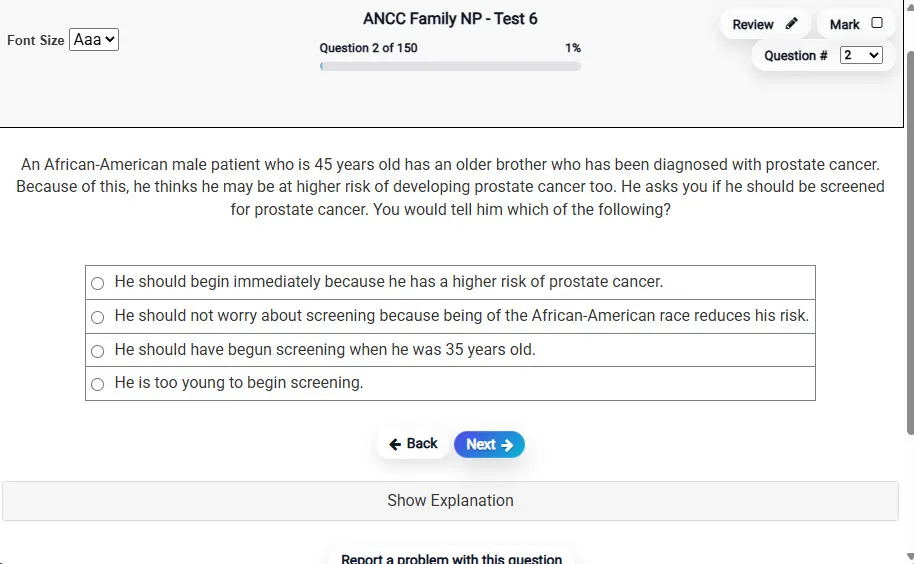
Answering a Question screen – Multiple-choice item view with navigation controls and progress tracker.
Answering a Question Multiple-choice item view with navigation controls and progress tracker.

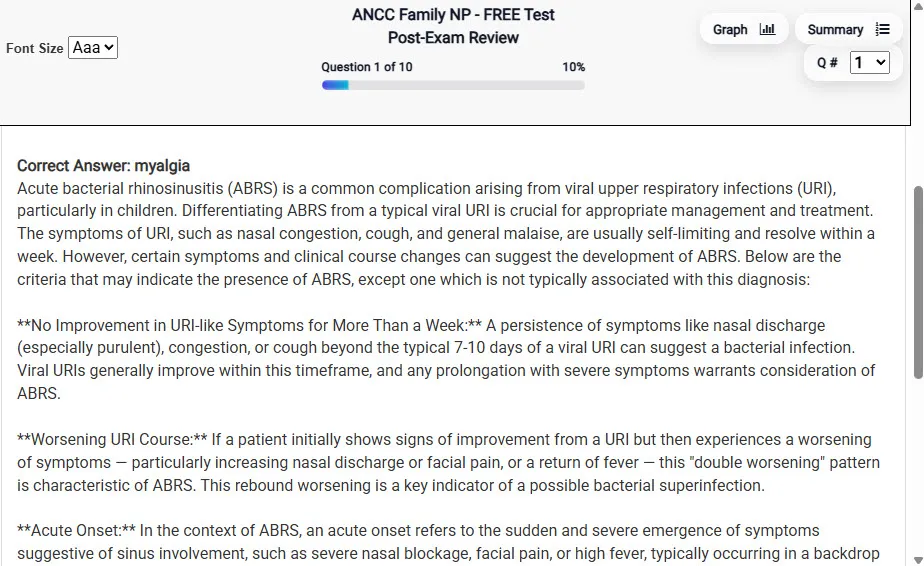
                           Detailed Explanation screen – 
                         Review mode showing chosen answer and rationale and references.
Detailed Explanation Review mode showing chosen answer and rationale and references.

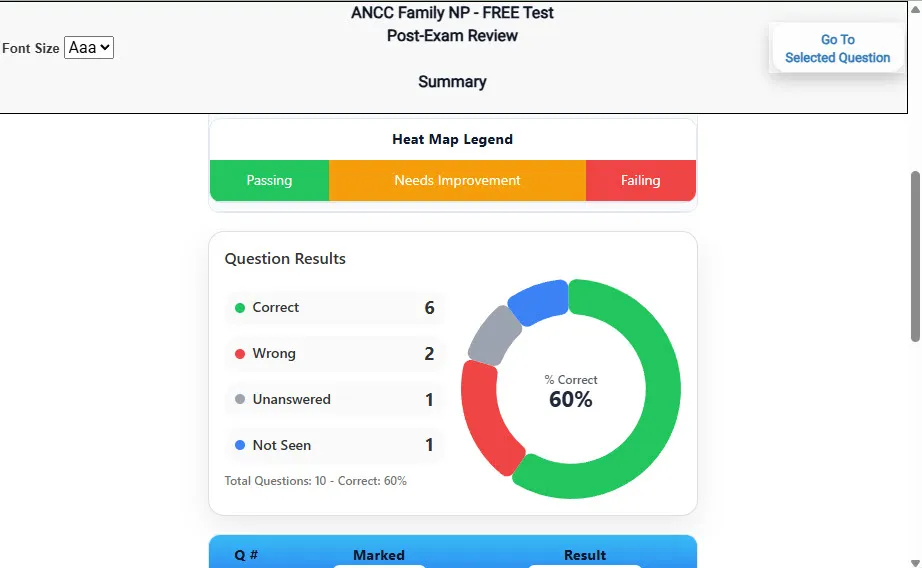
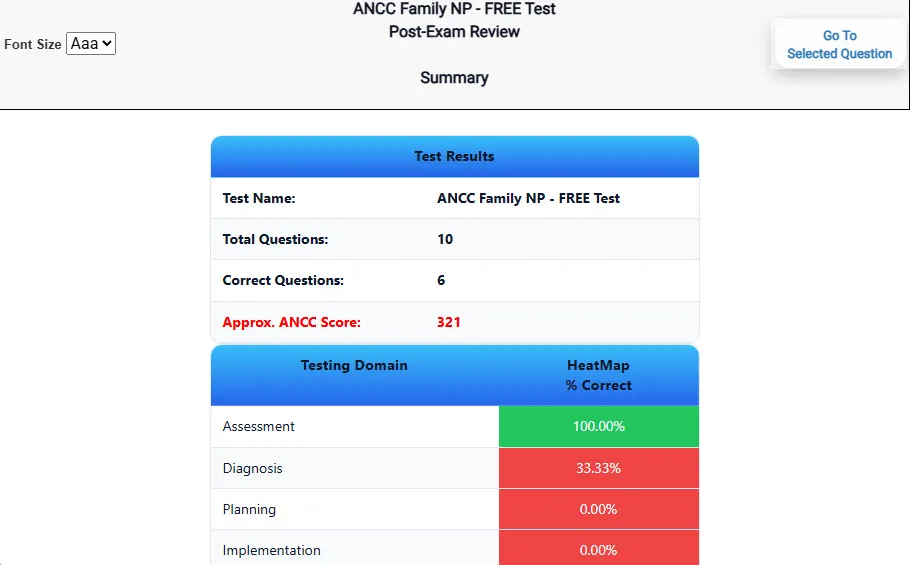
                           Review Summary 1 screen – 
                         Summary with counts for correct/wrong/unanswered and not seen items.
Review Summary 1 Summary with counts for correct/wrong/unanswered and not seen items.

                           Review Summary 2 screen – 
                         Advanced summary with category/domain breakdown and performance insights.
Review Summary 2 Advanced summary with category/domain breakdown and performance insights.

What Each Screen Shows

Answer Question Screen

  • Clean multiple-choice interface with progress bar.
  • Mark for review feature.
  • Matches real test pacing.

Detailed Explanation

  • Correct answer plus rationale.
  • Key concepts and guidelines highlighted.
  • Move between questions to fill knowledge gaps.

Review Summary 1

  • Overall results with total questions and scaled score.
  • Domain heatmap shows strengths and weaknesses.
  • Quick visual feedback on study priorities.

Review Summary 2

  • Chart of correct, wrong, unanswered, not seen.
  • Color-coded results for easy review.
  • Links back to missed items.

Top 10 Reasons to Use Exam Edge for your Child Development Associate Toddler Exam Prep

  1. Focused on the Child Development Associate Toddler Exam

    Our practice tests are built specifically for the Child Development Associate Toddler exam — every question mirrors the real topics, format, and difficulty so you're studying exactly what matters.

  2. Real Exam Simulation

    We match the per-question time limits and pressure of the actual CDA exam, so test day feels familiar and stress-free.

  3. 5 Full Practice Tests & 325 Unique Questions

    You'll have more than enough material to master every Child Development Associate Toddler concept — no repeats, no fluff.

  4. Lower Cost Than a Retake

    Ordering 5 practice exams costs less than retaking the Child Development Associate Toddler exam after a failure. One low fee could save you both time and money.

  5. Flexible Testing

    Need to step away mid-exam? Pick up right where you left off — with your remaining time intact.

  6. Instant Scoring & Feedback

    See your raw score and an estimated Child Development Associate Toddler score immediately after finishing each practice test.

  7. Detailed Explanations for Every Question

    Review correct and incorrect answers with clear, step-by-step explanations so you truly understand each topic.

  8. Trusted & Accredited

    We're fully accredited by the Better Business Bureau and uphold the highest standards of trust and transparency.

  9. Web-Based & Always Available

    No software to install. Access your Child Development Associate Toddler practice exams 24/7 from any computer or mobile device.

  10. Expert Support When You Need It

    Need extra help? Our specialized tutors are highly qualified and ready to support your CDA exam prep.


Pass the Child Development Associate Toddler Exam with Realistic Practice Tests from Exam Edge

Preparing for your upcoming Child Development Associate Toddler (CDA-toddler) Certification Exam can feel overwhelming — but the right practice makes all the difference. Exam Edge gives you the tools, structure, and confidence to pass on your first try. Our online practice exams are built to match the real Child Development Associate Toddler exam in content, format, and difficulty.

  • 📝 5 Child Development Associate Toddler Practice Tests: Access 5 full-length exams with 65 questions each, covering every major Child Development Associate Toddler topic in depth.
  • Instant Online Access: Start practicing right away — no software, no waiting.
  • 🧠 Step-by-Step Explanations: Understand the reasoning behind every correct answer so you can master Child Development Associate Toddler exam concepts.
  • 🔄 Retake Each Exam Up to 4 Times: Build knowledge through repetition and track your improvement over time.
  • 🌐 Web-Based & Available 24/7: Study anywhere, anytime, on any device.
  • 🧘 Boost Your Test-Day Confidence: Familiarity with the CDA format reduces anxiety and helps you perform under pressure.

These Child Development Associate Toddler practice exams are designed to simulate the real testing experience by matching question types, timing, and difficulty level. This approach helps you get comfortable not just with the exam content, but also with the testing environment, so you walk into your exam day focused and confident.


Exam Edge CDA Reviews


I really like the area; it was organized. Very quiet environment to take a test. And I would recommend it to anyone who wants to take a test. Thank you so much.

Faisa, minneapolis, Minnesota

The program helped me get ready for my CDA Exam. I liked that there were multiple tests to take and that you could reset each test and take it again. I feel like these practice tests helped me ultimately pass the exam.

Tracey , Bluemont, Virginia


Child Development Associate Toddler Aliases Test Name

Here is a list of alternative names used for this exam.

  • Child Development Associate Toddler
  • Child Development Associate Toddler test
  • Child Development Associate Toddler Certification Test
  • CDA
  • CDA CDA-toddler
  • CDA-toddler test
  • Child Development Associate Toddler (CDA-toddler)
  • Child Development Associate Toddler certification