This is the content of the pop-over!

Lightning Deal Alert – 12% Off Ends at Midnight!

Strike while the savings are hot! Use promo code FlashSale at checkout for 12% off any Exam Edge test or bundle. Hurry—the clock is ticking!

ASCP Histotechnician (ASCP-HT) Practice Tests & Test Prep by Exam Edge


ASCP Histotechnician  product image
(5.0)
Based on 22 Reviews

  • Real Exam Simulation: Timed questions and matching content build comfort for your ASCP Histotechnician test day.
  • Instant, 24/7 Access: Web-based ASCP Histotechnician practice exams with no software needed.
  • Clear Explanations: Step-by-step answers and explanations for your ASCP exam to strengthen understanding.
  • Boosted Confidence: Reduces anxiety and improves test-taking skills to ace your ASCP Histotechnician (ASCP-HT).

Featured on

ASCP Histotechnician Online Practice Test Bundles

BEST VALUE
5 practice tests

$69.75

$199.75

SAVE $130

Only $13.95 per test!

  • 100% Pass Guarantee
  • 5 online practice tests
  • 100 questions per test
  • Bonus: 100 Flash Cards + Study Guide
  • Instant access
  • Detailed Explanations
  • Practice tests never expire
  • Timed, untimed, or study guide mode
1 practice test

$39.95

  • 1 online practice test
  • 100 questions per test
  • Instant access
  • Detailed Explanations
  • Practice tests never expire
  • Timed, untimed, or study guide mode
Quick Select
Tap to choose a bundle

** All Prices are in US Dollars (USD) **


ASCP Histotechnician (ASCP-HT) Resources

Jump to the section you need most.

Understanding the exact breakdown of the ASCP Histotechnician test will help you know what to expect and how to most effectively prepare. The ASCP Histotechnician has multiple-choice questions . The exam will be broken down into the sections below:

ASCP Histotechnician Exam Blueprint
Domain Name % Number of
Questions
Fixation 15-25% 19
Processing 10-20% 13
Embedding/Microtomy 15-25% 19
Staining 30-40% 38
Laboratory Operations 10-15% 13

ASCP Histotechnician Study Tips by Domain

  • Place tissue in fixative immediately and keep pieces thin (about 3–4 mm); a practical cue is that any delay or thick specimen risks autolysis, seen as mushy texture and poor nuclear detail.
  • Use adequate fixative volume (commonly at least 10:1 fixative:tissue); red flag: an underfilled container or tightly packed cassette often produces uneven fixation with pale centers.
  • Select fixative to match downstream testing (e.g., neutral buffered formalin for routine histology, avoid acidic fixatives when nucleic acid integrity matters); trap: unbuffered formalin or acidic decalcifiers can reduce IHC/ISH performance.
  • Control fixation time—underfixation causes poor morphology and section chatter, while overfixation can mask epitopes; priority rule: standardize formalin fixation windows and document start/stop times for predictability.
  • For fatty or dense tissues, increase exposure by trimming and ensuring agitation/adequate circulation; cue: persistent opaque or “greasy” areas after fixation suggest incomplete penetration.
  • Handle special specimens correctly (e.g., open GI biopsies flat, ink margins before fixation if required, prevent drying of small biopsies); contraindication: allowing tiny specimens to dry even briefly can irreversibly compromise morphology.
  • Verify tissue thickness before starting: pieces should generally be =3–4 mm; anything thicker is a red flag for incomplete dehydration/clearing and “mushy” sections later.
  • Use fresh, graded alcohols and watch for water carryover—if 95% or absolute alcohol turns cloudy, treat it as a trap indicating contamination and replace/rotate reagents.
  • Ensure complete clearing before paraffin: tissue should appear translucent after xylene (or substitute); persistent opacity is a priority rule to extend clearing rather than proceeding.
  • Match processing time and agitation/vacuum settings to tissue type—fatty or dense specimens need longer steps; rushing is a common trap that yields crumbly or brittle blocks.
  • Maintain paraffin infiltration temperature near 2–3°C above paraffin melting point; overheating is a contraindication because it causes hard, overprocessed tissue and poor staining.
  • Track reagent change schedules and processor alarms—if a leak, low reagent level, or cycle interruption occurs, quarantine the load as a red flag and document corrective action before releasing for embedding.
  • Orient tissue to expose the diagnostic surface (e.g., epithelium, margin, lumen) and ensure the cutting face is flat; red flag: an “empty” first sections often indicates the specimen was embedded too deep or on edge.
  • Choose block temperature and section thickness to match the tissue (routine ~3–5 µm, thinner for renal/hematopath, thicker for special needs); common trap: over-chilling the block can cause brittle chatter, while a warm block promotes compression.
  • Set knife/clearance angle appropriately (typically ~3–5°) and use a sharp blade; priority rule: if you see chatter or “venetian blind” artifact, change blade and adjust clearance before blaming processing.
  • Control water bath temperature (about 5–10°C below paraffin melting point) and minimize float time; red flag: overly hot baths cause section expansion and loss of nuclear detail, and prolonged floating increases tissue lift-off later.
  • Prevent wrinkles and folds by facing the block evenly and using proper flotation/slide pickup technique; contraindication: do not over-stretch sections on the bath to “fix” folds—recut after adjusting block face and blade.
  • Manage contamination and carryover between blocks (clean forceps, water bath, and blade area, and trim away excess paraffin); threshold cue: any unexpected tissue fragment on a blank slide or in the ribbon requires immediate stop, decontaminate, and recut.
  • For H&E, keep hematoxylin differentiation and bluing consistent; a red flag is “muddy” nuclei (under-differentiated) or pale nuclei (over-differentiated), so adjust differentiation time before changing the stain.
  • Watch dehydration/clearing steps after aqueous stains; a common trap is leaving slides too long in alcohols/xylene, which can leach stain and cause weak cytoplasm.
  • Use positive and negative controls for special stains each run; a priority rule is to reject patient results if the control doesn’t show the expected reaction (e.g., PAS, trichrome, silver stains).
  • For immunohistochemistry, verify antigen retrieval and include internal tissue controls; a key red flag is diffuse background staining, often from inadequate blocking or overly concentrated primary antibody.
  • Prevent cross-contamination in special stains (especially silver and iron stains); a practical cue is to use dedicated, clean glassware because trace metals or carryover can create false-positive precipitate.
  • Mounting depends on stain chemistry; a contraindication is using non-aqueous mounting media on aqueous-only chromogens or incomplete dehydration, which can cause cloudiness, bubbles, or fading.
  • Verify two patient identifiers and ensure the cassette and requisition match before accessioning; a mismatch is a hard stop and must be resolved before any processing.
  • Track specimens with a documented chain of custody at every handoff; any unlabeled or “floating” tissue is a rejection/red-flag event requiring supervisor review and incident documentation.
  • Follow chemical hygiene for formalin, xylene, and alcohols using labeled secondary containers and required PPE; do not mix bleach with formalin (contraindication: toxic gas risk).
  • Perform and document daily equipment checks (processor, cryostat, water bath temperatures, ventilation alarms); if temperatures drift outside established limits, quarantine affected cases until QC is acceptable.
  • Use lot-to-lot verification and QC logs for stains, reagents, and control tissues; a failed control means patient slides are not reportable and must be repeated after corrective action.
  • Maintain CAP/CLIA-ready documentation for maintenance, QC, competency, and corrective actions; a common trap is “performed but not documented,” which is treated as not done during audits.


Built to Fit Into Your Busy Life

Everything you need to prepare with confidence—without wasting a minute.

Three Study Modes

Timed, No Time Limit, or Explanation mode.

Actionable Analytics

Heatmaps and scaled scores highlight weak areas.

High-Yield Rationales

Concise explanations emphasize key concepts.

Realistic Interface

Matches the feel of the actual exam environment.

Accessible by Design

Clean layout reduces cognitive load.

Anytime, Anywhere

Web-based access 24/7 on any device.
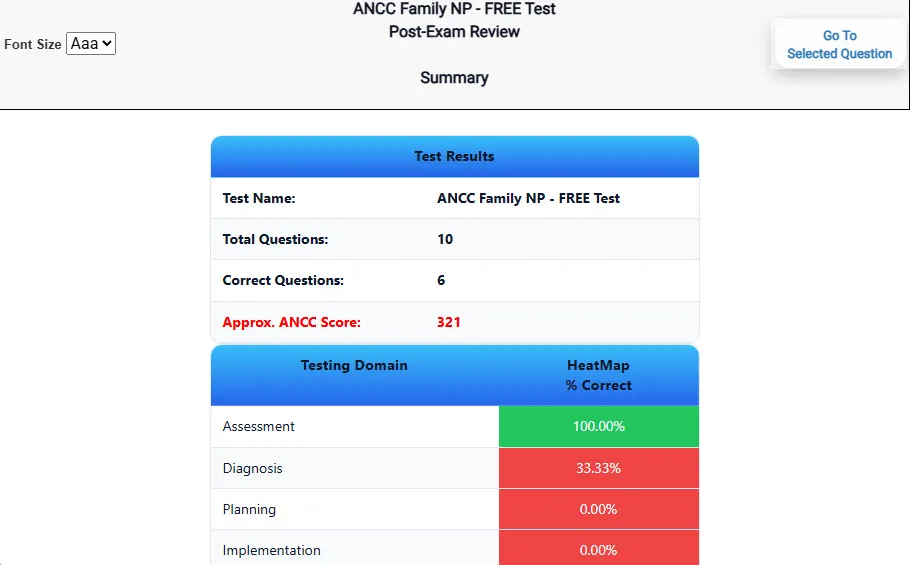
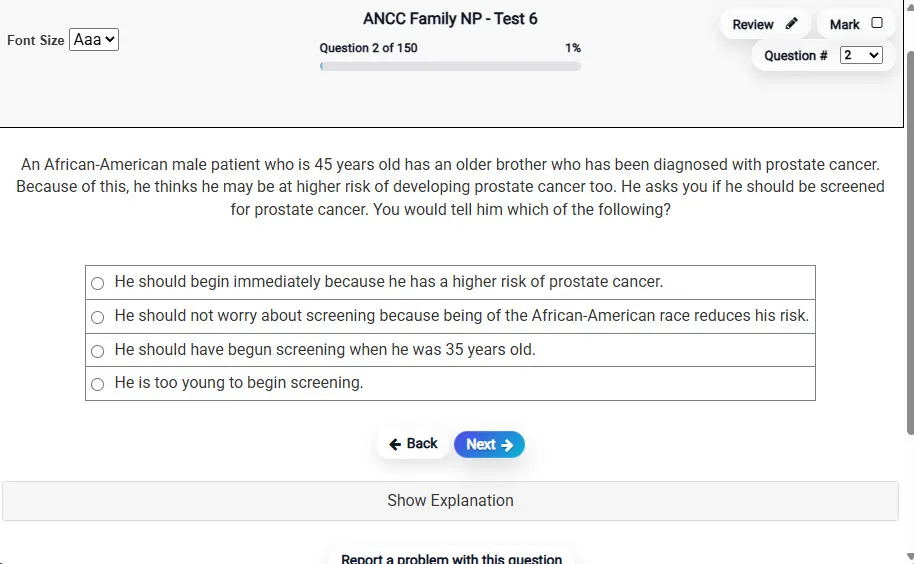
Answering a Question screen – Multiple-choice item view with navigation controls and progress tracker.
Answering a Question Multiple-choice item view with navigation controls and progress tracker.

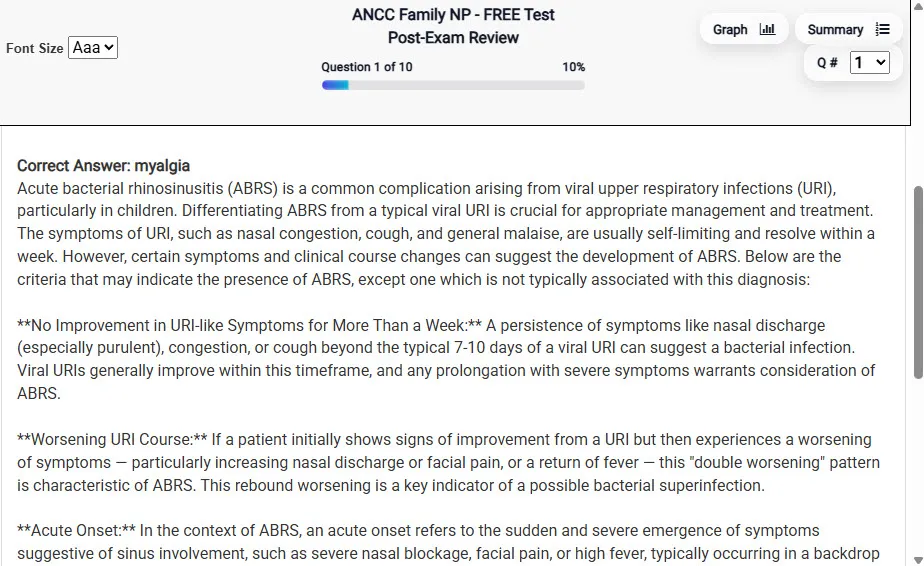
                           Detailed Explanation screen – 
                         Review mode showing chosen answer and rationale and references.
Detailed Explanation Review mode showing chosen answer and rationale and references.

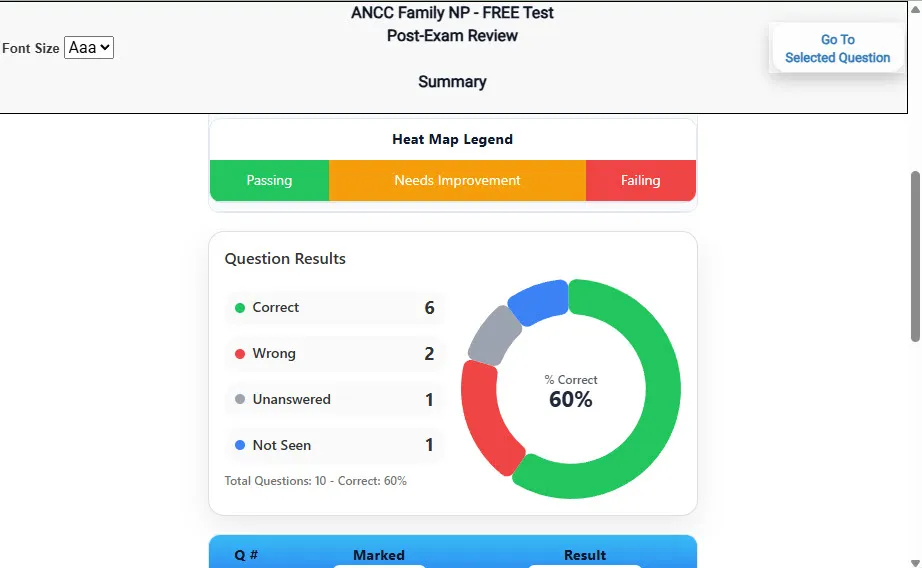
                           Review Summary 1 screen – 
                         Summary with counts for correct/wrong/unanswered and not seen items.
Review Summary 1 Summary with counts for correct/wrong/unanswered and not seen items.

                           Review Summary 2 screen – 
                         Advanced summary with category/domain breakdown and performance insights.
Review Summary 2 Advanced summary with category/domain breakdown and performance insights.

What Each Screen Shows

Answer Question Screen

  • Clean multiple-choice interface with progress bar.
  • Mark for review feature.
  • Matches real test pacing.

Detailed Explanation

  • Correct answer plus rationale.
  • Key concepts and guidelines highlighted.
  • Move between questions to fill knowledge gaps.

Review Summary 1

  • Overall results with total questions and scaled score.
  • Domain heatmap shows strengths and weaknesses.
  • Quick visual feedback on study priorities.

Review Summary 2

  • Chart of correct, wrong, unanswered, not seen.
  • Color-coded results for easy review.
  • Links back to missed items.

Top 10 Reasons to Use Exam Edge for your ASCP Histotechnician Exam Prep

  1. Focused on the ASCP Histotechnician Exam

    Our practice tests are built specifically for the ASCP Histotechnician exam — every question mirrors the real topics, format, and difficulty so you're studying exactly what matters.

  2. Real Exam Simulation

    We match the per-question time limits and pressure of the actual ASCP exam, so test day feels familiar and stress-free.

  3. 5 Full Practice Tests & 500 Unique Questions

    You'll have more than enough material to master every ASCP Histotechnician concept — no repeats, no fluff.

  4. Lower Cost Than a Retake

    Ordering 5 practice exams costs less than retaking the ASCP Histotechnician exam after a failure. One low fee could save you both time and money.

  5. Flexible Testing

    Need to step away mid-exam? Pick up right where you left off — with your remaining time intact.

  6. Instant Scoring & Feedback

    See your raw score and an estimated ASCP Histotechnician score immediately after finishing each practice test.

  7. Detailed Explanations for Every Question

    Review correct and incorrect answers with clear, step-by-step explanations so you truly understand each topic.

  8. Trusted & Accredited

    We're fully accredited by the Better Business Bureau and uphold the highest standards of trust and transparency.

  9. Web-Based & Always Available

    No software to install. Access your ASCP Histotechnician practice exams 24/7 from any computer or mobile device.

  10. Expert Support When You Need It

    Need extra help? Our specialized tutors are highly qualified and ready to support your ASCP exam prep.


Pass the ASCP Histotechnician Exam with Realistic Practice Tests from Exam Edge

Preparing for your upcoming ASCP Histotechnician (ASCP-HT) Certification Exam can feel overwhelming — but the right practice makes all the difference. Exam Edge gives you the tools, structure, and confidence to pass on your first try. Our online practice exams are built to match the real ASCP Histotechnician exam in content, format, and difficulty.

  • 📝 5 ASCP Histotechnician Practice Tests: Access 5 full-length exams with 100 questions each, covering every major ASCP Histotechnician topic in depth.
  • Instant Online Access: Start practicing right away — no software, no waiting.
  • 🧠 Step-by-Step Explanations: Understand the reasoning behind every correct answer so you can master ASCP Histotechnician exam concepts.
  • 🔄 Retake Each Exam Up to 4 Times: Build knowledge through repetition and track your improvement over time.
  • 🌐 Web-Based & Available 24/7: Study anywhere, anytime, on any device.
  • 🧘 Boost Your Test-Day Confidence: Familiarity with the ASCP format reduces anxiety and helps you perform under pressure.

These ASCP Histotechnician practice exams are designed to simulate the real testing experience by matching question types, timing, and difficulty level. This approach helps you get comfortable not just with the exam content, but also with the testing environment, so you walk into your exam day focused and confident.


Exam Edge ASCP Reviews


Thank you very much..... for helping me pass my ASCP-Medical Technologist exam.... 

Cheryll, North Dakota


ASCP Histotechnician Aliases Test Name

Here is a list of alternative names used for this exam.

  • ASCP Histotechnician
  • ASCP Histotechnician test
  • ASCP Histotechnician Certification Test
  • ASCP
  • ASCP ASCP-HT
  • ASCP-HT test
  • ASCP Histotechnician (ASCP-HT)
  • Histotechnician certification