This is the content of the pop-over!

ANCC FNP Practice Tests & Test Prep by Exam Edge


ANCC Family Nurse Practitioner  product image
(4.7)
Based on 37 Reviews

  • Real Exam Simulation: Timed questions and matching content build comfort for your ANCC Family NP test day.
  • Instant, 24/7 Access: Web-based ANCC Family Nurse Practitioner practice exams with no software needed.
  • Clear Explanations: Step-by-step answers and explanations for your ANCC exam to strengthen understanding.
  • Boosted Confidence: Reduces anxiety and improves test-taking skills to ace your ANCC Family Nurse Practitioner (FNP).

Featured on

ANCC Family Nurse Practitioner Online Practice Test Bundles

BEST VALUE
50 practice tests

$327.50

$1,497.50

SAVE $1170

Only $6.55 per test!

  • 100% Pass Guarantee
  • 50 online practice tests
  • 150 questions per test
  • Bonus: 100 Flash Cards + Study Guide
  • Instant access
  • Detailed Explanations
  • Practice tests never expire
  • Timed, untimed, or study guide mode
MOST POPULAR
25 practice tests

$218.75

$748.75

SAVE $530

Only $8.75 per test!

  • 25 online practice tests
  • 150 questions per test
  • Bonus: 100 Flash Cards + Study Guide
  • Instant access
  • Detailed Explanations
  • Practice tests never expire
  • Timed, untimed, or study guide mode
10 practice tests

$99.50

$299.50

SAVE $200

Only $9.95 per test!

  • 10 online practice tests
  • 150 questions per test
  • Bonus: 100 Flash Cards
  • Instant access
  • Detailed Explanations
  • Practice tests never expire
  • Timed, untimed, or study guide mode
5 practice tests

$59.75

$149.75

SAVE $90

Only $11.95 per test!

  • 5 online practice tests
  • 150 questions per test
  • Instant access
  • Detailed Explanations
  • Practice tests never expire
  • Timed, untimed, or study guide mode
1 practice test

$29.95

  • 1 online practice test
  • 150 questions per test
  • Instant access
  • Detailed Explanations
  • Practice tests never expire
  • Timed, untimed, or study guide mode
MOST FLEXIBLE
Question Bank

As low as $59.95

675 Questions

Choose 1, 3, 6, or 12 months
A second login is required.

  • Exam Edge content in a powerful question bank
  • Customize Tests
  • Multiple Test & Flash Card Modes
  • Track performance over time
  • Instant access
  • Detailed Explanations
Quick Select
Tap to choose a bundle

** All Prices are in US Dollars (USD) **


ANCC Family NP (FNP) Shortcuts


Understanding the exact breakdown of the ANCC Family Nurse Practitioner test will help you know what to expect and how to most effectively prepare. The ANCC Family Nurse Practitioner has 150 multiple-choice questions . The exam will be broken down into the sections below:

ANCC Family Nurse Practitioner Exam Blueprint
Domain Name % Number of
Questions
Assessment 19% 29
Diagnosis 17% 26
Planning 19% 29
Implementation 29% 44
Evaluation 15% 23

ANCC Family Nurse Practitioner Study Tips by Domain

  • Know how to obtain a complete, age-appropriate history (HPI with OLDCARTS/OPQRST, PMH/PSH, meds, allergies, FHx, SHx, ROS); it is tested with vignettes asking “next question” or “most important history element,” and a common trap is skipping pregnancy status/LMP or medication reconciliation in reproductive-age patients.
  • Know primary and secondary survey priorities (ABCs, mental status, vital-sign interpretation, red-flag symptoms); it is tested by “who must be seen first” triage items, and the trap is focusing on chronic complaints while missing instability (hypoxia, hypotension, altered mental status).
  • Know focused physical exam maneuvers and what they mean (e.g., McBurney/guarding, Murphy, CVA tenderness, JVD, calf asymmetry, meningeal signs); it is tested by selecting the most diagnostic exam component, and the trap is using low-yield maneuvers when a high-yield sign changes immediate management.
  • Know normal vs abnormal developmental and physiologic findings across the lifespan (pediatric milestones, adolescent puberty staging, pregnancy normals, geriatric changes); it is tested with “is this normal?” stems, and the trap is mislabeling normal aging changes as pathology (e.g., presbycusis) or missing abnormal ones (new confusion as delirium).
  • Know evidence-based preventive health assessment elements (screening readiness, risk stratification, lifestyle assessment, IPV screening, depression/substance screening); it is tested by choosing the most appropriate screening tool/interval in context, and the trap is using inappropriate screening in low-risk populations or missing high-risk indications.
  • Know how to assess pain and functional status (ADLs/IADLs, fall risk, frailty, occupational impact); it is tested through scenarios asking the “best next assessment” for chronic pain or geriatric visits, and the trap is treating pain without documenting function and risk (falls, misuse, depression).
  • Know cardiopulmonary assessment differentiators (acute coronary syndrome vs GERD, heart failure vs COPD, asthma severity, pneumonia red flags); it is tested via symptom clusters and lung/heart exam findings, and the trap is anchoring on benign causes of chest pain without ruling out life threats.
  • Know abdominal/genitourinary assessment essentials (hydration status, peritoneal signs, urinary symptoms, pelvic/testicular exam indications); it is tested by selecting exam steps and interpreting findings, and the trap is omitting genital exam when torsion, PID, ectopic pregnancy, or STI is plausible.
  • Know neurologic assessment basics (stroke recognition, cranial nerves, focal deficits, headache red flags, back pain cauda equina signs); it is tested with “urgent referral vs outpatient workup” decisions, and the trap is missing time-sensitive diagnoses (stroke/TIA, SAH, cauda equina).
  • Know dermatologic assessment patterns (morphology, distribution, systemic symptoms, melanoma ABCDE, drug eruptions); it is tested with lesion descriptions requiring next step, and the trap is ignoring mucosal involvement/systemic signs that indicate severe reactions (SJS/TEN).
  • Know culturally responsive and trauma-informed interviewing (health beliefs, language access, confidentiality with adolescents); it is tested by communication/ethics vignettes, and the trap is using family as interpreters or breaching adolescent confidentiality without safety/legal justification.
  • Know how to build prioritized differential diagnoses using likelihood and danger (common vs can’t-miss); it is tested by “most likely diagnosis” vs “diagnosis to rule out first,” and the trap is premature closure on common conditions when red flags suggest emergent pathology.
  • Know appropriate selection and interpretation of basic labs (CBC patterns, CMP abnormalities, TSH utility, A1c criteria, lipid interpretation); it is tested with lab panels embedded in cases, and the trap is over-ordering or misattributing nonspecific lab changes (e.g., mild leukocytosis) without clinical context.
  • Know diagnostic criteria and thresholds for diabetes/prediabetes (A1c, fasting glucose, OGTT) and acute metabolic complications; it is tested with numeric cutoffs and follow-up steps, and the trap is failing to confirm diagnosis appropriately or missing DKA/HHS warning signs.
  • Know evaluation of chest pain and dyspnea (risk stratification, ECG role, troponin timing conceptually, PE probability, asthma/COPD differentiation); it is tested by choosing initial tests and disposition, and the trap is ordering outpatient tests when ED transfer is indicated (suspected ACS/PE).
  • Know infectious disease diagnostic approach (URI vs sinusitis vs pneumonia, UTI criteria, STI testing strategy, mono vs strep); it is tested by selecting the best confirmatory test, and the trap is treating empirically without meeting diagnostic criteria (e.g., asymptomatic bacteriuria in nonpregnant adults).
  • Know anemia evaluation by indices (microcytic vs normocytic vs macrocytic) and next diagnostic step (ferritin, B12/folate, retic count); it is tested with CBC interpretation, and the trap is assuming iron deficiency without considering chronic disease, thalassemia, or occult bleeding.
  • Know thyroid disorder recognition (hypo vs hyper symptoms, TSH-first approach, when to add free T4/T3); it is tested by lab-driven vignettes, and the trap is misinterpreting abnormal TSH in acute illness or missing medication effects (amiodarone, biotin interference).
  • Know pregnancy-related diagnosis basics (confirming pregnancy, ectopic pregnancy red flags, preeclampsia recognition, Rh considerations conceptually); it is tested by urgent symptom scenarios (pain/bleeding/headache), and the trap is failing to obtain pregnancy testing before prescribing/diagnosing in reproductive-age patients.
  • Know psychiatric diagnostic screening and differentiation (MDD vs bipolar, GAD vs panic, ADHD vs anxiety, substance use); it is tested with symptom-duration criteria and tool selection (e.g., PHQ-9, GAD-7), and the trap is initiating antidepressants without screening for bipolar disorder history.
  • Know musculoskeletal diagnostic pathways (sprain/strain vs fracture, septic arthritis red flags, back pain red flags, gout vs cellulitis); it is tested with “need imaging?” and “urgent referral?” questions, and the trap is missing infection or neuro compromise when pain seems mechanical.
  • Know cancer screening/diagnostic follow-up logic (abnormal Pap/HPV pathways conceptually, colon screening positives, breast mass evaluation by age); it is tested with “next step after abnormal screening” items, and the trap is repeating screening instead of moving to appropriate diagnostic evaluation.
  • Know first-line pharmacologic and nonpharmacologic management for hypertension (lifestyle, thiazides/ACEi/ARB/CCB selection, compelling indications); it is tested with medication-choice vignettes, and the trap is using contraindicated drugs in pregnancy or failing to consider CKD/diabetes comorbidities.
  • Know diabetes management frameworks (metformin initiation when appropriate, GLP-1RA/SGLT2 indications by comorbidity, hypoglycemia risk); it is tested by selecting next medication and monitoring, and the trap is overlooking renal function limits or continuing sulfonylureas/insulin without addressing hypoglycemia episodes.
  • Know evidence-based management of hyperlipidemia and ASCVD risk reduction (statin intensity concepts, lifestyle, secondary prevention); it is tested with risk-factor cases and med selection, and the trap is missing drug interactions or not counseling on myopathy warning signs and adherence.
  • Know acute infection treatment principles (when antibiotics are indicated, appropriate agent selection, duration concepts, stewardship); it is tested with URI/otitis/sinusitis/UTI/pneumonia cases, and the trap is treating viral syndromes with antibiotics or missing need for culture/NAAT before therapy in STIs.
  • Know asthma and COPD chronic management (controller vs reliever roles, stepwise escalation, inhaler technique education); it is tested by symptom control scenarios, and the trap is prescribing inhalers without verifying technique, adherence, and trigger management.
  • Know anticoagulation/antiplatelet and VTE management concepts (indications, bleeding risk recognition, peri-procedural considerations at a high level); it is tested by medication safety and contraindication questions, and the trap is missing major bleeding signs or combining agents inappropriately.
  • Know pain management best practices (NSAID/acetaminophen ceilings, neuropathic options, opioid risk mitigation, nonpharmacologic therapies); it is tested with chronic pain vignettes, and the trap is ignoring renal/GI/cardiac risks of NSAIDs or not assessing misuse risk before opioids.
  • Know women’s health management basics (contraception selection, emergency contraception timing conceptually, vaginitis/cervicitis treatment, prenatal counseling triggers for referral); it is tested with reproductive planning cases, and the trap is overlooking contraindications to estrogen (smoking age, migraines with aura, VTE history).
  • Know pediatric management essentials (fever evaluation by age, dehydration assessment/ORS dosing concept, otitis media watchful waiting criteria conceptually); it is tested by age-based “manage vs refer” decisions, and the trap is missing serious bacterial infection risk in very young infants or underestimating dehydration severity.
  • Know geriatric management considerations (polypharmacy review, Beers list awareness, falls prevention, dementia vs delirium response); it is tested through medication and safety scenarios, and the trap is continuing high-risk sedatives/anticholinergics or attributing delirium to “normal aging.”
  • Know immunization administration and contraindication logic (live vaccines, pregnancy/immunocompromise considerations, catch-up principles); it is tested via “which vaccine today?” items, and the trap is giving live vaccines to immunocompromised patients or missing opportunities for vaccination during routine visits.
  • Know when to refer, image, or send to ED (stroke/ACS/PE, ectopic pregnancy, appendicitis, sepsis, suicidal intent); it is tested with disposition and timing questions, and the trap is attempting outpatient management for time-sensitive emergencies where delay increases morbidity.
  • Legal/ethical implementation in care and technology: Apply HIPAA/confidentiality, informed consent, documentation standards, and accessibility considerations (including telehealth) to everyday clinical scenarios.
  • Pharmacotherapeutic intervention selection: Choose appropriate medications considering interactions, contraindications (pregnancy, QT risk, renal disease), side effects, and patient goals; specify monitoring and stop/hold criteria.
  • Nonpharmacologic interventions and procedures: Know indications and safety steps for common office-based care (wound care, splinting, sutures, biopsies, basic injections) and when higher-level care is required.
  • Regulatory guidelines: Implement required reporting and safety steps for reportable diseases, suspected abuse/neglect, and other mandated situations; prioritize patient safety and documentation.
  • Scope and standards of APRN practice: Practice within role boundaries while coordinating interprofessional care; recognize when collaboration or supervision requirements apply in your setting.
  • Comprehensive documentation: Chart clinical reasoning clearly (assessment, differential, plan, education, follow-up, red flags) so the record supports continuity, safety, and medicolegal standards.
  • Patient-specific education: Provide clear counseling on diagnosis, medications, lifestyle changes, and warning signs; use teach-back and written instructions tailored to literacy level.
  • Resource management: Select cost-effective, accessible therapies and coordinate services (imaging, specialty care, community resources) while addressing barriers like transportation, insurance, and pharmacy access.
  • Therapeutic communication: Use motivational interviewing and shared decision-making to improve behavior change and adherence, especially for chronic disease management and preventive care.
  • Outcome evaluation using ethical and legal principles: Reassess goals and outcomes while respecting autonomy, justice, consent, guardianship issues, and documentation requirements in complex cases.
  • Evaluate diagnostic test results: Interpret results in clinical context (false positives/negatives, pretest probability) and determine the next step—treat, repeat, expand workup, or refer.
  • Monitor nonpharmacologic treatment outcomes: Define objective measures (symptom scores, functional status, vitals, weight, peak flow) and adjust the plan when targets aren’t met.
  • Monitor pharmacotherapy outcomes and adverse effects: Track efficacy, side effects, adherence, and lab monitoring requirements (e.g., renal function, electrolytes) and know when to discontinue or switch therapy.
  • Follow-up timing and safety netting: Set evidence-based follow-up intervals and provide explicit return precautions for worsening symptoms, new red flags, or lack of improvement.
  • Care-plan modification: When outcomes are suboptimal, reassess diagnosis, barriers, and adherence; escalate therapy appropriately and document the rationale for changes.
  • Reporting and communication of results: Communicate results promptly and clearly, ensure patient understanding, and close the loop on referrals, abnormal findings, and pending studies.

Built to Fit Into Your Busy Life

Everything you need to prepare with confidence—without wasting a minute.

Three Study Modes

Timed, No Time Limit, or Explanation mode.

Actionable Analytics

Heatmaps and scaled scores highlight weak areas.

High-Yield Rationales

Concise explanations emphasize key concepts.

Realistic Interface

Matches the feel of the actual exam environment.

Accessible by Design

Clean layout reduces cognitive load.

Anytime, Anywhere

Web-based access 24/7 on any device.
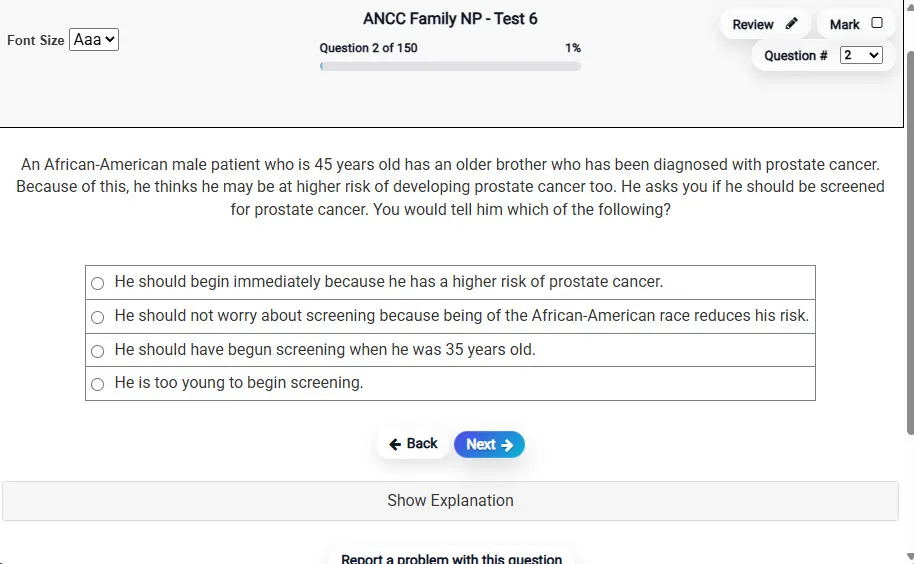
Answering a Question screen – Multiple-choice item view with navigation controls and progress tracker.
Answering a Question Multiple-choice item view with navigation controls and progress tracker.

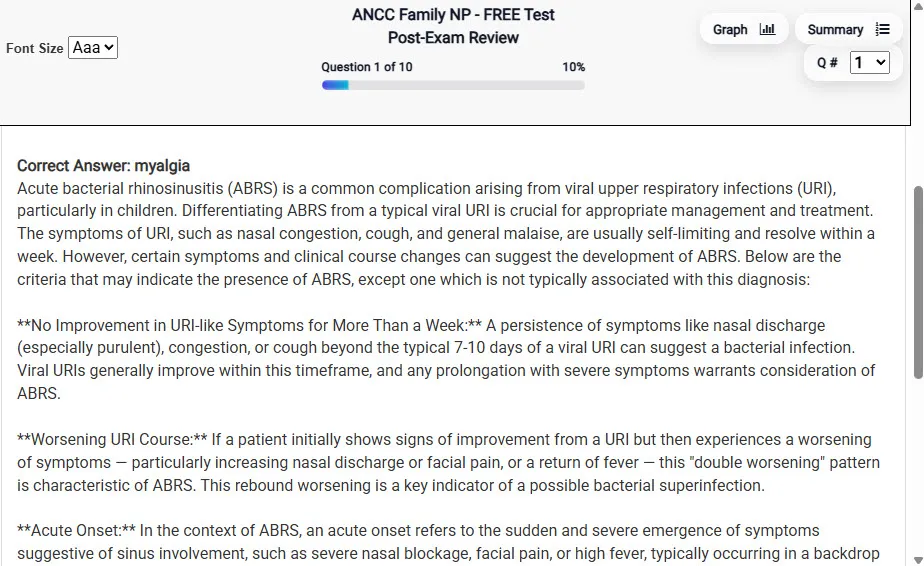
                           Detailed Explanation screen – 
                         Review mode showing chosen answer and rationale and references.
Detailed Explanation Review mode showing chosen answer and rationale and references.

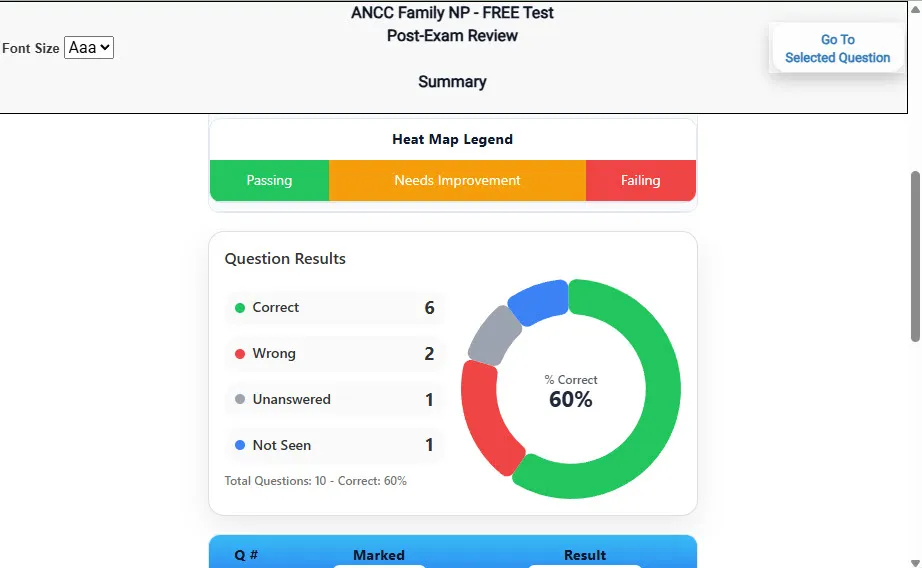
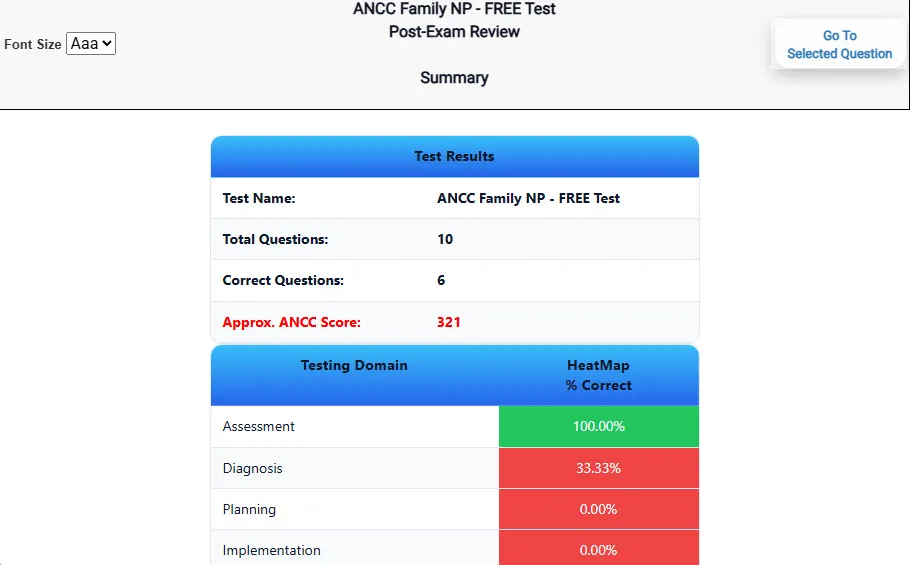
                           Review Summary 1 screen – 
                         Summary with counts for correct/wrong/unanswered and not seen items.
Review Summary 1 Summary with counts for correct/wrong/unanswered and not seen items.

                           Review Summary 2 screen – 
                         Advanced summary with category/domain breakdown and performance insights.
Review Summary 2 Advanced summary with category/domain breakdown and performance insights.

What Each Screen Shows

Answer Question Screen

  • Clean multiple-choice interface with progress bar.
  • Mark for review feature.
  • Matches real test pacing.

Detailed Explanation

  • Correct answer plus rationale.
  • Key concepts and guidelines highlighted.
  • Move between questions to fill knowledge gaps.

Review Summary 1

  • Overall results with total questions and scaled score.
  • Domain heatmap shows strengths and weaknesses.
  • Quick visual feedback on study priorities.

Review Summary 2

  • Chart of correct, wrong, unanswered, not seen.
  • Color-coded results for easy review.
  • Links back to missed items.

Top 10 Reasons to Use Exam Edge for your ANCC Family Nurse Practitioner Exam Prep

  1. Focused on the ANCC Family Nurse Practitioner Exam

    Our practice tests are built specifically for the ANCC Family NP exam — every question mirrors the real topics, format, and difficulty so you're studying exactly what matters.

  2. Real Exam Simulation

    We match the per-question time limits and pressure of the actual ANCC exam, so test day feels familiar and stress-free.

  3. 50 Full Practice Tests & 7,500 Unique Questions

    You'll have more than enough material to master every ANCC Family NP concept — no repeats, no fluff.

  4. Lower Cost Than a Retake

    Ordering 5 practice exams costs less than retaking the ANCC Family Nurse Practitioner exam after a failure. One low fee could save you both time and money.

  5. Flexible Testing

    Need to step away mid-exam? Pick up right where you left off — with your remaining time intact.

  6. Instant Scoring & Feedback

    See your raw score and an estimated ANCC Family Nurse Practitioner score immediately after finishing each practice test.

  7. Detailed Explanations for Every Question

    Review correct and incorrect answers with clear, step-by-step explanations so you truly understand each topic.

  8. Trusted & Accredited

    We're fully accredited by the Better Business Bureau and uphold the highest standards of trust and transparency.

  9. Web-Based & Always Available

    No software to install. Access your ANCC Family NP practice exams 24/7 from any computer or mobile device.

  10. Expert Support When You Need It

    Need extra help? Our specialized tutors are highly qualified and ready to support your ANCC exam prep.


Pass the ANCC Family Nurse Practitioner Exam with Realistic Practice Tests from Exam Edge

Preparing for your upcoming ANCC Family Nurse Practitioner (FNP) Certification Exam can feel overwhelming — but the right practice makes all the difference. Exam Edge gives you the tools, structure, and confidence to pass on your first try. Our online practice exams are built to match the real ANCC Family NP exam in content, format, and difficulty.

  • 📝 50 ANCC Family Nurse Practitioner Practice Tests: Access 50 full-length exams with 150 questions each, covering every major ANCC Family Nurse Practitioner topic in depth.
  • Instant Online Access: Start practicing right away — no software, no waiting.
  • 🧠 Step-by-Step Explanations: Understand the reasoning behind every correct answer so you can master ANCC Family NP exam concepts.
  • 🔄 Retake Each Exam Up to 4 Times: Build knowledge through repetition and track your improvement over time.
  • 🌐 Web-Based & Available 24/7: Study anywhere, anytime, on any device.
  • 🧘 Boost Your Test-Day Confidence: Familiarity with the ANCC format reduces anxiety and helps you perform under pressure.

These ANCC Family Nurse Practitioner practice exams are designed to simulate the real testing experience by matching question types, timing, and difficulty level. This approach helps you get comfortable not just with the exam content, but also with the testing environment, so you walk into your exam day focused and confident.


Exam Edge ANCC Reviews


I just received my Family Nurse Practitioner exam score and I passed with a 440! Your tests definitely made the difference for me! The questions on the real test were so similar that I felt very comfortable taking it. I will recommend your site to everyone I know that’s preparing for the ...
Read More
Wendy H., Pennsylvania

Every new graduate from an FNP program knows that your degree is relatively inactive until you pass the national certification exam. The stress is overwhelming, especially if you do not have the finances to take an expensive review course. Well, I am so glad I stumbled upon the Family NP prep websit ...
Read More
Jennifer , NC

I purchased over 20 exams and truly am so thankful I did. My studying prior was patchy and frustrating. Through the exams I was able to review the content I incorrectly answered and am proud to say I passed on my first go round. Not an easy feat with a family and job! Thanks

Lissette, Virginia

I wanted to let you know that I passed my FNP exam with flying colors. The test questions on your site were exceptionally helpful in my review. Thank you very much

Theresa, Millstadt, Illinois

Thank you for developing these tests, I passed the FNP exam today and it was very helpful to use your tests over the past few months, helped tremendously.

Cheryl , Prosper, Texas

These tests were a fantastic prep for the FNP ANCC board certification test! Thank you! I'm glad there was a resource like this for me to use, the practice questions were VERY similar to the real thing.

Daniel , Georgia


ANCC Family Nurse Practitioner Aliases Test Name

Here is a list of alternative names used for this exam.

  • ANCC Family Nurse Practitioner
  • ANCC Family Nurse Practitioner test
  • ANCC Family Nurse Practitioner Certification Test
  • ANCC Family NP test
  • ANCC
  • ANCC FNP
  • FNP test
  • ANCC Family Nurse Practitioner (FNP)
  • Family Nurse Practitioner certification
  • ANA Family Nurse Practitioner
  • ANA Family Nurse Practitioner certification
  • ANA FNP