This is the content of the pop-over!

AMT CMAS (CMAS) Practice Tests & Test Prep by Exam Edge


AMT Certified Medical Administrative Specialist product image
(4.6)
Based on 37 Reviews

  • Real Exam Simulation: Timed questions and matching content build comfort for your AMT CMAS test day.
  • Instant, 24/7 Access: Web-based AMT Certified Medical Administrative Specialist practice exams with no software needed.
  • Clear Explanations: Step-by-step answers and explanations for your AMT exam to strengthen understanding.
  • Boosted Confidence: Reduces anxiety and improves test-taking skills to ace your AMT Certified Medical Administrative Specialist (CMAS).

Featured on

AMT Certified Medical Administrative Specialist Online Practice Test Bundles

BEST VALUE
20 practice tests

$174.00

$799.00

SAVE $625

Only $8.70 per test!

  • 100% Pass Guarantee
  • 20 online practice tests
  • 100 questions per test
  • Bonus: 100 Flash Cards + Study Guide
  • Instant access
  • Detailed Explanations
  • Practice tests never expire
  • Timed, untimed, or study guide mode
MOST POPULAR
10 practice tests

$99.50

$399.50

SAVE $300

Only $9.95 per test!

  • 10 online practice tests
  • 100 questions per test
  • Bonus: 100 Flash Cards + Study Guide
  • Instant access
  • Detailed Explanations
  • Practice tests never expire
  • Timed, untimed, or study guide mode
5 practice tests

$69.75

$199.75

SAVE $130

Only $13.95 per test!

  • 5 online practice tests
  • 100 questions per test
  • Bonus: 100 Flash Cards
  • Instant access
  • Detailed Explanations
  • Practice tests never expire
  • Timed, untimed, or study guide mode
1 practice test

$39.95

  • 1 online practice test
  • 100 questions per test
  • Instant access
  • Detailed Explanations
  • Practice tests never expire
  • Timed, untimed, or study guide mode
Quick Select
Tap to choose a bundle

** All Prices are in US Dollars (USD) **


AMT CMAS (CMAS) Resources

Jump to the section you need most.

Understanding the exact breakdown of the AMT Certified Medical Administrative Specialist test will help you know what to expect and how to most effectively prepare. The AMT Certified Medical Administrative Specialist has multiple-choice questions . The exam will be broken down into the sections below:

AMT Certified Medical Administrative Specialist Exam Blueprint
Domain Name % Number of
Questions
     Anatomy and Physiology 11% 11
     Medical Office Management - General Office Procedures 10% 10
     Medical Office Management - Bookkeeping 4% 4
     Medical Office Management - Insurance Processings 4% 4
     Medical Procedures 12% 12
     Patient Examination 12% 12
     Phlebotomy 11% 11
     Diagnostic Testing: ECG and other Lab Procedures 12% 12
     Medical Terminology 12% 12
     Pharmacology 12% 12

AMT Certified Medical Administrative Specialist Study Tips by Domain

  • Know directional terms and planes (anterior/posterior, proximal/distal, sagittal/coronal/transverse)—common trap is mixing medial/lateral when describing limb findings.
  • Differentiate basic tissue types (epithelial, connective, muscle, nervous) and their functions—red flag: confusing tendon (connective) with muscle when documenting injury location.
  • Review major body cavities and organ locations (thoracic vs abdominal; quadrants)—priority rule: right-lower-quadrant pain suggests appendix involvement and should be escalated promptly.
  • Understand vital-sign physiology (heart rate, blood pressure, respiration, temperature) and normal ranges by adult context—threshold cue: hypotension with tachycardia can indicate shock and needs immediate clinical notification.
  • Identify key cardiovascular and respiratory structures (atria/ventricles, valves; trachea/bronchi/alveoli) and basic gas exchange—contraindication cue: shortness of breath with chest pain is an urgent symptom set, not routine scheduling.
  • Know endocrine and renal basics (insulin/glucagon; kidney filtration and fluid balance)—common trap: attributing polyuria/polydipsia to “just hydration” instead of flagging possible hyperglycemia/diabetes.
  • Control patient flow with documented scheduling rules (new vs. established, double-book limits) and a clear late/no-show policy—red flag: chronic overbooking that creates HIPAA exposure in crowded waiting areas.
  • Apply HIPAA minimum necessary and verify patient identity before releasing any information—common trap: discussing results within earshot of other patients or leaving sign-in sheets with visit reasons visible.
  • Maintain a reliable telephone protocol (greeting, message form, read-back of numbers, urgent escalation) and document all advice given—priority rule: chest pain, shortness of breath, or stroke symptoms get 911/ED direction, not routine scheduling.
  • Handle medical records with strict chain-of-custody: date-stamp requests, confirm authorization, and log releases—red flag: sending records to an employer/attorney without a signed, specific release.
  • Use correct mail, fax, and email safeguards (cover sheets, verified numbers, encryption when required) and report misdirected PHI immediately—common trap: auto-faxing to an outdated number without a confirmation check.
  • Follow OSHA bloodborne pathogen basics for the front office (spill kit, PPE availability, labeled biohazard disposal) and document incidents—contraindication: staff cleaning blood without gloves or placing contaminated items in regular trash.
  • Post transactions to the correct account type (asset, liability, equity, revenue, expense) and double-check the normal balance—red flag: a debit to revenue or a credit to an expense unless it’s a correction.
  • Reconcile the bank statement monthly by matching deposits, checks, and electronic payments; common trap: ignoring outstanding checks or deposits in transit and forcing the balance.
  • Differentiate patient A/R from insurance A/R and apply payments to the oldest allowable balances per office policy; red flag: leaving credit balances (overpayments) unresolved on patient accounts.
  • Handle petty cash with a fixed fund and require receipts for every disbursement; common trap: using petty cash for large purchases instead of issuing a check or card transaction.
  • Prepare end-of-day closeout totals (charges, payments by type, adjustments, deposits) and ensure the deposit equals the day’s receipts; red flag: rounding or “plugging” a variance without identifying the source.
  • Maintain audit trails and segregation of duties where possible (posting vs. depositing vs. reconciling); priority rule: any single person controlling all three is a control weakness likely targeted in AMT-style compliance scenarios.
  • Verify insurance eligibility and prior authorization before non-urgent services; red flag: scheduling imaging/surgery without a documented auth reference number and effective dates.
  • Use the correct primary vs secondary payer order (COB) and capture other coverage details; common trap: billing the secondary first, triggering denials and patient complaints.
  • Submit clean claims with complete demographics, policy IDs, and accurate ICD-10-CM/CPT/HCPCS codes; priority rule: one wrong digit in subscriber ID or DOB can cause an avoidable “patient not found” rejection.
  • Apply payer-specific timely filing limits and track submission dates; red flag: letting claims age past the payer window (often 90–180 days) and having to write off charges.
  • Post EOB/ERA payments correctly using contractual adjustments vs patient responsibility; common trap: treating a contractual write-off as a patient balance and sending an improper bill.
  • Manage denials and appeals with documentation (medical necessity, referrals, auths, corrected claims); priority rule: appeal within the payer’s deadline and include the denial code rationale or the appeal will be dismissed.
  • Apply standard precautions for every patient encounter—red flag: reusing gloves or skipping hand hygiene between tasks is a common AMT test trap.
  • Maintain aseptic technique during minor procedures (e.g., wound care, dressing changes)—priority rule: if sterility is broken, stop and replace contaminated supplies before continuing.
  • Follow correct specimen collection/handling steps when assisting with procedures—red flag: unlabeled or mislabeled specimens are a reportable error and often mean recollection.
  • Prepare patients for procedures with correct positioning and instructions—common trap: failing to verify identity and procedure before prep (two identifiers) can lead to wrong-patient/wrong-procedure events.
  • Monitor and document vitals and patient response before/during/after procedures—threshold cue: new shortness of breath, chest pain, syncope, or rapidly dropping BP requires immediate escalation.
  • Use proper post-procedure care and discharge instructions (wound care, activity limits, follow-up)—red flag: not documenting patient education and consent/refusal can create compliance and liability issues.
  • Confirm patient identity with at least two identifiers (e.g., full name and DOB) before any exam step—red flag: relying on room number or a chart label alone.
  • Measure and document vital signs with correct technique (appropriate cuff size, patient seated and rested)—common trap: recording a BP over clothing or immediately after activity.
  • Use proper positioning and draping to protect modesty while enabling assessment—priority rule: expose only the area being examined and re-drape promptly.
  • Apply standard precautions for every patient (hand hygiene, gloves when exposure is possible)—red flag: touching keyboards/phones with contaminated gloves during the exam flow.
  • Recognize urgent findings and escalate immediately (e.g., chest pain, severe SOB, syncope, signs of stroke)—threshold cue: activate office emergency protocol rather than scheduling routine follow-up.
  • Document objectively in the medical record (patient statements in quotes, measurable observations)—common trap: using judgmental terms (e.g., “uncooperative”) instead of specific behaviors.
  • Verify patient identity with at least two identifiers (e.g., full name and DOB) and label tubes at the bedside immediately—red flag: pre-labeling tubes before the draw.
  • Choose the correct site and avoid contraindicated areas (edema, hematoma, mastectomy side, fistula/AV shunt arm)—trap: drawing above an active IV can dilute specimens.
  • Apply the tourniquet 3–4 inches above the site and release within 1 minute once blood flow is established—priority rule: prolonged tourniquet time can falsely elevate analytes (hemoconcentration).
  • Follow order of draw to prevent additive carryover (blood cultures, citrate, serum, heparin, EDTA, glycolytic inhibitor)—common trap: EDTA contamination causing falsely high potassium and low calcium.
  • Match needle and technique to patient and test needs (butterfly for fragile veins, avoid small needles for high-volume draws)—red flag: excessive suction or pulling a syringe plunger too hard causes hemolysis.
  • Handle and transport specimens per test requirements (invert additive tubes the recommended times; protect light-sensitive samples like bilirubin)—trap: failing to document time-critical collections (e.g., peak/trough or glucose tolerance) can invalidate results.
  • Before ECG acquisition, confirm patient identifiers and correct lead placement; a common trap is swapping limb leads (RA/LA) which can mimic axis deviation or infarct patterns.
  • For a 12-lead ECG, ensure the standard settings (25 mm/sec, 10 mm/mV) unless ordered otherwise; red flag: abnormal interpretation when the calibration mark is not 10 mm.
  • Recognize urgent ECG findings requiring immediate escalation per office protocol (e.g., ST-elevation in contiguous leads, wide-complex tachycardia); priority rule: don’t wait to “finish paperwork” before notifying the provider.
  • For waived point-of-care testing (e.g., urine dip, glucose), follow manufacturer timing exactly; common trap: reading results outside the time window yields false positives/negatives.
  • Specimen handling affects lab validity—label at bedside, note collection time, and use correct tube/additive; red flag: hemolyzed samples from small needles or vigorous shaking can invalidate potassium and other chemistries.
  • Maintain QC/QA documentation (controls, lot numbers, expiration dates, maintenance logs) for in-office testing; AMT-style pitfall: performing patient testing when daily controls are out of range or reagents are expired.
  • Break down terms into prefix, root, suffix before guessing meaning; red flag: confusing “ileum” (small intestine) with “ilium” (hip bone) leads to charting errors.
  • Use standard abbreviations only and avoid ambiguous shorthand; common trap: writing “QD” or “U” instead of “daily” and “units” increases medication and scheduling mistakes.
  • Know directional and positional terms (anterior/posterior, proximal/distal, medial/lateral) to route messages correctly; cue: if the complaint location is vague, clarify before documenting.
  • Differentiate similar procedure terms (biopsy vs excision, arthroscopy vs arthroplasty) when creating referrals or orders; red flag: attaching the wrong CPT support documents because the term was misread.
  • Interpret common diagnostic prefixes/suffixes accurately (e.g., -itis inflammation, -ectomy removal, -ostomy creation); priority rule: verify whether documentation indicates a symptom, diagnosis, or procedure before coding support.
  • Recognize high-risk look-alike/sound-alike terms (hyper/hypo, tachy/brady, benign/malignant) in notes; common trap: transposing hyperglycemia and hypoglycemia when relaying results.
  • Verify the “five rights” of medication administration (right patient, drug, dose, route, time) and document immediately; red flag: giving a medication when two patient identifiers aren’t confirmed.
  • Know common high-alert abbreviations to avoid (e.g., no “U” for units, no trailing zero); common trap: misread dosing from “.5 mg” without a leading zero.
  • Screen for allergies and cross-sensitivities before administration; priority rule: a history of penicillin allergy warrants caution with cephalosporins and requires clear provider follow-up.
  • Recognize major adverse reaction patterns and escalation steps; red flag: anaphylaxis signs (wheezing, facial swelling, hypotension) require immediate emergency response and documentation of time and interventions.
  • Understand basic pharmacokinetics and factors that alter dosing (age, renal/hepatic function); common trap: assuming “standard adult dose” is safe in elderly patients or those with impaired kidney function.
  • Handle controlled substances per policy and regulations (secure storage, accurate counts, witnessed wasting when required); red flag: discrepancies in logs or missing signatures are compliance issues that must be reported promptly.


Built to Fit Into Your Busy Life

Everything you need to prepare with confidence—without wasting a minute.

Three Study Modes

Timed, No Time Limit, or Explanation mode.

Actionable Analytics

Heatmaps and scaled scores highlight weak areas.

High-Yield Rationales

Concise explanations emphasize key concepts.

Realistic Interface

Matches the feel of the actual exam environment.

Accessible by Design

Clean layout reduces cognitive load.

Anytime, Anywhere

Web-based access 24/7 on any device.
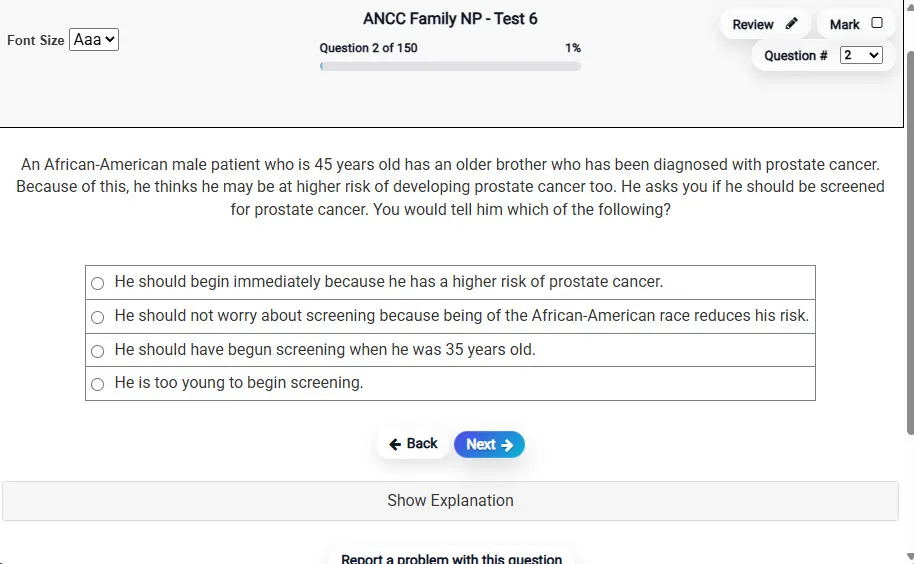
Answering a Question screen – Multiple-choice item view with navigation controls and progress tracker.
Answering a Question Multiple-choice item view with navigation controls and progress tracker.

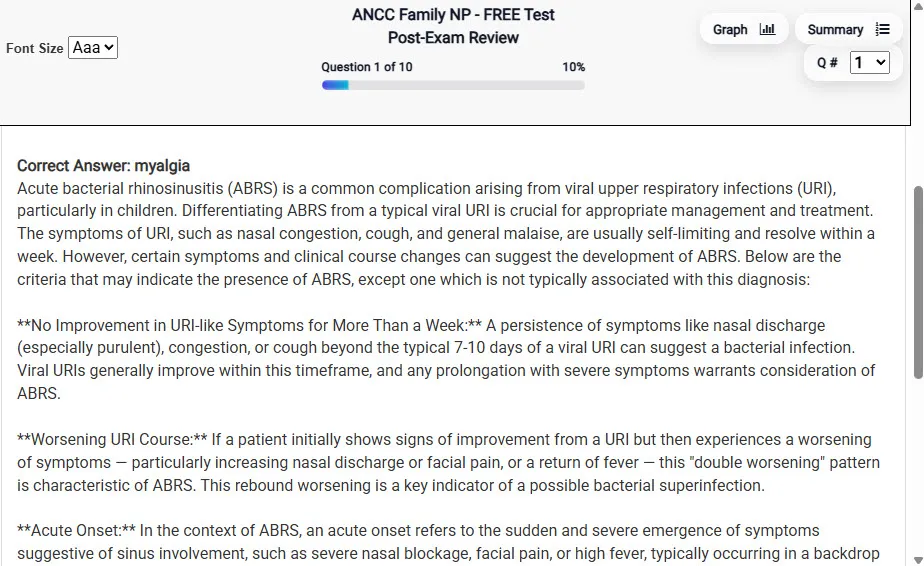
                           Detailed Explanation screen – 
                         Review mode showing chosen answer and rationale and references.
Detailed Explanation Review mode showing chosen answer and rationale and references.

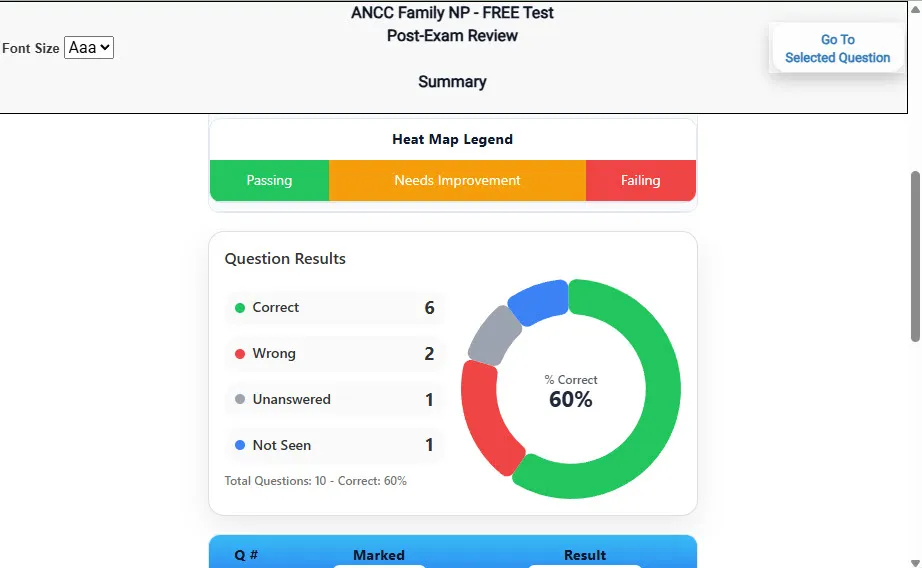
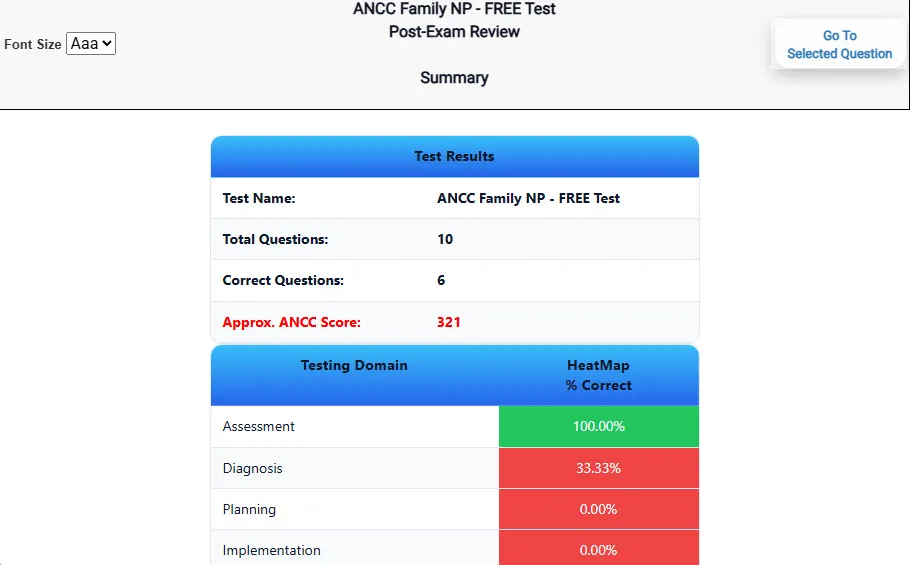
                           Review Summary 1 screen – 
                         Summary with counts for correct/wrong/unanswered and not seen items.
Review Summary 1 Summary with counts for correct/wrong/unanswered and not seen items.

                           Review Summary 2 screen – 
                         Advanced summary with category/domain breakdown and performance insights.
Review Summary 2 Advanced summary with category/domain breakdown and performance insights.

What Each Screen Shows

Answer Question Screen

  • Clean multiple-choice interface with progress bar.
  • Mark for review feature.
  • Matches real test pacing.

Detailed Explanation

  • Correct answer plus rationale.
  • Key concepts and guidelines highlighted.
  • Move between questions to fill knowledge gaps.

Review Summary 1

  • Overall results with total questions and scaled score.
  • Domain heatmap shows strengths and weaknesses.
  • Quick visual feedback on study priorities.

Review Summary 2

  • Chart of correct, wrong, unanswered, not seen.
  • Color-coded results for easy review.
  • Links back to missed items.

Top 10 Reasons to Use Exam Edge for your AMT Certified Medical Administrative Specialist Exam Prep

  1. Focused on the AMT Certified Medical Administrative Specialist Exam

    Our practice tests are built specifically for the AMT CMAS exam — every question mirrors the real topics, format, and difficulty so you're studying exactly what matters.

  2. Real Exam Simulation

    We match the per-question time limits and pressure of the actual AMT exam, so test day feels familiar and stress-free.

  3. 20 Full Practice Tests & 2,000 Unique Questions

    You'll have more than enough material to master every AMT CMAS concept — no repeats, no fluff.

  4. Lower Cost Than a Retake

    Ordering 5 practice exams costs less than retaking the AMT Certified Medical Administrative Specialist exam after a failure. One low fee could save you both time and money.

  5. Flexible Testing

    Need to step away mid-exam? Pick up right where you left off — with your remaining time intact.

  6. Instant Scoring & Feedback

    See your raw score and an estimated AMT Certified Medical Administrative Specialist score immediately after finishing each practice test.

  7. Detailed Explanations for Every Question

    Review correct and incorrect answers with clear, step-by-step explanations so you truly understand each topic.

  8. Trusted & Accredited

    We're fully accredited by the Better Business Bureau and uphold the highest standards of trust and transparency.

  9. Web-Based & Always Available

    No software to install. Access your AMT CMAS practice exams 24/7 from any computer or mobile device.

  10. Expert Support When You Need It

    Need extra help? Our specialized tutors are highly qualified and ready to support your AMT exam prep.


Pass the AMT Certified Medical Administrative Specialist Exam with Realistic Practice Tests from Exam Edge

Preparing for your upcoming AMT Certified Medical Administrative Specialist (CMAS) Certification Exam can feel overwhelming — but the right practice makes all the difference. Exam Edge gives you the tools, structure, and confidence to pass on your first try. Our online practice exams are built to match the real AMT CMAS exam in content, format, and difficulty.

  • 📝 20 AMT Certified Medical Administrative Specialist Practice Tests: Access 20 full-length exams with 100 questions each, covering every major AMT Certified Medical Administrative Specialist topic in depth.
  • Instant Online Access: Start practicing right away — no software, no waiting.
  • 🧠 Step-by-Step Explanations: Understand the reasoning behind every correct answer so you can master AMT CMAS exam concepts.
  • 🔄 Retake Each Exam Up to 4 Times: Build knowledge through repetition and track your improvement over time.
  • 🌐 Web-Based & Available 24/7: Study anywhere, anytime, on any device.
  • 🧘 Boost Your Test-Day Confidence: Familiarity with the AMT format reduces anxiety and helps you perform under pressure.

These AMT Certified Medical Administrative Specialist practice exams are designed to simulate the real testing experience by matching question types, timing, and difficulty level. This approach helps you get comfortable not just with the exam content, but also with the testing environment, so you walk into your exam day focused and confident.


Exam Edge AMT Reviews


I took the AMT CMAS test this past Monday and got a perfect score. Exam Edge was a huge help!

Sue B, Colorado Springs, CO


AMT Certified Medical Administrative Specialist Aliases Test Name

Here is a list of alternative names used for this exam.

  • AMT Certified Medical Administrative Specialist
  • AMT Certified Medical Administrative Specialist test
  • AMT Certified Medical Administrative Specialist Certification Test
  • AMT CMAS test
  • AMT
  • AMT CMAS
  • CMAS test
  • AMT Certified Medical Administrative Specialist (CMAS)
  • Certified Medical Administrative Specialist certification