This is the content of the pop-over!

Lightning Deal Alert – 12% Off Ends at Midnight!

Strike while the savings are hot! Use promo code FlashSale at checkout for 12% off any Exam Edge test or bundle. Hurry—the clock is ticking!

Child Development Associate - PreSchool (CDA) Practice Tests & Test Prep by Exam Edge


Child Development Associate PreSchool  product image
(4.5)
Based on 29 Reviews

  • Real Exam Simulation: Timed questions and matching content build comfort for your Child Development Associate PreSchool test day.
  • Instant, 24/7 Access: Web-based Child Development Associate PreSchool practice exams with no software needed.
  • Clear Explanations: Step-by-step answers and explanations for your CDA exam to strengthen understanding.
  • Boosted Confidence: Reduces anxiety and improves test-taking skills to ace your Child Development Associate PreSchool (CDA).

Featured on

Child Development Associate PreSchool Online Practice Test Bundles

BEST VALUE
15 practice tests

$149.25

$599.25

SAVE $450

Only $9.95 per test!

  • 100% Pass Guarantee
  • 15 online practice tests
  • 65 questions per test
  • Bonus: 100 Flash Cards + Study Guide
  • Instant access
  • Detailed Explanations
  • Practice tests never expire
  • Timed, untimed, or study guide mode
MOST POPULAR
10 practice tests

$99.50

$399.50

SAVE $300

Only $9.95 per test!

  • 10 online practice tests
  • 65 questions per test
  • Bonus: 100 Flash Cards + Study Guide
  • Instant access
  • Detailed Explanations
  • Practice tests never expire
  • Timed, untimed, or study guide mode
5 practice tests

$69.75

$199.75

SAVE $130

Only $13.95 per test!

  • 5 online practice tests
  • 65 questions per test
  • Bonus: 100 Flash Cards
  • Instant access
  • Detailed Explanations
  • Practice tests never expire
  • Timed, untimed, or study guide mode
1 practice test

$39.95

  • 1 online practice test
  • 65 questions per test
  • Instant access
  • Detailed Explanations
  • Practice tests never expire
  • Timed, untimed, or study guide mode
Quick Select
Tap to choose a bundle

** All Prices are in US Dollars (USD) **


Child Development Associate PreSchool (CDA) Resources

Jump to the section you need most.

Understanding the exact breakdown of the Child Development Associate PreSchool test will help you know what to expect and how to most effectively prepare. The Child Development Associate PreSchool has multiple-choice questions . The exam will be broken down into the sections below:

Child Development Associate PreSchool Exam Blueprint
Domain Name
Planning a safe and healthy learning environment  
Advancing children’s physical and intellectual development  
Supporting children’s social and emotional development  
Building productive relationships with families  
Managing an effective program operation  
Maintaining a commitment to professionalism  
Observing and recording children’s behavior  
Understanding the principles of child development and learning  

Child Development Associate PreSchool Study Tips by Domain

  • Complete daily safety checks (indoors/outdoors) before children arrive—red flag: blocked exits, broken equipment, or choking hazards within reach (especially items < 1.25" diameter for preschoolers).
  • Use active supervision at all times (scan, count, position, listen)—common trap: being in the room but facing away or staying at a distance during transitions and outdoor play.
  • Follow health practices for infection control (handwashing, sanitizing, diapering/toileting routines)—priority rule: wash hands after toileting and before food service; gloves do not replace handwashing.
  • Prevent injuries by matching materials to developmental level and setting clear safety limits—red flag: allowing climbing on furniture, crowding at gross-motor stations, or using small loose parts with children who still mouth objects.
  • Maintain safe nutrition and food handling (allergy awareness, choking prevention, clean surfaces)—common trap: serving whole grapes/hot dog rounds/popcorn; cue: cut grapes lengthwise and avoid high-risk choking foods.
  • Be prepared for emergencies (evacuation, shelter-in-place, first aid) and keep required info accessible—priority rule: know where emergency contact and allergy/medication plans are stored and never delay calling 911 for breathing trouble or anaphylaxis.
  • Plan daily schedules that balance active/quiet, indoor/outdoor, and large/small-group experiences; red flag: long whole-group seat time that increases challenging behavior and reduces learning.
  • Support gross-motor development with safe, progressive challenges (e.g., climbing, balancing, throwing/catching) matched to ability; common trap: offering only unstructured recess without intentional skill building.
  • Build fine-motor readiness through play (playdough, tongs, lacing, scissors, drawing) before pushing worksheets; priority rule: emphasize hand strength and control over perfect letter formation.
  • Advance language and early literacy with interactive read-alouds (open-ended questions, new vocabulary, retell/acting out); red flag: drilling letters/sight words without comprehension and conversation.
  • Strengthen early math/science by embedding counting, sorting, measuring, predicting, and observing in routines; common trap: confusing rote counting with one-to-one correspondence and cardinality.
  • Differentiate instruction using observation-based goals and scaffolding (model, prompt, fade support); contraindication: expecting all children to produce identical products rather than showing learning in multiple ways.
  • Build secure relationships through consistent routines and warm, responsive interactions; red flag: frequent staff changes or unpredictable schedules often trigger clinginess, aggression, or withdrawal.
  • Teach emotional literacy by naming feelings and offering acceptable choices (e.g., “You’re frustrated—you can ask for help or take a break”); common trap: saying “Use your words” without modeling the words.
  • Use positive guidance focused on teaching skills (problem-solving, turn-taking) rather than punishment; priority rule: address the behavior, not the child—avoid labels like “bad” or “mean.”
  • Set clear, simple limits and follow through consistently; red flag: repeated warnings with no follow-through increases testing and power struggles.
  • Support peer relationships with structured opportunities to practice sharing materials and negotiating roles in play; common trap: forcing apologies—instead prompt repair actions (help rebuild, offer a turn).
  • Create a culturally responsive, inclusive climate that respects children’s identities and family practices; contraindication: singling out a child’s behavior as “wrong” when it reflects cultural norms (e.g., eye contact expectations).
  • Establish two-way communication routines (daily notes, brief pick-up check-ins) and document family preferences; red flag: only contacting families when there is a problem.
  • Hold family conferences using specific observation examples and shared goal-setting; common trap: labeling a child (“lazy,” “aggressive”) instead of describing behaviors and contexts.
  • Practice culturally and linguistically responsive engagement (use interpreters/translated materials when needed); priority rule: never use a child as the interpreter for sensitive information.
  • Partner with families on guidance plans so expectations are consistent across home and school; contraindication: recommending punishment strategies that conflict with program policy or harm a child’s dignity.
  • Maintain confidentiality and follow consent procedures for sharing information or referrals; red flag: discussing a child’s needs in hallways, group messages, or with unauthorized staff.
  • Invite meaningful family participation (classroom volunteering, sharing traditions, take-home activities) with multiple access options; common trap: equating involvement only with in-person attendance during work hours.
  • Follow written schedules and transitions consistently; a common trap is letting long wait times build—use songs/visual cues to keep children engaged during routines.
  • Keep ratios and active supervision as non-negotiables; red flag: any moment you cannot account for every child by sight and sound, especially during arrival, toileting, and outdoor play.
  • Maintain organized, accessible materials and labeled storage; priority rule: set up interest areas before children arrive to prevent unsafe crowding and off-task behavior.
  • Implement daily health/safety checks and cleaning logs; common trap: skipping high-touch items (doorknobs, tablets, sensory tools) between groups or after messy play.
  • Use clear guidance plans for challenging behavior aligned with program policy; contraindication: corporal punishment, humiliation, or threatening loss of basic needs (food, bathroom, rest).
  • Protect confidentiality and accurate documentation; red flag: discussing a child’s behavior or records in public areas or sharing photos without the program’s written family permission.
  • Follow your program’s code of ethics and mandated reporting rules; red flag: delaying a suspected abuse/neglect report because you want to “check with someone first” beyond required internal steps.
  • Maintain confidentiality at all times (child records, family situations, staff issues); common trap: discussing a child in hallways, on personal devices, or on social media even without names.
  • Use professional communication and boundaries with families and coworkers; priority rule: keep interactions child-focused and avoid gifts, favors, or friendships that create conflicts of interest.
  • Engage in ongoing professional development and reflective practice tied to observed needs; cue: if you can’t name a recent training goal and how you applied it, you’re not meeting the spirit of continuous improvement.
  • Model reliability and workplace responsibility (attendance, punctuality, following policies); red flag: inconsistent supervision practices or leaving a classroom without proper coverage.
  • Practice cultural humility and equitable guidance; common trap: labeling behaviors as “bad” without considering developmental appropriateness, language differences, disability, or trauma history.
  • Write objective, specific observations (what you saw/heard) and separate them from interpretation—red flag: labeling a child “aggressive” instead of recording the exact actions and words.
  • Use a consistent method (anecdotal note, running record, time or event sampling, checklist) matched to the question you’re answering—common trap: using a checklist alone to document a behavior pattern over time.
  • Include essential details (date/time, setting, peers/adults present, antecedent, behavior, consequence) so patterns are usable—priority rule: if you can’t recreate the moment, the note is too vague.
  • Collect multiple observations across routines and days before drawing conclusions—threshold cue: one incident is an event; repeated incidents across contexts suggests a pattern to plan for.
  • Protect confidentiality in all records (initials, secure storage, need-to-know sharing)—red flag: discussing a child’s notes in hallways, on personal devices, or with unauthorized staff/families.
  • Use observation data to plan individualized supports and communicate with families using strengths-first language—common trap: bringing concerns to a family without examples, frequency, and the steps you’ve already tried.
  • Use developmentally appropriate practice (DAP): match activities to age, individual needs, and culture; red flag—expecting all children to meet the same milestone on the same timeline.
  • Apply major developmental domains (physical, cognitive, language, social-emotional) as interconnected; common trap—labeling a behavior as “misbehavior” when it reflects typical development (e.g., impulsivity in preschoolers).
  • Support learning through play and active, hands-on experiences; priority rule—preschoolers learn best with concrete materials before abstract paper-and-pencil tasks.
  • Recognize the role of relationships and responsive caregiving in brain development; red flag—using threats/shame, which can undermine attachment and self-regulation.
  • Understand individual differences, including temperament and developmental delays/disabilities; practical cue—document patterns over time before concluding a child is “behind” and use supports/accommodations first.
  • Use observation-based planning tied to developmental progressions; common trap—relying on a single checklist score or one-day snapshot rather than multiple observations across settings.


Built to Fit Into Your Busy Life

Everything you need to prepare with confidence—without wasting a minute.

Three Study Modes

Timed, No Time Limit, or Explanation mode.

Actionable Analytics

Heatmaps and scaled scores highlight weak areas.

High-Yield Rationales

Concise explanations emphasize key concepts.

Realistic Interface

Matches the feel of the actual exam environment.

Accessible by Design

Clean layout reduces cognitive load.

Anytime, Anywhere

Web-based access 24/7 on any device.
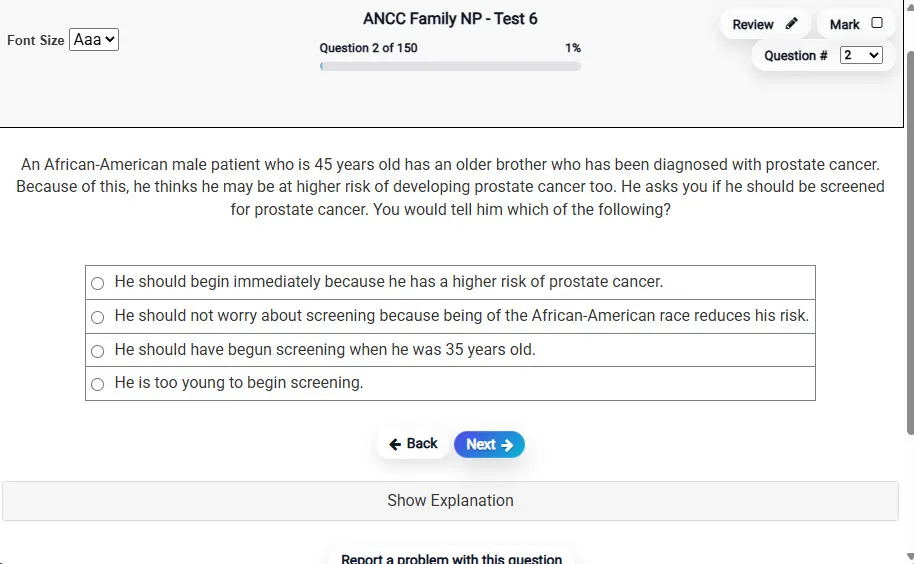
Answering a Question screen – Multiple-choice item view with navigation controls and progress tracker.
Answering a Question Multiple-choice item view with navigation controls and progress tracker.

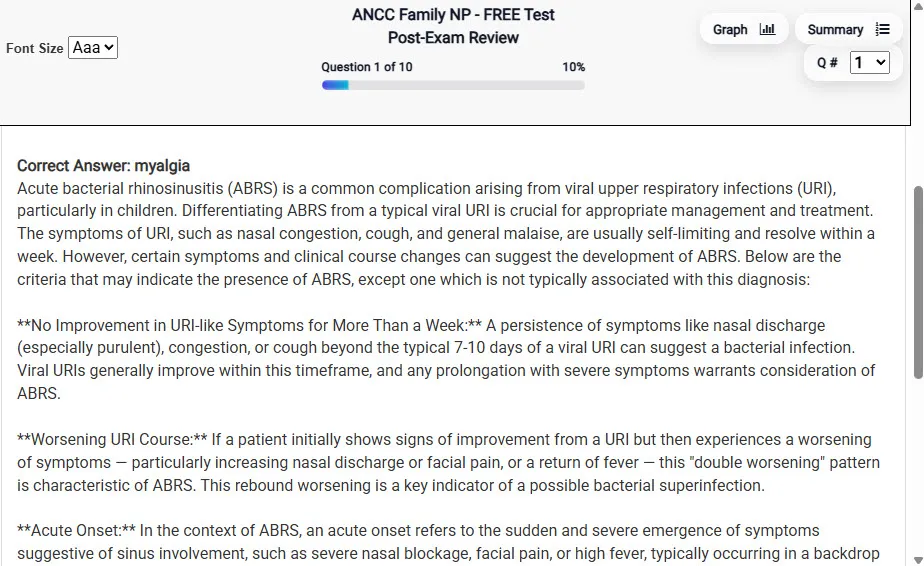
                           Detailed Explanation screen – 
                         Review mode showing chosen answer and rationale and references.
Detailed Explanation Review mode showing chosen answer and rationale and references.

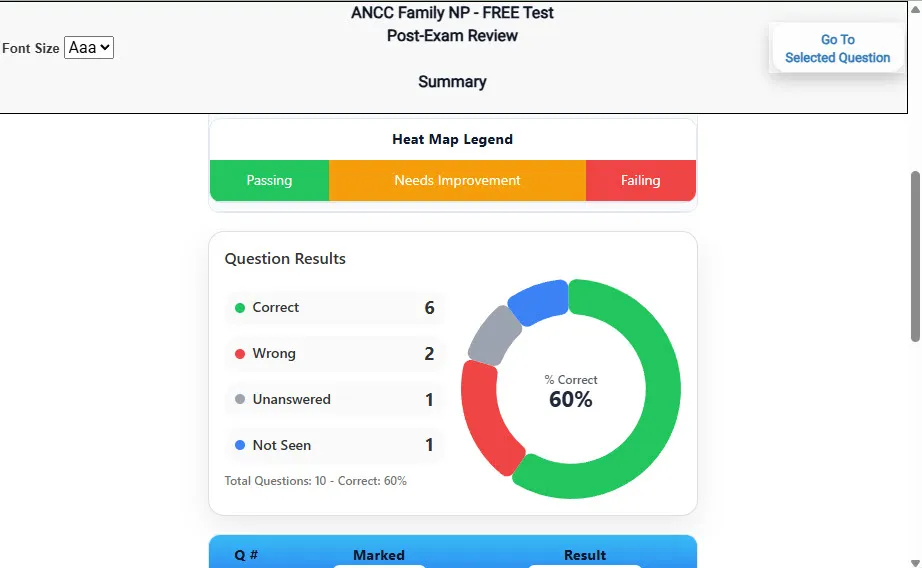
                           Review Summary 1 screen – 
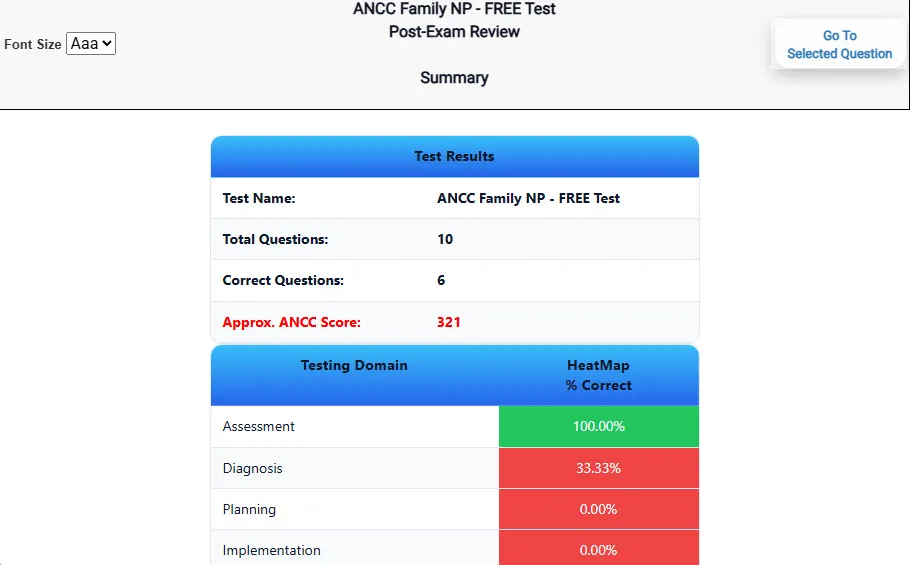
                         Summary with counts for correct/wrong/unanswered and not seen items.
Review Summary 1 Summary with counts for correct/wrong/unanswered and not seen items.

                           Review Summary 2 screen – 
                         Advanced summary with category/domain breakdown and performance insights.
Review Summary 2 Advanced summary with category/domain breakdown and performance insights.

What Each Screen Shows

Answer Question Screen

  • Clean multiple-choice interface with progress bar.
  • Mark for review feature.
  • Matches real test pacing.

Detailed Explanation

  • Correct answer plus rationale.
  • Key concepts and guidelines highlighted.
  • Move between questions to fill knowledge gaps.

Review Summary 1

  • Overall results with total questions and scaled score.
  • Domain heatmap shows strengths and weaknesses.
  • Quick visual feedback on study priorities.

Review Summary 2

  • Chart of correct, wrong, unanswered, not seen.
  • Color-coded results for easy review.
  • Links back to missed items.

Top 10 Reasons to Use Exam Edge for your Child Development Associate PreSchool Exam Prep

  1. Focused on the Child Development Associate PreSchool Exam

    Our practice tests are built specifically for the Child Development Associate PreSchool exam — every question mirrors the real topics, format, and difficulty so you're studying exactly what matters.

  2. Real Exam Simulation

    We match the per-question time limits and pressure of the actual CDA exam, so test day feels familiar and stress-free.

  3. 15 Full Practice Tests & 975 Unique Questions

    You'll have more than enough material to master every Child Development Associate PreSchool concept — no repeats, no fluff.

  4. Lower Cost Than a Retake

    Ordering 5 practice exams costs less than retaking the Child Development Associate PreSchool exam after a failure. One low fee could save you both time and money.

  5. Flexible Testing

    Need to step away mid-exam? Pick up right where you left off — with your remaining time intact.

  6. Instant Scoring & Feedback

    See your raw score and an estimated Child Development Associate PreSchool score immediately after finishing each practice test.

  7. Detailed Explanations for Every Question

    Review correct and incorrect answers with clear, step-by-step explanations so you truly understand each topic.

  8. Trusted & Accredited

    We're fully accredited by the Better Business Bureau and uphold the highest standards of trust and transparency.

  9. Web-Based & Always Available

    No software to install. Access your Child Development Associate PreSchool practice exams 24/7 from any computer or mobile device.

  10. Expert Support When You Need It

    Need extra help? Our specialized tutors are highly qualified and ready to support your CDA exam prep.


Pass the Child Development Associate PreSchool Exam with Realistic Practice Tests from Exam Edge

Preparing for your upcoming Child Development Associate PreSchool (CDA) Certification Exam can feel overwhelming — but the right practice makes all the difference. Exam Edge gives you the tools, structure, and confidence to pass on your first try. Our online practice exams are built to match the real Child Development Associate PreSchool exam in content, format, and difficulty.

  • 📝 15 Child Development Associate PreSchool Practice Tests: Access 15 full-length exams with 65 questions each, covering every major Child Development Associate PreSchool topic in depth.
  • Instant Online Access: Start practicing right away — no software, no waiting.
  • 🧠 Step-by-Step Explanations: Understand the reasoning behind every correct answer so you can master Child Development Associate PreSchool exam concepts.
  • 🔄 Retake Each Exam Up to 4 Times: Build knowledge through repetition and track your improvement over time.
  • 🌐 Web-Based & Available 24/7: Study anywhere, anytime, on any device.
  • 🧘 Boost Your Test-Day Confidence: Familiarity with the CDA format reduces anxiety and helps you perform under pressure.

These Child Development Associate PreSchool practice exams are designed to simulate the real testing experience by matching question types, timing, and difficulty level. This approach helps you get comfortable not just with the exam content, but also with the testing environment, so you walk into your exam day focused and confident.


Exam Edge CDA Reviews


I really like the area; it was organized. Very quiet environment to take a test. And I would recommend it to anyone who wants to take a test. Thank you so much.

Faisa, minneapolis, Minnesota

The program helped me get ready for my CDA Exam. I liked that there were multiple tests to take and that you could reset each test and take it again. I feel like these practice tests helped me ultimately pass the exam.

Tracey , Bluemont, Virginia


Child Development Associate PreSchool Aliases Test Name

Here is a list of alternative names used for this exam.

  • Child Development Associate PreSchool
  • Child Development Associate PreSchool test
  • Child Development Associate PreSchool Certification Test
  • CDA
  • CDA CDA
  • CDA test
  • Child Development Associate PreSchool (CDA)
  • Child Development Associate PreSchool certification