This is the content of the pop-over!

ATCB ART-BC (ATR) Practice Tests & Test Prep by Exam Edge


ATCB Art Therapist Board Certified  product image
(4.5)
Based on 28 Reviews

  • Real Exam Simulation: Timed questions and matching content build comfort for your ATCB ART-BC test day.
  • Instant, 24/7 Access: Web-based ATCB Art Therapist Board Certified practice exams with no software needed.
  • Clear Explanations: Step-by-step answers and explanations for your ATCB exam to strengthen understanding.
  • Boosted Confidence: Reduces anxiety and improves test-taking skills to ace your ATCB Art Therapist Board Certified (ATR).

Featured on

ATCB Art Therapist Board Certified Online Practice Test Bundles

BEST VALUE
5 practice tests

$69.75

$199.75

SAVE $130

Only $13.95 per test!

  • 100% Pass Guarantee
  • 5 online practice tests
  • 100 questions per test
  • Bonus: 100 Flash Cards + Study Guide
  • Instant access
  • Detailed Explanations
  • Practice tests never expire
  • Timed, untimed, or study guide mode
1 practice test

$39.95

  • 1 online practice test
  • 100 questions per test
  • Instant access
  • Detailed Explanations
  • Practice tests never expire
  • Timed, untimed, or study guide mode
Quick Select
Tap to choose a bundle

** All Prices are in US Dollars (USD) **


ATCB ART-BC (ATR) Resources

Jump to the section you need most.

Understanding the exact breakdown of the ATCB Art Therapist Board Certified test will help you know what to expect and how to most effectively prepare. The ATCB Art Therapist Board Certified has 100 multiple-choice questions . The exam will be broken down into the sections below:

ATCB Art Therapist Board Certified Exam Blueprint
Domain Name % Number of
Questions
Administrative and Therapeutic Environment 17% 17
Initial Interview and Evaluation 18% 18
Assessment 20% 20
Art Therapy Treatment and Services 20% 20
Professional Practice and Ethics 10% 10
Theory and Therapeutic Application 15% 15

ATCB Art Therapist Board Certified Study Tips by Domain

  • Confirm the physical space supports confidentiality (sound privacy, door signage, secure storage); red flag: client artwork or records left visible to other clients or visitors.
  • Use a written informed-consent process that covers art materials, image use, limits of confidentiality, and emergency procedures; common trap: relying on a generic psychotherapy consent that omits artwork ownership and photography.
  • Implement materials safety protocols (toxicity, ventilation, allergy screening, and cleanup) and restrict access to sharps/solvents; contraindication: offering solvents or blades to clients with active self-harm risk without documented safeguards.
  • Maintain clear documentation systems with timely entries and secure retention/destruction per policy; priority rule: document risk-related contacts, safety planning, and mandated reports the same day whenever possible.
  • Coordinate scheduling, billing, and referral pathways to match scope of practice and setting requirements; red flag: continuing treatment when client needs a higher level of care and no referral/consult is initiated.
  • Set group-room and studio-management expectations (materials use, boundaries, cleanup, and artwork handling) at the outset; common trap: allowing clients to take or alter others’ artwork without explicit consent and policy.
  • Obtain informed consent and explain confidentiality limits (harm to self/others, abuse reporting, court orders) before any art-making; red flag: a client who cannot paraphrase these points needs simplified language or guardian involvement.
  • Screen for immediate safety issues (suicidality, homicidality, psychosis, intoxication, acute medical concerns) as a priority rule before proceeding with a full intake; threshold: any active plan/intent or command hallucinations triggers same-day safety protocol and appropriate referral.
  • Clarify presenting problem, goals, and readiness for art-based work using the client’s words and cultural context; common trap: assuming “art skills” are required—explicitly normalize process over product to reduce shame-based refusal.
  • Collect a focused biopsychosocial history (psychiatric/medical, medications, trauma, substance use, family/social supports) and verify key details when possible; contraindication cue: recent trauma or dissociation may require pacing and grounding before imagery-focused exploration.
  • Assess functional status and environmental constraints (housing stability, transportation, scheduling, privacy, financial barriers) to shape the treatment plan; red flag: inconsistent attendance risk—set a concrete attendance plan and backup contact method during intake.
  • Document mental status and baseline observations (affect, thought process, insight, judgment, engagement with materials) and include objective descriptors; common trap: interpreting symbols as facts—separate observed behavior, client report, and clinical impressions in the intake note.
  • Use multiple data sources in Assessment (art products, process observations, collateral reports, and standardized tools when appropriate); red flag: basing conclusions on a single image or isolated session.
  • Choose instruments with evidence for the client’s age, culture, language, and setting; common trap: using norms that don’t match the client population and reporting results as definitive.
  • Document observable, behavioral descriptors of art-making (engagement, sequencing, affect shifts, problem-solving) before interpretation; priority rule: separate facts from hypotheses in your notes.
  • Screen and escalate when risk is indicated during Assessment (suicidality, self-harm, abuse/neglect, psychosis); threshold: any credible intent/plan or mandated-reporting suspicion requires immediate action per policy and law.
  • Check for contraindications to specific art media or directives (e.g., strong sensory aversions, trauma triggers, medical restrictions, intoxication); red flag: pushing exposure-style imagery without stabilization and consent.
  • Ensure Assessment conclusions translate into measurable treatment goals and level-of-care recommendations; common trap: writing narrative impressions without linking findings to functional impact and next clinical steps.
  • Write a treatment plan that links each goal to a measurable objective and a specific art therapy intervention; red flag: “improve self-esteem” without a target behavior or timeframe.
  • Match materials and directives to the client’s current capacity (sensory tolerance, cognition, trauma activation window) and adjust in-session; contraindication: unstructured, high-arousal media (e.g., messy paint) for a client escalating or dissociating.
  • Use session structure (check-in, artmaking, processing, closure) and prioritize safety over product; common trap: processing interpretation when the client has not stabilized after intense imagery.
  • Document each session with intervention used, client response, risk status, and progress toward objectives; priority rule: record any safety concerns and actions taken the same day per policy.
  • Coordinate services (referrals, collateral contacts, interdisciplinary care) only with appropriate authorization and clear purpose tied to the plan; red flag: sharing artwork or details with family/team without valid consent or legal basis.
  • Plan termination and transitions with notice, relapse-prevention coping tools, and resource linkage; threshold: initiate discharge planning when goals are met or progress stalls despite appropriate modifications and consultation.
  • Apply the Art Therapist Board Certified Code of Ethics and your jurisdiction’s laws using the “most protective standard” priority rule; red flag: a supervisor’s advice conflicts with legal mandates (e.g., abuse reporting) and you delay required action.
  • Maintain informed consent as an ongoing process (not a one-time form) and document material changes; common trap: starting collateral contact, recording, or telehealth without explicitly updating consent and limits of confidentiality.
  • Protect confidentiality with a minimum-necessary disclosure threshold and clear release-of-information parameters; red flag: sharing identifiable art images or session details for teaching/marketing without written authorization.
  • Set and document boundaries to avoid dual relationships and exploitation; contraindication: accepting significant gifts, bartering that increases client vulnerability, or engaging in social/online relationships that impair objectivity.
  • Ensure competent practice through scope-of-practice limits, consultation, and appropriate referral; common trap: treating beyond training (e.g., specialized trauma, eating disorders) without supervision or a documented plan for referral and co-management.
  • Keep accurate, timely records that would withstand audit and support continuity of care; priority rule: document risk assessments, safety planning, and mandated reports the same day when possible, and never alter a record without an addendum noting date/time and rationale.
  • Choose a theoretical orientation (e.g., psychodynamic, humanistic, CBT/DBT-informed, systems) that matches the client’s goals and context; red flag: “eclectic” work with no stated rationale or measurable target for change.
  • Use the client’s developmental level and attachment/relational patterns to set the level of structure and therapist involvement; common trap: offering open-ended, insight-focused directives to clients who need containment, skills, or stabilization first.
  • Apply trauma-informed principles (safety, choice, collaboration, empowerment) when integrating expressive work; contraindication: processing traumatic imagery in depth when the client lacks grounding skills or shows escalating dissociation.
  • Differentiate art as process vs. product and select directives accordingly; priority rule: use process-oriented interventions for emotion regulation and relational exploration, and be cautious of product-focused “performance” demands that heighten shame or perfectionism.
  • Use symbolism and imagery interpretation as hypotheses, not conclusions; red flag: therapist-led decoding that overrides the client’s meaning-making or cultural/spiritual framework.
  • Integrate verbal processing intentionally (before/during/after artmaking) to match the model and client needs; common trap: forcing verbal insight immediately after intense artmaking instead of first stabilizing affect and titrating discussion.


Built to Fit Into Your Busy Life

Everything you need to prepare with confidence—without wasting a minute.

Three Study Modes

Timed, No Time Limit, or Explanation mode.

Actionable Analytics

Heatmaps and scaled scores highlight weak areas.

High-Yield Rationales

Concise explanations emphasize key concepts.

Realistic Interface

Matches the feel of the actual exam environment.

Accessible by Design

Clean layout reduces cognitive load.

Anytime, Anywhere

Web-based access 24/7 on any device.
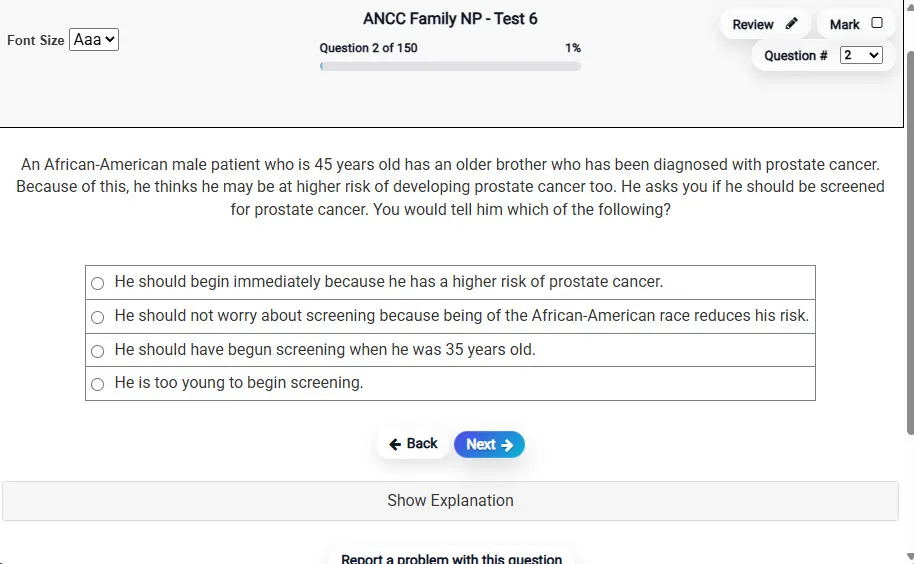
Answering a Question screen – Multiple-choice item view with navigation controls and progress tracker.
Answering a Question Multiple-choice item view with navigation controls and progress tracker.

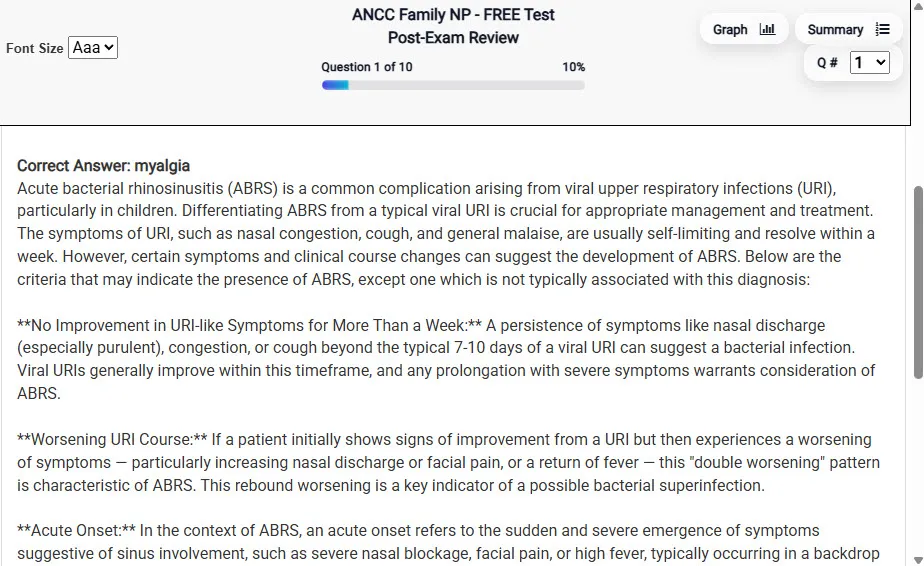
                           Detailed Explanation screen – 
                         Review mode showing chosen answer and rationale and references.
Detailed Explanation Review mode showing chosen answer and rationale and references.

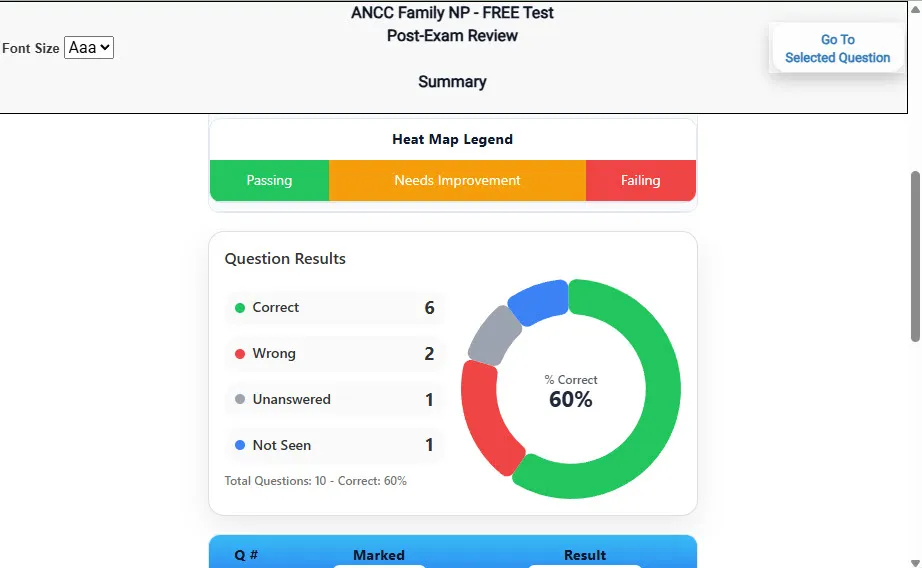
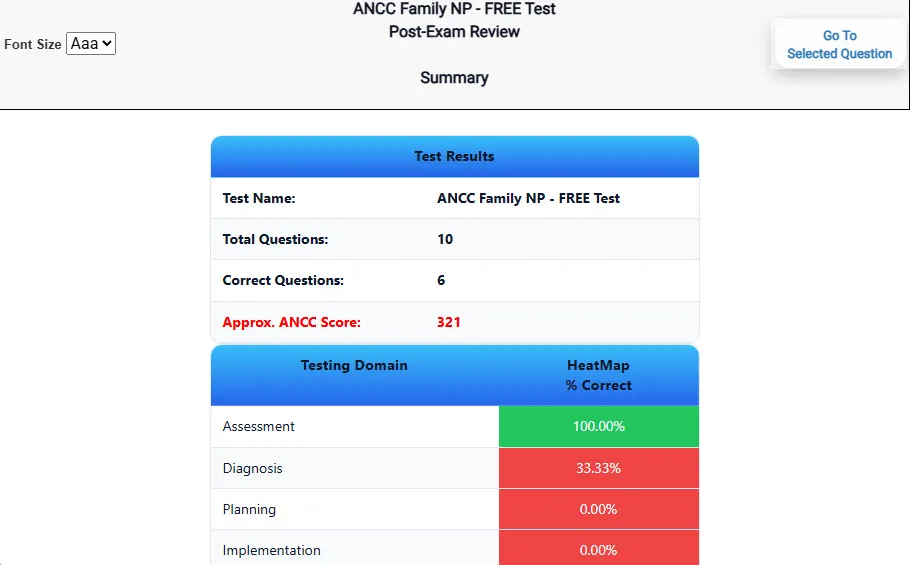
                           Review Summary 1 screen – 
                         Summary with counts for correct/wrong/unanswered and not seen items.
Review Summary 1 Summary with counts for correct/wrong/unanswered and not seen items.

                           Review Summary 2 screen – 
                         Advanced summary with category/domain breakdown and performance insights.
Review Summary 2 Advanced summary with category/domain breakdown and performance insights.

What Each Screen Shows

Answer Question Screen

  • Clean multiple-choice interface with progress bar.
  • Mark for review feature.
  • Matches real test pacing.

Detailed Explanation

  • Correct answer plus rationale.
  • Key concepts and guidelines highlighted.
  • Move between questions to fill knowledge gaps.

Review Summary 1

  • Overall results with total questions and scaled score.
  • Domain heatmap shows strengths and weaknesses.
  • Quick visual feedback on study priorities.

Review Summary 2

  • Chart of correct, wrong, unanswered, not seen.
  • Color-coded results for easy review.
  • Links back to missed items.

Top 10 Reasons to Use Exam Edge for your ATCB Art Therapist Board Certified Exam Prep

  1. Focused on the ATCB Art Therapist Board Certified Exam

    Our practice tests are built specifically for the ATCB ART-BC exam — every question mirrors the real topics, format, and difficulty so you're studying exactly what matters.

  2. Real Exam Simulation

    We match the per-question time limits and pressure of the actual ATCB exam, so test day feels familiar and stress-free.

  3. 5 Full Practice Tests & 500 Unique Questions

    You'll have more than enough material to master every ATCB ART-BC concept — no repeats, no fluff.

  4. Lower Cost Than a Retake

    Ordering 5 practice exams costs less than retaking the ATCB Art Therapist Board Certified exam after a failure. One low fee could save you both time and money.

  5. Flexible Testing

    Need to step away mid-exam? Pick up right where you left off — with your remaining time intact.

  6. Instant Scoring & Feedback

    See your raw score and an estimated ATCB Art Therapist Board Certified score immediately after finishing each practice test.

  7. Detailed Explanations for Every Question

    Review correct and incorrect answers with clear, step-by-step explanations so you truly understand each topic.

  8. Trusted & Accredited

    We're fully accredited by the Better Business Bureau and uphold the highest standards of trust and transparency.

  9. Web-Based & Always Available

    No software to install. Access your ATCB ART-BC practice exams 24/7 from any computer or mobile device.

  10. Expert Support When You Need It

    Need extra help? Our specialized tutors are highly qualified and ready to support your ATCB exam prep.


Pass the ATCB Art Therapist Board Certified Exam with Realistic Practice Tests from Exam Edge

Preparing for your upcoming ATCB Art Therapist Board Certified (ATR) Certification Exam can feel overwhelming — but the right practice makes all the difference. Exam Edge gives you the tools, structure, and confidence to pass on your first try. Our online practice exams are built to match the real ATCB ART-BC exam in content, format, and difficulty.

  • 📝 5 ATCB Art Therapist Board Certified Practice Tests: Access 5 full-length exams with 100 questions each, covering every major ATCB Art Therapist Board Certified topic in depth.
  • Instant Online Access: Start practicing right away — no software, no waiting.
  • 🧠 Step-by-Step Explanations: Understand the reasoning behind every correct answer so you can master ATCB ART-BC exam concepts.
  • 🔄 Retake Each Exam Up to 4 Times: Build knowledge through repetition and track your improvement over time.
  • 🌐 Web-Based & Available 24/7: Study anywhere, anytime, on any device.
  • 🧘 Boost Your Test-Day Confidence: Familiarity with the ATCB format reduces anxiety and helps you perform under pressure.

These ATCB Art Therapist Board Certified practice exams are designed to simulate the real testing experience by matching question types, timing, and difficulty level. This approach helps you get comfortable not just with the exam content, but also with the testing environment, so you walk into your exam day focused and confident.


Exam Edge ATCB Reviews


ATCB Art Therapist Board Certified Aliases Test Name

Here is a list of alternative names used for this exam.

  • ATCB Art Therapist Board Certified
  • ATCB Art Therapist Board Certified test
  • ATCB Art Therapist Board Certified Certification Test
  • ATCB ART-BC test
  • ATCB
  • ATCB ATR
  • ATR test
  • ATCB Art Therapist Board Certified (ATR)
  • Art Therapist Board Certified certification