This is the content of the pop-over!

Praxis Special Education: Core Knowledge and Mild to Moderate Applications (5543) Practice Tests & Test Prep by Exam Edge


Praxis Special Education Core Knowledge and Mild to Moderate Applications  product image
(5.0)
Based on 20 Reviews

  • Real Exam Simulation: Timed questions and matching content build comfort for your Praxis SPED: Core Knowledge and Mild to Moderate Applications test day.
  • Instant, 24/7 Access: Web-based Praxis Special Education Core Knowledge and Mild to Moderate Applications practice exams with no software needed.
  • Clear Explanations: Step-by-step answers and explanations for your Praxis exam to strengthen understanding.
  • Boosted Confidence: Reduces anxiety and improves test-taking skills to ace your Praxis Special Education Core Knowledge and Mild to Moderate Applications (5543).

Featured on

Praxis Special Education Core Knowledge and Mild to Moderate Applications Online Practice Test Bundles

BEST VALUE
20 practice tests

$174.00

$799.00

SAVE $625

Only $8.70 per test!

  • 100% Pass Guarantee
  • 20 online practice tests
  • 90 questions + 3 essays per test
  • Bonus: 100 Flash Cards + Study Guide
  • Instant access
  • Detailed Explanations
  • Practice tests never expire
  • Timed, untimed, or study guide mode
MOST POPULAR
10 practice tests

$99.50

$399.50

SAVE $300

Only $9.95 per test!

  • 10 online practice tests
  • 90 questions + 3 essays per test
  • Bonus: 100 Flash Cards + Study Guide
  • Instant access
  • Detailed Explanations
  • Practice tests never expire
  • Timed, untimed, or study guide mode
5 practice tests

$69.75

$199.75

SAVE $130

Only $13.95 per test!

  • 5 online practice tests
  • 90 questions + 3 essays per test
  • Bonus: 100 Flash Cards
  • Instant access
  • Detailed Explanations
  • Practice tests never expire
  • Timed, untimed, or study guide mode
1 practice test

$39.95

  • 1 online practice test
  • 90 questions + 3 essays per test
  • Instant access
  • Detailed Explanations
  • Practice tests never expire
  • Timed, untimed, or study guide mode
Quick Select
Tap to choose a bundle

** All Prices are in US Dollars (USD) **


Praxis SPED: Core Knowledge and Mild to Moderate Applications (5543) Resources

Jump to the section you need most.

Understanding the exact breakdown of the Praxis Special Education Core Knowledge and Mild to Moderate Applications test will help you know what to expect and how to most effectively prepare. The Praxis Special Education Core Knowledge and Mild to Moderate Applications has 90 multiple-choice questions and 3 essay questions. The exam will be broken down into the sections below:

Praxis Special Education Core Knowledge and Mild to Moderate Applications Exam Blueprint
Domain Name % Number of
Questions
Development and Characteristics of Learners 14% 13
Planning and the Learning Environment 17% 15
Instruction 17% 15
Assessment 14% 13
Foundations and Professional Responsibilities 13% 12
Integrated Constructed-response Questions 25% 23

Praxis Special Education Core Knowledge and Mild to Moderate Applications Study Tips by Domain

  • Know typical developmental milestones across cognitive, language, motor, and social-emotional domains; red flag: a persistent delay across settings warrants referral consideration, not “wait and see.”
  • Differentiate disability categories by hallmark characteristics (e.g., SLD vs. ID vs. ADHD/ED); common trap: attributing academic failure solely to motivation when patterns suggest a specific processing deficit.
  • Interpret how culture, language, and socioeconomic factors affect development and school performance; priority rule: rule out limited English proficiency and lack of opportunity to learn before suspecting disability.
  • Understand comorbidity and how one condition can mask another (e.g., ADHD with anxiety, ASD with language disorder); red flag: inconsistent performance may reflect executive-function or sensory needs rather than skill gaps alone.
  • Recognize behavior as communication linked to developmental level; common trap: treating escape-maintained behavior with harsher consequences instead of adjusting task difficulty or supports.
  • Apply early warning indicators and risk/protective factors (trauma, prenatal exposure, chronic illness, strong routines/relationships); contraindication: using a single incident or one-setting concern as proof of a disability.
  • Write IEP-aligned lesson plans that connect present levels → measurable annual goals → accommodations/modifications; red flag: listing supports without stating when/where/how they will be implemented.
  • Plan for UDL and differentiated instruction (multiple means of engagement, representation, action/expression) from the start; common trap: adding accommodations after instruction rather than designing flexible access upfront.
  • Use data to select appropriate instructional groupings and pacing (e.g., flexible small groups based on progress monitoring); priority rule: regroup when data show no growth across 2–3 consecutive data points.
  • Create proactive behavior supports using clear expectations, routines, and reinforcement tied to function; red flag: relying on punishment without teaching a replacement behavior or adjusting antecedents.
  • Ensure accessibility and assistive technology are planned, taught, and monitored (e.g., explicit instruction in the tool plus a maintenance plan); common trap: providing AT without training or collecting usage/impact data.
  • Coordinate with related service providers and general education teachers to align schedules, services, and materials; red flag: service minutes delivered inconsistently or pulled from core instruction without documenting the rationale.
  • Use explicit instruction for new skills (model → guided practice → independent practice) and check for understanding every few minutes; red flag: moving on because a few students answer correctly without verifying all learners.
  • Teach to the IEP by aligning instruction to present levels, measurable annual goals, and accommodations/modifications; common trap: giving accommodations (e.g., read-aloud) that change the construct being measured in reading comprehension tasks.
  • Apply evidence-based reading instruction (phonological awareness/phonics, fluency, vocabulary, comprehension) and intensify via more practice and immediate corrective feedback; priority rule: if decoding is weak, do not substitute comprehension strategies alone.
  • In math, build conceptual understanding with CRA sequencing (concrete–representational–abstract) and explicit strategy instruction; red flag: jumping to algorithms when students cannot represent quantities or explain reasoning.
  • Use behavior-supportive instruction (clear expectations, high rates of opportunities to respond, reinforcement matched to function) to prevent problem behavior; common trap: relying on punishment without teaching a replacement skill.
  • Differentiate using UDL and targeted scaffolds (chunking, graphic organizers, assistive tech) while maintaining grade-level intent; contraindication: reducing task complexity so much that it eliminates access to the standard rather than providing support.
  • Match the assessment type to the decision: screening/diagnostic (eligibility), formative (daily instructional adjustments), and summative (end-of-unit outcomes)—common trap is using a single test score as the sole basis for high-stakes decisions.
  • Interpret norm-referenced vs criterion-referenced results correctly: percentiles rank peers while mastery is based on predetermined criteria—red flag is treating a percentile (e.g., 25th) as “percent correct.”
  • Prioritize technical adequacy: reliability supports consistency and validity supports whether the test measures the intended construct—contraindication is making placement decisions from an instrument used outside its validated purpose or population.
  • Use progress-monitoring data (e.g., CBM) to judge rate of improvement over time—priority rule is to look for a trend across multiple data points rather than reacting to one “bad day” score.
  • Select and implement accommodations without changing the construct being measured—common trap is providing a modification (changes what is tested) when only an accommodation (changes how it’s accessed) is permissible for score interpretation.
  • Apply fair and ethical testing practices: consider language, culture, sensory/motor needs, and standardized administration conditions—red flag is invalid results due to deviating from directions or failing to note testing irregularities.
  • Apply IDEA and Section 504 correctly: eligibility under IDEA requires an adverse educational impact and need for specially designed instruction—red flag when a team tries to use 504 to replace needed special education services.
  • Follow IEP legal requirements: goals must be measurable with baseline data and clear criteria—common trap is writing accommodations/modifications as goals instead of skill outcomes.
  • Protect confidentiality under FERPA: share student information only with legitimate educational interest and document releases—red flag is discussing IEP details in hallways, email chains, or with staff not on the team.
  • Use ethical practice in assessment and reporting: avoid labeling beyond data and stay within your role/licensure—common trap is diagnosing medical conditions or overstating results without multiple data sources.
  • Ensure procedural safeguards and parent rights: provide notice, obtain informed consent when required, and ensure meaningful participation (including interpreters)—priority rule is to document contacts and attempts when parents are hard to reach.
  • Implement nondiscriminatory, equitable practices: apply discipline rules consistently and consider manifestation determination when applicable—red flag is removing a student for behavior related to disability without following required procedures.
  • Answer each prompt in a clear structure (e.g., Identify need → Evidence → Action → Progress monitor); red flag: listing strategies without tying them to student data from the scenario.
  • When asked for goals/objectives, write measurable statements with baseline, observable behavior, criterion, and timeframe (e.g., “Given…, will… with… by…”); trap: vague verbs like “understand” or missing accuracy/rate.
  • For instruction responses, select evidence-based practices aligned to the disability/skill (explicit instruction, modeling, guided practice, corrective feedback); priority rule: match the intervention to the identified deficit (e.g., decoding vs. comprehension).
  • Include accommodations/modifications only when appropriate and keep them defensible; red flag: changing the construct being measured on an assessment (e.g., reading a decoding test aloud) unless the prompt supports it.
  • Show progress monitoring with a specific tool and decision rule (e.g., CBM weekly; adjust if 3–4 consecutive data points fall below the aimline); trap: saying “monitor progress” without frequency or criteria for changing instruction.
  • Address collaboration and legal/ethical steps succinctly (IEP team, family communication, confidentiality/FERPA, IDEA requirements); red flag: proposing placement changes or services without referencing IEP team decision-making and documented data.


Built to Fit Into Your Busy Life

Everything you need to prepare with confidence—without wasting a minute.

Three Study Modes

Timed, No Time Limit, or Explanation mode.

Actionable Analytics

Heatmaps and scaled scores highlight weak areas.

High-Yield Rationales

Concise explanations emphasize key concepts.

Realistic Interface

Matches the feel of the actual exam environment.

Accessible by Design

Clean layout reduces cognitive load.

Anytime, Anywhere

Web-based access 24/7 on any device.
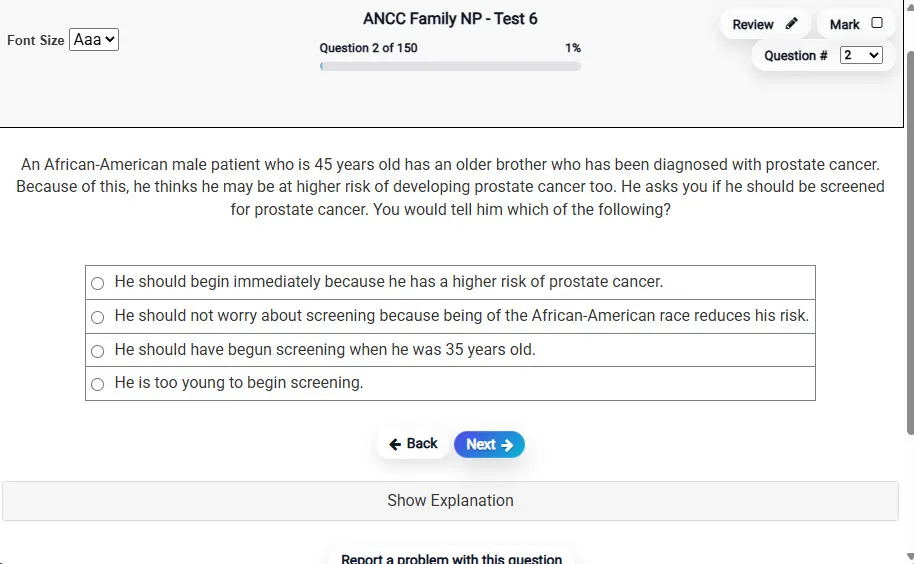
Answering a Question screen – Multiple-choice item view with navigation controls and progress tracker.
Answering a Question Multiple-choice item view with navigation controls and progress tracker.

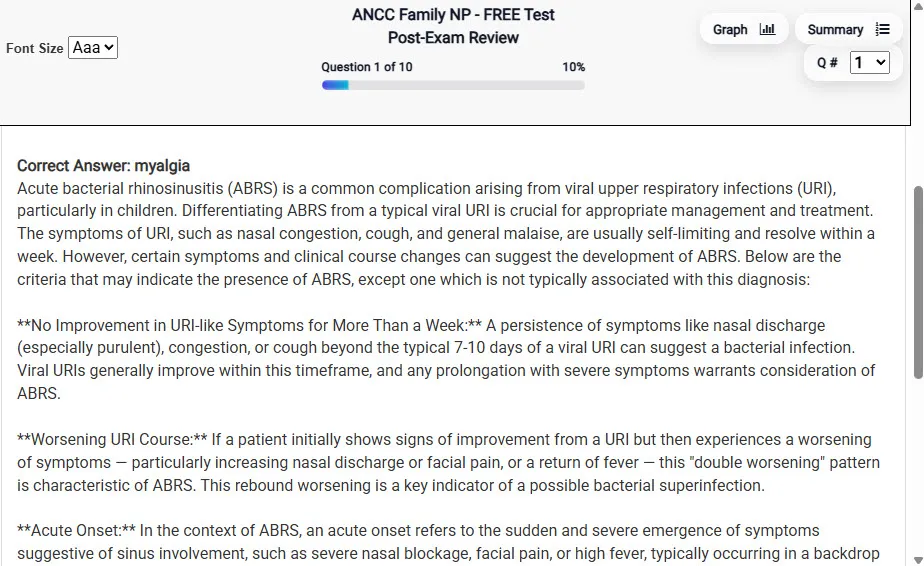
                           Detailed Explanation screen – 
                         Review mode showing chosen answer and rationale and references.
Detailed Explanation Review mode showing chosen answer and rationale and references.

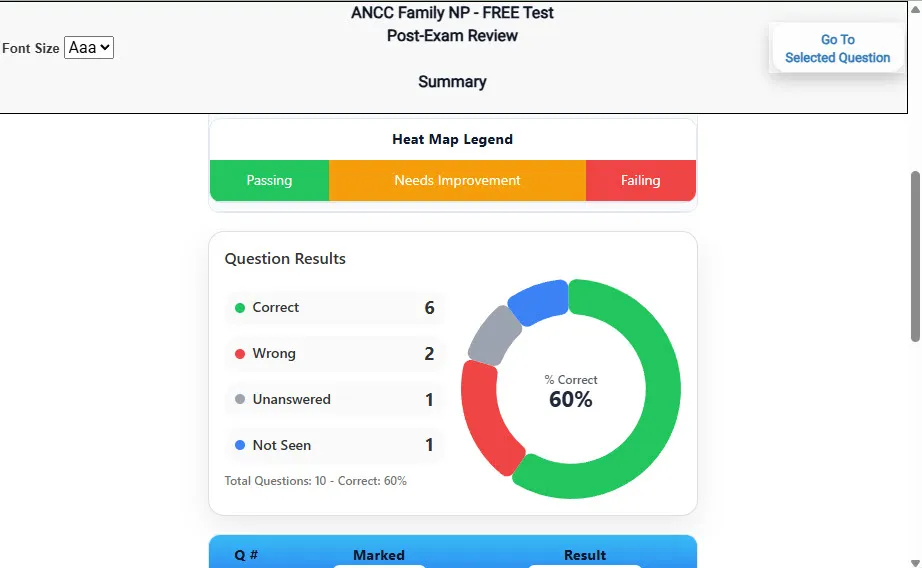
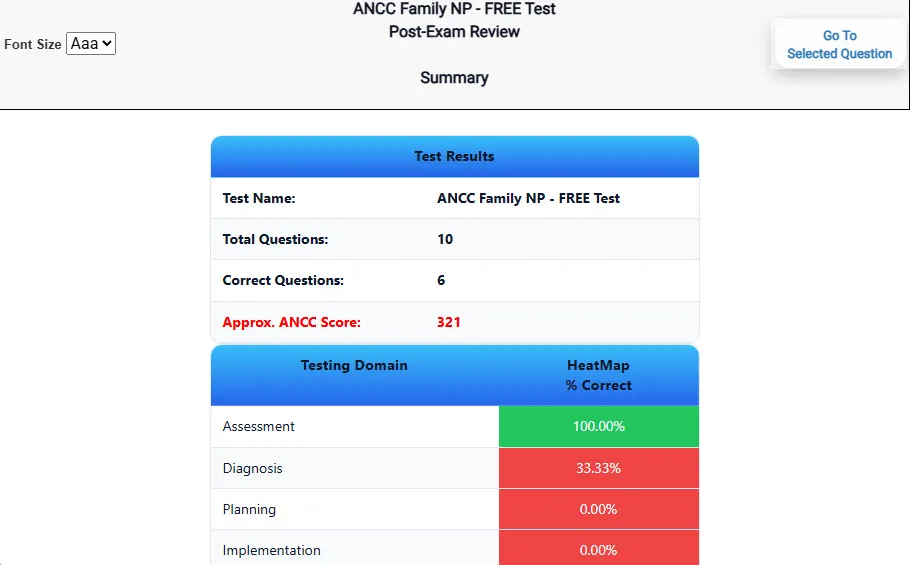
                           Review Summary 1 screen – 
                         Summary with counts for correct/wrong/unanswered and not seen items.
Review Summary 1 Summary with counts for correct/wrong/unanswered and not seen items.

                           Review Summary 2 screen – 
                         Advanced summary with category/domain breakdown and performance insights.
Review Summary 2 Advanced summary with category/domain breakdown and performance insights.

What Each Screen Shows

Answer Question Screen

  • Clean multiple-choice interface with progress bar.
  • Mark for review feature.
  • Matches real test pacing.

Detailed Explanation

  • Correct answer plus rationale.
  • Key concepts and guidelines highlighted.
  • Move between questions to fill knowledge gaps.

Review Summary 1

  • Overall results with total questions and scaled score.
  • Domain heatmap shows strengths and weaknesses.
  • Quick visual feedback on study priorities.

Review Summary 2

  • Chart of correct, wrong, unanswered, not seen.
  • Color-coded results for easy review.
  • Links back to missed items.

Top 10 Reasons to Use Exam Edge for your Praxis Special Education Core Knowledge and Mild to Moderate Applications Exam Prep

  1. Focused on the Praxis Special Education Core Knowledge and Mild to Moderate Applications Exam

    Our practice tests are built specifically for the Praxis SPED: Core Knowledge and Mild to Moderate Applications exam — every question mirrors the real topics, format, and difficulty so you're studying exactly what matters.

  2. Real Exam Simulation

    We match the per-question time limits and pressure of the actual Praxis exam, so test day feels familiar and stress-free.

  3. 20 Full Practice Tests & 1,860 Unique Questions

    You'll have more than enough material to master every Praxis SPED: Core Knowledge and Mild to Moderate Applications concept — no repeats, no fluff.

  4. Lower Cost Than a Retake

    Ordering 5 practice exams costs less than retaking the Praxis Special Education Core Knowledge and Mild to Moderate Applications exam after a failure. One low fee could save you both time and money.

  5. Flexible Testing

    Need to step away mid-exam? Pick up right where you left off — with your remaining time intact.

  6. Instant Scoring & Feedback

    See your raw score and an estimated Praxis Special Education Core Knowledge and Mild to Moderate Applications score immediately after finishing each practice test.

  7. Detailed Explanations for Every Question

    Review correct and incorrect answers with clear, step-by-step explanations so you truly understand each topic.

  8. Trusted & Accredited

    We're fully accredited by the Better Business Bureau and uphold the highest standards of trust and transparency.

  9. Web-Based & Always Available

    No software to install. Access your Praxis SPED: Core Knowledge and Mild to Moderate Applications practice exams 24/7 from any computer or mobile device.

  10. Expert Support When You Need It

    Need extra help? Our specialized tutors are highly qualified and ready to support your Praxis exam prep.


Pass the Praxis Special Education Core Knowledge and Mild to Moderate Applications Exam with Realistic Practice Tests from Exam Edge

Preparing for your upcoming Praxis Special Education Core Knowledge and Mild to Moderate Applications (5543) Certification Exam can feel overwhelming — but the right practice makes all the difference. Exam Edge gives you the tools, structure, and confidence to pass on your first try. Our online practice exams are built to match the real Praxis SPED: Core Knowledge and Mild to Moderate Applications exam in content, format, and difficulty.

  • 📝 20 Praxis Special Education Core Knowledge and Mild to Moderate Applications Practice Tests: Access 20 full-length exams with 93 questions each, covering every major Praxis Special Education Core Knowledge and Mild to Moderate Applications topic in depth.
  • Instant Online Access: Start practicing right away — no software, no waiting.
  • 🧠 Step-by-Step Explanations: Understand the reasoning behind every correct answer so you can master Praxis SPED: Core Knowledge and Mild to Moderate Applications exam concepts.
  • 🔄 Retake Each Exam Up to 4 Times: Build knowledge through repetition and track your improvement over time.
  • 🌐 Web-Based & Available 24/7: Study anywhere, anytime, on any device.
  • 🧘 Boost Your Test-Day Confidence: Familiarity with the Praxis format reduces anxiety and helps you perform under pressure.

These Praxis Special Education Core Knowledge and Mild to Moderate Applications practice exams are designed to simulate the real testing experience by matching question types, timing, and difficulty level. This approach helps you get comfortable not just with the exam content, but also with the testing environment, so you walk into your exam day focused and confident.


Exam Edge Praxis Reviews


I failed the Praxis Math test five times before I found your site. After taking all your practice tests, on my next attempt I passed by five points! I can honestly say this site is the reason I passed. Thank you!!!

Nikki P, Tennessee

Just wanted to say thanks for helping me pass the Praxis I Reading! Your practice tests and especially your explanations are great. They gave me the confidence I needed! Now I can student teach this fall. I'm so glad I found PraxisReading.com!

Denise C, Florida

Thank you so much. I just received my results in the mail. I scored a 179 and passed the Praxis I Writing! I'll never have to worry about retaking this test again! PraxisWriting.com is great. I told all my friends about this site.

Susan K, Virginia

I failed the Parapro test four times before I found your site. After taking all your practice tests, on my next attempt I passed by seven points! I can honestly say that this site is the reason I passed. Thank you!!!

Rebecca S, Texas

Hi! Just returned from taking my Praxis computerized and am happy to say that I passed with a 175. The last time I took the test I missed by 1 point. Your tests definitely made the difference for me! The set up was so similar to the test and the types of questions were also similar that I felt ve ...
Read More
Brad Y, Pennsylvania

I have taken the math praxis 3 times and wanted to give up. I ordered the bundle of math tests and I passed the math praxis today. Thank you for all the help.

Jacob D, South Carolina


Praxis Special Education Core Knowledge and Mild to Moderate Applications Aliases Test Name

Here is a list of alternative names used for this exam.

  • Praxis Special Education Core Knowledge and Mild to Moderate Applications
  • Praxis Special Education Core Knowledge and Mild to Moderate Applications test
  • Praxis Special Education Core Knowledge and Mild to Moderate Applications Certification Test
  • Praxis SPED: Core Knowledge and Mild to Moderate Applications test
  • Praxis
  • Praxis 5543
  • 5543 test
  • Praxis Special Education Core Knowledge and Mild to Moderate Applications (5543)
  • Special Education Core Knowledge and Mild to Moderate Applications certification