This is the content of the pop-over!

PMI PBA (PBA) Practice Tests & Test Prep by Exam Edge


PMI Professional in Business Analysis  product image
(5.0)
Based on 17 Reviews

  • Real Exam Simulation: Timed questions and matching content build comfort for your PMI PBA test day.
  • Instant, 24/7 Access: Web-based PMI Professional in Business Analysis practice exams with no software needed.
  • Clear Explanations: Step-by-step answers and explanations for your PMI exam to strengthen understanding.
  • Boosted Confidence: Reduces anxiety and improves test-taking skills to ace your PMI Professional in Business Analysis (PBA).

Featured on

PMI Professional in Business Analysis Online Practice Test Bundles

BEST VALUE
5 practice tests

$69.75

$199.75

SAVE $130

Only $13.95 per test!

  • 100% Pass Guarantee
  • 5 online practice tests
  • 100 questions per test
  • Bonus: 100 Flash Cards + Study Guide
  • Instant access
  • Detailed Explanations
  • Practice tests never expire
  • Timed, untimed, or study guide mode
1 practice test

$39.95

  • 1 online practice test
  • 100 questions per test
  • Instant access
  • Detailed Explanations
  • Practice tests never expire
  • Timed, untimed, or study guide mode
Quick Select
Tap to choose a bundle

** All Prices are in US Dollars (USD) **


PMI PBA (PBA) Resources

Jump to the section you need most.

Understanding the exact breakdown of the PMI Professional in Business Analysis test will help you know what to expect and how to most effectively prepare. The PMI Professional in Business Analysis has 200 multiple-choice questions . The exam will be broken down into the sections below:

PMI Professional in Business Analysis Exam Blueprint
Domain Name % Number of
Questions
Needs Assessment 18% 36
Planning 22% 44
Analysis 35% 70
Traceability and Monitoring 15% 30
Evaluation 10% 20

PMI Professional in Business Analysis Study Tips by Domain

  • Identify the business problem/opportunity and articulate the measurable outcome; red flag: a “solution statement” appears before the problem is validated.
  • Analyze stakeholders and users (power/interest, influence, and decision rights) to confirm who defines value; common trap: missing regulators, operations, or support groups who impose non-negotiable constraints.
  • Perform current-state assessment to establish baseline performance and process/system realities; priority rule: quantify the baseline (cycle time, cost, defects) before proposing targets.
  • Determine root cause versus symptoms using structured techniques (e.g., 5 Whys, fishbone) and validate with evidence; red flag: jumping from complaints to requirements without confirming causality.
  • Define future-state needs and success metrics aligned to strategy and benefits; threshold cue: ensure each objective has a SMART measure and an accountable owner.
  • Recommend solution approach options (including “do nothing”) and evaluate feasibility at a high level; common trap: ignoring organizational readiness, leading to benefits that are not realistically achievable.
  • Build a Business Analysis Plan that explicitly defines deliverables, activities, and the cadence for requirements work—red flag: starting elicitation without agreed scope boundaries and outputs.
  • Select elicitation and collaboration techniques based on stakeholder availability, decision rights, and risk—common trap: defaulting to workshops when key SMEs cannot attend or have low authority.
  • Define requirements management approach (baselines, versioning, change control, and approval gates)—priority rule: no requirements changes enter build without an agreed impact assessment.
  • Plan stakeholder engagement with a RACI-style view of roles, influence, and communication channels—red flag: missing an accountable decision-maker for acceptance and sign-off.
  • Establish quality criteria for requirements (testable, unambiguous, feasible, prioritized) and the review process—common trap: accepting “complete” requirements that lack measurable acceptance criteria.
  • Integrate BA planning with project/iteration planning (schedule, dependencies, and risk responses)—priority rule: surface high-risk/unknown requirements early to reduce rework and downstream cost.
  • Validate requirements quality early (clear, feasible, testable) to prevent rework — red flag: requirements with vague terms like “user-friendly” or no acceptance criteria.
  • Select analysis techniques based on decision risk and stakeholder availability (e.g., modeling vs. workshops) — common trap: defaulting to one favorite technique regardless of context.
  • Model current vs. future state to expose gaps and assumptions — priority rule: explicitly label assumptions and constraints or they will be treated as facts.
  • Decompose and elaborate requirements to the level needed for delivery — threshold cue: stop when each requirement can be verified and traced to a business objective.
  • Assess solution options using agreed criteria (value, risk, feasibility, compliance) — red flag: criteria introduced after options are compared, which biases the outcome.
  • Confirm stakeholder understanding with structured reviews and walkthroughs — common trap: relying on verbal agreement instead of documented approval/sign-off or recorded acceptance decisions.
  • Maintain bidirectional traceability from business objectives → requirements → design/test cases → delivered value; red flag: a requirement that can’t be traced to an approved need or objective.
  • Define and enforce baselines and version control for requirements artifacts; common trap: updating requirements in meeting notes without re-baselining and stakeholder sign-off.
  • Monitor requirement status with clear states (e.g., proposed, approved, implemented, verified) and owners; priority rule: resolve “approved but unverified” items before accepting “done.”
  • Run impact analysis for every change request across scope, schedule, cost, risk, and benefits; red flag: change approvals that skip downstream impacts on tests, training, or operational procedures.
  • Use defined quality metrics (e.g., defect density, rework rate, volatility) to spot requirement issues early; common trap: treating high change volatility as “normal” instead of a signal of unclear needs.
  • Report performance against the benefits/value plan and trigger corrective action when variance exceeds agreed thresholds; red flag: delivering all requirements but missing the intended business outcomes.
  • Validate solution performance against agreed acceptance criteria and KPIs—red flag if success metrics weren’t baselined, making improvements impossible to prove.
  • Assess realized benefits versus the business case using planned benefit measures and timelines—common trap: declaring success at go-live instead of after benefits stabilization.
  • Perform stakeholder satisfaction and adoption evaluation (surveys, interviews, usage analytics)—priority rule: low adoption is a defect even if requirements were met.
  • Identify defects, gaps, and enhancement opportunities and recommend corrective actions—contraindication: proposing scope changes without impact analysis on cost, schedule, and risk.
  • Evaluate operational readiness (training, support, controls, transition ownership)—red flag if no clear handoff to operations exists, leading to unresolved incidents and benefit leakage.
  • Document and socialize lessons learned and evaluation findings with decision makers—common trap: failing to define who approves post-implementation changes and how they are prioritized.


Built to Fit Into Your Busy Life

Everything you need to prepare with confidence—without wasting a minute.

Three Study Modes

Timed, No Time Limit, or Explanation mode.

Actionable Analytics

Heatmaps and scaled scores highlight weak areas.

High-Yield Rationales

Concise explanations emphasize key concepts.

Realistic Interface

Matches the feel of the actual exam environment.

Accessible by Design

Clean layout reduces cognitive load.

Anytime, Anywhere

Web-based access 24/7 on any device.
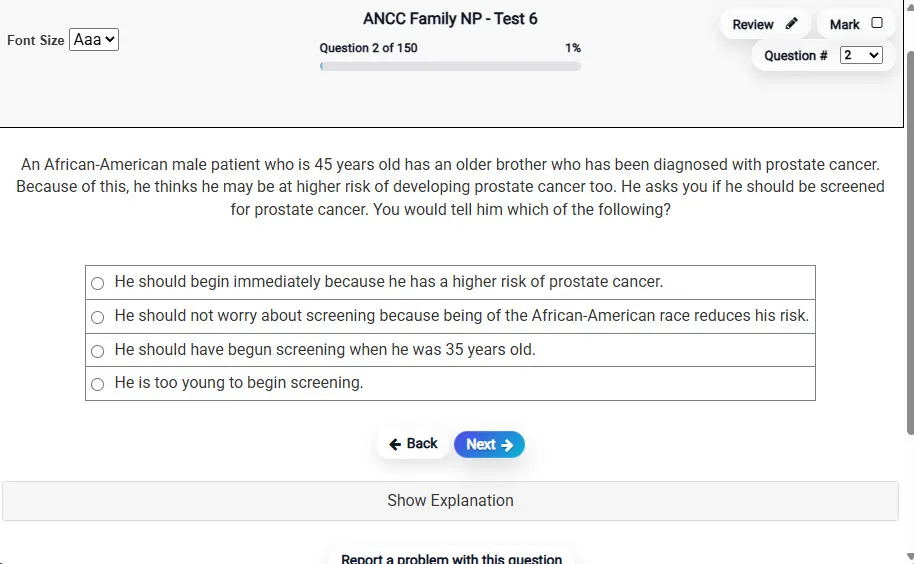
Answering a Question screen – Multiple-choice item view with navigation controls and progress tracker.
Answering a Question Multiple-choice item view with navigation controls and progress tracker.

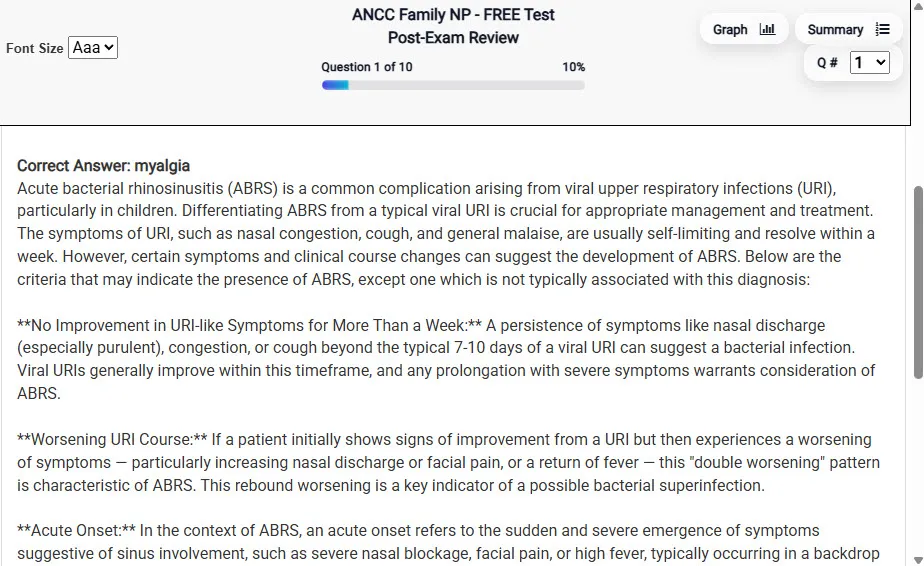
                           Detailed Explanation screen – 
                         Review mode showing chosen answer and rationale and references.
Detailed Explanation Review mode showing chosen answer and rationale and references.

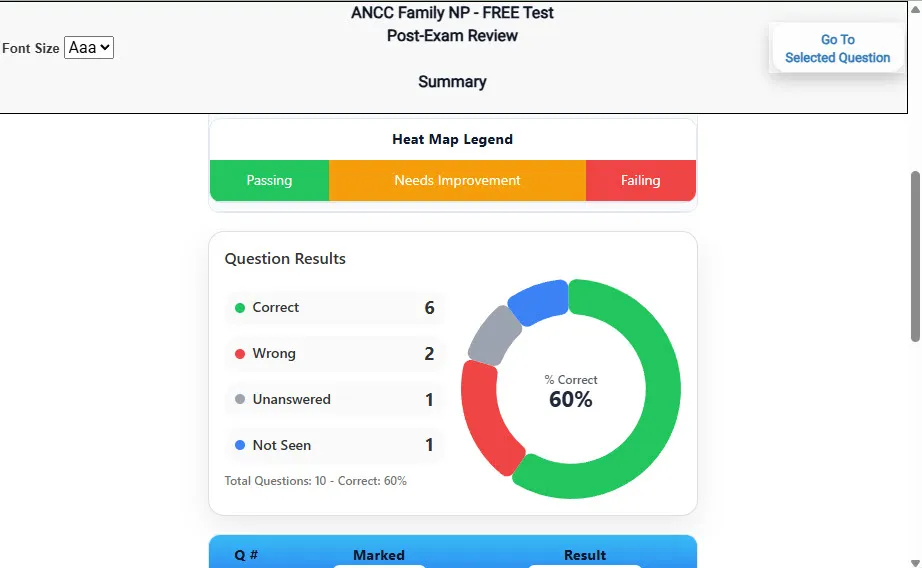
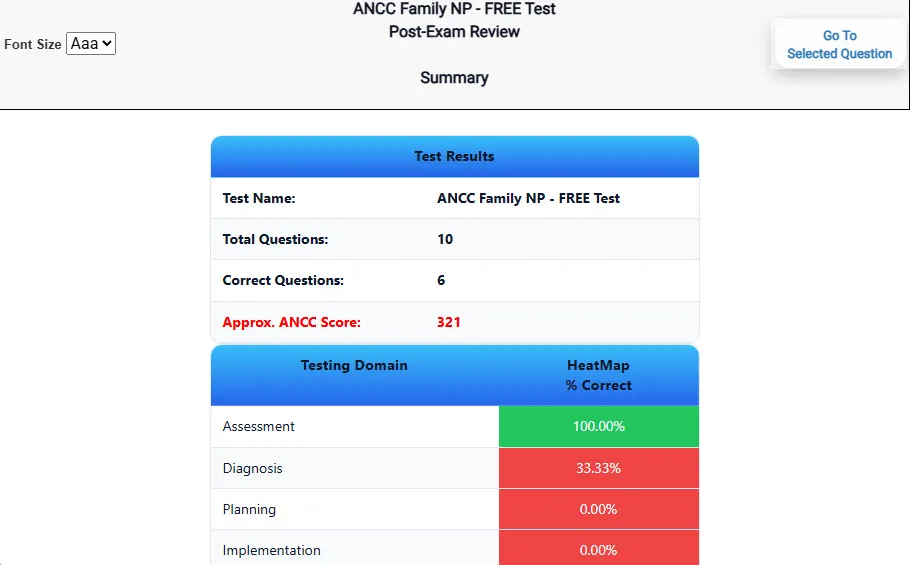
                           Review Summary 1 screen – 
                         Summary with counts for correct/wrong/unanswered and not seen items.
Review Summary 1 Summary with counts for correct/wrong/unanswered and not seen items.

                           Review Summary 2 screen – 
                         Advanced summary with category/domain breakdown and performance insights.
Review Summary 2 Advanced summary with category/domain breakdown and performance insights.

What Each Screen Shows

Answer Question Screen

  • Clean multiple-choice interface with progress bar.
  • Mark for review feature.
  • Matches real test pacing.

Detailed Explanation

  • Correct answer plus rationale.
  • Key concepts and guidelines highlighted.
  • Move between questions to fill knowledge gaps.

Review Summary 1

  • Overall results with total questions and scaled score.
  • Domain heatmap shows strengths and weaknesses.
  • Quick visual feedback on study priorities.

Review Summary 2

  • Chart of correct, wrong, unanswered, not seen.
  • Color-coded results for easy review.
  • Links back to missed items.

Top 10 Reasons to Use Exam Edge for your PMI Professional in Business Analysis Exam Prep

  1. Focused on the PMI Professional in Business Analysis Exam

    Our practice tests are built specifically for the PMI PBA exam — every question mirrors the real topics, format, and difficulty so you're studying exactly what matters.

  2. Real Exam Simulation

    We match the per-question time limits and pressure of the actual PMI exam, so test day feels familiar and stress-free.

  3. 5 Full Practice Tests & 500 Unique Questions

    You'll have more than enough material to master every PMI PBA concept — no repeats, no fluff.

  4. Lower Cost Than a Retake

    Ordering 5 practice exams costs less than retaking the PMI Professional in Business Analysis exam after a failure. One low fee could save you both time and money.

  5. Flexible Testing

    Need to step away mid-exam? Pick up right where you left off — with your remaining time intact.

  6. Instant Scoring & Feedback

    See your raw score and an estimated PMI Professional in Business Analysis score immediately after finishing each practice test.

  7. Detailed Explanations for Every Question

    Review correct and incorrect answers with clear, step-by-step explanations so you truly understand each topic.

  8. Trusted & Accredited

    We're fully accredited by the Better Business Bureau and uphold the highest standards of trust and transparency.

  9. Web-Based & Always Available

    No software to install. Access your PMI PBA practice exams 24/7 from any computer or mobile device.

  10. Expert Support When You Need It

    Need extra help? Our specialized tutors are highly qualified and ready to support your PMI exam prep.


Pass the PMI Professional in Business Analysis Exam with Realistic Practice Tests from Exam Edge

Preparing for your upcoming PMI Professional in Business Analysis (PBA) Certification Exam can feel overwhelming — but the right practice makes all the difference. Exam Edge gives you the tools, structure, and confidence to pass on your first try. Our online practice exams are built to match the real PMI PBA exam in content, format, and difficulty.

  • 📝 5 PMI Professional in Business Analysis Practice Tests: Access 5 full-length exams with 100 questions each, covering every major PMI Professional in Business Analysis topic in depth.
  • Instant Online Access: Start practicing right away — no software, no waiting.
  • 🧠 Step-by-Step Explanations: Understand the reasoning behind every correct answer so you can master PMI PBA exam concepts.
  • 🔄 Retake Each Exam Up to 4 Times: Build knowledge through repetition and track your improvement over time.
  • 🌐 Web-Based & Available 24/7: Study anywhere, anytime, on any device.
  • 🧘 Boost Your Test-Day Confidence: Familiarity with the PMI format reduces anxiety and helps you perform under pressure.

These PMI Professional in Business Analysis practice exams are designed to simulate the real testing experience by matching question types, timing, and difficulty level. This approach helps you get comfortable not just with the exam content, but also with the testing environment, so you walk into your exam day focused and confident.


Exam Edge PMI Reviews


PMI Professional in Business Analysis Aliases Test Name

Here is a list of alternative names used for this exam.

  • PMI Professional in Business Analysis
  • PMI Professional in Business Analysis test
  • PMI Professional in Business Analysis Certification Test
  • PMI PBA test
  • PMI
  • PMI PBA
  • PBA test
  • PMI Professional in Business Analysis (PBA)
  • Professional in Business Analysis certification