This is the content of the pop-over!

ILTS Reading Specialist (221) Practice Tests & Test Prep by Exam Edge


ILTS Reading Specialist  product image
(4.6)
Based on 32 Reviews

  • Real Exam Simulation: Timed questions and matching content build comfort for your ILTS Reading Specialist test day.
  • Instant, 24/7 Access: Web-based ILTS Reading Specialist practice exams with no software needed.
  • Clear Explanations: Step-by-step answers and explanations for your ILTS exam to strengthen understanding.
  • Boosted Confidence: Reduces anxiety and improves test-taking skills to ace your ILTS Reading Specialist (221).

Featured on

ILTS Reading Specialist Online Practice Test Bundles

BEST VALUE
20 practice tests

$174.00

$799.00

SAVE $625

Only $8.70 per test!

  • 100% Pass Guarantee
  • 20 online practice tests
  • 100 questions per test
  • Bonus: 100 Flash Cards + Study Guide
  • Instant access
  • Detailed Explanations
  • Practice tests never expire
  • Timed, untimed, or study guide mode
MOST POPULAR
10 practice tests

$99.50

$399.50

SAVE $300

Only $9.95 per test!

  • 10 online practice tests
  • 100 questions per test
  • Bonus: 100 Flash Cards + Study Guide
  • Instant access
  • Detailed Explanations
  • Practice tests never expire
  • Timed, untimed, or study guide mode
5 practice tests

$69.75

$199.75

SAVE $130

Only $13.95 per test!

  • 5 online practice tests
  • 100 questions per test
  • Bonus: 100 Flash Cards
  • Instant access
  • Detailed Explanations
  • Practice tests never expire
  • Timed, untimed, or study guide mode
1 practice test

$39.95

  • 1 online practice test
  • 100 questions per test
  • Instant access
  • Detailed Explanations
  • Practice tests never expire
  • Timed, untimed, or study guide mode
Quick Select
Tap to choose a bundle

** All Prices are in US Dollars (USD) **


ILTS Reading Specialist (221) Resources

Jump to the section you need most.

Understanding the exact breakdown of the ILTS Reading Specialist test will help you know what to expect and how to most effectively prepare. The ILTS Reading Specialist has 100 multiple-choice questions . The exam will be broken down into the sections below:

ILTS Reading Specialist Exam Blueprint
Domain Name % Number of
Questions
Theoretical and Research Foundations 23% 23
Literate Environment 12% 12
Reading Assessment 18% 18
Reading Instruction 35% 35
Professional Responsibilities - Leadership Learning 12% 12

ILTS Reading Specialist Study Tips by Domain

  • Know the pillars of scientifically based reading research (phonological awareness, phonics, fluency, vocabulary, comprehension) and prioritize instruction in deficit areas first—red flag: treating comprehension as a generic skill without addressing decoding/word recognition.
  • Distinguish Scarborough’s Reading Rope/Simple View (decoding × language comprehension) and use it to explain patterns of need—common trap: assuming strong listening comprehension guarantees strong reading comprehension.
  • Understand the reading development continuum (emergent → early → fluent) and match instructional targets accordingly—priority rule: don’t push leveled-text practice as a substitute for explicit foundational skills when accuracy is low.
  • Apply principles of effective intervention (explicit, systematic, cumulative, ample practice with immediate feedback) and adjust intensity when growth is inadequate—threshold cue: lack of progress across multiple data points signals a need to increase time/structure, not just change materials.
  • Use research on vocabulary and knowledge building (multiple exposures, morphology, academic language) to support comprehension—red flag: relying on isolated word lists without meaningful context and reuse.
  • Interpret qualitative and quantitative research basics (validity, reliability, effect size, fidelity) to evaluate programs and claims—common trap: accepting “research-based” marketing without checking whether studies match your students and were implemented with fidelity.
  • Create a print-rich, language-rich classroom (labeled materials, diverse classroom library, visible word study tools) and schedule daily sustained reading/writing time—red flag: wall displays with no instructional use.
  • Ensure texts and tasks represent students’ cultures, languages, and identities while maintaining high expectations—common trap: equating “leveled” with “low interest” and reducing access to grade-level ideas.
  • Establish routines for student talk (structured discussion, accountable talk stems, partner retell) to build oral language and comprehension—priority rule: talk must be purposeful and tied to a clear text or task.
  • Design accessible literacy spaces and materials (UDL supports, assistive tech, audiobooks, captioned media, translated family communications)—contraindication: providing supports that replace, rather than scaffold, reading and writing.
  • Partner with families and communities using two-way communication and culturally responsive outreach to support reading at home—common trap: sending one-size-fits-all logs or homework without modeling how to use them.
  • Promote a safe, inclusive climate with explicit norms for risk-taking, feedback, and respectful discourse—red flag: students avoiding reading aloud or writing share-outs due to fear of correction or ridicule.
  • Use multiple data sources (screeners, diagnostics, progress monitoring, outcome measures) and apply a decision rule for each; red flag: treating a universal screener score as sufficient to plan intervention.
  • Prioritize evidence of reliability and validity for the intended purpose (screening vs. diagnosis vs. growth); common trap: assuming a test is “valid” simply because it is standardized.
  • Interpret scores accurately (standard scores, percentile ranks, grade/age equivalents) and state what each can and cannot claim; red flag: using grade equivalents to set IEP goals or to measure progress.
  • Link assessment findings to the reading components (phonological awareness, phonics, fluency, vocabulary, comprehension) with a targeted hypothesis; priority rule: intervene at the skill deficit, not the symptom (e.g., comprehension errors driven by decoding).
  • Ensure fair and appropriate administration for multilingual learners and students with disabilities, documenting accommodations vs. modifications; contraindication: providing an accommodation that changes the construct (e.g., reading passages aloud on a decoding measure).
  • Communicate results clearly to families and staff with actionable next steps and a timeline for re-assessment; common trap: reporting only composite scores without explaining instructional implications or progress-monitoring frequency.
  • Prioritize instruction that explicitly links phonological awareness → phonics → orthographic mapping; red flag: students can sound out in isolation but cannot read the same patterns in connected text.
  • Teach fluency with a purpose (accuracy, rate, prosody) using repeated reading and performance reading; common trap: pushing speed goals before accuracy reaches about 95% in passage reading.
  • Build vocabulary with a mix of direct instruction (student-friendly definitions, examples/nonexamples, morphology) and wide reading; red flag: teaching long word lists without multiple, spaced exposures in varied contexts.
  • Strengthen comprehension by teaching strategies (e.g., questioning, summarizing, monitoring) alongside knowledge building; priority rule: if comprehension breaks down, check language/vocabulary and background knowledge before assigning more strategy worksheets.
  • Differentiate within MTSS by matching intensity and scaffolds to skill need and progress data; contraindication: moving students to intervention based on a single score or without monitoring response to instruction.
  • Support writing-to-read (sentence combining, text-based writing, explicit genre features) to reinforce comprehension and vocabulary; common trap: assigning writing tasks without modeling, success criteria, and feedback tied to reading evidence.
  • Use student outcome data (e.g., screening, progress monitoring, state results) to set measurable literacy goals and to justify resource allocation—red flag: proposing a program change without baseline data and a monitoring plan.
  • Model and coach evidence-based literacy practices through cycles (pre-brief, observation, feedback, follow-up), keeping feedback tied to a specific look-for—common trap: offering generic praise or criticism without actionable next steps.
  • Lead collaborative problem-solving (MTSS/RTI) by ensuring intervention decisions match documented need and intensity—priority rule: increase time/intensity and align to skill deficits before changing programs.
  • Maintain legal/ethical compliance in leadership roles (confidential records, appropriate use of assessments, equitable access)—red flag: sharing student data in PLC notes without removing identifiers or limiting access.
  • Design and facilitate professional learning that is sustained and evaluated (implementation checks, student impact evidence)—common trap: one-and-done workshops with no fidelity measures or classroom transfer plan.
  • Communicate with families and stakeholders using clear, culturally responsive language and interpreters when needed—contraindication: using jargon-heavy reports or recommending retention/special education as a first response to reading difficulty.


Built to Fit Into Your Busy Life

Everything you need to prepare with confidence—without wasting a minute.

Three Study Modes

Timed, No Time Limit, or Explanation mode.

Actionable Analytics

Heatmaps and scaled scores highlight weak areas.

High-Yield Rationales

Concise explanations emphasize key concepts.

Realistic Interface

Matches the feel of the actual exam environment.

Accessible by Design

Clean layout reduces cognitive load.

Anytime, Anywhere

Web-based access 24/7 on any device.
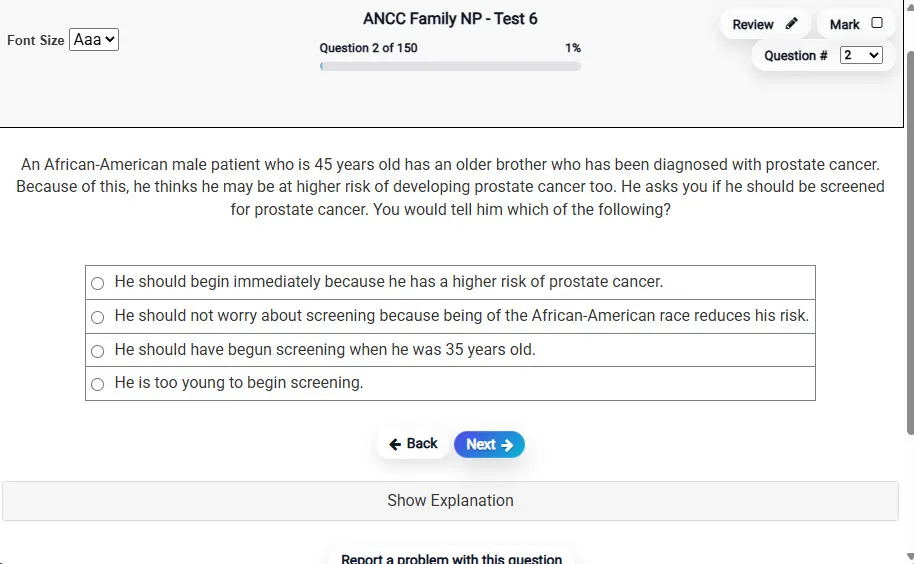
Answering a Question screen – Multiple-choice item view with navigation controls and progress tracker.
Answering a Question Multiple-choice item view with navigation controls and progress tracker.

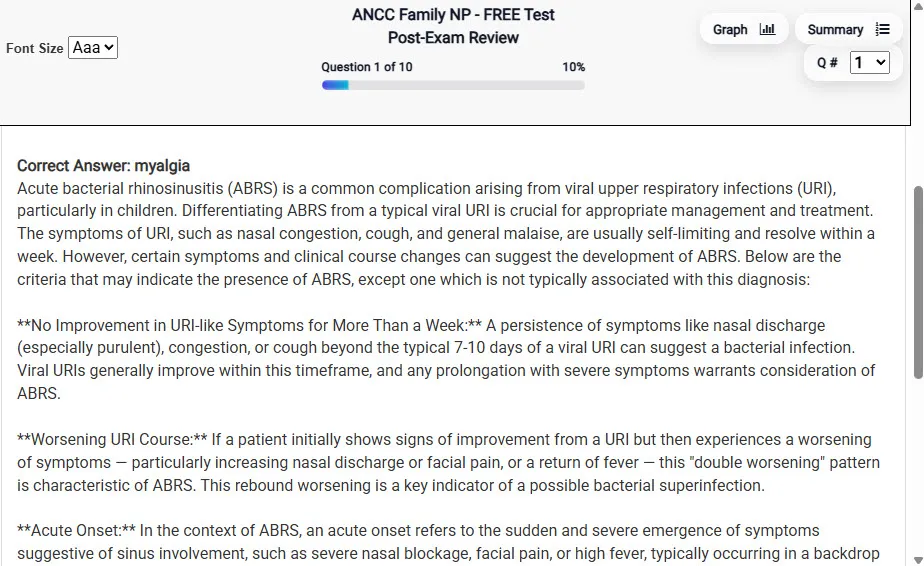
                           Detailed Explanation screen – 
                         Review mode showing chosen answer and rationale and references.
Detailed Explanation Review mode showing chosen answer and rationale and references.

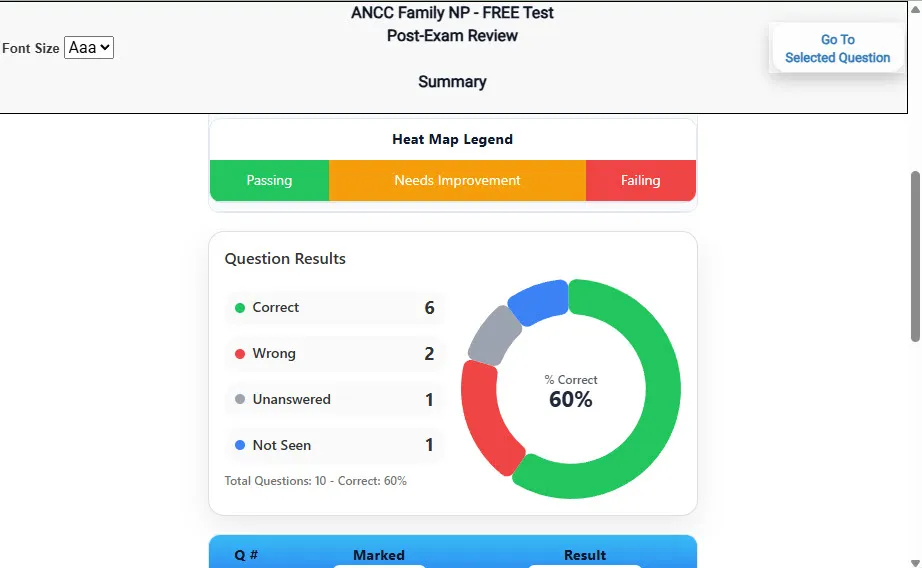
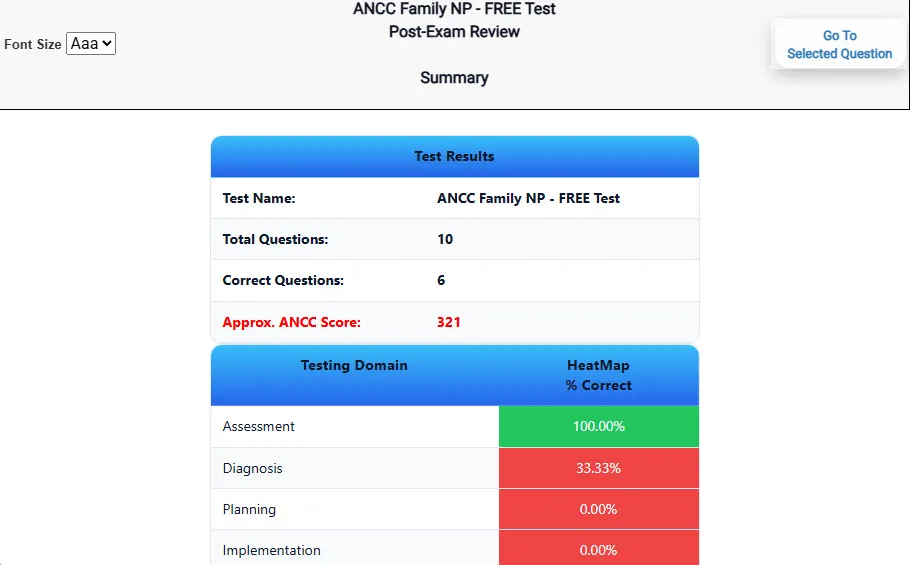
                           Review Summary 1 screen – 
                         Summary with counts for correct/wrong/unanswered and not seen items.
Review Summary 1 Summary with counts for correct/wrong/unanswered and not seen items.

                           Review Summary 2 screen – 
                         Advanced summary with category/domain breakdown and performance insights.
Review Summary 2 Advanced summary with category/domain breakdown and performance insights.

What Each Screen Shows

Answer Question Screen

  • Clean multiple-choice interface with progress bar.
  • Mark for review feature.
  • Matches real test pacing.

Detailed Explanation

  • Correct answer plus rationale.
  • Key concepts and guidelines highlighted.
  • Move between questions to fill knowledge gaps.

Review Summary 1

  • Overall results with total questions and scaled score.
  • Domain heatmap shows strengths and weaknesses.
  • Quick visual feedback on study priorities.

Review Summary 2

  • Chart of correct, wrong, unanswered, not seen.
  • Color-coded results for easy review.
  • Links back to missed items.

Top 10 Reasons to Use Exam Edge for your ILTS Reading Specialist Exam Prep

  1. Focused on the ILTS Reading Specialist Exam

    Our practice tests are built specifically for the ILTS Reading Specialist exam — every question mirrors the real topics, format, and difficulty so you're studying exactly what matters.

  2. Real Exam Simulation

    We match the per-question time limits and pressure of the actual ILTS exam, so test day feels familiar and stress-free.

  3. 20 Full Practice Tests & 2,000 Unique Questions

    You'll have more than enough material to master every ILTS Reading Specialist concept — no repeats, no fluff.

  4. Lower Cost Than a Retake

    Ordering 5 practice exams costs less than retaking the ILTS Reading Specialist exam after a failure. One low fee could save you both time and money.

  5. Flexible Testing

    Need to step away mid-exam? Pick up right where you left off — with your remaining time intact.

  6. Instant Scoring & Feedback

    See your raw score and an estimated ILTS Reading Specialist score immediately after finishing each practice test.

  7. Detailed Explanations for Every Question

    Review correct and incorrect answers with clear, step-by-step explanations so you truly understand each topic.

  8. Trusted & Accredited

    We're fully accredited by the Better Business Bureau and uphold the highest standards of trust and transparency.

  9. Web-Based & Always Available

    No software to install. Access your ILTS Reading Specialist practice exams 24/7 from any computer or mobile device.

  10. Expert Support When You Need It

    Need extra help? Our specialized tutors are highly qualified and ready to support your ILTS exam prep.


Pass the ILTS Reading Specialist Exam with Realistic Practice Tests from Exam Edge

Preparing for your upcoming ILTS Reading Specialist (221) Certification Exam can feel overwhelming — but the right practice makes all the difference. Exam Edge gives you the tools, structure, and confidence to pass on your first try. Our online practice exams are built to match the real ILTS Reading Specialist exam in content, format, and difficulty.

  • 📝 20 ILTS Reading Specialist Practice Tests: Access 20 full-length exams with 100 questions each, covering every major ILTS Reading Specialist topic in depth.
  • Instant Online Access: Start practicing right away — no software, no waiting.
  • 🧠 Step-by-Step Explanations: Understand the reasoning behind every correct answer so you can master ILTS Reading Specialist exam concepts.
  • 🔄 Retake Each Exam Up to 4 Times: Build knowledge through repetition and track your improvement over time.
  • 🌐 Web-Based & Available 24/7: Study anywhere, anytime, on any device.
  • 🧘 Boost Your Test-Day Confidence: Familiarity with the ILTS format reduces anxiety and helps you perform under pressure.

These ILTS Reading Specialist practice exams are designed to simulate the real testing experience by matching question types, timing, and difficulty level. This approach helps you get comfortable not just with the exam content, but also with the testing environment, so you walk into your exam day focused and confident.


Exam Edge ILTS Reviews


The practice tests were EXACTLY what I needed! The test explanations for answers were the teaching points I needed to help understand certain subjects. Thank you for your help!

Arnita , South Holland, Illinois

These practice exams really put my mind at ease! I feel confident about taking my test when the current situation is over. EDIT: Yep. Nailed it.

Sean , Silver Spring , MD

Navigating this site is excellent. Thank you

dwaina , chicago, Illinois

These are great exams to help prepare you for the exams. I passed my ILTS Learning Behavior Specialist I (155) exam on the first attempt. The question structure readily prepares you for how the structure will be on the test, multiple choice questions that are relevant to what is needed to know for t ...
Read More
Jugoslav, Cook County, Illinois

I took the Integrated Social Studies OAE exam once and didn't pass after trying a few different programs to help me study for the test. Then I purchased the Exam Edge practice tests and after taking 12 practice tests, I gave the OAE exam another shot. And to my surprise, I passed the exam! Thank you ...
Read More
Steve, Strongsville, OH

I used Exam Edge to help me pass my Science 4-8 TExES exam on my first try! The practice exams look exactly how the real test looked and the timer helped me be a little less nervous. Now I’m using their practice exams to help me prepare to take my Science 7-12 TExES exam. Wish me luck! :)

Shamai , TX


ILTS Reading Specialist Aliases Test Name

Here is a list of alternative names used for this exam.

  • ILTS Reading Specialist
  • ILTS Reading Specialist test
  • ILTS Reading Specialist Certification Test
  • ILTS
  • ILTS 221
  • 221 test
  • ILTS Reading Specialist (221)
  • Reading Specialist certification