This is the content of the pop-over!

Praxis Special Education: Teaching Students with Learning Disabilities (5383) Practice Tests & Test Prep by Exam Edge


Praxis Special Education Teaching Students with Learning Disabilities  product image
(5.0)
Based on 34 Reviews

  • Real Exam Simulation: Timed questions and matching content build comfort for your Praxis SPED: Teaching Students with Learning Disabilities test day.
  • Instant, 24/7 Access: Web-based Praxis Special Education Teaching Students with Learning Disabilities practice exams with no software needed.
  • Clear Explanations: Step-by-step answers and explanations for your Praxis exam to strengthen understanding.
  • Boosted Confidence: Reduces anxiety and improves test-taking skills to ace your Praxis Special Education Teaching Students with Learning Disabilities (5383).

Featured on

Praxis Special Education Teaching Students with Learning Disabilities Online Practice Test Bundles

BEST VALUE
15 practice tests

$149.25

$599.25

SAVE $450

Only $9.95 per test!

  • 100% Pass Guarantee
  • 15 online practice tests
  • 120 questions per test
  • Bonus: 100 Flash Cards + Study Guide
  • Instant access
  • Detailed Explanations
  • Practice tests never expire
  • Timed, untimed, or study guide mode
MOST POPULAR
10 practice tests

$99.50

$399.50

SAVE $300

Only $9.95 per test!

  • 10 online practice tests
  • 120 questions per test
  • Bonus: 100 Flash Cards + Study Guide
  • Instant access
  • Detailed Explanations
  • Practice tests never expire
  • Timed, untimed, or study guide mode
5 practice tests

$69.75

$199.75

SAVE $130

Only $13.95 per test!

  • 5 online practice tests
  • 120 questions per test
  • Bonus: 100 Flash Cards
  • Instant access
  • Detailed Explanations
  • Practice tests never expire
  • Timed, untimed, or study guide mode
1 practice test

$39.95

  • 1 online practice test
  • 120 questions per test
  • Instant access
  • Detailed Explanations
  • Practice tests never expire
  • Timed, untimed, or study guide mode
Quick Select
Tap to choose a bundle

** All Prices are in US Dollars (USD) **


Praxis SPED: Teaching Students with Learning Disabilities (5383) Resources

Jump to the section you need most.

Understanding the exact breakdown of the Praxis Special Education Teaching Students with Learning Disabilities test will help you know what to expect and how to most effectively prepare. The Praxis Special Education Teaching Students with Learning Disabilities has 120 multiple-choice questions . The exam will be broken down into the sections below:

Praxis Special Education Teaching Students with Learning Disabilities Exam Blueprint
Domain Name % Number of
Questions
Development and Characteristics of
Students with Learning Disabilities
17% 20
Planning and Managing the Learning Environment 26% 31
Instruction 28% 34
Identification - Eligibility Placement 12% 14
Foundations and Professional Responsibilities 17% 20

Praxis Special Education Teaching Students with Learning Disabilities Study Tips by Domain

  • Recognize core characteristics of SLD: unexpected underachievement in specific academic skills (often reading/phonological processing, written expression, or math) despite typical instruction—red flag is a persistent gap that does not close with targeted, evidence-based intervention.
  • Differentiate SLD from other causes of poor performance (e.g., sensory impairment, intellectual disability, limited English proficiency, inadequate instruction)—common trap is labeling a student with SLD when the primary issue is inconsistent attendance or lack of access to grade-level teaching.
  • Know common cognitive/processing patterns: difficulties with working memory, processing speed, attention regulation, and executive functions can co-occur—priority rule is to link observed processing needs to specific academic breakdowns (e.g., slow retrieval affecting fluency).
  • Identify academic manifestations by area: dyslexia-related decoding/fluency issues, dysgraphia-related transcription/spelling issues, and dyscalculia-related number sense/fact retrieval issues—red flag is a student who can explain concepts orally but cannot demonstrate them efficiently in print.
  • Account for social-emotional/behavioral characteristics (avoidance, low self-efficacy, learned helplessness, anxiety) that may mask skill deficits—common trap is interpreting task refusal as willful defiance instead of an escape from repeated failure.
  • Consider developmental trajectory and comorbidity (ADHD, speech-language impairment) and variability across settings—priority cue is that SLD patterns are typically long-standing and specific, not a sudden global decline after a major environmental change.
  • Establish clear, positively stated classroom rules and routines (entry, transitions, materials) and teach them explicitly; red flag: assuming students will “pick up” expectations without modeling and practice.
  • Use proactive behavior supports (specific praise, precorrections, consistent consequences) aligned with IEP/BIP requirements; common trap: responding only with punishment after behavior escalates.
  • Arrange the physical and instructional environment to reduce distractions and increase access (strategic seating, visual schedules, organized materials); priority rule: change the environment before attributing inattention to “noncompliance.”
  • Implement accommodations consistently across settings and assessments (extended time, reduced-distraction location, assistive technology) as documented; red flag: providing an accommodation only when a student is “struggling” rather than as a routine support.
  • Use data-based classroom management (frequency/duration counts, ABC notes, progress monitoring) to adjust supports; common trap: making changes based on impressions instead of measurable patterns.
  • Maintain confidentiality and respectful communication when collaborating with families and staff (FERPA/IEP information need-to-know); red flag: discussing a student’s disability or services in public spaces or with uninvolved personnel.
  • Use explicit instruction (I do – We do – You do) with frequent checks for understanding; red flag: moving on when students can answer in chorus but not independently.
  • Teach decoding/word recognition with systematic, cumulative phonics and daily review; common trap: relying on leveled texts or “context clues” instead of direct phonics for struggling readers.
  • Build reading comprehension through modeling and guided practice with strategies (e.g., main idea, summarizing, self-questioning); priority rule: teach vocabulary and background knowledge before expecting comprehension of grade-level passages.
  • Address written expression with explicit instruction in planning, sentence combining, and revising using checklists/rubrics; red flag: grading only mechanics when the IEP targets organization and idea development.
  • Teach math with concrete–representational–abstract (CRA), explicit problem-solving steps, and distributed practice; common trap: emphasizing speed/rote memorization when students lack conceptual understanding.
  • Provide accommodations and assistive technology aligned to skill deficits (e.g., text-to-speech, speech-to-text, graphic organizers) while continuing remediation; contraindication: using an accommodation that removes the target skill during assessment without verifying it’s allowed.
  • Differentiate LD from other causes of underachievement (e.g., lack of instruction, limited English proficiency, sensory impairment) — red flag: moving to referral without documented, targeted interventions and progress data.
  • Apply RTI/MTSS data and/or PSW patterns appropriately when suspecting LD — common trap: using a single low test score instead of converging evidence across time, settings, and measures.
  • Ensure evaluation is nondiscriminatory and uses multiple tools (academic, cognitive/processing as relevant, observations, work samples) — red flag: relying on one standardized test or invalid accommodations during testing.
  • Verify all procedural safeguards and timelines (parental consent, notice, eligibility meeting documentation) — priority rule: a solid evaluation can be invalidated by missed timelines or inadequate parent participation.
  • Make eligibility decisions that link identified needs to educational impact and the need for specially designed instruction — common trap: confusing a diagnosis or “low achievement” alone with IDEA eligibility for LD.
  • Choose placement in the LRE based on IEP services and supports, not disability label — red flag: defaulting to a separate setting without documenting why supplementary aids/services in general education are insufficient.
  • Apply IDEA requirements by ensuring FAPE is delivered through the IEP and in the LRE; red flag: recommending a more restrictive placement because it’s “easier” rather than because data show it’s necessary.
  • Follow procedural safeguards (prior written notice, consent, timelines, and parent participation) with meticulous documentation; common trap: implementing evaluation or major IEP changes without informed parental consent when required.
  • Maintain confidentiality under FERPA by sharing student records only with legitimate educational interest; red flag: discussing a student’s disability status in hallways, emails, or meetings where non-authorized staff can hear/read.
  • Use ethically sound, nondiscriminatory practices aligned to professional standards; priority rule: base decisions on multiple data sources, not a single test score or subjective impressions.
  • Collaborate effectively with families and the multidisciplinary team to align goals, services, and progress monitoring; common trap: writing IEP goals that are not measurable (missing condition, behavior, criterion) and therefore cannot be monitored.
  • Implement required accommodations, modifications, and assistive technology as written, including for state/district assessments; red flag: providing unapproved testing supports that invalidate scores or failing to provide documented accommodations.


Built to Fit Into Your Busy Life

Everything you need to prepare with confidence—without wasting a minute.

Three Study Modes

Timed, No Time Limit, or Explanation mode.

Actionable Analytics

Heatmaps and scaled scores highlight weak areas.

High-Yield Rationales

Concise explanations emphasize key concepts.

Realistic Interface

Matches the feel of the actual exam environment.

Accessible by Design

Clean layout reduces cognitive load.

Anytime, Anywhere

Web-based access 24/7 on any device.
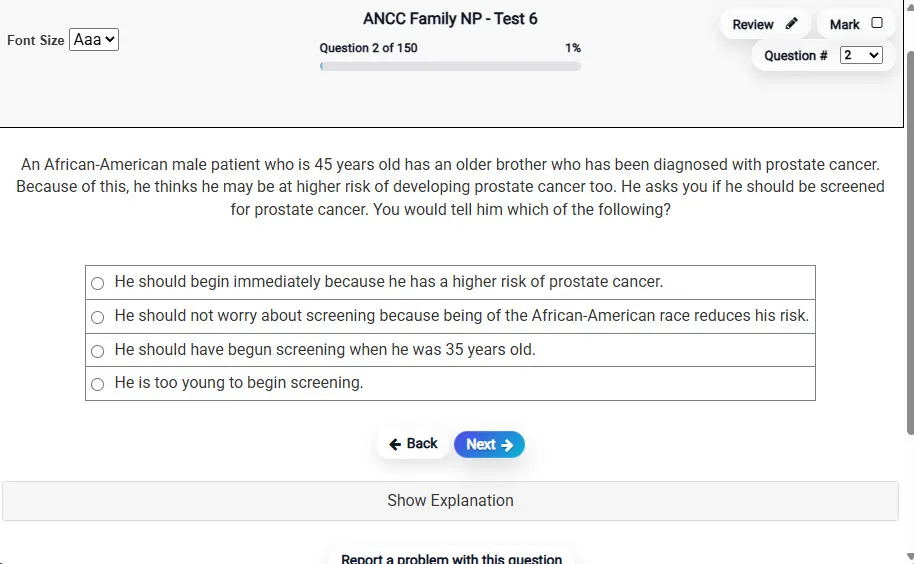
Answering a Question screen – Multiple-choice item view with navigation controls and progress tracker.
Answering a Question Multiple-choice item view with navigation controls and progress tracker.

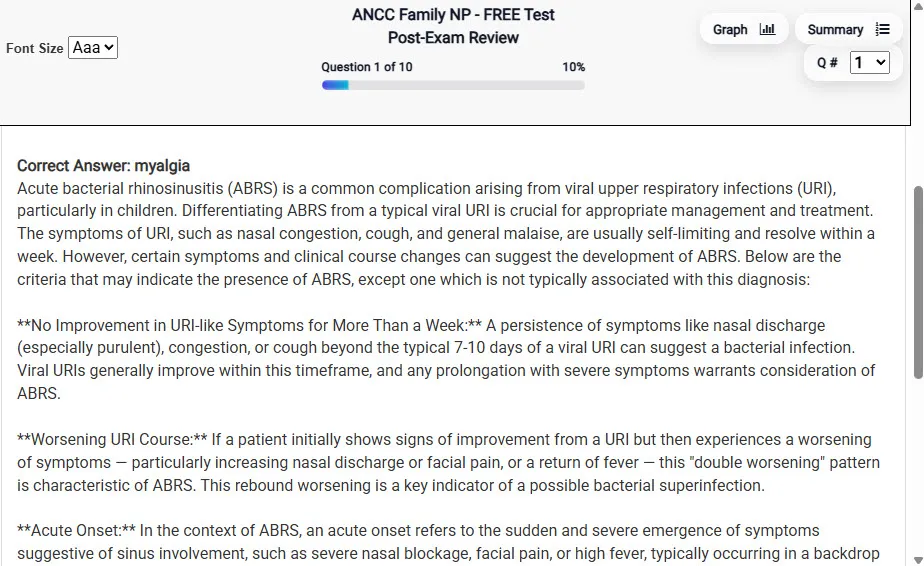
                           Detailed Explanation screen – 
                         Review mode showing chosen answer and rationale and references.
Detailed Explanation Review mode showing chosen answer and rationale and references.

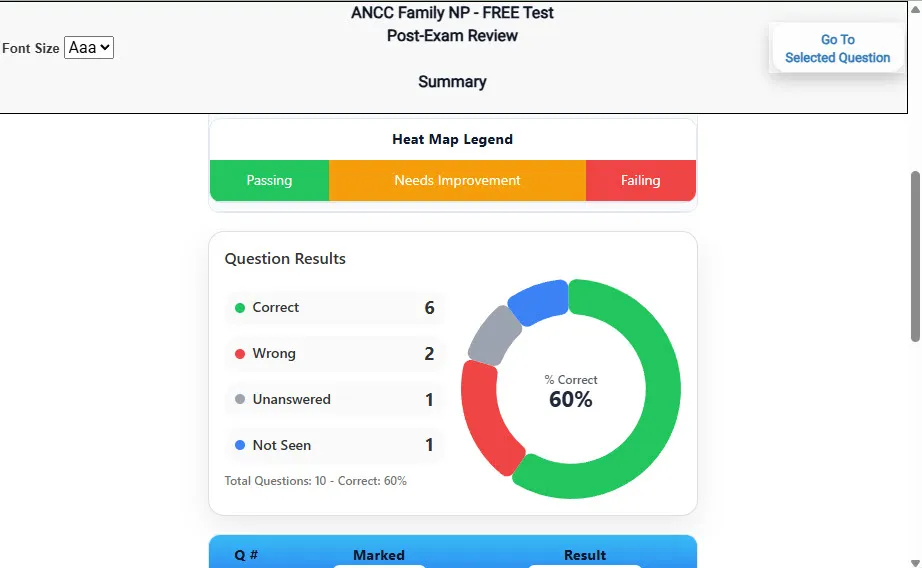
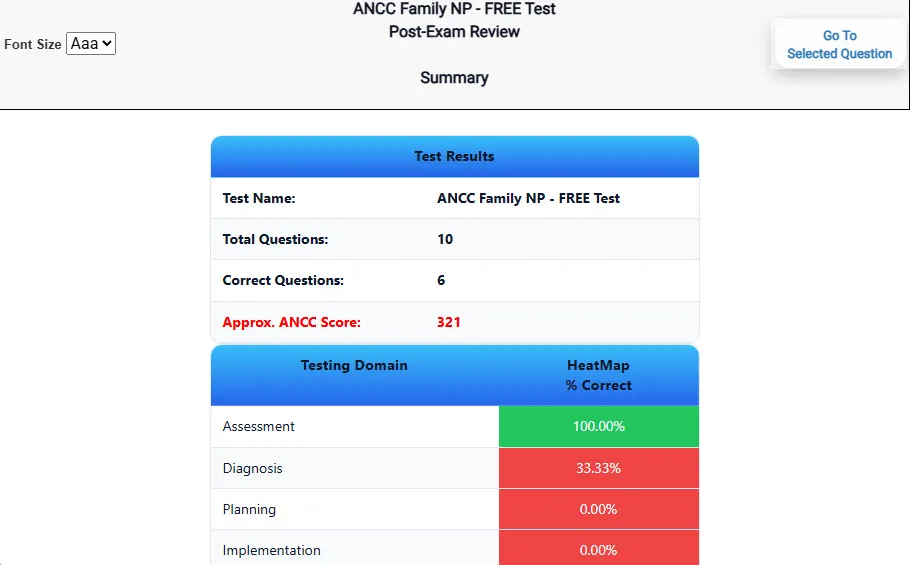
                           Review Summary 1 screen – 
                         Summary with counts for correct/wrong/unanswered and not seen items.
Review Summary 1 Summary with counts for correct/wrong/unanswered and not seen items.

                           Review Summary 2 screen – 
                         Advanced summary with category/domain breakdown and performance insights.
Review Summary 2 Advanced summary with category/domain breakdown and performance insights.

What Each Screen Shows

Answer Question Screen

  • Clean multiple-choice interface with progress bar.
  • Mark for review feature.
  • Matches real test pacing.

Detailed Explanation

  • Correct answer plus rationale.
  • Key concepts and guidelines highlighted.
  • Move between questions to fill knowledge gaps.

Review Summary 1

  • Overall results with total questions and scaled score.
  • Domain heatmap shows strengths and weaknesses.
  • Quick visual feedback on study priorities.

Review Summary 2

  • Chart of correct, wrong, unanswered, not seen.
  • Color-coded results for easy review.
  • Links back to missed items.

Top 10 Reasons to Use Exam Edge for your Praxis Special Education Teaching Students with Learning Disabilities Exam Prep

  1. Focused on the Praxis Special Education Teaching Students with Learning Disabilities Exam

    Our practice tests are built specifically for the Praxis SPED: Teaching Students with Learning Disabilities exam — every question mirrors the real topics, format, and difficulty so you're studying exactly what matters.

  2. Real Exam Simulation

    We match the per-question time limits and pressure of the actual Praxis exam, so test day feels familiar and stress-free.

  3. 15 Full Practice Tests & 1,800 Unique Questions

    You'll have more than enough material to master every Praxis SPED: Teaching Students with Learning Disabilities concept — no repeats, no fluff.

  4. Lower Cost Than a Retake

    Ordering 5 practice exams costs less than retaking the Praxis Special Education Teaching Students with Learning Disabilities exam after a failure. One low fee could save you both time and money.

  5. Flexible Testing

    Need to step away mid-exam? Pick up right where you left off — with your remaining time intact.

  6. Instant Scoring & Feedback

    See your raw score and an estimated Praxis Special Education Teaching Students with Learning Disabilities score immediately after finishing each practice test.

  7. Detailed Explanations for Every Question

    Review correct and incorrect answers with clear, step-by-step explanations so you truly understand each topic.

  8. Trusted & Accredited

    We're fully accredited by the Better Business Bureau and uphold the highest standards of trust and transparency.

  9. Web-Based & Always Available

    No software to install. Access your Praxis SPED: Teaching Students with Learning Disabilities practice exams 24/7 from any computer or mobile device.

  10. Expert Support When You Need It

    Need extra help? Our specialized tutors are highly qualified and ready to support your Praxis exam prep.


Pass the Praxis Special Education Teaching Students with Learning Disabilities Exam with Realistic Practice Tests from Exam Edge

Preparing for your upcoming Praxis Special Education Teaching Students with Learning Disabilities (5383) Certification Exam can feel overwhelming — but the right practice makes all the difference. Exam Edge gives you the tools, structure, and confidence to pass on your first try. Our online practice exams are built to match the real Praxis SPED: Teaching Students with Learning Disabilities exam in content, format, and difficulty.

  • 📝 15 Praxis Special Education Teaching Students with Learning Disabilities Practice Tests: Access 15 full-length exams with 120 questions each, covering every major Praxis Special Education Teaching Students with Learning Disabilities topic in depth.
  • Instant Online Access: Start practicing right away — no software, no waiting.
  • 🧠 Step-by-Step Explanations: Understand the reasoning behind every correct answer so you can master Praxis SPED: Teaching Students with Learning Disabilities exam concepts.
  • 🔄 Retake Each Exam Up to 4 Times: Build knowledge through repetition and track your improvement over time.
  • 🌐 Web-Based & Available 24/7: Study anywhere, anytime, on any device.
  • 🧘 Boost Your Test-Day Confidence: Familiarity with the Praxis format reduces anxiety and helps you perform under pressure.

These Praxis Special Education Teaching Students with Learning Disabilities practice exams are designed to simulate the real testing experience by matching question types, timing, and difficulty level. This approach helps you get comfortable not just with the exam content, but also with the testing environment, so you walk into your exam day focused and confident.


Exam Edge Praxis Reviews


This is the best test review I've seen. I've tried so many test review books as well as online programs. Exam Edge is the best around.

Catrina , Memphis, TN

I failed the Praxis Math test five times before I found your site. After taking all your practice tests, on my next attempt I passed by five points! I can honestly say this site is the reason I passed. Thank you!!!

Nikki P, Tennessee

Just wanted to say thanks for helping me pass the Praxis I Reading! Your practice tests and especially your explanations are great. They gave me the confidence I needed! Now I can student teach this fall. I'm so glad I found PraxisReading.com!

Denise C, Florida

Thank you so much. I just received my results in the mail. I scored a 179 and passed the Praxis I Writing! I'll never have to worry about retaking this test again! PraxisWriting.com is great. I told all my friends about this site.

Susan K, Virginia

I failed the Parapro test four times before I found your site. After taking all your practice tests, on my next attempt I passed by seven points! I can honestly say that this site is the reason I passed. Thank you!!!

Rebecca S, Texas

Hi! Just returned from taking my Praxis computerized and am happy to say that I passed with a 175. The last time I took the test I missed by 1 point. Your tests definitely made the difference for me! The set up was so similar to the test and the types of questions were also similar that I felt ve ...
Read More
Brad Y, Pennsylvania


Praxis Special Education Teaching Students with Learning Disabilities Aliases Test Name

Here is a list of alternative names used for this exam.

  • Praxis Special Education Teaching Students with Learning Disabilities
  • Praxis Special Education Teaching Students with Learning Disabilities test
  • Praxis Special Education Teaching Students with Learning Disabilities Certification Test
  • Praxis SPED: Teaching Students with Learning Disabilities test
  • Praxis
  • Praxis 5383
  • 5383 test
  • Praxis Special Education Teaching Students with Learning Disabilities (5383)
  • Special Education Teaching Students with Learning Disabilities certification