This is the content of the pop-over!

PMI PfMP (PfMP) Practice Tests & Test Prep by Exam Edge


PMI Portfolio Management Professional  product image
(5.0)
Based on 28 Reviews

  • Real Exam Simulation: Timed questions and matching content build comfort for your PMI PfMP test day.
  • Instant, 24/7 Access: Web-based PMI Portfolio Management Professional practice exams with no software needed.
  • Clear Explanations: Step-by-step answers and explanations for your PMI exam to strengthen understanding.
  • Boosted Confidence: Reduces anxiety and improves test-taking skills to ace your PMI Portfolio Management Professional (PfMP).

Featured on

PMI Portfolio Management Professional Online Practice Test Bundles

BEST VALUE
5 practice tests

$69.75

$199.75

SAVE $130

Only $13.95 per test!

  • 100% Pass Guarantee
  • 5 online practice tests
  • 100 questions per test
  • Bonus: 100 Flash Cards + Study Guide
  • Instant access
  • Detailed Explanations
  • Practice tests never expire
  • Timed, untimed, or study guide mode
1 practice test

$39.95

  • 1 online practice test
  • 100 questions per test
  • Instant access
  • Detailed Explanations
  • Practice tests never expire
  • Timed, untimed, or study guide mode
Quick Select
Tap to choose a bundle

** All Prices are in US Dollars (USD) **


PMI PfMP (PfMP) Resources

Jump to the section you need most.

Understanding the exact breakdown of the PMI Portfolio Management Professional test will help you know what to expect and how to most effectively prepare. The PMI Portfolio Management Professional has 150 multiple-choice questions . The exam will be broken down into the sections below:

PMI Portfolio Management Professional Exam Blueprint
Domain Name % Number of
Questions
Strategic Alignment 25% 38
Governance 20% 30
Portfolio Performance 25% 38
Portfolio Risk Management 15% 23
Communications Management 15% 23

PMI Portfolio Management Professional Study Tips by Domain

  • Confirm every portfolio component traces to a documented strategic objective and value driver; red flag: initiatives justified only by “business as usual” with no measurable benefit.
  • Define and apply component selection/prioritization criteria (e.g., strategic fit, value, risk, capacity) consistently; common trap: approving exceptions that bypass scoring and later distort the portfolio mix.
  • Map dependencies and sequencing to strategic roadmaps and capability maturity; cue: if two components compete for the same scarce resource in the same window, force a decision rather than “share” allocations.
  • Establish benefit realization targets and leading indicators tied to strategy, not just delivery metrics; red flag: reporting “on time/on budget” while strategic KPIs remain flat.
  • Use change control to revalidate alignment when strategy, funding, or external conditions shift; priority rule: re-score and re-balance the portfolio whenever assumptions behind the original business case change materially.
  • Set clear escalation paths for strategic conflicts across programs/projects; common trap: allowing local optimization (department goals) to override enterprise strategic priorities without governance approval.
  • Define and document the portfolio governance framework (roles, decision rights, escalation paths) before selection starts; red flag: approvals coming from “whoever is available” instead of the designated authority.
  • Establish stage gates and decision cadences (intake, prioritization, authorization, rebalancing, termination) with clear entry/exit criteria; common trap: letting initiatives proceed on sunk-cost momentum without passing a gate.
  • Set portfolio policies for prioritization and resource allocation (including how conflicts are resolved across components); priority rule: resource decisions must follow agreed criteria, not sponsor influence.
  • Define KPI/threshold-based oversight (benefits, value, capacity, compliance) and require exception reporting when thresholds are breached; red flag: dashboards show status but no trigger points for action.
  • Implement change control at the portfolio level (scope, funding, benefits, risk appetite) with auditability; common trap: treating cross-component changes as “local” and bypassing portfolio approval.
  • Ensure governance includes compliance and ethical conduct expectations (PMI Code of Ethics alignment, transparency, conflict-of-interest handling); contraindication: a decision maker participates while having an undisclosed competing interest.
  • Define and baseline portfolio performance metrics (e.g., value delivery, benefit realization, strategic contribution) and set tolerance bands; red flag: reporting schedule/cadence exists but no approved performance thresholds.
  • Implement a performance measurement framework that rolls up component KPIs consistently (normalized units, time horizons, and assumptions); common trap: mixing project “on-time/on-budget” status with benefits outcomes and calling it portfolio performance.
  • Conduct periodic portfolio reviews to compare actuals vs. targets and confirm continued viability; priority rule: escalate variances beyond tolerance to governance promptly rather than waiting for the next cycle.
  • Optimize resource allocation using performance data (rebalancing funding, capacity, and sequencing) to maximize portfolio value; red flag: high-performing components are starved while low-value initiatives persist due to sunk-cost bias.
  • Manage interdependencies and constraints that affect performance (shared resources, integration points, external deadlines) and track their impacts; common trap: treating dependency risk as a project issue and not reflecting it in portfolio-level performance forecasts.
  • Drive corrective and preventive actions (reprioritize, pause, terminate, or add components) and document decisions with expected performance impact; threshold cue: terminate or re-scope when forecasted benefits fall below minimum viable return or strategic contribution.
  • Maintain a portfolio risk register that traces each risk to a component and strategic objective; red flag: risks logged only at project level with no portfolio aggregation.
  • Define portfolio risk appetite and thresholds with governance (e.g., max exposure, concentration limits) and use them for decisions; common trap: approving components that individually look acceptable but collectively breach the portfolio threshold.
  • Quantify and prioritize risks using consistent measures (probability/impact, expected monetary value, scenario analysis) across components; cue: inconsistent scoring scales create false prioritization and should trigger recalibration.
  • Plan and fund risk responses at the portfolio level (avoid, mitigate, transfer, accept) including reserves; priority rule: allocate contingency where the marginal reduction in exposure is greatest, not where stakeholders are loudest.
  • Actively manage dependencies and systemic risks (shared resources, common vendors, regulatory changes) with cross-component response plans; red flag: a “single point of failure” dependency without an alternative path or owner.
  • Monitor portfolio risk KPIs/KRIs and escalate when thresholds are crossed using predefined triggers; common trap: waiting for component status reports instead of using forward-looking indicators (e.g., volatility, trend breaches).
  • Create a portfolio communications management plan that maps each stakeholder group to cadence, channels, and decision rights; red flag: blasting the same status deck to everyone regardless of action needed.
  • Define escalation paths and response-time thresholds (e.g., issues impacting strategic objectives escalate within 24–48 hours); common trap: escalating based on noise rather than impact and urgency.
  • Use a single source of truth for portfolio data (KPIs, capacity, funding, dependencies) with version control; red flag: parallel spreadsheets that produce conflicting “official” numbers.
  • Tailor communications to governance forums (steering committee vs. PMO vs. sponsors) and focus on decisions required; priority rule: every communication should either inform a decision or confirm an approved change.
  • Set standards for reporting (RAG definitions, forecast accuracy, benefits realization updates) and audit adherence; common trap: ambiguous RAG criteria that allows teams to stay “green” while missing milestones.
  • Manage stakeholder expectations through transparent change communications (scope, funding, prioritization, and benefits impacts) with documented acknowledgments; red flag: stakeholders learning about reprioritization after work has already shifted.


Built to Fit Into Your Busy Life

Everything you need to prepare with confidence—without wasting a minute.

Three Study Modes

Timed, No Time Limit, or Explanation mode.

Actionable Analytics

Heatmaps and scaled scores highlight weak areas.

High-Yield Rationales

Concise explanations emphasize key concepts.

Realistic Interface

Matches the feel of the actual exam environment.

Accessible by Design

Clean layout reduces cognitive load.

Anytime, Anywhere

Web-based access 24/7 on any device.
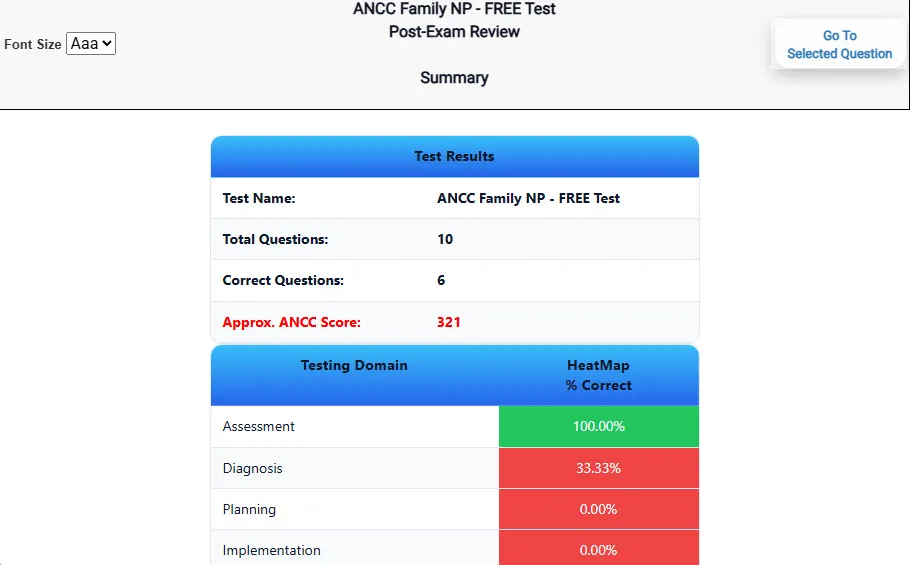
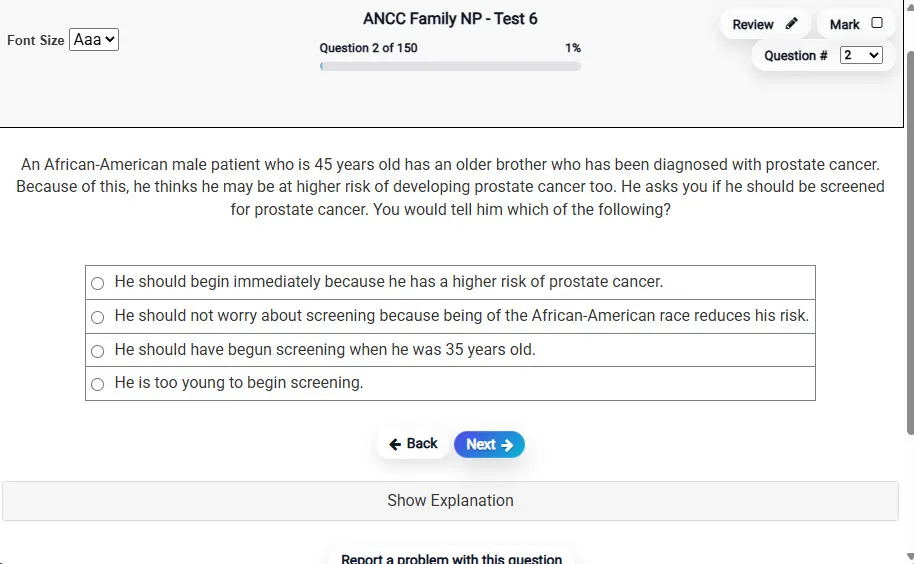
Answering a Question screen – Multiple-choice item view with navigation controls and progress tracker.
Answering a Question Multiple-choice item view with navigation controls and progress tracker.

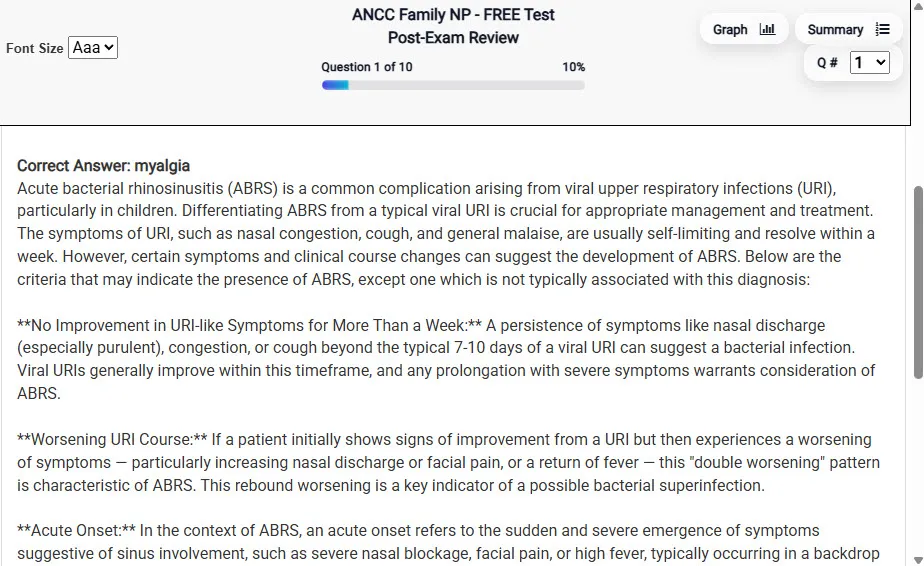
                           Detailed Explanation screen – 
                         Review mode showing chosen answer and rationale and references.
Detailed Explanation Review mode showing chosen answer and rationale and references.

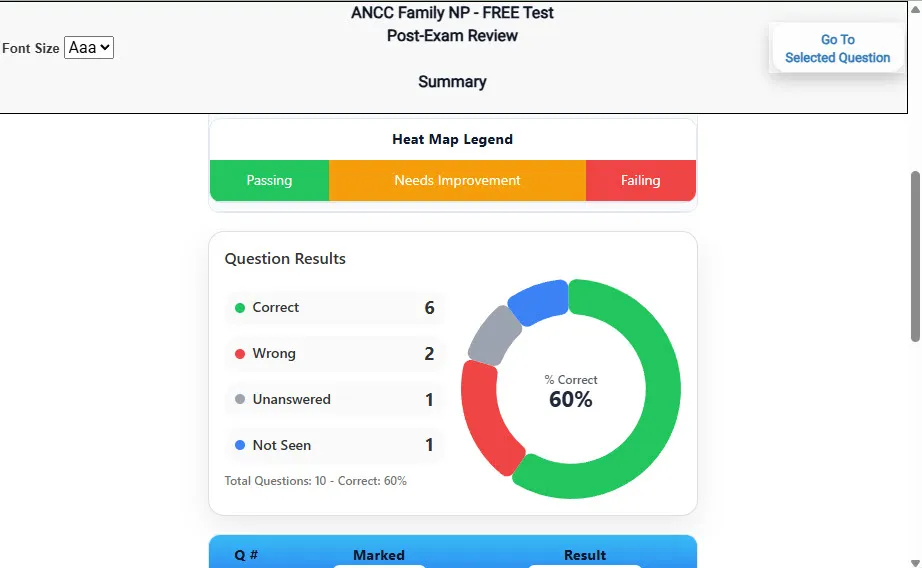
                           Review Summary 1 screen – 
                         Summary with counts for correct/wrong/unanswered and not seen items.
Review Summary 1 Summary with counts for correct/wrong/unanswered and not seen items.

                           Review Summary 2 screen – 
                         Advanced summary with category/domain breakdown and performance insights.
Review Summary 2 Advanced summary with category/domain breakdown and performance insights.

What Each Screen Shows

Answer Question Screen

  • Clean multiple-choice interface with progress bar.
  • Mark for review feature.
  • Matches real test pacing.

Detailed Explanation

  • Correct answer plus rationale.
  • Key concepts and guidelines highlighted.
  • Move between questions to fill knowledge gaps.

Review Summary 1

  • Overall results with total questions and scaled score.
  • Domain heatmap shows strengths and weaknesses.
  • Quick visual feedback on study priorities.

Review Summary 2

  • Chart of correct, wrong, unanswered, not seen.
  • Color-coded results for easy review.
  • Links back to missed items.

Top 10 Reasons to Use Exam Edge for your PMI Portfolio Management Professional Exam Prep

  1. Focused on the PMI Portfolio Management Professional Exam

    Our practice tests are built specifically for the PMI PfMP exam — every question mirrors the real topics, format, and difficulty so you're studying exactly what matters.

  2. Real Exam Simulation

    We match the per-question time limits and pressure of the actual PMI exam, so test day feels familiar and stress-free.

  3. 5 Full Practice Tests & 500 Unique Questions

    You'll have more than enough material to master every PMI PfMP concept — no repeats, no fluff.

  4. Lower Cost Than a Retake

    Ordering 5 practice exams costs less than retaking the PMI Portfolio Management Professional exam after a failure. One low fee could save you both time and money.

  5. Flexible Testing

    Need to step away mid-exam? Pick up right where you left off — with your remaining time intact.

  6. Instant Scoring & Feedback

    See your raw score and an estimated PMI Portfolio Management Professional score immediately after finishing each practice test.

  7. Detailed Explanations for Every Question

    Review correct and incorrect answers with clear, step-by-step explanations so you truly understand each topic.

  8. Trusted & Accredited

    We're fully accredited by the Better Business Bureau and uphold the highest standards of trust and transparency.

  9. Web-Based & Always Available

    No software to install. Access your PMI PfMP practice exams 24/7 from any computer or mobile device.

  10. Expert Support When You Need It

    Need extra help? Our specialized tutors are highly qualified and ready to support your PMI exam prep.


Pass the PMI Portfolio Management Professional Exam with Realistic Practice Tests from Exam Edge

Preparing for your upcoming PMI Portfolio Management Professional (PfMP) Certification Exam can feel overwhelming — but the right practice makes all the difference. Exam Edge gives you the tools, structure, and confidence to pass on your first try. Our online practice exams are built to match the real PMI PfMP exam in content, format, and difficulty.

  • 📝 5 PMI Portfolio Management Professional Practice Tests: Access 5 full-length exams with 100 questions each, covering every major PMI Portfolio Management Professional topic in depth.
  • Instant Online Access: Start practicing right away — no software, no waiting.
  • 🧠 Step-by-Step Explanations: Understand the reasoning behind every correct answer so you can master PMI PfMP exam concepts.
  • 🔄 Retake Each Exam Up to 4 Times: Build knowledge through repetition and track your improvement over time.
  • 🌐 Web-Based & Available 24/7: Study anywhere, anytime, on any device.
  • 🧘 Boost Your Test-Day Confidence: Familiarity with the PMI format reduces anxiety and helps you perform under pressure.

These PMI Portfolio Management Professional practice exams are designed to simulate the real testing experience by matching question types, timing, and difficulty level. This approach helps you get comfortable not just with the exam content, but also with the testing environment, so you walk into your exam day focused and confident.


Exam Edge PMI Reviews


PMI Portfolio Management Professional Aliases Test Name

Here is a list of alternative names used for this exam.

  • PMI Portfolio Management Professional
  • PMI Portfolio Management Professional test
  • PMI Portfolio Management Professional Certification Test
  • PMI PfMP test
  • PMI
  • PMI PfMP
  • PfMP test
  • PMI Portfolio Management Professional (PfMP)
  • Portfolio Management Professional certification