This is the content of the pop-over!

ILTS Speech Nonteaching (154) Practice Tests & Test Prep by Exam Edge


ILTS Speech-Language Pathologist Pathologist Nonteaching  product image
(5.0)
Based on 20 Reviews

  • Real Exam Simulation: Timed questions and matching content build comfort for your ILTS Speech Nonteaching test day.
  • Instant, 24/7 Access: Web-based ILTS Speech-Language Pathologist Pathologist Nonteaching practice exams with no software needed.
  • Clear Explanations: Step-by-step answers and explanations for your ILTS exam to strengthen understanding.
  • Boosted Confidence: Reduces anxiety and improves test-taking skills to ace your ILTS Speech-Language Pathologist Pathologist Nonteaching (232).

Featured on

ILTS Speech-Language Pathologist Pathologist Nonteaching Online Practice Test Bundles

BEST VALUE
15 practice tests

$149.25

$599.25

SAVE $450

Only $9.95 per test!

  • 100% Pass Guarantee
  • 15 online practice tests
  • 100 questions per test
  • Bonus: 100 Flash Cards + Study Guide
  • Instant access
  • Detailed Explanations
  • Practice tests never expire
  • Timed, untimed, or study guide mode
MOST POPULAR
10 practice tests

$99.50

$399.50

SAVE $300

Only $9.95 per test!

  • 10 online practice tests
  • 100 questions per test
  • Bonus: 100 Flash Cards + Study Guide
  • Instant access
  • Detailed Explanations
  • Practice tests never expire
  • Timed, untimed, or study guide mode
5 practice tests

$69.75

$199.75

SAVE $130

Only $13.95 per test!

  • 5 online practice tests
  • 100 questions per test
  • Bonus: 100 Flash Cards
  • Instant access
  • Detailed Explanations
  • Practice tests never expire
  • Timed, untimed, or study guide mode
1 practice test

$39.95

  • 1 online practice test
  • 100 questions per test
  • Instant access
  • Detailed Explanations
  • Practice tests never expire
  • Timed, untimed, or study guide mode
Quick Select
Tap to choose a bundle

** All Prices are in US Dollars (USD) **


ILTS Speech Nonteaching (232) Resources

Jump to the section you need most.

Understanding the exact breakdown of the ILTS Speech-Language Pathologist Pathologist Nonteaching test will help you know what to expect and how to most effectively prepare. The ILTS Speech-Language Pathologist Pathologist Nonteaching has 100 multiple-choice questions . The exam will be broken down into the sections below:

ILTS Speech-Language Pathologist Pathologist Nonteaching Exam Blueprint
Domain Name % Number of
Questions
Foundations of Communication 19% 19
Students with Communication Disorders 31% 31
Assessment of Communication Disorders 19% 19
Program Planning and Intervention for Students with Communication Disorders 19% 19
Collaboration and Professional Responsibilities 12% 12

ILTS Speech-Language Pathologist Pathologist Nonteaching Study Tips by Domain

  • Differentiate normal speech-language-hearing development from disorder by checking whether errors are developmentally expected for the student’s age and language exposure—red flag: persistent atypical patterns (e.g., unusual phonological processes) beyond expected age ranges.
  • Apply anatomy and physiology of respiration, phonation, resonance, and articulation to symptom patterns—priority rule: sudden onset dysarthria/voice change with neurological signs warrants immediate medical referral.
  • Use principles of phonetics/phonology to link speech sound features to intelligibility impacts—common trap: targeting isolated sounds without addressing a rule-based phonological pattern affecting multiple phonemes.
  • Connect language form, content, and use to classroom demands (e.g., narrative, expository, pragmatic discourse)—red flag: adequate vocabulary but weak inferencing, cohesion, or conversational repair that limits academic participation.
  • Integrate hearing science and auditory processing basics (outer/middle/inner ear; audibility vs clarity) into communication outcomes—priority rule: fluctuating hearing history (e.g., recurrent otitis media) plus inconsistent responses should prompt hearing screening/referral.
  • Recognize bilingual/multidialectal differences versus disorders using cross-linguistic influence and dialect features—common trap: labeling a predictable transfer pattern or dialectal feature as an error without evidence of impairment in the student’s dominant language.
  • Differentiate disorder vs. difference by examining whether a communication pattern limits educational access and participation—red flag: labeling dialectal variation or bilingual transfer as a disorder.
  • Profile characteristics and educational impact across disability categories (e.g., ASD, ID, hearing loss, TBI) and anticipate co-occurring needs—common trap: attributing all academic difficulty to speech sound errors alone.
  • Recognize indicators of swallowing/feeding concerns (coughing with thin liquids, wet/gurgly voice, recurrent pneumonia, weight loss) and refer per district protocol—contraindication: initiating oral trials without appropriate medical/clinical clearance.
  • Identify hearing-related communication signs (inconsistent responses, listening fatigue, frequent requests for repetition) and ensure classroom access supports—priority rule: address audibility/access (e.g., acoustics, assistive tech) before intensifying language goals.
  • Use developmentally appropriate expectations for speech, language, fluency, and voice, but focus on functional impact in school settings—threshold cue: intervene when intelligibility or participation limits curriculum access, not solely because a sound is “late.”
  • Apply culturally and linguistically responsive decision-making when considering eligibility and service delivery for multilingual students—red flag: relying on a single English-normed score without corroborating data from multiple contexts and languages.
  • Select assessment tools that match the referral question and the student’s age, language(s), and cultural background—red flag: relying on a single standardized score when validity is compromised by dialect or limited English proficiency.
  • Differentiate screening vs. comprehensive evaluation and know when to move from one to the other—common trap: using a screening outcome alone to determine eligibility or dismiss concerns.
  • Use multiple data sources (case history, observation across contexts, teacher/parent input, dynamic assessment, and work samples) to establish functional impact—priority rule: document how the disorder affects educational performance, not just impairment.
  • Interpret standardized test results correctly (standard scores, percentiles, confidence intervals, and test ceilings/basals)—common trap: treating percentile rank as a “percentage correct” or over-interpreting small score differences within the SEM.
  • Assess speech production with both perceptual and instrumental/structured measures (articulation, phonology, voice, fluency, resonance) and rule out structural/medical contributors—contraindication: proceeding with therapy without referral when signs suggest hearing loss, cleft/velopharyngeal issues, or neurologic change.
  • Write clear, defensible evaluation reports that link findings to recommendations and next steps—red flag: goals or service recommendations that do not align with data patterns, severity, or documented functional needs.
  • Write measurable IEP goals tied to baselines (e.g., accuracy, frequency, duration, level of cueing) and specify mastery criteria; red flag: goals that list activities (e.g., “will practice”) without an observable behavior and criterion.
  • Select intervention targets and approaches using developmental norms, functional impact, and evidence-based methods (articulation/phonology, language, fluency, voice, AAC); common trap: treating a score deficit alone when classroom participation and intelligibility are not affected.
  • Plan service delivery (individual, group, classroom-based, consult) to maximize educational relevance and generalization; priority rule: choose the least restrictive, most instructionally aligned model that still meets intensity and skill-acquisition needs.
  • Embed generalization and carryover supports (self-monitoring, strategy instruction, teacher/parent coaching, home practice) from the start; red flag: progress limited to the therapy room because cues, materials, and communication partners never change.
  • Use data-driven progress monitoring (frequent probes, work samples, rubrics, treatment fidelity checks) and adjust dose or targets when progress stalls; threshold cue: if data plateau across multiple sessions despite consistent implementation, revise the plan rather than repeating the same drills.
  • Address safety and contraindications in intervention planning (e.g., vocal hygiene vs. harmful vocal exercises, medical clearance for voice/swallow-related concerns, AAC access needs); red flag: ignoring chronic hoarseness, pain, or sudden voice change and proceeding without referral.
  • Follow ASHA Code of Ethics and Illinois requirements for confidentiality and records; red flag: discussing student information with staff who lack a legitimate educational interest.
  • Use collaborative decision-making in IEP/504 teams with data tied to educational impact; common trap: recommending services based only on a medical diagnosis without linking to school performance.
  • Clearly define SLP roles versus other professionals (e.g., audiologist, OT, school psychologist) to avoid duplication; priority rule: refer out when needs exceed school-based scope (e.g., complex dysphagia management).
  • Provide culturally and linguistically responsive services with appropriate interpreters; red flag: using family members as interpreters for assessment or IEP meetings when accuracy and confidentiality are at risk.
  • Document services, progress monitoring, and consultation in a timely, defensible way; common trap: vague notes (e.g., “good session”) that don’t specify objectives, data, and next steps.
  • Manage workload and caseload ethically while ensuring FAPE; priority cue: if service minutes can’t be met, escalate through written communication and administrative channels rather than informally reducing frequency.


Built to Fit Into Your Busy Life

Everything you need to prepare with confidence—without wasting a minute.

Three Study Modes

Timed, No Time Limit, or Explanation mode.

Actionable Analytics

Heatmaps and scaled scores highlight weak areas.

High-Yield Rationales

Concise explanations emphasize key concepts.

Realistic Interface

Matches the feel of the actual exam environment.

Accessible by Design

Clean layout reduces cognitive load.

Anytime, Anywhere

Web-based access 24/7 on any device.
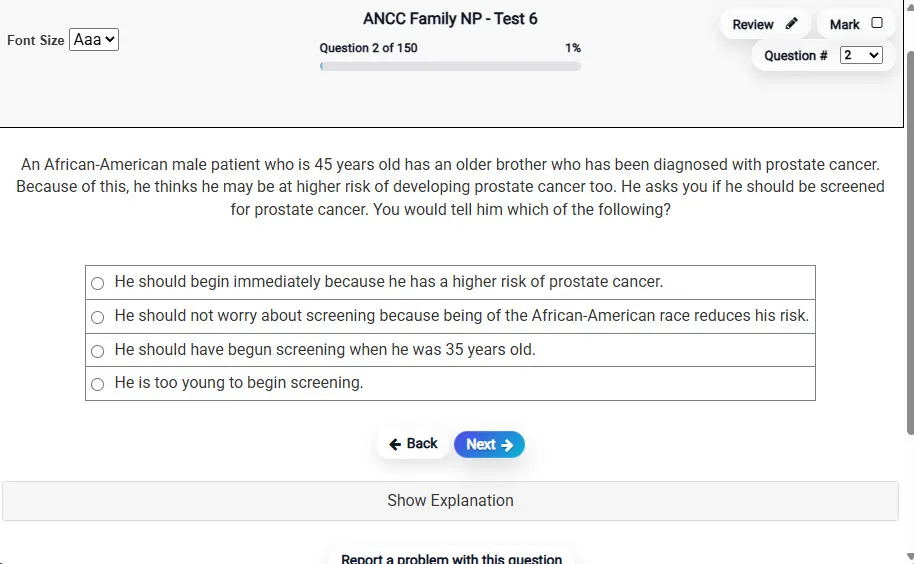
Answering a Question screen – Multiple-choice item view with navigation controls and progress tracker.
Answering a Question Multiple-choice item view with navigation controls and progress tracker.

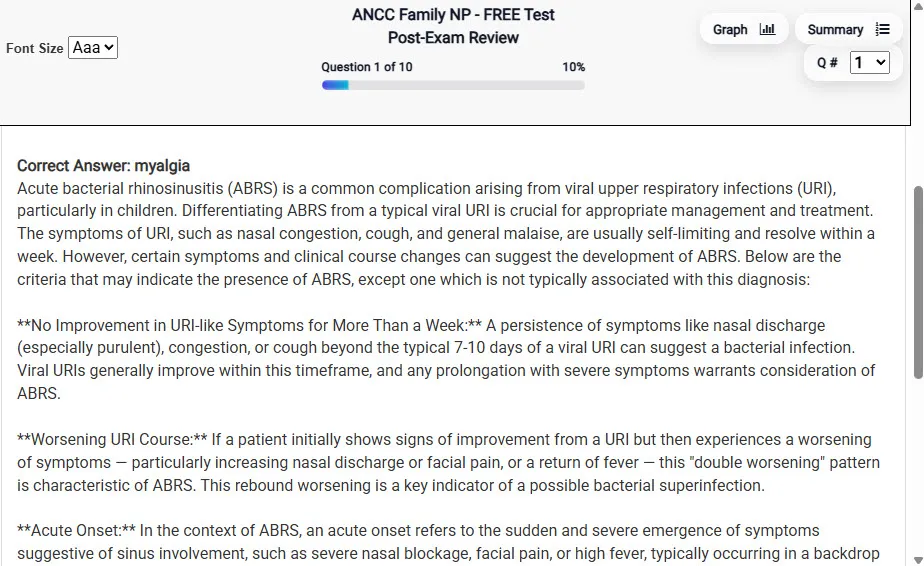
                           Detailed Explanation screen – 
                         Review mode showing chosen answer and rationale and references.
Detailed Explanation Review mode showing chosen answer and rationale and references.

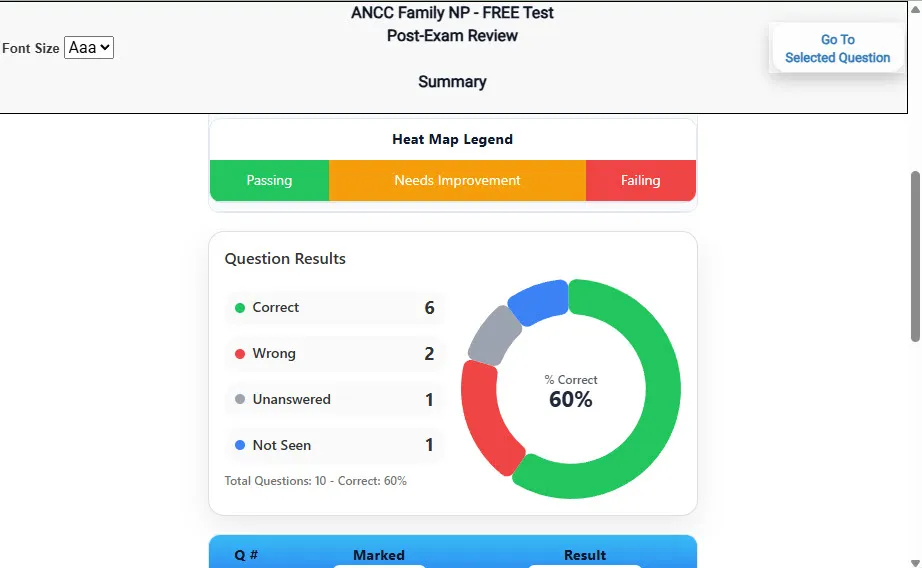
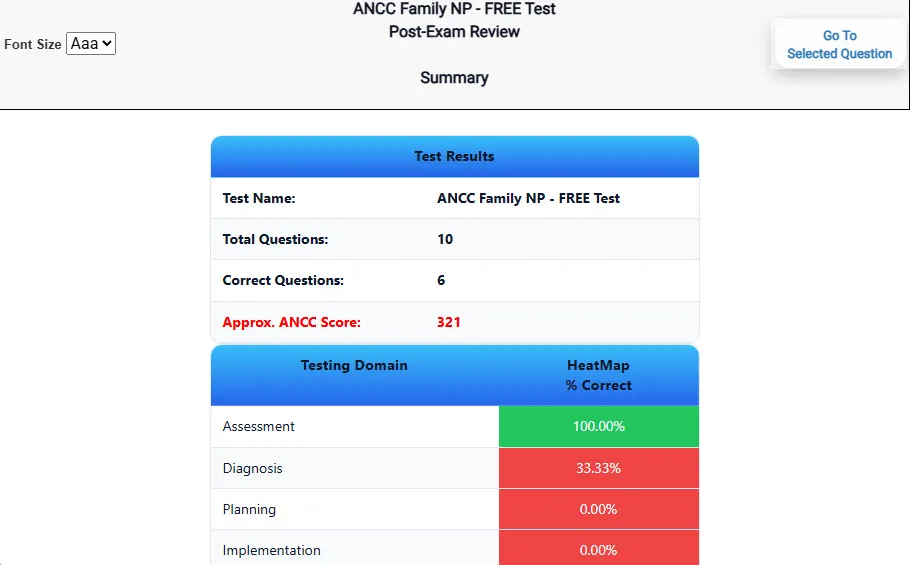
                           Review Summary 1 screen – 
                         Summary with counts for correct/wrong/unanswered and not seen items.
Review Summary 1 Summary with counts for correct/wrong/unanswered and not seen items.

                           Review Summary 2 screen – 
                         Advanced summary with category/domain breakdown and performance insights.
Review Summary 2 Advanced summary with category/domain breakdown and performance insights.

What Each Screen Shows

Answer Question Screen

  • Clean multiple-choice interface with progress bar.
  • Mark for review feature.
  • Matches real test pacing.

Detailed Explanation

  • Correct answer plus rationale.
  • Key concepts and guidelines highlighted.
  • Move between questions to fill knowledge gaps.

Review Summary 1

  • Overall results with total questions and scaled score.
  • Domain heatmap shows strengths and weaknesses.
  • Quick visual feedback on study priorities.

Review Summary 2

  • Chart of correct, wrong, unanswered, not seen.
  • Color-coded results for easy review.
  • Links back to missed items.

Top 10 Reasons to Use Exam Edge for your ILTS Speech-Language Pathologist Pathologist Nonteaching Exam Prep

  1. Focused on the ILTS Speech-Language Pathologist Pathologist Nonteaching Exam

    Our practice tests are built specifically for the ILTS Speech Nonteaching exam — every question mirrors the real topics, format, and difficulty so you're studying exactly what matters.

  2. Real Exam Simulation

    We match the per-question time limits and pressure of the actual ILTS exam, so test day feels familiar and stress-free.

  3. 15 Full Practice Tests & 1,500 Unique Questions

    You'll have more than enough material to master every ILTS Speech Nonteaching concept — no repeats, no fluff.

  4. Lower Cost Than a Retake

    Ordering 5 practice exams costs less than retaking the ILTS Speech-Language Pathologist Pathologist Nonteaching exam after a failure. One low fee could save you both time and money.

  5. Flexible Testing

    Need to step away mid-exam? Pick up right where you left off — with your remaining time intact.

  6. Instant Scoring & Feedback

    See your raw score and an estimated ILTS Speech-Language Pathologist Pathologist Nonteaching score immediately after finishing each practice test.

  7. Detailed Explanations for Every Question

    Review correct and incorrect answers with clear, step-by-step explanations so you truly understand each topic.

  8. Trusted & Accredited

    We're fully accredited by the Better Business Bureau and uphold the highest standards of trust and transparency.

  9. Web-Based & Always Available

    No software to install. Access your ILTS Speech Nonteaching practice exams 24/7 from any computer or mobile device.

  10. Expert Support When You Need It

    Need extra help? Our specialized tutors are highly qualified and ready to support your ILTS exam prep.


Pass the ILTS Speech-Language Pathologist Pathologist Nonteaching Exam with Realistic Practice Tests from Exam Edge

Preparing for your upcoming ILTS Speech-Language Pathologist Pathologist Nonteaching (232) Certification Exam can feel overwhelming — but the right practice makes all the difference. Exam Edge gives you the tools, structure, and confidence to pass on your first try. Our online practice exams are built to match the real ILTS Speech Nonteaching exam in content, format, and difficulty.

  • 📝 15 ILTS Speech-Language Pathologist Pathologist Nonteaching Practice Tests: Access 15 full-length exams with 100 questions each, covering every major ILTS Speech-Language Pathologist Pathologist Nonteaching topic in depth.
  • Instant Online Access: Start practicing right away — no software, no waiting.
  • 🧠 Step-by-Step Explanations: Understand the reasoning behind every correct answer so you can master ILTS Speech Nonteaching exam concepts.
  • 🔄 Retake Each Exam Up to 4 Times: Build knowledge through repetition and track your improvement over time.
  • 🌐 Web-Based & Available 24/7: Study anywhere, anytime, on any device.
  • 🧘 Boost Your Test-Day Confidence: Familiarity with the ILTS format reduces anxiety and helps you perform under pressure.

These ILTS Speech-Language Pathologist Pathologist Nonteaching practice exams are designed to simulate the real testing experience by matching question types, timing, and difficulty level. This approach helps you get comfortable not just with the exam content, but also with the testing environment, so you walk into your exam day focused and confident.

Exam Edge ILTS Reviews


Dear Exam Edge, I recently ordered a five-pack of tests and successfully passed the ILTS Mathematics content area test with a score of 280/300. I found your tests a very effective way of testing my knowledge of the content material on the real test and seeing explanations of each problem. I scored b ...
Read More
Alistair, IL

Navigating this site is excellent. Thank you

dwaina , chicago, Illinois

The practice tests were EXACTLY what I needed! The test explanations for answers were the teaching points I needed to help understand certain subjects. Thank you for your help!

Arnita , South Holland, Illinois

These practice exams really put my mind at ease! I feel confident about taking my test when the current situation is over. EDIT: Yep. Nailed it.

Sean , Silver Spring , MD

I used Exam Edge to help me pass my Science 4-8 TExES exam on my first try! The practice exams look exactly how the real test looked and the timer helped me be a little less nervous. Now I’m using their practice exams to help me prepare to take my Science 7-12 TExES exam. Wish me luck! :)

Shamai , TX

These are great exams to help prepare you for the exams. I passed my ILTS Learning Behavior Specialist I (155) exam on the first attempt. The question structure readily prepares you for how the structure will be on the test, multiple choice questions that are relevant to what is needed to know for t ...
Read More
Jugoslav, Cook County, Illinois


ILTS Speech-Language Pathologist Pathologist Nonteaching Aliases Test Name

Here is a list of alternative names used for this exam.

  • ILTS Speech-Language Pathologist Pathologist Nonteaching
  • ILTS Speech-Language Pathologist Pathologist Nonteaching test
  • ILTS Speech-Language Pathologist Pathologist Nonteaching Certification Test
  • ILTS Speech Nonteaching test
  • ILTS
  • ILTS 232
  • 232 test
  • ILTS Speech-Language Pathologist Pathologist Nonteaching (232)
  • Speech-Language Pathologist Pathologist Nonteaching certification