This is the content of the pop-over!

Lightning Deal Alert – 12% Off Ends at Midnight!

Strike while the savings are hot! Use promo code FlashSale at checkout for 12% off any Exam Edge test or bundle. Hurry—the clock is ticking!

ICC National Residential Inspector (B1) Practice Tests & Test Prep by Exam Edge


ICC Residential Inspector product image
(4.8)
Based on 34 Reviews

  • Real Exam Simulation: Timed questions and matching content build comfort for your ICC Residential Inspector test day.
  • Instant, 24/7 Access: Web-based ICC Residential Inspector practice exams with no software needed.
  • Clear Explanations: Step-by-step answers and explanations for your ICC exam to strengthen understanding.
  • Boosted Confidence: Reduces anxiety and improves test-taking skills to ace your ICC Residential Inspector (ICCB1).

Featured on

ICC Residential Inspector Online Practice Test Bundles

BEST VALUE
5 practice tests

$69.75

$199.75

SAVE $130

Only $13.95 per test!

  • 100% Pass Guarantee
  • 5 online practice tests
  • 60 questions per test
  • Bonus: 100 Flash Cards + Study Guide
  • Instant access
  • Detailed Explanations
  • Practice tests never expire
  • Timed, untimed, or study guide mode
1 practice test

$39.95

  • 1 online practice test
  • 60 questions per test
  • Instant access
  • Detailed Explanations
  • Practice tests never expire
  • Timed, untimed, or study guide mode
Quick Select
Tap to choose a bundle

** All Prices are in US Dollars (USD) **


ICC Residential Inspector (ICCB1) Resources

Jump to the section you need most.

Understanding the exact breakdown of the ICC Residential Inspector test will help you know what to expect and how to most effectively prepare. The ICC Residential Inspector has 60 multiple-choice questions . The exam will be broken down into the sections below:

ICC Residential Inspector Exam Blueprint
Domain Name % Number of
Questions
Code Administration 7% 4
Building Planning 20% 12
Footings and Foundations 14% 8
Floor Construction 9% 5
Wall Construction and Coverings 27% 16
Roof/Ceiling Construction 9% 5
Public Safety and Special Construction 17% 10

ICC Residential Inspector Study Tips by Domain

  • Verify the adopted code set and edition (IRC/IBC, local amendments) before citing violations—a common trap is applying a newer section number or deleted provision.
  • Confirm permit scope and valuation match the work; red flag: work underway with no permit posted or a permit that doesn’t cover structural/MEP changes.
  • Use the correct inspection sequence and required approvals (e.g., footing/foundation before backfill, framing before insulation); priority rule: missed required inspection can trigger concealment removal.
  • Document corrections with clear code references and measurable criteria; common trap: writing “not to code” without citing the section and the specific condition observed.
  • Know when to require engineered design or sealed documents (wind/brace, trusses, unusual loads); red flag: deferred submittals not provided before installation or inspection sign-off.
  • Apply authority limits consistently: identify unsafe conditions and issue stop-work only per jurisdiction policy; priority rule: life-safety hazards (structural instability, exposed energized conductors, blocked egress) take precedence over cosmetic items.
  • Verify zoning/setback and fire-separation distances early—a common trap is approving placement that forces noncompliant exterior wall ratings or opening limits later (IRC R302).
  • Confirm occupancy/use as one- and two-family or townhouses only; red flag is mixed-use or accessory spaces (e.g., salon, short-term rental suite) that may trigger different code paths or separation requirements.
  • Check egress planning: every sleeping room needs an emergency escape and rescue opening meeting minimum clear opening, height, and sill limits; common trap is a window that “meets size” but fails net clear opening or sill height (IRC R310).
  • Validate stair and ramp layout against rise/run, headroom, landing, and handrail continuity; priority rule is that uniformity of risers/treads is enforced strictly, and small variations are a frequent fail point.
  • Plan for required smoke alarms and carbon monoxide alarms with correct locations and interconnection; red flag is omission of outside-sleeping-area alarms or lack of interconnect on alterations where required (IRC R314/R315).
  • Review light, ventilation, and minimum room dimensions up front; common trap is relying on mechanical ventilation while still failing minimum ceiling height or room area requirements for habitable spaces (IRC R303/R304/R305).
  • Verify footing size, thickness, and reinforcement match the approved plans and soil assumptions; red flag: field “downsizing” of footings without an engineered revision.
  • Confirm footing embedment is below required frost depth and on undisturbed, bearing soil; common trap: placing on loose fill or muddy subgrade without proper compaction and verification.
  • Check forms and concrete placement for continuous support and proper consolidation; red flag: honeycombing, cold joints, or visible segregation at the footing–wall interface.
  • Inspect foundation wall reinforcement, anchor bolts/straps, and hold-downs for correct spacing and embedment; priority rule: missing or mislocated anchors must be corrected before framing proceeds.
  • Assess dampproofing/waterproofing, drainage (drain tile, gravel, filter fabric), and discharge path; common trap: footing drains that daylight incorrectly or terminate without an approved outlet/sump.
  • Verify slab/footing insulation, vapor retarder, and capillary break details where required; red flag: vapor retarder punctures or laps not sealed around penetrations before concrete placement.
  • Verify floor joist sizing/span and species/grade match the approved plan or IRC tables; red flag if a field-cut notch or hole violates limits (e.g., large holes near midspan or notches in the middle third).
  • Confirm bearing and end support at joists/girders (adequate seat and full contact on plates/hangers); common trap is joists resting on a nailer or skim-bearing on masonry without proper bearing length.
  • Inspect engineered I-joists/trusses for manufacturer-required details (web stiffeners, squash blocks, hangers, rim board fastening); red flag is any flange notch/cut or bored hole outside the manufacturer’s hole chart.
  • Check connections and load path at ledgers, girders, and hangers (correct hanger model, fastener type/length, and nailing pattern); priority rule: do not accept drywall screws or roofing nails in structural connectors.
  • Evaluate subfloor sheathing thickness, grade, orientation, and fastening schedule; common trap is installing panels parallel to joists or omitting required panel edge support (blocking/T&G) leading to excessive deflection and squeaks.
  • Review fireblocking/draftstopping and protection at penetrations in concealed floor spaces; red flag is unsealed plumbing/electrical penetrations or open chases that defeat required compartmentation.
  • Verify exterior wall bracing per the approved plan (braced-wall panels, required lengths, and hold-downs) — red flag: large window/door openings that remove required braced panel segments without an engineered alternate.
  • Check weather-resistive barrier (WRB) continuity and flashing integration at windows/doors — common trap: reversed shingle-lap or missing pan flashing at sills leading to concealed moisture intrusion.
  • Confirm fireblocking and draftstopping in concealed spaces (stud bays, soffits, interconnections between floors/attics) — red flag: unsealed penetrations around pipes/cables that create vertical chimneys.
  • Inspect framing for proper fastening and support (stud size/spacing, headers, king/jack studs, and bearing points) — priority rule: any cut, notched, or bored stud beyond code limits needs an approved repair or engineering.
  • Validate insulation and vapor retarder placement for the climate/assembly — common trap: kraft-faced batts installed backwards or with gaps/voids behind wiring and boxes reducing required R-value performance.
  • Review exterior wall coverings (siding, brick veneer, stucco) for clearances and moisture management — red flag: veneer without weep holes/through-wall flashing or siding too close to grade/decks violating minimum clearance.
  • Verify roof slope and covering type match manufacturer/IRC requirements; red flag: low-slope areas (e.g., valleys/porches) covered with materials not rated for that pitch.
  • Check roof framing spans, bearing, and connections (rafters/trusses, ridge/hip, hangers/straps); common trap: field-cut trusses or missing truss bracing per truss design.
  • Confirm roof sheathing thickness, fastener size/spacing, and edge support (H-clips/blocking) where required; red flag: edge swelling, spongy decking, or nails overdriven/underdriven reducing uplift resistance.
  • Evaluate attic ventilation balance (intake at eaves, exhaust at ridge/roof) and baffle use to keep soffits clear; priority rule: blocked intake vents are a frequent cause of moisture, mold, and ice dams.
  • Inspect flashing details at penetrations and transitions (step flashing at walls, kick-out flashing, chimney/cricket, drip edge); red flag: reliance on sealant instead of properly lapped metal flashing.
  • Review ceiling/attic fire and energy details (draftstopping, insulation depth/coverage, recessed light ratings, attic access insulation); common trap: insulation covering non-IC fixtures or missing air sealing at top plates and penetrations.
  • Verify guard requirements where the walking surface is more than 30 inches above grade below within 36 inches horizontally; red flag: missing/low guards at open-sided stairs, decks, and landings.
  • Confirm handrails on stairways with 4 or more risers and ensure continuous graspable profiles; common trap: installers stop the handrail at the top riser or use non-graspable “wide” rails.
  • Check emergency escape and rescue openings in sleeping rooms and basements, including operational constraints; red flag: window wells without a compliant ladder/steps where required or openings painted shut.
  • Evaluate fire-resistance and draftstopping in concealed spaces and between dwelling/garage separation; priority rule: any openings for ducts, pipes, or wiring must be properly protected—unsealed penetrations are a frequent failure.
  • Inspect special construction such as decks, balconies, and exterior stairs for corrosion resistance and flashing; red flag: ledgers not properly flashed or fastened, especially where decay or water staining is present.
  • Confirm required safety glazing locations (e.g., near doors, in hazardous locations, in guards/railings) and proper labeling; common trap: tempered marking missing or glass installed too close to the floor without meeting exceptions.


Built to Fit Into Your Busy Life

Everything you need to prepare with confidence—without wasting a minute.

Three Study Modes

Timed, No Time Limit, or Explanation mode.

Actionable Analytics

Heatmaps and scaled scores highlight weak areas.

High-Yield Rationales

Concise explanations emphasize key concepts.

Realistic Interface

Matches the feel of the actual exam environment.

Accessible by Design

Clean layout reduces cognitive load.

Anytime, Anywhere

Web-based access 24/7 on any device.
Answering a Question screen – Multiple-choice item view with navigation controls and progress tracker.
Answering a Question Multiple-choice item view with navigation controls and progress tracker.

                           Detailed Explanation screen – 
                         Review mode showing chosen answer and rationale and references.
Detailed Explanation Review mode showing chosen answer and rationale and references.

                           Review Summary 1 screen – 
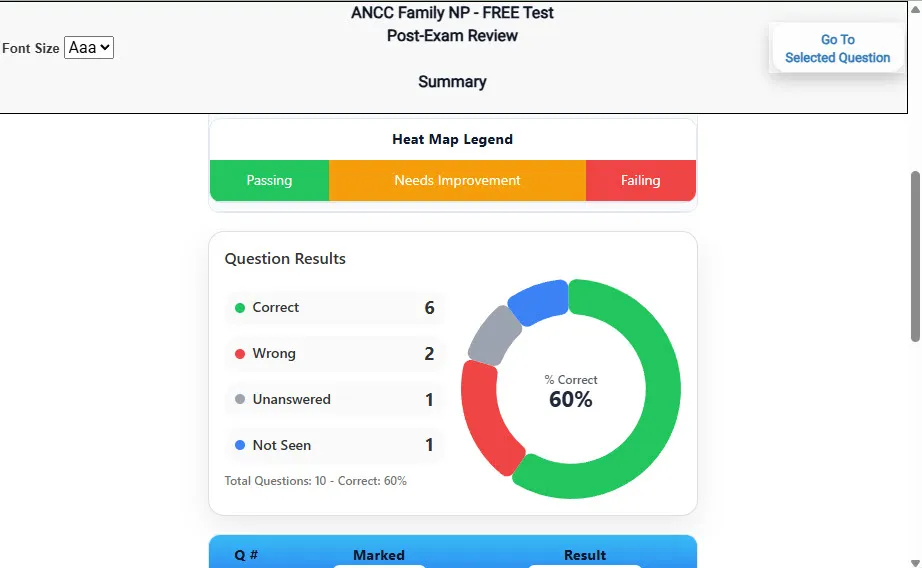
                         Summary with counts for correct/wrong/unanswered and not seen items.
Review Summary 1 Summary with counts for correct/wrong/unanswered and not seen items.

                           Review Summary 2 screen – 
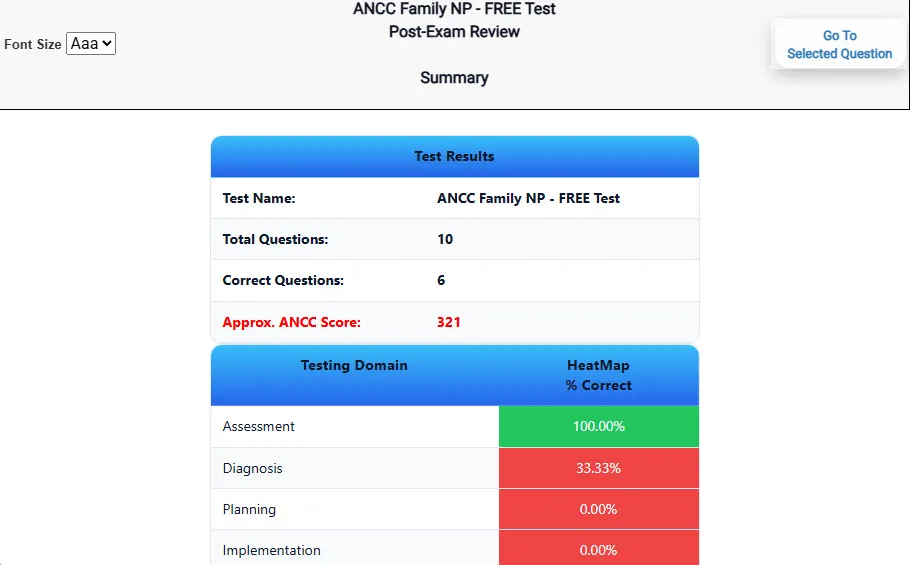
                         Advanced summary with category/domain breakdown and performance insights.
Review Summary 2 Advanced summary with category/domain breakdown and performance insights.

What Each Screen Shows

Answer Question Screen

  • Clean multiple-choice interface with progress bar.
  • Mark for review feature.
  • Matches real test pacing.

Detailed Explanation

  • Correct answer plus rationale.
  • Key concepts and guidelines highlighted.
  • Move between questions to fill knowledge gaps.

Review Summary 1

  • Overall results with total questions and scaled score.
  • Domain heatmap shows strengths and weaknesses.
  • Quick visual feedback on study priorities.

Review Summary 2

  • Chart of correct, wrong, unanswered, not seen.
  • Color-coded results for easy review.
  • Links back to missed items.

Top 10 Reasons to Use Exam Edge for your ICC Residential Inspector Exam Prep

  1. Focused on the ICC Residential Inspector Exam

    Our practice tests are built specifically for the ICC Residential Inspector exam — every question mirrors the real topics, format, and difficulty so you're studying exactly what matters.

  2. Real Exam Simulation

    We match the per-question time limits and pressure of the actual ICC exam, so test day feels familiar and stress-free.

  3. 5 Full Practice Tests & 300 Unique Questions

    You'll have more than enough material to master every ICC Residential Inspector concept — no repeats, no fluff.

  4. Lower Cost Than a Retake

    Ordering 5 practice exams costs less than retaking the ICC Residential Inspector exam after a failure. One low fee could save you both time and money.

  5. Flexible Testing

    Need to step away mid-exam? Pick up right where you left off — with your remaining time intact.

  6. Instant Scoring & Feedback

    See your raw score and an estimated ICC Residential Inspector score immediately after finishing each practice test.

  7. Detailed Explanations for Every Question

    Review correct and incorrect answers with clear, step-by-step explanations so you truly understand each topic.

  8. Trusted & Accredited

    We're fully accredited by the Better Business Bureau and uphold the highest standards of trust and transparency.

  9. Web-Based & Always Available

    No software to install. Access your ICC Residential Inspector practice exams 24/7 from any computer or mobile device.

  10. Expert Support When You Need It

    Need extra help? Our specialized tutors are highly qualified and ready to support your ICC exam prep.


Pass the ICC Residential Inspector Exam with Realistic Practice Tests from Exam Edge

Preparing for your upcoming ICC Residential Inspector (ICCB1) Certification Exam can feel overwhelming — but the right practice makes all the difference. Exam Edge gives you the tools, structure, and confidence to pass on your first try. Our online practice exams are built to match the real ICC Residential Inspector exam in content, format, and difficulty.

  • 📝 5 ICC Residential Inspector Practice Tests: Access 5 full-length exams with 60 questions each, covering every major ICC Residential Inspector topic in depth.
  • Instant Online Access: Start practicing right away — no software, no waiting.
  • 🧠 Step-by-Step Explanations: Understand the reasoning behind every correct answer so you can master ICC Residential Inspector exam concepts.
  • 🔄 Retake Each Exam Up to 4 Times: Build knowledge through repetition and track your improvement over time.
  • 🌐 Web-Based & Available 24/7: Study anywhere, anytime, on any device.
  • 🧘 Boost Your Test-Day Confidence: Familiarity with the ICC format reduces anxiety and helps you perform under pressure.

These ICC Residential Inspector practice exams are designed to simulate the real testing experience by matching question types, timing, and difficulty level. This approach helps you get comfortable not just with the exam content, but also with the testing environment, so you walk into your exam day focused and confident.


Exam Edge ICC Reviews


ICC Residential Inspector Aliases Test Name

Here is a list of alternative names used for this exam.

  • ICC Residential Inspector
  • ICC Residential Inspector test
  • ICC Residential Inspector Certification Test
  • ICC
  • ICC ICCB1
  • ICCB1 test
  • ICC Residential Inspector (ICCB1)
  • Residential Inspector certification