This is the content of the pop-over!

Praxis PLT: Early Childhood (5621) Practice Tests & Test Prep by Exam Edge


Praxis Principles of Learning and Teaching Early Childhood  product image
(5.0)
Based on 37 Reviews

  • Real Exam Simulation: Timed questions and matching content build comfort for your Praxis PLT: Early Childhood test day.
  • Instant, 24/7 Access: Web-based Praxis Principles of Learning and Teaching Early Childhood practice exams with no software needed.
  • Clear Explanations: Step-by-step answers and explanations for your Praxis exam to strengthen understanding.
  • Boosted Confidence: Reduces anxiety and improves test-taking skills to ace your Praxis Principles of Learning and Teaching Early Childhood (5621).

Featured on

Praxis Principles of Learning and Teaching Early Childhood Online Practice Test Bundles

BEST VALUE
10 practice tests

$99.50

$399.50

SAVE $300

Only $9.95 per test!

  • 100% Pass Guarantee
  • 10 online practice tests
  • 70 questions + 4 essays per test
  • Bonus: 100 Flash Cards + Study Guide
  • Instant access
  • Detailed Explanations
  • Practice tests never expire
  • Timed, untimed, or study guide mode
5 practice tests

$69.75

$199.75

SAVE $130

Only $13.95 per test!

  • 5 online practice tests
  • 70 questions + 4 essays per test
  • Bonus: 100 Flash Cards + Study Guide
  • Instant access
  • Detailed Explanations
  • Practice tests never expire
  • Timed, untimed, or study guide mode
1 practice test

$39.95

  • 1 online practice test
  • 70 questions + 4 essays per test
  • Instant access
  • Detailed Explanations
  • Practice tests never expire
  • Timed, untimed, or study guide mode
Quick Select
Tap to choose a bundle

** All Prices are in US Dollars (USD) **


Praxis PLT: Early Childhood (5621) Resources

Jump to the section you need most.

Understanding the exact breakdown of the Praxis Principles of Learning and Teaching Early Childhood test will help you know what to expect and how to most effectively prepare. The Praxis Principles of Learning and Teaching Early Childhood has 70 multiple-choice questions and 4 essay questions. The exam will be broken down into the sections below:

Praxis Principles of Learning and Teaching Early Childhood Exam Blueprint
Domain Name % Number of
Questions
Students as Learners 22.5% 16
Instructional Process 22.5% 16
Assessment 15% 11
Professional Development - Leadership and Community 15% 11
Analysis of Instructional Scenarios 25% 18
     Students as Learners  
     Instructional Process  
     Assessment  
     Professional Development - Leadership and Community  

Praxis Principles of Learning and Teaching Early Childhood Study Tips by Domain

  • Use developmental milestones to set realistic expectations for ages 3–8 and plan supports; red flag: expecting sustained attention or abstract reasoning beyond typical early childhood development.
  • Apply key learning theories (Piaget, Vygotsky, behaviorism, information processing) to explain student behavior and choose strategies; common trap: matching an intervention to the wrong theory (e.g., using punishment when skill deficits need scaffolding).
  • Differentiate for diverse learners (ELLs, disabilities, gifted) using multiple means of representation and response; priority rule: don’t reduce rigor—adjust access (supports, language demands, accommodations) instead.
  • Promote motivation and self-regulation with clear routines, choices, and specific feedback; red flag: overreliance on extrinsic rewards that reduces intrinsic interest or triggers power struggles.
  • Create a culturally responsive, trauma-informed climate that supports belonging and behavior; common trap: interpreting cultural communication styles or stress responses as “defiance” without checking context and antecedents.
  • Use fair observation and documentation practices (anecdotal records, checklists, work samples) to understand individual learners; threshold cue: if a pattern persists across settings/time, consider targeted supports and referral steps rather than a one-off conclusion.
  • Plan developmentally appropriate instruction by using children’s play, exploration, and routines as learning contexts; red flag: relying on long teacher talk or seatwork that exceeds typical attention span.
  • Write objectives that are observable and measurable (e.g., “sorts by color” vs. “understands colors”); common trap: misalignment where activities are fun but don’t target the stated skill.
  • Differentiate with scaffolds (modeling, prompts, manipulatives, sentence stems) and gradually release support; priority rule: provide access without lowering the learning goal.
  • Use multiple modes of instruction (visuals, movement, songs, read-alouds, hands-on centers) to match varied learners; red flag: one-format lessons that disadvantage English learners or children with communication needs.
  • Manage the learning environment with clear procedures, proactive transitions, and positive reinforcement; common trap: waiting to react to misbehavior instead of pre-correcting and structuring materials/routines.
  • Embed formative checks during instruction (quick observations, questioning, turn-and-talk, work samples) and adjust in the moment; red flag: saving assessment for the end and missing misconceptions early.
  • Choose assessment types to match the purpose: screening/diagnostic for instructional planning, formative for in-the-moment adjustments, and summative for end-of-unit judgments—red flag if a single test score is used to make high-stakes decisions for a young child.
  • Use developmentally appropriate measures (observations, checklists, work samples, performance tasks) in natural contexts—common trap: relying heavily on paper-and-pencil or long, timed tasks that reflect stamina more than learning.
  • Ensure reliability and validity by using clear criteria/rubrics and consistent administration—priority rule: standardize directions and conditions when comparing results across children.
  • Interpret results with attention to measurement error, developmental variability, and context—red flag if conclusions ignore factors like fatigue, language load, or unfamiliar settings.
  • Use multiple data sources and progress monitoring before adjusting supports (e.g., move tiers or change goals)—common trap: changing interventions based on one data point or a single anecdotal observation.
  • Assess and report ethically: protect confidentiality, communicate in family-friendly language, and avoid bias by providing appropriate accommodations—contraindication: modifying a construct being measured (e.g., reading a decoding test aloud) when the goal is to measure decoding.
  • Maintain confidentiality under FERPA—share student information only with staff who have a legitimate educational interest; red flag: discussing a child’s performance in hallways, staff rooms, or on social media.
  • Use mandated reporting procedures for suspected abuse/neglect and follow district protocol immediately; trap: trying to “investigate” or waiting for more proof before reporting.
  • Communicate with families using strengths-first, jargon-free language and specific next steps; red flag: blaming language (e.g., “won’t behave”) instead of describing observable behavior and supports.
  • Collaborate with specialists (e.g., SLP, OT, school psych) and document agreed-upon interventions and data; priority rule: implement IEP/IFSP accommodations consistently—not “when time allows.”
  • Engage in continuous improvement by using data to choose targeted PD and then applying it with evidence of impact; common trap: attending workshops without changing instruction or collecting follow-up data.
  • Promote equitable, culturally responsive partnerships with the community and avoid bias in referrals/discipline; red flag: disproportionate behavior referrals for certain groups without documented, tiered supports.
  • Start by identifying the learning objective and success criteria in the scenario; red flag: choosing an engaging activity that doesn’t align to the stated goal or standard.
  • Prioritize child safety and developmentally appropriate practice (DAP) for early childhood; trap: expecting sustained seatwork or abstract reasoning beyond typical attention span and concrete learning needs.
  • Use evidence from the scenario to select the best teacher move (e.g., prompting, modeling, scaffolding); priority rule: respond to the child’s current level of understanding before increasing task difficulty.
  • Differentiate supports (language, sensory, behavior, access) while keeping the same target outcome; red flag: lowering expectations instead of providing accommodations or scaffolds.
  • Choose responses that use ongoing checks for understanding (observations, questioning, work samples) to adjust instruction; trap: waiting until the end to “see who got it” in a one-shot product.
  • When behavior or classroom management is central, select proactive and instructional strategies (clear routines, positive reinforcement, reteaching expectations); contraindication: punitive responses that ignore function or escalate conflicts.
  • Use developmental milestones as a guide, not a label—red flag: expecting all 4-year-olds to master the same fine-motor or phonological skills on the same timeline.
  • Prioritize learning through play with clear objectives; common trap: choosing a “cute” activity that lacks an observable language, math, or self-regulation outcome.
  • Support self-regulation with consistent routines and explicit modeling; red flag: interpreting typical early-childhood impulsivity as willful defiance and escalating consequences.
  • Differentiate for English learners using visuals, gestures, and sentence frames; common trap: lowering cognitive demand instead of providing language supports.
  • Apply special education safeguards appropriately—priority rule: provide documented, targeted interventions before assuming disability, and never delay referral solely because “they’re young.”
  • Build family partnerships respectfully and culturally responsively; red flag: attributing learning or behavior issues to “lack of support at home” without seeking family input and context.
  • Plan developmentally appropriate instruction by linking objectives to early learning standards and children’s prior knowledge; red flag: activities that are “cute” but have no clear, observable learning target.
  • Use a gradual release model (model → guided practice → independent practice) and provide scaffolds like sentence frames or manipulatives; common trap: assigning independent work before children have practiced with support.
  • Differentiate through flexible grouping, varied materials, and adjusted language demands while keeping the same essential goal; priority rule: change the pathway, not the learning expectation, unless an IEP/IFSP requires modified outcomes.
  • Embed explicit vocabulary and oral-language routines (think-alouds, turn-and-talk, dialogic reading) across the day; red flag: teacher does most of the talking and children have minimal structured talk time.
  • Support positive behavior with clear routines, proactive teaching of expectations, and specific praise; common trap: relying on punitive responses instead of reteaching the procedure and reinforcing the desired behavior.
  • Integrate culturally responsive materials and family/community knowledge to increase relevance and engagement; red flag: “one-size-fits-all” examples that conflict with children’s home language or cultural norms.
  • Align assessments tightly to the stated learning targets and developmental expectations; red flag: judging preschoolers against grade-level academic standards rather than age-appropriate indicators.
  • Use multiple measures (observations, work samples, performance tasks) across settings for early childhood; common trap: relying on a single timed paper-and-pencil test to make high-stakes decisions.
  • Prioritize formative assessment that informs immediate next steps (prompt, scaffold, reteach); cue: if results don’t change instruction, the assessment is functionally summative.
  • Ensure reliability in observational assessment with clear criteria and consistent routines; red flag: vague checklists (e.g., “participates”) without operational definitions or examples.
  • Interpret data with attention to language, culture, and disability—compare to appropriate norms and accommodations; common trap: labeling an English learner as delayed based on English-only measures.
  • Communicate assessment results to families using plain language and strengths-based framing; priority rule: avoid sharing raw scores without explaining what the child can do and the next goals.
  • Use reflective practice cycles (plan–teach–assess–adjust) and document what changed and why; red flag: claiming growth without citing student evidence or a concrete next step.
  • Follow ethical and legal responsibilities (confidentiality, mandated reporting, and appropriate boundaries) consistently; common trap: sharing identifiable student information in casual settings or unsecured digital tools.
  • Partner with families using culturally responsive, two-way communication and multiple access points (translations, flexible times); priority rule: avoid deficit language and start with family strengths and goals.
  • Collaborate with colleagues and specialists (e.g., IEP/IFSP teams, ELL support) to align interventions and accommodations; red flag: implementing changes without documented team input or required consent.
  • Select professional development that targets a specific classroom need and includes follow-up coaching or implementation support; common trap: choosing PD based on convenience rather than an identified instructional gap.
  • Promote safe, inclusive learning environments through school policies (bullying prevention, equity practices, behavior supports); contraindication: zero-tolerance responses that ignore developmental appropriateness in early childhood.


Built to Fit Into Your Busy Life

Everything you need to prepare with confidence—without wasting a minute.

Three Study Modes

Timed, No Time Limit, or Explanation mode.

Actionable Analytics

Heatmaps and scaled scores highlight weak areas.

High-Yield Rationales

Concise explanations emphasize key concepts.

Realistic Interface

Matches the feel of the actual exam environment.

Accessible by Design

Clean layout reduces cognitive load.

Anytime, Anywhere

Web-based access 24/7 on any device.
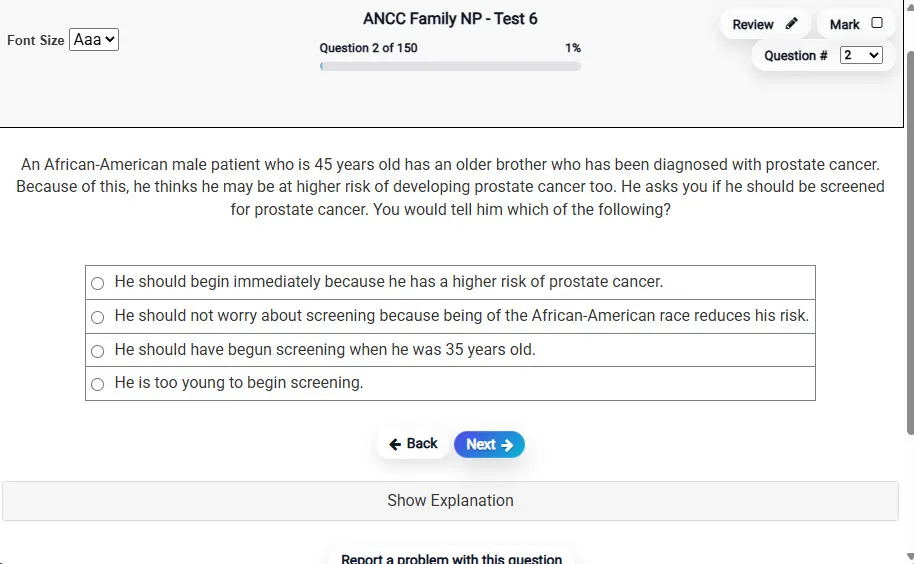
Answering a Question screen – Multiple-choice item view with navigation controls and progress tracker.
Answering a Question Multiple-choice item view with navigation controls and progress tracker.

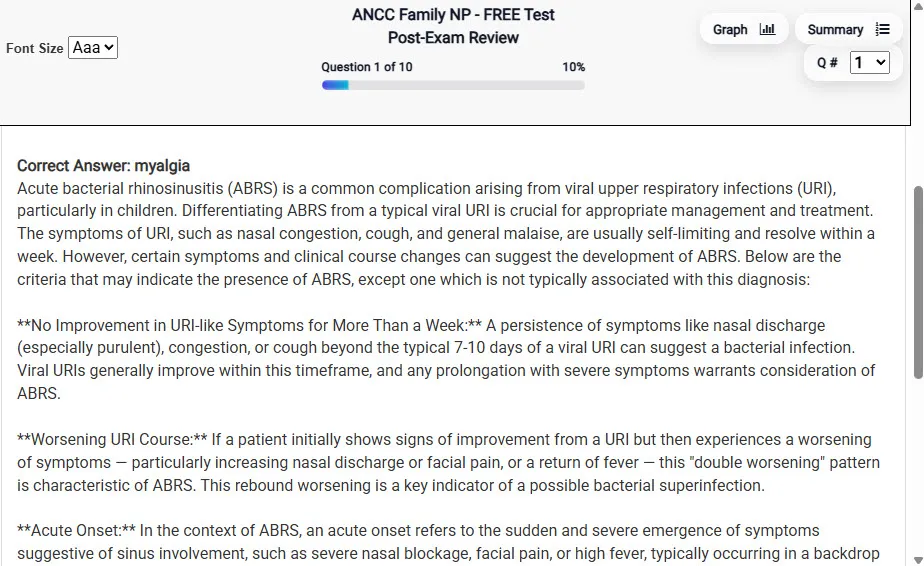
                           Detailed Explanation screen – 
                         Review mode showing chosen answer and rationale and references.
Detailed Explanation Review mode showing chosen answer and rationale and references.

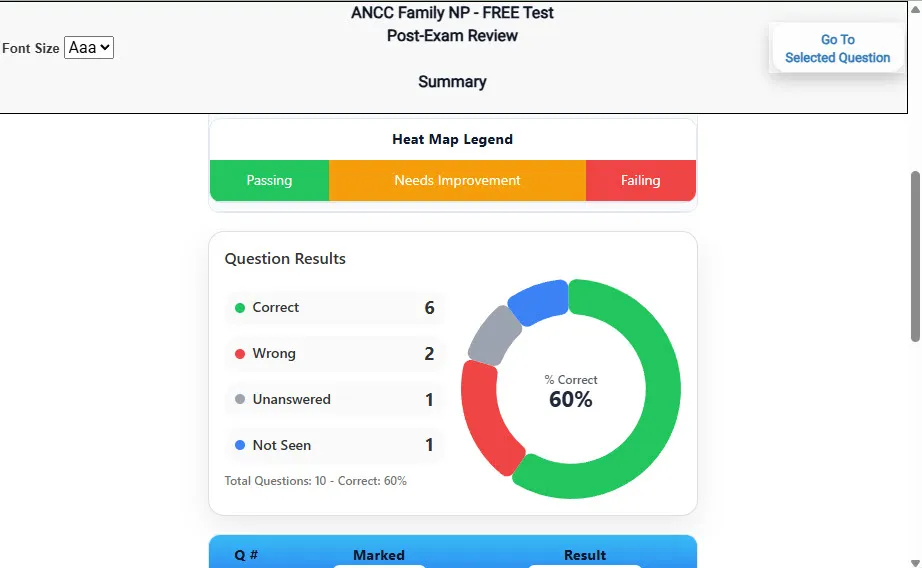
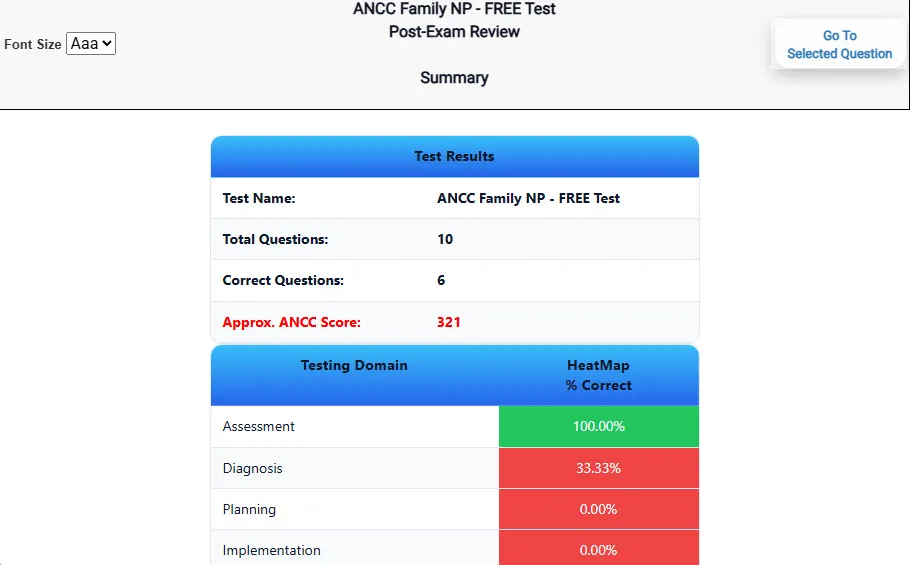
                           Review Summary 1 screen – 
                         Summary with counts for correct/wrong/unanswered and not seen items.
Review Summary 1 Summary with counts for correct/wrong/unanswered and not seen items.

                           Review Summary 2 screen – 
                         Advanced summary with category/domain breakdown and performance insights.
Review Summary 2 Advanced summary with category/domain breakdown and performance insights.

What Each Screen Shows

Answer Question Screen

  • Clean multiple-choice interface with progress bar.
  • Mark for review feature.
  • Matches real test pacing.

Detailed Explanation

  • Correct answer plus rationale.
  • Key concepts and guidelines highlighted.
  • Move between questions to fill knowledge gaps.

Review Summary 1

  • Overall results with total questions and scaled score.
  • Domain heatmap shows strengths and weaknesses.
  • Quick visual feedback on study priorities.

Review Summary 2

  • Chart of correct, wrong, unanswered, not seen.
  • Color-coded results for easy review.
  • Links back to missed items.

Top 10 Reasons to Use Exam Edge for your Praxis Principles of Learning and Teaching Early Childhood Exam Prep

  1. Focused on the Praxis Principles of Learning and Teaching Early Childhood Exam

    Our practice tests are built specifically for the Praxis PLT: Early Childhood exam — every question mirrors the real topics, format, and difficulty so you're studying exactly what matters.

  2. Real Exam Simulation

    We match the per-question time limits and pressure of the actual Praxis exam, so test day feels familiar and stress-free.

  3. 10 Full Practice Tests & 740 Unique Questions

    You'll have more than enough material to master every Praxis PLT: Early Childhood concept — no repeats, no fluff.

  4. Lower Cost Than a Retake

    Ordering 5 practice exams costs less than retaking the Praxis Principles of Learning and Teaching Early Childhood exam after a failure. One low fee could save you both time and money.

  5. Flexible Testing

    Need to step away mid-exam? Pick up right where you left off — with your remaining time intact.

  6. Instant Scoring & Feedback

    See your raw score and an estimated Praxis Principles of Learning and Teaching Early Childhood score immediately after finishing each practice test.

  7. Detailed Explanations for Every Question

    Review correct and incorrect answers with clear, step-by-step explanations so you truly understand each topic.

  8. Trusted & Accredited

    We're fully accredited by the Better Business Bureau and uphold the highest standards of trust and transparency.

  9. Web-Based & Always Available

    No software to install. Access your Praxis PLT: Early Childhood practice exams 24/7 from any computer or mobile device.

  10. Expert Support When You Need It

    Need extra help? Our specialized tutors are highly qualified and ready to support your Praxis exam prep.


Pass the Praxis Principles of Learning and Teaching Early Childhood Exam with Realistic Practice Tests from Exam Edge

Preparing for your upcoming Praxis Principles of Learning and Teaching Early Childhood (5621) Certification Exam can feel overwhelming — but the right practice makes all the difference. Exam Edge gives you the tools, structure, and confidence to pass on your first try. Our online practice exams are built to match the real Praxis PLT: Early Childhood exam in content, format, and difficulty.

  • 📝 10 Praxis Principles of Learning and Teaching Early Childhood Practice Tests: Access 10 full-length exams with 74 questions each, covering every major Praxis Principles of Learning and Teaching Early Childhood topic in depth.
  • Instant Online Access: Start practicing right away — no software, no waiting.
  • 🧠 Step-by-Step Explanations: Understand the reasoning behind every correct answer so you can master Praxis PLT: Early Childhood exam concepts.
  • 🔄 Retake Each Exam Up to 4 Times: Build knowledge through repetition and track your improvement over time.
  • 🌐 Web-Based & Available 24/7: Study anywhere, anytime, on any device.
  • 🧘 Boost Your Test-Day Confidence: Familiarity with the Praxis format reduces anxiety and helps you perform under pressure.

These Praxis Principles of Learning and Teaching Early Childhood practice exams are designed to simulate the real testing experience by matching question types, timing, and difficulty level. This approach helps you get comfortable not just with the exam content, but also with the testing environment, so you walk into your exam day focused and confident.

Exam Edge Praxis Reviews


I failed the Praxis Math test five times before I found your site. After taking all your practice tests, on my next attempt I passed by five points! I can honestly say this site is the reason I passed. Thank you!!!

Nikki P, Tennessee

Just wanted to say thanks for helping me pass the Praxis I Reading! Your practice tests and especially your explanations are great. They gave me the confidence I needed! Now I can student teach this fall. I'm so glad I found PraxisReading.com!

Denise C, Florida

Thank you so much. I just received my results in the mail. I scored a 179 and passed the Praxis I Writing! I'll never have to worry about retaking this test again! PraxisWriting.com is great. I told all my friends about this site.

Susan K, Virginia

I failed the Parapro test four times before I found your site. After taking all your practice tests, on my next attempt I passed by seven points! I can honestly say that this site is the reason I passed. Thank you!!!

Rebecca S, Texas

Hi! Just returned from taking my Praxis computerized and am happy to say that I passed with a 175. The last time I took the test I missed by 1 point. Your tests definitely made the difference for me! The set up was so similar to the test and the types of questions were also similar that I felt ve ...
Read More
Brad Y, Pennsylvania

I have taken the math praxis 3 times and wanted to give up. I ordered the bundle of math tests and I passed the math praxis today. Thank you for all the help.

Jacob D, South Carolina


Praxis Principles of Learning and Teaching Early Childhood Aliases Test Name

Here is a list of alternative names used for this exam.

  • Praxis Principles of Learning and Teaching Early Childhood
  • Praxis Principles of Learning and Teaching Early Childhood test
  • Praxis Principles of Learning and Teaching Early Childhood Certification Test
  • Praxis PLT: Early Childhood test
  • Praxis
  • Praxis 5621
  • 5621 test
  • Praxis Principles of Learning and Teaching Early Childhood (5621)
  • Principles of Learning and Teaching Early Childhood certification