
This is the content of the pop-over!

Praxis Marketing Education (5561) Practice Tests & Test Prep by Exam Edge


Praxis Marketing Education  product image
(5.0)
Based on 25 Reviews

  • Real Exam Simulation: Timed questions and matching content build comfort for your Praxis Marketing Education test day.
  • Instant, 24/7 Access: Web-based Praxis Marketing Education practice exams with no software needed.
  • Clear Explanations: Step-by-step answers and explanations for your Praxis exam to strengthen understanding.
  • Boosted Confidence: Reduces anxiety and improves test-taking skills to ace your Praxis Marketing Education (5561).

Featured on

Praxis Marketing Education Online Practice Test Bundles

BEST VALUE
10 practice tests

$99.50

$399.50

SAVE $300

Only $9.95 per test!

  • 100% Pass Guarantee
  • 10 online practice tests
  • 120 questions per test
  • Bonus: 100 Flash Cards + Study Guide
  • Instant access
  • Detailed Explanations
  • Practice tests never expire
  • Timed, untimed, or study guide mode
5 practice tests

$69.75

$199.75

SAVE $130

Only $13.95 per test!

  • 5 online practice tests
  • 120 questions per test
  • Bonus: 100 Flash Cards + Study Guide
  • Instant access
  • Detailed Explanations
  • Practice tests never expire
  • Timed, untimed, or study guide mode
1 practice test

$39.95

  • 1 online practice test
  • 120 questions per test
  • Instant access
  • Detailed Explanations
  • Practice tests never expire
  • Timed, untimed, or study guide mode
Quick Select
Tap to choose a bundle

** All Prices are in US Dollars (USD) **


Praxis Marketing Education (5561) Resources

Jump to the section you need most.

Understanding the exact breakdown of the Praxis Marketing Education test will help you know what to expect and how to most effectively prepare. The Praxis Marketing Education has 120 multiple-choice questions . The exam will be broken down into the sections below:

Praxis Marketing Education Exam Blueprint
Domain Name % Number of
Questions
Marketing Education Programs 14% 17
General Business Principles 14% 17
Marketing-Information Management and Planning 14% 17
Channel Management 10% 12
Pricing 12% 14
Product/Service Management 12% 14
Promotion 14% 17
Personal Selling 10% 12

Praxis Marketing Education Study Tips by Domain

  • Align every lesson to stated program standards and measurable outcomes; red flag: activities that are fun but have no documented objective, assessment, or evidence of skill mastery.
  • Use safety and liability protocols for labs, school stores, and off-campus activities; common trap: skipping written permissions, inventory controls, or supervision ratios during DECA trips or community-based learning.
  • Build an advisory committee with documented agendas and minutes to keep curriculum current; priority rule: employer input should directly drive updates to skills, equipment, and work-based learning placements.
  • Implement work-based learning (internships/co-ops) with training plans, time logs, and evaluations; red flag: placing students without clear duties, legal compliance, or feedback tied to employability skills.
  • Differentiate instruction and accommodations per IEP/504 and language needs while maintaining rigor; common trap: lowering performance expectations instead of adjusting supports, time, or assessment format.
  • Manage program budgets, fundraising, and school-store finances with separation of duties and audit-ready records; red flag: cash handling without receipts, reconciliation, or approved purchasing procedures.
  • Distinguish business ownership forms (sole proprietorship, partnership, corporation, LLC) by liability and taxation; red flag: assuming an LLC always avoids all personal liability (piercing the veil can apply).
  • Apply basic accounting logic (assets = liabilities + equity) to interpret financial statements; common trap: treating revenue as cash flow (credit sales can inflate revenue without increasing cash).
  • Use break-even analysis (fixed costs, variable costs, contribution margin) to support decisions; cue: if contribution margin is negative, selling more increases losses.
  • Recognize legal/ethical compliance basics (contracts, consumer protection, intellectual property, employment law); red flag: using images/music/logos without permission because it’s “for school” or “nonprofit”.
  • Differentiate macroeconomic indicators (inflation, unemployment, interest rates) and their business impact; priority rule: rising interest rates typically increase borrowing costs and can dampen consumer spending on financed purchases.
  • Apply management and operations fundamentals (planning, organizing, leading, controlling; quality and productivity measures); common trap: skipping controls—set measurable standards and corrective actions or performance data won’t drive improvement.
  • Use marketing research to reduce uncertainty—start with a clear problem statement and objectives before choosing methods; red flag: collecting data first and hoping it answers the question.
  • Distinguish primary vs. secondary data and judge source credibility; common trap: using outdated secondary data (e.g., old census/industry reports) to make current forecasts.
  • Apply sampling basics (population, frame, sample size, bias) and interpret margins of error; priority rule: nonrandom/convenience samples limit how far you can generalize results.
  • Build and use a Marketing Information System (MIS) and dashboards to track KPIs (sales, share, CLV, churn); red flag: optimizing a vanity metric (clicks/likes) that doesn’t link to objectives.
  • Use segmentation and targeting analysis (demographic, psychographic, geographic, behavioral) to create actionable segments; common trap: segments that are too broad or not measurable/reachable.
  • Prepare sales forecasts and plans using trend, moving average, and qualitative methods; contraindication: assuming past trends will continue despite major environmental changes (new competitor, regulation, supply shock).
  • Choose channel intensity to match product complexity and brand control needs—red flag: using intensive distribution for high-service or prestige products can dilute positioning.
  • Compare direct vs. indirect channels by total cost-to-serve and customer coverage, not just margins—common trap: ignoring hidden logistics, returns, and support costs in intermediated channels.
  • Map channel roles (merchant wholesalers, agents/brokers, retailers, facilitators) to needed functions—priority rule: ensure every function (storage, financing, risk, promotion) is assigned or it becomes a service gap.
  • Anticipate channel conflict (horizontal, vertical, multichannel) and set clear policies—red flag: price discrepancies across channels often trigger retailer pushback and gray-market behavior.
  • Use basic performance metrics (sales by channel, inventory turns, fill rate, on-time delivery) to evaluate partners—common trap: rewarding sales volume while overlooking low service levels that harm customer retention.
  • Apply legal/ethical constraints in channel decisions (exclusive dealing, territorial restrictions, slotting fees) cautiously—red flag: agreements that reduce competition can raise compliance risk and damage partner trust.
  • Calculate and interpret break-even point (fixed costs ÷ contribution margin) and margin percent; red flag: using gross margin when the question requires contribution margin.
  • Compare pricing objectives (profit, sales, market share, image, survival) and align the method to the objective; common trap: choosing a “profit-maximizing” approach when the scenario prioritizes penetration.
  • Apply demand concepts (elastic vs. inelastic) to price changes and revenue outcomes; cue: if elastic demand, a price increase often decreases total revenue.
  • Use cost-based, competition-based, and value-based pricing appropriately (including markup/markdown); priority rule: value-based pricing requires customer perceived benefits, not just costs.
  • Evaluate discounting tactics (quantity, seasonal, promotional, trade, cash) and their channel effects; red flag: excessive discounting can train customers to wait and erode brand positioning.
  • Recognize legal/ethical constraints (price discrimination, price fixing, deceptive pricing, predatory pricing) and document justification; cue: “competitors agreed on prices” signals illegal collusion.
  • Use the product life cycle (intro, growth, maturity, decline) to pick tactics; red flag: pushing heavy discounts in introduction can cheapen positioning and slow adoption.
  • Differentiate “features” from “benefits” and align benefits to target needs; common trap: listing specs without translating to buyer value propositions.
  • Manage the product mix (width, depth, consistency) and decide when to add, prune, or reposition lines; priority rule: drop SKUs with low contribution margin even if unit sales look strong.
  • Apply branding decisions (brand name, marks, packaging, labeling) with legal awareness; red flag: confusing trademark vs. copyright when protecting brand identifiers.
  • Use product differentiation and positioning maps to avoid head-to-head parity; common trap: claiming “best quality” without a measurable point of difference or evidence.
  • Handle new product development stages (idea screening to commercialization) with go/no-go gates; threshold cue: validate concept with target-customer feedback before investing in full-scale production.
  • Distinguish promotion mix elements (advertising, sales promotion, personal selling, PR, direct/digital) by objective and control; red flag: using advertising to solve a short-term “trial” problem better suited to sales promotion.
  • Apply AIDA and the hierarchy-of-effects to set measurable goals (awareness, preference, action); common trap: skipping to purchase tactics without building awareness in new-market launches.
  • Select media using reach, frequency, and impact while matching to target segments; priority rule: if the target is narrow, favor high-relevance vehicles over mass reach.
  • Ensure message strategy aligns with brand positioning and avoids deceptive claims; red flag: implied performance guarantees or missing qualifiers that could trigger truth-in-advertising issues.
  • Coordinate integrated marketing communications (IMC) so offers, visuals, and tone are consistent across channels; common trap: running a discount promo that contradicts a premium brand promise.
  • Evaluate promotion effectiveness with metrics (CTR, conversion rate, lift, ROI) and basic A/B tests; threshold cue: if ROI is negative after a valid test period, adjust targeting/creative before increasing spend.
  • Qualify prospects early using need, authority, budget, and timing; red flag: spending time on leads with no decision-maker access.
  • Use active listening and purposeful questioning (open-ended, probing, clarifying) to uncover needs; common trap: pitching features before confirming the customer’s problem.
  • Present benefits tied to stated needs and support with proof (demonstrations, testimonials, data); priority rule: translate every feature into a customer outcome.
  • Handle objections by acknowledging, clarifying, and responding with evidence or alternatives; red flag: arguing with the buyer instead of isolating the real objection (price vs. value vs. risk).
  • Choose an appropriate closing method (assumptive, summary-of-benefits, alternative-choice) based on buying signals; common trap: closing too early without commitment cues or too late after momentum fades.
  • Follow up to confirm satisfaction, reduce buyer’s remorse, and build repeat business; priority rule: document agreements and next steps immediately to prevent service failures and returns.


Built to Fit Into Your Busy Life

Everything you need to prepare with confidence—without wasting a minute.

Three Study Modes

Timed, No Time Limit, or Explanation mode.

Actionable Analytics

Heatmaps and scaled scores highlight weak areas.

High-Yield Rationales

Concise explanations emphasize key concepts.

Realistic Interface

Matches the feel of the actual exam environment.

Accessible by Design

Clean layout reduces cognitive load.

Anytime, Anywhere

Web-based access 24/7 on any device.
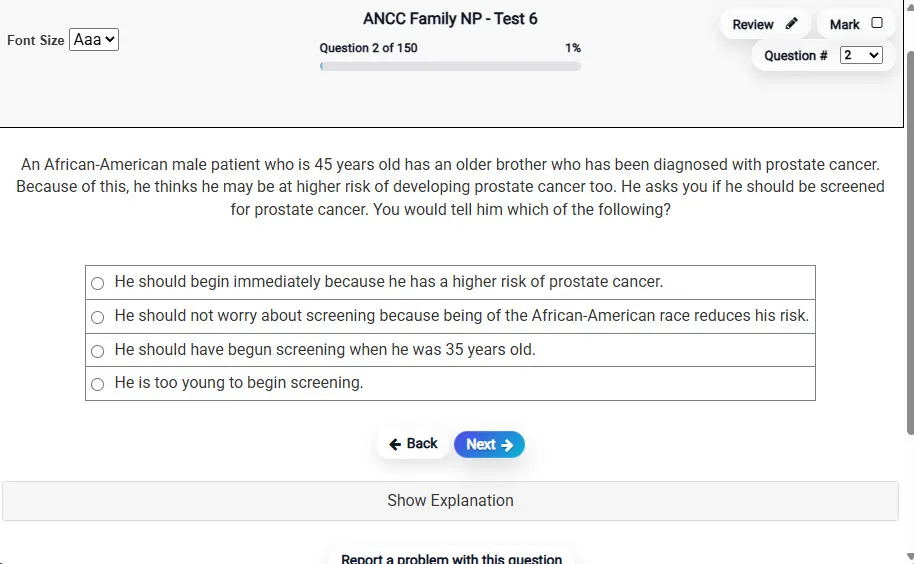
Answering a Question screen – Multiple-choice item view with navigation controls and progress tracker.
Answering a Question Multiple-choice item view with navigation controls and progress tracker.

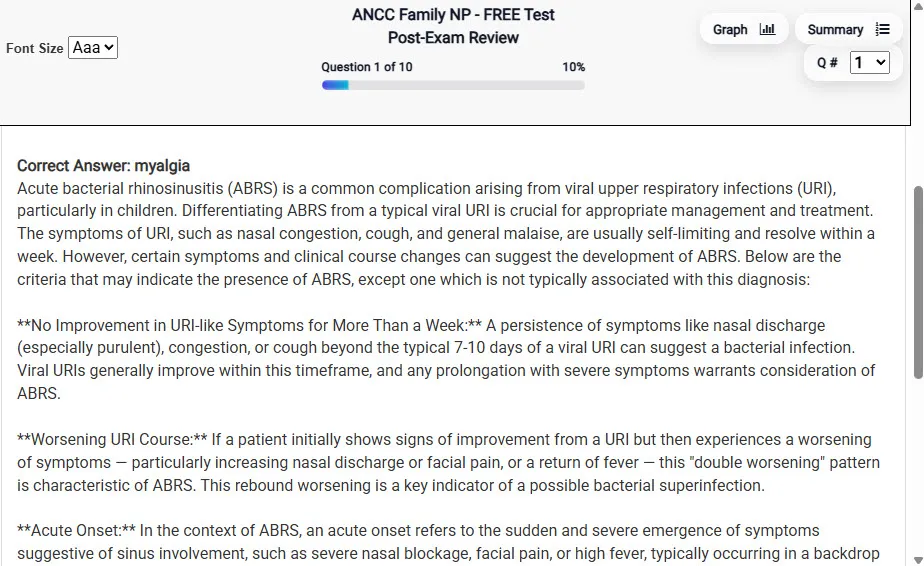
                           Detailed Explanation screen – 
                         Review mode showing chosen answer and rationale and references.
Detailed Explanation Review mode showing chosen answer and rationale and references.

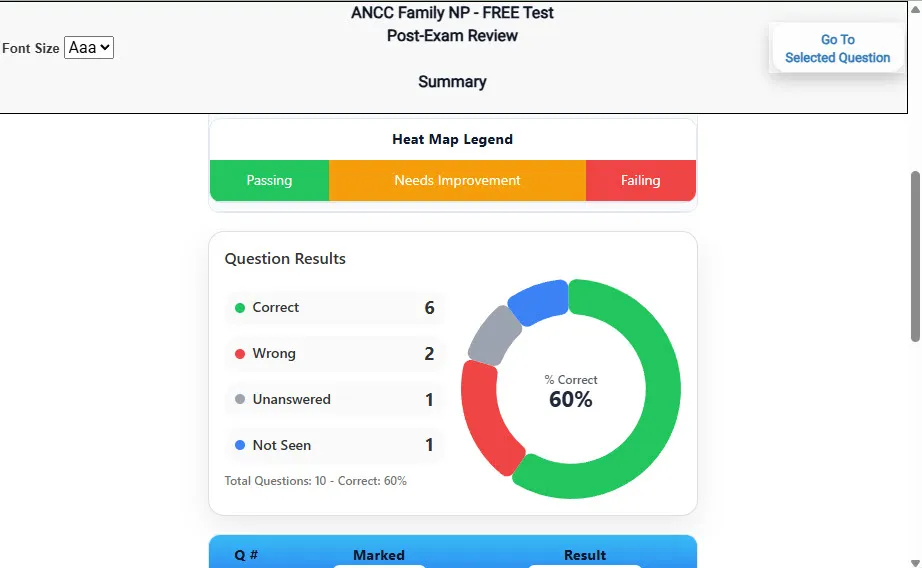
                           Review Summary 1 screen – 
                         Summary with counts for correct/wrong/unanswered and not seen items.
Review Summary 1 Summary with counts for correct/wrong/unanswered and not seen items.

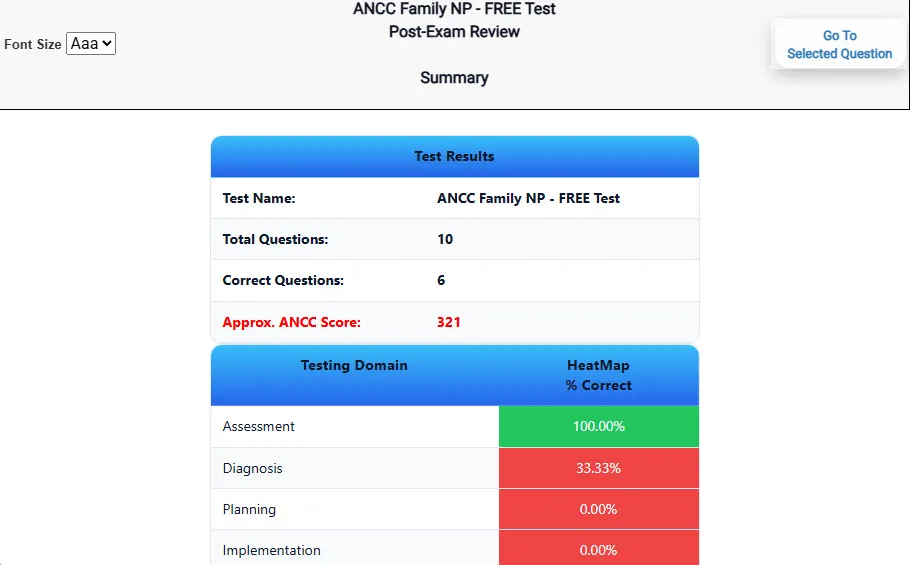
                           Review Summary 2 screen – 
                         Advanced summary with category/domain breakdown and performance insights.
Review Summary 2 Advanced summary with category/domain breakdown and performance insights.

What Each Screen Shows

Answer Question Screen

  • Clean multiple-choice interface with progress bar.
  • Mark for review feature.
  • Matches real test pacing.

Detailed Explanation

  • Correct answer plus rationale.
  • Key concepts and guidelines highlighted.
  • Move between questions to fill knowledge gaps.

Review Summary 1

  • Overall results with total questions and scaled score.
  • Domain heatmap shows strengths and weaknesses.
  • Quick visual feedback on study priorities.

Review Summary 2

  • Chart of correct, wrong, unanswered, not seen.
  • Color-coded results for easy review.
  • Links back to missed items.

Top 10 Reasons to Use Exam Edge for your Praxis Marketing Education Exam Prep

  1. Focused on the Praxis Marketing Education Exam

    Our practice tests are built specifically for the Praxis Marketing Education exam — every question mirrors the real topics, format, and difficulty so you're studying exactly what matters.

  2. Real Exam Simulation

    We match the per-question time limits and pressure of the actual Praxis exam, so test day feels familiar and stress-free.

  3. 10 Full Practice Tests & 1,200 Unique Questions

    You'll have more than enough material to master every Praxis Marketing Education concept — no repeats, no fluff.

  4. Lower Cost Than a Retake

    Ordering 5 practice exams costs less than retaking the Praxis Marketing Education exam after a failure. One low fee could save you both time and money.

  5. Flexible Testing

    Need to step away mid-exam? Pick up right where you left off — with your remaining time intact.

  6. Instant Scoring & Feedback

    See your raw score and an estimated Praxis Marketing Education score immediately after finishing each practice test.

  7. Detailed Explanations for Every Question

    Review correct and incorrect answers with clear, step-by-step explanations so you truly understand each topic.

  8. Trusted & Accredited

    We're fully accredited by the Better Business Bureau and uphold the highest standards of trust and transparency.

  9. Web-Based & Always Available

    No software to install. Access your Praxis Marketing Education practice exams 24/7 from any computer or mobile device.

  10. Expert Support When You Need It

    Need extra help? Our specialized tutors are highly qualified and ready to support your Praxis exam prep.


Pass the Praxis Marketing Education Exam with Realistic Practice Tests from Exam Edge

Preparing for your upcoming Praxis Marketing Education (5561) Certification Exam can feel overwhelming — but the right practice makes all the difference. Exam Edge gives you the tools, structure, and confidence to pass on your first try. Our online practice exams are built to match the real Praxis Marketing Education exam in content, format, and difficulty.

  • 📝 10 Praxis Marketing Education Practice Tests: Access 10 full-length exams with 120 questions each, covering every major Praxis Marketing Education topic in depth.
  • Instant Online Access: Start practicing right away — no software, no waiting.
  • 🧠 Step-by-Step Explanations: Understand the reasoning behind every correct answer so you can master Praxis Marketing Education exam concepts.
  • 🔄 Retake Each Exam Up to 4 Times: Build knowledge through repetition and track your improvement over time.
  • 🌐 Web-Based & Available 24/7: Study anywhere, anytime, on any device.
  • 🧘 Boost Your Test-Day Confidence: Familiarity with the Praxis format reduces anxiety and helps you perform under pressure.

These Praxis Marketing Education practice exams are designed to simulate the real testing experience by matching question types, timing, and difficulty level. This approach helps you get comfortable not just with the exam content, but also with the testing environment, so you walk into your exam day focused and confident.

Exam Edge Praxis Reviews


I passed the business praxis. I purchased the bundle of 20 tests and went through each and every one. So helpful.

Annette , Rochelle Park, New Jersey

I failed the Praxis Math test five times before I found your site. After taking all your practice tests, on my next attempt I passed by five points! I can honestly say this site is the reason I passed. Thank you!!!

Nikki P, Tennessee

Just wanted to say thanks for helping me pass the Praxis I Reading! Your practice tests and especially your explanations are great. They gave me the confidence I needed! Now I can student teach this fall. I'm so glad I found PraxisReading.com!

Denise C, Florida

Thank you so much. I just received my results in the mail. I scored a 179 and passed the Praxis I Writing! I'll never have to worry about retaking this test again! PraxisWriting.com is great. I told all my friends about this site.

Susan K, Virginia

I failed the Parapro test four times before I found your site. After taking all your practice tests, on my next attempt I passed by seven points! I can honestly say that this site is the reason I passed. Thank you!!!

Rebecca S, Texas

Hi! Just returned from taking my Praxis computerized and am happy to say that I passed with a 175. The last time I took the test I missed by 1 point. Your tests definitely made the difference for me! The set up was so similar to the test and the types of questions were also similar that I felt ve ...
Read More
Brad Y, Pennsylvania


Praxis Marketing Education Aliases Test Name

Here is a list of alternative names used for this exam.

  • Praxis Marketing Education
  • Praxis Marketing Education test
  • Praxis Marketing Education Certification Test
  • Praxis
  • Praxis 5561
  • 5561 test
  • Praxis Marketing Education (5561)
  • Marketing Education certification