This is the content of the pop-over!

Praxis Interdisciplinary Early Childhood Ed (5023) Practice Tests & Test Prep by Exam Edge


Praxis Interdisciplinary Early Childhood Education  product image
(5.0)
Based on 29 Reviews

  • Real Exam Simulation: Timed questions and matching content build comfort for your Praxis Interdisciplinary Early Childhood Ed test day.
  • Instant, 24/7 Access: Web-based Praxis Interdisciplinary Early Childhood Education practice exams with no software needed.
  • Clear Explanations: Step-by-step answers and explanations for your Praxis exam to strengthen understanding.
  • Boosted Confidence: Reduces anxiety and improves test-taking skills to ace your Praxis Interdisciplinary Early Childhood Education (5023).

Featured on

Praxis Interdisciplinary Early Childhood Education Online Practice Test Bundles

BEST VALUE
10 practice tests

$99.50

$399.50

SAVE $300

Only $9.95 per test!

  • 100% Pass Guarantee
  • 10 online practice tests
  • 120 questions per test
  • Bonus: 100 Flash Cards + Study Guide
  • Instant access
  • Detailed Explanations
  • Practice tests never expire
  • Timed, untimed, or study guide mode
5 practice tests

$69.75

$199.75

SAVE $130

Only $13.95 per test!

  • 5 online practice tests
  • 120 questions per test
  • Bonus: 100 Flash Cards + Study Guide
  • Instant access
  • Detailed Explanations
  • Practice tests never expire
  • Timed, untimed, or study guide mode
1 practice test

$39.95

  • 1 online practice test
  • 120 questions per test
  • Instant access
  • Detailed Explanations
  • Practice tests never expire
  • Timed, untimed, or study guide mode
Quick Select
Tap to choose a bundle

** All Prices are in US Dollars (USD) **


Praxis Interdisciplinary Early Childhood Ed (5023) Resources

Jump to the section you need most.

Understanding the exact breakdown of the Praxis Interdisciplinary Early Childhood Education test will help you know what to expect and how to most effectively prepare. The Praxis Interdisciplinary Early Childhood Education has 120 multiple-choice questions . The exam will be broken down into the sections below:

Praxis Interdisciplinary Early Childhood Education Exam Blueprint
Domain Name % Number of
Questions
Growth and Development of Young Children
Across the Spectrum of Development
20% 24
Educational and Service Requirements
for Children with a Range of Abilities and Special Needs
16% 19
Curriculum - Instruction Assessment for Young Children 22% 26
Play and Learning Environment for Young Children 20% 24
Collaboration with Families and Colleagues 12% 14
Professionalism and Growth through Professional Development 10% 12

Praxis Interdisciplinary Early Childhood Education Study Tips by Domain

  • Know major developmental theories (Piaget, Vygotsky, Erikson, Bronfenbrenner) and apply them to classroom decisions—red flag: treating stages as rigid checklists rather than typical age ranges with wide variation.
  • Distinguish milestones across domains (cognitive, language, motor, social-emotional, adaptive) and look for patterns over time—trap: a single late milestone is less concerning than a multi-domain delay or loss of previously learned skills (regression).
  • Use observation and developmental screening appropriately (screening flags risk; it does not diagnose)—priority rule: document what you see/hear (objective notes) before interpreting to reduce bias.
  • Recognize early warning signs that warrant referral (e.g., no babbling/gestures by ~12 months, no single words by ~16 months, no two-word phrases by ~24 months, persistent toe-walking, limited eye contact)—red flag: delaying referral because the child is bilingual or “will grow out of it.”
  • Account for influences on development (culture, temperament, trauma/toxic stress, health, sleep, nutrition, ACEs) when interpreting behavior—trap: mislabeling stress responses as “noncompliance” without considering triggers and regulation skills.
  • Support diverse learners with developmentally appropriate, strength-based strategies (scaffolding within the ZPD, routines, visual supports, sensory breaks)—priority rule: adjust the environment and instruction first before assuming the child must “try harder.”
  • Know IDEA’s key elements for ages 3–5: IEP-required services in the LRE and the need for data-based present levels; red flag—confusing IFSP (Part C, birth–2) with IEP (Part B, 3+).
  • Recognize referral-to-evaluation steps and timelines (consent before evaluation, eligibility based on multiple data sources); common trap—using a single screener score to make special education eligibility decisions.
  • Apply FAPE and related services (e.g., SLP, OT, PT, transportation) as supports to access instruction; priority rule—services must connect to IEP goals, not simply a diagnosis.
  • Use accommodations/modifications appropriately in early childhood settings (visual schedules, adapted materials, AAC, sensory supports); red flag—changing the learning goal when an accommodation would allow access to the same goal.
  • Implement behavior supports ethically (FBA-informed positive behavior supports, teach replacement skills, consistent reinforcement); contraindication—punitive responses that ignore function or remove instruction as a default.
  • Coordinate with specialists and families for transition planning (Part C to Part B, entry to preschool/kindergarten) and document responsibilities; common trap—waiting until the last minute and missing required transition meetings/services.
  • Plan integrated units that align objectives, learning activities, and assessment evidence across domains (language, math, science, arts); red flag: lessons that are “fun” but don’t map to a clear target skill.
  • Differentiate instruction with tiered supports (visuals, manipulatives, sentence frames, choice levels) while keeping the same learning goal; common trap: lowering the standard instead of scaffolding access.
  • Use ongoing formative assessment (anecdotal notes, checklists, work samples) to adjust next steps within 24–48 hours; priority rule: assessment data should change what you teach, not just what you record.
  • Ensure assessments are developmentally appropriate and culturally/linguistically responsive (home language supports, multiple ways to show learning); red flag: using a single timed or language-heavy measure as the main evidence.
  • Balance direct instruction, guided practice, and embedded learning opportunities during routines/centers; common trap: over-reliance on whole-group seatwork for preschool and kindergarten learners.
  • Communicate progress with specific, observable criteria tied to standards/IEP goals and avoid subjective labels; contraindication: reporting “advanced/behind” without examples of what the child can or cannot do.
  • Design safe, accessible spaces (clear traffic paths, stable shelving, labeled bins) and supervise actively—red flag: blind spots created by tall furniture or cluttered centers.
  • Use play as the vehicle for learning (dramatic play, blocks, sensory, outdoor) with intentional teacher prompts—common trap: over-directing play so children lose choice and engagement.
  • Set and teach 3–5 positively stated rules, practice routines, and reinforce expectations consistently—priority rule: prevent challenging behavior by adjusting environment before escalating consequences.
  • Support social-emotional growth through turn-taking materials, cooperative games, and calm-down areas—red flag: punitive time-out used as a default instead of teaching replacement behaviors.
  • Create culturally responsive, inclusive environments with multiple entry points and adaptations (visual schedules, choice boards, varied seating)—common trap: offering “same materials” without needed supports, which is inequitable.
  • Use observation during play to document learning and plan next steps (anecdotal notes, checklists, work samples)—threshold: collect evidence across settings and times, not from a single isolated incident.
  • Use family-centered, strengths-based language and ask about goals, routines, and cultural expectations before proposing supports—red flag: assuming “noninvolved” families rather than removing access barriers (time, language, transportation).
  • Maintain confidentiality in all collaboration (FERPA/IDEA contexts): share only what colleagues need to serve the child—common trap: discussing a child in hallways, staff rooms, or email threads without a legitimate educational interest.
  • Communicate in families’ preferred language and modality (interpreters, translated documents, visuals) and verify understanding—priority rule: don’t use children/siblings as interpreters for sensitive information.
  • In IEP/IFSP or team meetings, document decisions, roles, and follow-up steps with timelines—red flag: leaving action items vague (e.g., “try strategies”) with no owner or date.
  • Collaborate with related service providers using shared data (observations, work samples) to align strategies across settings—common trap: implementing therapy recommendations that conflict with classroom routines without coordinating adaptations.
  • Address conflict professionally by focusing on observable behavior, impact on learning, and agreed-upon standards, not personal judgments—contraindication: escalating via gossip or unilateral changes instead of using the team problem-solving process.
  • Know what constitutes ethical practice (e.g., confidentiality, mandated reporting, avoiding conflicts of interest) — red flag: discussing identifiable child/family information in public spaces or on social media.
  • Maintain accurate, timely documentation (attendance, anecdotal notes, IEP/IFSP service logs, incident reports) — common trap: writing subjective labels (“lazy,” “bad”) instead of observable facts and dates.
  • Use reflective practice to improve instruction (plan → teach → assess → adjust) — priority rule: change strategies based on evidence from child work samples and observation, not intuition alone.
  • Engage in ongoing professional learning aligned to identified needs (e.g., trauma-informed care, behavior supports, inclusive practices) — cue: select PD with a clear implementation plan rather than one-off workshops.
  • Follow legal and program policies (IDEA, FERPA-like confidentiality expectations, safety procedures) — contraindication: implementing an accommodation/modification without required team/parent agreement when policies require it.
  • Communicate professionally and collaborate with colleagues (respectful language, meeting norms, culturally responsive interactions) — red flag: blaming families or coworkers instead of using solution-focused, child-centered language.


Built to Fit Into Your Busy Life

Everything you need to prepare with confidence—without wasting a minute.

Three Study Modes

Timed, No Time Limit, or Explanation mode.

Actionable Analytics

Heatmaps and scaled scores highlight weak areas.

High-Yield Rationales

Concise explanations emphasize key concepts.

Realistic Interface

Matches the feel of the actual exam environment.

Accessible by Design

Clean layout reduces cognitive load.

Anytime, Anywhere

Web-based access 24/7 on any device.
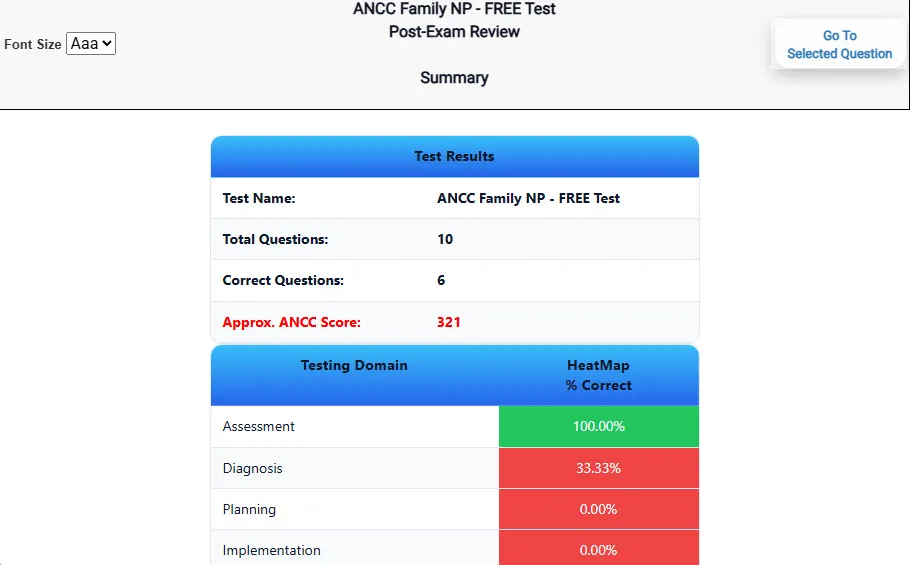
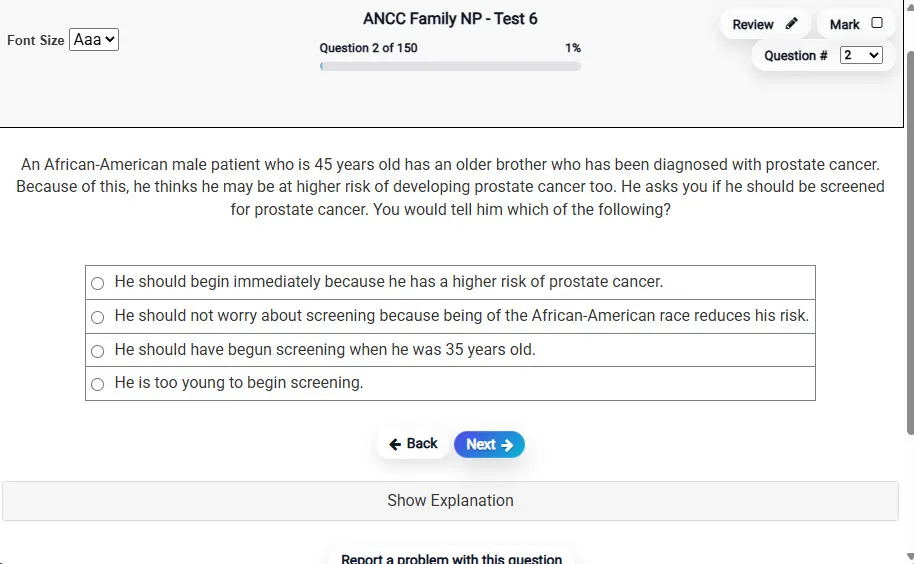
Answering a Question screen – Multiple-choice item view with navigation controls and progress tracker.
Answering a Question Multiple-choice item view with navigation controls and progress tracker.

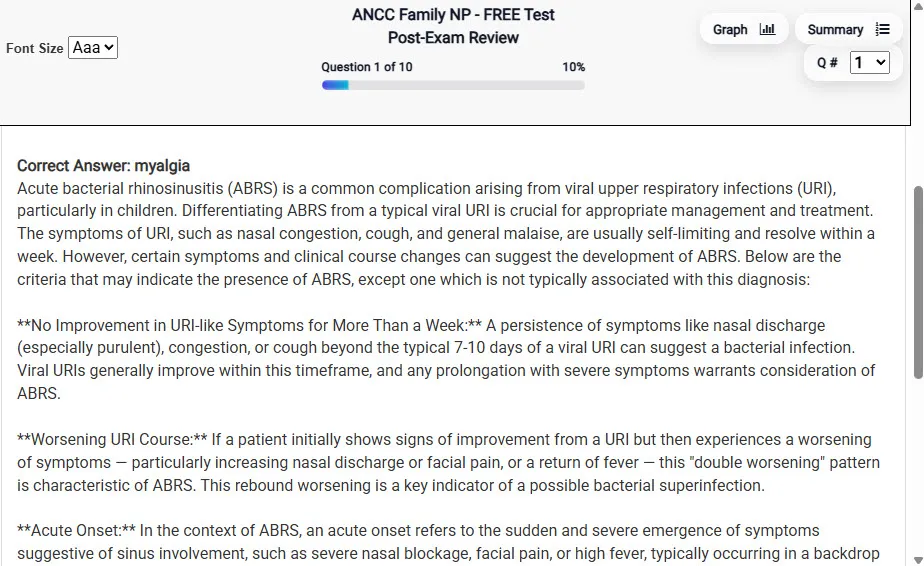
                           Detailed Explanation screen – 
                         Review mode showing chosen answer and rationale and references.
Detailed Explanation Review mode showing chosen answer and rationale and references.

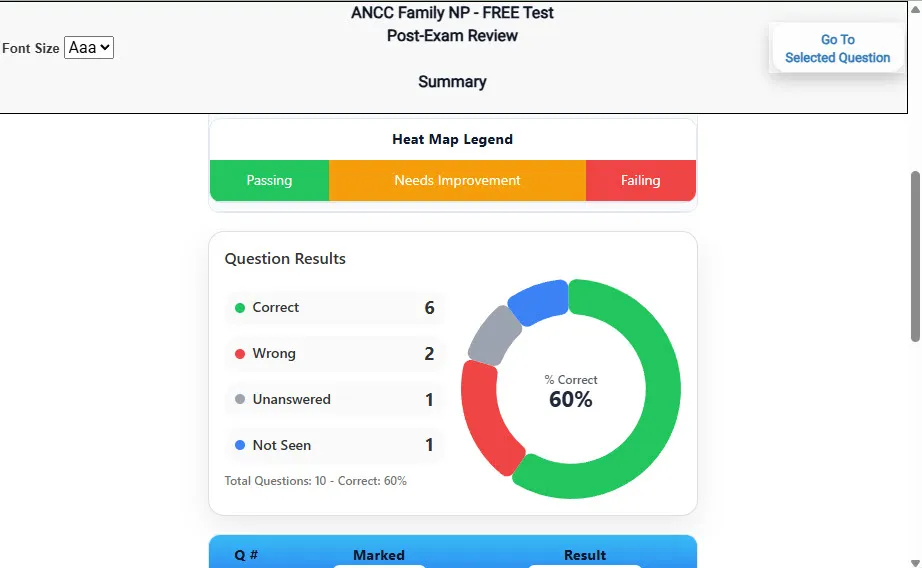
                           Review Summary 1 screen – 
                         Summary with counts for correct/wrong/unanswered and not seen items.
Review Summary 1 Summary with counts for correct/wrong/unanswered and not seen items.

                           Review Summary 2 screen – 
                         Advanced summary with category/domain breakdown and performance insights.
Review Summary 2 Advanced summary with category/domain breakdown and performance insights.

What Each Screen Shows

Answer Question Screen

  • Clean multiple-choice interface with progress bar.
  • Mark for review feature.
  • Matches real test pacing.

Detailed Explanation

  • Correct answer plus rationale.
  • Key concepts and guidelines highlighted.
  • Move between questions to fill knowledge gaps.

Review Summary 1

  • Overall results with total questions and scaled score.
  • Domain heatmap shows strengths and weaknesses.
  • Quick visual feedback on study priorities.

Review Summary 2

  • Chart of correct, wrong, unanswered, not seen.
  • Color-coded results for easy review.
  • Links back to missed items.

Top 10 Reasons to Use Exam Edge for your Praxis Interdisciplinary Early Childhood Education Exam Prep

  1. Focused on the Praxis Interdisciplinary Early Childhood Education Exam

    Our practice tests are built specifically for the Praxis Interdisciplinary Early Childhood Ed exam — every question mirrors the real topics, format, and difficulty so you're studying exactly what matters.

  2. Real Exam Simulation

    We match the per-question time limits and pressure of the actual Praxis exam, so test day feels familiar and stress-free.

  3. 10 Full Practice Tests & 1,200 Unique Questions

    You'll have more than enough material to master every Praxis Interdisciplinary Early Childhood Ed concept — no repeats, no fluff.

  4. Lower Cost Than a Retake

    Ordering 5 practice exams costs less than retaking the Praxis Interdisciplinary Early Childhood Education exam after a failure. One low fee could save you both time and money.

  5. Flexible Testing

    Need to step away mid-exam? Pick up right where you left off — with your remaining time intact.

  6. Instant Scoring & Feedback

    See your raw score and an estimated Praxis Interdisciplinary Early Childhood Education score immediately after finishing each practice test.

  7. Detailed Explanations for Every Question

    Review correct and incorrect answers with clear, step-by-step explanations so you truly understand each topic.

  8. Trusted & Accredited

    We're fully accredited by the Better Business Bureau and uphold the highest standards of trust and transparency.

  9. Web-Based & Always Available

    No software to install. Access your Praxis Interdisciplinary Early Childhood Ed practice exams 24/7 from any computer or mobile device.

  10. Expert Support When You Need It

    Need extra help? Our specialized tutors are highly qualified and ready to support your Praxis exam prep.


Pass the Praxis Interdisciplinary Early Childhood Education Exam with Realistic Practice Tests from Exam Edge

Preparing for your upcoming Praxis Interdisciplinary Early Childhood Education (5023) Certification Exam can feel overwhelming — but the right practice makes all the difference. Exam Edge gives you the tools, structure, and confidence to pass on your first try. Our online practice exams are built to match the real Praxis Interdisciplinary Early Childhood Ed exam in content, format, and difficulty.

  • 📝 10 Praxis Interdisciplinary Early Childhood Education Practice Tests: Access 10 full-length exams with 120 questions each, covering every major Praxis Interdisciplinary Early Childhood Education topic in depth.
  • Instant Online Access: Start practicing right away — no software, no waiting.
  • 🧠 Step-by-Step Explanations: Understand the reasoning behind every correct answer so you can master Praxis Interdisciplinary Early Childhood Ed exam concepts.
  • 🔄 Retake Each Exam Up to 4 Times: Build knowledge through repetition and track your improvement over time.
  • 🌐 Web-Based & Available 24/7: Study anywhere, anytime, on any device.
  • 🧘 Boost Your Test-Day Confidence: Familiarity with the Praxis format reduces anxiety and helps you perform under pressure.

These Praxis Interdisciplinary Early Childhood Education practice exams are designed to simulate the real testing experience by matching question types, timing, and difficulty level. This approach helps you get comfortable not just with the exam content, but also with the testing environment, so you walk into your exam day focused and confident.


Exam Edge Praxis Reviews


I failed the Praxis Math test five times before I found your site. After taking all your practice tests, on my next attempt I passed by five points! I can honestly say this site is the reason I passed. Thank you!!!

Nikki P, Tennessee

Just wanted to say thanks for helping me pass the Praxis I Reading! Your practice tests and especially your explanations are great. They gave me the confidence I needed! Now I can student teach this fall. I'm so glad I found PraxisReading.com!

Denise C, Florida

Thank you so much. I just received my results in the mail. I scored a 179 and passed the Praxis I Writing! I'll never have to worry about retaking this test again! PraxisWriting.com is great. I told all my friends about this site.

Susan K, Virginia

I failed the Parapro test four times before I found your site. After taking all your practice tests, on my next attempt I passed by seven points! I can honestly say that this site is the reason I passed. Thank you!!!

Rebecca S, Texas

Hi! Just returned from taking my Praxis computerized and am happy to say that I passed with a 175. The last time I took the test I missed by 1 point. Your tests definitely made the difference for me! The set up was so similar to the test and the types of questions were also similar that I felt ve ...
Read More
Brad Y, Pennsylvania

I have taken the math praxis 3 times and wanted to give up. I ordered the bundle of math tests and I passed the math praxis today. Thank you for all the help.

Jacob D, South Carolina


Praxis Interdisciplinary Early Childhood Education Aliases Test Name

Here is a list of alternative names used for this exam.

  • Praxis Interdisciplinary Early Childhood Education
  • Praxis Interdisciplinary Early Childhood Education test
  • Praxis Interdisciplinary Early Childhood Education Certification Test
  • Praxis Interdisciplinary Early Childhood Ed test
  • Praxis
  • Praxis 5023
  • 5023 test
  • Praxis Interdisciplinary Early Childhood Education (5023)
  • Interdisciplinary Early Childhood Education certification