This is the content of the pop-over!

Praxis Geography (5921) Practice Tests & Test Prep by Exam Edge


Praxis Geography  product image
(5.0)
Based on 17 Reviews

  • Real Exam Simulation: Timed questions and matching content build comfort for your Praxis Geography test day.
  • Instant, 24/7 Access: Web-based Praxis Geography practice exams with no software needed.
  • Clear Explanations: Step-by-step answers and explanations for your Praxis exam to strengthen understanding.
  • Boosted Confidence: Reduces anxiety and improves test-taking skills to ace your Praxis Geography (5921).

Featured on

Praxis Geography Online Practice Test Bundles

BEST VALUE
5 practice tests

$69.75

$199.75

SAVE $130

Only $13.95 per test!

  • 100% Pass Guarantee
  • 5 online practice tests
  • 120 questions per test
  • Bonus: 100 Flash Cards + Study Guide
  • Instant access
  • Detailed Explanations
  • Practice tests never expire
  • Timed, untimed, or study guide mode
1 practice test

$39.95

  • 1 online practice test
  • 120 questions per test
  • Instant access
  • Detailed Explanations
  • Practice tests never expire
  • Timed, untimed, or study guide mode
Quick Select
Tap to choose a bundle

** All Prices are in US Dollars (USD) **


Praxis Geography (5921) Resources

Jump to the section you need most.

Understanding the exact breakdown of the Praxis Geography test will help you know what to expect and how to most effectively prepare. The Praxis Geography has 120 multiple-choice questions . The exam will be broken down into the sections below:

Praxis Geography Exam Blueprint
Domain Name % Number of
Questions
Geography Literacy and Tools 20% 24
Physical Geography 20% 24
Human Geography 25% 30
Regional Geography 15% 18
Environment and Society 20% 24

Praxis Geography Study Tips by Domain

  • Distinguish map scale types (representative fraction, verbal, graphic) and convert correctly; common trap—forgetting to square the scale change when comparing areas.
  • Use latitude/longitude and direction conventions precisely (N/S for latitude, E/W for longitude); red flag—mixing up 0°–180° E/W with 0°–90° N/S leads to reversed hemispheres.
  • Recognize projection properties and tradeoffs (conformal vs equal-area vs equidistant vs azimuthal); priority rule—if the task is comparing size/density across regions, choose/interpret an equal-area projection.
  • Interpret thematic maps (choropleth, dot density, proportional symbols, isolines) and legends; common trap—reading raw counts on a choropleth instead of normalized rates.
  • Apply GIS/remote sensing basics (layers, attribute tables, raster vs vector, resolution, spectral bands); red flag—confusing spatial resolution (pixel size) with temporal resolution (revisit frequency).
  • Evaluate spatial data quality and classification choices (natural breaks, equal interval, quantiles) and their effects; priority cue—if class breaks change the story dramatically, report uncertainty and inspect the underlying distribution.
  • Differentiate Earth’s internal structure and plate boundaries (divergent, convergent, transform) and link each to landforms and hazards; red flag: confusing transform boundaries with subduction zones when predicting earthquake vs. volcanic risk.
  • Explain weathering, mass wasting, erosion, and deposition across fluvial, glacial, aeolian, and coastal systems; common trap: mixing up weathering (breakdown in place) with erosion (transport).
  • Use the hydrologic cycle to interpret runoff, infiltration, and groundwater flow (aquifers, water table, recharge); priority rule: steep slopes, impermeable surfaces, and saturated soils raise flood and landslide risk.
  • Analyze atmospheric circulation (Hadley/Ferrel/Polar cells), jet streams, and pressure belts to predict prevailing winds and climate zones; red flag: assuming winds blow straight from high to low pressure without Coriolis deflection.
  • Apply climate controls (latitude, altitude, continentality, ocean currents, rain shadow) and classify patterns (e.g., Köppen basics); common trap: treating “climate” as short-term weather rather than long-term averages (≥30 years).
  • Recognize biomes and ecosystem productivity drivers (temperature, precipitation, seasonality) and connect them to soils and vegetation; contraindication: ignoring human alteration (deforestation, irrigation) when interpreting present-day biome boundaries.
  • Distinguish population measures (crude birth/death rates vs TFR vs NIR) and read demographic transition stages; red flag: mixing “rate per 1,000” with “children per woman.”
  • Apply migration models (push–pull, Ravenstein, gravity) and evaluate forced vs voluntary migration; common trap: treating distance decay as irrelevant when interpreting flow maps.
  • Analyze urban structure (concentric zone, sector, multiple nuclei, peripheral) and suburbanization/gentrification impacts; priority rule: connect the model to a specific city context rather than naming it generically.
  • Use cultural geography concepts (diffusion types, cultural landscapes, language/religion patterns) to explain spatial distribution; red flag: confusing relocation diffusion with contagious diffusion on a map.
  • Interpret political geography (state, nation, nation-state, boundary types, territoriality) and geopolitics; common trap: calling all enclaves/exclaves “colonies” instead of defining the spatial relationship.
  • Evaluate economic geography (core–periphery, Weber industrial location, Rostow, Wallerstein) and development indicators; threshold cue: distinguish GDP per capita from HDI when ranking development levels.
  • Use a region framework (formal, functional, vernacular) and justify it with multiple traits; red flag: defining a region from a single attribute (e.g., only climate or only language).
  • When comparing world regions, tie physical processes to human outcomes (e.g., monsoons → cropping calendars, trade patterns); common trap: treating physical and human geography as unrelated lists.
  • For geopolitical regions, distinguish state, nation, nation-state, and multinational state; priority rule: match examples to the definition rather than the label a map or prompt implies.
  • Interpret regional change through diffusion, migration, and globalization (core–periphery, supply chains); red flag: assuming cultural traits spread uniformly without barriers or time lags.
  • On regional maps, check scale and projection before drawing conclusions about size or proximity; common trap: assuming Mercator-area distortions reflect real landmass comparisons.
  • When using regional case studies, support claims with specific indicators (population pyramids, GDP per capita, HDI, land use, energy mix); threshold cue: if two indicators conflict, explain the discrepancy rather than ignoring it.
  • Use core models to explain human–environment interaction (e.g., cultural ecology, political ecology, tragedy of the commons); red flag: describing outcomes without identifying the mechanism (institutions, incentives, or power).
  • Apply the IPAT framework (Impact = Population × Affluence × Technology) to compare drivers of environmental change; common trap: treating “technology” as always reducing impact when it can increase consumption.
  • Distinguish point-source vs. nonpoint-source pollution and match each to realistic controls (permits vs. land-use best practices); cue: if a question mentions runoff, think nonpoint-source and watershed-scale solutions.
  • Evaluate sustainability using the triple bottom line (environmental, economic, social) and trade-offs across scales; priority rule: always specify the scale (local, regional, global) before judging “best” policy.
  • Interpret climate-change evidence and impacts (temperature anomalies, sea-level rise, shifting biomes) and link to adaptation vs. mitigation; red flag: confusing weather variability with climate trends over decades.
  • Connect resource use (water, forests, fisheries, energy) to carrying capacity, renewable rates, and governance regimes (open access vs. common property); threshold cue: harvest above regeneration implies depletion even if short-term yields rise.


Built to Fit Into Your Busy Life

Everything you need to prepare with confidence—without wasting a minute.

Three Study Modes

Timed, No Time Limit, or Explanation mode.

Actionable Analytics

Heatmaps and scaled scores highlight weak areas.

High-Yield Rationales

Concise explanations emphasize key concepts.

Realistic Interface

Matches the feel of the actual exam environment.

Accessible by Design

Clean layout reduces cognitive load.

Anytime, Anywhere

Web-based access 24/7 on any device.
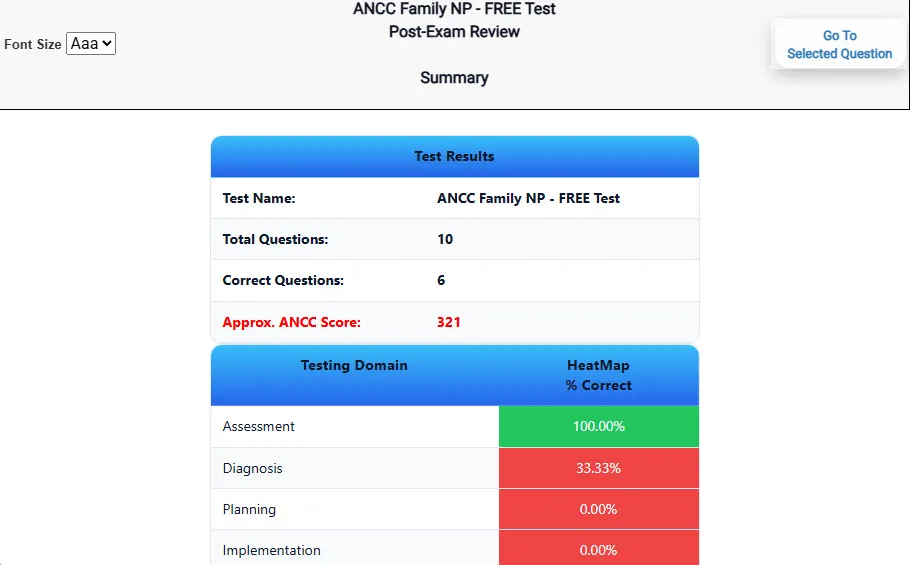
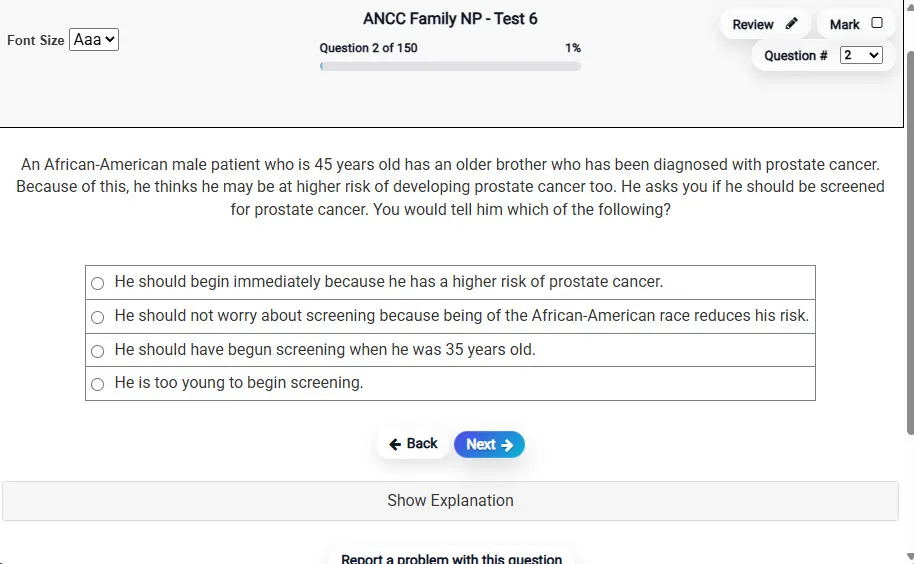
Answering a Question screen – Multiple-choice item view with navigation controls and progress tracker.
Answering a Question Multiple-choice item view with navigation controls and progress tracker.

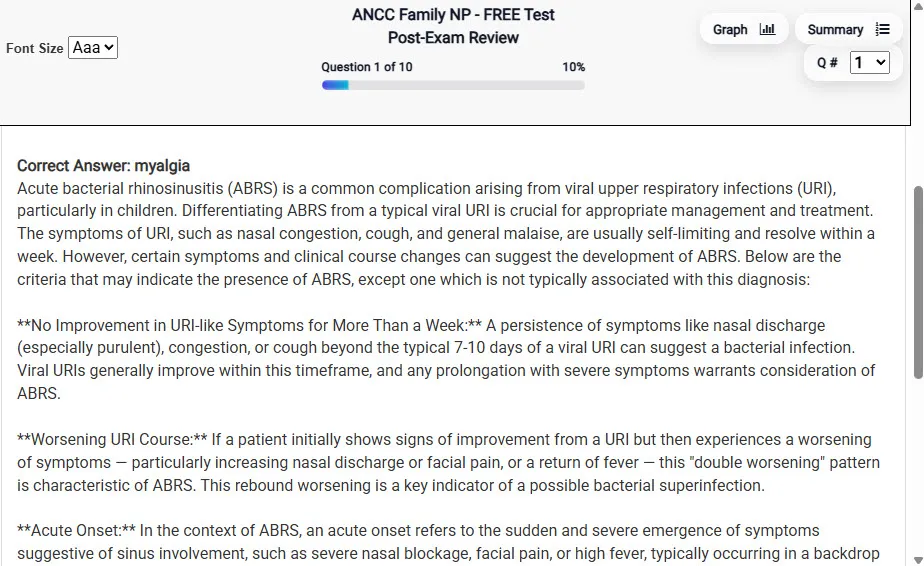
                           Detailed Explanation screen – 
                         Review mode showing chosen answer and rationale and references.
Detailed Explanation Review mode showing chosen answer and rationale and references.

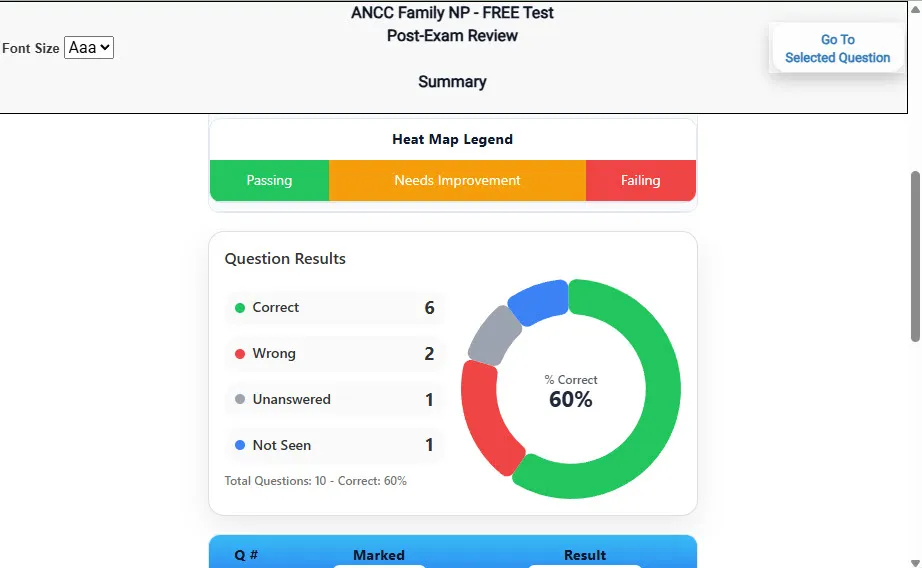
                           Review Summary 1 screen – 
                         Summary with counts for correct/wrong/unanswered and not seen items.
Review Summary 1 Summary with counts for correct/wrong/unanswered and not seen items.

                           Review Summary 2 screen – 
                         Advanced summary with category/domain breakdown and performance insights.
Review Summary 2 Advanced summary with category/domain breakdown and performance insights.

What Each Screen Shows

Answer Question Screen

  • Clean multiple-choice interface with progress bar.
  • Mark for review feature.
  • Matches real test pacing.

Detailed Explanation

  • Correct answer plus rationale.
  • Key concepts and guidelines highlighted.
  • Move between questions to fill knowledge gaps.

Review Summary 1

  • Overall results with total questions and scaled score.
  • Domain heatmap shows strengths and weaknesses.
  • Quick visual feedback on study priorities.

Review Summary 2

  • Chart of correct, wrong, unanswered, not seen.
  • Color-coded results for easy review.
  • Links back to missed items.

Top 10 Reasons to Use Exam Edge for your Praxis Geography Exam Prep

  1. Focused on the Praxis Geography Exam

    Our practice tests are built specifically for the Praxis Geography exam — every question mirrors the real topics, format, and difficulty so you're studying exactly what matters.

  2. Real Exam Simulation

    We match the per-question time limits and pressure of the actual Praxis exam, so test day feels familiar and stress-free.

  3. 5 Full Practice Tests & 600 Unique Questions

    You'll have more than enough material to master every Praxis Geography concept — no repeats, no fluff.

  4. Lower Cost Than a Retake

    Ordering 5 practice exams costs less than retaking the Praxis Geography exam after a failure. One low fee could save you both time and money.

  5. Flexible Testing

    Need to step away mid-exam? Pick up right where you left off — with your remaining time intact.

  6. Instant Scoring & Feedback

    See your raw score and an estimated Praxis Geography score immediately after finishing each practice test.

  7. Detailed Explanations for Every Question

    Review correct and incorrect answers with clear, step-by-step explanations so you truly understand each topic.

  8. Trusted & Accredited

    We're fully accredited by the Better Business Bureau and uphold the highest standards of trust and transparency.

  9. Web-Based & Always Available

    No software to install. Access your Praxis Geography practice exams 24/7 from any computer or mobile device.

  10. Expert Support When You Need It

    Need extra help? Our specialized tutors are highly qualified and ready to support your Praxis exam prep.


Pass the Praxis Geography Exam with Realistic Practice Tests from Exam Edge

Preparing for your upcoming Praxis Geography (5921) Certification Exam can feel overwhelming — but the right practice makes all the difference. Exam Edge gives you the tools, structure, and confidence to pass on your first try. Our online practice exams are built to match the real Praxis Geography exam in content, format, and difficulty.

  • 📝 5 Praxis Geography Practice Tests: Access 5 full-length exams with 120 questions each, covering every major Praxis Geography topic in depth.
  • Instant Online Access: Start practicing right away — no software, no waiting.
  • 🧠 Step-by-Step Explanations: Understand the reasoning behind every correct answer so you can master Praxis Geography exam concepts.
  • 🔄 Retake Each Exam Up to 4 Times: Build knowledge through repetition and track your improvement over time.
  • 🌐 Web-Based & Available 24/7: Study anywhere, anytime, on any device.
  • 🧘 Boost Your Test-Day Confidence: Familiarity with the Praxis format reduces anxiety and helps you perform under pressure.

These Praxis Geography practice exams are designed to simulate the real testing experience by matching question types, timing, and difficulty level. This approach helps you get comfortable not just with the exam content, but also with the testing environment, so you walk into your exam day focused and confident.


Exam Edge Praxis Reviews


I failed the Praxis Math test five times before I found your site. After taking all your practice tests, on my next attempt I passed by five points! I can honestly say this site is the reason I passed. Thank you!!!

Nikki P, Tennessee

Just wanted to say thanks for helping me pass the Praxis I Reading! Your practice tests and especially your explanations are great. They gave me the confidence I needed! Now I can student teach this fall. I'm so glad I found PraxisReading.com!

Denise C, Florida

Thank you so much. I just received my results in the mail. I scored a 179 and passed the Praxis I Writing! I'll never have to worry about retaking this test again! PraxisWriting.com is great. I told all my friends about this site.

Susan K, Virginia

I failed the Parapro test four times before I found your site. After taking all your practice tests, on my next attempt I passed by seven points! I can honestly say that this site is the reason I passed. Thank you!!!

Rebecca S, Texas

Hi! Just returned from taking my Praxis computerized and am happy to say that I passed with a 175. The last time I took the test I missed by 1 point. Your tests definitely made the difference for me! The set up was so similar to the test and the types of questions were also similar that I felt ve ...
Read More
Brad Y, Pennsylvania

I have taken the math praxis 3 times and wanted to give up. I ordered the bundle of math tests and I passed the math praxis today. Thank you for all the help.

Jacob D, South Carolina


Praxis Geography Aliases Test Name

Here is a list of alternative names used for this exam.

  • Praxis Geography
  • Praxis Geography test
  • Praxis Geography Certification Test
  • Praxis
  • Praxis 5921
  • 5921 test
  • Praxis Geography (5921)
  • Geography certification