This is the content of the pop-over!

Praxis Family and Consumer Sciences (5122) Practice Tests & Test Prep by Exam Edge


Praxis Family and Consumer Sciences  product image
(5.0)
Based on 28 Reviews

  • Real Exam Simulation: Timed questions and matching content build comfort for your Praxis Family and Consumer Sciences test day.
  • Instant, 24/7 Access: Web-based Praxis Family and Consumer Sciences practice exams with no software needed.
  • Clear Explanations: Step-by-step answers and explanations for your Praxis exam to strengthen understanding.
  • Boosted Confidence: Reduces anxiety and improves test-taking skills to ace your Praxis Family and Consumer Sciences (5122).

Featured on

Praxis Family and Consumer Sciences Online Practice Test Bundles

BEST VALUE
15 practice tests

$149.25

$599.25

SAVE $450

Only $9.95 per test!

  • 100% Pass Guarantee
  • 15 online practice tests
  • 120 questions per test
  • Bonus: 100 Flash Cards + Study Guide
  • Instant access
  • Detailed Explanations
  • Practice tests never expire
  • Timed, untimed, or study guide mode
MOST POPULAR
10 practice tests

$99.50

$399.50

SAVE $300

Only $9.95 per test!

  • 10 online practice tests
  • 120 questions per test
  • Bonus: 100 Flash Cards + Study Guide
  • Instant access
  • Detailed Explanations
  • Practice tests never expire
  • Timed, untimed, or study guide mode
5 practice tests

$69.75

$199.75

SAVE $130

Only $13.95 per test!

  • 5 online practice tests
  • 120 questions per test
  • Bonus: 100 Flash Cards
  • Instant access
  • Detailed Explanations
  • Practice tests never expire
  • Timed, untimed, or study guide mode
1 practice test

$39.95

  • 1 online practice test
  • 120 questions per test
  • Instant access
  • Detailed Explanations
  • Practice tests never expire
  • Timed, untimed, or study guide mode
Quick Select
Tap to choose a bundle

** All Prices are in US Dollars (USD) **


Praxis Family and Consumer Sciences (5122) Resources

Jump to the section you need most.

Understanding the exact breakdown of the Praxis Family and Consumer Sciences test will help you know what to expect and how to most effectively prepare. The Praxis Family and Consumer Sciences has 120 multiple-choice questions . The exam will be broken down into the sections below:

Praxis Family and Consumer Sciences Exam Blueprint
Domain Name % Number of
Questions
Food and Nutrition 22% 26
Housing and Interior Design 12% 14
Textiles - Fashion Apparel 12% 14
Human Development and Interpersonal Relationships 20% 24
Foundations of Family and Consumer Sciences Education 16% 19
Resource Management 18% 22

Praxis Family and Consumer Sciences Study Tips by Domain

  • Apply MyPlate/Dietary Guidelines patterns to real menus; red flag: “healthy” plans that routinely miss fiber, calcium/vitamin D, or exceed sodium/saturated fat.
  • Use food-safety time/temperature controls (refrigerate ≤ 40°F, hot-hold ≥ 135°F, poultry 165°F); common trap: leaving TCS foods in the 41–135°F danger zone for > 2 hours.
  • Prioritize cross-contamination prevention (separate raw meat/seafood, sanitize, wash hands); red flag: rinsing poultry or using the same cutting board/utensil without sanitation.
  • Interpret nutrition labels accurately (serving size, %DV, added sugars, fats); common trap: comparing products without adjusting for different serving sizes.
  • Match cooking methods to nutrient retention and food quality (steam, microwave, minimal water, proper doneness); priority rule: avoid overcooking and repeated reheating that increases nutrient loss and quality defects.
  • Plan for special dietary needs and allergens (celiac, lactose intolerance, diabetes, food allergies); contraindication: advising “gluten-free” or elimination diets without a clear medical/clinical rationale or safe substitutions.
  • Apply the design process (client needs → criteria → plan → evaluate) and document constraints early; red flag: choosing finishes/furniture before confirming budget, dimensions, and code limits.
  • Use basic space-planning standards (clearances for doors, walkways, and seating) to create functional traffic flow; common trap: creating a “pinch point” where circulation falls below safe/comfortable clearance.
  • Prioritize universal design/accessibility features (no-step entries, lever handles, adequate turning/approach space) for usability across the lifespan; cue: if a plan requires frequent tight turns, it likely fails accessibility intent.
  • Select materials/finishes based on performance (durability, cleanability, moisture resistance, VOCs) as well as aesthetics; red flag: specifying porous flooring or wallcoverings in high-moisture zones like baths or laundry areas.
  • Plan lighting by layering ambient, task, and accent lighting and matching source to the activity; common trap: relying on one overhead fixture and causing glare or shadows on work surfaces.
  • Integrate safety and residential codes in layouts (smoke/CO alarms, egress, electrical load/GFCI where required); priority rule: life-safety requirements override style preferences and are frequently tested.
  • Identify fiber content and properties (absorbency, elasticity, resilience, heat sensitivity) and match to end use; red flag: confusing rayon (regenerated cellulose) with a true synthetic when predicting care/performance.
  • Apply fabric construction knowledge (woven vs. knit vs. nonwoven) to predict stretch, fraying, and drape; common trap: assuming all knits don’t fray and all wovens stretch.
  • Interpret labels for care, fiber, and country of origin and follow the most restrictive instruction; priority rule: if any component says “dry clean only,” don’t recommend home washing.
  • Use correct measurement and pattern terminology (grainline, ease, nap, seam allowance) to ensure fit and layout; red flag: ignoring nap/directional prints and cutting pieces in opposite directions.
  • Select appropriate seams, stitches, interfacing, and closures based on fabric weight and stress points; common trap: using a universal needle and stitch length on all fabrics (e.g., skipping ballpoint needles on knits).
  • Apply apparel merchandising and product-development basics (target market, sizing systems, quality indicators, pricing/markdowns) with consumer protection in mind; red flag: overlooking return policies/warranties when evaluating value and satisfaction.
  • Know major developmental theorists (Piaget, Erikson, Kohlberg, Vygotsky, Bronfenbrenner) and match stage/construct to behaviors—common trap: confusing “initiative vs. guilt” (preschool) with “industry vs. inferiority” (elementary).
  • Distinguish typical vs. atypical milestones across infancy through adolescence (motor, language, social-emotional)—red flag: loss of previously acquired skills warrants referral rather than classroom “wait and see.”
  • Apply parenting styles (authoritative, authoritarian, permissive, neglectful) to outcomes—priority rule: authoritative (high warmth/high structure) is most consistently linked to positive competence and self-regulation.
  • Use evidence-based communication skills (I-statements, reflective listening, assertiveness) in conflict resolution—common trap: “you” statements escalate defensiveness and shut down problem-solving.
  • Recognize healthy vs. unhealthy relationship patterns (boundaries, consent, power/control, digital behaviors)—red flag: coercion, isolation, and monitoring devices/accounts are indicators of abuse, not “jealousy.”
  • Identify signs of mental health concerns and crisis response basics (stress, depression, anxiety, self-harm)—priority rule: any mention of self-harm/suicidal intent requires immediate reporting per school protocol; do not promise confidentiality.
  • Align lesson objectives to standards and measurable outcomes (condition–behavior–criterion); red flag: objectives written as activities (e.g., “students will discuss”) instead of observable performance.
  • Select appropriate instructional strategies for lab-based learning (demo, guided practice, gradual release) and explicitly teach safety routines; common trap: assuming prior tool/food safety knowledge without a safety contract or skills check-off.
  • Use valid, reliable assessment with clear rubrics for performance tasks (labs, sewing, budgeting projects); red flag: grading effort/participation without criteria tied to the objective.
  • Plan for differentiation and accessibility (IEP/504, language supports, adaptive equipment) while maintaining rigor; common trap: reducing expectations instead of changing supports, materials, or process.
  • Apply ethics, legal responsibilities, and professional practices (confidentiality, mandated reporting, equity); priority rule: student welfare and safety override privacy when abuse/neglect indicators are present.
  • Integrate CTSOs, career pathways, and employability skills (collaboration, communication, professionalism) into instruction; red flag: treating FCCLA or career readiness as an add-on rather than embedded evidence in tasks and assessment.
  • Use a structured decision-making model (identify needs, set criteria, evaluate alternatives, implement, review) for personal/family choices; red flag: skipping the evaluation step leads to repeat problems.
  • Build and interpret a spending plan with fixed, variable, and periodic expenses plus savings; priority rule: pay yourself first (emergency fund/savings) before discretionary categories.
  • Apply credit and debt basics (APR, minimum payments, amortization, credit scores) to compare borrowing options; common trap: focusing on monthly payment instead of total cost of credit.
  • Manage time and energy with prioritization (urgent vs. important), delegation, and realistic schedules; red flag: overcommitting without buffers increases stress and decreases follow-through.
  • Evaluate consumer choices using unit pricing, warranties, return policies, and reputable information sources; common trap: confusing “sale” pricing with best value when unit cost is higher.
  • Plan for risk management (insurance types, deductibles, coverage limits) and basic financial safeguards; threshold cue: choose a deductible you can actually pay out-of-pocket in an emergency.


Built to Fit Into Your Busy Life

Everything you need to prepare with confidence—without wasting a minute.

Three Study Modes

Timed, No Time Limit, or Explanation mode.

Actionable Analytics

Heatmaps and scaled scores highlight weak areas.

High-Yield Rationales

Concise explanations emphasize key concepts.

Realistic Interface

Matches the feel of the actual exam environment.

Accessible by Design

Clean layout reduces cognitive load.

Anytime, Anywhere

Web-based access 24/7 on any device.
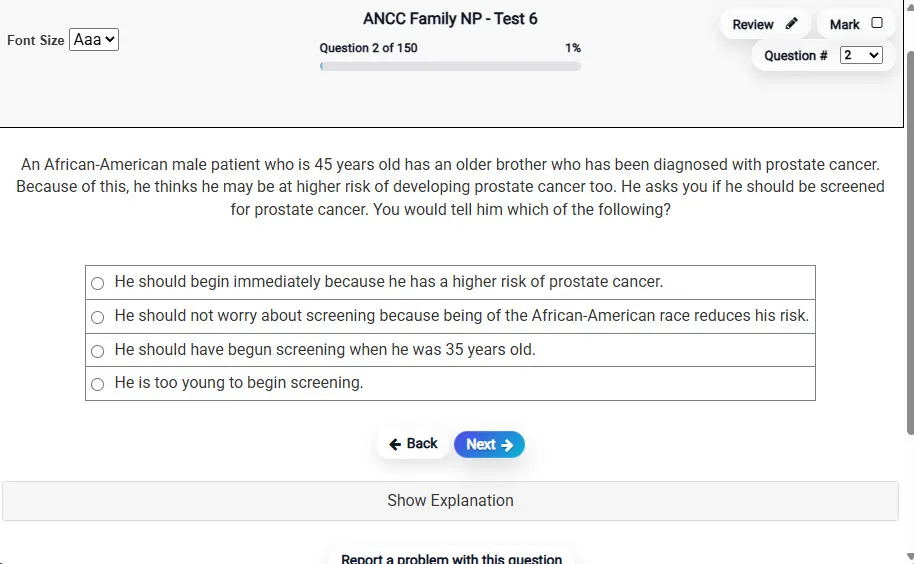
Answering a Question screen – Multiple-choice item view with navigation controls and progress tracker.
Answering a Question Multiple-choice item view with navigation controls and progress tracker.

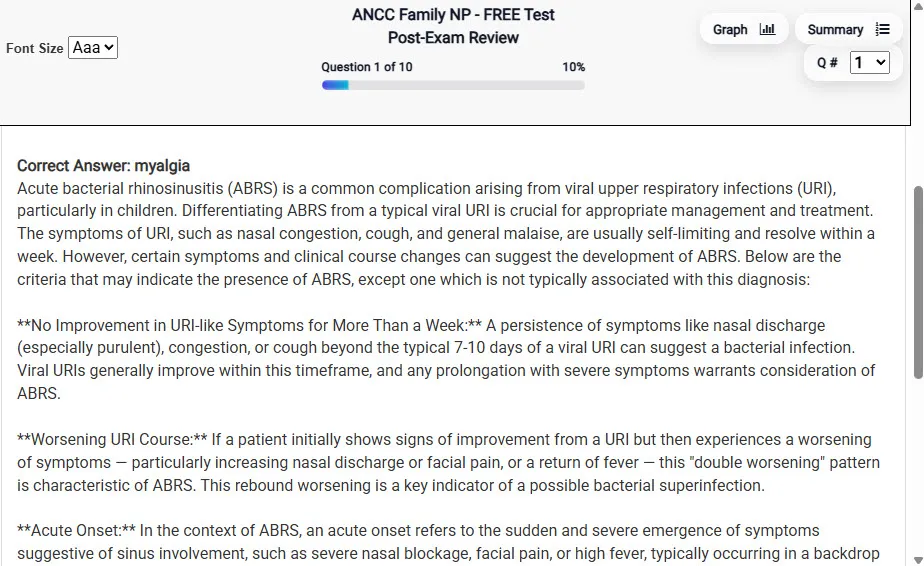
                           Detailed Explanation screen – 
                         Review mode showing chosen answer and rationale and references.
Detailed Explanation Review mode showing chosen answer and rationale and references.

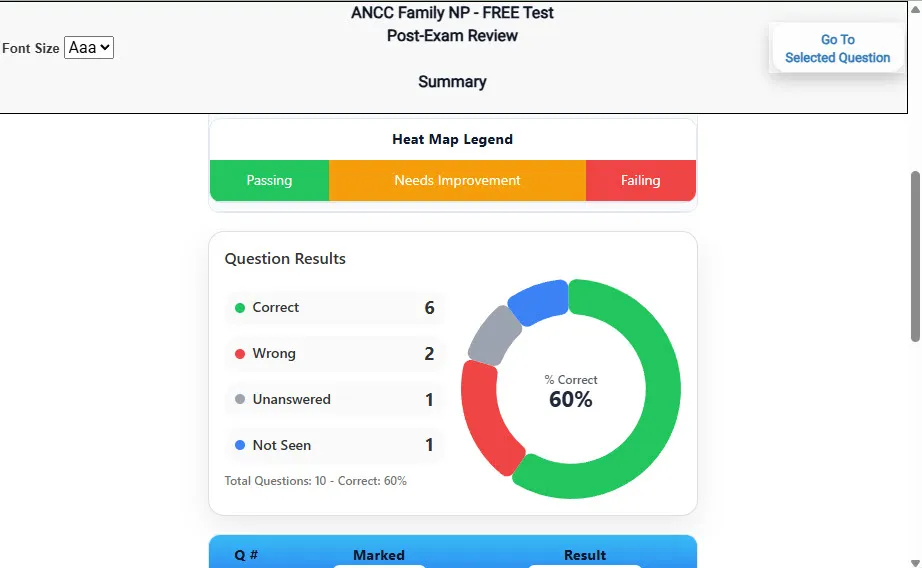
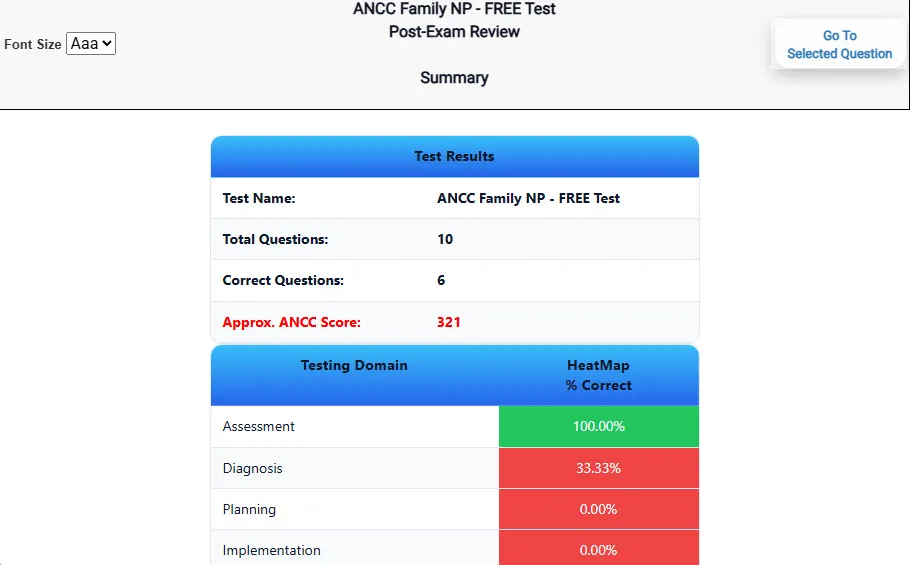
                           Review Summary 1 screen – 
                         Summary with counts for correct/wrong/unanswered and not seen items.
Review Summary 1 Summary with counts for correct/wrong/unanswered and not seen items.

                           Review Summary 2 screen – 
                         Advanced summary with category/domain breakdown and performance insights.
Review Summary 2 Advanced summary with category/domain breakdown and performance insights.

What Each Screen Shows

Answer Question Screen

  • Clean multiple-choice interface with progress bar.
  • Mark for review feature.
  • Matches real test pacing.

Detailed Explanation

  • Correct answer plus rationale.
  • Key concepts and guidelines highlighted.
  • Move between questions to fill knowledge gaps.

Review Summary 1

  • Overall results with total questions and scaled score.
  • Domain heatmap shows strengths and weaknesses.
  • Quick visual feedback on study priorities.

Review Summary 2

  • Chart of correct, wrong, unanswered, not seen.
  • Color-coded results for easy review.
  • Links back to missed items.

Top 10 Reasons to Use Exam Edge for your Praxis Family and Consumer Sciences Exam Prep

  1. Focused on the Praxis Family and Consumer Sciences Exam

    Our practice tests are built specifically for the Praxis Family and Consumer Sciences exam — every question mirrors the real topics, format, and difficulty so you're studying exactly what matters.

  2. Real Exam Simulation

    We match the per-question time limits and pressure of the actual Praxis exam, so test day feels familiar and stress-free.

  3. 15 Full Practice Tests & 1,800 Unique Questions

    You'll have more than enough material to master every Praxis Family and Consumer Sciences concept — no repeats, no fluff.

  4. Lower Cost Than a Retake

    Ordering 5 practice exams costs less than retaking the Praxis Family and Consumer Sciences exam after a failure. One low fee could save you both time and money.

  5. Flexible Testing

    Need to step away mid-exam? Pick up right where you left off — with your remaining time intact.

  6. Instant Scoring & Feedback

    See your raw score and an estimated Praxis Family and Consumer Sciences score immediately after finishing each practice test.

  7. Detailed Explanations for Every Question

    Review correct and incorrect answers with clear, step-by-step explanations so you truly understand each topic.

  8. Trusted & Accredited

    We're fully accredited by the Better Business Bureau and uphold the highest standards of trust and transparency.

  9. Web-Based & Always Available

    No software to install. Access your Praxis Family and Consumer Sciences practice exams 24/7 from any computer or mobile device.

  10. Expert Support When You Need It

    Need extra help? Our specialized tutors are highly qualified and ready to support your Praxis exam prep.


Pass the Praxis Family and Consumer Sciences Exam with Realistic Practice Tests from Exam Edge

Preparing for your upcoming Praxis Family and Consumer Sciences (5122) Certification Exam can feel overwhelming — but the right practice makes all the difference. Exam Edge gives you the tools, structure, and confidence to pass on your first try. Our online practice exams are built to match the real Praxis Family and Consumer Sciences exam in content, format, and difficulty.

  • 📝 15 Praxis Family and Consumer Sciences Practice Tests: Access 15 full-length exams with 120 questions each, covering every major Praxis Family and Consumer Sciences topic in depth.
  • Instant Online Access: Start practicing right away — no software, no waiting.
  • 🧠 Step-by-Step Explanations: Understand the reasoning behind every correct answer so you can master Praxis Family and Consumer Sciences exam concepts.
  • 🔄 Retake Each Exam Up to 4 Times: Build knowledge through repetition and track your improvement over time.
  • 🌐 Web-Based & Available 24/7: Study anywhere, anytime, on any device.
  • 🧘 Boost Your Test-Day Confidence: Familiarity with the Praxis format reduces anxiety and helps you perform under pressure.

These Praxis Family and Consumer Sciences practice exams are designed to simulate the real testing experience by matching question types, timing, and difficulty level. This approach helps you get comfortable not just with the exam content, but also with the testing environment, so you walk into your exam day focused and confident.


Exam Edge Praxis Reviews


I am a non-traditional teacher. I graduated college ten years ago with a degree in another field. After ten years of not studying or taking tests, I was extremely out of practice and couldn't believe how much I had forgotten. I had purchased about every book I could to relearn all of the content ...
Read More
Jessica, Arkansas

I failed the Praxis Math test five times before I found your site. After taking all your practice tests, on my next attempt I passed by five points! I can honestly say this site is the reason I passed. Thank you!!!

Nikki P, Tennessee

Just wanted to say thanks for helping me pass the Praxis I Reading! Your practice tests and especially your explanations are great. They gave me the confidence I needed! Now I can student teach this fall. I'm so glad I found PraxisReading.com!

Denise C, Florida

Thank you so much. I just received my results in the mail. I scored a 179 and passed the Praxis I Writing! I'll never have to worry about retaking this test again! PraxisWriting.com is great. I told all my friends about this site.

Susan K, Virginia

I failed the Parapro test four times before I found your site. After taking all your practice tests, on my next attempt I passed by seven points! I can honestly say that this site is the reason I passed. Thank you!!!

Rebecca S, Texas

Hi! Just returned from taking my Praxis computerized and am happy to say that I passed with a 175. The last time I took the test I missed by 1 point. Your tests definitely made the difference for me! The set up was so similar to the test and the types of questions were also similar that I felt ve ...
Read More
Brad Y, Pennsylvania


Praxis Family and Consumer Sciences Aliases Test Name

Here is a list of alternative names used for this exam.

  • Praxis Family and Consumer Sciences
  • Praxis Family and Consumer Sciences test
  • Praxis Family and Consumer Sciences Certification Test
  • Praxis
  • Praxis 5122
  • 5122 test
  • Praxis Family and Consumer Sciences (5122)
  • Family and Consumer Sciences certification