This is the content of the pop-over!

Lightning Deal Alert – 12% Off Ends at Midnight!

Strike while the savings are hot! Use promo code FlashSale at checkout for 12% off any Exam Edge test or bundle. Hurry—the clock is ticking!

Praxis Early Childhood Ed (5025) Practice Tests & Test Prep by Exam Edge


Praxis Early Childhood Education  product image
(5.0)
Based on 22 Reviews

  • Real Exam Simulation: Timed questions and matching content build comfort for your Praxis Early Childhood Ed test day.
  • Instant, 24/7 Access: Web-based Praxis Early Childhood Education practice exams with no software needed.
  • Clear Explanations: Step-by-step answers and explanations for your Praxis exam to strengthen understanding.
  • Boosted Confidence: Reduces anxiety and improves test-taking skills to ace your Praxis Early Childhood Education (5025).

Featured on

Praxis Early Childhood Education Online Practice Test Bundles

BEST VALUE
10 practice tests

$99.50

$399.50

SAVE $300

Only $9.95 per test!

  • 100% Pass Guarantee
  • 10 online practice tests
  • 120 questions per test
  • Bonus: 100 Flash Cards + Study Guide
  • Instant access
  • Detailed Explanations
  • Practice tests never expire
  • Timed, untimed, or study guide mode
5 practice tests

$69.75

$199.75

SAVE $130

Only $13.95 per test!

  • 5 online practice tests
  • 120 questions per test
  • Bonus: 100 Flash Cards + Study Guide
  • Instant access
  • Detailed Explanations
  • Practice tests never expire
  • Timed, untimed, or study guide mode
1 practice test

$39.95

  • 1 online practice test
  • 120 questions per test
  • Instant access
  • Detailed Explanations
  • Practice tests never expire
  • Timed, untimed, or study guide mode
Quick Select
Tap to choose a bundle

** All Prices are in US Dollars (USD) **


Praxis Early Childhood Ed (5025) Resources

Jump to the section you need most.

Understanding the exact breakdown of the Praxis Early Childhood Education test will help you know what to expect and how to most effectively prepare. The Praxis Early Childhood Education has 120 multiple-choice questions . The exam will be broken down into the sections below:

Praxis Early Childhood Education Exam Blueprint
Domain Name % Number of
Questions
Language and Literacy 30% 36
Mathematics 25% 30
Social Studies 14% 17
Science 14% 17
Health and Physical Education; Creative and Performing Arts 17% 20

Praxis Early Childhood Education Study Tips by Domain

  • Prioritize phonological awareness and phonics in explicit, short daily bursts (e.g., blending/segmenting, letter–sound mapping); red flag: teaching letter names only and expecting decoding to follow.
  • When a child guesses words from pictures or context, treat it as a common trap—cue them to “look through the whole word” and check sounds left-to-right before confirming meaning.
  • Use interactive read-alouds with planned stopping points for vocabulary and comprehension, but avoid over-questioning; red flag: turning the read-aloud into a quiz that derails story understanding.
  • For emergent writing, accept invented spelling and focus feedback on message and one targeted convention (e.g., spacing or first/last sounds); contraindication: correcting every error, which suppresses risk-taking.
  • Teach print concepts explicitly (front/back of book, tracking, words vs. letters, punctuation cues); priority rule: correct directionality and one-to-one pointing before expecting accurate word recognition.
  • Provide scaffolded oral language practice (sentence frames, retells, partner talk) and monitor for disproportionate participation; red flag: only confident speakers answer, masking language delays or multilingual learners’ needs.
  • Prioritize number sense before procedures: if a child can recite numbers but can’t match objects to count (one-to-one), treat it as a red flag for rote counting without cardinality.
  • Use multiple representations (objects, fingers, drawings, numerals) and check for the common trap of confusing digit recognition with quantity understanding, especially around 6/9 and teen numbers.
  • Teach comparing and ordering with clear language (more/less, same as) and a threshold cue: if the child consistently misjudges which set is larger beyond 5 items without counting, shift to structured counting and subitizing practice.
  • For early operations, emphasize “join, separate, and compare” story problems and avoid the priority error of teaching symbol-only equations (e.g., 3+2=5) before children can act it out with manipulatives.
  • In geometry and spatial sense, use attribute-based sorting and naming (sides, corners) and watch for the trap of thinking orientation changes the shape (a “diamond” isn’t a square) as a cue to reteach invariance.
  • For measurement and data, require same-size units and consistent start points; a key red flag is measuring with mixed units or leaving gaps/overlaps, which indicates the need to reteach unit iteration and alignment.
  • Prioritize teaching families and community roles with concrete classroom routines (jobs chart, helper roles); red flag: framing “family” as one structure—require multiple examples (single-parent, multigenerational, foster, adoptive) in materials and discussions.
  • Use maps and globes for simple location language (near/far, left/right, land/water) and connect to real navigation in the classroom; common trap: expecting compass directions or scale accuracy—keep tasks to child-friendly spatial reasoning and symbols.
  • Teach rules and fairness through classroom agreements and predictable consequences; priority rule: distinguish rules (safety/fairness) from preferences—red flag is enforcing “because I said so” without linking to harm prevention or community well-being.
  • Introduce basic economics through choice, needs vs. wants, and simple exchanges (store/market dramatic play); threshold: keep “money” concepts to counting and exchanging tokens—avoid abstract pricing, interest, or profit explanations.
  • Build citizenship skills via turn-taking, voting on simple class choices, and helping behaviors; contraindication: public voting on personal matters (friends, behavior, sensitive topics) can shame children—use private choices or teacher mediation instead.
  • Support cultural understanding with authentic stories, artifacts, and home-language inclusion; common trap: “tourist curriculum” (holidays/food only)—cue to assess depth by including everyday practices, multiple perspectives, and avoiding stereotypes.
  • Prioritize inquiry-based investigations where children predict, observe, and explain; red flag: activities that are only “cute crafts” with no chance to test an idea or discuss what happened.
  • Use simple, controlled comparisons (change one variable at a time) when exploring cause-and-effect; common trap: changing multiple things (e.g., light and water) and then claiming a single cause.
  • Build science vocabulary from firsthand experiences (e.g., sink/float, dissolve, magnet); priority rule: define words in context and avoid expecting accurate use of technical terms without repeated hands-on exposure.
  • Plan for safety with materials and procedures (goggles for splashes, no tasting, supervised heat/tools); contraindication: small objects, magnets, or liquids used without clear choking/ingestion precautions.
  • Integrate life, earth, and physical science through daily observations (weather charting, plant growth, shadows); threshold: collect data over multiple days before drawing conclusions.
  • Assess science learning by documenting process skills (questioning, measuring, sorting, recording) via checklists or anecdotal notes; common trap: grading only the final product instead of the child’s reasoning and evidence.
  • Health and Physical Education; Creative and Performing Arts: Prioritize daily moderate-to-vigorous movement with clear safety boundaries; red flag: activities that require long waiting lines or eliminate children quickly because they reduce active time and increase behavior issues.
  • Health and Physical Education; Creative and Performing Arts: Use developmentally appropriate locomotor and manipulative skills (run, hop, throw, catch) with simple progressions; common trap: expecting mature overhand throws or coordinated dribbling from children who still need large, slow targets.
  • Health and Physical Education; Creative and Performing Arts: Follow a safety checklist for space, equipment, and supervision (e.g., “no throw” zones near faces, taped boundaries); contraindication: small objects or detachable parts during movement or art for children who mouth materials (choking hazard).
  • Health and Physical Education; Creative and Performing Arts: Teach health routines through modeling and brief prompts (handwashing steps, covering coughs, safe tool use); priority rule: prevention skills come before performance goals like speed, volume, or “neatness.”
  • Health and Physical Education; Creative and Performing Arts: In creative and performing arts, assess process and participation rather than product; red flag: teacher-made crafts with identical outcomes because they limit creativity and fine-motor practice.
  • Health and Physical Education; Creative and Performing Arts: Adapt activities for all learners (choice of tools, tempo, seated options, visual cues) while keeping the goal constant; common trap: lowering the learning target instead of providing accommodations that preserve inclusion.


Built to Fit Into Your Busy Life

Everything you need to prepare with confidence—without wasting a minute.

Three Study Modes

Timed, No Time Limit, or Explanation mode.

Actionable Analytics

Heatmaps and scaled scores highlight weak areas.

High-Yield Rationales

Concise explanations emphasize key concepts.

Realistic Interface

Matches the feel of the actual exam environment.

Accessible by Design

Clean layout reduces cognitive load.

Anytime, Anywhere

Web-based access 24/7 on any device.
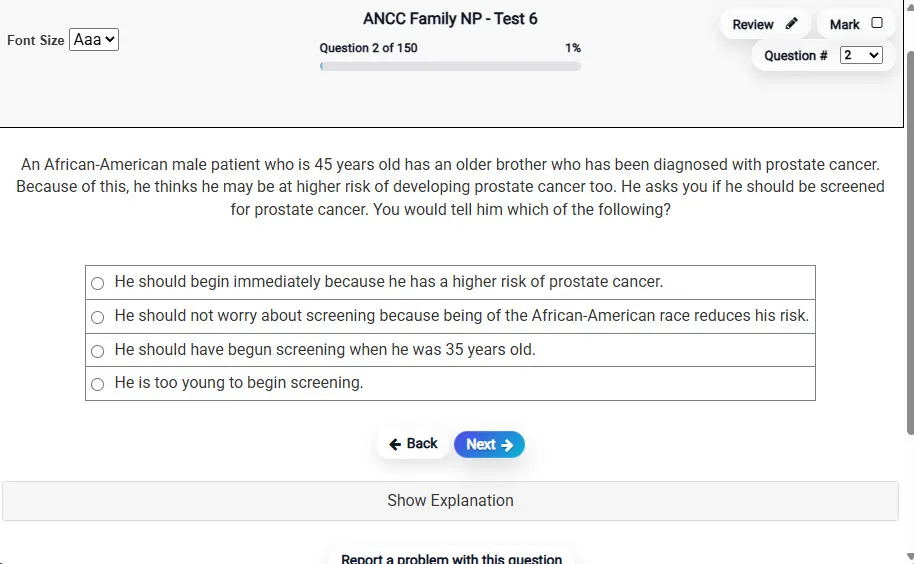
Answering a Question screen – Multiple-choice item view with navigation controls and progress tracker.
Answering a Question Multiple-choice item view with navigation controls and progress tracker.

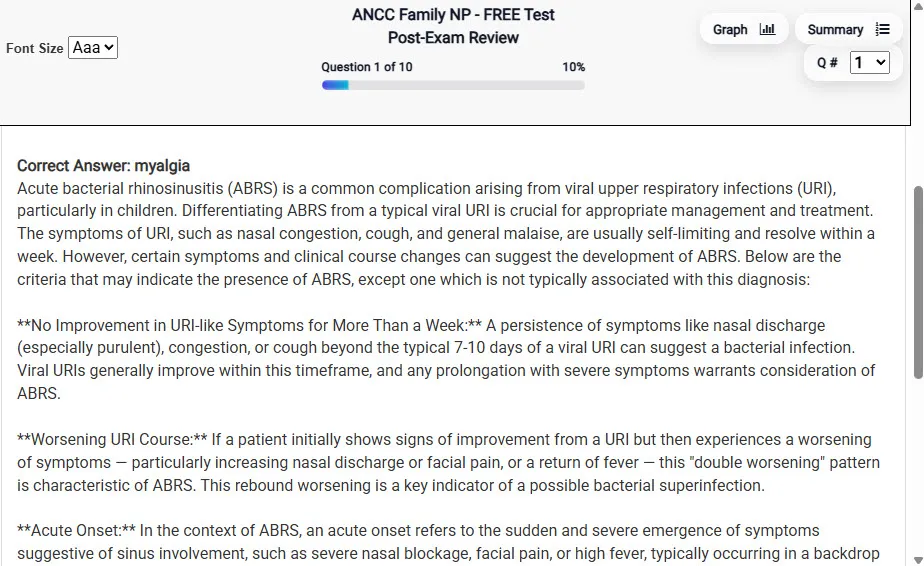
                           Detailed Explanation screen – 
                         Review mode showing chosen answer and rationale and references.
Detailed Explanation Review mode showing chosen answer and rationale and references.

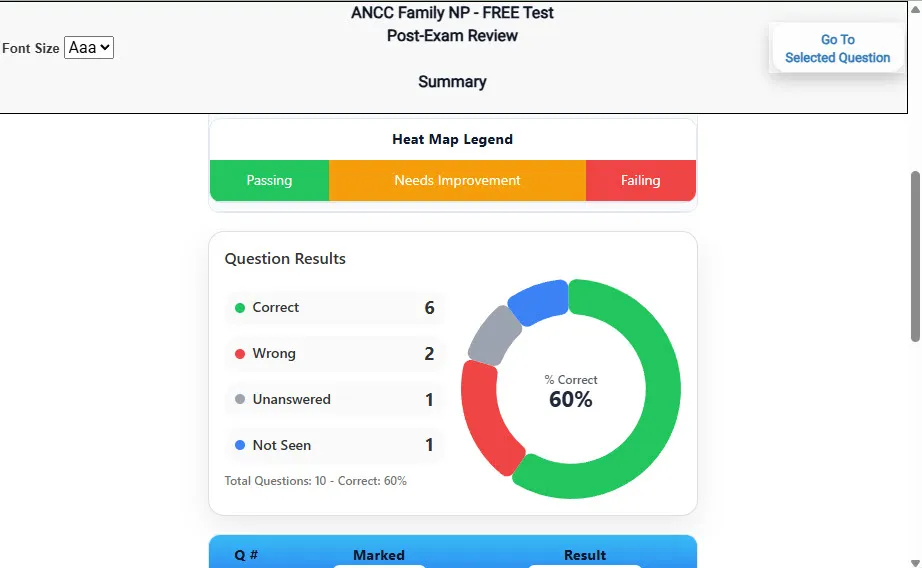
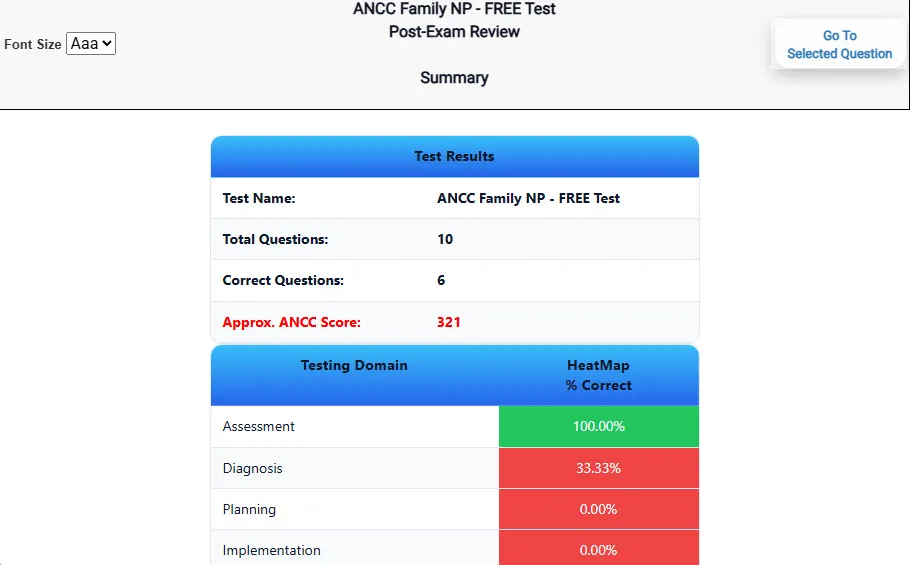
                           Review Summary 1 screen – 
                         Summary with counts for correct/wrong/unanswered and not seen items.
Review Summary 1 Summary with counts for correct/wrong/unanswered and not seen items.

                           Review Summary 2 screen – 
                         Advanced summary with category/domain breakdown and performance insights.
Review Summary 2 Advanced summary with category/domain breakdown and performance insights.

What Each Screen Shows

Answer Question Screen

  • Clean multiple-choice interface with progress bar.
  • Mark for review feature.
  • Matches real test pacing.

Detailed Explanation

  • Correct answer plus rationale.
  • Key concepts and guidelines highlighted.
  • Move between questions to fill knowledge gaps.

Review Summary 1

  • Overall results with total questions and scaled score.
  • Domain heatmap shows strengths and weaknesses.
  • Quick visual feedback on study priorities.

Review Summary 2

  • Chart of correct, wrong, unanswered, not seen.
  • Color-coded results for easy review.
  • Links back to missed items.

Top 10 Reasons to Use Exam Edge for your Praxis Early Childhood Education Exam Prep

  1. Focused on the Praxis Early Childhood Education Exam

    Our practice tests are built specifically for the Praxis Early Childhood Ed exam — every question mirrors the real topics, format, and difficulty so you're studying exactly what matters.

  2. Real Exam Simulation

    We match the per-question time limits and pressure of the actual Praxis exam, so test day feels familiar and stress-free.

  3. 10 Full Practice Tests & 1,200 Unique Questions

    You'll have more than enough material to master every Praxis Early Childhood Ed concept — no repeats, no fluff.

  4. Lower Cost Than a Retake

    Ordering 5 practice exams costs less than retaking the Praxis Early Childhood Education exam after a failure. One low fee could save you both time and money.

  5. Flexible Testing

    Need to step away mid-exam? Pick up right where you left off — with your remaining time intact.

  6. Instant Scoring & Feedback

    See your raw score and an estimated Praxis Early Childhood Education score immediately after finishing each practice test.

  7. Detailed Explanations for Every Question

    Review correct and incorrect answers with clear, step-by-step explanations so you truly understand each topic.

  8. Trusted & Accredited

    We're fully accredited by the Better Business Bureau and uphold the highest standards of trust and transparency.

  9. Web-Based & Always Available

    No software to install. Access your Praxis Early Childhood Ed practice exams 24/7 from any computer or mobile device.

  10. Expert Support When You Need It

    Need extra help? Our specialized tutors are highly qualified and ready to support your Praxis exam prep.


Pass the Praxis Early Childhood Education Exam with Realistic Practice Tests from Exam Edge

Preparing for your upcoming Praxis Early Childhood Education (5025) Certification Exam can feel overwhelming — but the right practice makes all the difference. Exam Edge gives you the tools, structure, and confidence to pass on your first try. Our online practice exams are built to match the real Praxis Early Childhood Ed exam in content, format, and difficulty.

  • 📝 10 Praxis Early Childhood Education Practice Tests: Access 10 full-length exams with 120 questions each, covering every major Praxis Early Childhood Education topic in depth.
  • Instant Online Access: Start practicing right away — no software, no waiting.
  • 🧠 Step-by-Step Explanations: Understand the reasoning behind every correct answer so you can master Praxis Early Childhood Ed exam concepts.
  • 🔄 Retake Each Exam Up to 4 Times: Build knowledge through repetition and track your improvement over time.
  • 🌐 Web-Based & Available 24/7: Study anywhere, anytime, on any device.
  • 🧘 Boost Your Test-Day Confidence: Familiarity with the Praxis format reduces anxiety and helps you perform under pressure.

These Praxis Early Childhood Education practice exams are designed to simulate the real testing experience by matching question types, timing, and difficulty level. This approach helps you get comfortable not just with the exam content, but also with the testing environment, so you walk into your exam day focused and confident.


Exam Edge Praxis Reviews


The practice tests did a great job at preparing me for the exam content. I wish they included the different question formats, but that didn't take away from the overall experience and preparation. Good Job overall. Highly recommend.

Jelani , Silver Spring , MD

I failed the Praxis Math test five times before I found your site. After taking all your practice tests, on my next attempt I passed by five points! I can honestly say this site is the reason I passed. Thank you!!!

Nikki P, Tennessee

Just wanted to say thanks for helping me pass the Praxis I Reading! Your practice tests and especially your explanations are great. They gave me the confidence I needed! Now I can student teach this fall. I'm so glad I found PraxisReading.com!

Denise C, Florida

Thank you so much. I just received my results in the mail. I scored a 179 and passed the Praxis I Writing! I'll never have to worry about retaking this test again! PraxisWriting.com is great. I told all my friends about this site.

Susan K, Virginia

I failed the Parapro test four times before I found your site. After taking all your practice tests, on my next attempt I passed by seven points! I can honestly say that this site is the reason I passed. Thank you!!!

Rebecca S, Texas

Hi! Just returned from taking my Praxis computerized and am happy to say that I passed with a 175. The last time I took the test I missed by 1 point. Your tests definitely made the difference for me! The set up was so similar to the test and the types of questions were also similar that I felt ve ...
Read More
Brad Y, Pennsylvania


Praxis Early Childhood Education Aliases Test Name

Here is a list of alternative names used for this exam.

  • Praxis Early Childhood Education
  • Praxis Early Childhood Education test
  • Praxis Early Childhood Education Certification Test
  • Praxis Early Childhood Ed test
  • Praxis
  • Praxis 5025
  • 5025 test
  • Praxis Early Childhood Education (5025)
  • Early Childhood Education certification