This is the content of the pop-over!

Praxis Citizenship Education (5087) Practice Tests & Test Prep by Exam Edge


Praxis Citizenship Education Content Knowledge  product image
(5.0)
Based on 25 Reviews

  • Real Exam Simulation: Timed questions and matching content build comfort for your Praxis Citizenship Education test day.
  • Instant, 24/7 Access: Web-based Praxis Citizenship Education Content Knowledge practice exams with no software needed.
  • Clear Explanations: Step-by-step answers and explanations for your Praxis exam to strengthen understanding.
  • Boosted Confidence: Reduces anxiety and improves test-taking skills to ace your Praxis Citizenship Education Content Knowledge (5087).

Featured on

Praxis Citizenship Education Content Knowledge Online Practice Test Bundles

BEST VALUE
25 practice tests

$218.75

$998.75

SAVE $780

Only $8.75 per test!

  • 100% Pass Guarantee
  • 25 online practice tests
  • 120 questions per test
  • Bonus: 100 Flash Cards + Study Guide
  • Instant access
  • Detailed Explanations
  • Practice tests never expire
  • Timed, untimed, or study guide mode
MOST POPULAR
10 practice tests

$99.50

$399.50

SAVE $300

Only $9.95 per test!

  • 10 online practice tests
  • 120 questions per test
  • Bonus: 100 Flash Cards + Study Guide
  • Instant access
  • Detailed Explanations
  • Practice tests never expire
  • Timed, untimed, or study guide mode
5 practice tests

$69.75

$199.75

SAVE $130

Only $13.95 per test!

  • 5 online practice tests
  • 120 questions per test
  • Bonus: 100 Flash Cards
  • Instant access
  • Detailed Explanations
  • Practice tests never expire
  • Timed, untimed, or study guide mode
1 practice test

$39.95

  • 1 online practice test
  • 120 questions per test
  • Instant access
  • Detailed Explanations
  • Practice tests never expire
  • Timed, untimed, or study guide mode
Quick Select
Tap to choose a bundle

** All Prices are in US Dollars (USD) **


Praxis Citizenship Education (5087) Resources

Jump to the section you need most.

Understanding the exact breakdown of the Praxis Citizenship Education Content Knowledge test will help you know what to expect and how to most effectively prepare. The Praxis Citizenship Education Content Knowledge has 120 multiple-choice questions . The exam will be broken down into the sections below:

Praxis Citizenship Education Content Knowledge Exam Blueprint
Domain Name % Number of
Questions
United States History 22% 26
World History 22% 26
Government/Civics/Political Science 22% 26
Geography 17% 20
Economics 17% 20

Praxis Citizenship Education Content Knowledge Study Tips by Domain

  • Know the pre-contact and colonial eras (Indigenous societies, Columbian Exchange, Atlantic slavery, colonial regional economies) and connect cause-and-effect to later conflicts; red flag: treating the colonies as politically unified before 1776.
  • For the Revolution and founding, tie Enlightenment ideas to documents (Declaration, Articles, Constitution, Bill of Rights) and debates (Federalists vs. Anti-Federalists); common trap: confusing the Articles’ weaknesses (no taxing power) with Constitutional limits.
  • Track early national growth (Jeffersonian vs. Hamiltonian visions, Marshall Court, westward expansion) and use the correct policy/doctrine; cue: if a question mentions tariffs, banks, or internal improvements, think economic nationalism and sectional tension.
  • Explain sectionalism to Civil War (Missouri Compromise, Compromise of 1850, Kansas–Nebraska, Dred Scott, emancipation) with clear chronology; red flag: assuming the Emancipation Proclamation freed all enslaved people immediately nationwide.
  • Reconstruction through industrialization (13th–15th Amendments, Compromise of 1877, Jim Crow, immigration, labor, Populism/Progressivism) and link policy to social outcomes; common trap: mixing up de jure segregation (laws) with de facto segregation (practice).
  • 20th century to present: map crises and transformations (WWI/WWII, New Deal, Cold War, civil rights, Vietnam, globalization) to Supreme Court and major legislation; cue: whenever civil liberties are tested in wartime, look for limits/precedents (e.g., Schenck, Korematsu) and later reversals or critiques.
  • Use a clear timeline anchored by major transitions (e.g., Neolithic Revolution, classical eras, post-1500 global interactions, industrialization, world wars, decolonization) — red flag: mixing chronological order or placing industrialization before the Columbian Exchange.
  • Compare classical civilizations (e.g., Han, Gupta, Rome, Aksum) by governance, social hierarchy, belief systems, and trade — common trap: treating “empires” as identical rather than noting distinct administrative methods and cultural integration.
  • Identify how religions and philosophies spread (Buddhism, Christianity, Islam, Confucianism) via trade routes, conquest, missionaries, and syncretism — cue: if a prompt mentions Silk Roads/Indian Ocean, expect cultural diffusion and hybrid practices.
  • Explain causes and consequences of early modern global contact (Columbian Exchange, Atlantic slavery, mercantilism) — priority rule: connect economic motives to demographic collapse and environmental/crop changes, not just “exploration.”
  • Link industrialization to imperialism, migration/urbanization, and labor movements — red flag: assuming industrialization happened everywhere at once or ignoring raw-material/market dynamics that drove “new imperialism.”
  • Analyze 20th-century turning points (World Wars, Cold War, genocide, decolonization) using causation and continuity/change — common trap: confusing proximate triggers (e.g., assassination at Sarajevo) with underlying causes (alliances, militarism, nationalism, imperial competition).
  • Differentiate limited vs. enumerated vs. reserved powers and apply federalism logic; red flag: treating the 10th Amendment as giving new powers rather than reserving undelegated ones.
  • Know the checks-and-balances sequence for lawmaking (veto, override, judicial review, appointments/treaties) and where each branch can block the others; common trap: confusing an executive order with a statute passed by Congress.
  • Connect core constitutional rights to realistic scenarios (speech, religion, search and seizure, due process, equal protection); priority rule: ask first whether a right is explicitly protected and then what level of scrutiny likely applies.
  • Distinguish civil liberties from civil rights and recognize major expansion points (e.g., incorporation through the 14th Amendment); red flag: assuming the Bill of Rights originally restricted state governments without incorporation.
  • Explain how elections and political participation work (party systems, primaries, Electoral College, turnout, interest groups) and interpret basic voting data; common trap: forgetting that most states use winner-take-all electors but Maine and Nebraska can split.
  • Identify key Supreme Court role terms and case types (jurisdiction, precedent, standing, original vs. appellate) and how constitutional interpretation varies; contraindication: selecting an answer that ignores standing or ripeness in a case description.
  • Use the five themes of geography (location, place, human–environment interaction, movement, region) to frame scenarios; common trap: describing “place” with only absolute location instead of physical and human characteristics.
  • Interpret and choose the right map projection for the task—Mercator distorts area at high latitudes, so it’s a red flag if a question asks for comparing sizes of Greenland vs. Africa using Mercator.
  • Read topographic maps by contour intervals (closer lines = steeper slope) and relate to drainage; priority rule: contour lines form a “V” pointing upstream where they cross a stream.
  • Analyze climate with latitude, elevation, distance from water, currents, and prevailing winds; common trap: assuming coastal areas always have higher precipitation despite cold currents and rain-shadow effects.
  • Connect human systems to spatial patterns (migration, urbanization, diffusion) using push–pull and network effects; red flag: treating population density as the same thing as population size.
  • Evaluate resource use and environmental impact (renewable vs. nonrenewable, sustainability, externalities) in real places; contraindication: proposing a solution that ignores local constraints like water rights, soil salinization, or hazard zones (floodplains, fault lines).
  • Use opportunity cost and marginal analysis to justify choices (e.g., continue an activity while marginal benefit ≥ marginal cost); red flag: confusing opportunity cost with just the dollar price.
  • Interpret supply-and-demand shifts correctly (taste/income/technology/input costs); common trap: saying “price changes demand” instead of a movement along the curve.
  • Know elasticity and its revenue implication (inelastic demand → higher price raises total revenue); cue: look for necessities vs. luxuries and short run vs. long run.
  • Compare market structures (perfect competition, monopoly, monopolistic competition, oligopoly) using output/price outcomes; red flag: assuming all firms are price takers or that monopoly always maximizes revenue rather than profit.
  • Apply macro indicators and policy tools (GDP, inflation, unemployment; fiscal vs. monetary); priority rule: demand-side policies may reduce cyclical unemployment but can worsen inflation in the short run.
  • Explain trade gains and policy effects (comparative advantage, tariffs/quotas); common trap: thinking absolute advantage determines trade or ignoring that protectionism raises domestic prices for consumers.


Built to Fit Into Your Busy Life

Everything you need to prepare with confidence—without wasting a minute.

Three Study Modes

Timed, No Time Limit, or Explanation mode.

Actionable Analytics

Heatmaps and scaled scores highlight weak areas.

High-Yield Rationales

Concise explanations emphasize key concepts.

Realistic Interface

Matches the feel of the actual exam environment.

Accessible by Design

Clean layout reduces cognitive load.

Anytime, Anywhere

Web-based access 24/7 on any device.
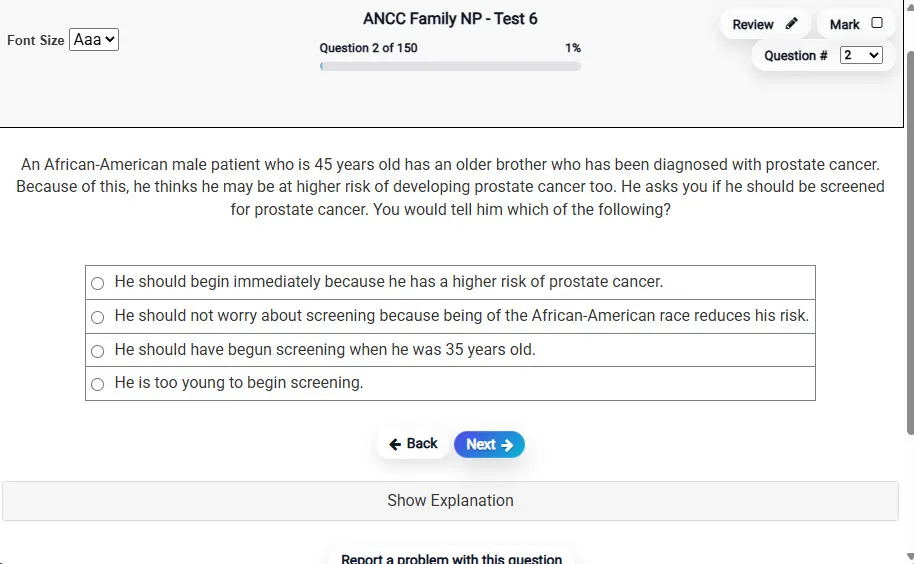
Answering a Question screen – Multiple-choice item view with navigation controls and progress tracker.
Answering a Question Multiple-choice item view with navigation controls and progress tracker.

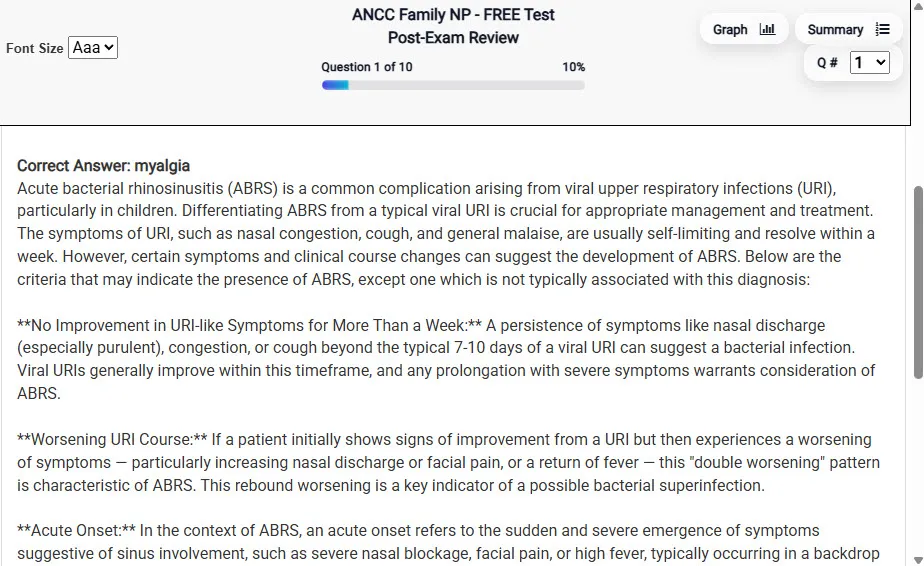
                           Detailed Explanation screen – 
                         Review mode showing chosen answer and rationale and references.
Detailed Explanation Review mode showing chosen answer and rationale and references.

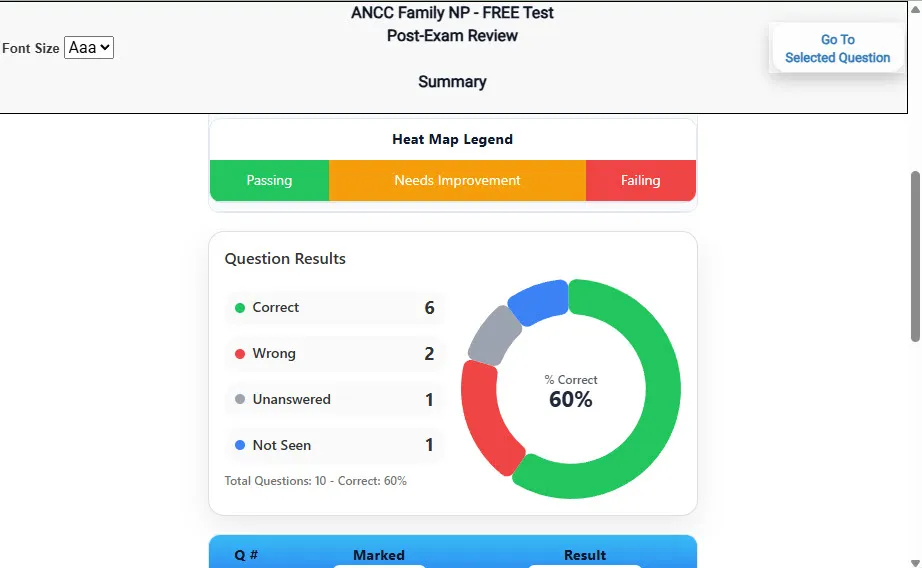
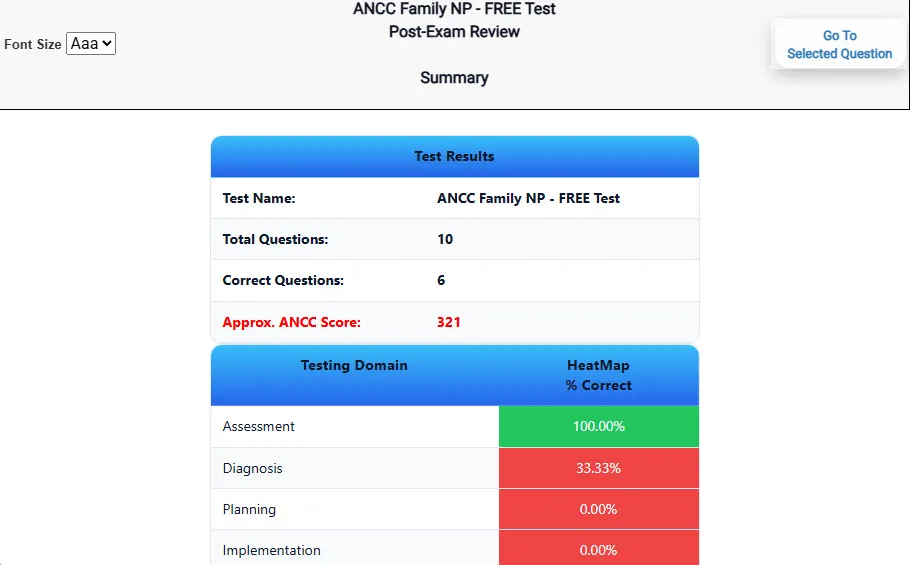
                           Review Summary 1 screen – 
                         Summary with counts for correct/wrong/unanswered and not seen items.
Review Summary 1 Summary with counts for correct/wrong/unanswered and not seen items.

                           Review Summary 2 screen – 
                         Advanced summary with category/domain breakdown and performance insights.
Review Summary 2 Advanced summary with category/domain breakdown and performance insights.

What Each Screen Shows

Answer Question Screen

  • Clean multiple-choice interface with progress bar.
  • Mark for review feature.
  • Matches real test pacing.

Detailed Explanation

  • Correct answer plus rationale.
  • Key concepts and guidelines highlighted.
  • Move between questions to fill knowledge gaps.

Review Summary 1

  • Overall results with total questions and scaled score.
  • Domain heatmap shows strengths and weaknesses.
  • Quick visual feedback on study priorities.

Review Summary 2

  • Chart of correct, wrong, unanswered, not seen.
  • Color-coded results for easy review.
  • Links back to missed items.

Top 10 Reasons to Use Exam Edge for your Praxis Citizenship Education Content Knowledge Exam Prep

  1. Focused on the Praxis Citizenship Education Content Knowledge Exam

    Our practice tests are built specifically for the Praxis Citizenship Education exam — every question mirrors the real topics, format, and difficulty so you're studying exactly what matters.

  2. Real Exam Simulation

    We match the per-question time limits and pressure of the actual Praxis exam, so test day feels familiar and stress-free.

  3. 25 Full Practice Tests & 3,000 Unique Questions

    You'll have more than enough material to master every Praxis Citizenship Education concept — no repeats, no fluff.

  4. Lower Cost Than a Retake

    Ordering 5 practice exams costs less than retaking the Praxis Citizenship Education Content Knowledge exam after a failure. One low fee could save you both time and money.

  5. Flexible Testing

    Need to step away mid-exam? Pick up right where you left off — with your remaining time intact.

  6. Instant Scoring & Feedback

    See your raw score and an estimated Praxis Citizenship Education Content Knowledge score immediately after finishing each practice test.

  7. Detailed Explanations for Every Question

    Review correct and incorrect answers with clear, step-by-step explanations so you truly understand each topic.

  8. Trusted & Accredited

    We're fully accredited by the Better Business Bureau and uphold the highest standards of trust and transparency.

  9. Web-Based & Always Available

    No software to install. Access your Praxis Citizenship Education practice exams 24/7 from any computer or mobile device.

  10. Expert Support When You Need It

    Need extra help? Our specialized tutors are highly qualified and ready to support your Praxis exam prep.


Pass the Praxis Citizenship Education Content Knowledge Exam with Realistic Practice Tests from Exam Edge

Preparing for your upcoming Praxis Citizenship Education Content Knowledge (5087) Certification Exam can feel overwhelming — but the right practice makes all the difference. Exam Edge gives you the tools, structure, and confidence to pass on your first try. Our online practice exams are built to match the real Praxis Citizenship Education exam in content, format, and difficulty.

  • 📝 25 Praxis Citizenship Education Content Knowledge Practice Tests: Access 25 full-length exams with 120 questions each, covering every major Praxis Citizenship Education Content Knowledge topic in depth.
  • Instant Online Access: Start practicing right away — no software, no waiting.
  • 🧠 Step-by-Step Explanations: Understand the reasoning behind every correct answer so you can master Praxis Citizenship Education exam concepts.
  • 🔄 Retake Each Exam Up to 4 Times: Build knowledge through repetition and track your improvement over time.
  • 🌐 Web-Based & Available 24/7: Study anywhere, anytime, on any device.
  • 🧘 Boost Your Test-Day Confidence: Familiarity with the Praxis format reduces anxiety and helps you perform under pressure.

These Praxis Citizenship Education Content Knowledge practice exams are designed to simulate the real testing experience by matching question types, timing, and difficulty level. This approach helps you get comfortable not just with the exam content, but also with the testing environment, so you walk into your exam day focused and confident.


Exam Edge Praxis Reviews


I failed the Praxis Math test five times before I found your site. After taking all your practice tests, on my next attempt I passed by five points! I can honestly say this site is the reason I passed. Thank you!!!

Nikki P, Tennessee

Just wanted to say thanks for helping me pass the Praxis I Reading! Your practice tests and especially your explanations are great. They gave me the confidence I needed! Now I can student teach this fall. I'm so glad I found PraxisReading.com!

Denise C, Florida

Thank you so much. I just received my results in the mail. I scored a 179 and passed the Praxis I Writing! I'll never have to worry about retaking this test again! PraxisWriting.com is great. I told all my friends about this site.

Susan K, Virginia

I failed the Parapro test four times before I found your site. After taking all your practice tests, on my next attempt I passed by seven points! I can honestly say that this site is the reason I passed. Thank you!!!

Rebecca S, Texas

Hi! Just returned from taking my Praxis computerized and am happy to say that I passed with a 175. The last time I took the test I missed by 1 point. Your tests definitely made the difference for me! The set up was so similar to the test and the types of questions were also similar that I felt ve ...
Read More
Brad Y, Pennsylvania

I have taken the math praxis 3 times and wanted to give up. I ordered the bundle of math tests and I passed the math praxis today. Thank you for all the help.

Jacob D, South Carolina


Praxis Citizenship Education Content Knowledge Aliases Test Name

Here is a list of alternative names used for this exam.

  • Praxis Citizenship Education Content Knowledge
  • Praxis Citizenship Education Content Knowledge test
  • Praxis Citizenship Education Content Knowledge Certification Test
  • Praxis Citizenship Education test
  • Praxis
  • Praxis 5087
  • 5087 test
  • Praxis Citizenship Education Content Knowledge (5087)
  • Citizenship Education Content Knowledge certification