This is the content of the pop-over!

Praxis Audiology (5342) Practice Tests & Test Prep by Exam Edge


Praxis Audiology product image
(5.0)
Based on 28 Reviews

  • Real Exam Simulation: Timed questions and matching content build comfort for your Praxis Audiology test day.
  • Instant, 24/7 Access: Web-based Praxis Audiology practice exams with no software needed.
  • Clear Explanations: Step-by-step answers and explanations for your Praxis exam to strengthen understanding.
  • Boosted Confidence: Reduces anxiety and improves test-taking skills to ace your Praxis Audiology (5342).

Featured on

Praxis Audiology Online Practice Test Bundles

BEST VALUE
5 practice tests

$69.75

$199.75

SAVE $130

Only $13.95 per test!

  • 100% Pass Guarantee
  • 5 online practice tests
  • 120 questions per test
  • Bonus: 100 Flash Cards + Study Guide
  • Instant access
  • Detailed Explanations
  • Practice tests never expire
  • Timed, untimed, or study guide mode
1 practice test

$39.95

  • 1 online practice test
  • 120 questions per test
  • Instant access
  • Detailed Explanations
  • Practice tests never expire
  • Timed, untimed, or study guide mode
Quick Select
Tap to choose a bundle

** All Prices are in US Dollars (USD) **


Praxis Audiology (5342) Resources

Jump to the section you need most.

Understanding the exact breakdown of the Praxis Audiology test will help you know what to expect and how to most effectively prepare. The Praxis Audiology has 120 multiple-choice questions . The exam will be broken down into the sections below:

Praxis Audiology Exam Blueprint
Domain Name % Number of
Questions
Foundations 10% 12
Prevention and Identification 10% 12
Assessment 40% 48
Intervention 30% 36
Professional Issues 10% 12

Praxis Audiology Study Tips by Domain

  • Apply core acoustics: 6 dB per distance doubling in free field and +3 dB for doubling identical sources; red flag—confusing dB SPL with dB HL on exam items.
  • Know ear-canal and middle-ear transfer basics (outer ear resonance boosts ~2–4 kHz; middle ear matches impedance); common trap—assuming maximum sensitivity is at 1 kHz rather than ~3–4 kHz.
  • Differentiate cochlear vs neural coding: place theory for high frequencies and phase locking for low frequencies; red flag—expecting phase locking to support pitch well above ~4–5 kHz.
  • Map lesion site to expected patterns: conductive loss affects AC with ABG, sensorineural affects AC and BC similarly, retrocochlear may show poor speech scores out of proportion; priority rule—unexplained unilateral/asymmetric SNHL is a referral cue.
  • Use basic speech science: SII/importance is weighted toward mid-high frequencies for many phonemes; common trap—equating louder speech with better intelligibility when audibility of high-frequency cues is the limiter.
  • Recognize vestibular physiology essentials: semicircular canals sense angular acceleration, otoliths linear acceleration/tilt; red flag—mixing up canal planes or assuming BPPV implies central pathology.
  • Use age- and risk-based screening protocols (e.g., newborn, school-age, ototoxic monitoring) and document pass/refer criteria—red flag: treating a “pass” as definitive when risk factors still require surveillance.
  • Follow mandated timelines for infant follow-up after a failed newborn screen (prompt diagnostic evaluation and early intervention referral)—common trap: losing infants to follow-up due to unclear responsibility for tracking.
  • Prioritize immediate referral for sudden sensorineural hearing loss, unilateral rapid change, or new neurologic signs—contraindication: delaying medical evaluation while repeating routine audiometry.
  • Identify noise-induced risk and counsel on exposure limits and hearing protection—red flag: patients reporting tinnitus, temporary threshold shift, or frequent loud recreational/occupational exposure without consistent protection.
  • Recognize ototoxic and vestibulotoxic medication risks (e.g., aminoglycosides, cisplatin) and recommend baseline plus serial monitoring—priority rule: compare to each patient’s baseline, not only to normative ranges.
  • Screen for cerumen, otitis media signs, and hearing aid/earmold fit issues that can confound results—common trap: labeling a child as inattentive or developmentally delayed before ruling out fluctuating conductive loss.
  • Select and sequence the test battery based on age, history, and referral question; red flag: relying on one measure (e.g., pure-tone thresholds alone) when cross-checks conflict.
  • Ensure calibration, transducer choice, and test environment meet standards before interpreting results; common trap: misreading thresholds from improper headphone/insert use or ambient noise contamination.
  • Interpret immittance (tympanometry and acoustic reflexes) to differentiate conductive vs. sensorineural patterns; cue: absent reflexes with normal tymps suggests retrocochlear risk and warrants follow-up.
  • Use speech measures (SRT, word recognition, speech-in-noise) to validate pure-tone findings and functional impact; red flag: word recognition far poorer than expected for the audiogram indicating possible neural involvement.
  • Apply electrophysiologic and otoacoustic tests (OAE, ABR/ASSR) appropriately for non-behavioral or difficult-to-test patients; contraindication cue: do not equate present OAEs with normal hearing if middle-ear status is abnormal.
  • Document results clearly with test conditions, reliability, and recommendations tied to data; priority rule: report degree/type/configuration and include when immediate medical referral is indicated (e.g., sudden or unilateral/asymmetric findings).
  • Select intervention based on site of lesion and client goals; red flag: fitting amplification before ruling out medical contraindications (e.g., active otorrhea, sudden sensorineural loss) warrants immediate referral.
  • For hearing aids, verify with real-ear measures (REM) using prescriptive targets (e.g., NAL-NL2/DSL) rather than relying on first-fit; common trap: skipping REM leads to under-amplification in soft speech and poor outcomes.
  • For cochlear implant or bone-anchored options, document limited benefit with appropriately fit amplification and aided speech perception; priority rule: include counseling on realistic expectations and the need for post-activation aural rehabilitation.
  • Implement tinnitus management using education plus sound therapy and/or CBT-informed strategies; red flag: unilateral tinnitus with asymmetric hearing loss or pulsatile tinnitus requires medical evaluation before routine counseling.
  • Plan vestibular intervention with evidence-based maneuvers (e.g., canalith repositioning for BPPV) and habituation/adaptation exercises; common trap: performing repositioning without confirming the involved canal and laterality on positional testing.
  • Provide aural rehabilitation with communication strategies and environmental modifications; priority rule: train both client and communication partners and verify benefit with validated outcome measures (e.g., HHIE/APHAB) rather than subjective reports alone.
  • Know scope-of-practice vs. licensure requirements and payer rules; red flag: providing or billing for services not supported by state law, supervision rules, or documentation.
  • Apply ASHA/AAA ethics and informed consent standards; common trap: inadequate discussion of test limitations, alternative options, or foreseeable risks (e.g., cerumen management, impression taking).
  • Maintain HIPAA/FERPA-compliant confidentiality and release-of-information practices; priority rule: disclose the minimum necessary and document who received what and why.
  • Write defensible documentation (case history, results, interpretation, plan, counseling, follow-up); red flag: copying templates without tying recommendations to audiometric findings and patient goals.
  • Use evidence-based practice by integrating best evidence, clinical expertise, and patient values; common trap: recommending amplification or vestibular rehab without outcome measures (e.g., aided speech scores, questionnaires) and a clear trial/verification plan.
  • Coordinate interprofessional care and referrals appropriately; threshold cue: refer urgently for sudden unilateral hearing loss, otologic red flags (e.g., otorrhea with pain), or neurologic signs rather than continuing routine audiology management.


Built to Fit Into Your Busy Life

Everything you need to prepare with confidence—without wasting a minute.

Three Study Modes

Timed, No Time Limit, or Explanation mode.

Actionable Analytics

Heatmaps and scaled scores highlight weak areas.

High-Yield Rationales

Concise explanations emphasize key concepts.

Realistic Interface

Matches the feel of the actual exam environment.

Accessible by Design

Clean layout reduces cognitive load.

Anytime, Anywhere

Web-based access 24/7 on any device.
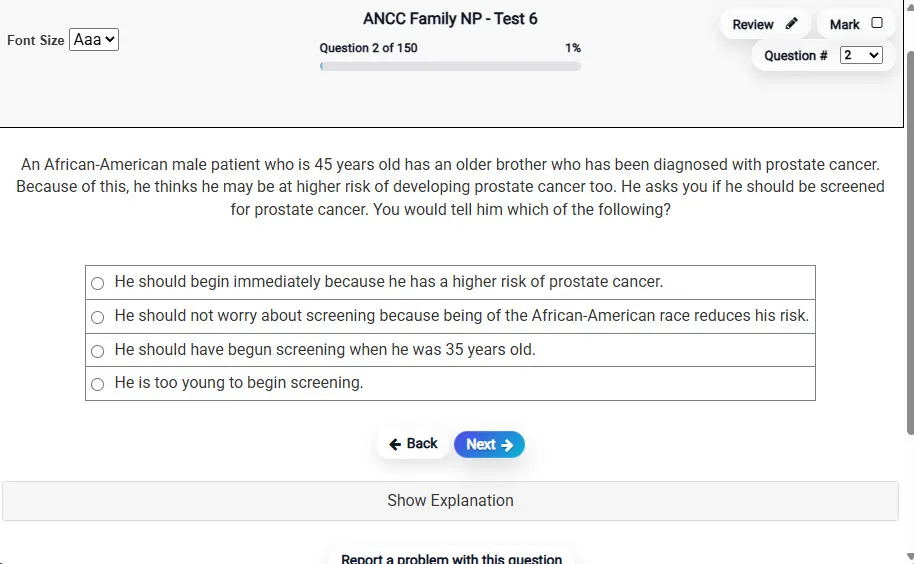
Answering a Question screen – Multiple-choice item view with navigation controls and progress tracker.
Answering a Question Multiple-choice item view with navigation controls and progress tracker.

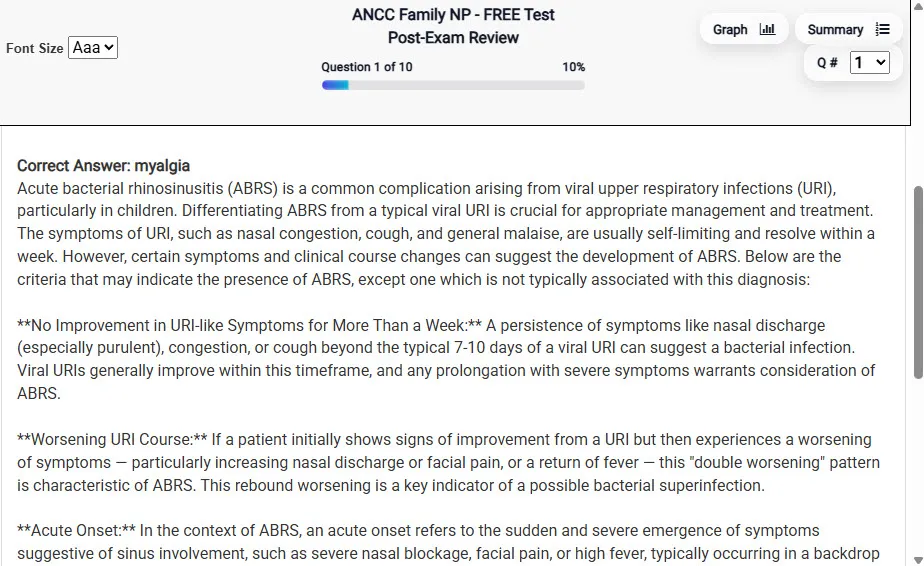
                           Detailed Explanation screen – 
                         Review mode showing chosen answer and rationale and references.
Detailed Explanation Review mode showing chosen answer and rationale and references.

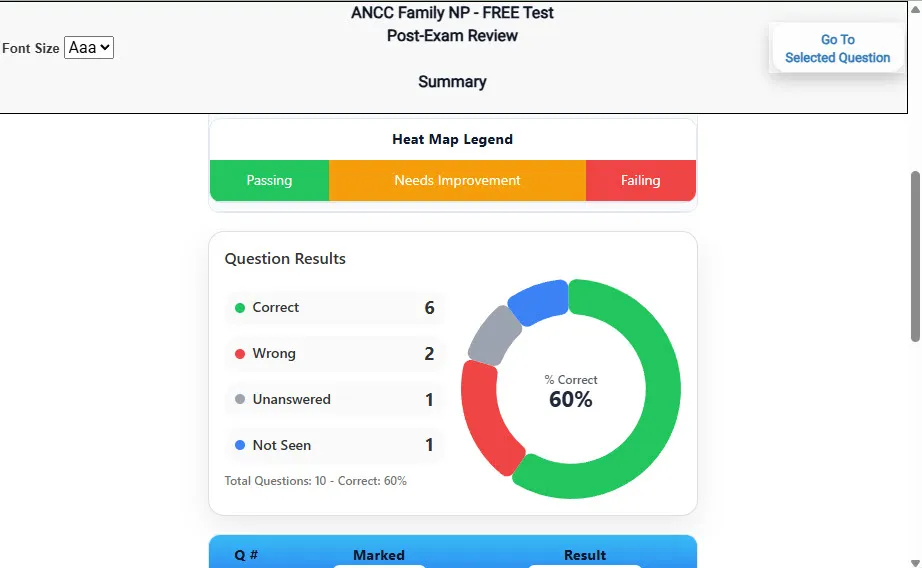
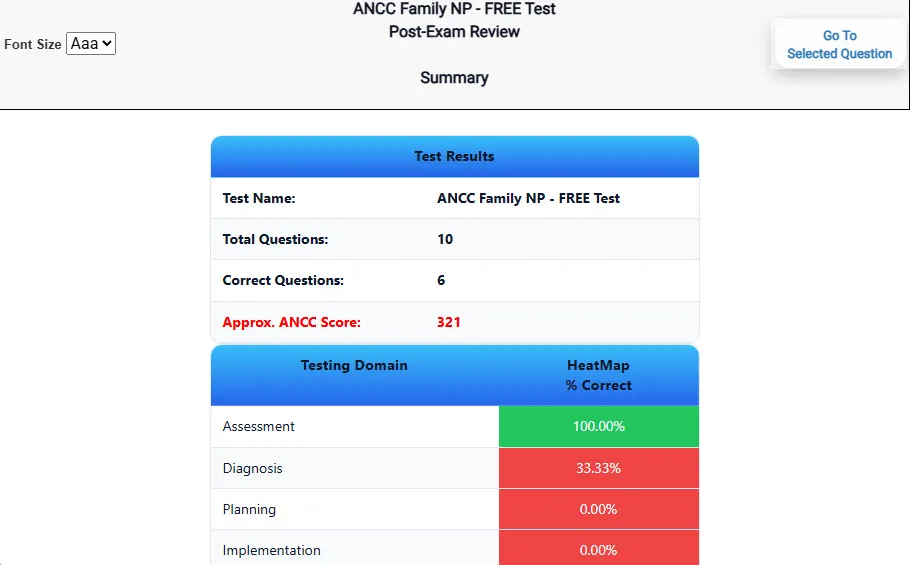
                           Review Summary 1 screen – 
                         Summary with counts for correct/wrong/unanswered and not seen items.
Review Summary 1 Summary with counts for correct/wrong/unanswered and not seen items.

                           Review Summary 2 screen – 
                         Advanced summary with category/domain breakdown and performance insights.
Review Summary 2 Advanced summary with category/domain breakdown and performance insights.

What Each Screen Shows

Answer Question Screen

  • Clean multiple-choice interface with progress bar.
  • Mark for review feature.
  • Matches real test pacing.

Detailed Explanation

  • Correct answer plus rationale.
  • Key concepts and guidelines highlighted.
  • Move between questions to fill knowledge gaps.

Review Summary 1

  • Overall results with total questions and scaled score.
  • Domain heatmap shows strengths and weaknesses.
  • Quick visual feedback on study priorities.

Review Summary 2

  • Chart of correct, wrong, unanswered, not seen.
  • Color-coded results for easy review.
  • Links back to missed items.

Top 10 Reasons to Use Exam Edge for your Praxis Audiology Exam Prep

  1. Focused on the Praxis Audiology Exam

    Our practice tests are built specifically for the Praxis Audiology exam — every question mirrors the real topics, format, and difficulty so you're studying exactly what matters.

  2. Real Exam Simulation

    We match the per-question time limits and pressure of the actual Praxis exam, so test day feels familiar and stress-free.

  3. 5 Full Practice Tests & 600 Unique Questions

    You'll have more than enough material to master every Praxis Audiology concept — no repeats, no fluff.

  4. Lower Cost Than a Retake

    Ordering 5 practice exams costs less than retaking the Praxis Audiology exam after a failure. One low fee could save you both time and money.

  5. Flexible Testing

    Need to step away mid-exam? Pick up right where you left off — with your remaining time intact.

  6. Instant Scoring & Feedback

    See your raw score and an estimated Praxis Audiology score immediately after finishing each practice test.

  7. Detailed Explanations for Every Question

    Review correct and incorrect answers with clear, step-by-step explanations so you truly understand each topic.

  8. Trusted & Accredited

    We're fully accredited by the Better Business Bureau and uphold the highest standards of trust and transparency.

  9. Web-Based & Always Available

    No software to install. Access your Praxis Audiology practice exams 24/7 from any computer or mobile device.

  10. Expert Support When You Need It

    Need extra help? Our specialized tutors are highly qualified and ready to support your Praxis exam prep.


Pass the Praxis Audiology Exam with Realistic Practice Tests from Exam Edge

Preparing for your upcoming Praxis Audiology (5342) Certification Exam can feel overwhelming — but the right practice makes all the difference. Exam Edge gives you the tools, structure, and confidence to pass on your first try. Our online practice exams are built to match the real Praxis Audiology exam in content, format, and difficulty.

  • 📝 5 Praxis Audiology Practice Tests: Access 5 full-length exams with 120 questions each, covering every major Praxis Audiology topic in depth.
  • Instant Online Access: Start practicing right away — no software, no waiting.
  • 🧠 Step-by-Step Explanations: Understand the reasoning behind every correct answer so you can master Praxis Audiology exam concepts.
  • 🔄 Retake Each Exam Up to 4 Times: Build knowledge through repetition and track your improvement over time.
  • 🌐 Web-Based & Available 24/7: Study anywhere, anytime, on any device.
  • 🧘 Boost Your Test-Day Confidence: Familiarity with the Praxis format reduces anxiety and helps you perform under pressure.

These Praxis Audiology practice exams are designed to simulate the real testing experience by matching question types, timing, and difficulty level. This approach helps you get comfortable not just with the exam content, but also with the testing environment, so you walk into your exam day focused and confident.


Exam Edge Praxis Reviews


I failed the Praxis Math test five times before I found your site. After taking all your practice tests, on my next attempt I passed by five points! I can honestly say this site is the reason I passed. Thank you!!!

Nikki P, Tennessee

Just wanted to say thanks for helping me pass the Praxis I Reading! Your practice tests and especially your explanations are great. They gave me the confidence I needed! Now I can student teach this fall. I'm so glad I found PraxisReading.com!

Denise C, Florida

Thank you so much. I just received my results in the mail. I scored a 179 and passed the Praxis I Writing! I'll never have to worry about retaking this test again! PraxisWriting.com is great. I told all my friends about this site.

Susan K, Virginia

I failed the Parapro test four times before I found your site. After taking all your practice tests, on my next attempt I passed by seven points! I can honestly say that this site is the reason I passed. Thank you!!!

Rebecca S, Texas

Hi! Just returned from taking my Praxis computerized and am happy to say that I passed with a 175. The last time I took the test I missed by 1 point. Your tests definitely made the difference for me! The set up was so similar to the test and the types of questions were also similar that I felt ve ...
Read More
Brad Y, Pennsylvania

I have taken the math praxis 3 times and wanted to give up. I ordered the bundle of math tests and I passed the math praxis today. Thank you for all the help.

Jacob D, South Carolina


Praxis Audiology Aliases Test Name

Here is a list of alternative names used for this exam.

  • Praxis Audiology
  • Praxis Audiology test
  • Praxis Audiology Certification Test
  • Praxis
  • Praxis 5342
  • 5342 test
  • Praxis Audiology (5342)
  • Audiology certification