This is the content of the pop-over!

Praxis Art: Content and Analysis (5135) Practice Tests & Test Prep by Exam Edge


Praxis Art Content and Analysis  product image
(5.0)
Based on 20 Reviews

  • Real Exam Simulation: Timed questions and matching content build comfort for your Praxis Art: Content and Analysis test day.
  • Instant, 24/7 Access: Web-based Praxis Art Content and Analysis practice exams with no software needed.
  • Clear Explanations: Step-by-step answers and explanations for your Praxis exam to strengthen understanding.
  • Boosted Confidence: Reduces anxiety and improves test-taking skills to ace your Praxis Art Content and Analysis (5135).

Featured on

Praxis Art Content and Analysis Online Practice Test Bundles

BEST VALUE
20 practice tests

$174.00

$799.00

SAVE $625

Only $8.70 per test!

  • 100% Pass Guarantee
  • 20 online practice tests
  • 85 questions + 3 essays per test
  • Bonus: 100 Flash Cards + Study Guide
  • Instant access
  • Detailed Explanations
  • Practice tests never expire
  • Timed, untimed, or study guide mode
MOST POPULAR
10 practice tests

$99.50

$399.50

SAVE $300

Only $9.95 per test!

  • 10 online practice tests
  • 85 questions + 3 essays per test
  • Bonus: 100 Flash Cards + Study Guide
  • Instant access
  • Detailed Explanations
  • Practice tests never expire
  • Timed, untimed, or study guide mode
5 practice tests

$69.75

$199.75

SAVE $130

Only $13.95 per test!

  • 5 online practice tests
  • 85 questions + 3 essays per test
  • Bonus: 100 Flash Cards
  • Instant access
  • Detailed Explanations
  • Practice tests never expire
  • Timed, untimed, or study guide mode
1 practice test

$39.95

  • 1 online practice test
  • 85 questions + 3 essays per test
  • Instant access
  • Detailed Explanations
  • Practice tests never expire
  • Timed, untimed, or study guide mode
Quick Select
Tap to choose a bundle

** All Prices are in US Dollars (USD) **


Praxis Art: Content and Analysis (5135) Resources

Jump to the section you need most.

Understanding the exact breakdown of the Praxis Art Content and Analysis test will help you know what to expect and how to most effectively prepare. The Praxis Art Content and Analysis has 85 multiple-choice questions and 3 essay questions. The exam will be broken down into the sections below:

Praxis Art Content and Analysis Exam Blueprint
Domain Name % Number of
Questions
Art Making 48% 41
     General  
     Media and Processes  
Historical and Theoretical Foundations of Art 27% 23
     Materials and Processes in an Art Historical Context  
     The Western Tradition in Art History  
     Art Beyond the Western Tradition  
     Responding to Art  
Art Analysis - Constructed-response 25% 21
     Historical and Theoretical Foundations of Art  
     Art Making  

Praxis Art Content and Analysis Study Tips by Domain

  • Translate concept to plan by choosing a medium and constraints first (size, time, tools)—red flag: changing materials midstream without revising the design leads to unresolved results.
  • Use the elements/principles intentionally (e.g., value contrast for emphasis, repetition for unity)—common trap: listing principles without showing how specific choices create the intended effect.
  • Demonstrate sound composition through thumbnails and tests before the final—priority rule: solve focal point and value structure early, not after details are added.
  • Show craftsmanship and control appropriate to the medium—red flag: muddy color, unintended tangents, or weak edges usually signal rushed process and poor tool handling.
  • Revise based on critique using specific, observable criteria (balance, proportion, contrast, alignment)—common trap: vague feedback like “make it pop” without actionable edits.
  • Document process choices and reasoning (why this medium, how techniques support meaning)—threshold: your explanation should connect intent → formal decisions → outcome, not just describe steps.
  • Know core elements and principles (line, shape, value, texture, balance, emphasis, rhythm, unity) and use accurate terms; red flag: confusing “value” (light/dark) with “color” (hue/chroma).
  • Apply design vocabulary to critique with evidence (describe → analyze → interpret → judge); common trap: jumping to meaning or evaluation before describing observable features.
  • Understand color basics (additive vs. subtractive, complementary contrast, warm/cool effects) and predict outcomes; priority rule: pigment mixing is subtractive, so adding complements typically dulls/saturates less.
  • Recognize basic visual perception concepts (figure/ground, focal point, scale, proportion, perspective) and how artists manipulate them; red flag: assuming linear perspective is the only way to show depth.
  • Use correct museum/gallery and studio safety norms (PPE, ventilation, labeling, disposal) in general scenarios; contraindication: never mix unknown chemicals or store solvents in unmarked containers.
  • Be able to read and interpret common art documentation (labels, provenance, condition notes, citations) with academic integrity; common trap: treating paraphrase without citation as acceptable.
  • Match medium to intent: e.g., subtractive (carving) vs additive (modeling) changes how form and texture can be controlled; red flag if the process described can’t physically produce the stated effect.
  • Know key printmaking distinctions—relief (raised prints), intaglio (incised holds ink), planographic (lithography); common trap is mixing up where ink sits and which tools (burin/etching needle vs gouge) are used.
  • Plan painting by binder and drying behavior: oil dries by oxidation (slow, flexible layers) while acrylic dries by evaporation (fast, plastic film); priority rule is “fat over lean” in oils to prevent cracking.
  • Handle ceramics by clay body and firing stage: greenware vs bisque vs glaze firing require different tolerances; red flag is glazing unfired greenware or ignoring shrinkage/warping risk at high temperatures.
  • For photography/digital imaging, distinguish exposure controls (aperture, shutter, ISO) from resolution/output (ppi vs dpi); common trap is confusing ppi with pixel dimensions, leading to soft prints.
  • In 3D media and installation, choose adhesives/fasteners for material compatibility (porous vs nonporous, flexible vs rigid); contraindication is using water-based glue on nonporous plastics/metal where bond failure is likely.
  • Know core art theories (e.g., formalism, iconography, Marxist, feminist, postcolonial) and match each to what it prioritizes; red flag: describing “meaning” while using only formal analysis vocabulary.
  • Distinguish modernism vs. postmodernism using clear indicators (originality/medium specificity vs. appropriation/pastiche/critique); common trap: labeling any contemporary work “postmodern” without evidence in strategies or context.
  • Use accurate terminology for elements/principles (line, value, hue, balance, rhythm, emphasis, unity) and don’t confuse them; cue: if asked for “principle,” naming an “element” costs points.
  • Connect patronage, audience, and function to style choices (religious, civic, courtly, commercial); priority rule: when context is provided, address it explicitly before giving purely aesthetic claims.
  • Recognize how institutions shape meaning (museums, academies, salons, galleries, markets) and how canon formation works; red flag: treating the canon as neutral rather than historically constructed.
  • Apply ethical and legal frameworks (cultural appropriation, repatriation, copyright/fair use) to scenarios; contraindication: assuming “educational use” automatically makes copying images or works permissible.
  • Match medium to period and region—e.g., buon fresco requires wet plaster (intonaco), while fresco secco is paint on dry plaster; red flag: calling any mural “fresco” without noting wet vs. dry method.
  • Identify print processes by their telltale marks: intaglio often shows a plate mark and rich line, relief prints show crisp edges from raised surfaces; common trap: mixing up etching (acid) with engraving (burin cut).
  • Differentiate painting binders historically: tempera (egg) dries fast with matte, precise strokes; oil allows glazing and slower blending; priority rule: if you see layered translucent glazes and deep saturation, think oil rather than tempera.
  • Recognize sculpture casting steps in context: lost-wax casting uses a wax model, investment mold, burn-out, then metal pour; red flag: describing cast bronze as “carved” or ignoring evidence of seams/sprues.
  • Link supports and ground to era: panel with gesso is common before widespread canvas use in Europe; canvas favors portability and larger scale; common trap: assuming canvas is standard for all Renaissance paintings.
  • Connect material choices to conservation issues: iron-gall ink corrodes paper, frescoes are vulnerable to moisture/salts, and bronze can develop patina/bronze disease; practical cue: when prompted about condition, name a medium-specific deterioration mechanism.
  • Place key Western periods in order (Classical → Medieval → Renaissance → Baroque → Neoclassicism/Romanticism → Modernism) and name at least one hallmark per period; red flag: mixing Baroque drama with Renaissance balance.
  • Match major artists to signature works and innovations (e.g., Giotto — spatial narrative, Michelangelo — monumental anatomy, Caravaggio — tenebrism); common trap: attributing chiaroscuro generally when the prompt specifically implies tenebrism.
  • Connect patronage and function to style (Church, court, civic, bourgeois market) and state the purpose (devotional, propaganda, display); priority rule: start with who paid and where it was seen before analyzing aesthetics.
  • Identify defining formal strategies by movement (linear perspective in the Renaissance, dynamic diagonals in Baroque, visible brushwork in Impressionism, fragmentation in Cubism); red flag: calling any flattening “modern” without noting intent and context.
  • Use correct architectural vocabulary and structural logic (orders, nave/transept, flying buttress, dome, basilica plan) to distinguish Romanesque vs Gothic vs Renaissance; common trap: confusing a round arch (Romanesque) with a pointed arch (Gothic).
  • Track how Western art shifts from academic realism to avant-garde experimentation (Realism → Impressionism → Post-Impressionism → Fauvism/Expressionism → Cubism/Surrealism); cue: if the work prioritizes concept over depiction, justify it with a specific modern movement rather than a vague “abstract” label.
  • Situate works from Africa, the Americas, Asia, Oceania, and Indigenous traditions in their cultural functions (ritual, status, ancestor veneration) rather than only formal style—red flag: describing an object as “primitive” or “decorative” without purpose.
  • Know how materials and techniques connect to meaning (e.g., bronze casting, bark cloth, jade carving, textile weaving)—common trap: treating non-Western works as if they were made primarily for gallery display.
  • Use accurate regional and cultural identifiers when possible and avoid blanket terms (e.g., “African art” as a single category)—priority rule: be as specific as the prompt’s evidence allows.
  • Recognize cross-cultural exchange, trade, and colonial impacts (hybridity, syncretism, appropriation) while keeping agency with source communities—red flag: implying Western influence is required for “advancement.”
  • Connect iconography and symbolism to worldview (cosmology, power, lineage, deities) and intended audience—common trap: forcing Greco-Roman or Christian readings onto unrelated imagery.
  • Be prepared to compare beyond Eurocentric timelines by using thematic anchors (function, patronage, materials, context) instead of “Renaissance/Baroque” labels—contraindication: mapping Western period terms onto non-Western histories.
  • Use a deliberate sequence when critiquing: describe → analyze elements/principles → interpret → judge; red flag: jumping straight to “I like it” without visual evidence.
  • Support every claim with at least one observable detail (color, line, space, texture, scale, materials); common trap: relying on artist biography or assumed symbolism that isn’t present in the work.
  • Distinguish content (what is depicted) from context (where/when/why it was made) and form (how it looks); priority rule: if context is unknown, ground the response in formal analysis first.
  • Compare works using specific criteria (medium, function, patronage, audience, style, technique); red flag: listing similarities/differences without explaining their significance.
  • For interpretation, offer 1–2 plausible readings and state the evidence for each; common trap: treating a speculative meaning as fact or using absolute language (“always”/“must mean”).
  • When evaluating, align judgments to purpose and criteria (craftsmanship, innovation, communication, cultural role) rather than personal taste; contraindication: penalizing stylistic choices that are intentional conventions of the work’s tradition.
  • Use a tight structure: identify subject matter and formal elements, then explain how those choices create meaning; red flag—only listing elements/principles with no “so what” interpretation.
  • Anchor claims in visual evidence (e.g., “high contrast along the focal edge”) rather than opinions; common trap—using “I feel” statements without citing observable details.
  • Address context when prompted (artist, audience, function, patronage, time/place) and connect it to specific imagery; priority rule—don’t drop a historical fact unless it supports your interpretation.
  • Compare/contrast responses should state a clear thesis and use parallel criteria (composition, medium, purpose, style) for both works; red flag—describing one work fully and barely mentioning the other.
  • Use correct, domain-appropriate vocabulary (e.g., chiaroscuro, foreshortening, negative space, iconography) but define briefly through use; common trap—misusing terms like “abstract” for any non-realistic image.
  • In short constructed responses, prioritize 2–3 strongest observations with direct support and conclude with a one-sentence synthesis; threshold cue—rambling lowers clarity even if facts are correct.
  • Differentiate key lenses (formalism, iconography, Marxist, feminist, postcolonial) and state what each prioritizes; red flag: describing only elements/principles when the prompt asks for meaning, context, or power.
  • Use correct art vocabulary (line, value, space, scale, chiaroscuro, foreshortening, perspective) and connect it to effect; common trap: listing terms without explaining how they shape interpretation.
  • Anchor works in historical context (patronage, religion, politics, technology, audience) with at least one concrete factor; priority rule: when unsure, start with function/purpose before style labels.
  • Recognize major movements and what they reject/embrace (e.g., Realism vs. Romanticism, Modernism’s break with tradition, Postmodern appropriation); red flag: treating movements as purely chronological rather than ideological shifts.
  • Know core theories of aesthetics and criticism (mimesis, expression, form, institutional theory) and apply one to a specific example; common trap: giving a personal preference instead of an argument-backed claim.
  • Write defensible comparisons using evidence (similarities/differences in form, content, context) and define terms like “genre” and “iconography”; red flag: assuming symbolism without citing visual cues or cultural sources.
  • Choose techniques that match the concept and constraints (time, safety, resources)—red flag: selecting a flashy medium that can’t be executed well in the allotted process.
  • Plan composition with clear focal point, value structure, and intentional use of elements/principles—common trap: relying on detail to fix weak proportion or unreadable contrast.
  • Demonstrate iterative development (thumbnails, studies, revisions) and explain changes—priority rule: show evidence of decision-making, not just a final image.
  • Use craftsmanship appropriate to the medium (clean joins, controlled edges, stable construction)—red flag: avoidable technical errors that distract from meaning (e.g., muddy color, weak adhesion, warping).
  • Integrate expressive intent with formal choices (line quality, mark-making, scale, texture)—common trap: adding symbols or text that contradicts the visual hierarchy.
  • Address presentation and documentation (mounting, labeling, photographing work accurately)—threshold: poor lighting or perspective distortion can undermine evaluation of the artwork.


Built to Fit Into Your Busy Life

Everything you need to prepare with confidence—without wasting a minute.

Three Study Modes

Timed, No Time Limit, or Explanation mode.

Actionable Analytics

Heatmaps and scaled scores highlight weak areas.

High-Yield Rationales

Concise explanations emphasize key concepts.

Realistic Interface

Matches the feel of the actual exam environment.

Accessible by Design

Clean layout reduces cognitive load.

Anytime, Anywhere

Web-based access 24/7 on any device.
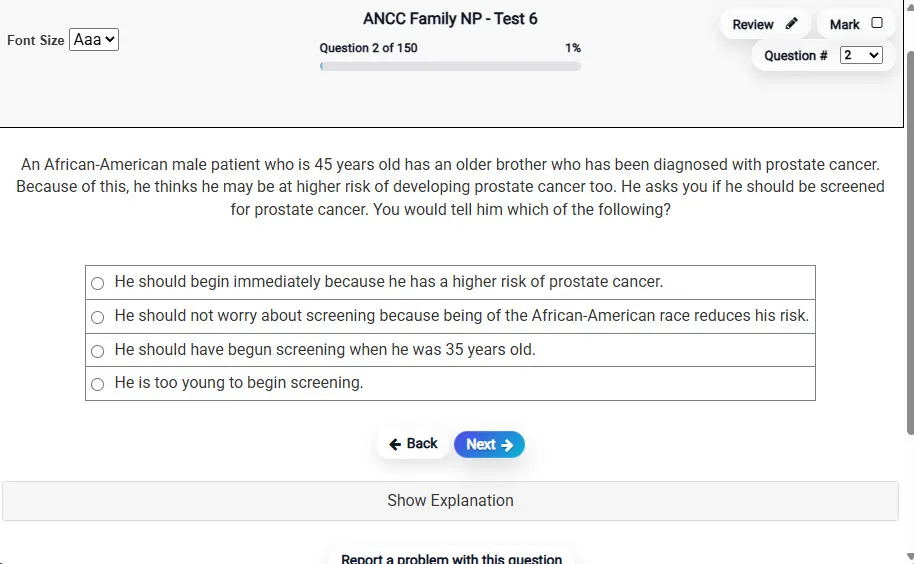
Answering a Question screen – Multiple-choice item view with navigation controls and progress tracker.
Answering a Question Multiple-choice item view with navigation controls and progress tracker.

                           Detailed Explanation screen – 
                         Review mode showing chosen answer and rationale and references.
Detailed Explanation Review mode showing chosen answer and rationale and references.

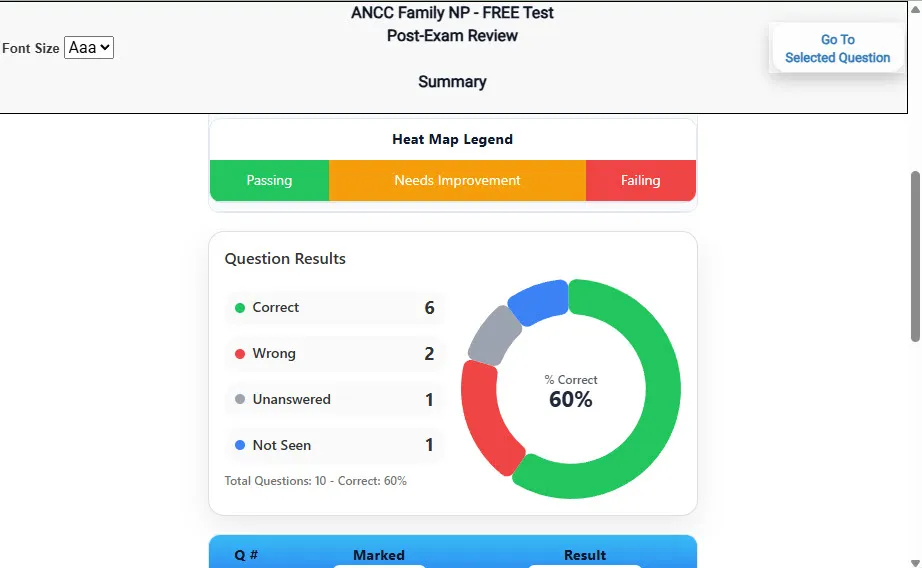
                           Review Summary 1 screen – 
                         Summary with counts for correct/wrong/unanswered and not seen items.
Review Summary 1 Summary with counts for correct/wrong/unanswered and not seen items.

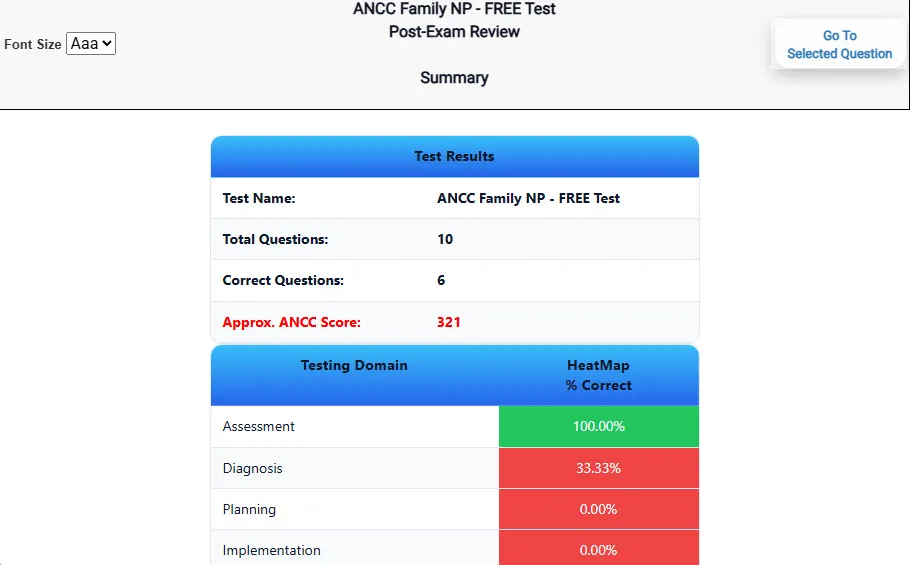
                           Review Summary 2 screen – 
                         Advanced summary with category/domain breakdown and performance insights.
Review Summary 2 Advanced summary with category/domain breakdown and performance insights.

What Each Screen Shows

Answer Question Screen

  • Clean multiple-choice interface with progress bar.
  • Mark for review feature.
  • Matches real test pacing.

Detailed Explanation

  • Correct answer plus rationale.
  • Key concepts and guidelines highlighted.
  • Move between questions to fill knowledge gaps.

Review Summary 1

  • Overall results with total questions and scaled score.
  • Domain heatmap shows strengths and weaknesses.
  • Quick visual feedback on study priorities.

Review Summary 2

  • Chart of correct, wrong, unanswered, not seen.
  • Color-coded results for easy review.
  • Links back to missed items.

Top 10 Reasons to Use Exam Edge for your Praxis Art Content and Analysis Exam Prep

  1. Focused on the Praxis Art Content and Analysis Exam

    Our practice tests are built specifically for the Praxis Art: Content and Analysis exam — every question mirrors the real topics, format, and difficulty so you're studying exactly what matters.

  2. Real Exam Simulation

    We match the per-question time limits and pressure of the actual Praxis exam, so test day feels familiar and stress-free.

  3. 20 Full Practice Tests & 1,760 Unique Questions

    You'll have more than enough material to master every Praxis Art: Content and Analysis concept — no repeats, no fluff.

  4. Lower Cost Than a Retake

    Ordering 5 practice exams costs less than retaking the Praxis Art Content and Analysis exam after a failure. One low fee could save you both time and money.

  5. Flexible Testing

    Need to step away mid-exam? Pick up right where you left off — with your remaining time intact.

  6. Instant Scoring & Feedback

    See your raw score and an estimated Praxis Art Content and Analysis score immediately after finishing each practice test.

  7. Detailed Explanations for Every Question

    Review correct and incorrect answers with clear, step-by-step explanations so you truly understand each topic.

  8. Trusted & Accredited

    We're fully accredited by the Better Business Bureau and uphold the highest standards of trust and transparency.

  9. Web-Based & Always Available

    No software to install. Access your Praxis Art: Content and Analysis practice exams 24/7 from any computer or mobile device.

  10. Expert Support When You Need It

    Need extra help? Our specialized tutors are highly qualified and ready to support your Praxis exam prep.


Pass the Praxis Art Content and Analysis Exam with Realistic Practice Tests from Exam Edge

Preparing for your upcoming Praxis Art Content and Analysis (5135) Certification Exam can feel overwhelming — but the right practice makes all the difference. Exam Edge gives you the tools, structure, and confidence to pass on your first try. Our online practice exams are built to match the real Praxis Art: Content and Analysis exam in content, format, and difficulty.

  • 📝 20 Praxis Art Content and Analysis Practice Tests: Access 20 full-length exams with 88 questions each, covering every major Praxis Art Content and Analysis topic in depth.
  • Instant Online Access: Start practicing right away — no software, no waiting.
  • 🧠 Step-by-Step Explanations: Understand the reasoning behind every correct answer so you can master Praxis Art: Content and Analysis exam concepts.
  • 🔄 Retake Each Exam Up to 4 Times: Build knowledge through repetition and track your improvement over time.
  • 🌐 Web-Based & Available 24/7: Study anywhere, anytime, on any device.
  • 🧘 Boost Your Test-Day Confidence: Familiarity with the Praxis format reduces anxiety and helps you perform under pressure.

These Praxis Art Content and Analysis practice exams are designed to simulate the real testing experience by matching question types, timing, and difficulty level. This approach helps you get comfortable not just with the exam content, but also with the testing environment, so you walk into your exam day focused and confident.


Exam Edge Praxis Reviews


Excellent program. Some of the tests have redundant questions, occasionally, which is not a big problem, but I would rather have all the questions be different. Also, in the essay section, I would have preferred to see longer entries. They are well written, but too short. All in all, the best pro ...
Read More
David , jacksonville, North Carolina

I failed the Praxis Math test five times before I found your site. After taking all your practice tests, on my next attempt I passed by five points! I can honestly say this site is the reason I passed. Thank you!!!

Nikki P, Tennessee

Just wanted to say thanks for helping me pass the Praxis I Reading! Your practice tests and especially your explanations are great. They gave me the confidence I needed! Now I can student teach this fall. I'm so glad I found PraxisReading.com!

Denise C, Florida

Thank you so much. I just received my results in the mail. I scored a 179 and passed the Praxis I Writing! I'll never have to worry about retaking this test again! PraxisWriting.com is great. I told all my friends about this site.

Susan K, Virginia

I failed the Parapro test four times before I found your site. After taking all your practice tests, on my next attempt I passed by seven points! I can honestly say that this site is the reason I passed. Thank you!!!

Rebecca S, Texas

Hi! Just returned from taking my Praxis computerized and am happy to say that I passed with a 175. The last time I took the test I missed by 1 point. Your tests definitely made the difference for me! The set up was so similar to the test and the types of questions were also similar that I felt ve ...
Read More
Brad Y, Pennsylvania


Praxis Art Content and Analysis Aliases Test Name

Here is a list of alternative names used for this exam.

  • Praxis Art Content and Analysis
  • Praxis Art Content and Analysis test
  • Praxis Art Content and Analysis Certification Test
  • Praxis Art: Content and Analysis test
  • Praxis
  • Praxis 5135
  • 5135 test
  • Praxis Art Content and Analysis (5135)
  • Art Content and Analysis certification