This is the content of the pop-over!

OAE Biology (007) Practice Tests & Test Prep by Exam Edge


OAE Biology  product image
(5.0)
Based on 17 Reviews

  • Real Exam Simulation: Timed questions and matching content build comfort for your OAE Biology test day.
  • Instant, 24/7 Access: Web-based OAE Biology practice exams with no software needed.
  • Clear Explanations: Step-by-step answers and explanations for your OAE exam to strengthen understanding.
  • Boosted Confidence: Reduces anxiety and improves test-taking skills to ace your OAE Biology (007).

Featured on

OAE Biology Online Practice Test Bundles

BEST VALUE
20 practice tests

$174.00

$799.00

SAVE $625

Only $8.70 per test!

  • 100% Pass Guarantee
  • 20 online practice tests
  • 100 questions per test
  • Bonus: 100 Flash Cards + Study Guide
  • Instant access
  • Detailed Explanations
  • Practice tests never expire
  • Timed, untimed, or study guide mode
MOST POPULAR
10 practice tests

$99.50

$399.50

SAVE $300

Only $9.95 per test!

  • 10 online practice tests
  • 100 questions per test
  • Bonus: 100 Flash Cards + Study Guide
  • Instant access
  • Detailed Explanations
  • Practice tests never expire
  • Timed, untimed, or study guide mode
5 practice tests

$69.75

$199.75

SAVE $130

Only $13.95 per test!

  • 5 online practice tests
  • 100 questions per test
  • Bonus: 100 Flash Cards
  • Instant access
  • Detailed Explanations
  • Practice tests never expire
  • Timed, untimed, or study guide mode
1 practice test

$39.95

  • 1 online practice test
  • 100 questions per test
  • Instant access
  • Detailed Explanations
  • Practice tests never expire
  • Timed, untimed, or study guide mode
Quick Select
Tap to choose a bundle

** All Prices are in US Dollars (USD) **


OAE Biology (007) Resources

Jump to the section you need most.

Understanding the exact breakdown of the OAE Biology test will help you know what to expect and how to most effectively prepare. The OAE Biology has 150 multiple-choice questions . The exam will be broken down into the sections below:

OAE Biology Exam Blueprint
Domain Name % Number of
Questions
Nature of Science 20% 30
Biochemistry and Cell Biology 13% 20
Genetics and Evolution 27% 41
Biological Unity and Diversity 20% 30
Ecology and Environment 20% 30

OAE Biology Study Tips by Domain

  • Distinguish observation from inference in scenarios; red flag: any claim about “why” or “cause” is an inference unless directly measured.
  • In experimental design, identify the independent variable (what is changed) and dependent variable (what is measured); common trap: confusing the control group with “constants” (controlled variables).
  • Evaluate validity and reliability: one trial can be valid but not reliable; priority rule: replication and consistent results strengthen reliability more than a larger sample in a single trial.
  • Interpret graphs and tables by reading axes, units, and scale first; red flag: conclusions that ignore a nonzero y-intercept or use a truncated axis to exaggerate differences.
  • Assess claims about correlation vs causation; contraindication: if there is no controlled manipulation or random assignment, you cannot conclude causation even if the correlation is strong.
  • Understand scientific theories vs hypotheses vs laws; common trap: thinking a theory becomes a law—threshold: a theory is a well-supported explanatory framework, not a “guess.”
  • Prioritize water properties (polarity, hydrogen bonding) when predicting solubility or membrane crossing; red flag: “nonpolar dissolves easily in water” is almost always wrong.
  • When analyzing enzymes, use saturation logic: increasing substrate boosts rate only until Vmax; common trap: assuming higher substrate keeps increasing rate indefinitely (especially past saturation).
  • ATP yield questions: apply the threshold rule that fermentation produces 2 ATP per glucose while aerobic respiration yields far more; red flag: any claim that fermentation “uses oxygen” is incorrect.
  • Membrane transport: osmosis moves water toward higher solute concentration and diffusion moves down a concentration gradient; common trap: mixing up which side is hypertonic and predicting water movement backwards.
  • Cell cycle and division: checkpoints (G1/S, G2/M, spindle) are priority rules for preventing damaged DNA from replicating; red flag: statements implying cells “always” proceed through the cycle regardless of DNA damage.
  • Organelles and energy flow: mitochondria drive ATP production in eukaryotes and chloroplasts capture light energy in photosynthetic cells; contraindication cue: mature mammalian red blood cells lack mitochondria, so they cannot perform aerobic respiration.
  • Distinguish inheritance patterns by ratios: 3:1 suggests a single-gene dominant/recessive cross, while 9:3:3:1 indicates independent assortment; red flag—assuming any “dominant” trait is automatically “more common” in a population.
  • Use Hardy–Weinberg only when conditions are met (no selection, mutation, migration, drift, or nonrandom mating); priority rule—if any condition is violated, do not interpret p²+2pq+q² as stable genotype frequencies.
  • For linkage and recombination, map distance ˜ % recombinants (1% = 1 cM) but never exceeds 50%; common trap—reporting recombination frequencies above 50% instead of concluding independent assortment or unlinked genes.
  • When reading pedigrees, autosomal recessive often “skips” generations and affects both sexes equally; red flag—calling a trait X-linked just because more males are affected without checking father-to-son transmission (which rules out X-linkage).
  • Natural selection changes allele frequencies via differential reproductive success, not “need” or purposeful change; contraindication—any explanation using “organisms evolved because they needed to” is Lamarckian and incorrect for modern evolutionary theory.
  • Genetic drift is strongest in small populations (bottleneck/founder effects) and can fix alleles by chance; threshold cue—if population size is small or recently reduced, prioritize drift over selection when outcomes look random or rapid.
  • Don’t confuse the three domains of life: Bacteria and Archaea are prokaryotes (no nucleus), while Eukarya have a nucleus; red flag—any prompt implying a “prokaryotic nucleus” is wrong.
  • Prioritize key plant vs animal traits: plants have cellulose cell walls and chloroplasts, animals lack cell walls; common trap—fungi have cell walls too, but they’re chitin and they don’t photosynthesize.
  • Use cladistics correctly: derived traits (synapomorphies) define clades; red flag—grouping organisms by superficial similarity (analogous traits) rather than shared ancestry.
  • Know major animal body-plan thresholds: protostomes (mouth first) vs deuterostomes (anus first), and coelomate vs acoelomate distinctions; common trap—assuming all “worms” share the same body cavity plan.
  • Apply taxonomy in the right direction: broader to narrower is Domain ? Kingdom ? Phylum ? Class ? Order ? Family ? Genus ? Species; priority rule—binomial names are Genus species (Genus capitalized, species lowercase).
  • Match reproductive/structural cues to groups: angiosperms have flowers/fruits and gymnosperms have “naked” seeds in cones; red flag—calling a cone-bearing plant “flowering” is incorrect.
  • Track energy flow with the 10% rule: if your numbers show higher trophic levels having more energy/biomass than producers in a typical terrestrial pyramid, treat it as a red flag unless the question explicitly states an inverted aquatic biomass pyramid.
  • Use limiting-factor logic: when two resources are scarce, the one in shortest supply relative to need limits growth (common trap: picking the resource with the lowest absolute amount rather than the one most constraining per organism).
  • Differentiate primary vs. secondary succession by soil presence: no soil (lava/retreating glacier) implies primary, and calling it secondary is a common trap unless soil is clearly left behind.
  • Apply carrying capacity (K) to population graphs: an S-shaped curve leveling near K signals density-dependent limits, and interpreting overshoot-and-crash as “stable equilibrium” is a red flag.
  • Interpret interactions with sign pairs: (+/+) mutualism, (+/-) predation/parasitism, (-/-) competition, (+/0) commensalism; a cue is that “both benefit” cannot be predation even if one organism appears unharmed short-term.
  • In biogeochemical cycles, remember nitrogen must be fixed before most plants can use it: treating atmospheric N2 as directly usable by plants is a common trap unless fixation (bacteria/lightning/industrial) is mentioned.


Built to Fit Into Your Busy Life

Everything you need to prepare with confidence—without wasting a minute.

Three Study Modes

Timed, No Time Limit, or Explanation mode.

Actionable Analytics

Heatmaps and scaled scores highlight weak areas.

High-Yield Rationales

Concise explanations emphasize key concepts.

Realistic Interface

Matches the feel of the actual exam environment.

Accessible by Design

Clean layout reduces cognitive load.

Anytime, Anywhere

Web-based access 24/7 on any device.
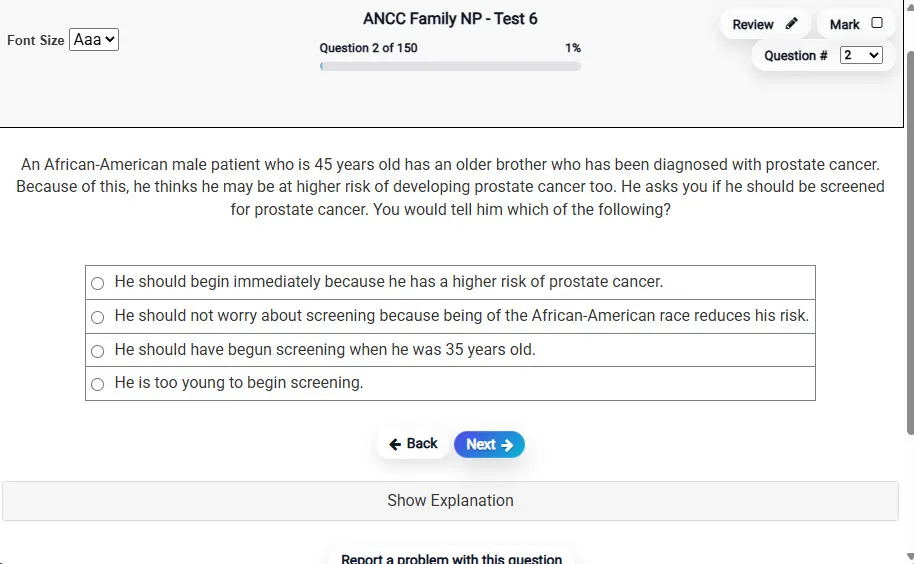
Answering a Question screen – Multiple-choice item view with navigation controls and progress tracker.
Answering a Question Multiple-choice item view with navigation controls and progress tracker.

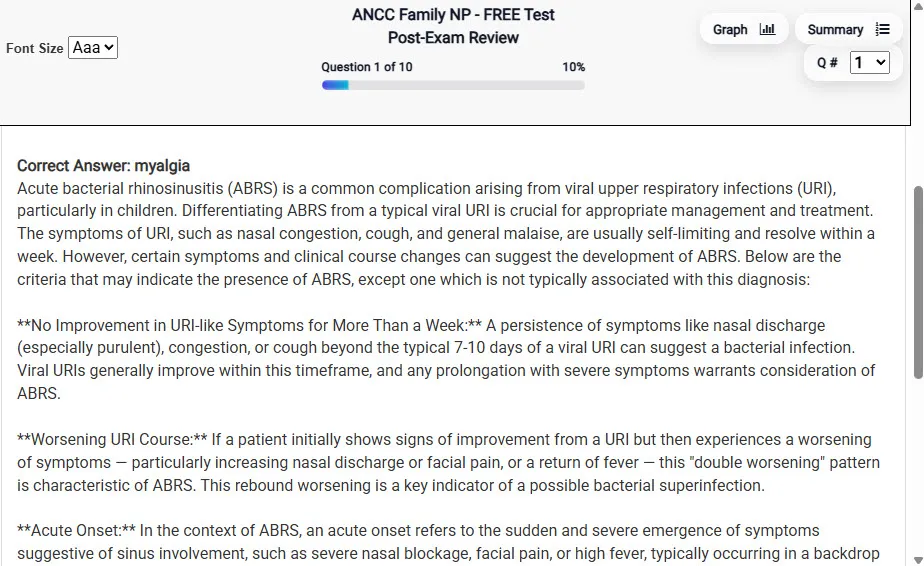
                           Detailed Explanation screen – 
                         Review mode showing chosen answer and rationale and references.
Detailed Explanation Review mode showing chosen answer and rationale and references.

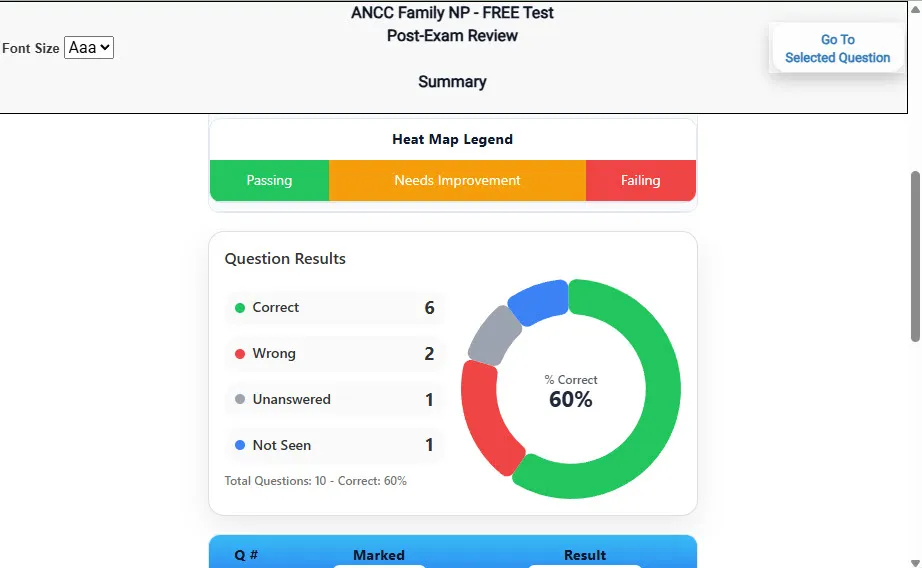
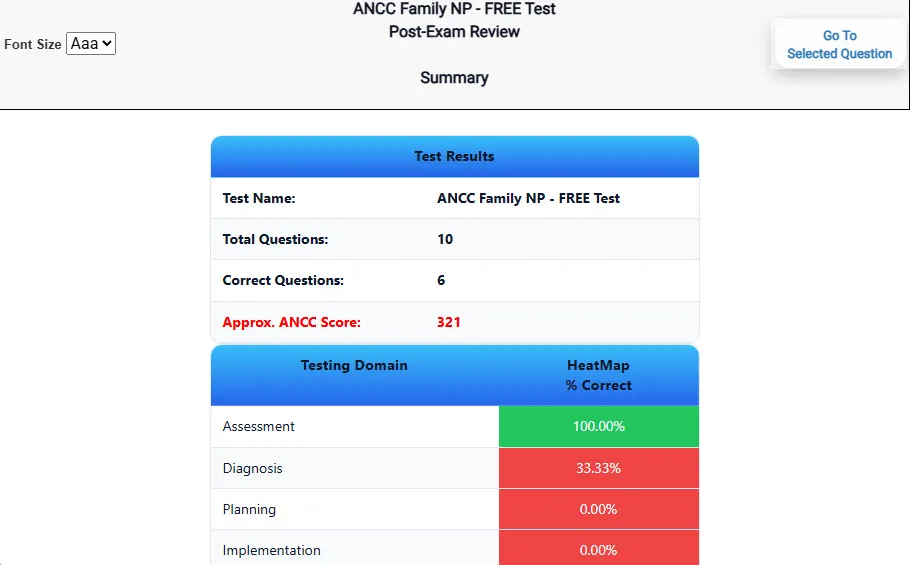
                           Review Summary 1 screen – 
                         Summary with counts for correct/wrong/unanswered and not seen items.
Review Summary 1 Summary with counts for correct/wrong/unanswered and not seen items.

                           Review Summary 2 screen – 
                         Advanced summary with category/domain breakdown and performance insights.
Review Summary 2 Advanced summary with category/domain breakdown and performance insights.

What Each Screen Shows

Answer Question Screen

  • Clean multiple-choice interface with progress bar.
  • Mark for review feature.
  • Matches real test pacing.

Detailed Explanation

  • Correct answer plus rationale.
  • Key concepts and guidelines highlighted.
  • Move between questions to fill knowledge gaps.

Review Summary 1

  • Overall results with total questions and scaled score.
  • Domain heatmap shows strengths and weaknesses.
  • Quick visual feedback on study priorities.

Review Summary 2

  • Chart of correct, wrong, unanswered, not seen.
  • Color-coded results for easy review.
  • Links back to missed items.

Top 10 Reasons to Use Exam Edge for your OAE Biology Exam Prep

  1. Focused on the OAE Biology Exam

    Our practice tests are built specifically for the OAE Biology exam — every question mirrors the real topics, format, and difficulty so you're studying exactly what matters.

  2. Real Exam Simulation

    We match the per-question time limits and pressure of the actual OAE exam, so test day feels familiar and stress-free.

  3. 20 Full Practice Tests & 2,000 Unique Questions

    You'll have more than enough material to master every OAE Biology concept — no repeats, no fluff.

  4. Lower Cost Than a Retake

    Ordering 5 practice exams costs less than retaking the OAE Biology exam after a failure. One low fee could save you both time and money.

  5. Flexible Testing

    Need to step away mid-exam? Pick up right where you left off — with your remaining time intact.

  6. Instant Scoring & Feedback

    See your raw score and an estimated OAE Biology score immediately after finishing each practice test.

  7. Detailed Explanations for Every Question

    Review correct and incorrect answers with clear, step-by-step explanations so you truly understand each topic.

  8. Trusted & Accredited

    We're fully accredited by the Better Business Bureau and uphold the highest standards of trust and transparency.

  9. Web-Based & Always Available

    No software to install. Access your OAE Biology practice exams 24/7 from any computer or mobile device.

  10. Expert Support When You Need It

    Need extra help? Our specialized tutors are highly qualified and ready to support your OAE exam prep.


Pass the OAE Biology Exam with Realistic Practice Tests from Exam Edge

Preparing for your upcoming OAE Biology (007) Certification Exam can feel overwhelming — but the right practice makes all the difference. Exam Edge gives you the tools, structure, and confidence to pass on your first try. Our online practice exams are built to match the real OAE Biology exam in content, format, and difficulty.

  • 📝 20 OAE Biology Practice Tests: Access 20 full-length exams with 100 questions each, covering every major OAE Biology topic in depth.
  • Instant Online Access: Start practicing right away — no software, no waiting.
  • 🧠 Step-by-Step Explanations: Understand the reasoning behind every correct answer so you can master OAE Biology exam concepts.
  • 🔄 Retake Each Exam Up to 4 Times: Build knowledge through repetition and track your improvement over time.
  • 🌐 Web-Based & Available 24/7: Study anywhere, anytime, on any device.
  • 🧘 Boost Your Test-Day Confidence: Familiarity with the OAE format reduces anxiety and helps you perform under pressure.

These OAE Biology practice exams are designed to simulate the real testing experience by matching question types, timing, and difficulty level. This approach helps you get comfortable not just with the exam content, but also with the testing environment, so you walk into your exam day focused and confident.


Exam Edge OAE Reviews


Today, I took my test and passed with confidence. I took it the first time and failed, but after purchasing this study guide, I was provided with resources that allowed me to take the test and get through it without being nervous. A lot of the questions that were provided in this study guide were si ...
Read More
Stephanie , Ohio

Studied a practice test everyday, and passed my test!

Gracyn, Clinton, Ohio

Great program to study from. Audio and images REALLY boosted my understanding of subjects.

Cherish , NEWARK, OH


OAE Biology Aliases Test Name

Here is a list of alternative names used for this exam.

  • OAE Biology
  • OAE Biology test
  • OAE Biology Certification Test
  • OAE
  • OAE 007
  • 007 test
  • OAE Biology (007)
  • Biology certification